
Large Print Sudoku for Seniors: Free Printable Puzzles (PDF)

For enjoyment and mental engagement. Sudoku is a pastime, not a treatment for memory loss or dementia.
Sudoku is easier to enjoy when the numbers are big enough to read without squinting and the first puzzles are genuinely easy. Below: four free large print puzzles to print, a simple way to solve them, and how to choose the right difficulty next.
Key takeaways
- A free four-puzzle sample in extra-large print, with answers, is yours by email to print as often as you like.
- Sudoku needs no maths — the digits are just symbols. Each row, column and 3×3 box holds 1 to 9 once.
- Start with easy puzzles: more numbers already filled in means more places to begin.
- Large print means big digits, one puzzle per page, and clear box lines — not just a bigger book.
- A good puzzle has exactly one answer and never needs guessing; every puzzle in the sample and the book has been checked.
Quick answer
Where can I get free large print Sudoku for seniors?
Enter your email in the box below and we’ll send a free large print Sudoku sample: four easy puzzles, one to a page with extra-large numbers, plus a how-to page and the answers. Print it as many times as you like. The puzzles come from our book Large Print Sudoku: 100 Easy to Medium Puzzles for Adults & Seniors, and every one has a single answer reachable by logic alone, with no guessing.
Get the free large print Sudoku sample
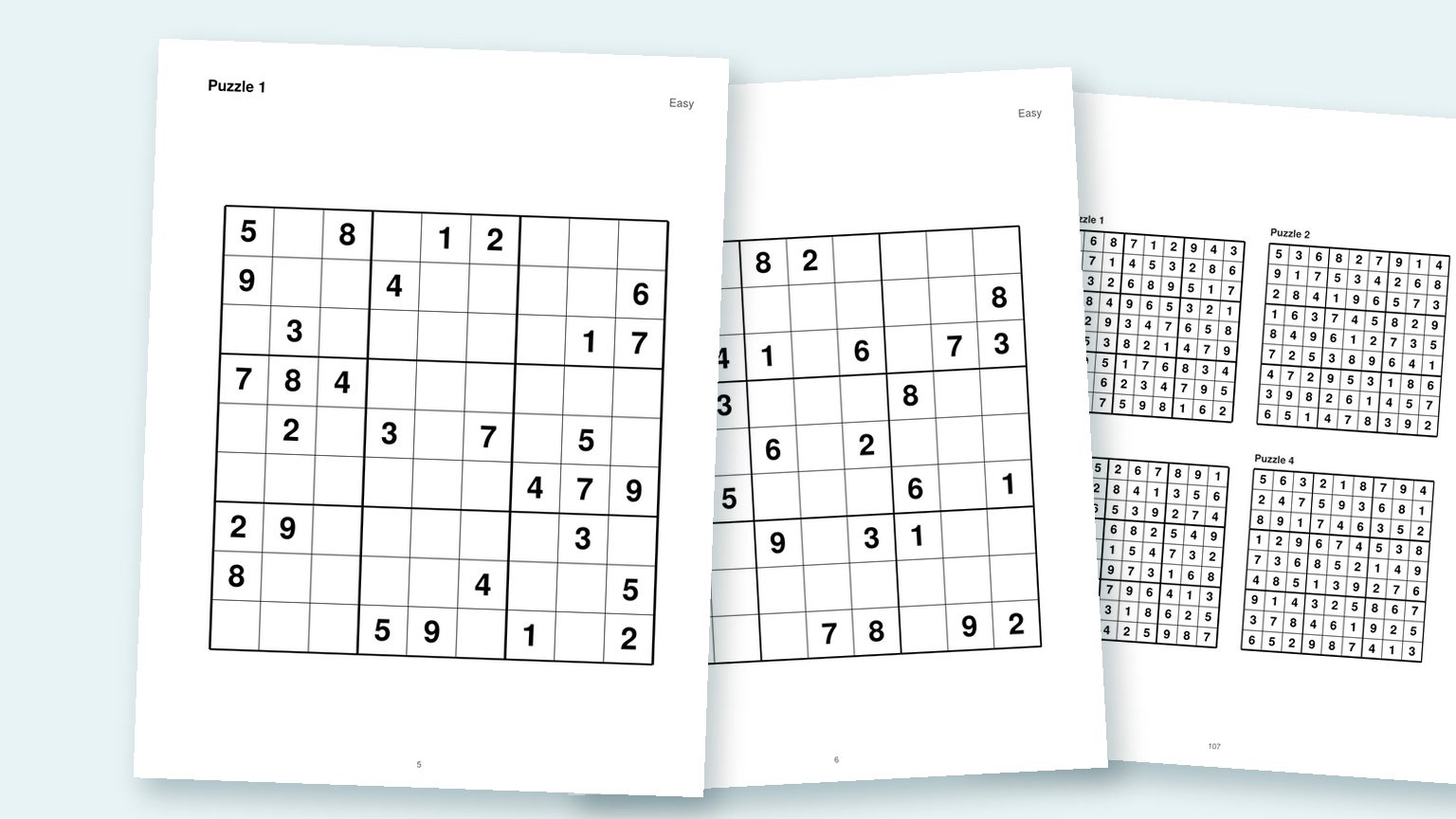
The free sample is eight printable pages, sized for ordinary US Letter paper:
- Four easy puzzles, one per page, with numbers big enough to read at arm’s length.
- A how-to page that explains the rules in four short paragraphs.
- An answer page for all four puzzles, so you can check your work or get unstuck.
Print as many copies as you like — to do again, to share with a friend, or to keep a few by the armchair. The sample is free; we email it so we can send the occasional new puzzle or activity idea afterwards, and you can unsubscribe whenever you like.
Good to know
Solve in pencil, and keep an eraser nearby. Even experienced solvers rub out a wrong number now and then, and a clean grid is far easier to read than one full of crossings-out.

Sponsored Pick
Lively Jitterbug Flip Senior Cell Phone
Seniors who need a simple phone to carry, ideally with built-in emergency help
Check Price
This season
Prime Big Deal Days, October 6 and 7
Amazon’s 48-hour sale for Prime members.
See the deals What’s worth buyingAffiliate link · Amazon
Get the free large print Sudoku sample
Four easy puzzles, one to a page in extra-large print, with the how-to page and the answers. We’ll email you the PDF to print as many times as you like, plus the occasional puzzle or activity idea after that. Unsubscribe anytime.
How to solve Sudoku: a simple method for beginners
The rule is the whole game: fill every empty square so that each row, each column and each 3×3 box contains the digits 1 to 9 exactly once. There is no arithmetic. The numbers could just as easily be letters or colours.
A method that works on every easy puzzle:
- Pick one digit — say 5 — and look at where it already appears.
- Look at one 3×3 box that is missing that digit. Any row or column that already has a 5 rules out every square in that line.
- If only one square is left, that is where the 5 goes. Write it in.
- Move on to the next box, or the next digit. Each number you place makes the next one easier.
- Stuck? Switch digits. On an easy puzzle there is always another number you can place. You never need to guess.
Here is that method on Puzzle 1 of the sample. Look at the bottom-left box, which has no 5 yet. The row through its middle already has a 5 at the far right of the grid, and the bottom row has a 5 in its fourth square. So the 5 in that box cannot sit in either of its lower two rows — it must go in the top row, where only one square is still empty. That is your first number.
Easy or medium: choosing the right difficulty
Difficulty comes mostly from how many numbers you are given to start with, and from how far you have to look to place the next one. In our book the easy puzzles start with 26 to 36 numbers filled in, and the medium puzzles with 24 to 30.
- New to Sudoku, or returning after a long break: start with easy. More starting numbers means more obvious first moves.
- Finishing easy puzzles in one sitting without getting stuck: that is the sign to try medium.
- Finding easy puzzles frustrating: that usually means the method above has not clicked yet, not that the puzzles are too hard. Try a single digit at a time.
One thing worth knowing: a well-made puzzle has exactly one answer and can be finished by logic alone. If a puzzle can only be finished by guessing, the puzzle is at fault, not you. Every puzzle in the free sample and the book has been checked to have exactly one solution.
What makes a Sudoku book genuinely large print
Plenty of books call themselves large print. These are the things that actually make a puzzle easier on the eyes:
- One puzzle per page. The grid fills the page, so every square is big enough to write in.
- Bold, extra-large starting numbers, clearly different from your own pencilled digits.
- Heavier lines around each 3×3 box, so you can see where one box ends and the next begins.
- Plain white space with no busy borders or tinted backgrounds that lower contrast.
- Answers at the back, not printed upside-down beneath the puzzle.
Good light matters as much as print size. A handheld magnifier helps with checking a single row, and our guide to low vision aids covers lighting and other simple fixes.
Want more? The full book
If the sample suits you, the four puzzles come from a full book of one hundred, in the same print and layout.
Making a puzzle part of the day
Puzzles stick best when they have a regular place in the day rather than waiting to be remembered:
- Pair it with something you already do — a puzzle with the morning cup of tea, or after lunch. Our daily routine guide has more ideas.
- Do one together. Two people on one grid, taking turns to place a number, is easy company. See social activities for seniors.
- Mix the activity. Sudoku sits alongside word games, reading and crafts in our mental activities guide.
- Stop while it is still fun. Half a puzzle today and the rest tomorrow is perfectly fine.
If memory is changing
For someone living with dementia, Sudoku’s rules can become a source of frustration rather than enjoyment. Picture-based puzzles are often a better fit — see our guide to puzzles for dementia patients.
Frequently asked questions
Is there free large print Sudoku I can print?
Yes. Enter your email in the box on this page and we’ll send a free eight-page sample: four easy puzzles in extra-large print, one per page, with a how-to page and the answers. Print it as many times as you like.
Do you need to be good at maths to do Sudoku?
No. Sudoku uses the digits 1 to 9 only as symbols — there is no adding or counting. The puzzle would work exactly the same with letters or colours. All it asks is patience and a little logic: each row, column and 3×3 box holds every digit once.
What is the easiest way for a beginner to start a Sudoku?
Pick one digit and one 3×3 box that does not have it yet. Rule out every square in that box that shares a row or column with the same digit elsewhere. If only one square is left, the digit goes there. Repeat with other boxes and digits. On an easy puzzle you can always find a next move this way, with no guessing.
How do I know if I should try medium puzzles?
When you finish easy puzzles in a single sitting without getting stuck, you are ready for medium. Medium puzzles start with fewer numbers — in our book, 24 to 30 rather than 26 to 36 — so the first moves take a little more looking.
What makes a Sudoku book large print?
One puzzle per page, bold extra-large starting numbers, heavier lines around each 3×3 box, plenty of white space, and answers kept at the back rather than squeezed beneath the puzzle. A bigger page alone is not enough if the digits and lines stay thin.
Can Sudoku prevent dementia?
No puzzle has been shown to prevent dementia, and we do not make that claim. Sudoku is a pleasant way to keep the mind engaged and to pass time with others. If you are worried about memory changes, talk to a doctor.
