
4 Best Transfer Boards for Seniors
 By Kutubuddin, Founder & Senior Care Researcher Updated October 2026
In this guide
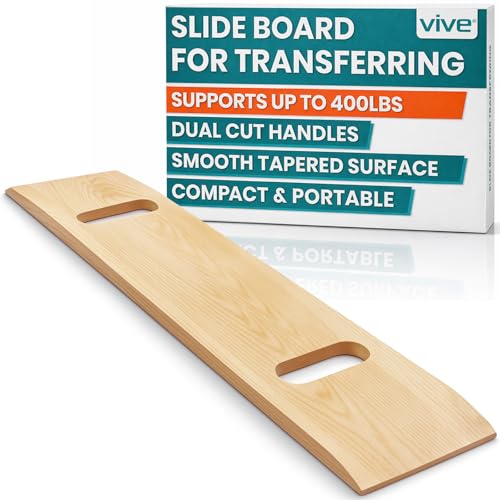
For most bed-to-wheelchair or chair-to-toilet transfers, a straight wooden transfer board is the right starting point — simple, durable, easy to use once technique is established.
We may earn a commission when you buy through links on this page. Read our affiliate disclosure.
Top 4 Picks — Find Your Situation
#1 · Best overall
Vive Health Wooden Transfer BoardBest for: Most daily bed-to-chair, wheelchair-to-toilet, and seated car transfers
#2 · Best curved
Platinum Health UltraSlide Transfer BoardBest for: Transfers where the wheelchair or chair arm cannot be removed
#3 · Best heavy-duty
Sammons Preston Bariatric Transfer BoardBest for: Seniors whose weight exceeds the rating of a standard transfer board
#4 · Best extra-long
Rehabilitation Advantage 40-Inch Birchwood Transfer BoardBest for: Wide gaps and large height differences, for users comfortably under 250 lb
The Vive Health wooden board is the strongest everyday pick: 30 inches, tapered ends, 440-pound capacity, and two cutout handles that give both the senior and caregiver something to hold. If the wheelchair has arms that obstruct a straight slide, a curved board clears the armrest without awkward positioning. For a larger body, a bariatric board rated to 600 pounds is the safe answer rather than exceeding a standard board's limit. If the gap itself is the problem, a 40-inch board buys reach a 30-inch one cannot — but check its weight rating, since longer doesn't mean stronger.
A closer look at our top pick
Vive Health Wooden Transfer Board
Best for: Most daily bed-to-chair, wheelchair-to-toilet, and seated car transfers
- Length
- 30 in
- Capacity
- 440 lb
- Handles
- 2 cutout grips
Independently researched · Updated October 2026
The Vive Health wooden board earns the top spot because it is the most useful single board for the widest range of everyday transfers. The 30-inch length covers standard bed-to-wheelchair, wheelchair-to-toilet, and car-seat gaps with safe overlap on both ends. The two cutout handles mean both the senior and the caregiver have a grip point, which is the thing that gives both parties confidence during the transfer.
Tapered ends slide under the person’s thigh without requiring them to lift fully, which reduces the caregiver’s load. Sealed and coated wood is smooth for sliding and durable for daily use without the maintenance concerns of cheaper boards that crack.
What we love
- 30-inch length covers most home transfer gaps
- Tapered ends slide under the user without lifting
- Two cutout handles for senior and caregiver grip
- Sealed wood slides smoothly; 440 lb capacity
Things to consider
- Wood slides best with smooth, low-friction clothing such as transfer shorts
- Not ideal for transfers around wheelchair arms — use a curved board instead
Right for you if
- ✓Most home transfers between two flat seated surfaces with a gap under 10 inches
- ✓The senior can maintain a sitting position and has some arm or trunk control
- ✓The wheelchair or chair arms can be removed for the transfer
Maybe skip it if
- !Fixed wheelchair arms that cannot be removed (get the curved board)
- !User weight above the standard board’s rating (get the bariatric board)
- !Gaps or height differences too large for a 30-inch board to keep a third of its length on each surface (get the 40-inch board)
What owners consistently report
Common praise
- +Caregivers say the tapered ends are much easier to slide under the user than blunt-ended boards
- +Both handle cutouts are consistently praised for giving everyone something to hold
- +The sealed wood holds up to daily use without cracking or splintering
Common gripes
- –Smooth trousers or transfer shorts are needed — rough fabric can slow the slide
- –Technique is important; have an OT demonstrate before the first independent use
- –Do not exceed the weight capacity; get the bariatric board if needed
Getting started
- →Position the board at an angle under the user’s thigh, not perpendicular to the seat edge
- →Ensure at least one-third of the board is on each surface before starting the transfer
- →Remove the wheelchair armrest on the transfer side if possible before positioning the board
How it compares
If the wheelchair armrests cannot be removed, the Platinum Health UltraSlide is the pick instead — its curve arcs around the arm without requiring removal. Choose the Vive flat board for the majority of home transfers where arms are removable; choose the curved board when fixed arms are the constraint.
How we picked
We compared 4 options. Our picks are based on manufacturer specifications, occupational-therapy guidance, and verified caregiver reviews — not independent clinical testing. We focused on the decisions that matter for safe transfers: board length (must span the gap with at least a third of the board on each surface), weight capacity matched to the user, surface smoothness for sliding, shape (flat versus curved for wheelchair arm clearance), and whether handles assist both the user and caregiver. Transfer boards should be introduced with the guidance of an occupational therapist or physiotherapist wherever possible, particularly after surgery or for people with significant weakness. Incorrect technique is a fall risk regardless of board quality.
Reviewed by Kutubuddin — who researches senior-care products and the real-world needs of caregivers and older adults.
Other picks, reviewed
Platinum Health UltraSlide Transfer Board
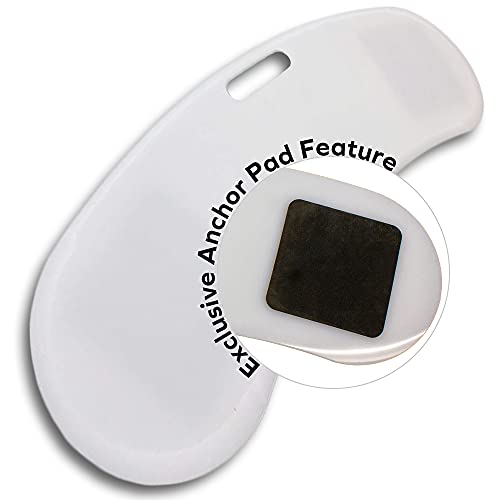
A straight board cannot always be positioned correctly when the wheelchair has fixed or non-removable arms. The UltraSlide is curved, so it arcs around the arm of a wheelchair or chair and bridges the seat without the arm being removed first. Two details separate it from a plain curved board: the hand hold sits in the centre of the board where the user can actually reach it mid-transfer rather than at the far end, and non-slip pads underneath both ends anchor it so it does not shift or slide out of place partway through. The surface is a non-porous plastic rather than wood, so it will not splinter or catch on clothing and it wipes clean instead of absorbing spills. The edges are tapered around the full perimeter, which makes moving onto and off the board gentler on fragile skin than a squared-off edge.
What we like
- Curve clears fixed wheelchair and chair arms without detaching the armrest
- Non-slip pads at both ends stop the board shifting mid-transfer
- Centre hand hold is within reach during the slide, not at the far end
- Non-porous plastic will not splinter and wipes clean
- Tapered all the way round — no square edge to catch skin or clothing
Keep in mind
- Platinum Health does not state a length or weight capacity for this board — check both against the user’s weight and the transfer gap before buying
- Less versatile than a straight board for transfers that do not involve armrests
- Shape
- Curved, centre hand hold
- Surface
- Non-porous plastic
- Edges
- Tapered full perimeter
- Grip
- Non-slip pads, both ends
Sammons Preston Bariatric Transfer Board

Standard transfer boards are typically rated to 300–440 pounds. When that rating is not enough, a board built for the load is the safe answer — not an attempt to use a standard board beyond its limit. The Sammons Preston bariatric board states its numbers plainly: 600 pounds, 35 inches long by 8 inches wide, cut from 5/8-inch birch plywood. The extra five inches over a standard 30-inch board also help when the gap between surfaces is wider than usual, because a third of the board still has to rest on each surface. It has two hand slots rather than one — a horizontal slot for leverage during the slide and a vertical one for carrying the board — and the wood is sealed and coated so it slides smoothly and wipes clean.
What we like
- 600 lb capacity, stated by the manufacturer rather than estimated
- 35 inches spans wider gaps than a standard 30-inch board
- Horizontal slot gives leverage during the slide; vertical slot is for carrying
- Sealed, coated birch plywood slides smoothly and wipes clean
Keep in mind
- Heavier and bulkier to store than a standard board
- Sealed wood still needs low-friction clothing to slide well — rough fabric slows the transfer
- Capacity
- 600 lb
- Size
- 35 x 8 in
- Board
- 5/8 in birch plywood
- Handles
- 2 slots (vertical + horizontal)
Rehabilitation Advantage 40-Inch Birchwood Transfer Board

A standard 30-inch board covers most home transfers, but not all of them. When the gap is wide — a high hospital-style bed down to a low wheelchair, or a chair the wheelchair cannot be pulled close to — a third of the board still has to rest on each surface, and 30 inches stops being enough. This one is 40 inches long by 8 inches wide, three-quarters of an inch thick, cut from birch with rounded edges and a sanded finish, and at 4.5 pounds it is the lightest board here. One thing to be clear about, because the listing is not: it is described as a bariatric board, but the stated capacity is 250 pounds — lower than every other board on this page, including the 440-pound Vive. Extra-long and heavy-duty are not the same thing. Choose this one for reach, and only when the user is comfortably inside 250 pounds; if weight is the constraint, the Sammons Preston board above is the right answer.
What we like
- 40 inches keeps a third of the board on each surface across gaps a 30-inch board cannot span
- Lightest board here at 4.5 lb — easy to position one-handed
- Birch with rounded edges and a sanded finish rather than rough multi-ply
- Reaches a low wheelchair from a high bed without perching the user on the very end
Keep in mind
- 250 lb capacity — the lowest on this page, despite the listing describing it as bariatric
- 40 inches is unwieldy in a small bathroom or a car doorway; this is a room-based board
- Length
- 40 in
- Size
- 40 x 8 x 0.75 in
- Capacity
- 250 lb
- Board weight
- 4.5 lb
What to look for
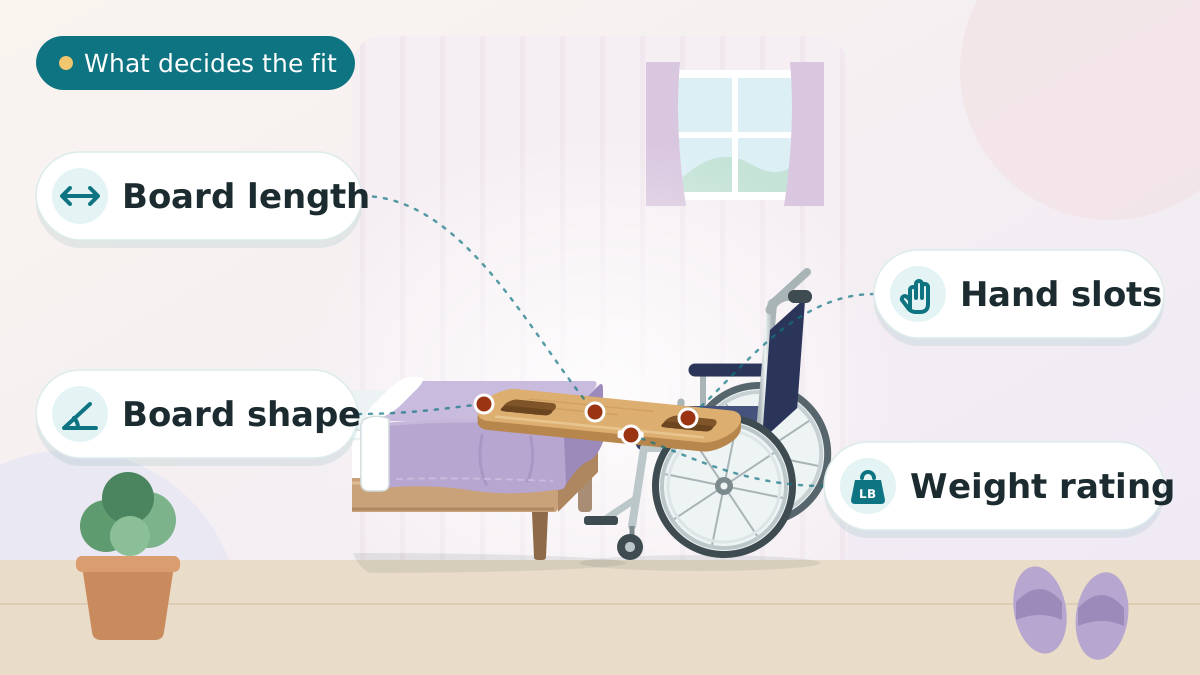
Length: the board must span the gap with room to spare
This is the most important spec. At least one-third of the board should sit on each surface — meaning for a 30-inch board, 10 inches must be on the starting surface and 10 inches on the destination. If the gap is wider than about 10 inches, a standard 30-inch board may not leave enough overlap to be safe; that is when an extra-long board matters.
Measure the distance between the wheelchair seat and the bed or chair edge before buying. Most home transfers use a gap of 6–10 inches, which a standard 30-inch board handles comfortably.
Shape: flat versus curved
- Flat board: works for most transfers where the wheelchair arms can be removed or lowered, or where the surfaces have clear access.
- Curved board: designed to arc around fixed or non-removable wheelchair arms, bridging the seat without requiring armrest removal.
If the wheelchair has removable arms (most standard wheelchairs do), a flat board is simpler. If the arms are fixed or the senior transfers from a non-wheelchair chair with wide arms, the curved board saves significant positioning difficulty.
Surface and friction: wood versus plastic
Sealed wood slides well and is durable, but clothing with a high coefficient of friction (rough fabrics) can make sliding harder. Smooth polypropylene or coated plastic boards are lower friction and easier to wipe down if moisture is a concern (bathroom transfers). Both work; the decision usually comes down to the specific transfer environment.
For shower or bath transfers, look for a board specifically rated for wet use rather than adapting a dry-transfer board.
Transfer technique matters as much as the board
A transfer board is not a magic solution — it is a tool that works when technique is correct. The senior should be sitting upright before starting, the board should be positioned at an angle (not perpendicular to the edge), body weight should shift forward and the person slides in a controlled arc, and neither the senior nor the caregiver should twist the back during the transfer.
For anyone new to using a transfer board — especially after surgery, a stroke, or with significant weakness — an occupational therapist should demonstrate and supervise the first several transfers. Incorrect use is a fall risk. A belt or gait belt on the senior adds a caregiver grip point for safer assisted transfers.
Read more:Elderly Parent Keeps Falling?Fear of Falling in the ElderlyHow to Walk with a Cane
Tips to Choose Transfer Boards
Short on time? Here are the key points to weigh before choosing, each covered in detail above:
- Length: the board must span the gap with room to spare
- Shape: flat versus curved
- Surface and friction: wood versus plastic
- Transfer technique matters as much as the board
Comparing options? See our guides to Best Canes for Seniors, Best Walkers for Seniors, and Best Rollators for Seniors.
Transfer boards versus transfer belts: when to use which
A transfer board is a horizontal surface the person slides across. A transfer belt (gait belt) is a belt around the person’s waist that gives the caregiver a secure grip during a standing or walking transfer. They serve different needs:
- Use a transfer board when the person cannot stand or needs to transfer between two seated positions.
- Use a transfer belt when the person can bear some weight and needs steadying during a stand-pivot transfer.
- Use both for a sliding transfer where the caregiver also needs the belt for body control.
Both should be used with proper technique, ideally demonstrated by a therapist first.
When transfer boards are and are not appropriate
Transfer boards work for people who can maintain a sitting position and bear some weight through their arms or have enough trunk stability to control the slide. They are not the right tool for people who cannot sit unsupported, have very limited arm strength, or are confused and may not follow instructions during the transfer. For those cases, a hoist, ceiling track lift, or powered transfer aid is the safer solution.
See our best wheelchairs for elderly guide for information on matching mobility equipment to the person’s actual ability level.
Frequently asked questions
A transfer board is a rigid flat or curved board that bridges the gap between two seated surfaces — for example, a wheelchair and a bed, or a car seat and a wheelchair. It lets a person slide from one to the other without fully standing, reducing the effort required by both the senior and the caregiver. It is typically used when a person cannot stand independently but has enough trunk control and arm strength to slide safely with support.
A flat board is used for transfers where the gap between surfaces is clear and the wheelchair arms can be removed. A curved board arcs around the arm of a wheelchair or chair, bridging the seat without requiring the arm to be detached. If the wheelchair has fixed or non-removable arms, a curved board is the shape that makes the transfer possible without awkward positioning.
At least one-third of the board must rest on each surface during the transfer. For a 30-inch board, that means 10 inches on each side, leaving 10 inches to span the gap. Most home transfers involve a gap of 6–10 inches, which a standard 30-inch board handles safely. For wider gaps or large height differences, an extra-long board provides safer overlap.
Some people with good arm strength and trunk stability can do sliding transfers independently with a transfer board. Many seniors need caregiver assistance for at least some of the motion. An occupational therapist should assess whether independent transfers are safe and, if so, demonstrate the technique. A gait belt worn by the senior gives the caregiver a safe grip point during an assisted transfer.
It depends on how the dementia affects the person. A transfer board requires the user to follow instructions, not pull on the caregiver, and slide in a controlled direction. If cognitive impairment means the person cannot follow these cues reliably, a powered hoist or ceiling track lift is the safer alternative. A transfer board used incorrectly is a fall risk for both the person and the caregiver.
Match the capacity to the user with margin to spare. Standard transfer boards are typically rated to 300–440 pounds. For a user above this range, a bariatric board with a reinforced, wider design is necessary — do not use a standard board beyond its rated capacity, as this risks collapse or breakage during the transfer. Confirm the exact model’s capacity before purchasing.
Smooth, low-friction clothing on the sitting surface — nylon or lycra transfer shorts, or smooth trousers — makes sliding significantly easier. Rough fabrics like denim or terrycloth create friction that slows the slide and increases the caregiver’s effort. Specialised transfer shorts are widely available and designed specifically for this purpose.
A dry-use transfer board (sealed wood or standard polypropylene) should not be used wet without checking whether it is rated for that environment. Some boards are specifically designed for shower or bath transfers with non-slip surfaces and water-resistant materials. Using a dry-use board in the shower risks slipping. Match the board to the intended environment.
Transfer boards may be covered as durable medical equipment under Medicare Part B when a doctor documents medical necessity and the supplier accepts Medicare assignment. Coverage and out-of-pocket costs vary. This is general information — confirm the specifics with the supplier and your Medicare plan before purchasing.
A transfer board requires the person to have trunk stability and the ability to follow instructions during the transfer. A hoist (mechanical or ceiling-mounted) is the safer alternative when the person cannot bear any weight, has very limited arm strength, cannot follow instructions, or has had multiple failed transfer attempts. For borderline situations, an occupational therapist should assess which is safer for the specific person and home layout.
The final verdict
For most home transfers, start with the Vive Health 30-inch wooden board — it is the most versatile, handles up to 440 pounds, and the tapered ends and two handles make it workable for both the senior and caregiver. If the wheelchair arms get in the way, switch to the Platinum Health UltraSlide: its curve clears the armrest and the centre hand hold is placed where the user can reach it. If the user is above a standard board’s rating, the Sammons Preston bariatric board is rated to 600 pounds and is 35 inches long, which also helps across a wider gap. If the gap rather than the weight is what defeats a 30-inch board, the Rehabilitation Advantage 40-inch board gives you the reach — check its 250-pound limit first, because it is the lowest here. But whatever board you choose: learn the technique first, ideally from an OT.
Our overall winner is the Vive Health Wooden Transfer Board. You can check the current price on Amazon.
Our Top 4 Picks at a Glance
Ready to choose? Here are the top 4 again.
Best overall
Vive Health Wooden Transfer Board
Best curved
Platinum Health UltraSlide Transfer Board
Best heavy-duty
Sammons Preston Bariatric Transfer Board
Best extra-long
Rehabilitation Advantage 40-Inch Birchwood Transfer Board
Affiliate links — we may earn a commission.
