
4 Best Bed Ladders for Elderly
 By Kutubuddin, Founder & Senior Care Researcher Updated October 2026
In this guide


A bed ladder is a fabric strap with rungs anchored to the foot of the bed — the person grips the rungs and pulls themselves up hand over hand from lying to sitting, restoring the independence to sit up without help. It suits someone with weak core muscles who still has reasonable arm and grip strength to pull.
We may earn a commission when you buy through links on this page. Read our affiliate disclosure.
Top 4 Picks — Find Your Situation
#1 · Best Overall
Vive Bed Ladder AssistBest for: Most seniors with weak core muscles but working arms who want to sit up unaided
#2 · Best for Fine-Tuning Reach
KkaFFe Bed Ladder Assist (6 Handles)Best for: Seniors who sit up in short pulls and want more handholds along the way
#3 · Best Grip
Leetye Mei Bed Ladder Assist (5 TPE Handles)Best for: Seniors whose hands tire or ache, who need a more comfortable grip
#4 · Best Heavy-Duty (Longest Strap)
Munzong Bed Ladder AssistBest for: Larger beds, heavier users, or anyone wanting the most strength margin
Just as important is who it doesn't suit: someone who can't grip or pull needs an electric adjustable bed or hands-on assistance instead. What matters in a good one is sturdy rungs and webbing, the right length, enough weight capacity, and a secure anchor to a compatible bed frame. Our overall pick is the Vive Bed Ladder Assist.
A closer look at our top pick: the Vive Bed Ladder Assist
Vive Bed Ladder Assist
Best for: Most seniors with weak core muscles but working arms who want to sit up unaided
- Type
- Strap ladder with rungs
- Length
- Adjustable
- Grip
- Sturdy, easy-grip rungs
- Anchor
- Foot of bed frame
Independently researched · Updated October 2026
The Vive Bed Ladder Assist wins by being the most dependable all-round strap ladder. Its webbing is durable and its rungs are sturdy and easy to grip, so a senior can climb hand over hand from lying flat to sitting upright — recovering the simple independence of sitting up without calling for help. The length adjusts to fit the bed and the person's reach, and it anchors firmly to the foot of the frame.
It strikes the right balance of build quality and value, which is why it's the default recommendation. The caveats are inherent to the category rather than the product: it needs a solid bed frame to anchor to, and the person must have the arm and grip strength to pull. Within that scope, it's sturdy, well-made, and reassuring to use day after day.
What we love
- Restores independent sitting up
- Sturdy, durable build
- Adjustable to bed and reach
- Good value from a trusted brand
Things to consider
- Needs a solid bed frame to anchor
- Requires arm and grip strength
- Check the anchor stays tight over time
Right for you if
- ✓You have weak core muscles but working arms
- ✓You want to sit up in bed without help
- ✓Your bed has a solid frame to anchor to
Maybe skip it if
- !You can't grip or pull — an adjustable bed is the answer
- !Your hands tire or ache when gripping — the Leetye Mei's wider handles suit
- !You need higher capacity — the Munzong is listed at 300 lb
What owners consistently report
Common praise
- +Owners value regaining independent sitting up
- +The rungs and webbing are described as sturdy
- +Setup is straightforward
Common gripes
- –It needs a solid bed frame to anchor to
- –It requires arm and grip strength to use
- –Re-check that the anchor stays tight
Getting started
- →Loop and secure it around a solid part of the foot frame
- →Adjust the length to the bed and the person's reach
- →Test it holds, then supervise the first few uses
How it compares
The KkaFFe ladder is the pick if each pull only gains a little: it has six handles instead of the usual four or five, and it fastens to the frame with two buckles. The Vive is the more established build and our default for most people. Choose the KkaFFe for more handholds, the Vive for a dependable everyday ladder.
How we picked
We compared bed ladders on what matters for safe, independent use: rung sturdiness and grip, webbing durability and stitching, adjustable length and number of rungs, weight capacity, anchoring security and bed compatibility, and ease of setup. Our picks draw on manufacturer specs and owner feedback — not hands-on lab testing. The single most important factor is suitability: a bed ladder requires arm and grip strength to use at all.
Reviewed by Kutubuddin — who researches senior-care products and the real-world needs of caregivers and older adults.
Other picks, reviewed
KkaFFe Bed Ladder Assist (6 Handles)

Six handles instead of the usual four or five, which means more, closer-spaced places to grip on the way up — helpful when each pull only gains a little. The length adjusts so the first handle sits at the person's waist when lying down, and it fastens to the bed frame with two adjustable buckles rather than a knot, which keeps it steadier under a pull. No tools, and it comes off easily to take on a trip.
What we like
- Six handholds for a gradual climb
- Buckle anchor rather than a knot
- Tool-free and portable
- Length sets to the person's reach
Keep in mind
- No weight capacity stated on the listing
- Needs a solid frame at the foot of the bed
- Still needs arm and grip strength
- Type
- Strap ladder, 6 handles
- Grip
- Non-slip handles
- Length
- Adjustable (listed up to ~80 in)
- Anchor
- Two buckles to the bed frame
- Capacity
- Not stated — check before buying
Leetye Mei Bed Ladder Assist (5 TPE Handles)
The handles are the point here: wide, ergonomic grips in anti-slip TPE rather than bare plastic, shaped to spread the load across the hand and ease strain on the wrists while pulling up. The nylon ladder adjusts with a slide buckle, fits most bed frames without tools, and is light enough to move between beds.
What we like
- Wider, softer handles than plain rungs
- Anti-slip grip surface
- Easy length adjustment
- Light and portable
Keep in mind
- No weight capacity stated on the listing
- Five handles — fewer holds than six-handle ladders
- Requires a solid frame and arm strength
- Grip
- 5 wide, anti-slip TPE handles
- Type
- Nylon strap ladder
- Length
- Adjustable, slide buckle
- Anchor
- Bed frame, no tools
- Capacity
- Not stated — check before buying
Munzong Bed Ladder Assist
The longest and highest-capacity strap here. At 82 inches, with a further 53-inch adjustable extension, it reaches down a larger bed than the others, and the listed 300 lb capacity gives the most strength margin in this set. Nylon webbing with EVA foam handle grips, metal adjustment buttons rather than plastic, and no tools to fit — you bind it to the frame and set the length.
What we like
- Longest strap here at 82 inches
- Highest listed capacity at 300 lb
- Metal adjustment buttons rather than plastic
- Fits bed sizes from twin to king, if the bed has a solid frame to anchor to
Keep in mind
- Capacity is manufacturer-listed, not independently verified
- Long strap needs more adjusting on a smaller bed
- Still needs arm and grip strength and a solid frame
- Length
- 82 in (208 cm), plus 53 in adjustable strap
- Width
- 4.5 in (11.5 cm)
- Capacity
- 300 lb (manufacturer listed)
- Material
- Nylon webbing, EVA foam grips
- Anchor
- Binds to bed frame, no tools
What to look for
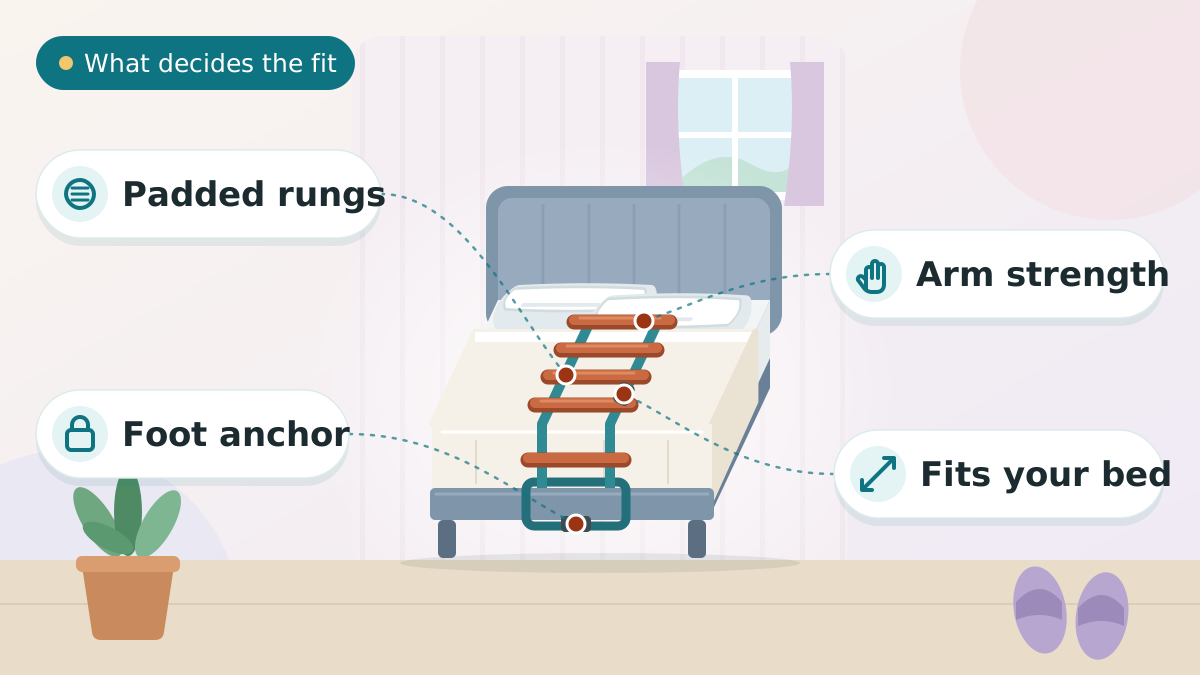
Is a bed ladder right for the person? The key question
Before anything else, check that a bed ladder actually fits the person's abilities, because it only works one way.
A bed ladder is used by pulling up hand over hand, so the person needs reasonable arm and grip strength even though their core or abdominal muscles may be weak — it's ideal for exactly that profile. But it is not suitable for someone who can't grip or pull. For them, an electric adjustable bed that raises the head, or caregiver assistance, is the right answer. Be honest about this before buying.
Rungs, grip, and length
The rungs are where the work happens, so comfort and reach matter.
Sturdy, easy-to-grip rungs help weak or arthritic hands, and padded grips are gentler still. Enough rungs and an adjustable length let the person climb all the way up to a full sitting position; match the length to the bed and to how far they can comfortably reach.
Weight capacity and durable webbing
The strap takes the person's full pulling load, so strength is a safety issue.
Check the weight capacity and choose one rated comfortably above the user's weight. Durable, washable webbing with strong stitching matters both for safety and for how long the ladder lasts under repeated pulling.
Anchoring and bed compatibility
A ladder is only as safe as its anchor, and not every bed works.
The ladder loops around the foot of the bed frame, so the bed must have a solid frame or footboard to anchor to. Platform beds without a suitable frame, and some adjustable beds, may not work. Confirm compatibility, and make sure the anchor is secure and tested before anyone relies on it.
Setup and safe use
A little care at setup helps reduce the risk of a dangerous failure later.
- Attach the ladder firmly to a solid part of the frame.
- Test that it holds before the person pulls with full weight.
- Supervise the first few uses until they're confident.
- Re-check the anchor and webbing regularly for wear or loosening.
- Pair it with a bed assist handle if they also need help getting out of bed.
Read more:Bed Rail Safety for SeniorsElderly Parent Keeps Falling?Fear of Falling in the Elderly
Tips to Choose Bed Ladders
Short on time? Here are the key points to weigh before choosing, each covered in detail above:
- Is a bed ladder right for the person? The key question
- Rungs, grip, and length
- Weight capacity and durable webbing
- Anchoring and bed compatibility
- Setup and safe use
Comparing options? See our guides to Best Canes for Seniors, Best Walkers for Seniors, and Best Rollators for Seniors.
Who a bed ladder helps — and who needs something else
Matching the tool to the person matters more here than with most aids, because a bed ladder has a clear scope.
It's ideal for someone with weak abdominal or core muscles but working arms — after surgery or illness, or with general weakness — who wants to sit up on their own. It is not suitable for a person without arm or grip strength, or someone confused who can't follow the pulling motion; they're better served by an electric adjustable bed that raises the head at the press of a button, a caregiver, or a hospital bed with an overhead trapeze. And if getting out of bed, rather than just sitting up, is the difficulty, a bed assist handle or bed rail is the right tool.
Bed ladders vs other bed-mobility aids
Each bed-mobility aid solves a specific problem, so it helps to know which does what:
- Bed ladder: pull yourself up from lying to sitting.
- Bed assist handle: push up to standing at the edge of the bed.
- Bed rail: help prevent rolling out and give a longer grip.
- Electric adjustable bed: raise the head powered, for those who can't pull.
- Leg lifter: help lift the legs into bed.
Pick the tool that matches the specific difficulty, and an occupational therapist can advise. Our safe bedroom setup guide covers the wider picture.
Frequently asked questions
A bed ladder is a strap or webbing with rungs, like a small rope ladder, that anchors to the foot of the bed. A senior grips the rungs and pulls themselves up hand over hand from lying down to sitting upright. It's designed to restore the independence to sit up in bed without a caregiver's help, and it suits people with weak core muscles who still have working arms.
They provide a series of graspable rungs to pull on, so instead of relying on weak abdominal muscles to sit up, the person uses their arms to climb hand over hand to a sitting position. This makes a movement that's become difficult or impossible achievable again, and it lets many seniors regain independence they'd lost, reducing how often they need to call for assistance.
Most are. The strap length typically adjusts so the ladder fits different bed sizes and suits the person's reach and how far up they need to climb. When setting one up, adjust it so the first rung is within easy reach when lying down and the top rung brings them to a comfortable seated position. Check the adjustable range against your bed before buying.
They're safe when the person is suited to one and it's anchored properly. The key is that they need adequate arm and grip strength to pull up, and the ladder must be securely attached to a solid bed frame and tested before use. Supervise the first few uses, re-check the anchor and webbing regularly, and don't use one for someone who can't grip and pull safely.
Choose one rated comfortably above the user's weight, since the strap bears their full weight during the pull. Capacities vary by model, and some listings don't state one; our heavy-duty pick, the Munzong, is listed at 300 lb. Because the load is dynamic — a pulling force rather than a static rest — it's wise to leave a generous margin and to inspect the webbing and stitching regularly.
Sometimes, but not always, so check carefully. An adjustable bed's moving frame and motors can interfere with anchoring a ladder securely, or create pinch points. If the bed already raises the head electrically, a ladder may be unnecessary anyway. Confirm the ladder can be anchored to a fixed, solid part of the frame, and if in doubt, rely on the bed's own head-raising function.
Loop and fasten the anchoring strap securely around a solid part of the bed frame at the foot, then adjust the ladder's length so the rungs are within reach. Before anyone uses it, pull firmly on the ladder to confirm the anchor holds and nothing slips. Test it with gradual weight first, supervise initial uses, and re-check the attachment regularly, as straps can loosen.
Flat strap (webbing) ladders with rigid rungs are generally easier and more comfortable to grip than thin rope, and they tend to be sturdier and less likely to twist. Rope versions are lighter and pack down smaller. For most seniors, a webbing ladder with solid, easy-to-grip rungs — ideally padded for arthritic hands — is the better, safer choice.
Only if the platform bed has a solid frame or footboard to anchor the strap to. Many platform beds lack a suitable structure at the foot, which makes secure anchoring difficult or impossible. Check your bed's construction before buying, and if there's nowhere solid to attach the ladder, consider an electric adjustable bed or a different mobility aid instead.
Inspect the ladder regularly and replace it whenever you see fraying webbing, weakened or stretched stitching, cracked rungs, or any sign the anchor is wearing. With normal use a quality ladder lasts a long time, but because it bears the person's full weight, don't wait for a failure — replace it at the first sign of significant wear to keep it safe.
The final verdict
For most seniors, the Vive Bed Ladder Assist is the best choice — sturdy, adjustable, and good value. Choose the KkaFFe for six handholds, the Leetye Mei for the most comfortable grip, or the Munzong if you need the longest strap and the highest listed capacity. But the most important step isn't the product: make sure the person has the arm and grip strength to pull up. A bed ladder is perfect for weak core muscles with working arms, and the wrong choice for someone who can't pull — who needs an electric adjustable bed or assistance instead. Anchor it to a solid bed frame, test it before full use, and re-check it regularly.
Our overall winner is the Vive Bed Ladder Assist. You can check the current price on Amazon.
Our Top 4 Picks at a Glance
Ready to choose? Here are the top 4 again.
Best Overall
Vive Bed Ladder Assist
Best for Fine-Tuning Reach
KkaFFe Bed Ladder Assist (6 Handles)
Best Grip
Leetye Mei Bed Ladder Assist (5 TPE Handles)
Best Heavy-Duty (Longest Strap)
Munzong Bed Ladder Assist
Affiliate links — we may earn a commission.
