

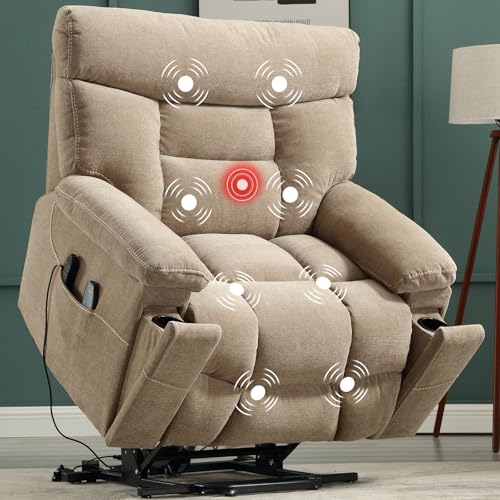
Rent a Lift Chair or Buy One? Where the Break-Even Sits

Rental rates below are quoted from named medical equipment suppliers current at the time of writing. Prices vary by region and change, so treat them as a realistic range rather than a quote.
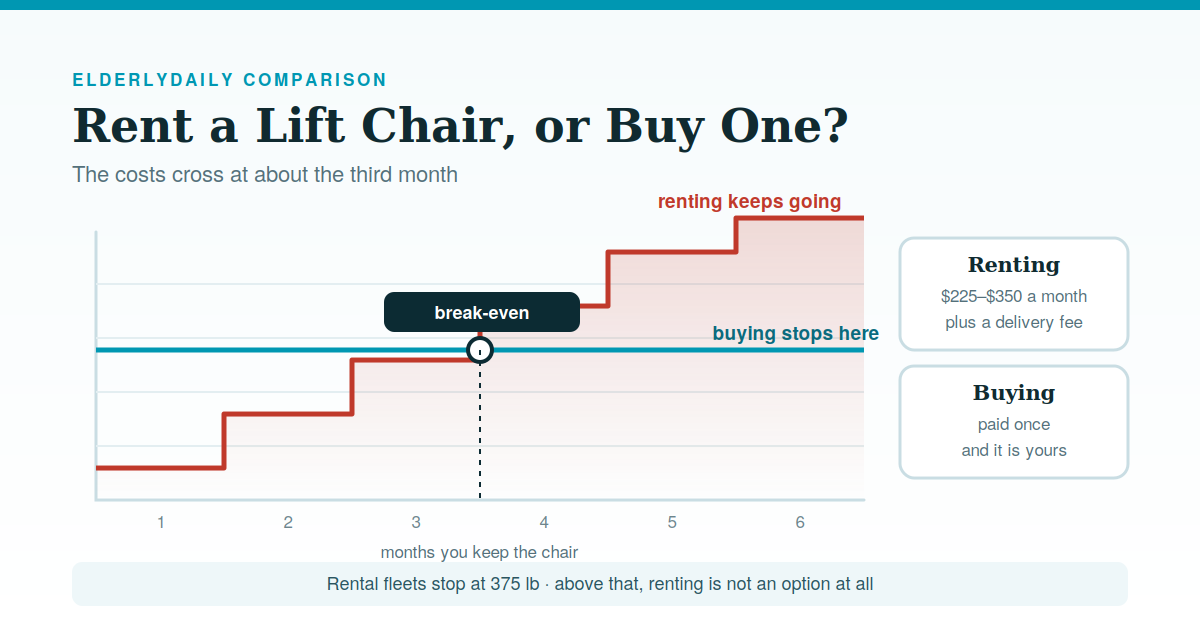
Renting looks like the cautious choice and often is. But the sums turn over faster than most families expect, rental fleets do not stock the sizes some people need, and there is a third option nobody at a medical supply shop is going to mention.
Key takeaways
- Lift chair rentals run roughly $225 to $350 a month, with heavy-duty models around $500, and several suppliers add a flat delivery and setup fee of about $150.
- The break-even against buying usually falls around the third month. Beyond that, renting costs more every month and you own nothing.
- Medicare pays nothing toward a rental. It may cover the lifting mechanism when you buy — so renting forfeits the only help available.
- Rental fleets stop at about 375 lb, with 22-inch seats. If the person needs more capacity or width, renting is not on the table.
- Before either, ask about a loan closet — free medical equipment lending exists in most areas and almost nobody is told about it.
Quick answer
Is it cheaper to rent or buy a lift chair?
Renting is cheaper only for short periods. At $225 to $350 a month plus a delivery fee of around $150, the cost of renting passes the cost of buying at roughly three months. Rent if you need it for a defined recovery of a few weeks; buy if the need is open-ended or progressive. And check whether a local loan closet will lend you one free before you pay for either.
What renting actually costs
Rental pricing is remarkably consistent across suppliers once you look, which makes planning easier than it first appears. These are current rates from named medical equipment companies rather than estimates.
| Supplier | Standard chair | Heavy-duty | Delivery and setup |
|---|---|---|---|
| You Can Home Medical (Colorado) | $300 / month | $500 / month | $150 flat |
| Alpine Home Medical (Utah, Idaho) | $250 / month | $500 / month | $150 flat |
| MI MED | $225 / 4 weeks | $350 / 4 weeks (infinite position) | Not stated |
| My Medical House | $229 / month | $249 / month | Not stated |
| Preston Home Medical (Florida) | From $275 / month (infinite position) | Not stated | Included within 10 miles |
Where the break-even falls
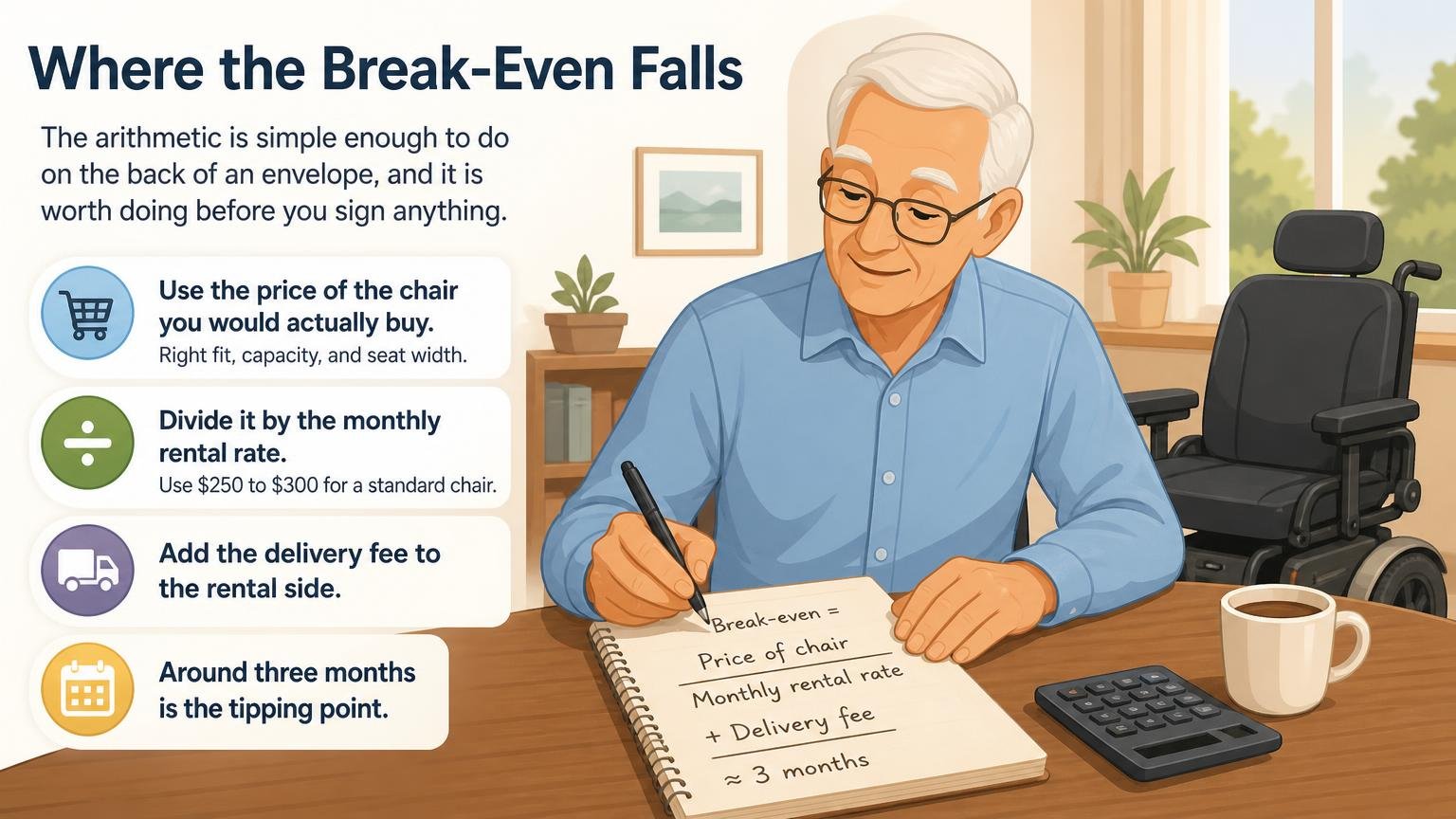
The arithmetic is simple enough to do on the back of an envelope, and it is worth doing before you sign anything.
- Take the price of the chair you would actually buy. Not the cheapest listing — the one that fits the person, at the right capacity and seat width.
- Divide it by the monthly rental rate. Use $250 to $300 for a standard chair.
- Add the delivery fee to the rental side, not the purchase side. That $150 is spent whether you keep the chair a month or six.
For most chairs in the range families actually buy, that division lands at around three months. Before three months, renting is cheaper and you have nothing to store afterwards. After three months, you are paying every month for something you hand back at the end.
We deliberately have not printed a chair price here, because they move constantly and any figure would be out of date within weeks. Open the chair you are considering, take today’s price, and do the division yourself. It takes ten seconds and it is the only number that matters.
Good to know
If the answer to "how long will they need it?" is "we do not know", that usually means longer than three months. Open-ended needs almost always favour buying.
Medicare pays nothing toward a rental
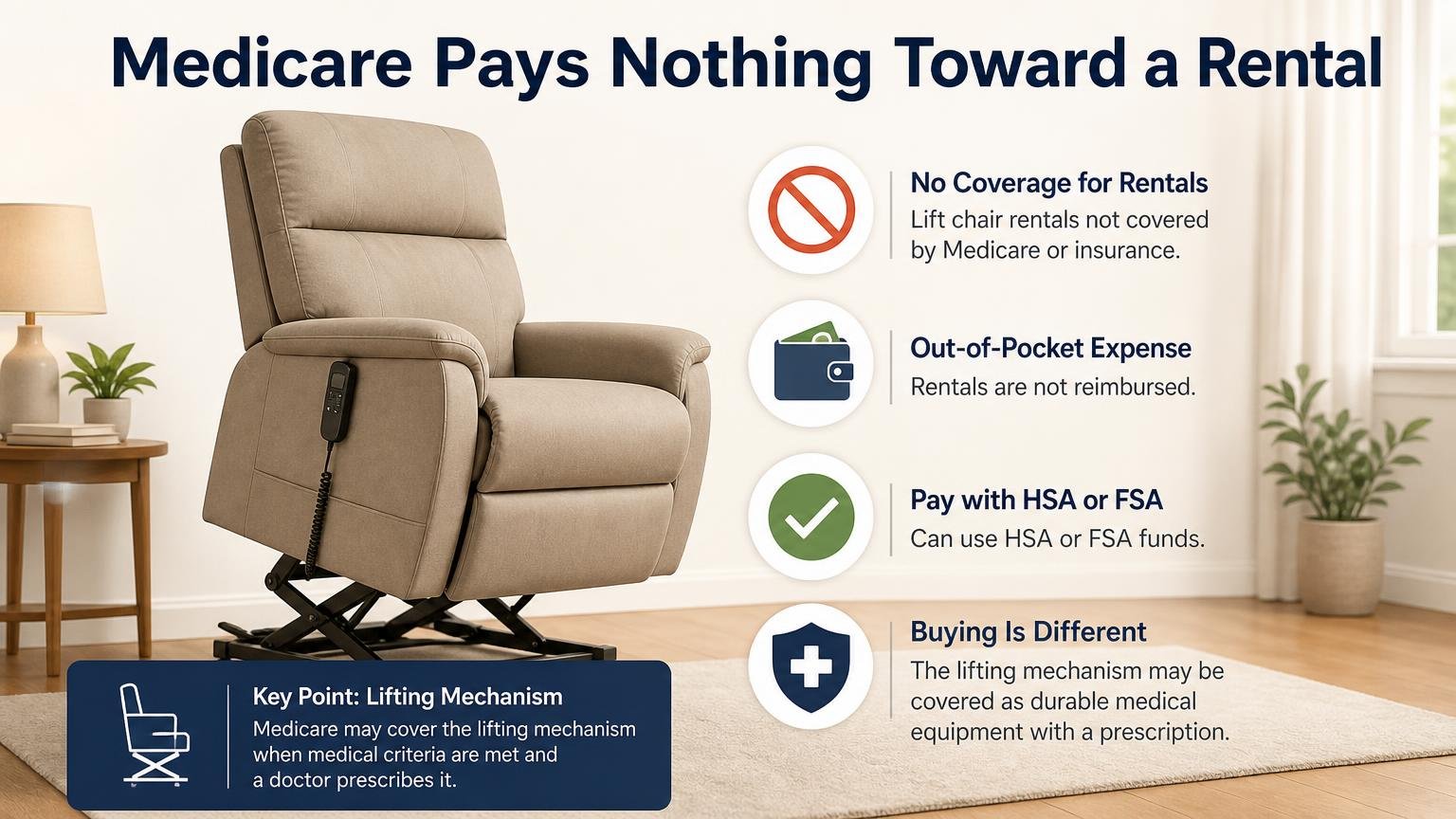
This is the detail that changes the sum, and no rental page leads with it.
Medical equipment suppliers state it plainly in their own rental terms: lift chair rentals are not covered by insurance or Medicare and are an out-of-pocket expense. You can generally pay with HSA or FSA funds, which softens it, but there is no reimbursement.
Buying is different. Medicare treats the lifting mechanism as durable medical equipment. Where the medical criteria are met and a doctor prescribes it, that mechanism may be covered under Part B — not the chair, not the upholstery, not the recline function, but the part that does the lifting. You buy from a Medicare-enrolled supplier and claim on that portion.
So renting does not merely cost more past three months. It forfeits the only financial help available in the whole decision. If cost is the reason you are considering renting, that is worth knowing before you commit.
Rental fleets stop at about 375 lb
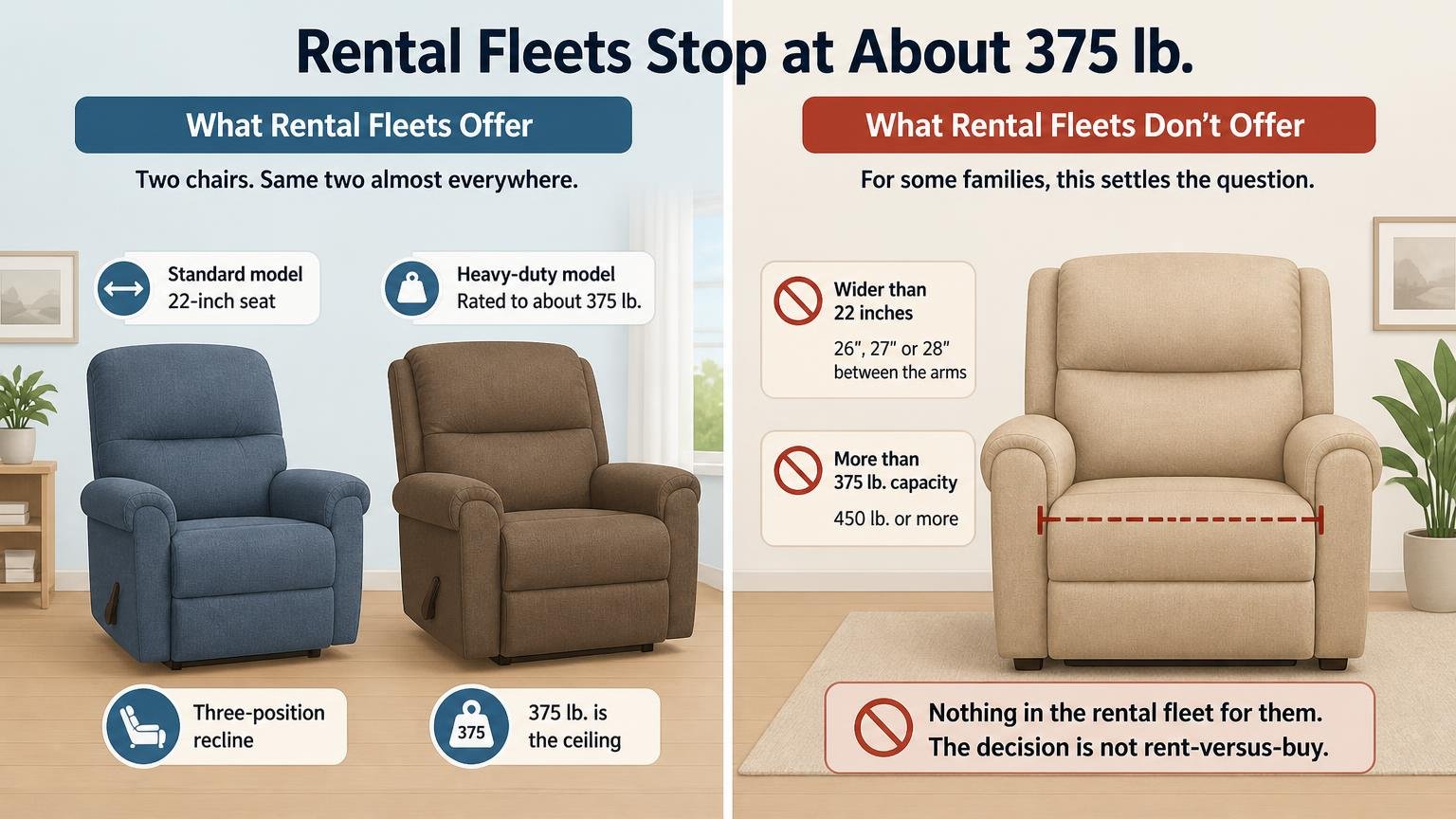
For some families this settles the question before cost comes into it.
Rental companies stock two chairs, and they are the same two almost everywhere: a standard model with a 22-inch seat and a three-position recline, and a heavy-duty model rated to about 375 lb. That is the ceiling.
A standard recliner seat is 20 to 22 inches between the arms. If the person needs 26, 27 or 28 inches, or a capacity of 450 lb or more, there is nothing in the rental fleet for them. The decision is not rent-versus-buy at all — it is buy, or manage without.
That is worth checking early, because it is a phone call rather than a research project. Ask the supplier what their heavy-duty chair is rated to and how wide the seat is, before you plan around renting one. If the answer rules it out, our heavy-duty and bariatric lift chair review covers what is available to buy and, more importantly, the three measurements that decide whether a chair fits.
Watch out
Do not assume a rental heavy-duty chair will suit a larger user. Ask for the capacity and the seat width in inches, and measure the person’s hip width sitting down before you accept a delivery slot.
When renting is clearly the right call
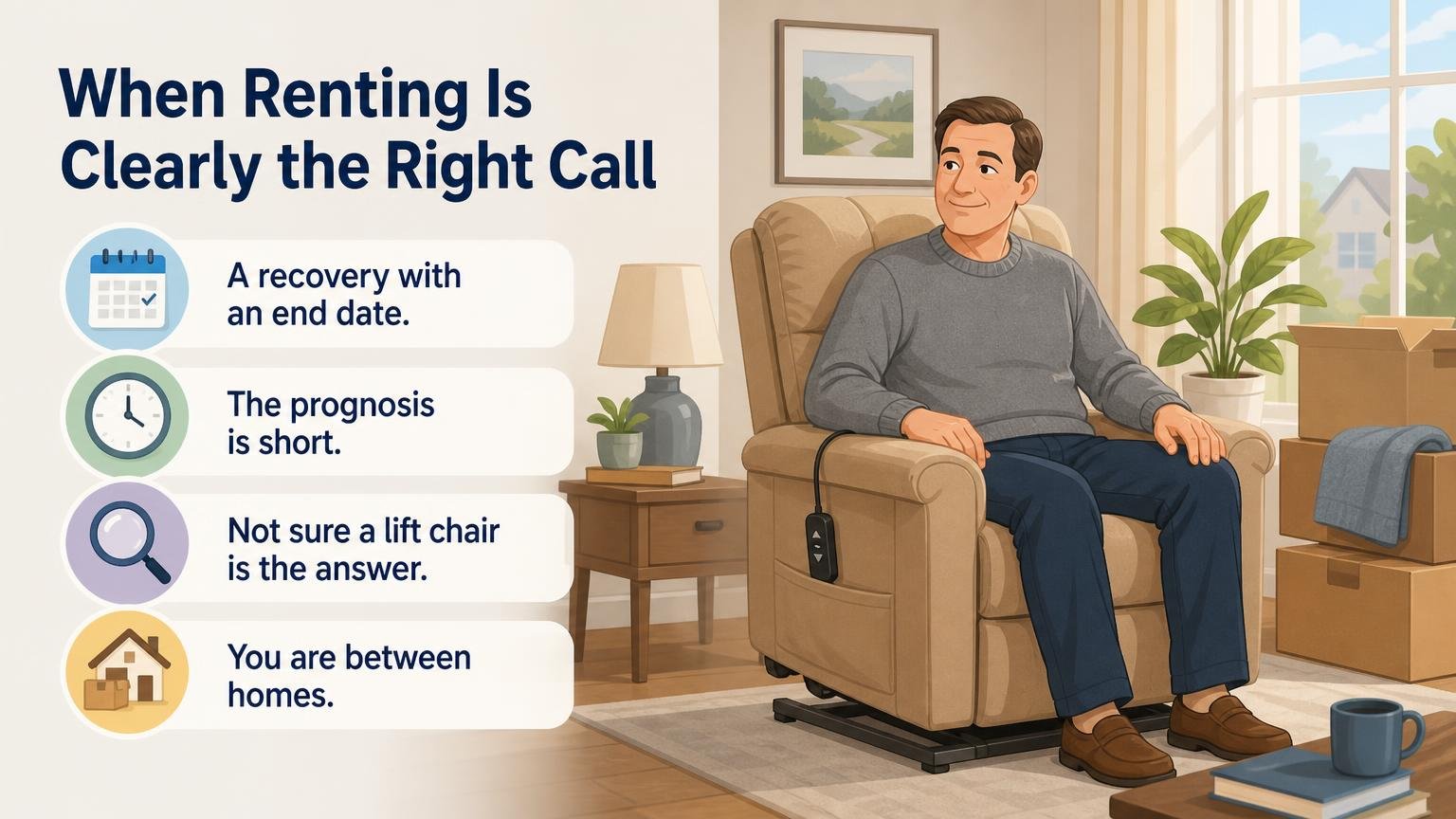
There are situations where renting is not merely acceptable but obviously correct.
- A recovery with an end date. Four to eight weeks after a hip or knee replacement, back surgery or an abdominal operation is the classic case. You need the chair, then you genuinely do not.
- You are not sure a lift chair is the answer. A month of renting tells you whether it helps, for a fraction of the cost of finding out the expensive way.
- Delivery and setup matter more than the money. Suppliers deliver into the room, assemble the chair, show you how it works and take it away afterwards. Buying online means three boxes at the kerb and a 100 to 200 lb object to assemble yourself.
- The prognosis is short. In end-of-life care, buying furniture that will be needed for weeks is the wrong shape of decision. Hospice programmes will often supply the equipment anyway — ask first.
- You are between homes, or waiting for a custom-sized chair to be built.
When buying is clearly the right call
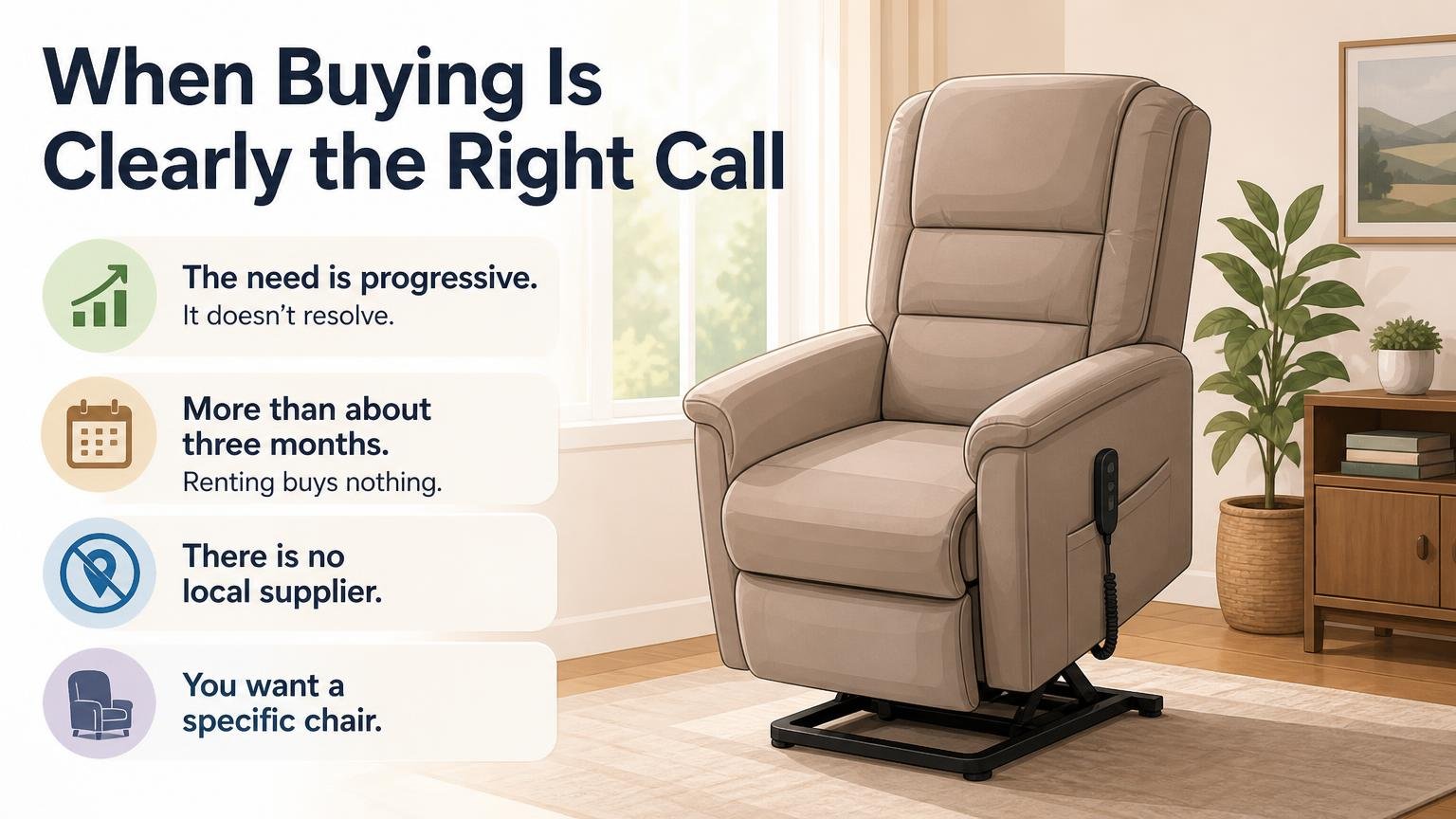
- The need is progressive. Arthritis, Parkinson’s, heart failure and general frailty do not resolve. If the reason for the chair will still be there next year, renting is a subscription to a problem.
- More than about three months. Past the break-even, every month of rental is money that bought nothing.
- Capacity or width beyond the rental fleet. Above 375 lb or beyond a 22-inch seat, buying is the only route.
- There is no local supplier. Rental is a local business. Outside metropolitan areas the option may simply not exist, and the "near me" search that brought you here may come back empty.
- You want a specific chair. Rentals give you whatever is in the warehouse. Buying lets you match the seat depth to the person’s height, which is the measurement most often got wrong.
If you have landed on buying, the two chairs above are our picks, and the full review explains the three measurements to take first — capacity, seat width and user height. Getting the third one wrong is the commonest way to end up with a chair that does not do its job.
The free option nobody mentions
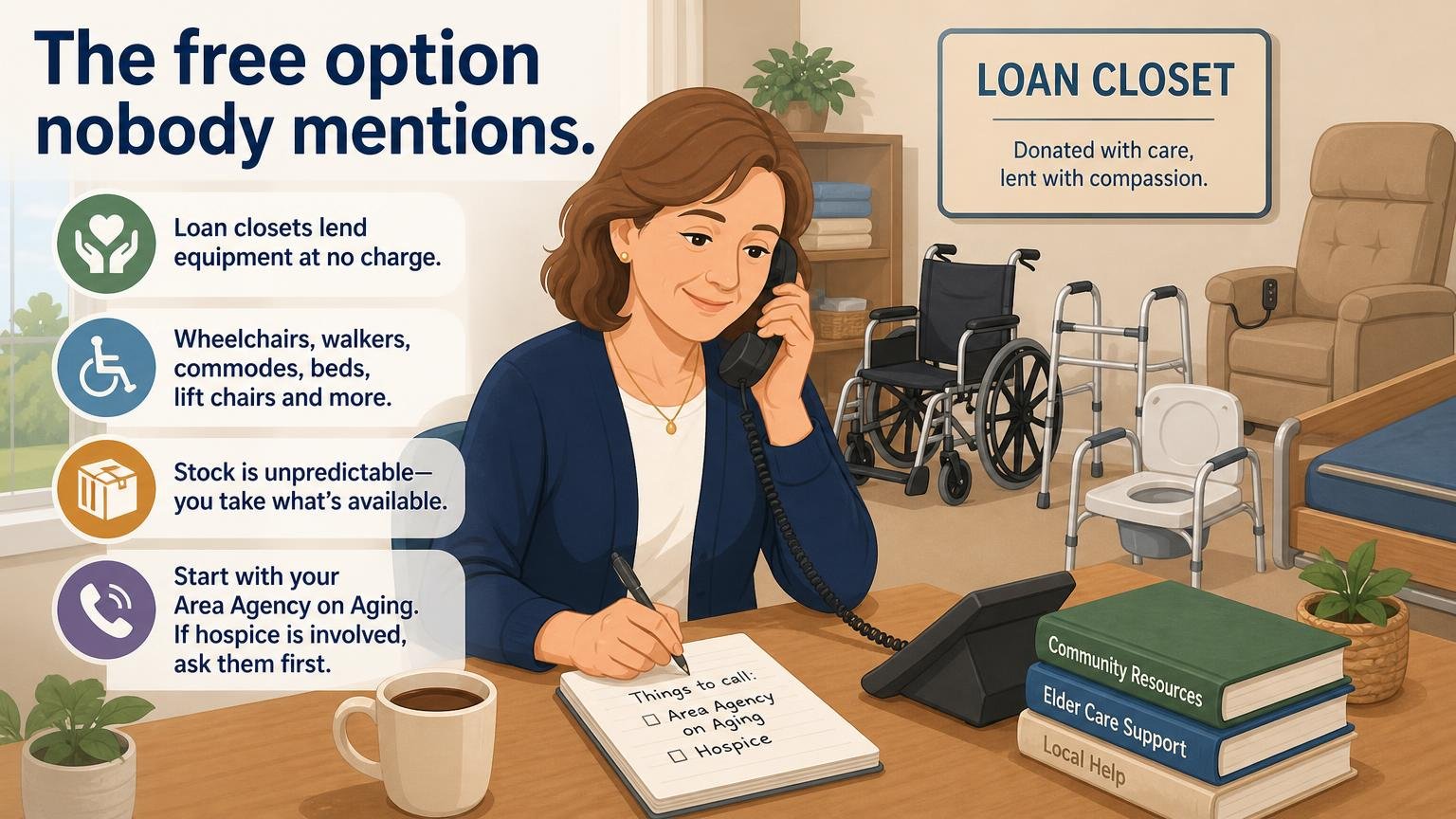
Before you pay for either, spend an hour on the phone. Medical equipment lending exists almost everywhere and is one of the least publicised resources in elder care.
Loan closets are run by charities, faith groups, service clubs, Area Agencies on Aging and local health organisations. They hold donated equipment — wheelchairs, walkers, commodes, hospital beds and sometimes lift chairs — and lend it at no charge for as long as it is needed. Stock is unpredictable and you take what is available, which is exactly why it is worth asking early rather than late.
- Start with your Area Agency on Aging. Every region in the United States has one, and they know what is available locally.
- Ask the hospital discharge planner or social worker before discharge, not after. They do this weekly and they know who lends what.
- If hospice is involved, ask them first. Equipment is usually part of the care package.
- Try local service clubs and faith organisations. Many run loan programmes that are never advertised online.
The chair you are lent will not be the one you would have chosen. For a six-week recovery, that matters far less than the several hundred dollars you did not spend.
The bottom line
Rent if the end date is known and close. A defined recovery of a few weeks, with delivery, setup and collection included, is exactly what rental is good at.
Buy if the need is open-ended, progressive, or longer than about three months. The sums turn over faster than people expect, and buying is the only route that Medicare may contribute to at all.
Buy if the person needs more than 375 lb or a wide seat, because renting is not available to you.
And ask about a loan closet before doing either. The worst outcome of that phone call is that you learn nothing and carry on as planned.
Frequently asked questions
How much does it cost to rent a lift chair?
Roughly $225 to $350 a month for a standard or infinite-position chair, and around $500 a month for a heavy-duty model. Several suppliers charge a flat delivery and setup fee of about $150 on top, though some include delivery within a short radius. Weekly rates exist too, at around $115 to $125.
Is it cheaper to rent or buy a lift chair?
Renting is cheaper for the first couple of months and more expensive after that. Divide the price of the chair you would buy by the monthly rental rate, and add the delivery fee to the rental side. In most cases the lines cross at around three months. After that you are paying every month for something you will hand back.
Does Medicare cover a lift chair rental?
No. Suppliers state plainly that lift chair rentals are not covered by Medicare or insurance and are an out-of-pocket expense. Medicare may contribute toward the lifting mechanism when a chair is purchased, where the medical criteria are met and a doctor prescribes it. So renting forfeits the only financial help available. Rentals can usually be paid for with HSA or FSA funds.
Can I rent a bariatric or heavy-duty lift chair?
Up to a point. Rental fleets typically offer a standard chair with a 22-inch seat and a heavy-duty model rated to about 375 lb. If the person needs 450 lb or more, or a seat wider than about 24 inches, renting is generally not available and buying is the only route.
Can I get a lift chair for free?
Sometimes, and it is worth an hour of phone calls before spending anything. Many areas have medical equipment loan closets run by charities, faith groups, Area Agencies on Aging or local health organisations, lending donated equipment at no charge. Hospice programmes usually supply equipment for patients in their care. Start with your Area Agency on Aging or the Eldercare Locator service.
How long should I rent a lift chair for after surgery?
Rental is at its most sensible for a defined recovery with an expected end date — commonly four to eight weeks after hip, knee, back or abdominal surgery. If your surgeon expects a longer recovery, or the underlying condition will not improve, run the break-even sum before committing.
Do rental companies deliver and set up the chair?
Usually yes, and it is one of the genuine advantages. Suppliers typically deliver into the room, assemble the chair and demonstrate it, then collect it when you are finished. Several charge a flat fee of around $150 for this, and some include delivery within a set radius. Buying online means the boxes stop at the kerb.
Can I rent to own a lift chair?
Some suppliers offer it and it is worth asking about, but read the terms. Rent-to-own usually costs more in total than buying outright, and the credit toward purchase may be partial rather than the full amount paid. If you already expect to need the chair for more than three months, buying directly is normally cheaper.
