
5 Best Resistance Bands for Seniors
 By Kutubuddin, Founder & Senior Care Researcher Updated October 2026
In this guide
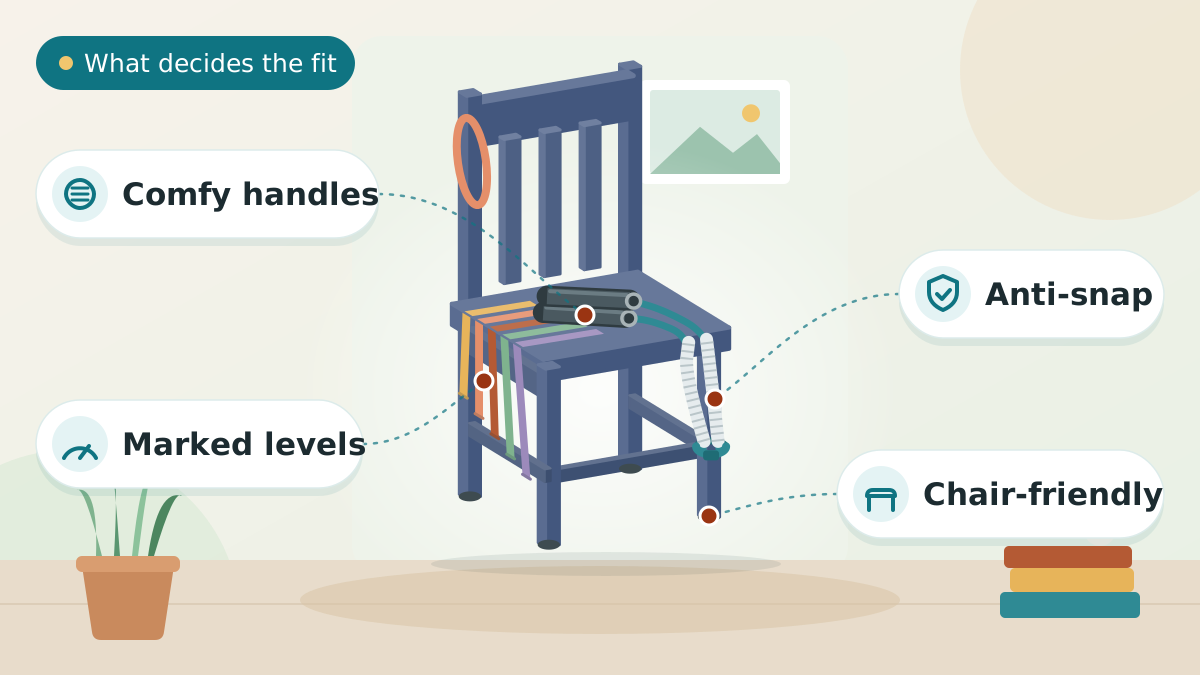
Resistance bands are one of the safest, most practical ways for an older adult to build strength — low-impact, gentle on the joints, and usable right from a chair. The best band for a senior comes down to grip comfort, clearly marked resistance, and safety features like anti-snap cords. Our overall pick is the therapist-trusted TheraBand system; if arthritis or weak grip is the concern, the handled Bodylastics set is easier to hold; and the Fit Simplify loops are the best low-cost way to start. Below are five senior-friendly options compared on comfort, safety, and value — start light, and check with a doctor before beginning.
We may earn a commission when you buy through links on this page. Read our affiliate disclosure.

Our Top Pick
TheraBand Professional Resistance Bands
TheraBand has been the standard in physical-therapy clinics for decades, and it is still the safest first choice for most seniors.
- The color-coded standard physical therapists recognize
- Consistent, predictable resistance between bands
- Latex-free versions for sensitive skin
- Flat design wraps easily around hands
- CLX option has a built-in anchor loop
- Excellent for rehab, stretching, and light strength
Type
Flat band (CLX loop option)
Resistance
Color-coded levels
Material
Latex (latex-free option)
Grip
Wrap, loop, or anchor
Best for
PT, rehab & versatility
Top 5 Picks — Find Your Situation
- TheraBand Professional Resistance BandsBest Overall
Best forSeniors who want the therapist-trusted standard, especially for rehab, stretching, and gentle strength
- The same color-coded system used in physical-therapy clinics
- Reliable color-coded resistance
- Very versatile (wrap, loop, or anchor)
Watch out: Flat bands need some grip strength to hold
 Bodylastics Tube Resistance Bands SetBest with Handles
Best forAnyone with arthritis or a weaker grip who wants comfortable handles for arm, shoulder, and back work
- Comfortable handles for weak or sore hands
- Built-in anti-snap safety cord
- Progressive, stackable resistance
Watch out: Tubes wear faster than flat bands over years
 Fit Simplify Resistance Loop BandsBest Value
Best forBeginners who want an affordable, simple set to try seated and lower-body exercises
- Excellent value for money
- Beginner-friendly with a guide
- Genuinely light options for rehab
Watch out: No handles — needs some grip
 THERABAND Non-Latex Resistance Band SetBest Latex-Free
Best forSeniors with a latex allergy or sensitive skin who still want gentle, effective resistance
- Genuinely latex-free, from the clinical standard brand
- Kind to sensitive skin
- Flat shape does not roll or pinch the way a loop can
Watch out: Three bands, not five — less room to progress
 Perform Better Mini Loop BandsBest for Lower Body
Best forSeniors focused on hip strength, balance, and fall prevention
- Excellent for lower-body and balance work
- Simple to use from a chair
- Durable and reliable
Watch out: Lower-body focused (not upper body)
TheraBand Professional Resistance Bands
Seniors who want the therapist-trusted standard, especially for rehab, stretching, and gentle strength
TheraBand wins because it removes the guesswork that trips seniors up. The color-coded resistance system is the same one used in physical-therapy clinics, so if a therapist says "use the red band," you have exactly that — and you can progress in known, gentle steps rather than jumping to something too heavy. The latex quality and consistency mean the band you buy this year behaves like the one you replace next year.
It is also the most versatile format for the money. A flat band can be wrapped around the hands for a custom grip, tied into a loop, or anchored to a door, which covers seated upper-body work, gentle stretching, and rehab. If holding a flat band is difficult, the CLX version adds a built-in loop so you can use one band for both upper and lower body without extra hardware. The main trade-off is grip: flat bands ask a little more of the hands than a handled tube set, which is why arthritis sufferers may prefer our runner-up.
What we love
- The same color-coded system used in physical-therapy clinics
- Reliable color-coded resistance
- Very versatile (wrap, loop, or anchor)
- Latex-free option available
Things to consider
- Flat bands need some grip strength to hold
- No molded handles (unless you choose CLX)
- Quality costs a little more than basic loops
Right for you if
- ✓You want the standard your physical therapist is most likely to name
- ✓You value predictable, color-coded resistance you can progress
- ✓You do stretching, rehab, or light full-body work
- ✓You want one versatile band rather than a bulky set
Maybe skip it if
- !Arthritis or weak grip makes flat bands hard to hold — choose Bodylastics handles
- !You mainly want hip, glute, and balance work — add Perform Better mini loops
- !You have a latex allergy — pick the latex-free SmarterLife bands (or TheraBand latex-free)
What owners consistently report
Common praise
- +Users trust the consistent, clinic-grade resistance
- +The color code makes it easy to follow a therapist plan
- +The flat format is praised for versatility and stretching
Common gripes
- –Flat bands take a little practice to grip comfortably
- –Choose the latex-free version if skin is sensitive
- –Replace any band that shows nicks or thinning
Getting started
- →Start with the lightest color and master slow, controlled reps
- →For a door anchor, close the door fully and anchor on the far side
- →Consider the CLX loop version if gripping a flat band is hard
How it compares to our runner-up
The handled Bodylastics set is the better pick if arthritis or grip strength is your main concern — the padded handles make upper-body work far more comfortable, and the anti-snap cords add peace of mind. TheraBand wins on versatility, therapist trust, and value for a first band. Choose Bodylastics for comfortable handles, TheraBand for the proven, adaptable standard.
How we picked
We compared 5 options. We compared the resistance bands most recommended for older adults on what matters most with age: grip comfort for arthritic or weaker hands, clearly marked and gentle resistance levels, safety features such as anti-snap inner cords and secure anchors, whether the band works well for seated as well as standing exercises, latex-free options for sensitive skin, and overall durability and value. Our picks draw on senior-fitness and physical-therapy guidance and published reviews rather than long-term hands-on testing. Product details and pricing change often — confirm the current specifics on the product page, start with a light resistance, and check with a doctor or physical therapist before starting, especially after surgery or with a chronic condition.
Reviewed by Kutubuddin — who researches senior-care products and the real-world needs of caregivers and older adults.
Our picks, reviewed
TheraBand Professional Resistance Bands
TheraBand has been the standard in physical-therapy clinics for decades, and it is still the safest first choice for most seniors. The flat latex bands use a well-known color code, so a therapist or doctor can prescribe an exact resistance and you always know what you are working with. Quality and consistency are excellent, latex-free versions are available for sensitive skin, and the flat design is remarkably versatile — wrap it around your hands, loop it, or anchor it to a door. The CLX version adds a built-in loop so you can use one band for upper and lower body without a separate anchor.
What we like
- The same color-coded system used in physical-therapy clinics
- Reliable color-coded resistance
- Very versatile (wrap, loop, or anchor)
- Latex-free option available
Keep in mind
- Flat bands need some grip strength to hold
- No molded handles (unless you choose CLX)
- Quality costs a little more than basic loops
Key features
- The color-coded standard physical therapists recognize
- Consistent, predictable resistance between bands
- Latex-free versions for sensitive skin
- Flat design wraps easily around hands
- CLX option has a built-in anchor loop
- Excellent for rehab, stretching, and light strength
- Type
- Flat band (CLX loop option)
- Resistance
- Color-coded levels
- Material
- Latex (latex-free option)
- Grip
- Wrap, loop, or anchor
- Best for
- PT, rehab & versatility
Bodylastics Tube Resistance Bands Set
If arthritis or reduced grip makes flat bands hard to hold, a handled tube set solves it — and Bodylastics is one of the most trusted. The padded handles spread pressure across your palm instead of your fingers, which makes upper-body moves like rows, chest presses, and arm curls far more comfortable. Crucially for older users, the bands run an anti-snap inner safety cord so a worn band cannot recoil, and the set stacks to different resistance levels and includes a door anchor for more exercise options.
What we like
- Comfortable handles for weak or sore hands
- Built-in anti-snap safety cord
- Progressive, stackable resistance
- Door anchor and accessories included
Keep in mind
- Tubes wear faster than flat bands over years
- More setup than a single loop
- Geared to upper body more than lower
Key features
- Padded handles that are easy on arthritic hands
- Anti-snap inner cord reduces recoil risk
- Stackable resistance you can progress with
- Door anchor opens up more exercises
- Best-in-class for rows, presses, and curls
- Comes with a carry bag
- Type
- Tube bands + handles
- Safety
- Anti-snap inner cord
- Resistance
- Stackable levels
- Accessories
- Door anchor, straps, bag
- Best for
- Upper body & arthritis
Fit Simplify Resistance Loop Bands
If you just want an inexpensive, no-fuss way to start, the Fit Simplify loop set is hard to beat. It is one of the most popular resistance bands anywhere, comes as a set of five graduated loops with an instruction guide, and is light enough for gentle seated exercises. It is a low-risk way to see whether band training suits you before spending more — and the lightest loops are genuinely gentle for beginners and rehab.
What we like
- Excellent value for money
- Beginner-friendly with a guide
- Genuinely light options for rehab
- Compact and portable
Keep in mind
- No handles — needs some grip
- Lighter-duty than premium sets
- Can roll or pinch on bare skin
Key features
- Very affordable way to get started
- Five graduated resistance loops
- Includes a printed exercise guide
- Light options are gentle for beginners
- Compact and easy to store
- Works seated for chair-based exercises
- Type
- Loop bands (set of 5)
- Levels
- X-light to X-heavy
- Guide
- Instruction sheet included
- Use
- Seated & standing
- Best for
- Beginners & value
THERABAND Non-Latex Resistance Band Set
For anyone with a latex allergy or sensitive skin, this is the set physical therapists actually hand out. THERABAND is the brand the profession standardized on, and the non-latex version is the one stocked in hospitals that operate a no-latex policy — about as good an answer to "is it really latex-free" as this category offers. The beginner kit holds three flat bands, 5 feet by 4 inches each, color-coded by resistance: yellow at 3 to 4.3 lb, red at 3.7 to 5.5 lb, green at 4.6 to 6.7 lb. Flat bands suit seated work better than loops, because one end anchors under a foot or a chair leg and the band pulls straight instead of rolling up the limb. They wipe clean and weigh almost nothing.
What we like
- Genuinely latex-free, from the clinical standard brand
- Kind to sensitive skin
- Flat shape does not roll or pinch the way a loop can
- Light resistance range suits starting out
Keep in mind
- Three bands, not five — less room to progress
- Top level is light if you are already strong
- Flat bands need anchoring; loops do not
Key features
- Non-latex — stocked in hospitals with a no-latex policy
- Color-coded resistance, so progress is obvious
- Flat bands anchor under a foot or a chair leg
- Three graduated levels from 3 to 6.7 lb
- Wipes clean
- The brand physical therapists standardized on
- Type
- Flat bands, 5 ft x 4 in
- Material
- Non-latex
- Levels
- Yellow, red, green (3 to 6.7 lb)
- Use
- Seated and standing work
- Best for
- Latex allergies
Perform Better Mini Loop Bands
The muscles that keep you steady on your feet — hips, glutes, and outer thighs — respond best to short loop bands, and Perform Better mini bands are a durable, therapist-favorite choice. Slip one above the knees or around the ankles for seated leg lifts, side steps, and hip work that directly supports balance and walking strength. They are simple, compact, and among the most reliable mini bands you can buy.
What we like
- Excellent for lower-body and balance work
- Simple to use from a chair
- Durable and reliable
- Small and portable
Keep in mind
- Lower-body focused (not upper body)
- Fabric or thicker loops resist rolling better
- A single-purpose addition, not a full set
Key features
- Ideal for hips, glutes, and outer thighs
- Directly supports balance and walking
- Easy to use seated for leg work
- Durable, therapist-favorite build
- Graduated resistances in the set
- Compact and travel-friendly
- Type
- Mini loops (set)
- Focus
- Hips, glutes, legs
- Use
- Seated & standing
- Levels
- Graduated set
- Best for
- Balance & lower body
What to look for
The three types of resistance band — and which suits seniors
Resistance bands come in three basic styles, and the right one depends mostly on your grip strength and what you want to work on:
- Tube bands with handles — rubber tubes with padded grips on each end. The handles make them the easiest to hold, so they are the best choice if you have arthritis or reduced hand strength. Best for upper-body moves like rows, chest presses, and arm curls; look for anti-snap inner cords and a door anchor.
- Flat therapy bands — wide, flat latex strips (the kind physical therapists use), color-coded by resistance. Gentle, versatile, and inexpensive, but they need more grip to hold. Best for rehab, stretching, and very light strength work.
- Loop bands — continuous loops in fabric or latex. Larger loops suit seated and standing work; short mini-loops are excellent for hips, glutes, and balance. Comfortable against the skin and hard to snap.
If you are buying one set to begin with, a handled tube set covers the most exercises comfortably. Add a fabric mini-loop for lower-body and balance work, and you have a complete home setup for very little money.
How much resistance should a senior start with?
Start lighter than you think. Most older adults should begin with the extra-light or light band and focus on slow, controlled movement rather than heavy tension. A simple test: if you cannot complete about eight repetitions with good form and control, the band is too heavy.
This is exactly why a color-coded, graduated set is a better long-term buy than a single band — you can grab a lighter band on a stiff day and step up as you get stronger. Two to three short sessions a week, with rest days between, is plenty to build strength safely. Bands pair naturally with seated routines, so you can add a few band moves to a chair yoga session or follow along with a guided app.
A few safety habits keep band training safe: check the band for nicks or small cracks before each use, anchor it securely, and store it away from sunlight and heat, which degrade the material. Stop if you feel sharp or joint pain — that is different from normal muscle effort. If you have a heart condition, recent surgery, or a chronic injury, check with your doctor or a physical therapist before starting.
Frequently asked questions
Yes. Resistance bands are one of the safest and most effective strength tools for older adults. They are low-impact and gentle on the joints, provide resistance without heavy weights, and can be used seated or standing. Research shows that regular resistance training helps maintain muscle mass, bone density, and balance in adults over 60, which supports independence and reduces fall risk. Start light, use good form, and build up gradually.
It depends on your hands and your goals. Tube bands with padded handles are easiest to grip and best for upper-body work, so they suit anyone with arthritis or reduced hand strength. Flat therapy bands (like TheraBand) are versatile and therapist-trusted, ideal for stretching and rehab, but need a bit more grip. Loop bands, especially short mini-loops, are excellent for hips, glutes, and balance from a chair. Many seniors do best with a handled set plus a mini-loop.
Start with an extra-light or light band and focus on slow, controlled movements. A good rule of thumb: if you cannot complete about eight repetitions with good form, the band is too heavy. A color-coded, graduated set lets you use a lighter band on stiff days and progress as you get stronger. Two to three short sessions per week, with rest days between, is enough to build strength safely.
Absolutely — seated band exercises are among the safest options for seniors, especially anyone with balance concerns. From a sturdy chair you can do seated rows, chest presses, arm curls, and leg lifts. Look for a set that includes a chair-based or seated workout guide, and pair the bands with a seated routine such as chair yoga. Always use a stable, non-rolling chair and keep the band anchored securely.
Yes. If you have a latex allergy or sensitive skin, look for bands made from TPE (thermoplastic elastomer), which are latex-free, usually odorless, and gentle on the skin. SmarterLife latex-free bands are a good example, and TheraBand also offers latex-free versions of its color-coded bands. These give you the same gentle, effective resistance without the irritation some people get from latex.
Two to three sessions a week is ideal for most older adults, with at least one rest day between sessions so muscles can recover. Consistency matters more than intensity — short, regular sessions build strength more safely than occasional hard workouts. Always warm up first, check your bands for damage, use slow and controlled form, and stop if you feel pain. If you have a health condition, ask your doctor or physical therapist for a personalized plan.
The final verdict
For most seniors, TheraBand is the best resistance band — therapist-trusted, gently progressive, and versatile enough for stretching, rehab, and light strength. If arthritis or grip strength is the issue, the handled Bodylastics set is the most comfortable choice for arm and back work. Want to spend as little as possible to start? Fit Simplify loops are the best value. Need latex-free? Go with SmarterLife. Focused on balance and steadier walking? Add Perform Better mini loops for hips and legs. Whichever you choose, start light, move slowly, and pair a few band exercises with a seated chair yoga routine or a guided senior-fitness app — and check with a doctor before starting.
Our overall winner is the TheraBand Professional Resistance Bands — our best overall for most seniors. You can check the current price on Amazon to see today’s deal.
