
6 Best Grab Bars for Seniors
 By Kutubuddin, Founder & Senior Care Researcher Updated October 2026
In this guide
 Best OverallMoen Home Care 24" Wall-Mounted Grab Bar
 Best for Shower & TubDelta Faucet Decorative ADA Grab Bar
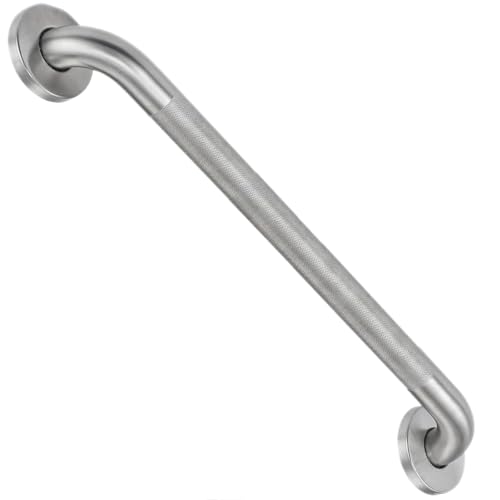 Best for Arthritis & Wet GripIJDD Knurled-Texture Grab Bar (24 in)
 Best No-Drill (structural)Stander Wonder Pole Plus with Rotating Double Grab Bar
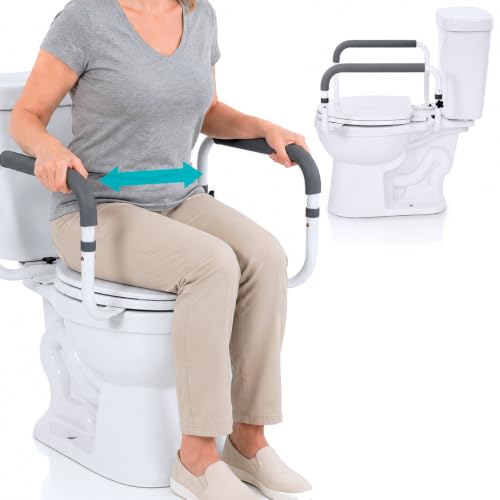 Best for ToiletVive Toilet Safety Rail
 Best Angled BarZepolu 16-Inch L-Shaped Angled Grab Bar
- What to look for
- Frequently asked questions
Most bathroom falls happen reaching for something that isn't there to hold onto. A properly mounted grab bar fixes that — and where you put it matters as much as which one you buy. For real weight-bearing support, a bar screwed into studs (or a floor-to-ceiling tension pole) is the only safe choice. Suction bars are balance aids only — they can release without warning and should never take real weight — so none of our picks rely on suction. Below, six picks that genuinely hold, and the safest spots to mount them. Most quality bars use stainless steel or a coated stainless steel core, which resists rust in a wet bathroom and holds a firm grip.
We may earn a commission when you buy through links on this page. Read our affiliate disclosure.
Our Top Pick
Moen Home Care 24" Wall-Mounted Grab Bar
The consensus top pick.
- ADA-compliant, rated for 500 lbs
- SecureMount anchor system — the most installer-friendly available
- 24-inch length
- Screw-mounts into studs or solid blocking
- Holds its strength over years of use
Top 6 Picks — Find Your Situation
- Moen Home Care 24" Wall-Mounted Grab BarBest Overall
Best forA permanent, full weight-bearing bar near a toilet or shower
- 500 lb rating supports full body weight
- SecureMount makes a solid install much easier to get right
- Built for pulling to stand or catching a slip
Watch out: Must be drilled into studs or blocking — a permanent install, not for renters who can't drill
- Delta Faucet Decorative ADA Grab BarBest for Shower & Tub
Best forShowers and tubs — the wettest spot in the house
- Corrosion-resistant where moisture is constant
- Concealed screws look clean, not clinical
- ADA-compliant strength and grip diameter
Watch out: One bar covers one direction — most showers need both a vertical (entry) and a horizontal (back-wall) bar, so plan for two
- IJDD Knurled-Texture Grab Bar (24 in)Best for Arthritis & Wet Grip
Best forLimited grip strength, arthritis, or hand pain
- Textured grip holds when hands are wet and soapy
- Feels more secure and less harsh on painful hands
- Far better friction than a smooth chrome bar
Watch out: Textured surface takes a little more effort to wipe clean than a smooth finish
- Stander Wonder Pole Plus with Rotating Double Grab BarBest No-Drill (structural)
Best forRenters, anyone who cannot drill, or spots with no convenient wall
- Real structural support with no drilling — far safer than suction
- Handle angle can be set to the pull that actually helps, then re-set
- Strong vertical hold where there's no wall to mount to
Watch out: Built for stand-and-pivot support, not heavy sideways pulling — complements wall bars rather than replacing them
- Vive Toilet Safety RailBest for Toilet
Best forSitting down and standing up at the toilet, with no wall mounting
- Push-up leverage on both sides, where a single wall bar can't help
- Adjustable height with no wall mounting
- Bariatric-friendly for heavier users
Watch out: Supports toilet transfers specifically — not a substitute for shower or general bathroom bars
- Zepolu 16-Inch L-Shaped Angled Grab BarBest Angled Bar
Best forOne bar that gives both horizontal and vertical support at a shower or toilet
- Two grip directions from one bar — strong leverage for shower entry and sit-to-stand
- 500 lb-rated SUS304 stainless steel
- Includes a second 20 inch straight knurled bar in the set
Watch out: Permanent install — must be drilled into studs or solid blocking, so not for renters who can't drill
Moen Home Care 24" Wall-Mounted Grab Bar
A permanent, full weight-bearing bar near a toilet or shower
The Moen Home Care is the consensus top pick because it gets the fundamentals exactly right: it's ADA-compliant, rated to 500 pounds, and screw-mounts into studs or solid blocking, so it genuinely supports full body weight for pulling to stand or catching a slip. That's the whole job of a grab bar, done without compromise.
What makes it the default, though, is the SecureMount anchoring system — the most installer-friendly available — which makes a solid, correctly anchored installation far easier to get right. And it holds that strength over years of daily use in a wet bathroom.
What we love
- 500 lb rating supports full body weight
- SecureMount makes a solid install much easier to get right
- Built for pulling to stand or catching a slip
- Holds up over years in a wet bathroom
Things to consider
- Must be drilled into studs or blocking — a permanent install, not for renters who can't drill
Right for you if
- ✓You want a permanent, genuinely weight-bearing bar by the toilet or shower
- ✓You can mount into studs or proper blocking
- ✓You value an easier, more foolproof install
Maybe skip it if
- !You're renting or otherwise can't drill into the wall
- !You need a no-drill option like a tension pole or toilet rail
- !You need capacity beyond 500 pounds
What owners consistently report
Common praise
- +It feels rock-solid once anchored into studs
- +The SecureMount system makes a correct install much easier
- +It holds up to years of wet-bathroom use
Common gripes
- –It must be drilled into studs or blocking — not renter-friendly
- –Drywall anchors alone will not hold; do it right or not at all
- –Tile installs need the right bit and sealing
Getting started
- →Find the studs (or add blocking) before mounting — never trust drywall anchors
- →Mount horizontal bars about 33 to 36 inches off the floor
- →Tug-test the finished bar hard before anyone relies on it
How it compares to our runner-up
Our runner-up, the Delta Faucet Decorative ADA Grab Bar, is the shower specialist — a corrosion-resistant finish with concealed screws for the wettest spot in the house — though a single bar only covers one direction, so most showers want two. Choose the Moen as your do-everything anchor bar; add or choose the Delta where a clean-looking, moisture-tough bar in the shower is the priority.
How we picked
We compared 6 options. We assessed grab bars on weight-bearing strength and load rating, grip texture for wet and arthritic hands, mounting type and where each is appropriate, length for the spot, and finish durability in constant moisture. Picks use manufacturer specs, verified reviews, and bathroom-safety guidance rather than physical testing. The single biggest safety factor is anchoring — a bar is only as strong as what it's screwed into, so install into studs or proper heavy-duty grab-bar anchors and match the bar to the load.
Reviewed by Kutubuddin — who researches senior-care products and the real-world needs of caregivers and older adults.
Our picks, reviewed
Moen Home Care 24" Wall-Mounted Grab Bar
The consensus top pick. It's ADA-compliant, rated for 500 lbs, and its SecureMount anchor system is the most installer-friendly available. Screw-mounted into studs or solid blocking, it supports full body weight and holds its strength over years of use — exactly what you want for pulling to stand or catching a slip. The right default for permanent installs near a toilet or shower.
What we like
- 500 lb rating supports full body weight
- SecureMount makes a solid install much easier to get right
- Built for pulling to stand or catching a slip
- Holds up over years in a wet bathroom
Keep in mind
- Must be drilled into studs or blocking — a permanent install, not for renters who can't drill
Key features
- ADA-compliant, rated for 500 lbs
- SecureMount anchor system — the most installer-friendly available
- 24-inch length
- Screw-mounts into studs or solid blocking
- Holds its strength over years of use
Delta Faucet Decorative ADA Grab Bar
Built for the wettest spot in the house. A corrosion-resistant finish with concealed mounting screws keeps it secure and clean-looking in constant moisture, while meeting ADA strength and diameter standards. Best paired up: a vertical bar at the tub or shower entry for stepping in and out, plus a horizontal bar on the back wall for balance once inside — most bathrooms need both directions.
What we like
- Corrosion-resistant where moisture is constant
- Concealed screws look clean, not clinical
- ADA-compliant strength and grip diameter
Keep in mind
- One bar covers one direction — most showers need both a vertical (entry) and a horizontal (back-wall) bar, so plan for two
Key features
- Corrosion-resistant finish for constant moisture
- Concealed mounting screws for a clean look
- Meets ADA strength and diameter standards
- Decorative finish that blends into the bathroom
IJDD Knurled-Texture Grab Bar (24 in)
The pick when grip strength or hand pain is the issue. The knurled, textured surface bites back when hands are wet and soapy, exactly where a smooth chrome bar turns slick. That extra friction also feels more secure and less harsh on arthritic or neuropathic hands. IJDD publish testing against ADA-related safety standards for this bar, and the 1.25-1.5 inch diameter is the range easiest for older hands to wrap around fully.
What we like
- Textured grip holds when hands are wet and soapy
- Feels more secure and less harsh on painful hands
- Far better friction than a smooth chrome bar
Keep in mind
- Textured surface takes a little more effort to wipe clean than a smooth finish
Key features
- Knurled, textured surface grips wet, soapy hands
- Extra friction where smooth chrome turns slick
- Easier on arthritic or neuropathic hands
- Tested against ADA-related safety standards
- 1.25-1.5 inch diameter is easiest for older hands to wrap
Stander Wonder Pole Plus with Rotating Double Grab Bar
The honest no-drill answer for renters or anyone who cannot drill — and far safer than a suction bar. The floor-to-ceiling tension design gives strong vertical support in spots with no convenient wall, like beside a bed or at the edge of a tub. The Plus adds the thing that makes it worth the money: a double grab bar that swivels a full 360 degrees and locks every 45, so the handle can be set to whatever angle the person actually pulls from, and re-set when they move to a different transfer. One limit to state plainly: it is built for stand-and-pivot support, not heavy sideways pulling, so it complements wall bars rather than fully replacing them.
What we like
- Real structural support with no drilling — far safer than suction
- Handle angle can be set to the pull that actually helps, then re-set
- Strong vertical hold where there's no wall to mount to
- Excellent for stand-and-pivot transfers
Keep in mind
- Built for stand-and-pivot support, not heavy sideways pulling — complements wall bars rather than replacing them
Key features
- Floor-to-ceiling tension design — no drilling
- Rotating double grab bar, 360 degrees, locking every 45
- Strong vertical support beside a bed or at the edge of a tub
- Excellent for transfers and standing up
- Genuinely structural, unlike a suction bar
Vive Toilet Safety Rail
Targeted support for sitting down and standing up at the toilet, with no wall mounting needed. The adjustable-height padded arms give push-up leverage on both sides — where a single wall bar can't — which is what weak knees or hips actually need at toilet height. Easy to install around a standard toilet, with a bariatric-friendly frame for heavier users.
What we like
- Push-up leverage on both sides, where a single wall bar can't help
- Adjustable height with no wall mounting
- Bariatric-friendly for heavier users
Keep in mind
- Supports toilet transfers specifically — not a substitute for shower or general bathroom bars
Key features
- Adjustable-height padded armrests
- Two-sided push-up leverage at toilet height
- No wall mounting — fits around a standard toilet
- Bariatric-friendly frame for heavier users
Zepolu 16-Inch L-Shaped Angled Grab Bar
An angled (90-degree) L-shaped bar gives you both a horizontal and a vertical grip from a single fixture — useful right where movement changes direction, like stepping into the shower or pushing up from the toilet. It is SUS304 stainless rated to 500 lb of pull force, with an easy-to-wrap 1.25 inch diameter, and it comes as a set with a 20 inch straight knurled bar. Like any wall bar, it only holds if it is screwed into studs or solid blocking. It comes in right- and left-handed versions, so match it to the wall you are mounting on.
What we like
- Two grip directions from one bar — strong leverage for shower entry and sit-to-stand
- 500 lb-rated SUS304 stainless steel
- Includes a second 20 inch straight knurled bar in the set
- Right- or left-handed to suit your wall
Keep in mind
- Permanent install — must be drilled into studs or solid blocking, so not for renters who can't drill
Key features
- L-shaped 90-degree angled bar, 16 x 16 inches
- SUS304 stainless steel, rated to 500 lb pull force
- Easy-grip 1.25 inch diameter
- Comes as a set with a 20 inch straight knurled bar
- Right- and left-handed configurations; mounting hardware included
What to look for
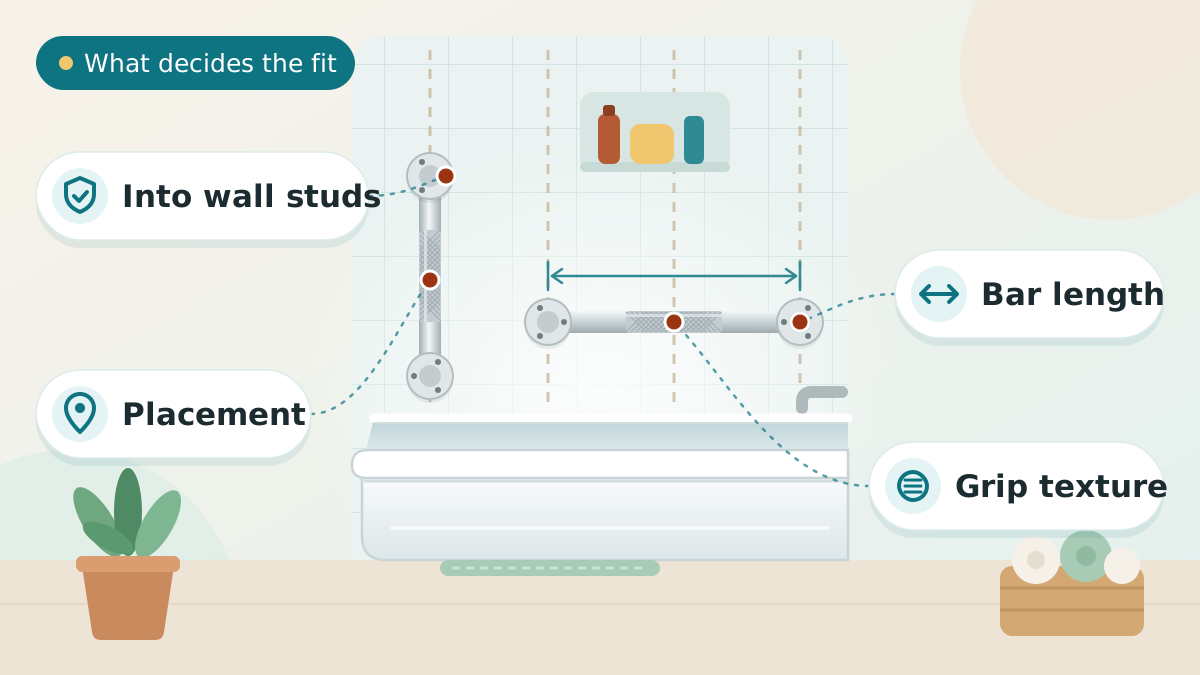
Installation matters more than the bar itself
The strongest grab bar is only as safe as what it's anchored to. Even a bar rated for 500 lbs will fail if it's screwed into drywall alone — it has to land in wall studs, or in proper heavy-duty grab-bar blocking or anchors. Never trust tile adhesive or plain drywall anchors to hold body weight.
For anyone with significant mobility limits, professional installation is worth it. A qualified installer will find the studs, use the right anchors for your wall, and confirm the bar holds its rated load before anyone leans on it.
Size the bar to the spot
Match length to the location. Shorter 12-16 inch bars suit the toilet area and other tight spaces where there isn't room for more. Longer 18-24 inch and up bars belong in showers and tubs, where the extra length gives more hand positions for stepping in, turning, and balancing.
Mount horizontal bars about 33-36 inches off the floor, and put them where weight actually shifts — at the toilet, the tub entry, and inside the shower.
Grip texture and diameter
Wet, soapy hands slip on smooth chrome. A knurled or textured surface bites back exactly when you need it, and it feels more secure for arthritic or neuropathic hands. Look for a 1.25-1.5 inch diameter — the easiest size for older hands to wrap around fully.
In constant moisture, a corrosion-resistant finish keeps the bar secure and clean-looking over time.
Placement: most bathrooms need more than one
Think in directions, not just bars. At the shower or tub, a vertical bar at the entry helps with stepping in and out, while a horizontal bar on the back wall steadies you once inside — most bathrooms need both. At the toilet, support on both sides — a wall bar plus a toilet rail, or a two-armed frame — gives the push-up leverage that weak knees and hips actually need.
Wall type and no-drill options
Tile can be drilled safely with the right bit into the studs or blocking behind it, then sealed with silicone around the flanges. If you can't drill at all — renting, or no convenient wall — a floor-to-ceiling tension pole is the genuinely structural no-drill choice. It is not the same thing as a suction bar.
Tips to Choose Grab Bars
Short on time? Here are the key points to weigh before choosing, each covered in detail above:
- Installation matters more than the bar itself
- Size the bar to the spot
- Grip texture and diameter
- Placement: most bathrooms need more than one
- Wall type and no-drill options
Comparing options? See our guides to Best Suction Grab Bars for Seniors, Best Shower Chairs for Seniors, and Best Bariatric Shower Chairs for Seniors.
Who installs grab bars — and how to get it done free or low-cost
You don't always need a contractor. For a single bar going into studs, a handyman or a bathroom-safety specialist can do it in well under an hour. If you can, have an occupational or physical therapist look at the bathroom first — they will mark exactly where the bars should go for the specific person, which is the part that actually prevents falls. Many medical-alert and home-health companies install bars too.
And in many cases you can get bars supplied and fitted for free or close to it. It is worth making one or two calls before paying out of pocket:
- Area Agency on Aging — many run fall-prevention or home-modification programs that provide and install grab bars free for qualifying older adults. Find yours through the Eldercare Locator or call 1-800-677-1116. Start here.
- Dial 2-1-1 — a free local referral line that points you to nearby home-safety help.
- [Rebuilding Together](https://rebuildingtogether.org) and [Habitat for Humanity](https://www.habitat.org) (Aging in Place) — local chapters do free or low-cost home-safety repairs, including grab bars.
- Medicaid — in many states, Home and Community-Based Services (HCBS) waivers cover grab bars and installation as a home modification (rules vary by state).
- Veterans — the VA's HISA grant covers bathroom-safety modifications, up to $6,800 for eligible veterans.
- Rural homeowners 62+ — the USDA Section 504 program offers home-repair grants (up to $10,000) to remove safety hazards.
On Medicare specifically: Original Medicare (Parts A and B) does not cover grab bars — it treats them as home modifications, not medical equipment. But roughly a quarter of Medicare Advantage plans now help, through an over-the-counter allowance or, for members with a qualifying chronic condition, Special Supplemental Benefits for the Chronically Ill (SSBCI). Call the number on the back of the plan card and ask specifically about 'bathroom safety' and 'SSBCI'.
Suction bars are balance aids, not safety bars
It's worth being blunt about this, because it's the most dangerous misconception with grab bars. A suction bar holds by vacuum against smooth tile or glass — and that vacuum can weaken or release without warning, especially as moisture and temperature change through the day. It is a light balance aid at most, never something to pull up on or catch a fall with.
None of the picks above rely on suction. If you need support without drilling, use a floor-to-ceiling tension pole or a freestanding toilet rail — both hold real weight. Treat any suction-cup bar as a place to rest a hand for balance, not as a grab bar.
A quick safe-install checklist
- Find the studs (or install solid blocking) before mounting — don't trust drywall anchors for weight
- Mount horizontal bars about 33-36 inches from the floor
- Use proper tile bits and seal the flanges with silicone in wet areas
- Tug-test the finished bar hard before anyone relies on it
- When mobility is significantly limited, have it installed professionally
Frequently asked questions
Install grab bars near the toilet (both sides if possible), inside the shower or tub (vertical and horizontal), and near the bathtub entry. The most critical locations are where seniors transfer weight or change positions. Horizontal bars should be mounted 33-36 inches from the floor. Vertical bars in showers should be 48-54 inches high. Always install bars where they'll be used most frequently during daily bathroom activities.
No — suction grab bars should never be treated as weight-bearing. They hold by vacuum on smooth tile or glass, and that grip can weaken or release without warning as moisture and temperature change. At most they're a light balance aid for steadying a hand, never something to pull up on or catch a fall with. For real support without drilling, use a floor-to-ceiling tension pole or a freestanding toilet rail; for permanent support, use a bar screwed into studs. Every pick on this page is genuinely weight-bearing.
Wall-mounted grab bars typically support 250–500 lbs when properly installed into wall studs or appropriate blocking, and floor-to-ceiling tension poles give strong vertical support without drilling. The real limit is the installation, not the printed rating — even a 500-lb bar will fail if it isn't anchored correctly. Choose a bar rated for at least 50 lbs more than the user's weight for a safety margin during transfers. (Suction-cup bars are not weight-bearing and shouldn't be counted in this category at all.)
Wall-mounted grab bars should be anchored into wall studs or proper blocking, and professional installation is strongly recommended — improper mounting is the leading cause of grab bar failure and serious falls. A qualified installer will locate studs, use the right anchors, and verify the bar holds its rated weight. If you can't drill, a floor-to-ceiling tension pole or a freestanding toilet rail needs no installation and still provides genuine, weight-bearing support.
For a bar mounted into wall studs, a handyman, a Certified Aging-in-Place Specialist (CAPS), or a bathroom-safety company can install it quickly and correctly, and many medical-alert and home-health providers install bars as well. The most valuable step is having an occupational or physical therapist assess the bathroom first and mark exactly where each bar should go for the specific person. If cost is a concern, your Area Agency on Aging may supply and install bars for free — see the next question.
Often, yes. Start with your Area Agency on Aging — find it through the Eldercare Locator at eldercare.acl.gov or 1-800-677-1116 — as many run fall-prevention or home-modification programs that provide and fit grab bars free for qualifying older adults. Dialing 2-1-1 also connects you to local help. Rebuilding Together and Habitat for Humanity's Aging in Place program offer free or low-cost home-safety repairs through local chapters, Medicaid HCBS waivers cover installation in many states, and veterans may qualify for the VA's HISA grant (up to $6,800).
24-inch grab bars are most versatile for general bathroom use near toilets and sinks. 18-inch bars work well in tight shower stalls where space is limited. 36-inch bars provide extended support for bathtub transfers and allow multiple hand positions. Longer bars offer more flexibility but require more wall space. Measure your specific bathroom layout and consider the user's reach and grip strength when selecting length.
Yes, grab bars can be safely installed on tile walls when done correctly. The installer must drill through the tile into wall studs or blocking behind the tile. Use proper tile drill bits to prevent cracking. Apply silicone caulk around mounting flanges to prevent water infiltration. Never rely on tile adhesive or drywall anchors alone — they will not support the necessary weight. Professional installation is strongly recommended for tile installations.
Angled grab bars (typically 135 degrees) provide a more natural hand position and better leverage when standing from the toilet or entering the shower. They reduce strain on wrists and shoulders, making them ideal for seniors with arthritis or limited upper body strength. Straight horizontal bars work well for general support and are more versatile for different grip positions. The best choice depends on the specific transfer movement and user comfort.
Side wall grab bars should be mounted 12 inches from the toilet centerline and extend at least 54 inches from the rear wall. Rear wall grab bars should be centered on the toilet and extend at least 12 inches on each side. Both should be 33-36 inches from the floor. These measurements follow ADA guidelines and provide optimal support for sitting down and standing up safely.
Yes, grab bars and shower chairs work together for maximum bathroom safety. Grab bars help seniors safely transfer onto and off the shower chair, maintain balance while seated, and provide support when reaching for soap or shampoo. Even with a shower chair, seniors still need stable support during entry, exit, and position changes. The combination of both significantly reduces fall risk.
Original Medicare (Parts A and B) does not cover grab bars or their installation — it classifies them as home modifications rather than durable medical equipment, even when a doctor recommends them for fall prevention. However, about a quarter of Medicare Advantage (Part C) plans help with bathroom-safety devices, through an over-the-counter allowance or, for members with a qualifying chronic condition, Special Supplemental Benefits for the Chronically Ill (SSBCI). Call the number on the plan card and ask about 'bathroom safety' and 'SSBCI'. Medicaid also covers grab bars and installation in many states through home-modification waivers, and the free and low-cost programs described above are open to many seniors who do not qualify for either.
The final verdict
Grab bars are one of the highest-return safety upgrades in any home — but only when they actually hold. Screw a rated bar into studs (or stand up a tension pole where there's no wall), size it to the spot, choose a grip that works for wet or arthritic hands, and remember that most bathrooms need support in more than one place. Get the anchoring right and a low-cost bar can prevent a fall that would otherwise cost far more — and because the bathroom is where so many of those falls happen, some families back up their bars with one of the best senior monitoring systems, so a fall still triggers an alert when no one is nearby. And if the real challenge is getting in and out of bed rather than the bathroom, that's a job for a bed assist handle, not a grab bar.
Our overall winner is the Moen Home Care 24" Wall-Mounted Grab Bar — our best overall for most seniors. You can check the current price on Amazon to see today’s deal.
