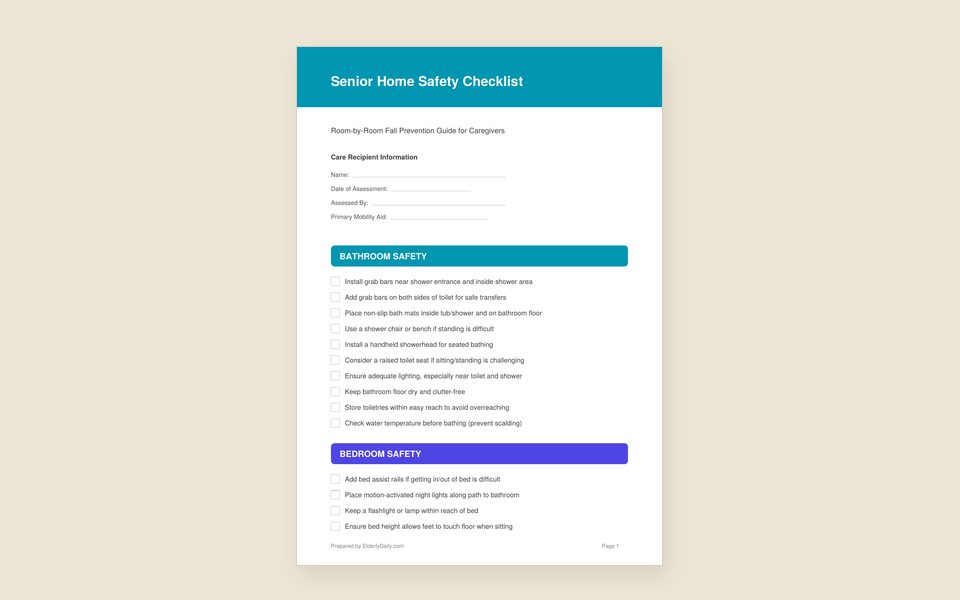
Mobility changes are one of the biggest fall-risk factors for seniors. Whether your loved one uses a walker, rollator, wheelchair, or walks independently, this comprehensive checklist helps families make walking safer at home and outdoors. Use this free resource to conduct regular safety assessments and prevent falls before they happen. For proper cane usage techniques, see our detailed guide on how to walk with a cane correctly. Learn more about fall prevention from Mayo Clinic. For comprehensive caregiver support during stressful times, read our guide on avoiding burnout.
Top Mobility Fixes in 5 Minutes
Free Printable PDF Checklist
Perfect for caregivers, PT clinics, and senior organizations. Download this comprehensive mobility safety resource.
Share this page with families and healthcare professionals
Mobility Device Safety Checklist
- Correct handle height (wrists level when arms hang naturally)
- Stable rubber tips or glides on all legs
- No cracks or damage to frame
- Walker moves smoothly without wobbling
- User lifts walker completely with each step
- Weight capacity appropriate for user
Home Walking Safety Checklist
Remove loose rugs
Secure all area rugs with non-slip backing or remove them entirely
Use double-sided carpet tape for smaller rugs
Add grab bars near bathroom/bedroom
Install grab bars at key transfer points and high-risk areas
Professional installation ensures proper weight support
Improve hallway lighting
Ensure adequate lighting in all walking paths, especially at night
Motion-sensor night lights work great for nighttime safety
Clear doorway thresholds
Remove or reduce height of door thresholds that could cause tripping
Threshold ramps help with mobility devices
Secure electrical cords
Keep all cords along walls and out of walking paths
Use cord covers or cable management systems
Mark step edges
Add contrasting tape to stair edges for better visibility
Install handrails on both sides of stairs
Related Safety Resources
Outdoor Mobility Checklist
Wear supportive shoes with traction
Proper footwear is essential for outdoor fall prevention
- Non-slip rubber soles
- Closed-toe design
- Proper arch support
- Secure fastening (laces, velcro, or zippers)
- Low heel height (under 1 inch)
Avoid uneven sidewalks
Plan routes carefully to minimize fall risks
- Scout walking routes in advance
- Choose well-maintained paths
- Avoid cracked or uneven pavement
- Watch for curbs and elevation changes
- Use crosswalks with curb cuts
Carry phone or medical alert device
Always have emergency communication available
- Fully charged mobile phone
- Medical alert pendant or watch
- Emergency contacts programmed
- Medical ID bracelet worn
- Location sharing enabled for family
Check weather conditions
Environmental factors affect outdoor safety
- Avoid walking in rain or ice
- Use sunglasses to reduce glare
- Dress appropriately for temperature
- Stay hydrated in hot weather
- Plan walks during daylight hours
Walking Companion Recommended
Whenever possible, seniors should walk with a companion outdoors. This provides immediate assistance if needed and makes outdoor activities more enjoyable and social.
Caregiver Weekly Mobility Check
| Item to Check | Checked This Week? | Notes |
|---|---|---|
| Mobility device condition | Check for wear, damage, or loose parts | |
| Walking path clearance | Remove clutter, cords, and obstacles | |
| Lighting functionality | Replace burned-out bulbs, test night lights | |
| Footwear condition | Inspect soles for wear, ensure proper fit | |
| Grab bar stability | Test all grab bars for secure mounting | |
| Floor surface safety | Check for spills, loose rugs, or hazards | |
| Transfer area setup | Ensure clear space and proper equipment placement | |
| Emergency device battery | Check medical alert device charge level |
Caregiver Tip
Print this checklist and post it in a visible location. Regular weekly checks help prevent accidents and catch potential problems before they become serious safety issues.
Mobility Support Levels: Choosing the Right Aid
Cane
- Light balance support
- One-handed use
- Portable and lightweight
- Best for minor stability issues
Walker
- Two-handed stability
- Weight-bearing support
- Must be lifted with each step
- Best for indoor use
Rollator
- Wheeled mobility
- Built-in seat for resting
- Hand brakes for control
- Best for indoor/outdoor use
Wheelchair
- Full mobility support
- No weight-bearing required
- Manual or powered options
- Best for limited walking ability
Mobility Fall Prevention Checklist
Home Safety
Clear paths, proper lighting, secure rugs
Equipment Check
Proper fit, good condition, regular maintenance
Personal Safety
Proper footwear, medical alerts, caregiver support
Authority Resources
Frequently Asked Questions
The best mobility safety checklist covers three key areas: mobility device safety (proper fit, maintenance, and usage), home environment safety (clear paths, adequate lighting, secure flooring), and personal safety practices (appropriate footwear, emergency communication, and caregiver support). This comprehensive checklist should be reviewed weekly to ensure all safety measures remain effective.
Caregivers can reduce fall risk by removing tripping hazards like loose rugs and clutter, installing grab bars in bathrooms and bedrooms, improving lighting throughout the home, ensuring mobility devices are properly fitted and maintained, encouraging the use of non-slip footwear, and conducting regular safety assessments. Weekly checks of walking paths and equipment condition are essential.
Rollators and walkers serve different needs. Rollators are often safer for seniors who can walk steadily but need balance support, as they don't require lifting and include hand brakes and a seat for resting. Standard walkers provide more stability for those who need significant weight-bearing support but require more upper body strength to lift. The safest choice depends on the individual's mobility level, strength, and environment.
Seniors living alone benefit most from rollators with seats (for resting during walks), medical alert devices (for emergency communication), grab bars in key locations, proper lighting including motion-sensor night lights, reacher tools for avoiding bending, and transfer aids like poles or boards. The combination of mobility support and emergency communication is crucial for independent living safety.
Mobility equipment should be checked weekly for general condition and safety. Look for worn rubber tips, loose screws, damaged frames, brake functionality, and proper fit. More thorough inspections should occur monthly, and professional assessments are recommended annually or whenever the user's mobility needs change. Immediate inspection is needed if any instability or damage is noticed.
Share This Resource
Help other families, caregivers, and healthcare professionals by sharing this mobility safety checklist. Together we can prevent falls and keep seniors safe.
Recommended products
Buying guides that pair well with this page: