
Mobility Aids for Seniors: A Complete Guide

Educational guidance, not medical advice. A physical or occupational therapist can recommend and fit the right aid for a person’s specific needs — strongly worth doing.
The right mobility aid keeps a senior moving, independent, and safe — the wrong one, or a poorly fitted one, can cause the very falls it should prevent. This guide covers the full range and how to choose well.
Key takeaways
- Mobility aids range from canes to walkers, rollators, wheelchairs, and scooters — each suits a different level of need.
- The right aid depends on how much support and stability the person needs, plus their strength, environment, and lifestyle.
- Correct fitting is critical — a wrongly sized aid is uncomfortable, ineffective, and can cause falls.
- A physical or occupational therapist is the ideal guide to choosing and fitting an aid — well worth arranging.
- The best aid is the one that keeps the person safely mobile and independent — and that they will actually use.
Quick answer
What mobility aids are available for seniors and how do I choose?
The main options, from least to most support: canes (light balance support), walkers (a standard frame for more stability), rollators (wheeled walkers with a seat, for those who can walk but tire), wheelchairs (when walking distances is not possible), and mobility scooters (for longer distances outdoors). Choose based on how much support and stability the person needs, their strength, environment, and lifestyle — and get the aid correctly fitted, ideally by a physical or occupational therapist.
Why the right mobility aid matters
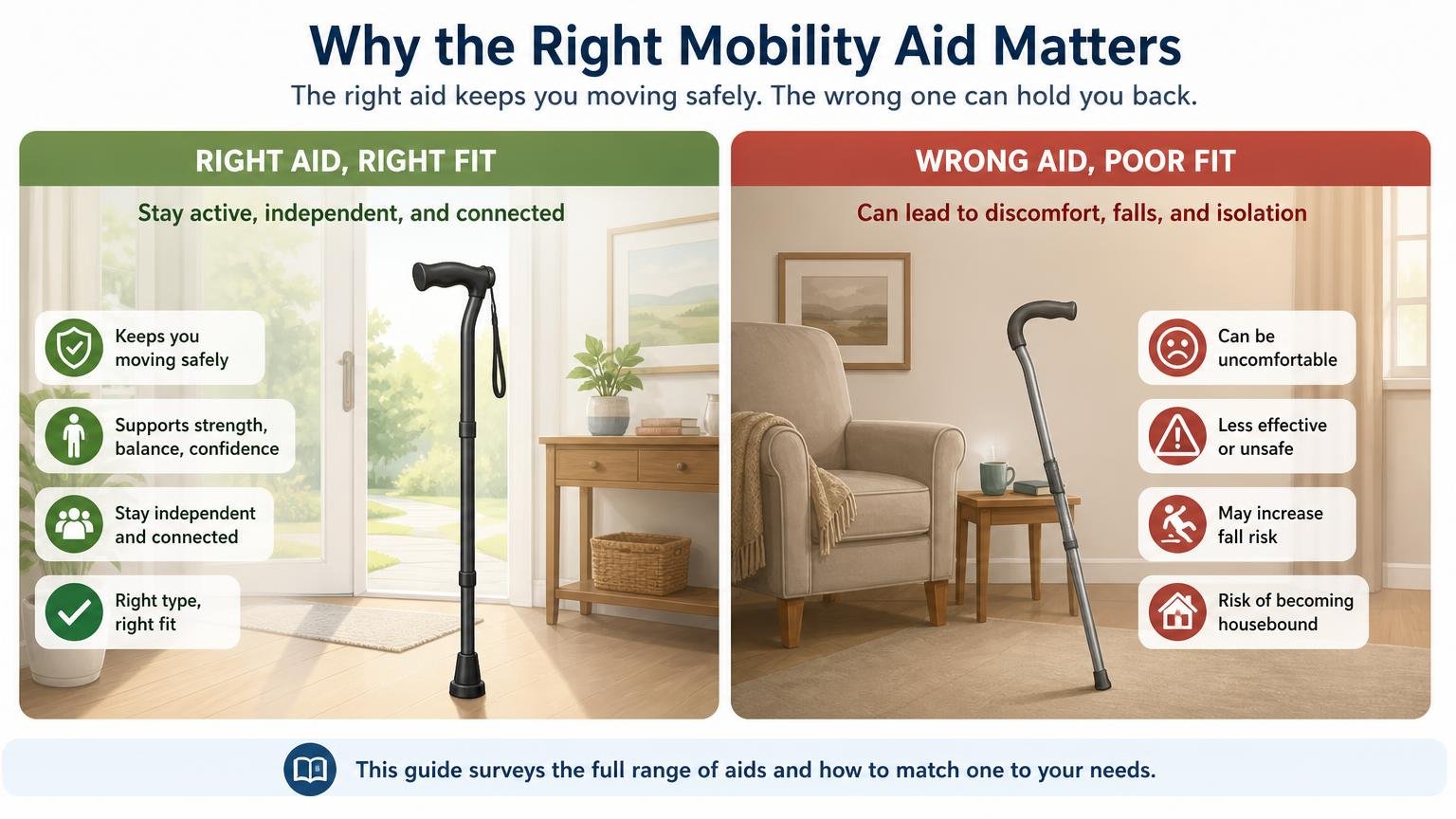
A mobility aid is far more than a piece of equipment — it can be the difference between a person staying active, independent, and connected, or becoming housebound and isolated. Used well, the right aid keeps someone moving safely, which itself protects strength, balance, and confidence. Used poorly — the wrong type, or a badly fitted one — it can be uncomfortable, ineffective, or even cause the falls it was meant to prevent.
This guide surveys the full range of aids and how to match one to the person. Two specific comparisons have their own guides: walker vs cane and rollator vs walker. And because mobility and falls are deeply linked, pair this with mobility and fall prevention.

Sponsored Pick
REHAND Ergonomic All-Terrain Folding Cane
Seniors with arthritis or joint pain who want a cushioned, ergonomic grip with all-terrain stability
Check PriceCanes
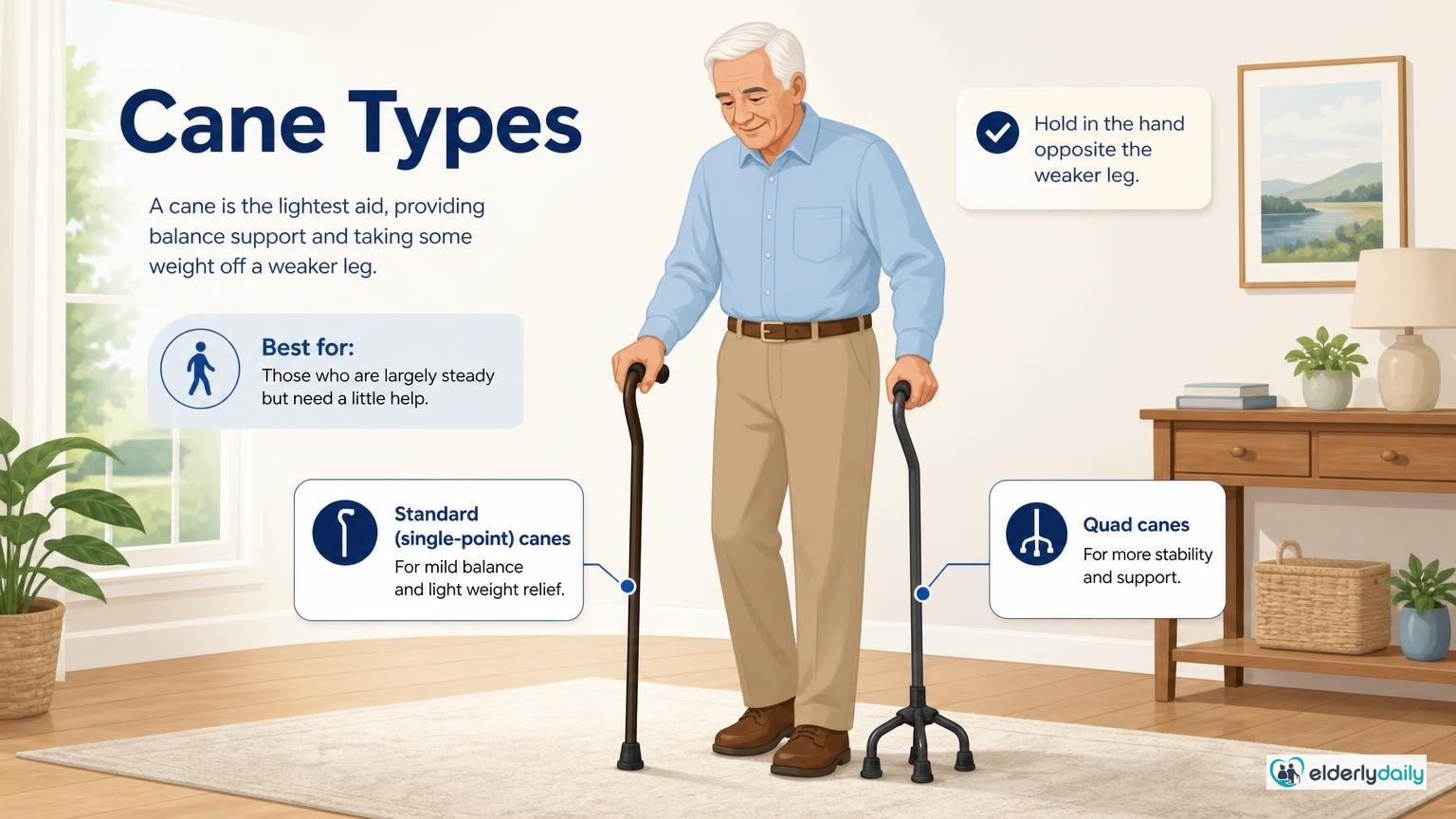
A cane is the lightest aid, providing balance support and taking some weight off a weaker leg — suited to those who are largely steady but need a little help:
- Standard (single-point) canes — for mild balance support and light weight relief.
- Quad canes — a four-point base for more stability, standing on their own, for those needing extra support.
- Best for — people who are mostly steady, need minor support, or are weaker on one side.
- Key fitting point — the cane height should let the elbow bend slightly (around 15°) with the top of the cane at wrist height when standing; held in the hand opposite the weaker leg.
See canes for seniors and how to walk with a cane, and walker vs cane to decide between them.
Walkers and rollators
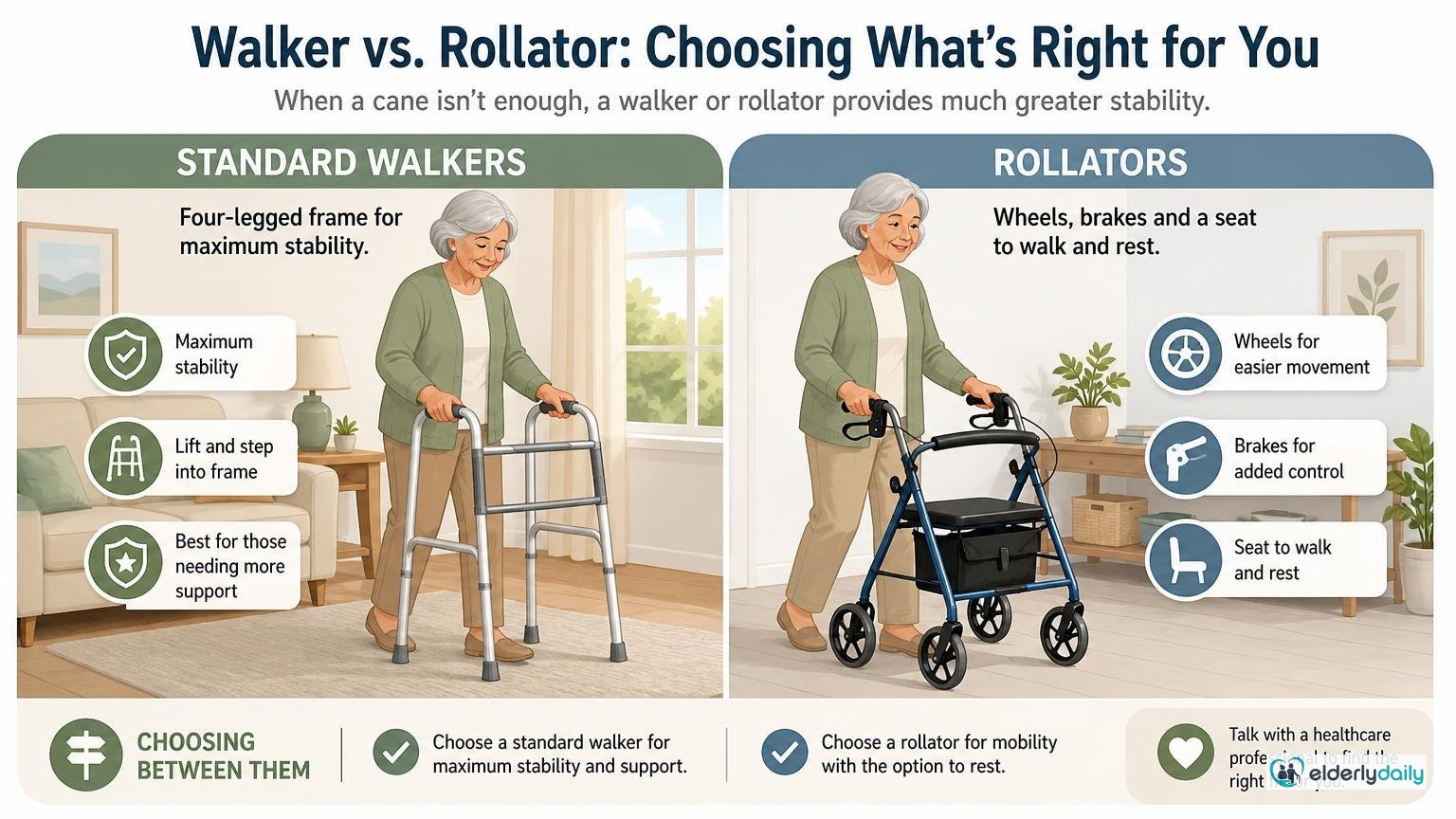
When a cane is not enough support, a walker or rollator provides much greater stability:
- Standard walkers — a four-legged frame (with or without front wheels) offering maximum stability; the person lifts or pushes it and steps into it. Best for those needing significant support or who bear weight through their arms. See walkers for seniors.
- Rollators — wheeled walkers (usually four wheels) with hand brakes and often a built-in seat, allowing a smoother, more natural walk without lifting. Best for those who can walk reasonably but tire, need to rest, or want to move faster. See rollators for seniors.
- Choosing between them — a standard walker gives more stability but a slower, lift-and-step gait; a rollator flows more easily but offers less bracing support. Our rollator vs walker guide compares them in detail.
- Accessories — trays, bags, and pouches add convenience; see walker accessories.
Good to know
The key rollator-vs-walker question: does the person need something to lean and brace on for stability (standard walker), or something to walk with and rest on that keeps them moving (rollator)? Match the aid to how they actually walk.
Wheelchairs and mobility scooters
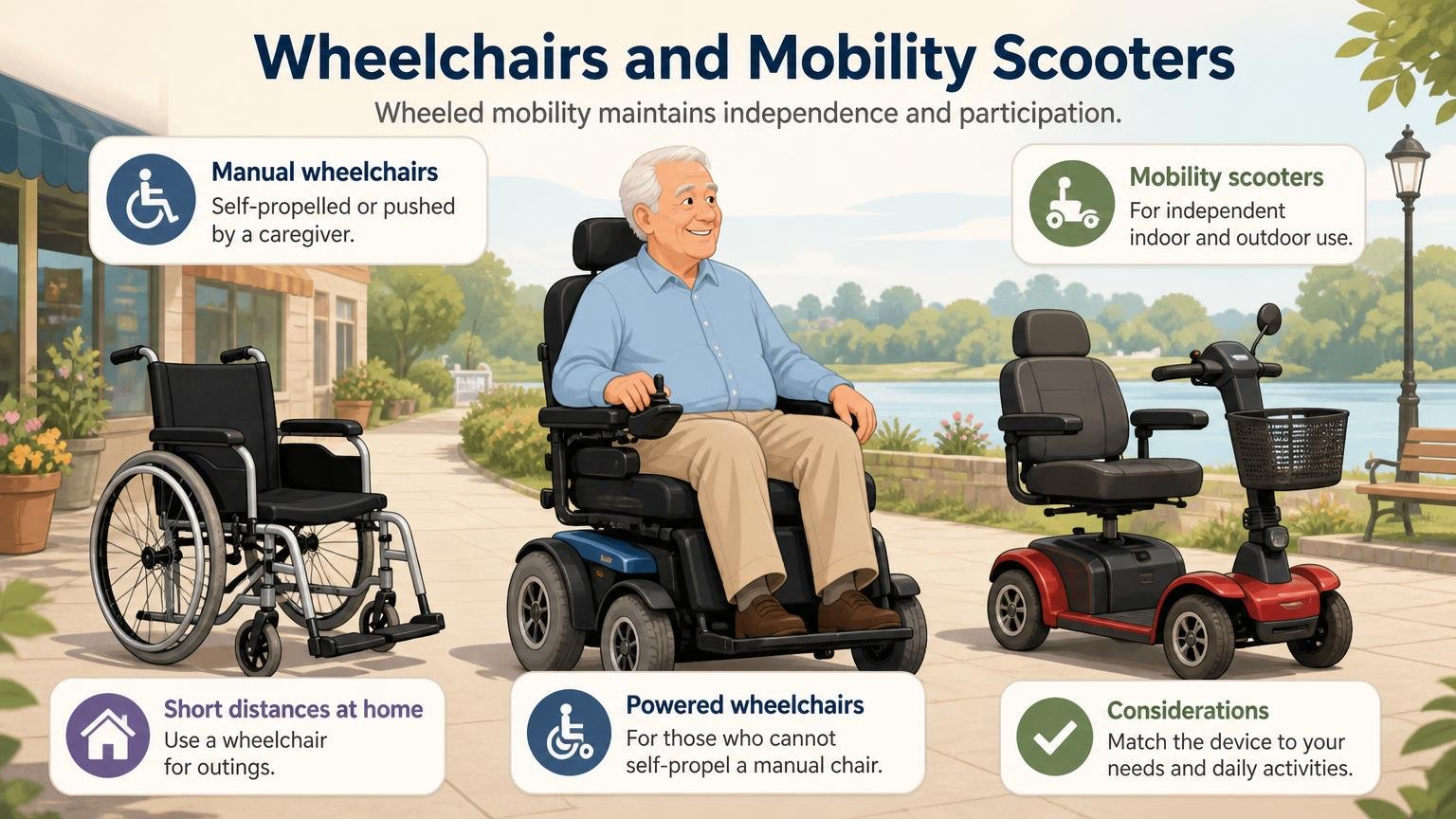
For those who cannot walk longer distances, wheeled mobility maintains independence and participation:
- Manual wheelchairs — self-propelled or pushed by a caregiver, for when walking any distance is not feasible; a person may walk short distances at home but use a wheelchair for outings.
- Powered wheelchairs — for those who cannot self-propel a manual chair, offering independent indoor and outdoor mobility.
- Mobility scooters — for people who can walk a little but not far, extending their range for shopping, outings, and staying active in the community, primarily outdoors.
- Considerations — these are bigger investments needing thought about the home’s space and access, transport, storage, and the person’s ability to operate them safely. Professional assessment helps greatly, and funding or provision may be available.
How to choose the right aid
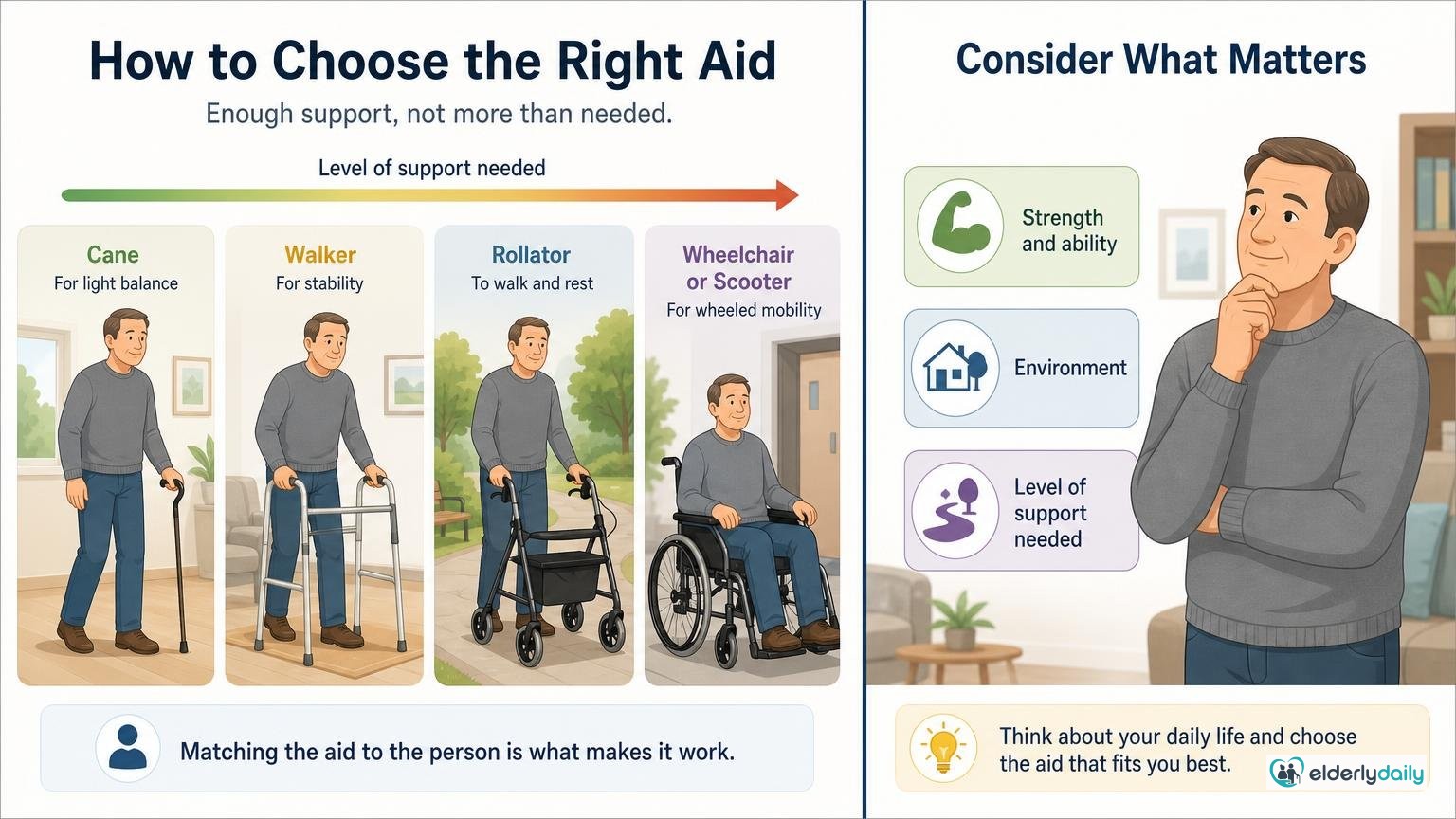
Matching the aid to the person is what makes it work. Consider:
- Level of support needed — the core question: light balance help (cane), significant stability (walker), walking-with-resting (rollator), or wheeled mobility (wheelchair/scooter). Err toward enough support, but not more than needed, which can reduce independence.
- Strength and ability — can they bear weight through their arms, manage brakes, lift a frame, or self-propel? This narrows the options.
- Environment — home layout (doorway widths, stairs, space), and where they will use it (indoors, outdoors, uneven ground).
- Lifestyle and goals — how active they are and what they want to keep doing shapes the choice.
- Get a professional assessment — a physical or occupational therapist can recommend the right aid, fit it correctly, and teach safe use — the single best step, especially as needs change.
Fitting and safe use
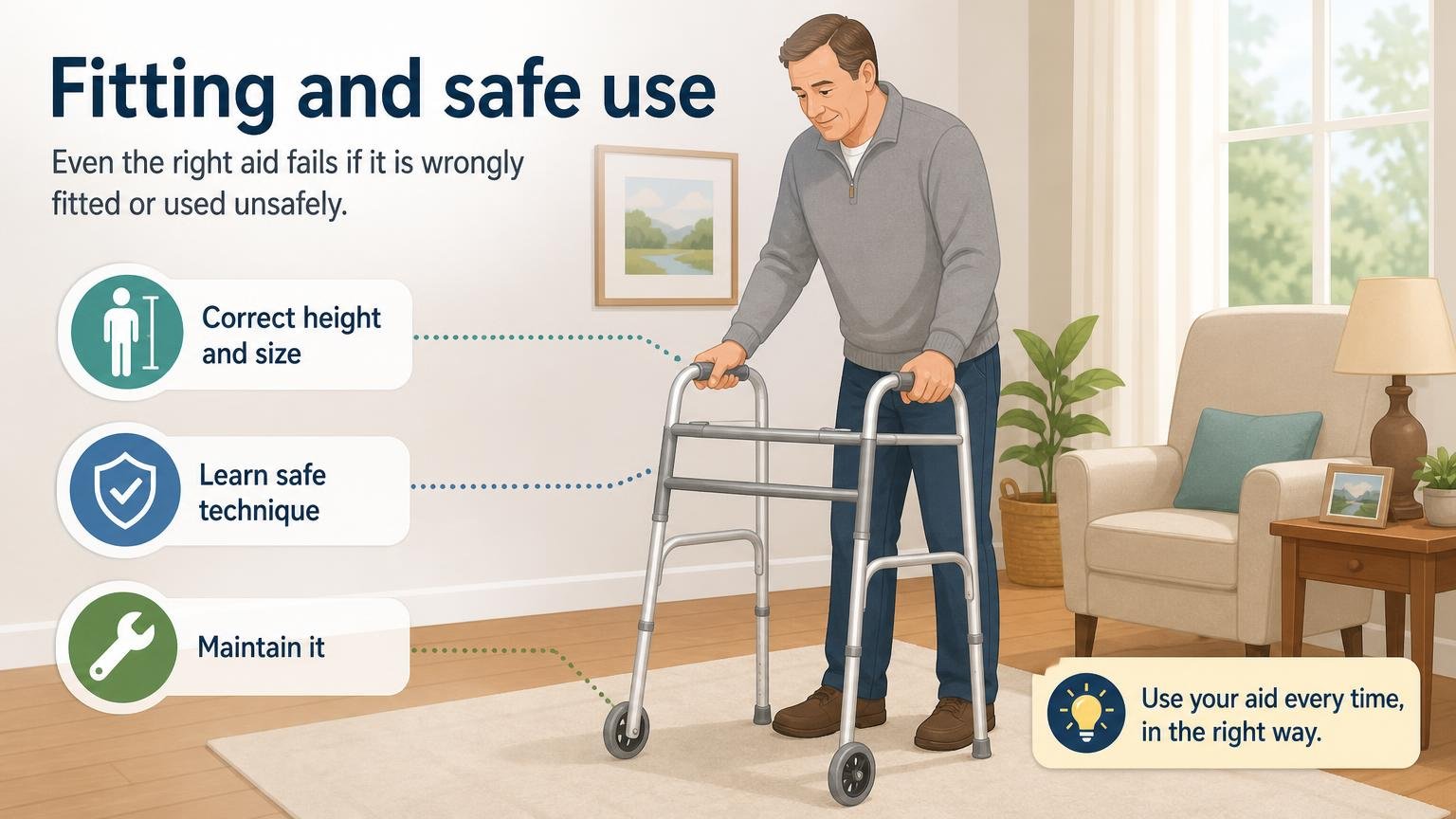
Even the right aid fails if it is wrongly fitted or used unsafely:
- Correct height and size — an aid set too high or low is uncomfortable, ineffective, and can cause falls; have it professionally fitted where possible.
- Learn safe technique — how to walk with the aid, manage transfers, and use it on different surfaces and (carefully) any steps; see how to walk with a cane and safe transfer techniques.
- Maintain it — check wheels, brakes, rubber tips/ferrules, and frames regularly; worn tips and faulty brakes cause falls.
- Combine with the wider picture — mobility aids work best alongside home safety, balance exercises, suitable footwear, and a way to call for help.
- Support confidence — some resist aids out of pride or fear; frame them as tools for independence, as in when a parent refuses help.
Frequently asked questions
What are the different types of mobility aids for seniors?
The main types, from least to most support, are canes (light balance support and weight relief), walkers (a frame for significant stability), rollators (wheeled walkers with a seat, for those who can walk but tire), wheelchairs (manual or powered, for when walking distances is not possible), and mobility scooters (for extending outdoor range). Each suits a different level of need.
How do I choose the right mobility aid for a senior?
Base it on how much support and stability the person needs, their strength and ability (bearing weight through the arms, managing brakes), their home environment and where they will use it, and their lifestyle and goals. Aim for enough support without more than needed, and ideally get a physical or occupational therapist to recommend, fit, and teach safe use of the aid.
What is the difference between a walker and a rollator?
A standard walker is a four-legged frame offering maximum stability, used with a lift-and-step or slow gait, best for those needing significant bracing support. A rollator is a wheeled walker with brakes and often a seat, allowing a smoother, more natural walk without lifting and a place to rest, best for those who can walk reasonably but tire. See our rollator vs walker guide.
Why is fitting a mobility aid correctly important?
A wrongly fitted aid — set too high or low, or the wrong size — is uncomfortable and ineffective and can actually cause falls, defeating its purpose. Correct height (for example, allowing a slight elbow bend with a cane) and proper technique make the aid safe and useful, which is why professional fitting by a therapist is strongly recommended.
Should I get a professional assessment for a mobility aid?
Yes, where possible — a physical or occupational therapist can assess the person’s specific needs, recommend the most suitable aid, fit it correctly, and teach safe technique, which greatly improves safety and outcomes. This is especially valuable as needs change over time or when choosing between options like a walker and a rollator.
My parent refuses to use a mobility aid. What can I do?
Resistance is common, often from pride or fear of appearing frail, or fear of falling. Frame the aid as a tool for staying independent and doing the things they enjoy rather than a sign of decline, involve them in choosing it, ensure it is well fitted and comfortable, and be patient. Our guides on when a parent refuses help and fear of falling offer approaches that work.
