
5 Best Walkers for Seniors
 By Kutubuddin, Founder & Senior Care Researcher Updated October 2026
In this guide
 Best overallDrive Medical Four Wheel Rollator Walker
 Best for maximum stabilityMedline Standard Folding Walker
 Best upright walkerDrive Medical Elevate Upright Walker
 Best heavy-dutyMedline Heavy-Duty Bariatric Folding Walker
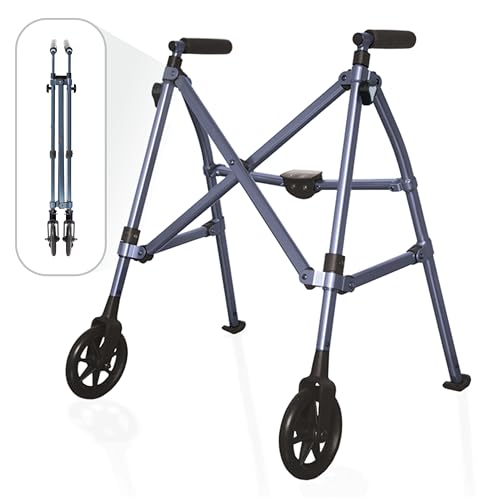 Best for narrow spacesStander Space Saver Walker
- What to look for
- Frequently asked questions
For most seniors who want to stay mobile and independent, a four-wheel rollator like the Drive Medical is the best all-around walker — it rolls smoothly, gives a place to rest, and carries things in its basket. We compare every walker with a seat in our rollator guide. If a senior needs maximum stability and can't put full weight on one side, a standard folding walker without wheels is the safer choice.
The UpWalker Lite solves a different problem: the chronic back and wrist pain from hunching over a traditional walker. Match the walker to what the person actually needs, not the price. If a senior has already had a fall, pair the walker with an elderly monitoring system that can alert family automatically.
We may earn a commission when you buy through links on this page. Read our affiliate disclosure.
Our Top Pick
Drive Medical Four Wheel Rollator Walker
The most useful everyday walker for the widest range of seniors.
- Rolls forward naturally — no lifting with every step
- Padded seat and under-seat pouch for resting and carrying
- Loop-lock brakes work well for arthritic hands
- Folds flat; about 14 lb to lift into a car
Type
4-wheel rollator
Wheels
7.5 in casters
Capacity
300 lb
Top 5 Picks — Find Your Situation
- Drive Medical Four Wheel Rollator WalkerBest overall
Best forActive seniors who walk independently but need balance support and want to rest on the go
- Rolls forward naturally — no lifting with every step
- Padded seat and under-seat pouch for resting and carrying
- Loop-lock brakes work well for arthritic hands
Watch out: Wheels can roll away if brakes are not locked when sitting
- Medline Standard Folding WalkerBest for maximum stability
Best forSeniors recovering from surgery or a fall who need maximum weight-bearing stability
- All four points on the floor simultaneously — maximum stability
- No wheels means no rolling when bearing weight
- Push-button height adjustment; rubber tips grip all floors
Watch out: Requires lifting and placing with every step — slower than a rollator
- Drive Medical Elevate Upright WalkerBest upright walker
Best forSeniors with chronic back or wrist pain from hunching over a conventional walker
- Forearm platforms keep the back upright — eliminates the hunch
- Takes weight off the wrists entirely
- One-handed side-to-side fold for the car
Watch out: Wider than a standard rollator — tighter in narrow spaces
- Medline Heavy-Duty Bariatric Folding WalkerBest heavy-duty
Best forLarger seniors who need a reinforced frame and a wider, higher-capacity walker
- Reinforced frame rated well above standard walker limits
- Extra-wide handle spacing for a larger build
- Greater lateral stability for heavier users
Watch out: Heavier and bulkier than a standard walker
- Stander Space Saver WalkerBest for narrow spaces
Best forSeniors in small homes with narrow hallways, or who travel frequently by air
- Narrow, space-saving frame for tight doorways and small rooms
- Folds flat to store beside a chair or in a car
- 6-inch front wheels with rear ski glides for smooth, catch-free movement
Watch out: No built-in seat or hand brakes (it is a walker, not a rollator)
Drive Medical Four Wheel Rollator Walker
Active seniors who walk independently but need balance support and want to rest on the go
The Drive Medical rollator earns the top spot because it solves the most common problem: a senior who still walks independently but is cutting trips short, skipping errands, or anxious about finding a place to sit. The rolling motion is natural, the loop-lock brakes work well even with arthritic hands, and the padded seat turns any spot into a rest stop.
The 7.5-inch casters handle both indoor floors and most outdoor surfaces. At about 14 pounds, it folds small enough for a car and is light enough that most seniors can manage the loading themselves.
What we love
- Rolls forward naturally — no lifting with every step
- Padded seat and under-seat pouch for resting and carrying
- Loop-lock brakes work well for arthritic hands
- Folds flat; about 14 lb to lift into a car
Things to consider
- Wheels can roll away if brakes are not locked when sitting
- Wider than a standard walker in doorways and tight spaces
Right for you if
- ✓Your parent walks on their own but tires quickly or feels unsteady
- ✓They need to carry things hands-free — purse, bag, light groceries
- ✓They want to sit down anywhere without searching for a chair
Maybe skip it if
- !Post-surgery or recent fall requiring maximum weight-bearing stability (get the Medline standard)
- !Chronic back and wrist pain from hunching (get the UpWalker)
- !Very narrow home doorways or frequent air travel (get the Stander Space Saver)
What owners consistently report
Common praise
- +Families say it extends the distance a parent will walk by allowing rest stops
- +The loop-lock brakes are consistently praised by arthritic users
- +The under-seat basket becomes essential for day-to-day independence
Common gripes
- –Must lock the brakes before sitting — an important habit to establish from day one
- –Slightly wide for older homes with narrow hallways
- –Outdoors on grass or gravel needs more effort than on a smooth surface
Getting started
- →Set handle height to wrist level when the arm hangs straight — too low causes hunching
- →Practice locking and releasing the brakes before relying on them for sitting
- →Keep the seat clean and the pouch at a manageable weight so the walker stays balanced
How it compares to our runner-up
If back and wrist pain from hunching is the main complaint, the UpWalker Lite is the better choice — it keeps the torso upright with forearm support and is clinically studied for pain reduction. Choose the Drive Medical for everyday independence with a seat; choose the UpWalker when the existing walker is causing secondary pain.
How we picked
We compared 5 options. Our picks are based on manufacturer specifications, physical-therapy and occupational-therapy guidance, and verified owner reviews — not independent gait testing. Walker selection depends heavily on the individual’s gait pattern, balance, and home layout, so we focused on the decisions that matter most: whether wheels help or hinder stability, how much weight the frame handles, handle height range, weight of the walker itself (for lifting into a car), and whether resting features like a seat actually matter for day-to-day use. For anyone recovering from surgery, a fall, or a major illness, a physical therapist’s assessment is strongly recommended before choosing a walker.
Reviewed by Kutubuddin — who researches senior-care products and the real-world needs of caregivers and older adults.
Our picks, reviewed
Drive Medical Four Wheel Rollator Walker
The most useful everyday walker for the widest range of seniors. Four wheels let it roll forward naturally, which is more intuitive than lifting a standard walker with every step. The padded seat means a senior can sit down anywhere without looking for a chair — essential for those who tire quickly. The under-seat pouch carries essentials, the 7.5-inch casters handle both indoor and outdoor surfaces, and loop-lock brakes are simple enough to use with arthritic hands. Handle height adjusts across a wide range (roughly 4’10″ to 6‘1″) and the whole thing folds flat for a car. At about 14 pounds, it’s light enough that most seniors can manage it themselves.
What we like
- Rolls forward naturally — no lifting with every step
- Padded seat and under-seat pouch for resting and carrying
- Loop-lock brakes work well for arthritic hands
- Folds flat; about 14 lb to lift into a car
Keep in mind
- Wheels can roll away if brakes are not locked when sitting
- Wider than a standard walker in doorways and tight spaces
- Type
- 4-wheel rollator
- Wheels
- 7.5 in casters
- Capacity
- 300 lb
Medline Standard Folding Walker
When someone cannot fully trust their balance or needs to put weight through the walker rather than just touch it, a standard four-point walker with no wheels is the safest choice. All four feet are on the floor at once — pick it up, place it, step into it, repeat. There is no risk of it rolling away. It is the type physical therapists most often recommend after hip replacement, knee surgery, or a significant fall when balance is genuinely compromised. The Medline folds flat for storage and travel, has push-button height adjustment, and the rubber tips grip the floor firmly.
What we like
- All four points on the floor simultaneously — maximum stability
- No wheels means no rolling when bearing weight
- Push-button height adjustment; rubber tips grip all floors
- Lightest and narrowest type — fits through most doorways
Keep in mind
- Requires lifting and placing with every step — slower than a rollator
- No seat; not designed for long walks
- Type
- Standard (no wheels)
- Adjustment
- Push-button height
- Folds
- Yes, flat
Drive Medical Elevate Upright Walker
An upright walker solves the problem most families never connect to the walker itself: the back, wrist and shoulder pain that comes from hunching forward to reach the handles of a standard rollator. Instead of gripping handles at hip height, the user rests their forearms on padded armrests at natural standing height, which keeps the back upright and takes weight off the wrists. The Elevate folds one-handed side to side for the car, has loop-lock brakes and a dual front fork for control, and includes a padded seat. Drive publish it at 23 lb with a 300 lb capacity.
What we like
- Forearm platforms keep the back upright — eliminates the hunch
- Takes weight off the wrists entirely
- One-handed side-to-side fold for the car
- Padded seat and armrests; loop-lock brakes
Keep in mind
- Wider than a standard rollator — tighter in narrow spaces
- Costs significantly more than a standard rollator
- At 23 lb it is heavy to lift into a boot
- Needs setting up properly — armrest height has to match the user
- Type
- Upright forearm-support rollator
- Weight
- 23 lb
- Capacity
- 300 lb
Medline Heavy-Duty Bariatric Folding Walker
A standard walker is rated around 250 to 300 pounds. When that is not enough, a bariatric frame with reinforced structure and wider design is the safe answer — not a standard walker stretched past its limit. The Medline Heavy-Duty Bariatric Walker uses a reinforced steel frame rated to 500 pounds, with wider handle spacing and 5-inch front wheels so it rolls forward without being lifted on every step. The wider design also provides more lateral stability for a larger build, which is not just a capacity issue but a balance one.
What we like
- Reinforced frame rated well above standard walker limits
- Extra-wide handle spacing for a larger build
- Greater lateral stability for heavier users
- 5-inch front wheels roll without lifting each step
- Folds flat for storage and transport
Keep in mind
- Heavier and bulkier than a standard walker
- Verify the exact model’s weight capacity before buying
- Type
- Bariatric front-wheeled walker
- Capacity
- Up to 500 lb
- Wheels
- 5-inch front wheels
Stander Space Saver Walker
Standard walkers and rollators can be too wide and bulky for small bathrooms, tight hallways, and older home layouts. The Stander Space Saver is a lightweight two-wheel folding walker built to take up as little room as possible — it moves easily through narrow doorways and folds flat to slip beside a chair, into a closet, or into a car. Its 6-inch front wheels roll smoothly while the rear ski glides slide without catching, so a senior pushes it forward in one steady motion instead of lifting it on every step. For someone in a small apartment or an older home with tight turns, that compact footprint is what keeps a walker usable rather than a constant obstacle.
What we like
- Narrow, space-saving frame for tight doorways and small rooms
- Folds flat to store beside a chair or in a car
- 6-inch front wheels with rear ski glides for smooth, catch-free movement
- Lightweight and easy to lift or reposition
Keep in mind
- No built-in seat or hand brakes (it is a walker, not a rollator)
- Two-wheel design offers less support than a four-wheel rollator outdoors
- Type
- Compact 2-wheel folding walker
- Wheels
- 6-inch front; rear ski glides
- Folds
- Compact, travel-friendly
What to look for
Wheels or no wheels: the first decision
This single choice determines more than anything else:
- No wheels (standard walker): maximum stability, four feet always on the floor. Lifts and places with every step. The right choice when someone cannot fully trust their balance or needs to put real weight through the walker — after surgery, after a fall, or with significant weakness on one side.
- Four wheels (rollator): rolls naturally, no lifting. Far more convenient for everyday use, but requires that the user can control the brakes — less suitable when balance is severely compromised.
If in doubt about which is safer, a physical therapist’s assessment is worth getting, especially after an injury or surgery.
Does your parent need a seat?
A seat is the biggest functional difference between a rollator and a standard walker. Seniors with limited endurance — heart or lung conditions, fatigue after short distances, or weak legs — genuinely benefit from sitting down anywhere without searching for a chair. If your parent’s goal is a short daily walk that is currently cut short by fatigue, a rollator with a seat often extends that walk significantly.
Handle height matters as much as walker type
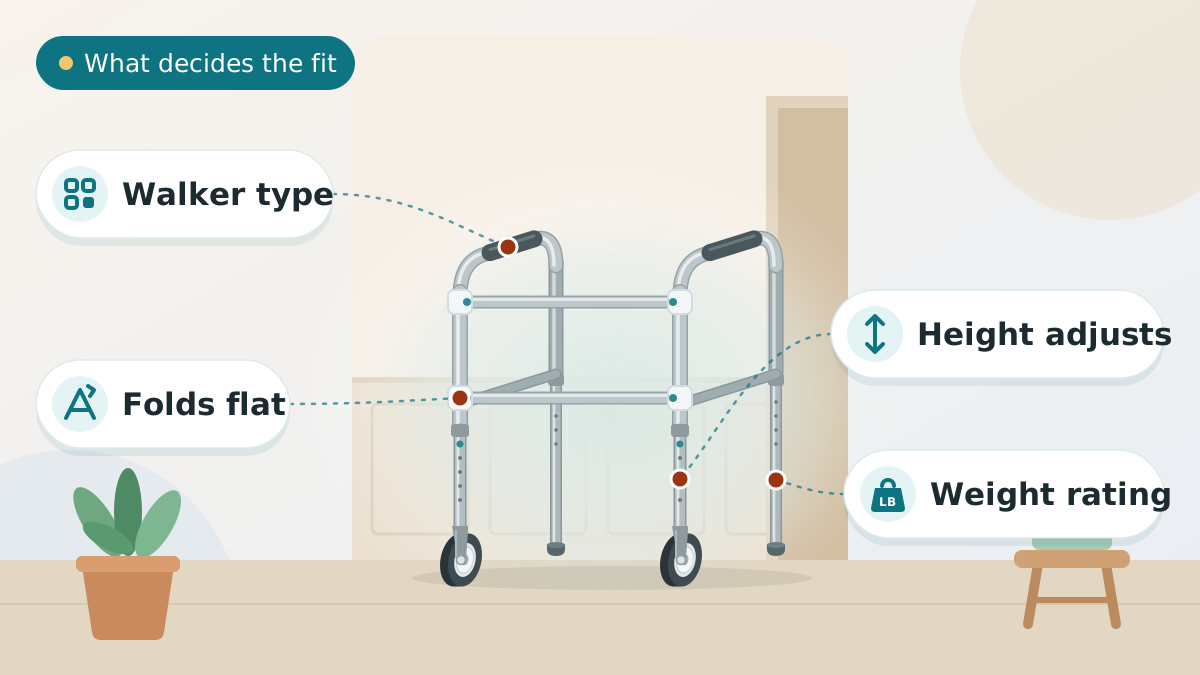
A walker set too low forces hunching, which leads to back pain and actually reduces balance. The handle should be roughly at wrist height when the arm hangs naturally. Most walkers adjust across a wide range, but verify the model covers your parent’s height before buying — especially for shorter or taller seniors. The UpWalker adjusts forearm platforms rather than handles, which solves hunching at the root.
Weight of the walker and width in the home
A rollator that cannot reliably get loaded into the car stops being used. Standard walkers weigh 5 to 7 pounds; rollators are typically 12 to 18 pounds; upright walkers can reach 20 to 25 pounds. Also measure the narrowest doorway in the home. Most rollators are 24 to 28 inches across; the Stander Space Saver is designed narrower. A rollator that constantly jams in the bathroom doorway does not get used — that is a fall risk in itself.
Tips to Choose Walkers
Short on time? Here are the key points to weigh before choosing, each covered in detail above:
- Wheels or no wheels: the first decision
- Does your parent need a seat?
- Handle height matters as much as walker type
- Weight of the walker and width in the home
Comparing options? See our guides to Best Canes for Seniors, Best Mobility Walker Accessories, and Best Transfer Boards for Seniors.
When to involve a physical therapist
A walker usually enters the picture after a fall, a surgery, or a noticeable change in gait. All three are good reasons for a physical therapist to assess the gait pattern and recommend the right type and fit. A poorly fitted walker does not just cause discomfort — it can increase fall risk rather than reduce it. Medicare Part B may cover walkers as durable medical equipment when a doctor documents medical necessity; confirm the specifics with the supplier and your plan.
Walkers versus rollators versus wheelchairs
These devices cover different levels of mobility. A walker or rollator suits someone who can still walk but needs support for balance or endurance. A wheelchair is the next step when walking is no longer safe or practical for daily distances.
The key principle: keep the person on their feet with a walker as long as it is safe to do so — walking maintains muscle and bone health in ways a wheelchair cannot. See our best wheelchairs for elderly and best rollators for seniors guides for more on each.
Frequently asked questions
It depends on what the person needs. A four-wheel rollator with a seat is best for seniors who walk independently but need balance support and want to rest on the go. A standard walker without wheels is best after surgery or a fall when maximum stability is required. An upright walker is best when chronic back or wrist pain comes from hunching. A physical therapist can assess which type fits a specific gait and home layout.
A standard walker has four legs and no wheels — you lift and place it with every step, which gives maximum stability. A rollator has four wheels, hand brakes, and usually a seat — it rolls forward naturally and is more convenient for everyday walking. Physical therapists often recommend a standard walker right after surgery and switch to a rollator once balance improves.
A cane provides mild balance help for one side. A rollator is the next step when a cane is not enough — when there is significant weakness, balance instability, or fatigue that cuts walks short. The seat feature makes a rollator especially useful for seniors who tire after a short distance; resting anywhere often extends how far they will walk.
An upright walker replaces hand grips with padded forearm platforms at a natural standing height, so the user stands upright rather than hunching forward. It is designed for seniors who have back, shoulder, or wrist pain caused by bending over a conventional walker. Clinical research supports reduced pain and the ability to walk farther. The trade-off is higher cost and a wider frame.
The handle should be roughly at wrist height when the arm hangs naturally at the side. Too low forces a hunch that causes back pain; too high raises the shoulders. For upright walkers with forearm platforms, the platform should allow a slight elbow bend — about 15 degrees — for a natural forward lean without strain.
Standard walkers weigh 5 to 7 pounds — most seniors can lift them easily. Rollators are typically 12 to 18 pounds; a lighter compact model makes a difference for frequent car loading. If the senior cannot manage the walker independently, that affects which model is practical and may mean a caregiver needs to be involved in loading and unloading.
Standard walkers and rollators are durable medical equipment and may be covered under Medicare Part B when a doctor documents medical necessity. The supplier must accept Medicare assignment for coverage to apply. Coverage and out-of-pocket costs vary. This is general information — confirm the specifics with the supplier and your Medicare plan before purchasing.
Loop-lock brakes (you squeeze up to brake) are easier for arthritic hands than squeeze-to-release styles that require a strong grip. The Drive Medical rollator uses loop-lock brakes. An upright walker eliminates wrist load entirely by using forearm platforms rather than hand grips — the better option when hand and wrist arthritis is severe.
A bariatric walker with a reinforced frame. Standard walkers are rated to around 250 to 300 pounds; a bariatric model goes higher with a frame designed for the load. Wider handle spacing and a reinforced seat also provide more lateral stability for a larger build, not just a capacity check. Confirm the specific model capacity before purchasing.
Generally not at the same time — a walker replaces a cane rather than supplementing it. Some seniors who use a rollator for longer outings keep a cane for brief trips inside the house where a rollator is cumbersome. The right approach depends on the environment and the person’s balance; a physical therapist can advise.
The final verdict
Start with the Drive Medical rollator if your parent walks independently but needs balance and endurance support — the seat and basket make daily life significantly easier. If they have just had surgery or a fall and need maximum stability, the Medline standard walker is safer. Back and wrist pain from hunching points to the UpWalker. A heavy build needs the Medline bariatric. A tight home layout or frequent travel points to the Stander Space Saver. And get a physical therapist’s assessment if balance is genuinely compromised — the right walker, fitted correctly, is what keeps a person on their feet. For anyone who hunches over a standard frame, Best Upright Walkers for Seniors compares six upright models on capacity, frame width and fit.
Our overall winner is the Drive Medical Four Wheel Rollator Walker — our best overall for most seniors. You can check the current price on Amazon to see today’s deal.
