
5 Best Wheelchairs for Seniors
 By Kutubuddin, Founder & Senior Care Researcher Updated October 2026
In this guide
 Best overallMedline Lightweight Wheelchair
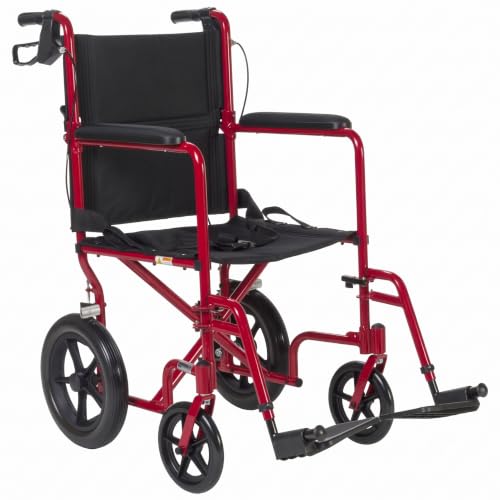 Best Transport ChairDrive Medical Lightweight Expedition Folding Transport Wheelchair
 Best for pressure reliefKarman S-115 Ergonomic Wheelchair
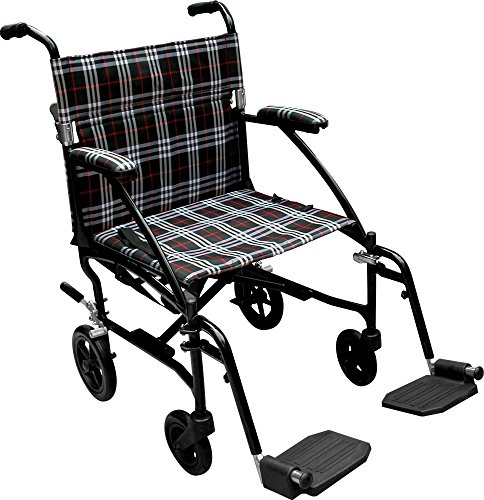 Best for travelDrive Medical Fly Lite Transport Chair
 Best valueMedline Transport Wheelchair with Hand Brakes
- What to look for
- Frequently asked questions
There is no single best wheelchair for a senior — the right one depends on who pushes it and why. For an independent senior, a standard self-propel chair like the Medline Lightweight is the everyday workhorse.
We may earn a commission when you buy through links on this page. Read our affiliate disclosure.
Top 5 Picks — Find Your Situation
#1 · Best overall
Medline Lightweight WheelchairBest for: Independent seniors with upper-body strength who want to propel themselves day to day
#2 · Best Transport Chair
Drive Medical Lightweight Expedition Folding Transport WheelchairBest for: Caregiver-pushed daily use where a smoother ride over bumps, thresholds, and curbs matters
#3 · Best for pressure relief
Karman S-115 Ergonomic WheelchairBest for: Seniors who sit for long hours or are at risk of pressure sores and want a light self-propel chair
#4 · Best for travel
Drive Medical Fly Lite Transport ChairBest for: Caregiver-pushed use — appointments, travel, and outings where weight and folding matter
#5 · Best value
Medline Transport Wheelchair with Hand BrakesBest for: Caregiver-pushed use — appointments and outings, or a second chair to keep at the house
If a caregiver does the pushing, the Drive Medical Expedition rolls smoothly over bumps and curbs, while the ultralight Drive Fly Lite is the one to grab when travel weight matters most. For long hours or sore-prone skin, Karman's ergonomic S-shaped seat earns its place — and pairing any chair with a good seat cushion adds real tailbone relief. The Medline transport chair covers the basics with hand brakes and 12-inch wheels. Match the chair to the person, not the price.
A closer look at our top pick
Medline Lightweight Wheelchair
Best for: Independent seniors with upper-body strength who want to propel themselves day to day
- Type
- Standard self-propel
- Rear wheels
- Large (self-propel)
- Capacity
- ~300 lb
Independently researched · Updated October 2026
For most seniors who can still push themselves, this is the right first chair because it covers the everyday job without overspending on features they don’t need. Large rear wheels with hand-rims mean real independence, while the lightweight folding frame still fits in a car for trips to the clinic or family.
The practical touches are what make it livable day to day: flip-back, removable desk arms let the user pull right up to a table and slide sideways for transfers, and the swing-away footrests come off entirely to clear the way. It is the dependable middle of the range — more capable than a transport chair, far cheaper than a specialty one.
What we love
- Large rear wheels let the user self-propel
- Lightweight folding frame fits in a car
- Flip-back, removable desk arms ease table access and transfers
- Swing-away footrests come off for transfers
Things to consider
- Heavier and bulkier than a transport chair
- No reclining or pressure-relief seat — add a good cushion
Right for you if
- ✓Your parent has the upper-body strength to self-propel
- ✓You want one do-everything chair without a specialty price
- ✓You need to fold it into a car fairly often
Maybe skip it if
- !A caregiver always pushes — the smooth-riding Expedition or the ultralight Fly Lite transport chairs fit better
- !Your parent sits for many hours and needs maximum pressure relief (look at Karman, plus a good cushion)
- !The user is over a standard ~300 lb capacity (look for a dedicated bariatric frame)
What owners consistently report
Common praise
- +Families value the independence of self-propelling versus a transport chair
- +The removable desk arms get singled out for easier transfers and table access
- +Folds down small enough for the car without a struggle
Common gripes
- –Heavier to lift than an 18-lb transport chair
- –The standard sling seat needs a good cushion for long days
- –Self-propelling takes arm strength that not every senior has
Getting started
- →Add a proper pressure-relief cushion before all-day use
- →Set the footrests to the right length so thighs are supported
- →Practice locking both wheel brakes before every transfer
How it compares
Our runner-up is the Drive Medical Expedition — a transport chair with large rear wheels for a smoother ride and hand brakes for the attendant. Choose the Medline self-propel when the user can drive their own wheels and wants independence; choose the Expedition when a caregiver does the pushing and you want the smoothest companion-pushed ride.
How we picked
We compared 5 options. Our picks are based on manufacturer specifications, occupational-therapy and mobility guidance, and verified owner reviews — not independent fitting or lab testing. A wheelchair is a medical device that ideally should be fitted to the user, so we focused on the decisions that matter most before that fitting: self-propel versus transport, chair weight (for lifting into a car), seat width and weight capacity, ride quality over thresholds and pavement, and pressure relief. Seat width and a proper cushion matter enormously for comfort and skin safety — if your parent will spend many hours a day in the chair, have a clinician or therapist confirm the fit and cushion before you commit.
Reviewed by Kutubuddin — who researches senior-care products and the real-world needs of caregivers and older adults.
Other picks, reviewed
Drive Medical Lightweight Expedition Folding Transport Wheelchair
A transport chair that stands out for its ride quality. Most transport chairs ride on four small wheels that catch on thresholds and curb cuts; the Expedition fits large rear wheels instead, so it rolls smoothly over gaps, bumps, and uneven pavement. It adds hand brakes the attendant can squeeze on slopes, folds compact for a car trunk, and stays light enough for a caregiver to lift. For families who want one dependable companion-pushed chair for appointments and outings, it is the safe default.
What we like
- Large rear wheels roll smoothly over thresholds and uneven ground
- Attendant hand brakes for control on slopes
- Folds compact and stays light for the car
- Large rear wheels for a smoother ride
Keep in mind
- Companion-pushed — not built for the user to self-propel long distances
- Like all transport chairs, the seat needs a cushion for long days
- Confirm seat width and capacity for the user before buying
- Type
- Transport (companion-pushed)
- Rear wheels
- Large (smoother ride)
- Brakes
- Attendant hand brakes
- Capacity
- ~300 lb
Karman S-115 Ergonomic Wheelchair
The pick when comfort and skin safety matter most. Karman’s patented S-shaped seat frame is designed to cradle the body, spread weight more evenly than a flat sling seat, and reduce forward sliding during long sitting. It does all that at about 25 pounds — genuinely light for a self-propel chair — with an aircraft-grade aluminum frame that folds for the car. The 250-pound capacity is lower than the others, so it suits lighter users.
What we like
- Patented S-shaped seat spreads pressure and reduces sliding
- About 25 lb — light for a self-propel chair
- Aircraft-grade aluminum frame folds for transport
- Removable, washable antimicrobial cushions
Keep in mind
- 250-lb capacity — lower than the others
- Costs more than a basic standard chair
- Type
- Ultralight self-propel
- Seat
- Ergonomic S-shaped
- Capacity
- 250 lb
Drive Medical Fly Lite Transport Chair
The one to own if a caregiver does the pushing and you travel. At about 18 pounds with footrests — and roughly 16 without — it is one of the lightest transport chairs made, and the back folds flat so it slides into a trunk or a closet. The small rear wheels mean the user cannot self-propel, which is the trade-off, but for appointments, airports, and shopping trips that lightness is exactly what saves a caregiver’s back.
What we like
- One of the lightest transport chairs — about 18 lb
- Back folds flat for a car trunk or storage
- 19-inch seat with a seat belt and rear wheel locks
- Tool-free, height-adjustable swing-away footrests
Keep in mind
- Small rear wheels — the user cannot self-propel
- Less cushioned than a full wheelchair for long days
- Type
- Transport (companion-pushed)
- Weight
- ~18 lb with footrests
- Capacity
- 300 lb
Medline Transport Wheelchair with Hand Brakes
The no-frills companion chair. At 26 lb of aluminium it is light enough for most caregivers to lift into a boot, and the 12-inch rear wheels ride over thresholds and lift edges far better than the four-small-wheel transport chairs do. It has squeeze hand brakes for slopes as well as rear locking brakes for transfers, the full-length armrests are cushioned, and it arrives assembled and folds with the footrest still attached. A sensible occasional-use chair, or a spare to keep at the house.
What we like
- 26 lb aluminium frame — light to lift into a car
- Hand brakes for slopes, plus rear locking brakes for transfers
- 12-inch rear wheels handle thresholds and ramps
- Arrives assembled and folds with the footrest attached
Keep in mind
- Companion-pushed — the user cannot self-propel
- Overlaps closely with the Expedition at #2; choose on seat fit and availability
- Sling seat needs a cushion for long sitting
- Type
- Transport (companion-pushed)
- Frame
- Aluminium, 26 lb
- Footrests
- Swing-away, detachable
- Capacity
- 300 lb
What to look for
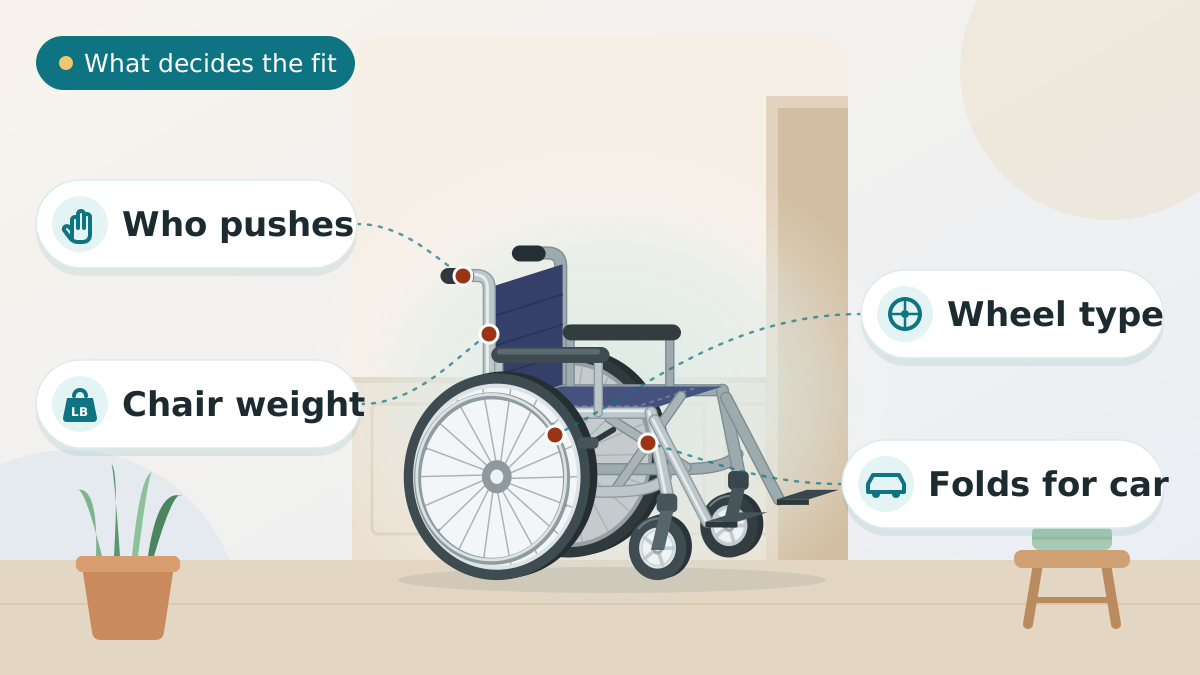
Self-propel or transport? Start here
This is the first and biggest fork, and it comes down to who moves the chair:
- Self-propel: large rear wheels with hand-rims so the user can drive themselves. Needs upper-body strength; the chair is heavier.
- Transport (companion chair): pushed by a caregiver. The lightest and most foldable option. Most use small wheels (the user cannot propel), though some — like the Expedition — add large rear wheels for a smoother ride.
If your parent has the arm strength and wants independence, choose self-propel. If a caregiver is always there and travel matters, a transport chair is lighter and easier to live with. Some families own both.
Ride quality: why wheel size matters
On a smooth floor any chair rolls fine. The difference shows up at thresholds, expansion gaps, curb cuts, and rough pavement, where small front-and-rear wheels catch and jolt the rider. Larger rear wheels — as on the Expedition or any self-propel chair — bridge those gaps and ride more smoothly, which matters for comfort and for anyone with a sensitive spine or fragile skin.
If most use is indoors on flat floors, small-wheeled transport chairs like the Fly Lite are fine and lighter. If outings cross sidewalks, ramps, and doorways, the smoother ride of larger wheels is worth the small weight penalty.
Seat width and weight capacity are safety, not just comfort
Measure the widest part of the hips while seated and add a little room (about an inch on each side). A seat that is too narrow concentrates pressure and raises the risk of sores; a seat that is too wide lets the body shift and slide, which hurts posture and stability.
Match the weight capacity to the user with margin to spare — standard chairs are typically rated around 300 lb. A larger user needs a bariatric frame (450 lb and up) with a genuinely wider seat, not a standard chair stretched past its limit. If that is your situation, look specifically for a heavy-duty model rather than any chair here.
The cushion matters as much as the chair
A wheelchair seat alone is not built for all-day sitting. For anyone in the chair for hours, a proper pressure-relief cushion — gel, foam, or air — does more for comfort and skin safety than almost any chair feature. Ergonomic seats like Karman’s S-shaped frame help, but a good cushion still earns its place.
See our guide to the best pressure-relief seat cushions for options, and reposition every hour or two to keep skin healthy.
Weigh the weight — literally
If someone will lift the chair into a car, its weight is a daily reality. Ultralight transport chairs can be around 18 pounds; standard self-propel chairs are often in the 30–40-pound range; and steel-framed chairs run heavier still. Removable rear wheels and footrests cut the lifting weight into manageable pieces — a feature worth looking for if a smaller caregiver does the loading.
Read more:Complete Mobility Aids Guide for CaregiversElderly Parent Keeps Falling?Fear of Falling in the Elderly
Tips to Choose Wheelchairs
Short on time? Here are the key points to weigh before choosing, each covered in detail above:
- Self-propel or transport? Start here
- Ride quality: why wheel size matters
- Seat width and weight capacity are safety, not just comfort
- The cushion matters as much as the chair
- Weigh the weight — literally
Comparing options? See our guides to Best Canes for Seniors, Best Walkers for Seniors, and Best Mobility Walker Accessories.
Wheelchair, rollator, or transport chair — which does your parent need?
It is easy to buy the wrong category. A quick way to decide:
- Still walks but tires or feels unsteady: a rolling walker with a seat, not a wheelchair — see our best rollators for seniors.
- Can’t walk far but has arm strength: a self-propel wheelchair keeps them independent.
- Can’t walk far and relies on a caregiver to push: a lightweight transport chair.
Choosing on mobility rather than price is what keeps a parent as independent and safe as possible.
Preventing pressure sores in a wheelchair
Pressure sores are the quiet danger of long sitting, and they can develop in hours over a bony area. The basics matter more than any gadget: use a real pressure-relief cushion, help your parent shift their weight or reposition every one to two hours, and check the skin daily over the tailbone, hips, and heels for redness that doesn’t fade.
Avoid improvising with a folded towel or pillow, which creates uneven pressure points, and keep the skin clean and dry. If you see a sore starting, treat it as urgent and call a clinician.
Frequently asked questions
A standard wheelchair has large rear wheels with hand-rims, so the user can push themselves (self-propel). A transport chair is pushed by a caregiver — usually on small wheels, though some like the Expedition use large rear wheels for a smoother ride. Transport chairs are much lighter and fold smaller. Choose self-propel for independence; choose transport for portability and caregiver-pushed travel.
For a caregiver-pushed transport chair, the Drive Medical Fly Lite is one of the lightest at about 18 pounds and folds flat for a car, while the Drive Expedition adds large rear wheels for a smoother ride. For a self-propel chair the user can still drive, the Karman S-115 is light at around 25 pounds and adds an ergonomic pressure-relief seat. Removable wheels and footrests make any chair lighter to lift.
Measure the widest part of the hips while seated and add about an inch of clearance on each side. Too narrow concentrates pressure and risks sores; too wide lets the body slide and hurts posture and stability. Standard seats run roughly 16–20 inches; larger users need a bariatric chair with a genuinely wider seat.
Match the capacity to the user with margin to spare. Standard wheelchairs are typically rated around 300 pounds. For a heavier user, choose a dedicated bariatric frame (450 pounds and up) with a reinforced structure and a wider seat — never a standard chair pushed past its rating, which is unsafe.
Yes, with a self-propel chair — one with large rear wheels and hand-rims — provided they have enough upper-body and grip strength. If pushing tires them quickly or their arms are weak, a transport chair pushed by a caregiver (or a powered option) is safer and less exhausting.
Wheel size is what matters. Small-wheeled transport chairs catch on thresholds, expansion gaps, and curb cuts; chairs with large rear wheels — the Expedition among transport chairs, or any self-propel chair — bridge those gaps and ride more smoothly. If outings cross sidewalks and doorways often, favor larger wheels; for flat indoor use, a small-wheeled chair is lighter and fine.
Use a real pressure-relief cushion (gel, foam, or air), help your parent reposition or shift their weight every one to two hours, and check the skin daily over the tailbone, hips, and heels for redness that doesn’t fade. Avoid improvising with folded towels, keep skin clean and dry, and treat any developing sore as urgent.
It varies a lot. Ultralight transport chairs can be around 18 pounds, standard self-propel chairs often 30–40 pounds, and steel-framed chairs heavier still. If a smaller caregiver does the loading, look for removable rear wheels and footrests so the chair comes apart into lighter pieces.
Standard wheelchairs are durable medical equipment and may be covered by Medicare Part B when a doctor documents they are medically necessary, usually with a prescription and a supplier that accepts Medicare. Coverage and out-of-pocket costs vary, so confirm the specifics with the supplier and your plan. This is general information, not insurance advice.
If your parent can still walk but tires or feels unsteady, a rolling walker (rollator) with a seat keeps them on their feet and is usually the better choice. If they can’t walk far, a wheelchair fits — self-propel if they have arm strength, transport if a caregiver pushes. Choose based on how far they can safely walk, not price.
The final verdict
If you just need one chair and your parent can push themselves, start with the Medline Lightweight. If you are the one pushing, the Drive Expedition rolls smoothly over bumps and curbs on its large rear wheels, while the ultralight Drive Fly Lite is the back-saver for travel. For long hours and skin safety, Karman’s ergonomic seat; and for a straightforward second chair, the Medline transport chair. Whatever you choose, budget for a proper cushion and, if it is for all-day use, get the fit checked by a therapist. If the user needs reclining or a bariatric (450 lb+) frame, look specifically for those specialty models — none of the chairs here fill that role.
Our overall winner is the Medline Lightweight Wheelchair. You can check the current price on Amazon.
Our Top 5 Picks at a Glance
Ready to choose? Here are the top 5 again.
Best overall
Medline Lightweight Wheelchair
Best Transport Chair
Drive Medical Lightweight Expedition Folding Transport Wheelchair
Best for pressure relief
Karman S-115 Ergonomic Wheelchair
Best for travel
Drive Medical Fly Lite Transport Chair
Best value
Medline Transport Wheelchair with Hand Brakes
Affiliate links — we may earn a commission.
