
6 Best Shower Chairs for Seniors
 By Kutubuddin, Founder & Senior Care Researcher Updated October 2026
In this guide
 Best OverallDrive Medical Bathroom Bench with Back & Arms
 Best PaddedDrive Medical Padded Shower Chair
 Best Heavy-DutyHOMLAND 500 lb Shower Chair
 Best CompactVaunn Medical Compact Shower Chair
 Best Transfer BenchMedline Transfer Bench with Reversible Backrest
 Best Rust-ResistantMedline Rust-Resistant Aluminum Shower Chair
- What to look for
- Frequently asked questions
A shower chair lets someone sit through a wash instead of standing on wet tile.
We may earn a commission when you buy through links on this page. Read our affiliate disclosure.
Top 6 Picks — Find Your Situation
#1 · Best Overall
Drive Medical Bathroom Bench with Back & ArmsBest for: Most seniors who want a durable, no-frills everyday chair
#2 · Best Padded
Drive Medical Padded Shower ChairBest for: Seniors who want extra comfort and cushioned support
#4 · Best Compact
Vaunn Medical Compact Shower ChairBest for: Tight or small showers where space is limited
#5 · Best Transfer Bench
Medline Transfer Bench with Reversible BackrestBest for: Seniors who struggle to step over a tub wall
#6 · Best Rust-Resistant
Medline Rust-Resistant Aluminum Shower ChairBest for: Long-term daily use in wet bathrooms, and anyone who needs to wash seated
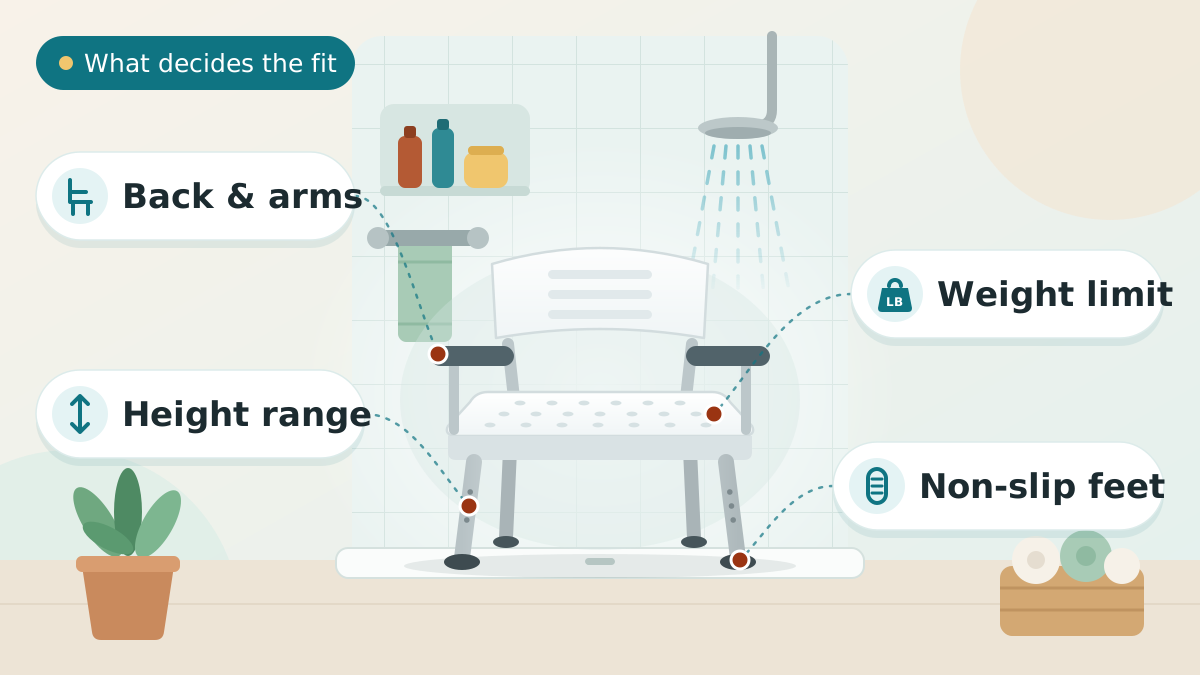
What decides the fit: height range, weight capacity, whether a back and arms are needed, and whether the tub calls for a bench that spans the rim instead.
Measure the tub floor before ordering. A chair that cannot sit flat on all four feet, or that crowds the enclosure, becomes a hazard of its own rather than a fix.
A closer look at our top pick
Drive Medical Bathroom Bench with Back & Arms
Best for: Most seniors who want a durable, no-frills everyday chair
- Durable molded-plastic seat
- Suction-tip legs for grip
- Back + armrests for support
- Adjusts 16–20.5" in 0.5" increments
Independently researched · Updated October 2026
This is the chair most bathrooms should start with, and it earns that on dependability rather than features. A durable molded-plastic seat sits on suction-tipped legs that grip a wet floor, while a backrest and armrests give a senior something to push against and lean on.
What sets it apart from cheaper stools is the fit. The legs adjust tool-free from 16 to 20.5 inches in fine half-inch steps, so you can dial in a transfer height that matches the tub edge and the user's legs instead of settling for 'close enough.'
What we love
- Proven, widely trusted design
- Fine 0.5" height adjustment
- Back and arms aid stability and transfers
- Simple, tool-free assembly
Things to consider
- Hard plastic seat is not padded
- Bulkier than a compact stool
Right for you if
- ✓You want one durable, no-drama chair for everyday showers
- ✓Back and arm support matter for balance and getting up
- ✓You need to fine-tune the seat height to the tub and the user
Maybe skip it if
- !You want a cushioned seat for longer, more comfortable showers
- !Your shower or tub is too compact for a full bench with arms
- !You need bariatric capacity beyond a standard chair
What owners consistently report
Common praise
- +Owners trust it because the design is proven and hard to get wrong
- +The half-inch height steps make a genuinely good transfer fit easy
- +Back and arms noticeably steady people during the riskiest moments
Common gripes
- –The hard plastic seat isn't padded
- –It's bulkier than a compact corner stool
- –Check your tub or stall dimensions for arm clearance before buying
Getting started
- →Set the seat height so feet rest flat and standing up is easy
- →Press each suction tip down firmly on a clean, wet floor before use
- →Pair it with a grab bar and a handheld shower head for the safest setup
How it compares
Our runner-up, the Drive Medical Padded Shower Chair, trades a little simplicity for comfort: a cushioned, contoured seat and removable padded arms on a light aluminum frame, ideal for longer showers or sensitive skin — though the padding needs more time to dry. Choose the standard bench for a durable, fine-adjustable everyday chair; choose the padded version when comfort during longer sits is the priority.
How we picked
We compared 6 options. These chairs were compared on frame stability and slip resistance, weight capacity, seat comfort and drainage, back and arm support, and rust-resistant materials. We relied on manufacturer specs, verified owner reviews, and bathing-safety guidance rather than marketing claims. Match the seat type and capacity to the user and tub, confirm clearances, and pair the chair with a grab bar and handheld shower for safer bathing.
Reviewed by Kutubuddin — who researches senior-care products and the real-world needs of caregivers and older adults.
Other picks, reviewed
Drive Medical Padded Shower Chair
A padded upgrade for longer or more comfortable showers, with removable padded armrests and a contoured backrest on a lightweight aluminum frame. Height adjusts 16 to 21 inches in 1-inch steps.
What we like
- Cushioned comfort for longer showers
- Removable arms ease side transfers
- Light, rust-resistant aluminum
- Contoured back for support
Keep in mind
- Padding needs more drying time
- 1" increments are less fine than some
Key features
- Padded removable armrests
- Contoured backrest
- Lightweight aluminum frame
- Adjusts 16–21" in 1" increments
HOMLAND 500 lb Shower Chair
Built for heavier users, with a wide seat rated to 500 lb, padded armrests, and a removable back and arms. The aluminum-alloy frame uses stainless-steel washer feet to resist rust, and it assembles without tools.
What we like
- High 500 lb capacity
- Wide, supportive seat
- Rust-resistant hardware
- Removable back and arms for flexibility
Keep in mind
- Larger footprint
- Heavier to reposition than compact models
Key features
- 500 lb weight capacity
- Wide seat with padded armrests
- Removable back and arms
- Rust-resistant stainless-steel feet
- Tool-free assembly, 1" increments
Vaunn Medical Compact Shower Chair
A small-footprint chair for tight showers that stays stable and supportive rather than dropping to a flimsy backless stool. Anodized aluminum with padded removable arms, a removable back, and a contoured HDPE seat (16" × 13"); just 8.5 lbs and adjustable 16 to 21 inches.
What we like
- Small footprint for tight spaces
- Still stable with back and arms
- Very light to move and store
- Rust-resistant anodized aluminum
Keep in mind
- Narrower seat than full-size chairs
- Not for bariatric users
Key features
- Compact 16" × 13" contoured HDPE seat
- Padded removable arms + removable back
- Anodized aluminum, just 8.5 lbs
- Adjusts 16–21", 350 lb capacity
Medline Transfer Bench with Reversible Backrest
The transfer bench to get for tub bathing — it straddles the tub wall so you sit down outside and slide in, removing the dangerous step-over. The backrest is reversible, so it mounts on whichever side suits your tub, and the push-button legs set the seat anywhere from 17.5 to 22 inches. Rated to 400 lb, and at 11 lb light enough to lift out for cleaning.
What we like
- Removes the risky step over the tub
- Reversible backrest suits either bathroom layout
- Push-button height adjustment needs no tools
- Tool-free assembly, and 11 lb to move
Keep in mind
- Needs clear space on both sides of the tub
- Larger and less portable
Key features
- Straddles the tub wall — no step-over
- Reversible backrest fits either side of the seat
- Push-button height adjustment, 17.5 to 22 inches
- Slip-resistant feet outside, suction cup feet inside the tub
- 400 lb capacity, aluminum frame
Medline Rust-Resistant Aluminum Shower Chair
Made for the long haul in a wet bathroom — a rust-resistant aluminum frame that will not corrode the way a plated-steel one does. The seat has a front cutout, which is there for washing and peri-care without standing up, and drainage holes so water does not pool. Height is adjustable and the backrest gives something to lean against.
What we like
- Built to resist rust long-term
- Cutout makes seated washing far easier
- Trusted medical-supply brand
Keep in mind
- No padded seat
- No armrests — less to push up from
- The cutout is not to everyone's taste
Key features
- Rust-resistant aluminum frame
- Hygiene cutout seat for washing while seated
- Drainage holes for wet use
- Height-adjustable legs
- Backrest for support
What to look for
Shower chair, tub bench, or transfer bench?
The first choice is the style, and it depends on the bathroom and the person:
- A basic shower chair or stool sits inside the shower or tub and suits someone who can step in safely but needs to sit while washing.
- A shower bench is longer and sturdier than a stool, giving more room to sit and better stability for a larger or less steady user.
- A tub transfer bench straddles the edge of the tub, so a senior can sit down outside the tub and slide across rather than stepping over the wall, which suits anyone who struggles to lift a leg over the side.
Match the style to how the person actually gets in and out. If stepping over a tub wall is the risky moment, a transfer bench or shower bench solves more than a plain chair ever will.
Height, weight capacity, and stability
A shower chair has to be rock-solid on a wet, slick surface. Look for adjustable-height legs so the seat sits at a height where the feet rest flat and the knees are level with the hips, which makes standing back up far easier. Check the weight capacity against the user (standard chairs hold around 250 to 300 pounds; bariatric models go higher), and choose a wider seat and frame for a larger person. A backrest and armrests add security and give something to push up from, though they take up more room than a backless stool.
One pick below, the HOMLAND, is rated to 500 lb. For a wider seat, reinforced base, and up to 600 lb, our bariatric shower chairs roundup is built specifically for that capacity range.
Feet, drainage, and material
The rubber tips are what keep the chair from sliding, so they should be intact, wide, and suction-style where possible. Seats with drainage holes stop water pooling under the person, and textured seats are less slippery than smooth plastic. Aluminum or rustproof frames matter in a permanently wet room; avoid anything that can corrode. Wipe the frame down regularly and check the feet every few weeks, since worn tips are a common, easily missed hazard.
Pair it with the rest of a safe bathroom
A shower chair is one piece of a safer bathroom, not the whole answer. It works best alongside a set of properly anchored grab bars for seniors, a non-slip bath mat inside and outside the tub, and a handheld shower head so the person can wash while seated without standing or twisting. Together these turn the most fall-prone room in the house into a manageable one.
Read more:Bathroom Safety for SeniorsPost-Surgery Home Setup GuideGrab Bar Placement Guide 2025
Tips to Choose Shower Chairs
Short on time? Here are the key points to weigh before choosing, each covered in detail above:
- Shower chair, tub bench, or transfer bench?
- Height, weight capacity, and stability
- Feet, drainage, and material
- Pair it with the rest of a safe bathroom
Comparing options? See our guides to Best Suction Grab Bars for Seniors, Best Bariatric Shower Chairs for Seniors, and Best Toilet Safety Rails for Elderly.
Frequently asked questions
Used properly, a shower chair can make bathing more stable by letting the person sit instead of standing on a wet surface. They remove the need to stand on wet surfaces while washing. Look for chairs with non-slip rubber feet, stable construction, and appropriate weight capacity. Always ensure the chair is positioned securely before your loved one sits down, and consider pairing it with grab bars for additional safety during transfers.
For seniors with limited mobility, a transfer bench is often the best choice. These chairs extend outside the shower, allowing the person to sit safely before swinging their legs over the tub wall. Look for models with padded armrests on both sides for support during transfers, and ensure it has a high weight capacity for stability.
Shower stools work well for seniors with good balance and core strength who just need occasional rest while bathing. However, chairs with backrests provide better support for those with balance issues, weakness, or who need to sit for extended periods. If your loved one has any stability concerns, choose a chair with a backrest and armrests for maximum safety.
Standard shower chairs typically list capacities around 250-300 pounds, while bariatric models are rated higher; always check the manufacturer's stated limit. Always choose a chair with a weight capacity well above the user's weight for an extra safety margin. Check the manufacturer's specifications and never exceed the stated weight limit.
Absolutely. Grab bars and shower chairs work together to create a comprehensive safety system. Install grab bars near the shower entrance and beside the chair to help with transfers on and off the seat. This combination provides multiple points of support during transfers on and off the seat.
The final verdict
Our overall winner is the Drive Medical Bathroom Bench with Back & Arms. You can check the current price on Amazon.
Our Top 5 Picks at a Glance
Ready to choose? Here are the top 5 again.
Best Overall
Drive Medical Bathroom Bench with Back & Arms
Best Padded
Drive Medical Padded Shower Chair
Best Heavy-Duty
HOMLAND 500 lb Shower Chair
Best Compact
Vaunn Medical Compact Shower Chair
Best Transfer Bench
Medline Transfer Bench with Reversible Backrest
Affiliate links — we may earn a commission.
