A predictable day is one of the quiet foundations of healthy aging. A steady rhythm — regular meals, movement, rest, and sleep — steadies mood, supports sleep, and makes it far easier to keep track of medications and appointments.
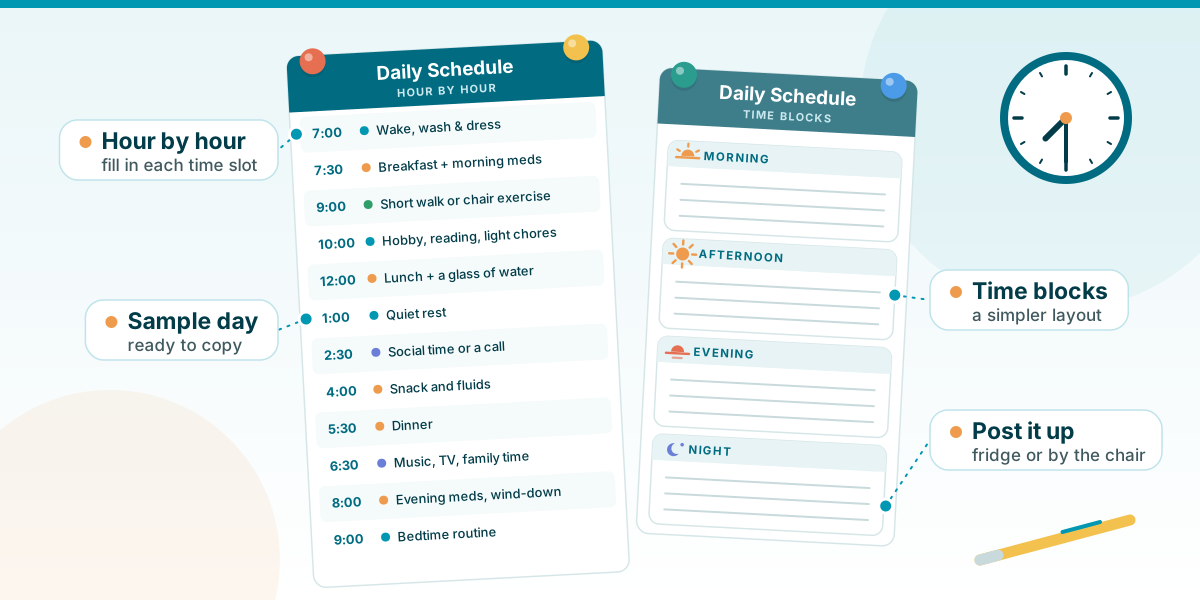
This free template gives you a blank daily schedule to fill in — as an hour-by-hour timetable or simpler Morning/Afternoon/Evening/Night blocks — plus a ready-made sample daily schedule below to copy and adapt. Print it, put it where it will be seen, and let the day run on rails instead of on memory.
This is a planning tool, not medical advice. Fit medications, therapies, and appointments around the plan set by your loved one’s healthcare provider.
Download Your Free Daily Schedule Template
Two printable layouts for an elderly parent or senior — a fill-in template plus the sample day below to copy from. No signup required.
Free, print-friendly PDFs. We respect your privacy.
A Sample Daily Schedule for an Elderly Parent
Not sure where to start? Here is one realistic, healthy day. Treat it as a starting point — shift the times to match when your person naturally wakes, eats, and tires.
| Time | Activity |
|---|---|
| 7:00 AM | Wake, wash, and dress |
| 7:30 AM | Breakfast with fluids + morning medications |
| 9:00 AM | Gentle movement — a short walk or chair exercises |
| 10:00 AM | Purposeful activity — a hobby, reading, or light chores |
| 12:00 PM | Lunch and a full glass of water |
| 1:00 PM | Quiet rest or a short, early nap |
| 2:30 PM | Social time, an outing, or a phone/video call |
| 4:00 PM | Afternoon snack and fluids |
| 5:30 PM | Dinner |
| 6:30 PM | Relax — music, TV, or time with family |
| 8:00 PM | Evening medications and wind-down |
| 9:00 PM | Bedtime routine, lights out |
What Makes a Healthy Daily Routine
Whatever the exact times, a few principles do most of the good:
- Keep wake-up and bedtime at the same times every day — steady sleep anchors everything else.
- Space three meals and regular fluids through the day; dehydration is easy to miss in older adults.
- Build in some daily movement, even a few minutes — it protects strength, balance, and mood.
- Give the mind something too: a hobby, conversation, puzzles, or a favorite show.
- Tie medications to fixed daily events so a dose is harder to forget.
- Aim for a little daylight and fresh air — it helps both sleep and spirits.
- Wind down before bed — dimmer lights, calmer activity, and no caffeine late in the day.
Schedule, Checklist, or Both?
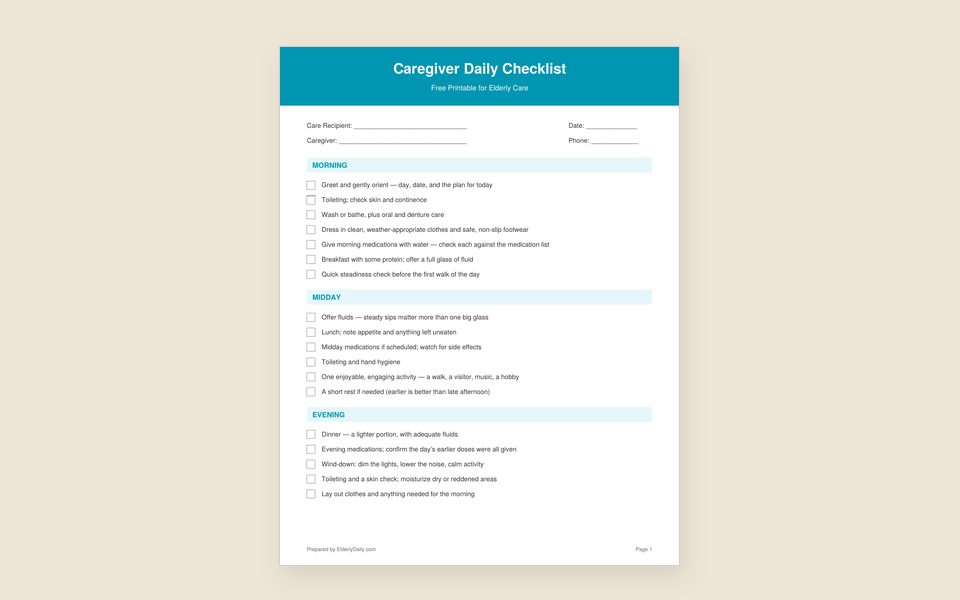
A schedule plans what happens and when. A caregiver daily checklist confirms that each care task actually got done. They are not the same tool, and many families keep both side by side — the schedule shapes the day, the checklist catches anything missed.
If you are caring for someone with dementia, start instead with our dementia care toolkit, whose schedule front-loads the mornings and keeps evenings calm to ease sundowning.
Frequently Asked Questions
A healthy day has a steady shape: the same wake and sleep times, three meals with regular fluids, some daily movement, mental and social engagement, medications at set times, a little daylight, and a calm wind-down before bed. Our sample schedule on this page shows one realistic version — use it as a starting point and adjust it to the person’s own preferences and energy.
Related Routines & Resources
Daily Routine for Seniors (Guide)
The full guide to structuring the whole day
Caregiver Daily Checklist
Confirm each day’s care tasks got done
Dementia Care Printables
A daily schedule built for dementia
Daily Nutrition & Hydration Guide
Fit meals and fluids into the day
Daily Exercise Routine for Seniors
Movement to build into the schedule
Evening Routine for Seniors
Wind-down habits for better sleep
Daily Medication Chart & Tracker
Keep doses on schedule
Senior Care Plan Generator
Turn the routine into a written plan
Last Updated: September 2026
This resource helps families plan calm, consistent days for an older adult. For medical advice, always consult your loved one’s healthcare provider.