
Seniors Living Alone: A Safety Guide for Families

Practical guidance for families, not medical advice. Balancing independence with safety is personal — involve the older adult, and their doctor, in decisions.
Most older adults want to stay in their own home — and with the right safeguards, many safely can. This guide covers the layers that make living alone safer, and the signs that it may no longer be enough.
Key takeaways
- Living alone safely is about layers of support: emergency response, a safe home, help with medications and meals, and regular contact.
- The most important safeguard is a way to get help fast — a medical alert device, since a fall while alone is the classic risk.
- Reduce fall hazards in the home — falls are a major risk for people living alone; see fall prevention.
- Set up reliable medication and meal support and a regular check-in routine so problems are caught early.
- Respect independence, but know the signs it is no longer safe to live alone.
Quick answer
How can I help an elderly parent live alone safely?
Build safety in layers. First, ensure a fast way to get help — a medical alert device or fall-detection sensor. Then fall-proof the home, set up reliable medication (an automatic dispenser) and meal support, and establish a regular check-in routine by phone, video, or monitoring. Involve them in the plan, and stay alert to the signs living alone is no longer safe.
Independence and safety, together
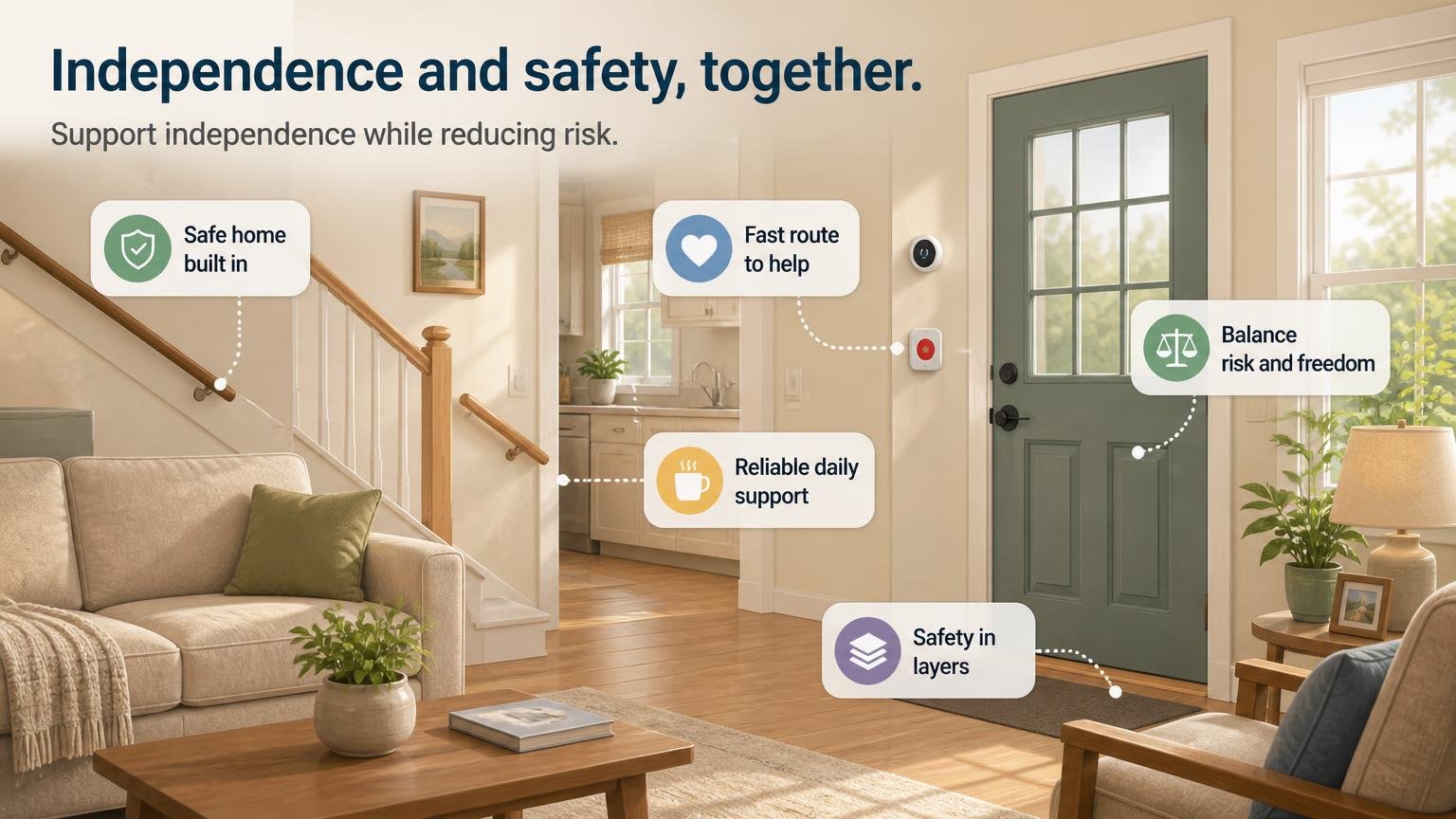
The vast majority of older adults want to remain in their own home, and there is real value in honoring that — independence supports dignity, identity, and wellbeing. The goal for families is rarely to end that independence prematurely, but to make it as safe as possible, and to recognize honestly when the risks have grown too large.
That balance is easier when safety is built in layers rather than treated as an all-or-nothing choice. A safe home, a fast route to help, reliable daily support, and regular human contact can together let someone stay home well for years. This guide covers those layers, and points to the signs that tell you when to reassess.

Sponsored Pick
HOMLAND T8 Foldable
Tight bathrooms, travel, or anyone who wants to fold the rail out of the way
Check PriceGet the free Home Safety Checklist
A room-by-room printable to walk the home and fix the risks behind most falls. Enter your email and we will send you the PDF.
A fast way to get help (the top priority)
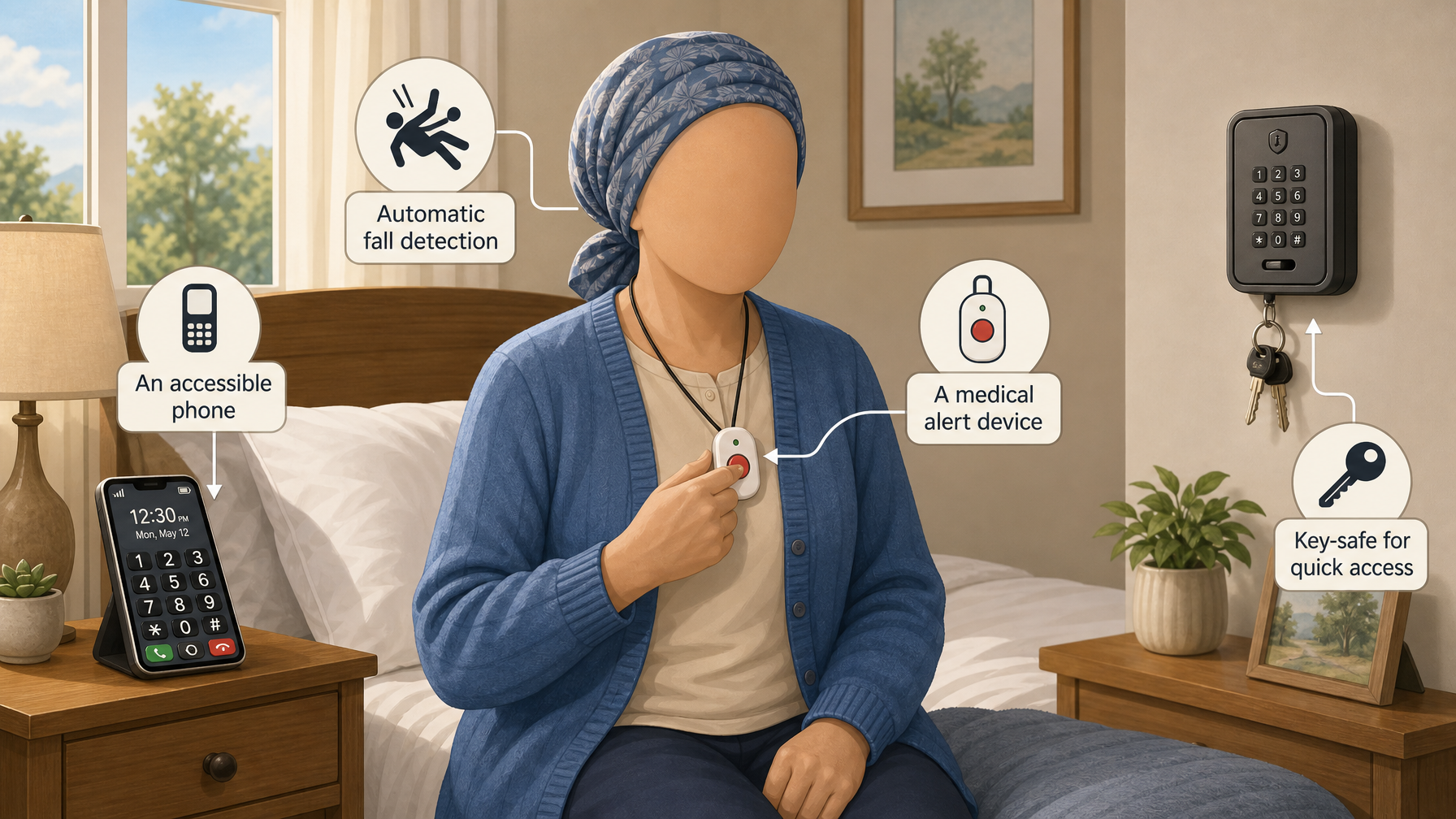
For someone living alone, the single most important safeguard is a reliable way to summon help in an emergency — because the greatest danger is not a fall itself, but a fall (or sudden illness) with no way to call for aid, sometimes for hours.
- A medical alert device — a wearable button that calls for help at a press is the classic, high-value tool. See medical alert devices for seniors.
- Automatic fall detection — devices and ambient sensors that can detect a fall and alert help even if the person cannot press a button — valuable for anyone who has fallen before.
- An accessible phone by the bed and main chair — a large-button or amplified phone with key contacts on speed dial.
- A key-safe or trusted key holder so responders and family can get in quickly without breaking down a door.
Safety first
If a parent living alone has fallen before, a fall-detection device is one of the most valuable investments you can make — many falls leave a person unable to reach a phone or press a button unaided.
Reduce fall and home hazards
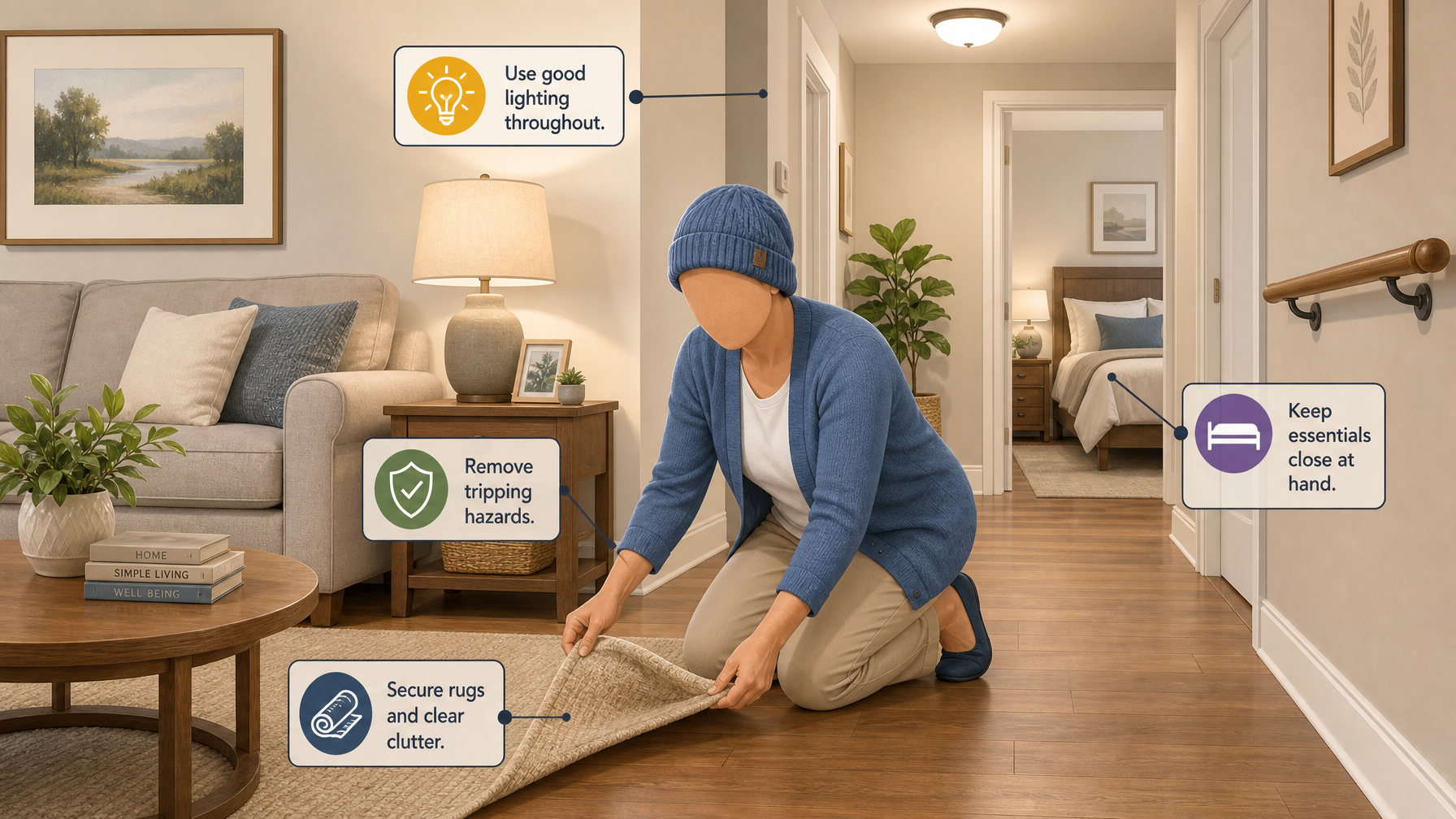
Because falls are a major risk for people living alone, a safe home is foundational. Work through the whole house — our senior home safety guide is a room-by-room walkthrough — with special attention to:
- Fall hazards — remove loose rugs, tidy cords, improve lighting, and add bathroom grab bars and stair rails. See why elderly parents keep falling.
- Lighting — bright, even light, and night lights on the route to the bathroom.
- The bedroom — a safe bedroom setup with essentials in reach.
- Fire and CO safety — working smoke and carbon-monoxide alarms (with visual/vibrating alerts if hearing is impaired), and safe cooking habits.
- Mobility aids — the right, correctly fitted walker or cane available where needed.
Medication and meal support
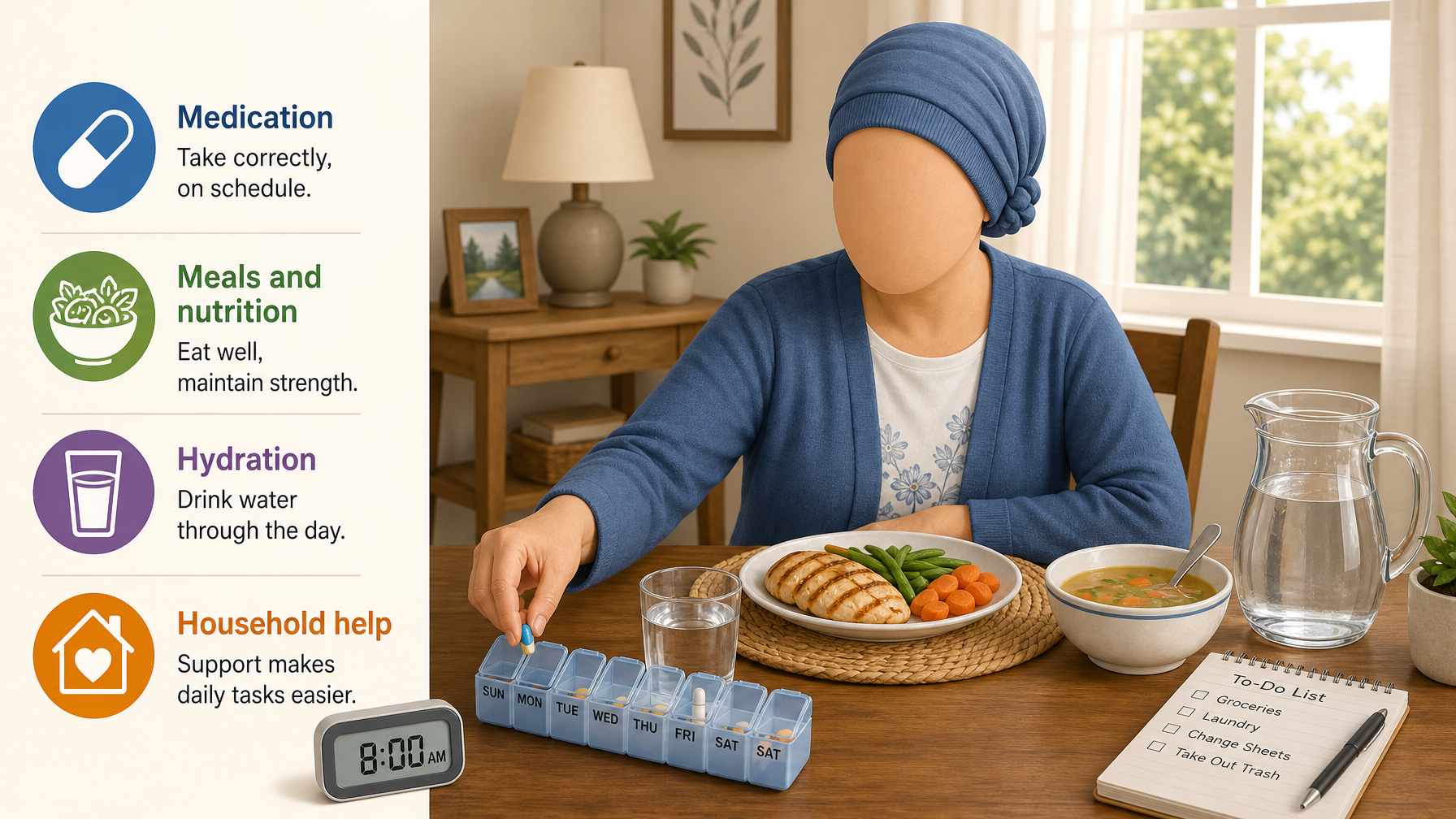
Two everyday needs are common failure points for people living alone: taking medications correctly and eating well. Both are addressable:
- Medication — missed or doubled doses are a real risk alone. Use a weekly pill organizer or an automatic dispenser that prompts and dispenses on schedule, and see medication management. Reminders and pharmacy blister packs help too.
- Meals and nutrition — poor appetite, difficulty cooking, or simply the effort of cooking for one leads to under-eating. Consider prepared meals, meal-delivery services, easy nutritious options, and shared meals where possible.
- Hydration — easy-to-reach drinks and gentle reminders, since dehydration causes weakness and confusion.
- Household help — cleaning, laundry, and shopping support (family, community services, or paid help) reduces both risk and strain.
Regular contact and check-ins
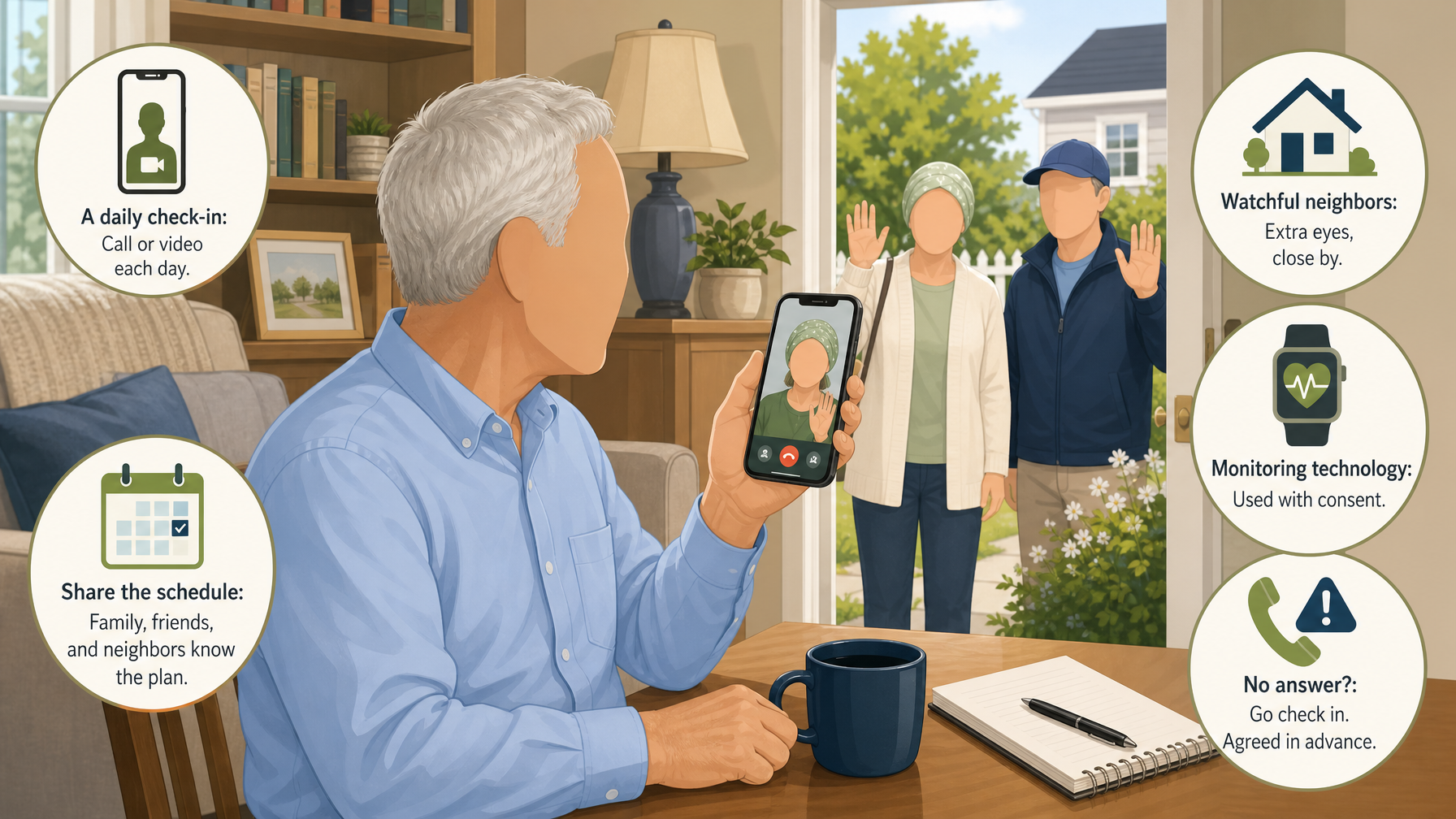
A dependable rhythm of contact does two things: it keeps the person connected (combating the isolation that harms health) and it means problems are noticed quickly rather than days later.
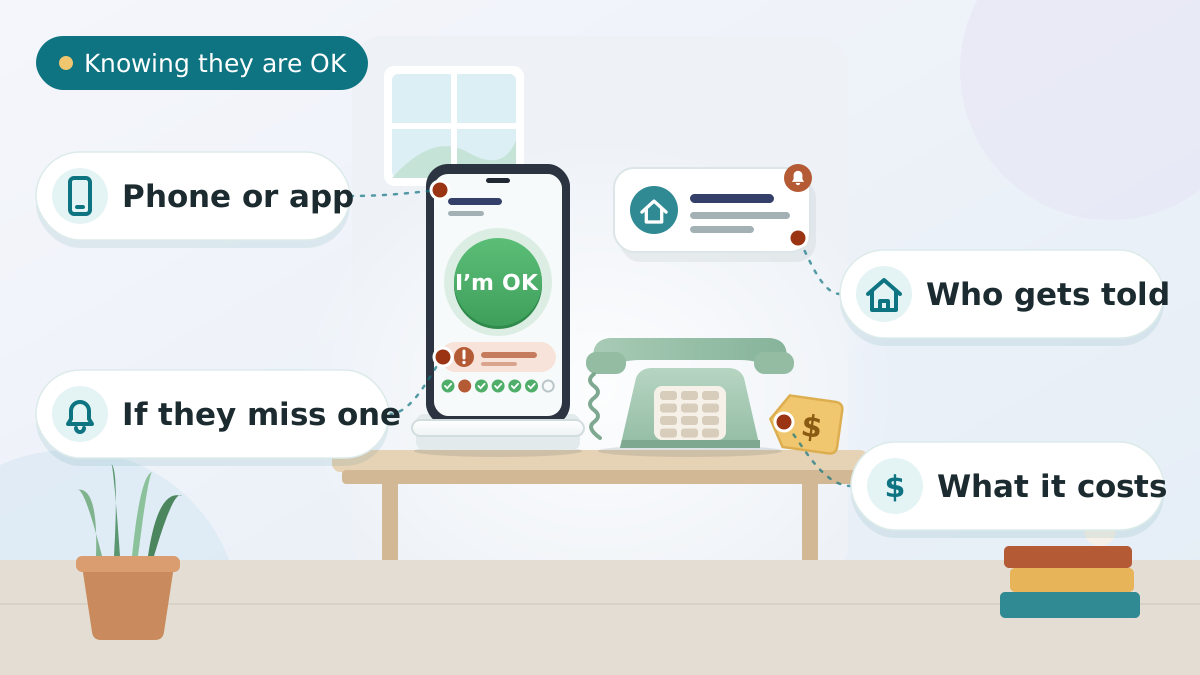
- A daily check-in — a set phone or video call so that if it is missed, someone knows to check. Video calling devices make this easy and let you see how the person actually looks, or use a dedicated daily check-in service that calls or texts automatically and alerts you if there is no answer.
- Share the schedule among family, friends, and neighbors so contact is frequent and the load is shared.
- Monitoring technology, used respectfully and with consent — monitoring systems can provide reassurance (activity, door, or wellness sensors) without constant calls.
- Watchful neighbors who have your number and know to raise a flag if something seems off.
- Protect against isolation — social contact, activities, and connection are part of safety and wellbeing, not extras.
Good to know
A simple "no answer = go check" rule around a daily call is one of the most effective, lowest-tech safety nets there is. Agree it in advance with everyone involved.
Staying on top of health
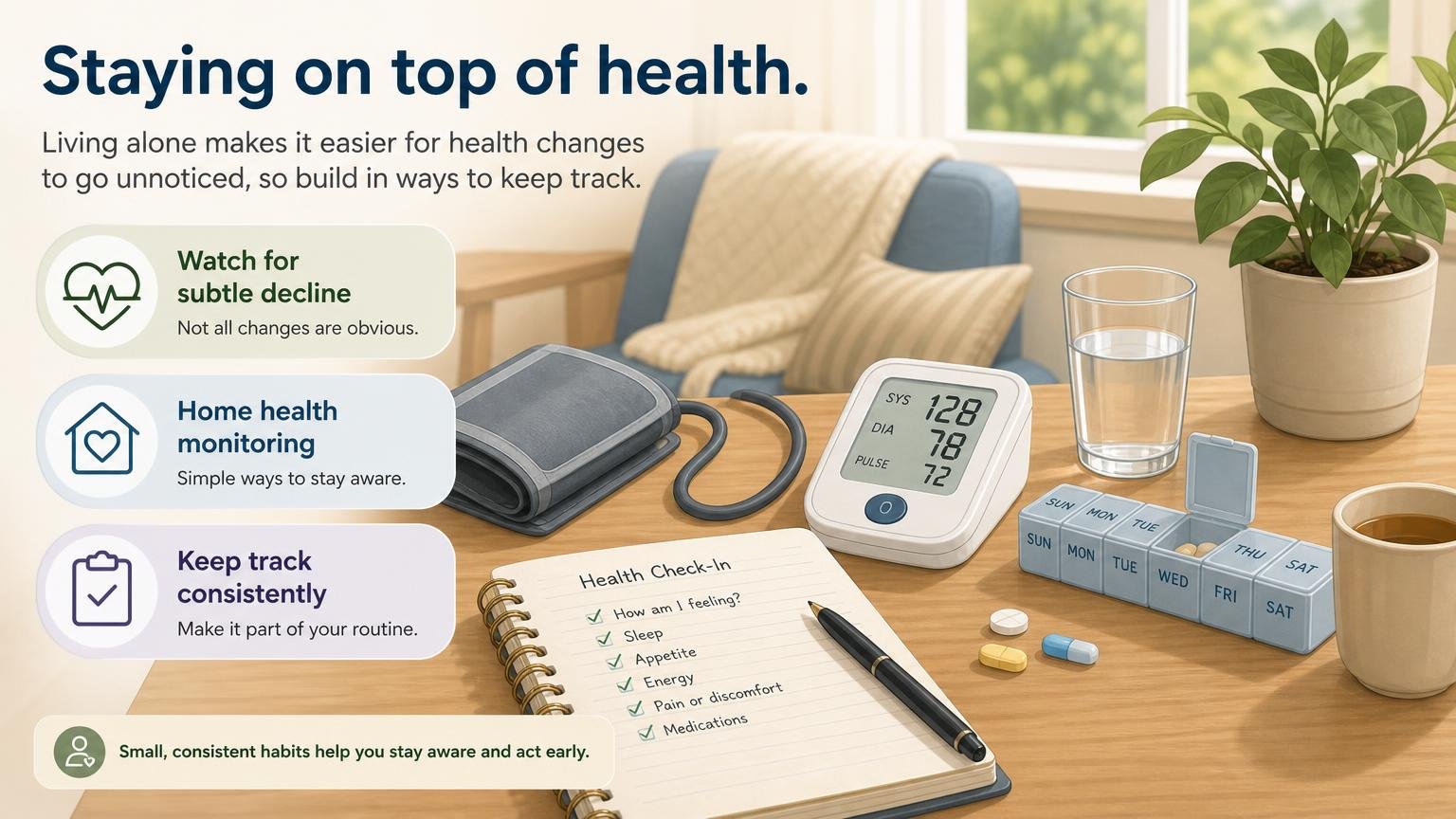
Living alone makes it easier for health changes to go unnoticed, so build in ways to keep track:
- Keep up medical appointments, eye and hearing checks, and medication reviews — sensory loss and medication issues both affect safety and falls.
- Watch for subtle decline — weight loss, more clutter or unopened mail, missed medications, or changes in mood or memory — often the first signs that more support is needed.
- Consider simple home health monitoring where appropriate, and know the signs it is no longer safe to live alone.
Knowing when to reassess
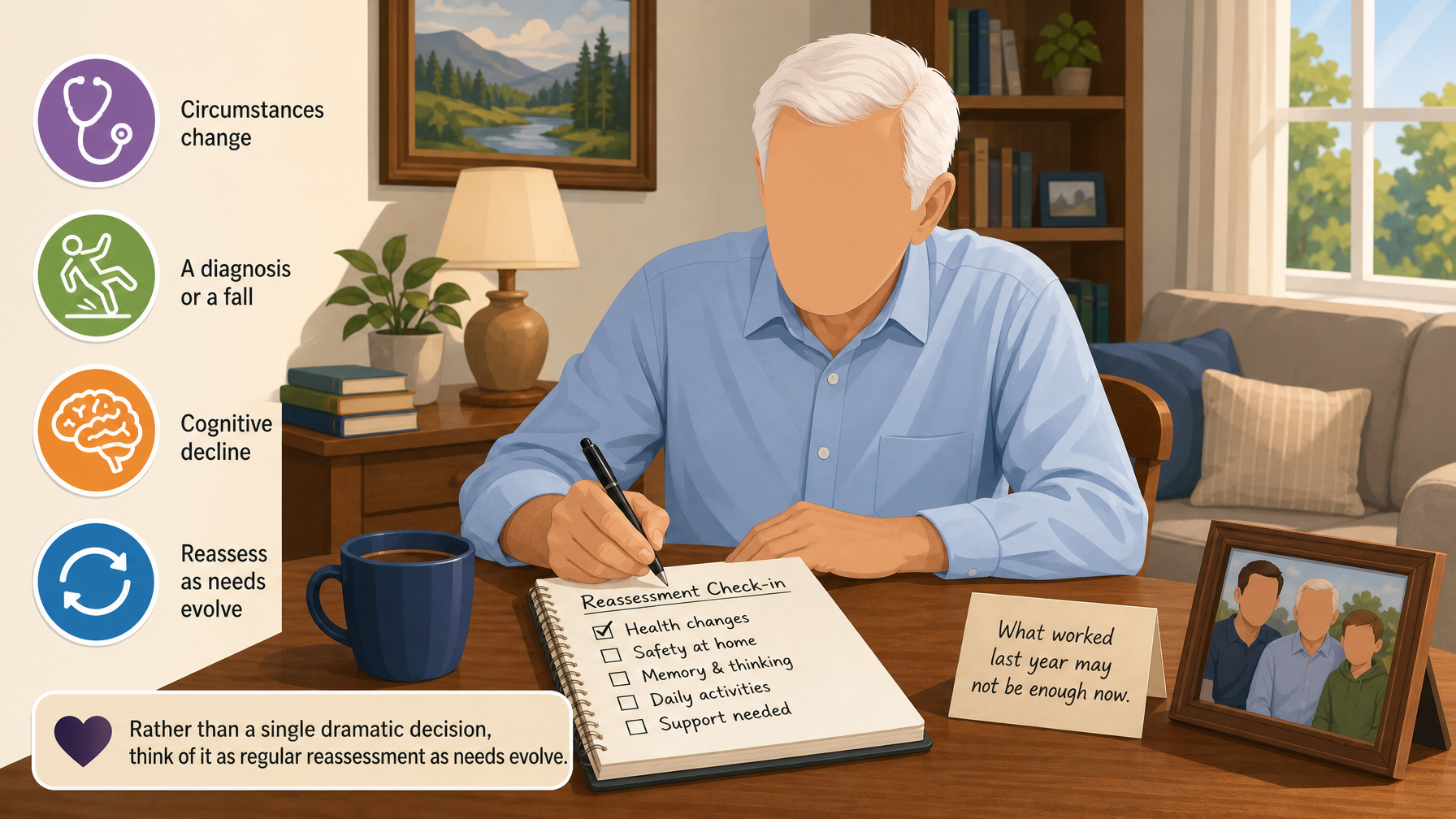
Supporting independence includes being honest about when it is no longer safe. Circumstances change — a diagnosis, a fall, cognitive decline — and what worked last year may not be enough now. Rather than a single dramatic decision, think of it as regular reassessment as needs evolve.
When you see warning signs, it is time to increase support — more help at home, adult day services, or a conversation about a move. Our guides on the signs a parent should not live alone and how to tell if a parent needs assisted living help you judge this, and when a parent refuses help covers the hard conversations. And through it all, look after yourself — see preventing caregiver burnout.
Frequently asked questions
How can I make it safer for my parent to live alone?
Build safety in layers: a fast way to get help (a medical alert or fall-detection device), a fall-proofed and hazard-proofed home, reliable medication and meal support, and a regular check-in routine so problems are caught early. Keep up health and sensory checks, involve your parent in the plan, and reassess as their needs change.
What is the most important safety device for a senior living alone?
A reliable way to summon help — typically a medical alert device (a wearable button that calls for help at a press), ideally with automatic fall detection for anyone who has fallen before. The greatest danger of living alone is a fall or sudden illness with no way to call for aid, so this safeguard comes first.
How often should I check on an elderly parent living alone?
At minimum a daily check-in by phone or video, with a clear "no answer means go check" rule agreed among family and neighbors. Sharing the schedule spreads the load and keeps contact frequent, which also combats isolation. Monitoring technology, used with consent, can add reassurance between calls.
How do I make sure my parent takes their medication when living alone?
Use a weekly pill organizer or an automatic dispenser that prompts and releases doses on schedule, consider pharmacy blister packs, and set reminders. Reconcile and review medications regularly with the pharmacist or doctor. Missed and doubled doses are a real risk when living alone, so a reliable system matters.
When is it no longer safe for a parent to live alone?
Warning signs include repeated falls, missed medications, poor nutrition or weight loss, declining hygiene or home upkeep, getting lost or confused, and unsafe situations like leaving the stove on. When these appear despite added support, it is time to reassess — see our guides on the signs a parent should not live alone and whether they need assisted living.
How can technology help a senior live alone safely?
Medical alert and fall-detection devices summon help fast, automatic pill dispensers manage medications, video calling devices enable easy check-ins and let you see how the person looks, and monitoring systems provide reassurance through activity or wellness sensors. Used respectfully and with consent, technology extends safe independent living.
Sources
- CDC. Facts About Falls — Older Adult Fall Prevention
- National Institute on Aging (NIH). Taking Medicines Safely as You Age
- Lin & Ferrucci, Arch Intern Med (2012). Hearing Loss and Falls Among Older Adults in the United States
