
Free Printable Chair Yoga for Seniors (PDF Chart)

Educational guidance, not medical advice. Follow the safety guidance below, move within a comfortable range, and check with a doctor before starting.
A printed chart on the fridge or beside the chair is one of the simplest ways to make chair yoga a daily habit. The whole routine is set out below, pose by pose, and we’ll email you the illustrated chart to print — free, with the 25-pose guide alongside it.
Key takeaways
- The whole routine is on this page, pose by pose, free to follow. The illustrated chart to print is free by email, together with the 25-pose guide.
- A printed routine kept in view (on the fridge or by the chair) is one of the best ways to build a consistent daily habit.
- The chart suits most seniors — and links through to variations for limited mobility, arthritis, and over 80.
- Build a simple weekly plan — a few gentle sessions a week, growing as it becomes familiar.
- Follow the same safety basics — sturdy chair, comfortable range, and stop for pain or dizziness.
Quick answer
Where can I get a free printable chair yoga routine for seniors?
The full routine is set out on this page, pose by pose, and we’ll email you the illustrated chart to print at no cost — the form is just below. Keeping the printed chart somewhere visible (the fridge, or beside the chair) is one of the best ways to turn chair yoga into a daily habit. Follow it safely from a sturdy chair, moving within a comfortable range, and choose the variation that fits — limited mobility, arthritis, or over 80. Check with a doctor before starting.
Get the free printable chair yoga PDF
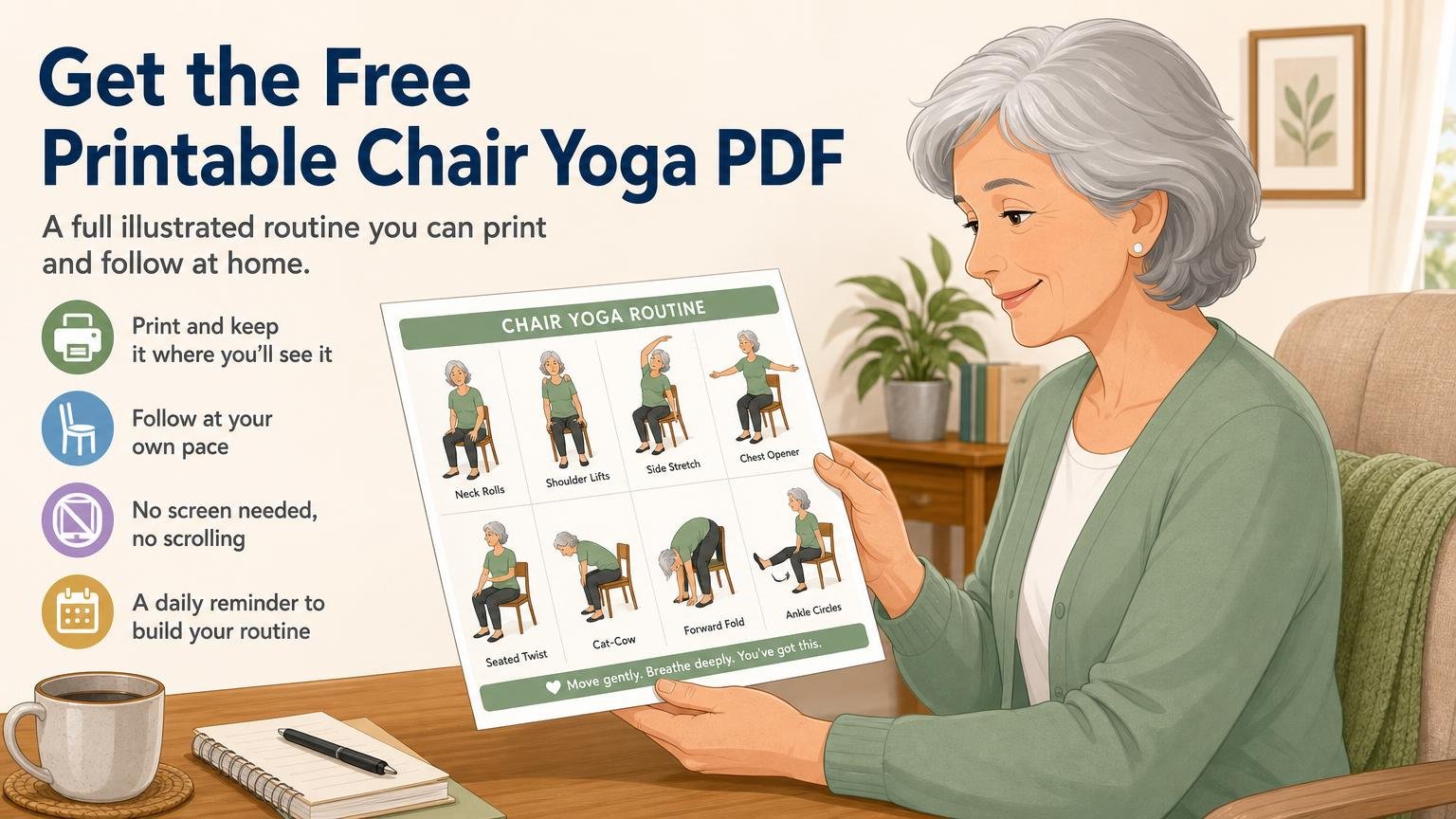
The easiest way to make chair yoga stick is to have the routine printed and in front of you. The illustrated chart lays out the whole routine on one page — no screen to hold, no scrolling, just a clear sheet to work through at your own pace. Put your email in the box below and we’ll send it, along with the 25-pose guide.
Print it and keep it somewhere you’ll see it every day — on the fridge, by the favorite chair, or in a folder with any other routines. A visible reminder is one of the simplest and most effective ways to build a lasting daily habit. Every pose on the chart is also written out further down this page, so you can start before the email arrives.
Good to know
Print the chart and tape it somewhere you can’t miss it — the fridge, the wall by the chair, or the back of a door. A routine you can see is a routine you’ll actually do; out of sight really does mean out of mind for a new habit.
Get the printable chair yoga chart
We’ll email you the illustrated chart to print — the full routine on one page — together with our 25-pose Advanced Chair Yoga Guide: step-by-step instructions, a caregiver tip and safety notes for every pose. Occasional gentle-movement tips after that. Unsubscribe anytime.
The gear we recommend for chair yoga
Our #1 pick in each essential — chosen for older adults and safe from a chair.

A Sturdy Armless Dining Chair (AmazonBasics as a buy-it example)
Regular home chair yoga use; stable, armless, correct seat height

SilverSneakers GO
Anyone on a Medicare Advantage or Supplement plan — check first, it may already be free

TheraBand Professional Resistance Bands
Seniors who want the therapist-trusted standard, especially for rehab, stretching, and gentle strength

AmazonBasics Neoprene Dumbbells
Most seniors who want a simple, comfortable, affordable pair to start with
The chair yoga poses in the printable (PDF)
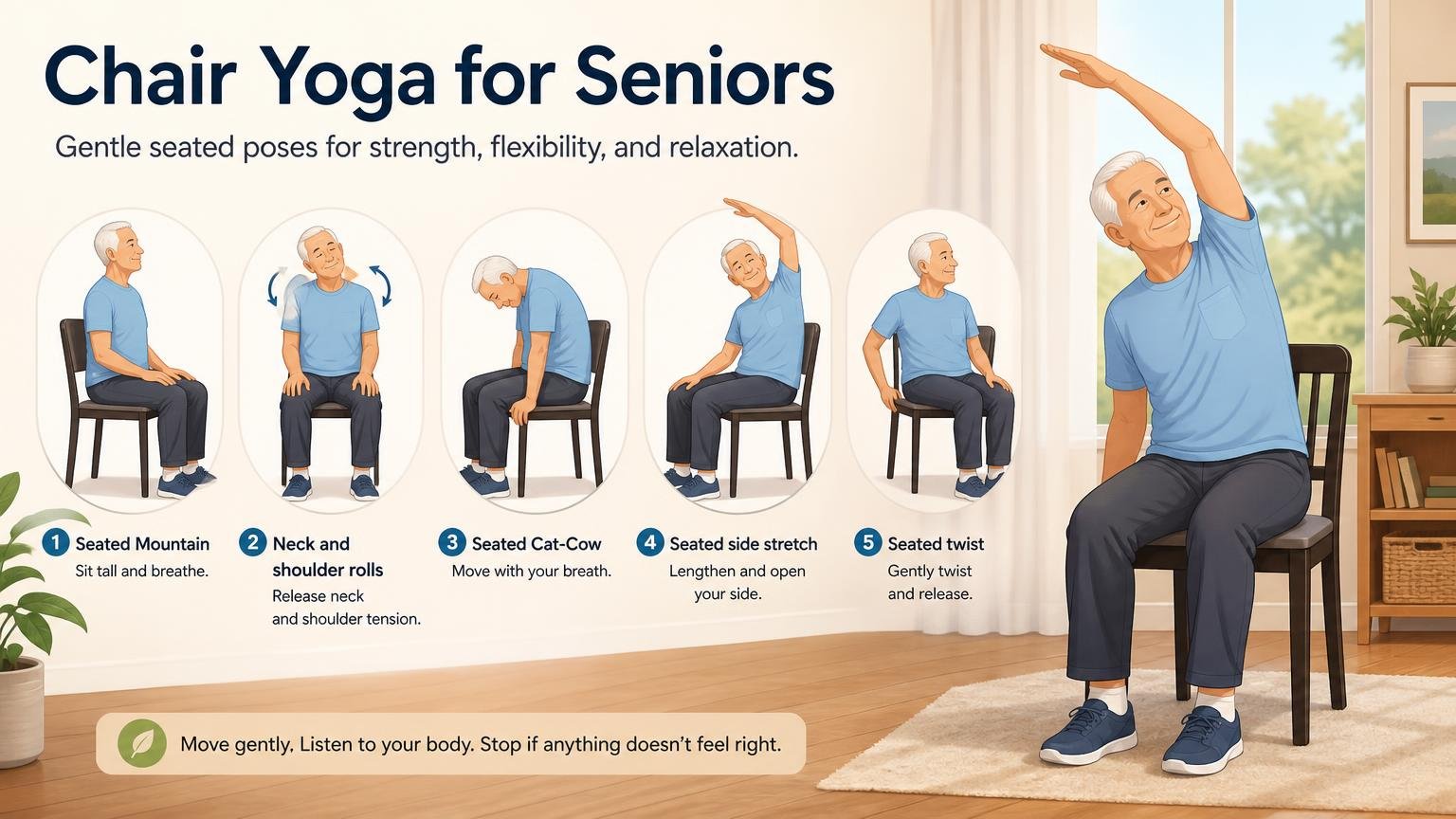
This free chair yoga routine for seniors works through a gentle, senior-friendly sequence of seated poses. Here are the main chair yoga poses it covers — all done sitting in, or lightly holding, a sturdy chair, with no standing or floor work:
- Seated Mountain — sit tall with both feet flat and shoulders relaxed, to reset your posture and steady your breathing.
- Neck and shoulder rolls — slow, easy circles to release tension in the neck, shoulders, and upper back.
- Seated Cat-Cow — gently arch and round your spine with your breath to warm up the back.
- Seated side stretch — reach one arm overhead and lean softly to the side to open the ribs and waist.
- Seated twist — turn slowly toward the back of the chair to keep the spine mobile.
- Seated forward fold — hinge forward with a flat back to gently stretch the lower back and hamstrings.
- Seated leg extensions — straighten one knee at a time to strengthen the thighs and support the knees.
- Ankle circles and heel raises — mobilize the ankles and feet to help circulation and balance.
- Wrist and finger stretches — open and close the hands and circle the wrists to ease stiffness.
Follow the poses in the order shown on the chart, moving only within a comfortable range. The illustrated chart of the same routine is free by email, and you can work through the poses at your own pace — or pair the chart with a guided chair yoga app if you prefer to follow along on screen.
Who chair yoga is best for
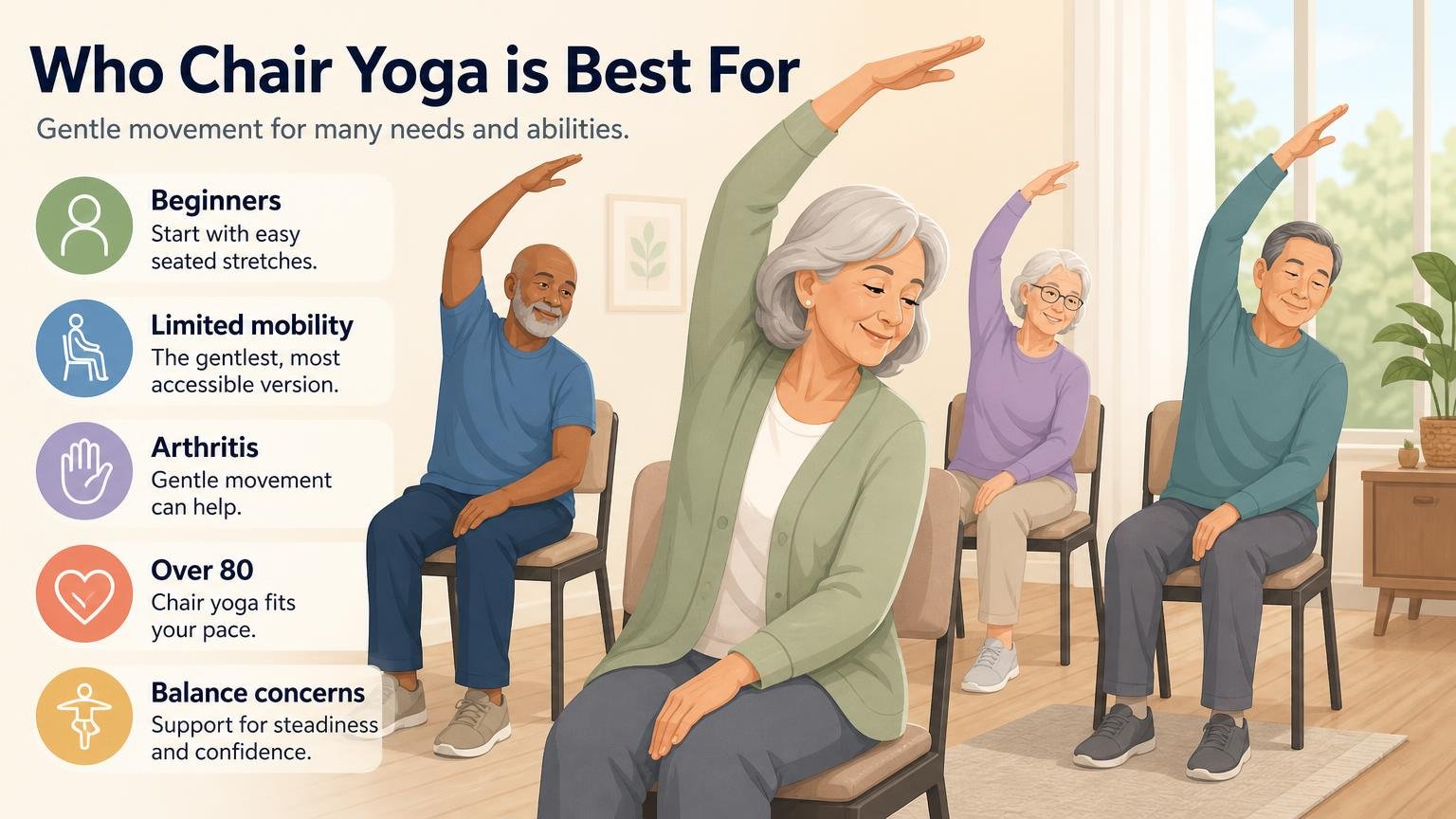
Gentle chair yoga suits a wide range of seniors, and there’s a version for most needs:
- Beginners — start with the 10-minute routine or easy seated stretches.
- Limited mobility — the gentlest, most accessible version is chair yoga for limited mobility.
- Arthritis — joint-friendly movements in chair yoga for arthritis in knees and hips.
- Over 80 — an ultra-gentle, safety-first routine in chair yoga for seniors over 80.
- Balance concerns — chair yoga for balance and fall prevention.
- Mornings — a gentle wake-up in morning chair yoga.
Why a printable routine helps seniors
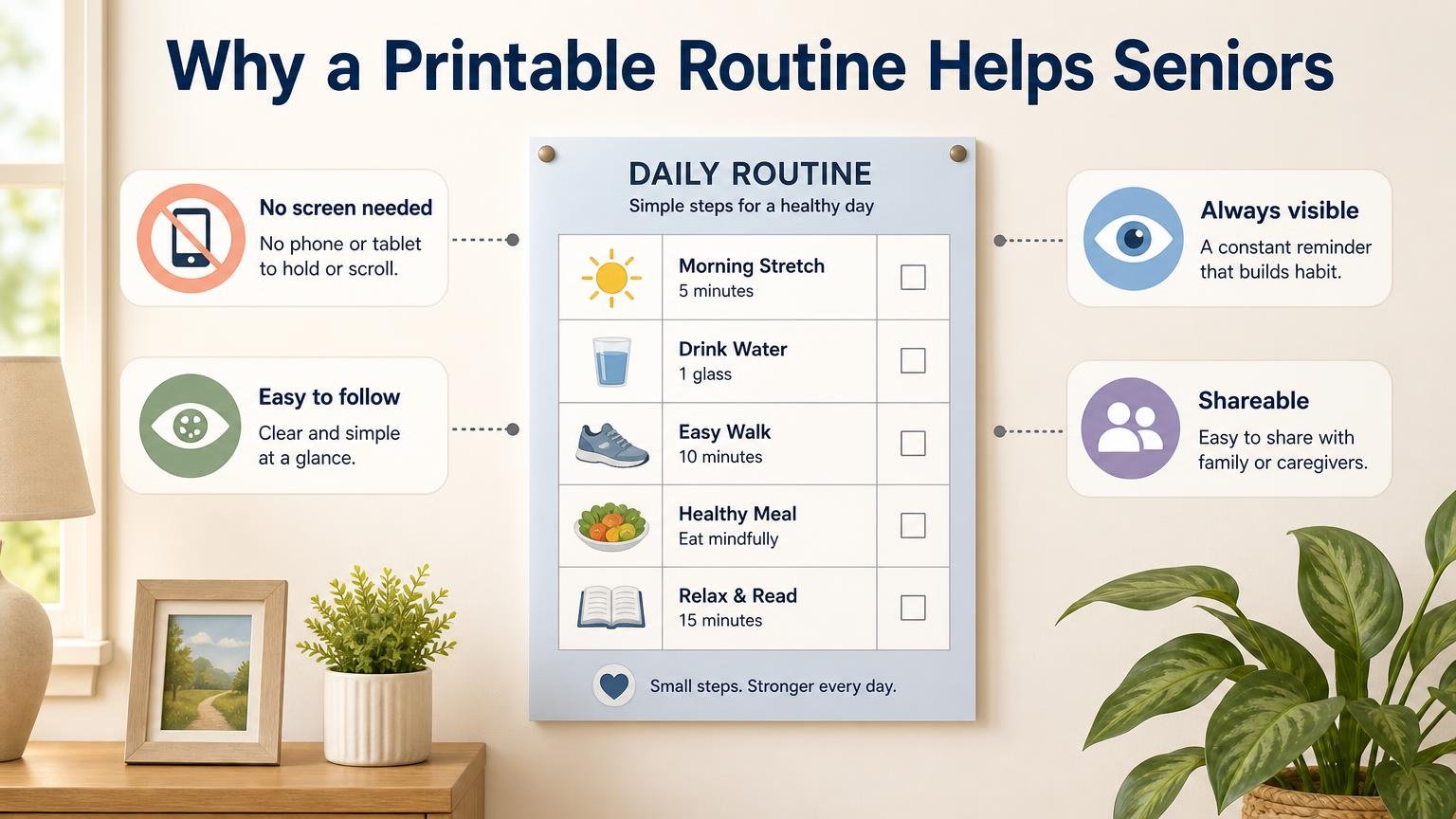
A printed chart has real advantages for older adults:
- No screen needed — no phone or tablet to hold, unlock, or scroll while exercising; easier for those less comfortable with technology or with low vision.
- Always visible — a chart on the wall is a constant, effortless reminder that builds the habit.
- Easy to follow — clear illustrations to glance at while moving, at your own pace.
- Shareable — easy for caregivers, family, or group settings to use and follow along together.
- Reliable — no battery, no connection, no distractions — just the routine.
How to build a weekly chair yoga plan
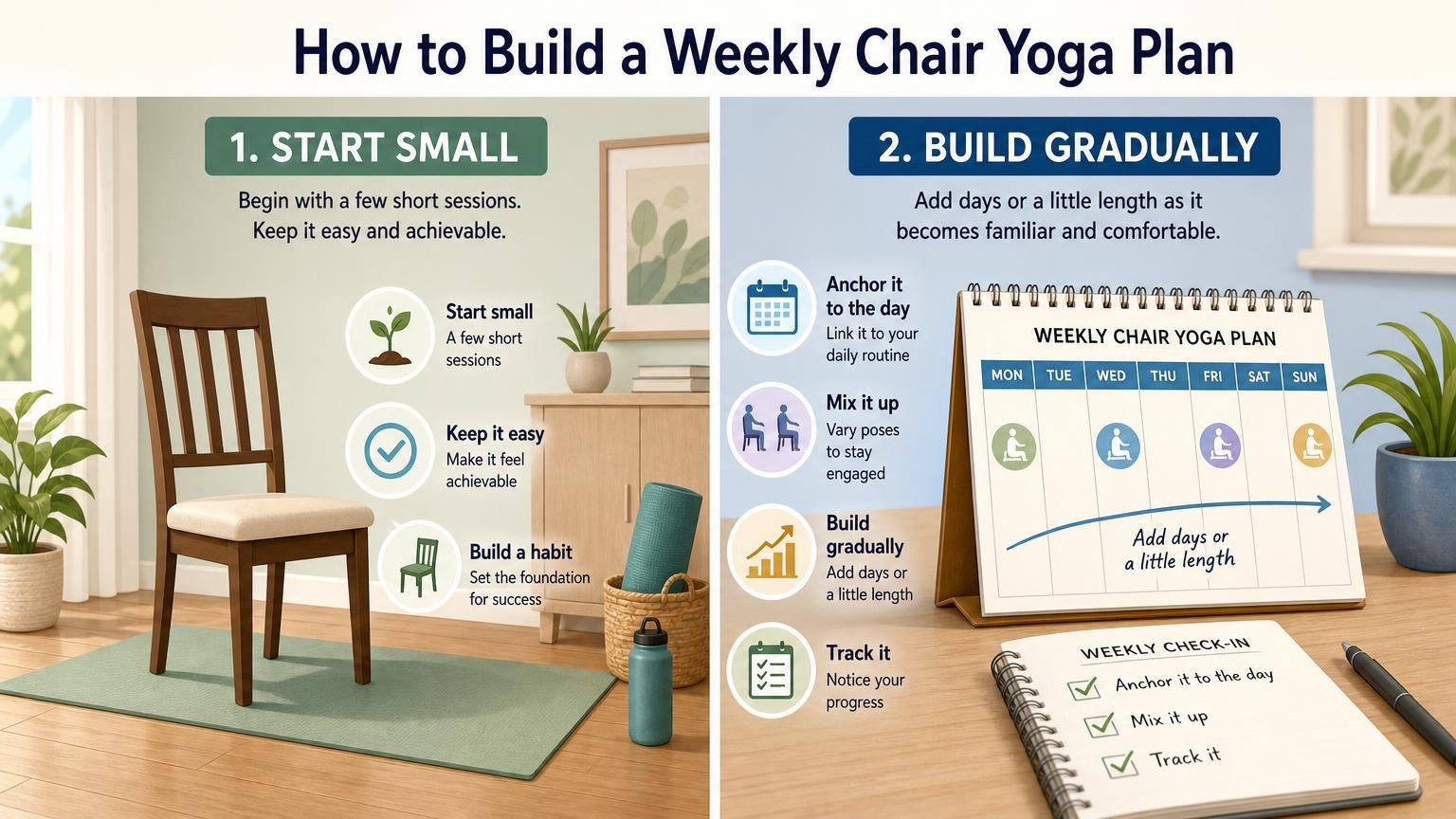
Turn the printed routine into a simple, sustainable weekly habit:
- Start small — a few short sessions in the first week, so it feels easy and achievable.
- Build gradually — add days or a little length as it becomes familiar and comfortable.
- Anchor it to the day — tie sessions to an existing habit (after breakfast, before lunch) so they happen reliably; see the daily routine guide.
- Mix it up — combine the routine with seated stretches and a little daily movement for variety.
- Track it — ticking off sessions on the printed chart is motivating and shows progress.
Safety basics for the printable routine
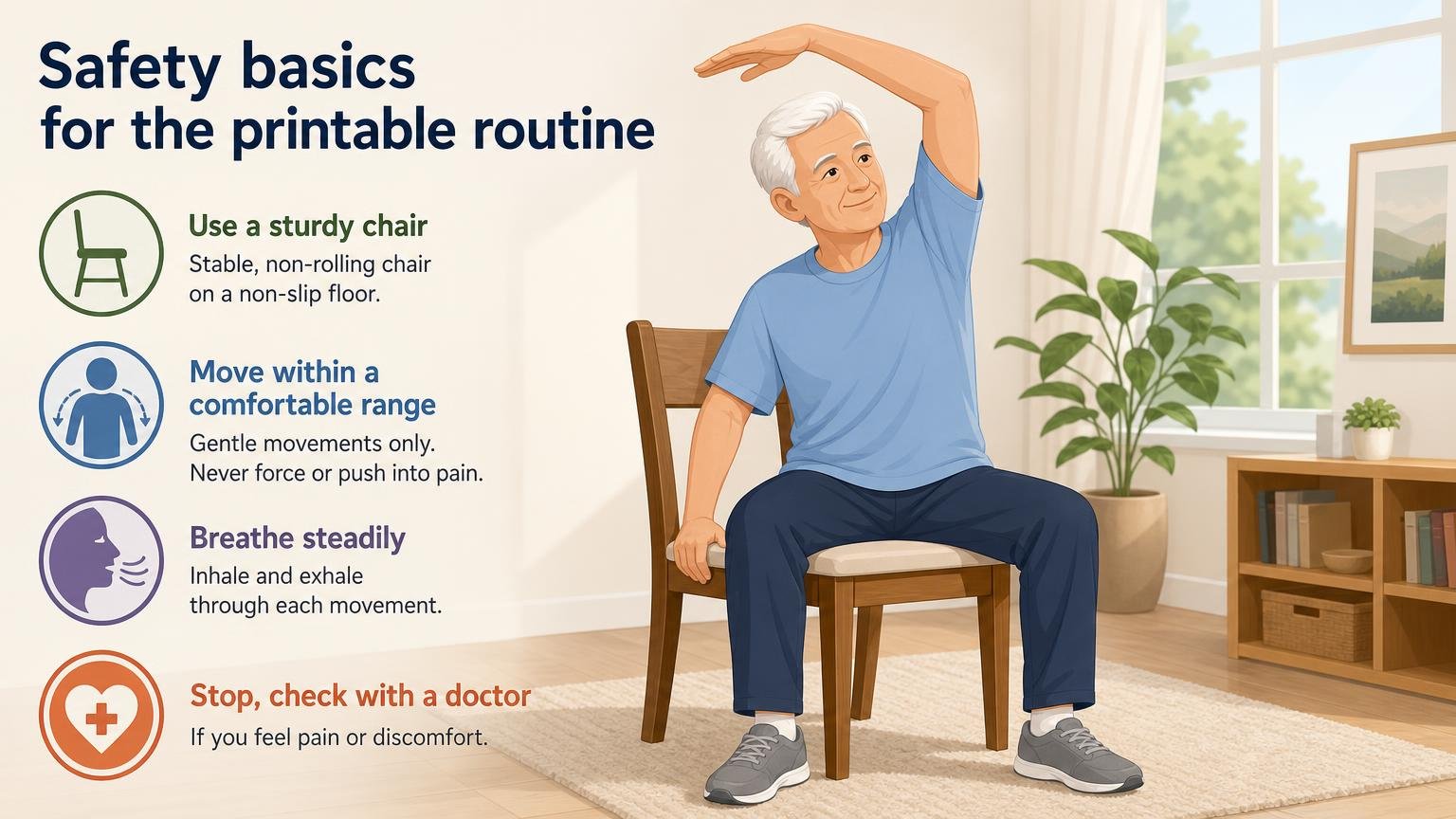
Follow the same simple precautions as any chair yoga:
- Use a sturdy chair — a stable, non-rolling chair on a non-slip floor, feet flat, sitting tall.
- Move within a comfortable range — gentle movements only; never force or push into pain.
- Breathe steadily and go at your own pace, resting whenever needed.
- **Wear supportive footwear and keep the space clear.
- Stop for pain, dizziness, breathlessness, or chest symptoms, and check with a doctor before starting, especially with health conditions.
- Build confidence — consistency, gently applied, is what improves flexibility, circulation, and steadiness over time.
Ready to begin? Work through the poses above, and put your email in the box near the top of the page — we’ll send the printable chart so you can keep it somewhere you’ll see it every day.
Watch out
Stop and rest if anything hurts, and seek help for chest pain, severe breathlessness, or dizziness. Chair yoga should feel gentle and comfortable — sharp pain is a signal to stop, never to push through.
Frequently asked questions
Where can I get a free printable chair yoga routine for seniors?
The full routine is written out on this page, and we will email you the free printable chart — a full illustrated routine designed to print and follow at home. Keeping the printed chart somewhere visible, such as the fridge or beside the chair, is one of the best ways to turn chair yoga into a daily habit. Follow it safely from a sturdy chair, and choose the variation that fits your needs.
What chair yoga poses are in the printable PDF?
The free printable works through a gentle sequence of seated poses suitable for seniors, including seated mountain (a posture reset), neck and shoulder rolls, seated cat-cow, a seated side stretch, gentle seated twists, a seated forward fold, seated leg extensions, and ankle and wrist mobility moves. Every pose is done sitting in or lightly holding a sturdy chair — no standing or floor work — so you can follow the whole routine safely from your seat.
Is the printable chair yoga PDF free to download?
Yes, the chart costs nothing. We send it by email so we can include the 25-pose Advanced Chair Yoga Guide with it and let you know when we add new seated routines — one address, both files, unsubscribe whenever you like. The routine itself is written out in full on this page if you would rather not give an address at all. Print a copy, keep it somewhere visible like the fridge or beside your chair, and share it with family or a caregiver if you like. If you would rather follow along with guided video, our guide to the best chair yoga apps for seniors covers free and low-cost options.
Why use a printable chair yoga chart instead of a video?
A printed chart needs no screen to hold, unlock, or scroll while exercising, which is easier for those less comfortable with technology or with low vision. It stays always visible as an effortless habit reminder, is easy to glance at while moving, works with no battery or connection, and is simple to share with caregivers, family, or a group. Many seniors find it more practical than a video.
Is the printable chair yoga routine suitable for beginners?
Yes — the routine is gentle and beginner-friendly, and we also link to variations for specific needs: easy seated stretches and a 10-minute routine for beginners, plus versions for limited mobility, arthritis, balance, and seniors over 80. Start with whichever fits your ability, follow the safety basics, and build up gradually as it becomes familiar.
How do I build a weekly chair yoga habit?
Start small with a few short sessions in the first week so it feels achievable, build gradually by adding days or length as it becomes familiar, and anchor sessions to an existing daily habit (like after breakfast) so they happen reliably. Mixing in seated stretches and gentle movement adds variety, and ticking sessions off on the printed chart keeps you motivated.
Is chair yoga from a printable chart safe?
Yes, with the same basic precautions as any chair yoga: use a sturdy non-rolling chair, move within a comfortable range without forcing, breathe steadily and rest as needed, wear supportive footwear, and stop for pain, dizziness, or chest symptoms. Check with a doctor before starting, especially with health conditions. The printed chart simply makes a safe routine easier to follow consistently.
Which chair yoga routine should I choose?
Pick the version that matches your needs: a 10-minute routine or easy seated stretches for beginners, chair yoga for limited mobility for the gentlest option, the arthritis routine for knee and hip stiffness, the over-80 routine for the oldest seniors, or the balance and fall-prevention routine for steadiness. Morning chair yoga suits an early wake-up. The printable chart works alongside any of them.
Sources
- National Institute on Aging (NIH). Four Types of Exercise Can Improve Your Health and Physical Ability
- Cochrane. Exercise for preventing falls in older people living in the community (2019)
