
Medication Management for Seniors: A Caregiver Guide


Medically reviewed by Dr. Shifin Shad PN, MBBS, BCCPM · Reviewed July 2026
Educational guidance, not medical advice. Never start, stop, or change a medication without the doctor or pharmacist — always seek professional advice for medication decisions.
Older adults often juggle many medications — and small mistakes can have big consequences. A good system turns a daily risk into a reliable routine, and is one of the highest-value things a caregiver can set up.
Key takeaways
- Older adults often take many medications, and errors — missed, doubled, or interacting doses — are common and one of the leading causes of hospital readmission.
- A dosing system (pill organizer or automatic dispenser) is the foundation of reliable management.
- Keep a current, accurate medication list and reconcile it with the doctor the person sees routinely — after every hospital stay, specialist visit, or change.
- Get regular medication reviews — a pharmacist or doctor can catch interactions and unnecessary drugs.
- Never start, stop, or change anything without professional advice, and watch for side effects.
- Never double a missed dose. Skip it and note it — but for blood thinners, insulin, Parkinson’s and epilepsy medicines, ring the pharmacist the same day rather than waiting.
Quick answer
How do I manage an elderly person’s medications safely?
Set up a reliable system: use a weekly pill organizer or an automatic dispenser to prevent missed and doubled doses, keep a current, accurate medication list and reconcile it after any change or hospital stay, get a regular medication review from a pharmacist or doctor to catch interactions and unnecessary drugs, watch for side effects, and never start, stop, or change anything without professional advice. Medication errors are one of the leading preventable causes of harm and readmission.
Why medication management matters so much
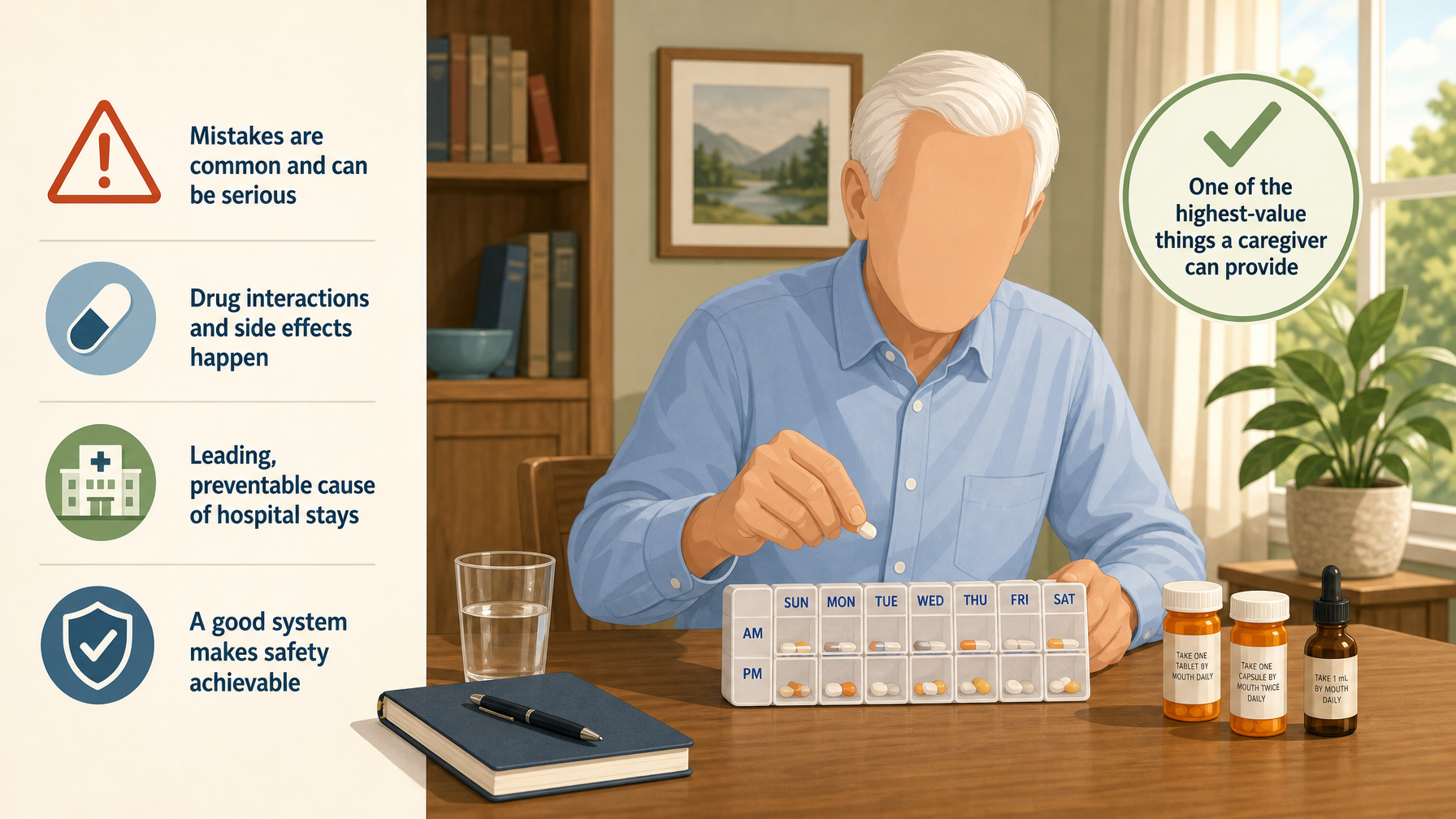
Many older adults take several medications, sometimes prescribed by different doctors, on different schedules — a situation ripe for mistakes. Missed doses, accidental double doses, drugs that interact, and side effects are all common, and the consequences can be serious: they are a common, and often preventable, reason older adults are admitted to hospital.
The reassuring news is that a good system makes safe medication management very achievable, and it is one of the highest-value things a caregiver can put in place. This guide covers the essentials — organizing doses, keeping an accurate list, getting reviews, and watching for problems. It underpins many other guides, from post-hospital recovery to preventing readmission.
An ElderlyDaily original
Want all of it in one organized binder?
Aging Parent Medical & Emergency Binder
- Medical history, medications and emergency contacts in one place
- Seven sections: emergency, health, medications, care team, appointments, documents and family
- Type into it on screen, or print it and fill it in by hand
One-off purchase. Instant download.
Fillable PDF · US Letter

Sponsored Pick
LiveFine 28-Day Automatic Pill Dispenser
Most seniors who want a reliable, lockable dispenser with no monthly fees
Check PriceSet up a dosing system
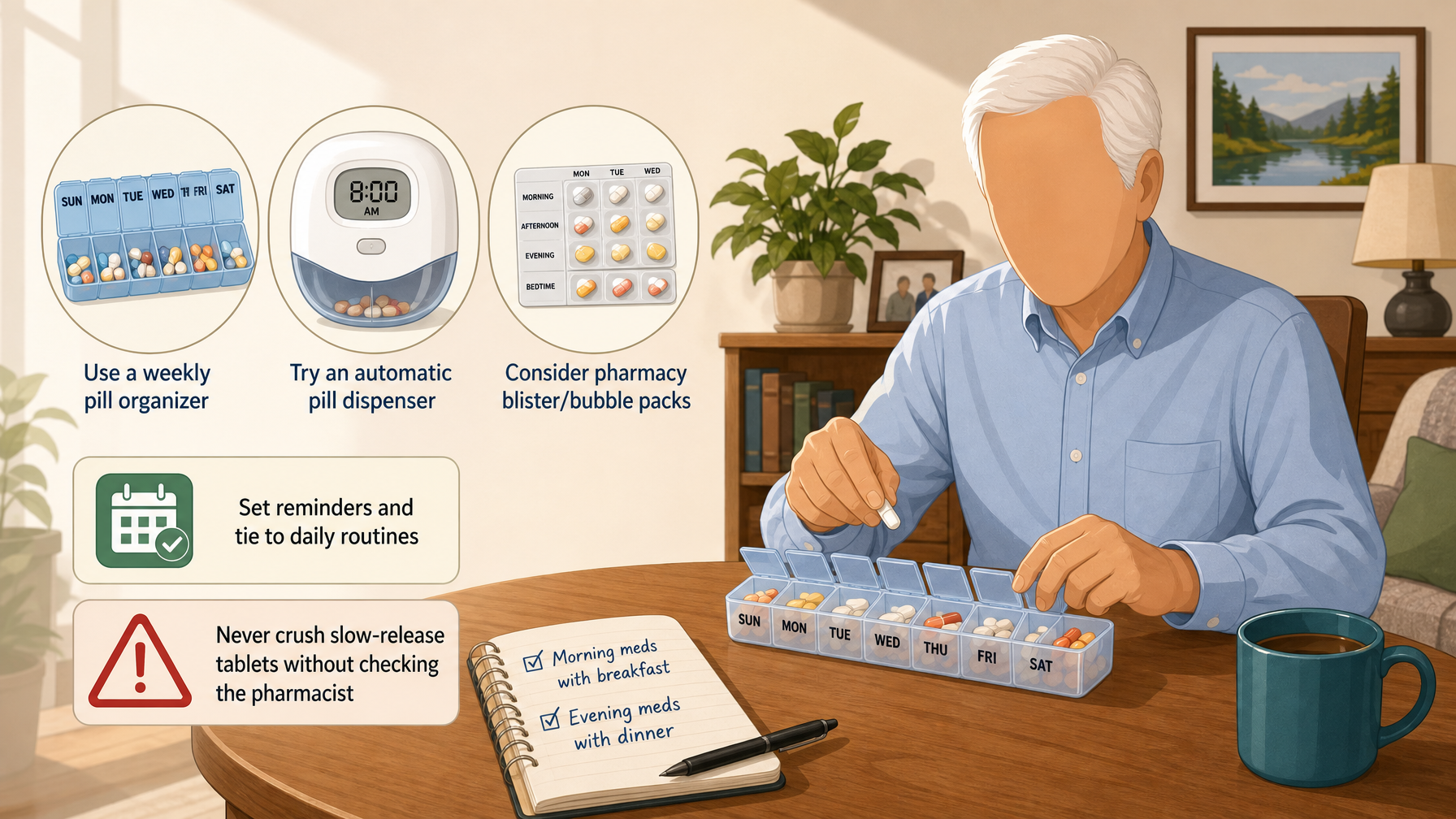
The foundation of reliable medication management is a system that makes it clear what to take and when, and removes reliance on memory:
- A weekly pill organizer — sorting pills into day/time compartments makes it obvious what has and has not been taken, preventing missed and doubled doses; see pill organizers for seniors.
- An automatic pill dispenser — for more support, these prompt and release the right dose at the right time, valuable for those who forget or live alone; see automatic pill dispensers.
- Pharmacy blister/bubble packs — many pharmacies can pre-pack medications by dose and time, which is very reliable.
- Reminders — alarms, phone reminders, or a chart, tied to daily routines (meals, bedtime).
- Pill aids — pill cutters or crushers where tablets need splitting or crushing — but check every medicine with the pharmacist first. Slow-release and enteric-coated tablets (marked SR, MR, ER, XR, XL, LA, CR or EC) should not be crushed at home: breaking the coating releases the whole dose at once, which can be dangerous. A score line means a tablet can be split, not that it can be crushed. If swallowing is difficult, ask the pharmacist about a liquid or a patch instead — and where crushing really is the only route, it is for the doctor or pharmacist to advise on that specific medicine and adjust the dose, rather than a decision made at home.
Good to know
Match the system to the person. A capable senior may just need a weekly organizer; someone who forgets or lives alone benefits from an automatic dispenser or blister packs that prompt and control each dose. The right level of support prevents the most errors.
What to do when a dose is missed
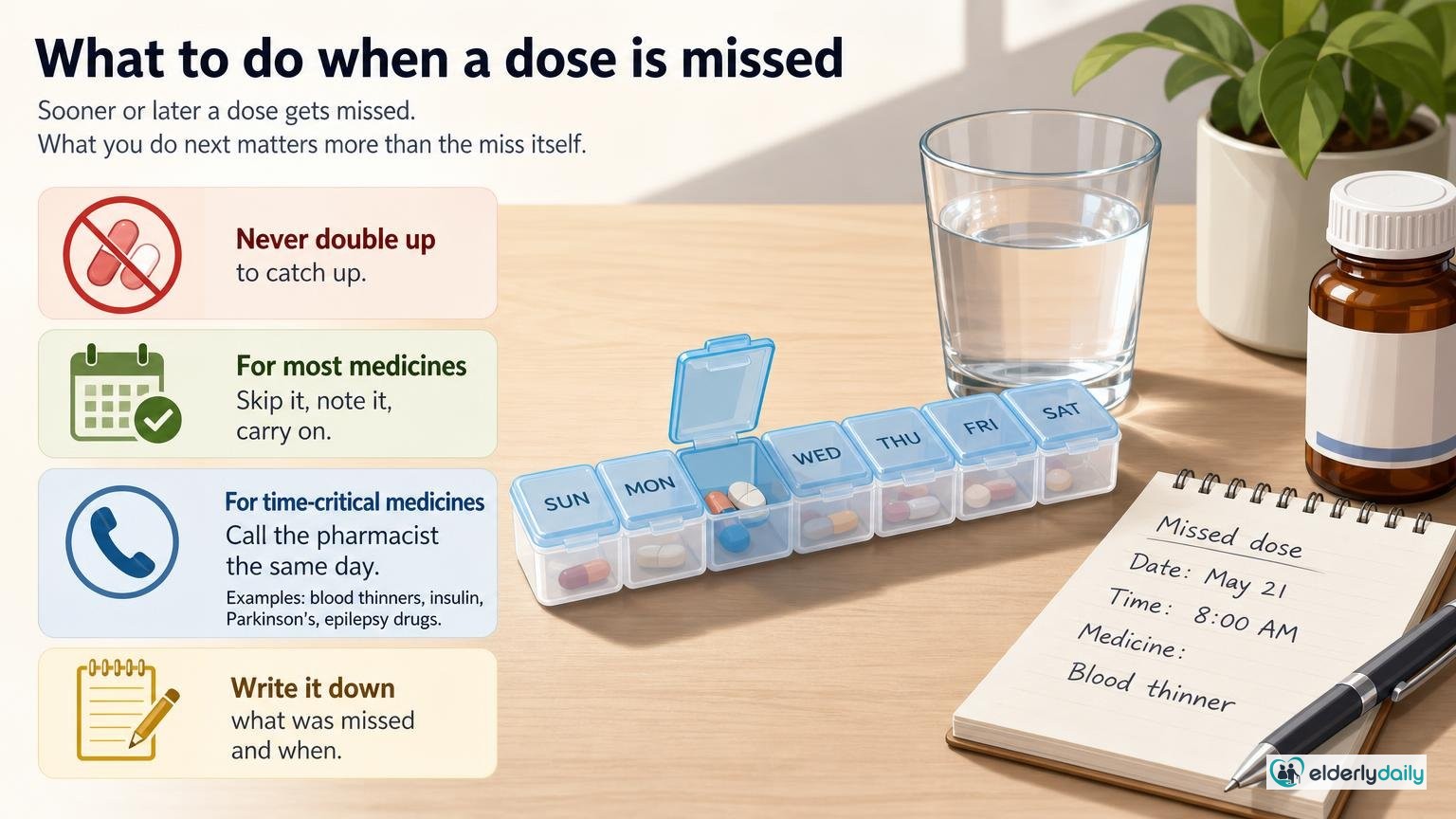
Sooner or later a dose gets missed. What you do next matters more than the miss itself.
- Never double up to catch up. Taking two doses to make up for one is how a missed dose becomes a hospital visit. This rule holds across almost every medicine.
- Skip it, note it, carry on with the next scheduled dose. For most ordinary medicines, that is the whole answer.
- Write down what was missed and when. A single miss usually does not matter; a pattern of them is information the doctor needs.
But a few medicines are time-critical, and for these a missed dose is worth a phone call to the pharmacist or clinic the same day rather than simply waiting for the next one:
- Blood thinners (anticoagulants) — warfarin, apixaban, rivaroxaban and the rest. Never double the dose. The timing rules differ by drug, and a run of missed doses raises clot risk, so tell the doctor who manages the blood thinner, or the anticoagulant clinic if they attend one.
- Insulin and diabetes medicines — never double an insulin dose. Check blood sugar more often than usual and contact the diabetes team.
- Parkinson’s medicines — these depend on fixed timing, and a late or missed dose can cause a marked decline in movement, often with worsening tremor.
- Epilepsy medicines — a missed dose can lower the seizure threshold, and there are specific rules on how late is too late.
A pharmacist can answer any of these in a two-minute phone call, and would far rather take the call than see the consequence.
Never double a missed dose
For most medicines: skip it, write it down, take the next one as scheduled. For blood thinners, insulin, Parkinson’s medicines and epilepsy medicines, do not simply wait — ring the pharmacist or clinic the same day. Each has its own rule about how late is too late.
Keep an accurate medication list
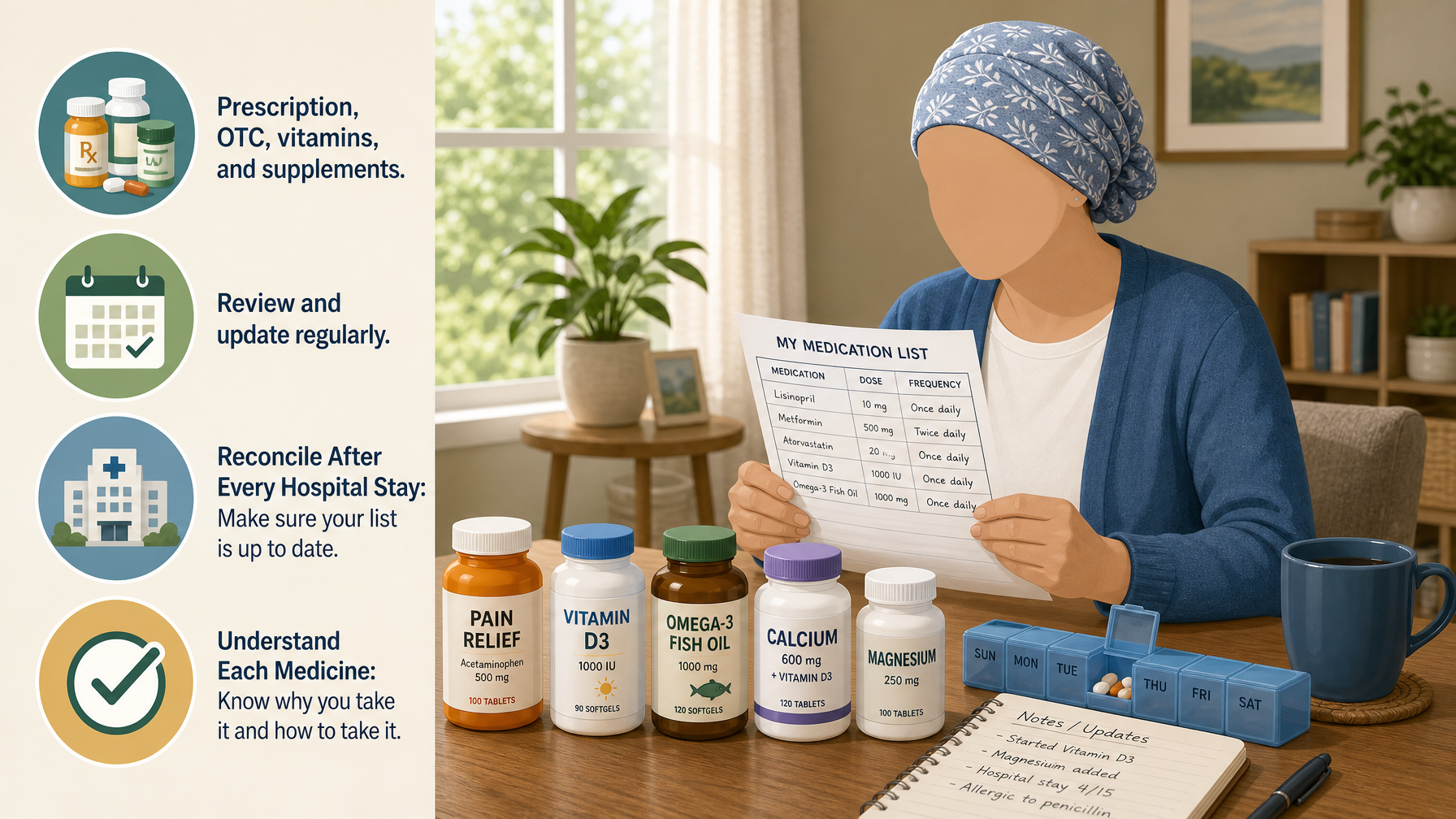
A single, current, accurate list of all medications is essential — for safe daily management and for every medical encounter:
- Include everything — prescription drugs, over-the-counter medicines, vitamins, and supplements, with doses and timing. Non-prescription items can interact too.
- Keep it current — update it whenever anything changes, and bring it to every appointment.
- Reconcile after every change, hospital stay, or specialist visit — hospital stays and specialist consultations frequently alter medications, and confusion between the old and new lists causes dangerous errors. Compare the new list against the old and resolve conflicts with the pharmacist and the doctor the person sees routinely; this reconciliation is one of the most important safety steps, covered in what to expect after discharge.
- Understand each medication — what it is for, how and when to take it, and its common side effects.
Get regular medication reviews

Over time, medication regimens can accumulate drugs that interact, duplicate, or are no longer needed — so periodic professional review is valuable:
- Pharmacist reviews — pharmacists are experts at spotting interactions and issues, and a medication review is often quick and free; ask for one, especially for a long or complex list.
- Doctor reviews — periodically review the whole regimen with the doctor to confirm each drug is still needed at the right dose (deprescribing unnecessary medications reduces side effects and fall risk).
- After any hospital stay or new diagnosis — prompt review ensures everything still fits together safely.
- Raise specific concerns — such as dizziness, drowsiness, or falls that a medication might be causing.
Watch out
Taking many medications raises the risk of interactions and side effects, including dizziness and drowsiness that cause falls. A pharmacist or doctor review to simplify the regimen where possible is one of the most valuable safety steps — ask for one.
Watch for side effects and problems
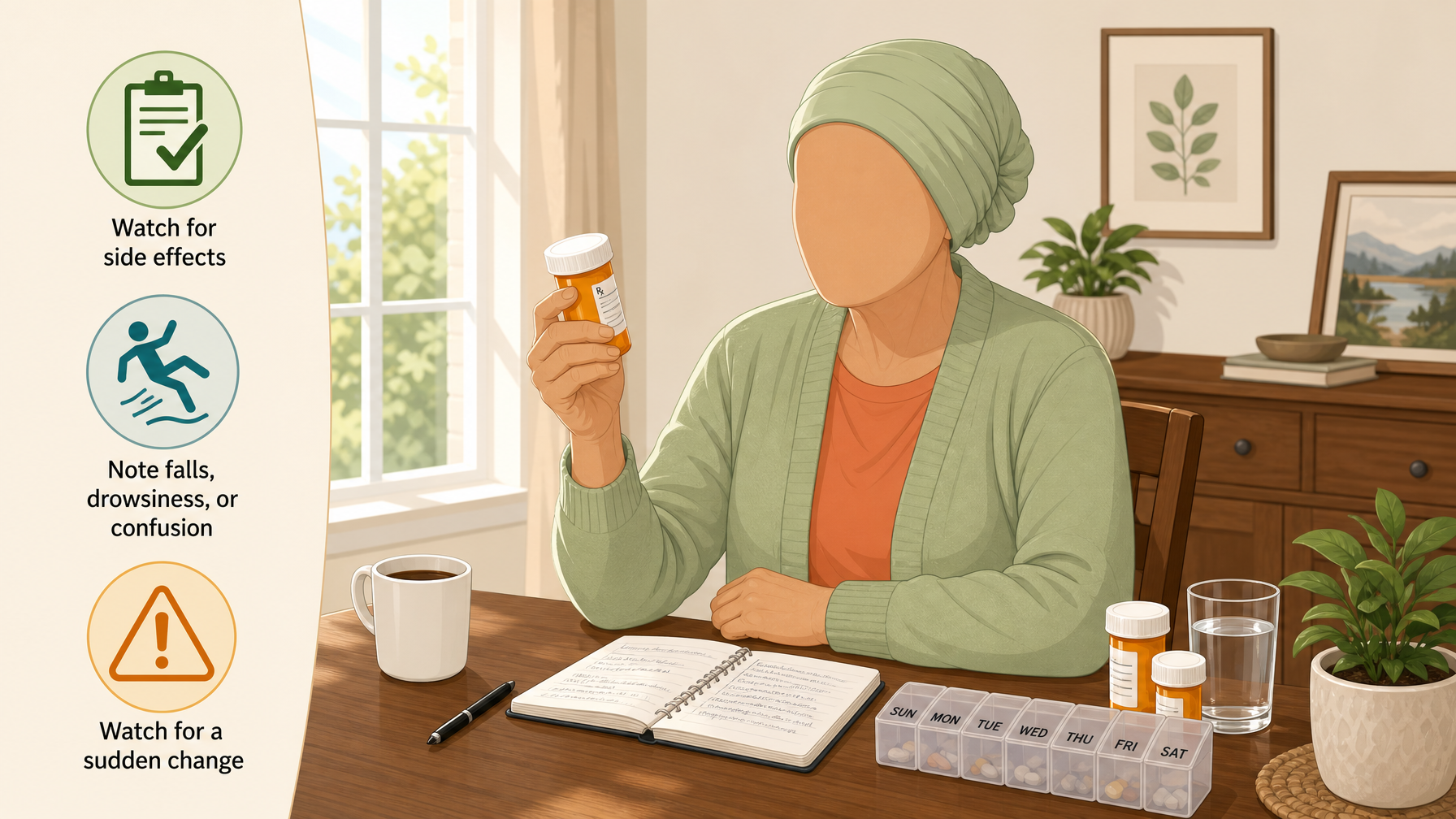
Ongoing vigilance catches problems early:
- Watch for side effects, especially after starting a new drug or a dose change — drowsiness, dizziness, confusion, stomach upset, or anything new. Report these rather than assuming they are just aging.
- Note falls, drowsiness, or confusion — these can be medication-related and are important to flag.
- Watch for a sudden change — new confusion or decline can be a medication effect (or an infection like a UTI); have it checked.
- Never stop or change anything yourself — even if you suspect a side effect, contact the doctor or pharmacist rather than stopping a medication, which can be dangerous.
Practical tips and support
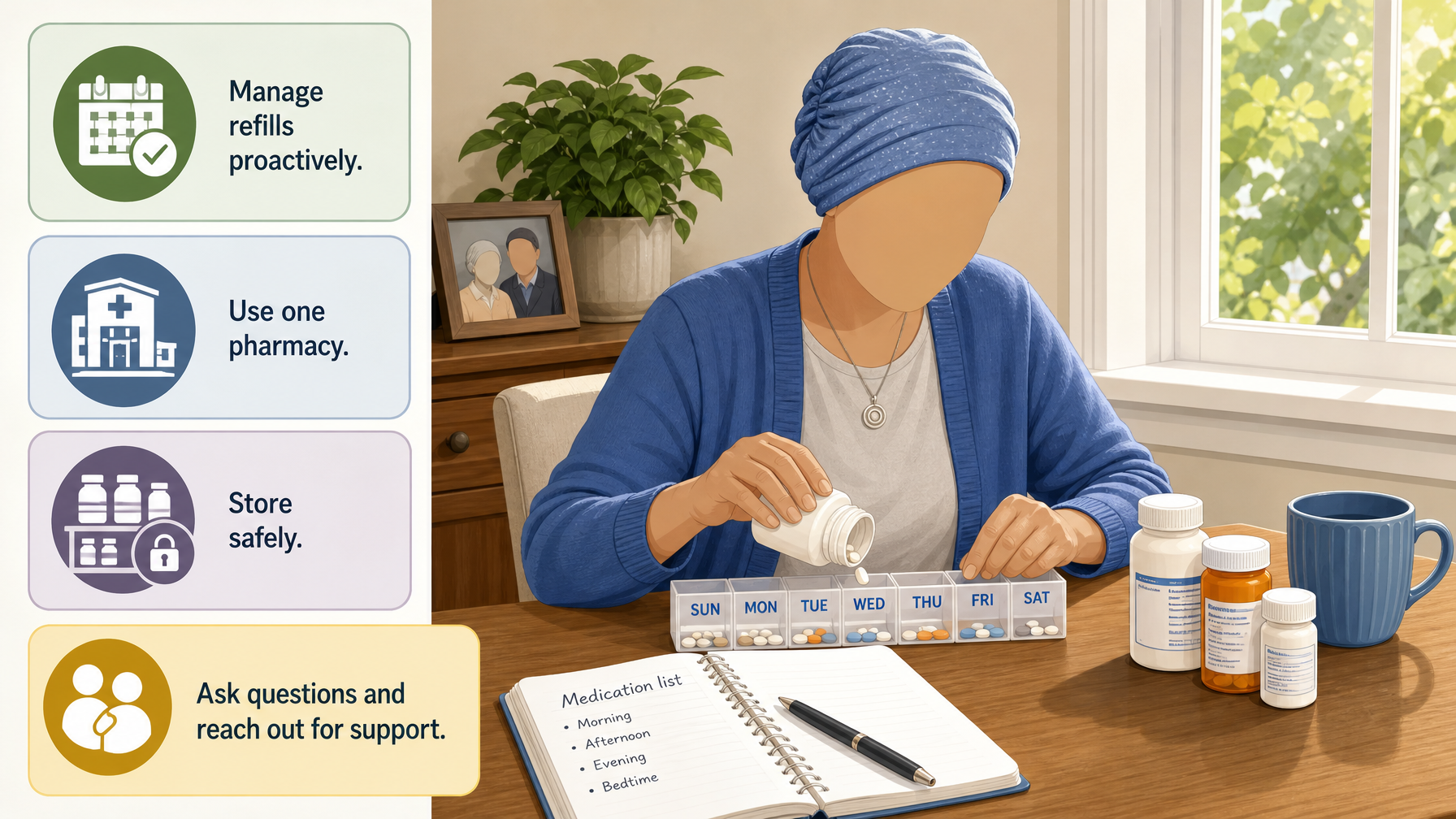
A few more things that make medication management smoother and safer:
- Manage refills proactively — track supplies and reorder before running out; pharmacy auto-refill or delivery helps.
- Use one pharmacy where possible — so the pharmacist sees the full picture and can catch interactions.
- Store safely — as directed, and secured if there is any risk (children, or cognitive decline where self-management becomes unsafe).
- Step up in stages as needed — as memory or ability declines, move from monitoring, to supervising each dose, to managing medications fully; recognize when self-management is no longer safe.
- Support adherence with dignity — involve the person as much as they safely can be, framing help as keeping them well and independent.
Frequently asked questions
How do I manage an elderly parent’s medications?
Set up a dosing system (a weekly pill organizer, an automatic dispenser, or pharmacy blister packs) to prevent missed and doubled doses, keep a current accurate list of all medications and reconcile it after any change or hospital stay, get regular pharmacist or doctor reviews to catch interactions and unnecessary drugs, watch for side effects, and never start, stop, or change anything without professional advice.
What is the best way to organize medications for seniors?
Match the system to the person: a weekly pill organizer suits a capable senior by making it clear what has been taken, while an automatic pill dispenser (which prompts and releases doses) or pharmacy blister packs suit those who forget or live alone. Reminders tied to daily routines help, and using one pharmacy lets the pharmacist see the full picture.
Why is a medication list important?
A single, current, accurate list of all medications — including over-the-counter drugs, vitamins, and supplements with doses and timing — is essential for safe daily management and for every medical encounter. It is especially important to reconcile the list after a hospital stay, since stays often change medications and confusion between old and new lists causes dangerous errors.
Should seniors have their medications reviewed?
Yes — regular reviews are valuable because regimens accumulate drugs that may interact, duplicate, or no longer be needed. A pharmacist can spot interactions (often in a quick, free review), and periodic doctor reviews confirm each drug is still needed and can safely simplify the regimen, reducing side effects and fall risk. Review promptly after any hospital stay or new diagnosis.
What should I do if I think a medication is causing side effects?
Report it to the doctor or pharmacist rather than stopping the medication yourself, which can be dangerous. Note the specific effects (drowsiness, dizziness, confusion, stomach upset, or falls), especially after a new drug or dose change, and have any sudden confusion or decline checked, since it can be a medication effect or another cause like an infection. The professional can adjust the plan safely.
When should a caregiver take over medication management?
When the person can no longer reliably manage their own medications — missing or doubling doses, confusion about what to take, or cognitive decline that makes self-management unsafe. Signs include pills left in the organizer or bottles fuller or emptier than they should be. Step up in stages rather than all at once — monitor first, then supervise each dose, and only then manage it fully — involving the person as much as they safely can be, and secure medications where needed.
What should I do if my parent misses a dose?
Never take two doses to catch up — that is how a missed dose becomes a hospital visit. For most medicines: skip the missed dose, write it down, and take the next one at the normal time. A few medicines are time-critical and deserve a same-day call to the pharmacist or clinic rather than simply waiting: blood thinners, insulin and diabetes medicines, Parkinson’s medicines, and epilepsy medicines. Each has its own rule about how late is too late, and a pharmacist can answer it in a two-minute call.
Sources
- National Institute on Aging (NIH). Taking Medicines Safely as You Age
- National Institute on Aging (NIH). The Dangers of Polypharmacy and the Case for Deprescribing in Older Adults
