Dementia Home Safety Guide (Wandering Prevention + Daily Calm)

It was 2:47 AM when Sarah heard the front door creak open. Her father, who had been diagnosed with early-stage Alzheimer's six months ago, was standing in the doorway in his pajamas, confused and trying to "go to work." He hadn't worked in fifteen years.
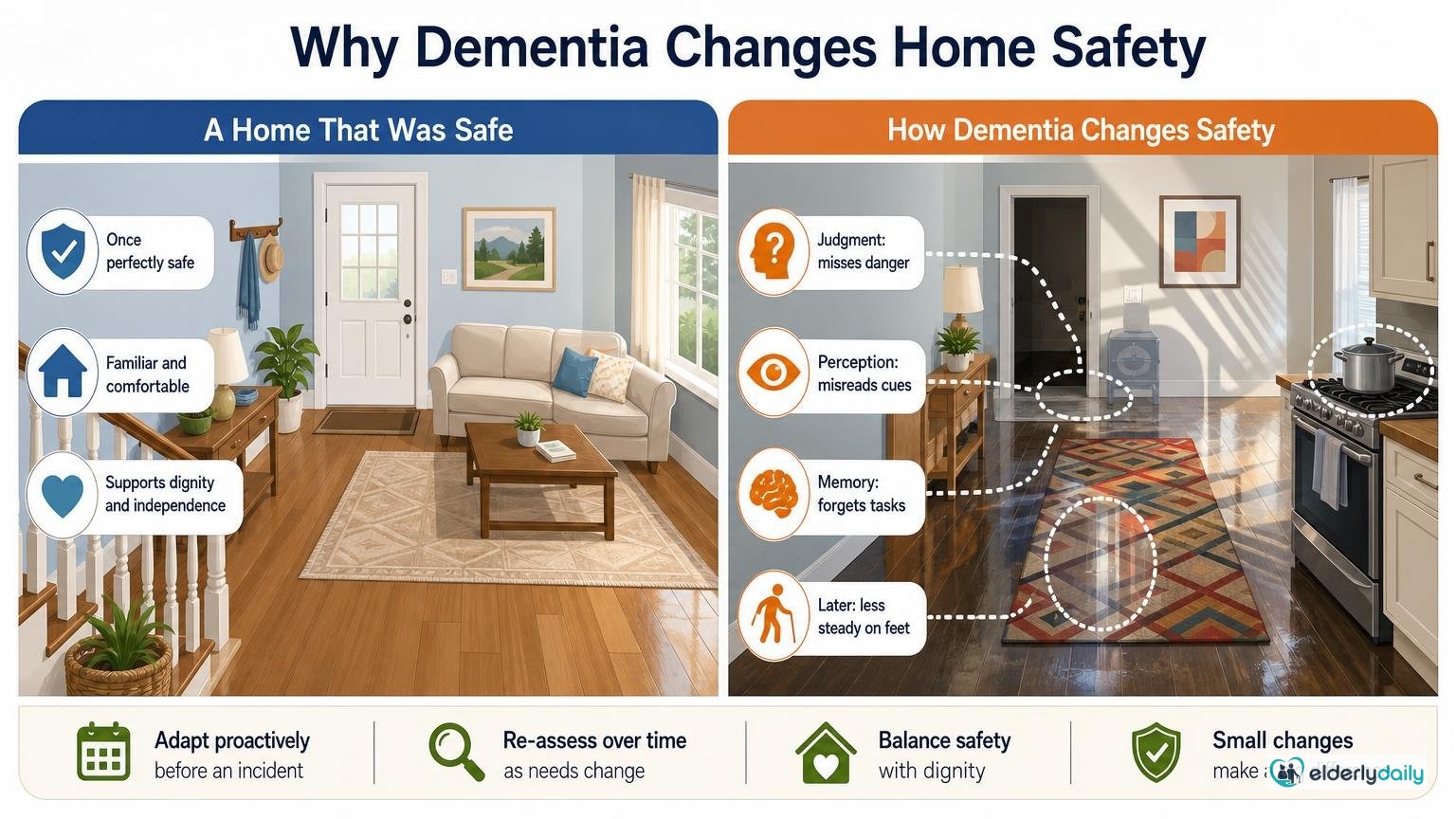
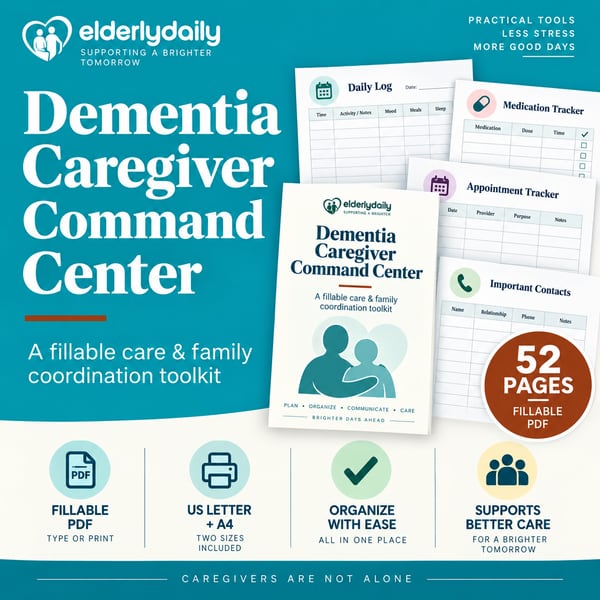
That night changed everything. Sarah realized that the home her father had lived in for 40 years—the place that should feel safest—had become full of hidden dangers she'd never noticed before. The unlocked doors. The dark hallways. The gas stove he'd forget to turn off. The medications he'd take twice, or not at all. For medication safety, use our daily medication tracker to monitor doses accurately.
If you're reading this, you might be having your own 2:47 AM moment. Maybe your mom wandered outside yesterday. Maybe you found the stove left on. Maybe you're just starting to notice the confusion and you want to get ahead of it before something happens. Keep essential emergency information organized with our caregiver emergency binder template.
You're not alone. Over 6 million Americans live with Alzheimer's or dementia, and most families want to keep their loved ones safe at home for as long as possible. This guide will show you exactly how to do that—with practical room-by-room safety steps, wandering prevention strategies that actually work, and the products that dementia caregivers rely on every single day.
This isn't about turning your home into a hospital. It's about making small, thoughtful changes that let your loved one stay in the place they know best, while giving you the peace of mind to sleep through the night.
Medical Disclaimer: This guide provides general safety information for dementia caregivers. Always consult with your loved one's doctor, neurologist, or geriatric care specialist for medical concerns, medication management, and personalized care plans.
This page is part of our Dementia Care at Home guide, which brings together everything caregivers need—from daily routines to wandering prevention—in one organized resource. If you're noticing increasing confusion or behavioral changes, our guide on recognizing when dementia is progressing can help you plan ahead. For evening agitation that often triggers unsafe behavior, see our advice on managing sundowning in dementia.
Who This Guide Helps
This dementia home safety guide is designed for families and caregivers who are:
- Caring for a parent or spouse with memory loss, Alzheimer's, or dementia
- Supporting seniors at risk of wandering or nighttime confusion
- Setting up safer daily routines and home modifications for aging in place
- Looking for caregiver-tested products that actually work in real dementia households
✓ Reviewed by dementia caregivers • Built for aging in place
Early Dementia Safety Risks Families Miss
In the early stages of dementia, many safety risks aren't obvious. Your loved one might seem fine most of the time—until they're not. Here are the five most common dangers that catch families off guard:
Leaving Doors Unlocked
Seniors with dementia may wander outside at any time—day or night—without realizing the danger. Unlocked doors are the #1 risk for wandering incidents.
Stove & Kitchen Hazards
Forgetting to turn off the stove, leaving food burning, or trying to cook at inappropriate times creates serious fire risks in dementia households.
Night Wandering + Falls
Confusion is often worse at night (called "sundowning"). Dark hallways and disorientation lead to falls, injuries, and dangerous wandering attempts.
Medication Confusion
Taking pills twice, skipping doses entirely, or accessing medications unsupervised can lead to overdoses, dangerous interactions, or missed critical treatments.
Bathroom Disorientation
Seniors may forget where the bathroom is, struggle with toilet use, or fall while trying to navigate wet surfaces during nighttime confusion.
Room-by-Room Dementia Proofing Checklist
Making your home safer for dementia doesn't mean renovating everything at once. Start with the rooms where your loved one spends the most time, and work through this checklist at your own pace.
Bedroom Safety
- Install bed exit alarm or motion sensor
- Remove tripping hazards (rugs, cords, clutter)
- Add motion-activated night lights
- Lower bed height or add floor padding
- Keep path to bathroom clear and well-lit
- Remove locks on bedroom doors
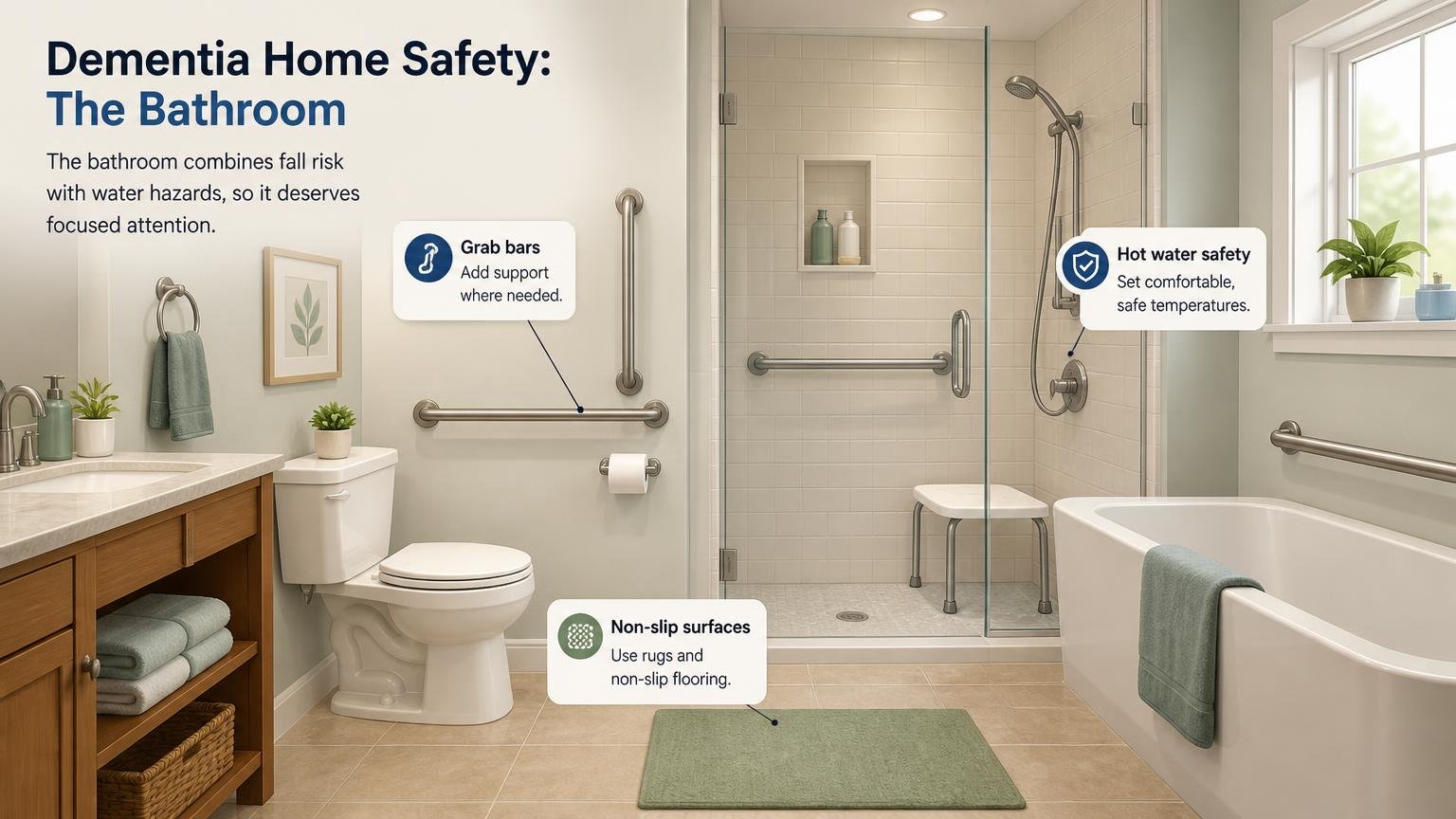
Bathroom Fall Prevention
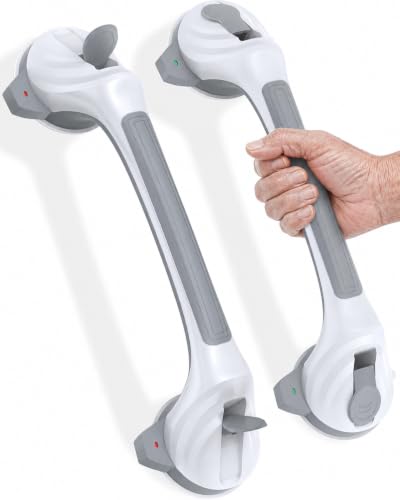
- Install grab bars near toilet and in shower
- Add non-slip bath mats inside and outside tub
- Use raised toilet seat with armrests
- Keep bathroom door unlocked (remove interior locks)
- Install motion-sensor night light
- Remove glass shower doors if possible
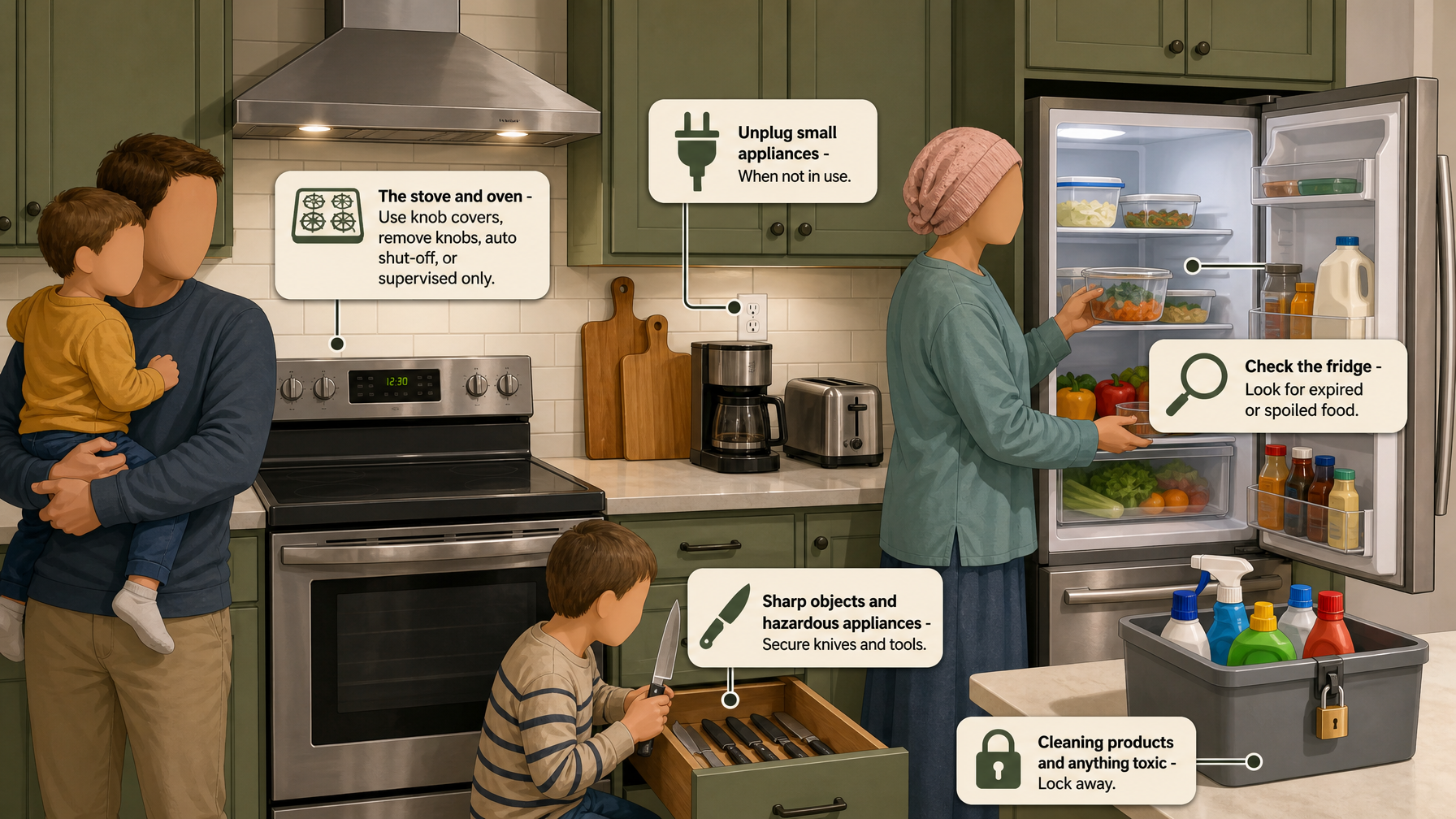
Kitchen Supervision
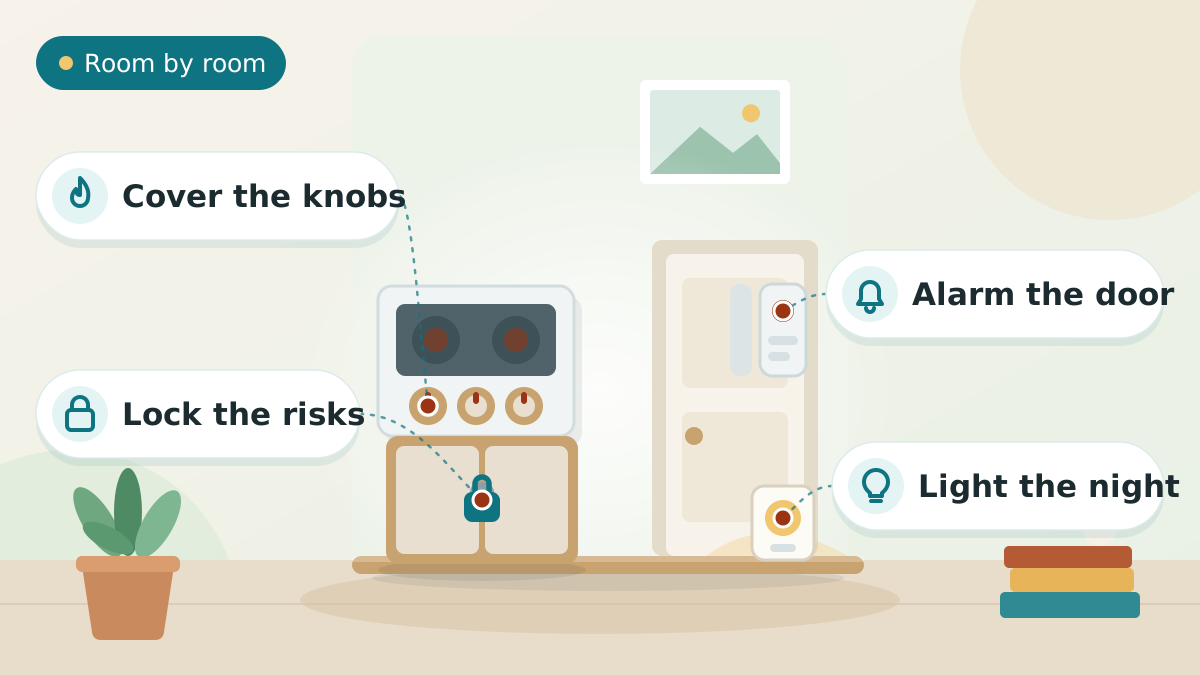
- Install stove knob covers or disable stove when unsupervised
- Remove sharp knives from easy access
- Lock away cleaning chemicals and toxic substances
- Use automatic shut-off appliances
- Keep fire extinguisher accessible
- Consider removing garbage disposal switch
Entryways + Door Alarms
- Install door alarms on all exterior doors
- Add slide bolts at top of doors (unusual height)
- Consider keypad locks caregivers can operate
- Remove welcome mats that suggest "leaving"
- Install motion-sensor lights at all exits
- Keep car keys hidden and out of sight
Lighting + Nighttime Calm
- Install motion-sensor lights in all hallways
- Use amber or warm-toned night lights (not blue)
- Eliminate dark corners and shadows
- Keep lighting consistent throughout the day
- Add nightlights in bedroom, bathroom, and hallway path
- Avoid harsh fluorescent lighting
Best Dementia Safety Products (Caregiver-Tested)
These are the products that dementia caregivers actually use and recommend. We've focused on devices that are simple to set up, reliable at night, and designed for real-world dementia households.
Affiliate Disclosure: As an Amazon Associate, ElderlyDaily.com earns from qualifying purchases. This helps us continue providing free caregiver resources.

Best Door Alarm for Wandering Prevention
Key Features:
- Loud 120dB alert when door opens
- Easy magnetic sensor installation
- Battery-powered (no wiring needed)
- Works on doors and windows
- Caregiver can hear from anywhere in home
Pros
- • Instant notification when doors open
- • Simple setup in under 5 minutes
- • Loud enough to wake sleeping caregivers
- • Affordable and reliable
Cons
- • May startle confused seniors
- • Batteries need regular replacement
- • Can be disabled if senior removes sensor
Ideal For:
Families worried about nighttime wandering or daytime exit attempts
Best GPS Tracker for Seniors with Dementia
Key Features:
- Real-time GPS location tracking
- Geofencing alerts when senior leaves safe zone
- Waterproof and durable design
- Long battery life (3-5 days)
- Mobile app for caregivers
Pros
- • Find your loved one quickly if they wander
- • Set up safe zones around home
- • Works nationwide with cellular connection
- • Peace of mind for caregivers
Cons
- • Requires monthly subscription ($20-40)
- • GPS less accurate indoors
- • Senior may remove or forget device
Ideal For:
Seniors who still go outside independently but are at risk of getting lost
Best Motion Night Light for Hallways
Key Features:
- Automatic motion detection
- Warm amber light (doesn't disrupt sleep)
- Plug-in design (no batteries)
- Lights pathway to bathroom
- Adjustable brightness settings
Pros
- • Prevents falls in dark hallways
- • Doesn't require senior to find light switch
- • Warm tones reduce nighttime agitation
- • Energy-efficient LED bulbs
Cons
- • May activate too frequently
- • Requires outlet placement along path
- • Some seniors still confused in dim light
Ideal For:
Preventing nighttime falls between bedroom and bathroom
Best Dementia-Friendly Large Display Clock
Key Features:
- Extra-large display shows day, date, and time
- Clear language: "Morning," "Afternoon," "Evening," "Night"
- Auto-dimming for nighttime
- Multiple alarm options
- Simple one-button setup
Pros
- • Reduces "What day is it?" confusion
- • Helps seniors know when to take medications
- • Large letters visible across the room
- • No complicated settings to confuse users
Cons
- • Doesn't prevent wandering
- • Some seniors ignore or forget to check it
- • Requires wall outlet
Ideal For:
Reducing time confusion and supporting medication routines
Best Bed Exit Alarm for Night Safety
Key Features:
- Pressure-sensitive pad under mattress
- Alerts caregiver when senior gets out of bed
- Adjustable volume settings
- Wireless receiver (caregiver can carry it)
- Works with any bed type
Pros
- • Catch wandering attempts before they happen
- • Caregiver doesn't need to sleep in same room
- • Prevents falls by alerting before senior walks
- • Non-intrusive (senior doesn’t notice it)
Cons
- • False alarms if senior shifts in bed
- • Caregiver must respond quickly
- • Doesn't work if senior is very light
Ideal For:
Caregivers who need to sleep but worry about nighttime wandering
Best Medication Lock Box for Supervised Use
Key Features:
- Secure lock prevents unsupervised access
- Timed access options available
- Holds multiple pill bottles
- Portable and lightweight
- Clear labeling system
Pros
- • Prevents accidental overdoses
- • Stops seniors from taking wrong medications
- • Gives caregivers control over dosing
- • Reduces medication confusion
Cons
- • Senior may feel loss of independence
- • Caregiver must be present for all doses
- • Doesn't remind senior to take pills
Ideal For:
Dementia households where medication safety is a serious concern
How We Chose These Products
We evaluated dementia safety products based on what matters most to caregivers managing memory loss at home:
Caregiver Usability
Easy setup, clear instructions, and simple operation for exhausted caregivers
Simple Setup
No complex installation or technical knowledge required
Nighttime Reliability
Works consistently during high-risk nighttime hours when wandering occurs
Dementia-Safe Controls
Can't be easily disabled or confused by someone with memory loss
Strong Family Reviews
Highly rated by real dementia caregivers, not just general users
Wandering Prevention Tips That Actually Work
Wandering is one of the most frightening aspects of dementia care. These strategies help keep your loved one safe without making them feel trapped or imprisoned in their own home.
Secure Exits Without Feeling Like "Locking In"
The goal isn't to make your loved one feel trapped—it's to create gentle barriers that give you time to respond. Here's how:
Install door alarms on all exits — Loud alerts notify you immediately when doors open, giving you time to intervene before your loved one gets far.
Add slide bolts at unusual heights — Install locks at the very top or bottom of doors where they're not instinctively noticed. This creates a delay without obvious "locking."
Use keypad locks caregivers can operate — Electronic locks with codes allow caregivers easy access while preventing confused seniors from leaving unsupervised.
Camouflage exits with curtains or paint — Some families paint doors the same color as walls or hang curtains over them to reduce visual cues that trigger leaving.
Hide car keys and remove welcome mats — Visual cues like keys or "Welcome" mats can trigger the urge to leave. Keep keys out of sight and remove exit‑suggesting items.
Daily Walking Routines
Many seniors wander because they have pent‑up energy or a lifelong habit of being active. Scheduled walks can reduce wandering urges:
Walk at the same time every day — Morning and afternoon walks create predictable routines that satisfy the urge to move.
Use safe, familiar routes — Stick to the same neighborhood paths so your loved one feels comfortable and you can easily redirect if needed.
Consider indoor walking spaces — If outdoor walks aren't safe, create a safe indoor walking loop or use a treadmill with supervision.
ID Bracelets + Emergency Plans
Even with the best prevention, wandering can still happen. Be prepared:
ID bracelet with name and phone number — Ensure your loved one always wears identification with emergency contact information.
GPS tracker for outdoor independence — If your loved one still goes outside alone, a GPS tracker can help you locate them quickly.
Notify neighbors and local police — Let neighbors know about the situation and provide them with your contact information. Register with local police wandering programs.
Keep recent photos on hand — Have current photos of your loved one ready to share with police or neighbors if they go missing.
Create an emergency binder — Document all medical information, medications, and emergency contacts in one place. Download our free emergency binder template.
Using AI to Manage Wandering and Medication
Securing a home for a loved one with dementia is one of the most exhausting responsibilities a caregiver faces. Traditional door alarms and motion sensors do the job — but they do it loudly. A blaring alarm at 2 AM doesn't just wake you up; it startles and disorients your parent, often making the situation far more dangerous and distressing than the wandering itself. The anxiety of waiting for that alarm to go off can make it nearly impossible for caregivers to get the rest they desperately need.
That's where 2026 smart home AI changes everything. The latest generation of ambient radar sensors and AI-powered bed monitors can silently detect the moment your parent gets out of bed at 2 AM — and send a quiet notification directly to your phone, without triggering a single audible alarm in the house. No startled senior. No panic. Just a calm, private alert that gives you time to respond before a situation escalates. These systems require no wearable device, no button to press, and no cooperation from your loved one — they simply work, invisibly, in the background.
Medication management is the other critical frontier where AI is making a real difference. AI-powered smart pill dispensers go far beyond a standard weekly pill organizer. They dispense the exact dose at the exact scheduled time, lock all other compartments to prevent double-dosing, and send an alert to a caregiver's phone if a dose is missed. For a dementia patient who may genuinely not remember whether they took their morning medication — or who may take it again out of habit — this technology can prevent dangerous overdoses and medication gaps that lead to emergency room visits.
Looking for smarter dementia care solutions?
From silent wandering sensors to locked AI pill dispensers, smart home tech can keep your parent safe while letting you sleep through the night. You don't have to choose between your own rest and your loved one's safety — 2026 AI technology makes both possible at the same time. Explore our top tech picks.
Read the 2026 Ultimate Guide to AI Technology for SeniorsSilent Ambient Sensors
Camera-free radar sensors that detect nighttime movement and send silent phone alerts — no wearable required.
See top picksAI Pill Dispensers
Automatic dispensers that lock unused doses, prevent double-dosing, and alert caregivers to missed medications.
See top picksGPS Trackers for Wandering
Discreet wearable GPS devices that let caregivers locate a wandering parent in real time from any smartphone.
See top picksCalming Daily Routines for Dementia Households
Predictable routines reduce confusion, anxiety, and nighttime wandering. Here's how to structure your day for maximum calm and safety.
Predictable Daily Schedules
Dementia makes the world feel unpredictable and scary. A consistent daily routine provides comfort and reduces anxiety‑driven wandering:
Same wake‑up time every day — Consistent morning routines help orient your loved one to the day ahead.
Meals at regular times — Eating at the same times daily provides structure and reduces confusion about time of day.
Scheduled activities and rest periods — Balance activity with rest to prevent overstimulation and exhaustion.
Avoid major changes to routine — Even small disruptions can trigger confusion and agitation in dementia patients.
Evening Lighting Routines
“Sundowning”—increased confusion and agitation in the evening—is common in dementia. Proper lighting can help:
Keep lights on before sunset — Turn on lights before it gets dark outside to prevent the disorientation that comes with sudden darkness.
Use warm‑toned bulbs — Amber or warm white lights are less agitating than harsh blue‑toned or fluorescent lighting.
Install motion‑sensor night lights — Automatic lighting in hallways and bathrooms prevents falls and reduces nighttime confusion.
Dim lights gradually before bed — Slowly reducing light levels signals bedtime and helps prepare for sleep.
Reducing Overstimulation
Too much noise, activity, or visual clutter can trigger anxiety and wandering. Create a calmer environment:
Limit TV and loud noises — Constant background noise can be confusing and agitating. Use TV sparingly and keep volume low.
Reduce visual clutter — Too many objects, patterns, or decorations can be overwhelming. Keep spaces simple and organized.
Limit visitors and large gatherings — Too many people at once can be confusing and exhausting. Keep visits small and calm.
Create quiet rest spaces — Designate a calm, comfortable area where your loved one can retreat when feeling overwhelmed.
Use calming music or nature sounds — Soft, familiar music can be soothing. Avoid jarring or unfamiliar sounds.
Medication Safety for Dementia Households
Medication management becomes critical with memory loss. Learn more about medication safety from Hopkins Medicine and implement these dementia-safe strategies.
Dementia Medication + Supervision Notes
Medication safety is critical in dementia households. Memory loss can lead to dangerous double-dosing, missed medications, or accidental overdoses.
Locked Access Recommended
Store all medications in a locked box or cabinet that only caregivers can access. This prevents:
- Taking medications multiple times because they forgot they already took them
- Mixing up different medications that look similar
- Accidentally taking someone else's medications
- Hoarding or hiding pills due to confusion
Simplify Medication Schedules
Work with your loved's doctor to simplify medication routines whenever possible:
- Ask about once-daily or twice-daily formulations instead of multiple doses
- Coordinate all medications to be taken at the same times
- Eliminate unnecessary supplements or medications
- Use automatic pill dispensers with alarms for reminders
Caregiver Supervision Required
In moderate to advanced dementia, caregivers should:
- Hand medications directly to your loved one and watch them swallow
- Keep a written log of all doses given
- Never leave medications out on counters or tables
- Review all medications with the doctor regularly to ensure they're still necessary
Learn More: The National Institute on Aging provides detailed guidance on managing medications for people with Alzheimer's and dementia.
Read NIA's Medication Management GuideRelated Caregiver Resources
Best Medical Alert Devices for Seniors
Fall detection and emergency response systems that work for dementia patients
Read GuideBest Night Lights for Seniors
Motion-sensor and amber-toned lighting to prevent nighttime falls and confusion
Read GuideSenior Home Safety Checklist
Complete room-by-room safety assessment for aging in place
Read GuideMedication Management Guide
Safe systems for organizing and supervising senior medications
Read GuideSeniors Living Alone Safety Guide
Essential safety measures for seniors who live independently
Read GuideBathroom Fall Prevention Guide
Grab bars, non-slip mats, and bathroom safety modifications
Read GuideVisual Guide: Dementia Home Safety Checklist
Dementia Home Safety Checklist (Room-by-Room)
Entryways
- Door alarms on all exits
- Slide bolts at unusual heights
- Hide car keys
- Motion-sensor lights
Kitchen
- Stove knob covers or disable
- Lock away sharp knives
- Secure cleaning chemicals
- Auto shut-off appliances
Bedroom
- Bed exit alarm
- Remove tripping hazards
- Motion night lights
- Clear path to bathroom
Bathroom
- Grab bars installed
- Non-slip bath mats
- Remove door locks
- Motion-sensor lighting
Medications
- Locked storage box
- Caregiver supervision
- Simplified schedule
- Written dose log
Lighting
- Warm-toned bulbs
- Motion sensors in hallways
- Eliminate dark corners
- Lights on before sunset
Frequently Asked Questions
You're Doing the Best You Can
Dementia caregiving is one of the hardest jobs in the world. Every safety measure you put in place, every routine you establish, every moment of patience—it all matters. Your loved one is lucky to have you.
Last Updated: February 2026