
Mental Activities for Seniors: Brain Health and Daily Joy

Practical guidance for seniors and caregivers; not medical advice. Mental activity supports wellbeing but does not prevent or treat dementia; discuss memory concerns with a doctor.
Keeping the mind active is as important as keeping the body moving — and it should be a pleasure, not a chore. These simple activities support brain health, memory, and mood, one enjoyable moment at a time.
Key takeaways
- Keeping the mind active and engaged supports cognitive health, memory, mood, and a sense of purpose.
- The best activities are enjoyable and varied — puzzles, reading, games, music, learning, and conversation.
- Variety and novelty help — mixing different kinds of mental challenge engages the brain more than the same task repeated.
- Social and physical activity boost brain health too — connection and movement are part of the picture.
- Encourage without pressure — engagement should bring joy, never stress or a feeling of being tested.
Quick answer
What are good mental activities for seniors?
Enjoyable, varied activities that gently challenge the mind: puzzles and word games (crosswords, sudoku, jigsaws), reading and audiobooks, card and board games, music (listening or playing), learning something new (a skill, language, or hobby), creative pursuits (art, crafts, writing), and conversation and social contact. Mixing different kinds of activity engages the brain most. Pair mental activity with physical movement and connection, and keep it pressure-free and enjoyable. Discuss any memory concerns with a doctor.
Why mental activity matters
Staying mentally active is a meaningful part of healthy aging. Engaging the mind supports cognitive function and memory, lifts mood and eases boredom and low spirits, and provides a valuable sense of purpose and accomplishment. Just as importantly, mental activities bring genuine daily joy — which matters for its own sake.
It’s worth being clear and honest: keeping mentally active supports wellbeing and helps people stay sharp and engaged, but it is not a guaranteed way to prevent dementia, and memory concerns should always be discussed with a doctor. With that framing, the goal here is simple — enjoyable, varied engagement as part of a full daily routine. For someone with dementia, see activities for seniors with dementia.
An ElderlyDaily original
Want the whole thing in one place?
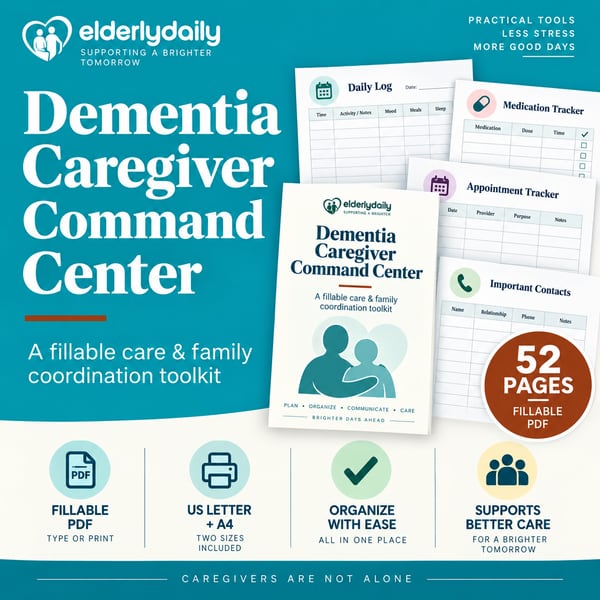
Dementia Caregiver Command Center
- Daily care and medication logs in one place
- Behaviour-pattern tracking, to spot what makes a day harder
- Safety pages and caregiver handoff sheets for family and respite helpers
One-off purchase. Instant download.
Fillable PDF · US Letter + A4

Sponsored Pick
Bits and Pieces 50-Piece Puzzle Set (3 puzzles)
Mid-stage dementia — a step up from 35 pieces, with three pictures to rotate
Check PriceThe best mental activities for seniors
A rich menu to choose from — the best ones are those the person genuinely enjoys:
- Puzzles and games — crosswords, sudoku, jigsaw puzzles, and word searches gently challenge the mind.
- Card and board games — often social as well as mentally engaging.
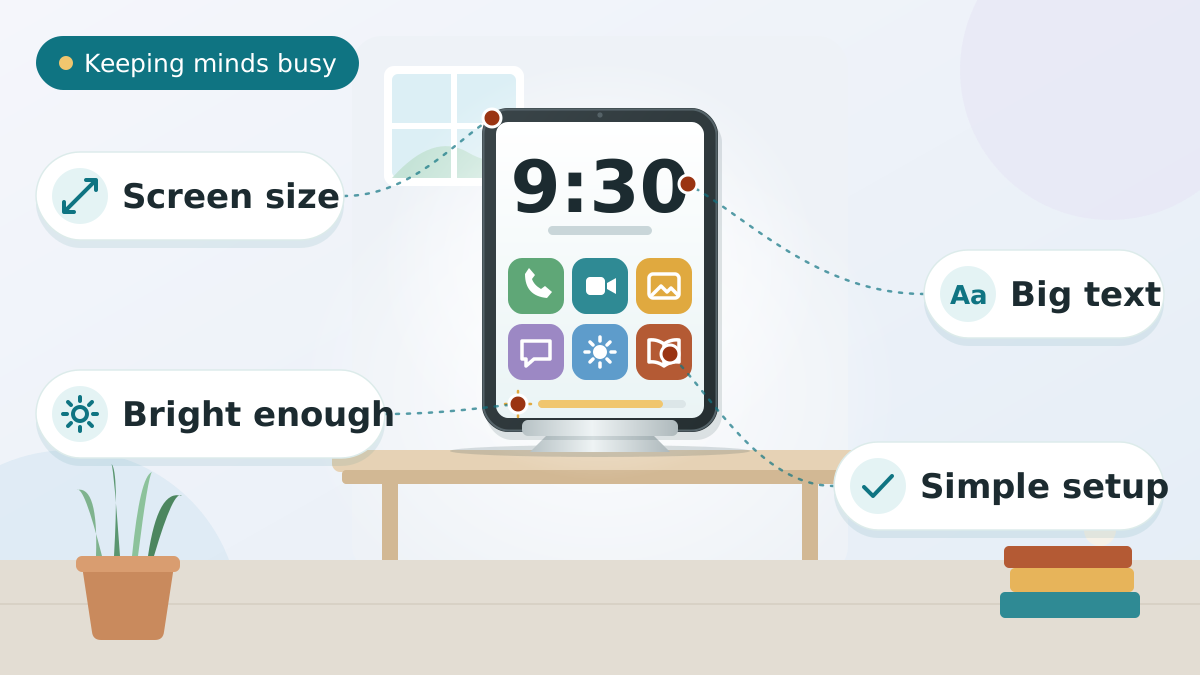
- Reading — books, magazines, newspapers, or audiobooks; tablets make large-text reading easy for those with low vision.
- Music — listening to favorite music, singing, or playing an instrument engages memory and emotion powerfully.
- Learning something new — a language, a craft, a topic of interest, or a simple new skill; novelty is especially good for the brain.
- Creative pursuits — art, crafts, knitting, writing, or journaling.
- Conversation and connection — talking, reminiscing, and staying socially connected, which supports mental wellbeing.
- Everyday mental engagement — cooking from a recipe, managing simple finances, gardening, or planning an outing all keep the mind working.
Good to know
Variety and novelty matter more than any single "brain-training" task. Mixing different kinds of activity — a puzzle one day, learning something new the next, a game with a friend after — engages the brain more richly than repeating the same exercise, and keeps it enjoyable.
How to encourage mental activity without stress
The spirit of it matters as much as the activity — engagement should feel like pleasure, not a test:
- Follow their interests — build on what the person already enjoys; genuine interest is what sustains engagement.
- Keep it pressure-free — never make it feel like a test of memory or ability, which causes anxiety, especially where there’s cognitive decline.
- Match the challenge — activities should be engaging but achievable; adjust difficulty so there’s success, not frustration.
- Make it social — doing activities together adds connection and enjoyment.
- Weave it into the day — small moments of engagement throughout the day work well; see the weekly routine idea below.
- Celebrate participation — enjoyment and taking part are the goal, not performance.
A weekly mental-activity routine
Variety across the week keeps things fresh and engages different kinds of thinking. A flexible idea:
| Focus | Ideas |
|---|---|
| Puzzles & logic | Crossword, sudoku, or a jigsaw |
| Reading & language | A book, newspaper, or audiobook; a language app |
| Games & social | Cards or a board game with family or friends |
| Music & memory | Favorite music, singing, or reminiscing over photos |
| Creative | Art, crafts, knitting, writing, or gardening |
| Learning | A new skill, recipe, or topic of interest |
| Movement & mind | A walk or gentle exercise (which helps the brain too) |
Connecting to the bigger picture
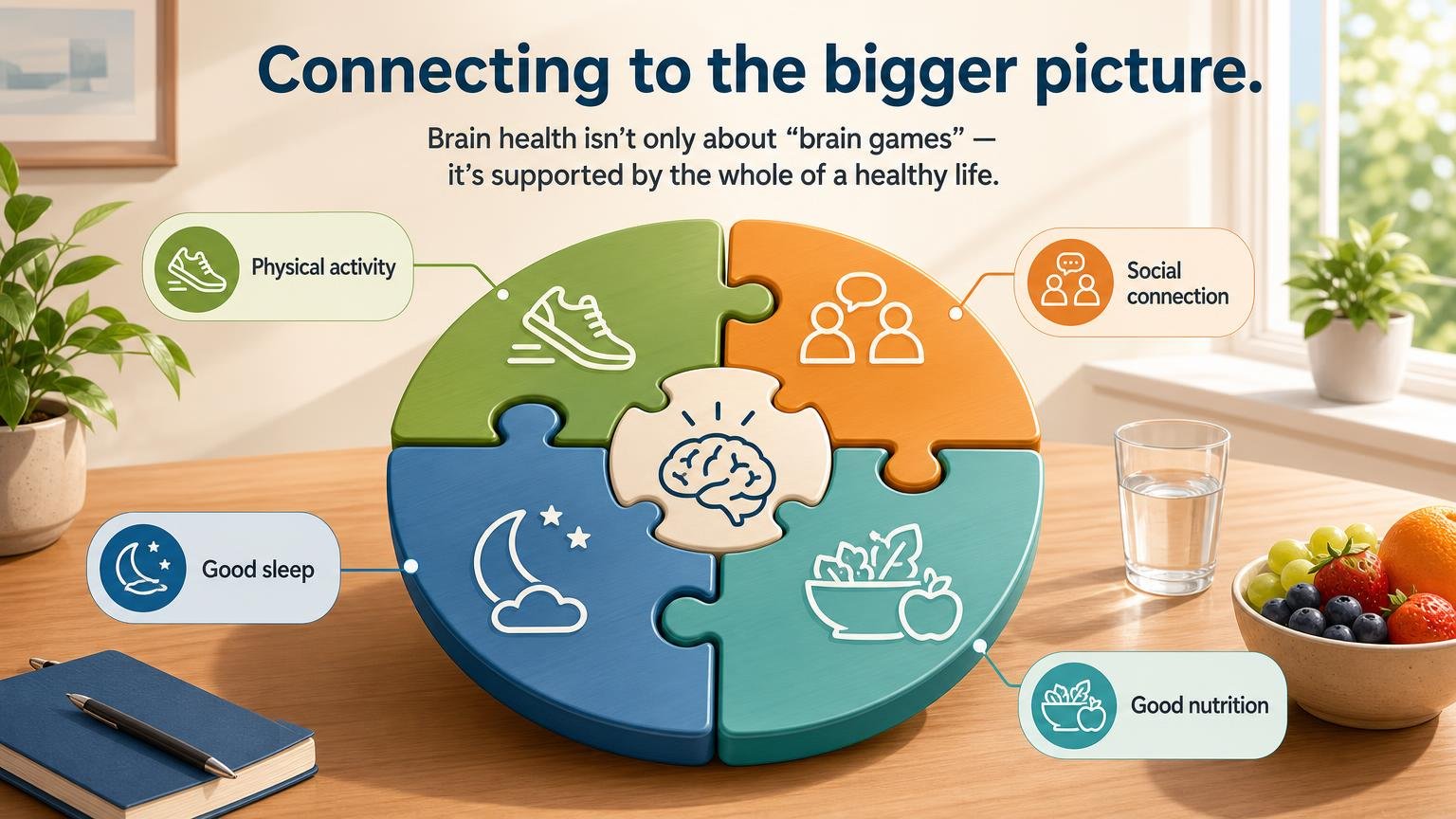
Brain health isn’t only about "brain games" — it’s supported by the whole of a healthy life:
- Physical activity — movement benefits the brain as well as the body.
- Social connection — staying connected is one of the strongest supports for mental wellbeing.
- Good sleep and nutrition — both underpin cognitive function; see the evening routine and nutrition guide.
- Managing health — controlling conditions and medications supports brain health.
- Caregiver support — help provide varied, enjoyable engagement; see caregiver daily routine support.
- Watch for changes — new or worsening memory problems, confusion, or withdrawal should be discussed with a doctor, not assumed to be normal aging.
Frequently asked questions
What are good mental activities for seniors?
Enjoyable, varied activities that gently challenge the mind: puzzles and word games (crosswords, sudoku, jigsaws), reading and audiobooks, card and board games, music (listening or playing), learning something new, creative pursuits like art and crafts, and conversation and social contact. Everyday tasks like cooking from a recipe or gardening count too. Mixing different kinds of activity engages the brain most.
Do brain games prevent dementia?
Keeping mentally active supports cognitive function, memory, mood, and a sense of purpose, and helps people stay sharp and engaged — but it is not a guaranteed way to prevent dementia. Brain health is supported by the whole of a healthy life, including physical activity, social connection, good sleep and nutrition, and managing health conditions. Any memory concerns should be discussed with a doctor.
How can I encourage a senior to stay mentally active?
Follow their existing interests, keep it pressure-free and never make it feel like a test (which causes anxiety), match the challenge so activities are engaging but achievable, make it social by doing things together, and weave small moments of engagement through the day. Celebrate participation and enjoyment rather than performance — the point is joy, not scoring well.
What activities are best for memory in seniors?
Variety and novelty help most — mixing puzzles, reading, learning something new, music and reminiscing, games, and conversation engages the brain more richly than repeating one task. Music and reminiscing over photos can be meaningful ways to engage memory and emotion. Social connection and physical movement also support memory, so brain health is best seen as part of a full, engaged life.
How often should seniors do mental activities?
Regularly and enjoyably — small moments of mental engagement through each day, with variety across the week, work well. There’s no need for long or intense sessions; the aim is consistent, pleasurable engagement rather than pressure. Building activities into the daily and weekly routine, and combining them with social and physical activity, keeps the mind engaged sustainably.
When should memory changes be checked by a doctor?
New or worsening memory problems, confusion, difficulty with familiar tasks, or withdrawal should be discussed with a doctor rather than assumed to be a normal part of aging. While some mild changes can be normal, these signs warrant assessment to identify any treatable causes or to plan appropriate support. Mental activity supports wellbeing but is not a substitute for medical evaluation of memory concerns.
Sources
- National Institute on Aging (NIH). Cognitive Health and Older Adults
- National Institute on Aging (NIH). Loneliness and Social Isolation — Tips for Staying Connected
- National Institute on Aging (NIH). Four Types of Exercise Can Improve Your Health and Physical Ability
