
5 Best Puzzles for Dementia Patients
 By Kutubuddin, Founder & Senior Care Researcher Updated October 2026
In this guide
 Best overall specialistRelish 35-Piece Dementia Puzzle
 Best nostalgic scenesSpringbok Puzzles to Remember
 Best for late-stage / tactileMelissa & Doug Wooden Knob Puzzle
 Best three-puzzle setBits and Pieces 50-Piece Puzzle Set (3 puzzles)
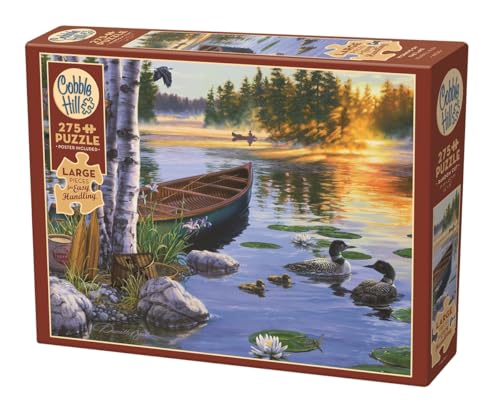 Best interlocking designCobble Hill Easy Handling Puzzle
- What to look for
- Frequently asked questions
The most important thing about a dementia puzzle is that it matches the person's current ability, not the stage they were at six months ago or the stage the family hopes they're at. Too hard produces frustration; too easy feels patronising.
We may earn a commission when you buy through links on this page. Read our affiliate disclosure.
Top 5 Picks — Find Your Situation
#1 · Best overall specialist
Relish 35-Piece Dementia PuzzleBest for: Mid-stage dementia — the default starting point for most caregivers
#2 · Best nostalgic scenes
Springbok Puzzles to RememberBest for: Mid-stage dementia — a second puzzle at the Relish level, with nostalgic scenes
#3 · Best for late-stage / tactile
Melissa & Doug Wooden Knob PuzzleBest for: Late-stage dementia where tactile handling and repetition matter more than challenge
#4 · Best three-puzzle set
Bits and Pieces 50-Piece Puzzle Set (3 puzzles)Best for: Mid-stage dementia — a step up from 35 pieces, with three pictures to rotate
#5 · Best interlocking design
Cobble Hill Easy Handling PuzzleBest for: Mild-to-early-stage dementia where the person has reduced hand control
For mid-stage dementia, the Relish 35-piece is the specialist pick — designed for this population, with adult imagery, wide high-contrast pieces, and a guided-completion box. Springbok's 36-piece "Puzzles to Remember" is a made-in-USA alternative at the same level, with nostalgic adult scenes. For early-stage, a larger interlocking puzzle such as the Cobble Hill 275-piece offers real adult challenge. Once the piece count drops to 12 or fewer and tactile handling is the goal, wooden knob puzzles close the gap.
A closer look at our top pick
Relish 35-Piece Dementia Puzzle
Best for: Mid-stage dementia — the default starting point for most caregivers
- Pieces
- 35
- Piece size
- 1.77 in wide
- Packaging
- No dementia label on box
Independently researched · Updated October 2026
The Relish 35-piece earns the top spot because it is the only pick that was designed specifically for this population rather than adapted from a general-market product. Every design decision — piece width, piece thickness, image choice, guided-completion box, packaging — was made with dementia in mind. That specificity is what makes the difference between a puzzle that gets put away after one try and one that becomes a regular part of the person’s day.
The guided-completion box is the practical feature most caregivers underestimate until they use it. Having the finished image as a constant reference reduces the frustration of not knowing what is being built, and it means the person can check their progress rather than relying on memory.
What we love
- Designed from the ground up for dementia, not adapted
- 1.77-inch pieces with a guided-completion box
- Adult imagery; no "dementia" label on packaging
- Also available in 13-piece and 63-piece for different stages
Things to consider
- 35 pieces may be too many for later-stage dementia — move to the 13-piece
- Range of image themes is narrower than general-market puzzles
Right for you if
- ✓Mid-stage dementia where a 100-piece is too many but a 6-piece wooden toy is too few
- ✓You want a puzzle that looks like a gift, not a medical aid
- ✓The person has reduced dexterity that makes standard puzzle pieces hard to handle
Maybe skip it if
- !Early-stage dementia where the person still enjoys a real challenge (try the Cobble Hill 275-piece)
- !Advanced dementia where piece count needs to drop to single digits (get wooden knob puzzles)
What owners consistently report
Common praise
- +Caregivers report the guided-completion box is genuinely useful — the person can check the image without help
- +Families appreciate that the packaging does not label the person as having dementia
- +The 35-piece count consistently hits the right difficulty window for mid-stage
Common gripes
- –As dementia progresses, 35 pieces will become too many — move to the 13-piece version from the same brand
- –The range of image themes is narrower than general-market puzzles
Getting started
- →Keep sessions to 15–30 minutes and stop while engagement is positive
- →Use the guided-completion box image as a reference throughout, not just at the end
- →If progress needs to be saved between sessions, a simple tray or the box lid keeps pieces in place
How it compares
If the person has finished the Relish 35-piece a few times and would enjoy a new picture at the same level, Springbok Puzzles to Remember is the natural second puzzle — 36 large pieces with a nostalgic, adult scene, made in the USA. Choose Relish first for its dementia-specific design and guided-completion box; add Springbok for variety.
How we picked
We compared 5 options. Our picks are based on dementia-care guidance, occupational therapist recommendations, verified owner and caregiver reviews, and product specifications — not clinical testing. We focused on what actually matters for dementia-friendly activity design: piece size (width and thickness), imagery appropriate for adults, piece count matched to cognitive stage, guided-completion box availability, and tactile accessibility for reduced dexterity. We also considered packaging dignity — whether the word "dementia" or "Alzheimer’s" appears on the outside of the box, since many people with dementia are not fully aware of their diagnosis. We also went to the trial evidence on cognitive stimulation rather than relying on the usual claims made for brain games, and it is set out in its own section below — including what puzzles demonstrably do not do. Match the puzzle to where the person is today, and be ready to move to a simpler option as the condition progresses.
Reviewed by Kutubuddin — who researches senior-care products and the real-world needs of caregivers and older adults.
Other picks, reviewed
Springbok Puzzles to Remember
Springbok’s "Puzzles to Remember" line is made for people living with Alzheimer’s and dementia: every puzzle in it has 36 large pieces that are easy to grasp and handle, and the pictures are adult, nostalgic scenes rather than children’s images. This one, The Malt Shop, shows an old-fashioned malt shop — the kind of picture that can start a conversation about the past while the pieces go together. At 36 pieces it sits at the same mid-stage level as the Relish 35-piece, so it makes a natural second puzzle once the Relish has been done a few times, or a made-in-USA alternative if the person prefers these scenes.
What we like
- Adult imagery — a nostalgic malt shop scene, not a childish picture
- 36 large pieces that are easy to grasp and handle
- Made in USA; part of a whole range of 36-piece scenes
- A good second puzzle at the same level as the Relish 35-piece
Keep in mind
- 36 pieces is too many for later-stage dementia — step down to the Relish 13-piece
- Not enough challenge for early-stage — choose a larger puzzle there
- Nostalgic US themes may not resonate for everyone
- Pieces
- 36
- Format
- Large pieces
- Origin
- Made in USA
Melissa & Doug Wooden Knob Puzzle
When piece count drops to single digits and the goal shifts from cognitive problem-solving to tactile engagement, wooden knob puzzles are the most practical option. The large wooden knobs provide a gripping point for hands with very limited dexterity, and the puzzle itself can be done repeatedly without frustration. Melissa & Doug’s wooden puzzles have simple, bold imagery (animals, vehicles) that remains visually accessible. This is a category rather than a specific model — the right one depends on the theme the person responds to. The honest note: these are children’s products repurposed for late-stage dementia care, which occupational therapists do recommend; some families find the imagery too childlike, in which case adult-scene wooden puzzles from specialist dementia brands are a better fit.
What we like
- Large wooden knobs allow gripping with very limited hand strength
- Solid wood pieces are durable and easy to clean
- Repetition without frustration — the person can finish independently
- Wide range of themes available
Keep in mind
- Children’s product repurposed — imagery may feel undignified for some
- Not appropriate for mid or early-stage dementia
- Knobs on children’s wooden puzzles have been recalled in the past for detaching — check them regularly if the person mouths objects
- Pieces
- 4–12 with knobs
- Material
- Solid wood
- Knobs
- Large easy-grip
Bits and Pieces 50-Piece Puzzle Set (3 puzzles)
This Bits and Pieces set gives you three 50-piece puzzles, each in its own box — Winter Wilderness, Harvest Harmony and Birds and the B’s, rustic American scenes by the artist John Sloane. Each finished puzzle measures 15 by 19 inches, so the pieces are about 3 inches across and easy to hold. They are cut with a random die, so no two pieces are alike and a piece that does not belong will not seem to fit, and the thick chipboard backing helps the pieces stay locked together. At 50 pieces the set sits near the top of the mid-stage range: a step up once the Relish 35-piece or the Springbok 36-piece feels easy, with three different pictures to rotate. Unlike Relish, it does not have a guided-completion box.
What we like
- Three 50-piece puzzles in one set, each in its own box
- Extra-large pieces, about 3 inches across
- Random-cut pieces with no false fits
- Thick chipboard backing; pieces lock together
Keep in mind
- No guided-completion box
- 50 pieces is too many for later-stage dementia — step down to 35 or fewer
- Not enough challenge for early-stage — choose a larger puzzle there
- Pieces
- 50 per puzzle, 3 puzzles
- Piece size
- About 3 in
- Finished size
- 15 x 19 in
Cobble Hill Easy Handling Puzzle
The practical frustration with standard jigsaw puzzles for anyone with reduced hand control is that pieces slide and shift. Cobble Hill’s Easy Handling line uses a thicker, more securely interlocking piece design that stays together when placed and doesn’t skid across the table. The imagery is adult-appropriate country and nature scenes. At 275 pieces it’s positioned at the upper end for mild cognitive impairment or early-stage dementia, but the staying-in-place feature makes it more workable than a standard 300-piece for shaky or less-controlled hands.
What we like
- Thicker interlocking pieces stay together and do not skid
- Adult-appropriate imagery; high-quality print
- Practical for reduced hand control without being a specialist product
Keep in mind
- 275 pieces is too many for mid-to-late stage — step down as needed
- No guided-completion box
- Pieces
- 275
- Design
- Secure interlocking, stays put
- Imagery
- Adult nature/country scenes
What to look for
Match the puzzle to the current stage
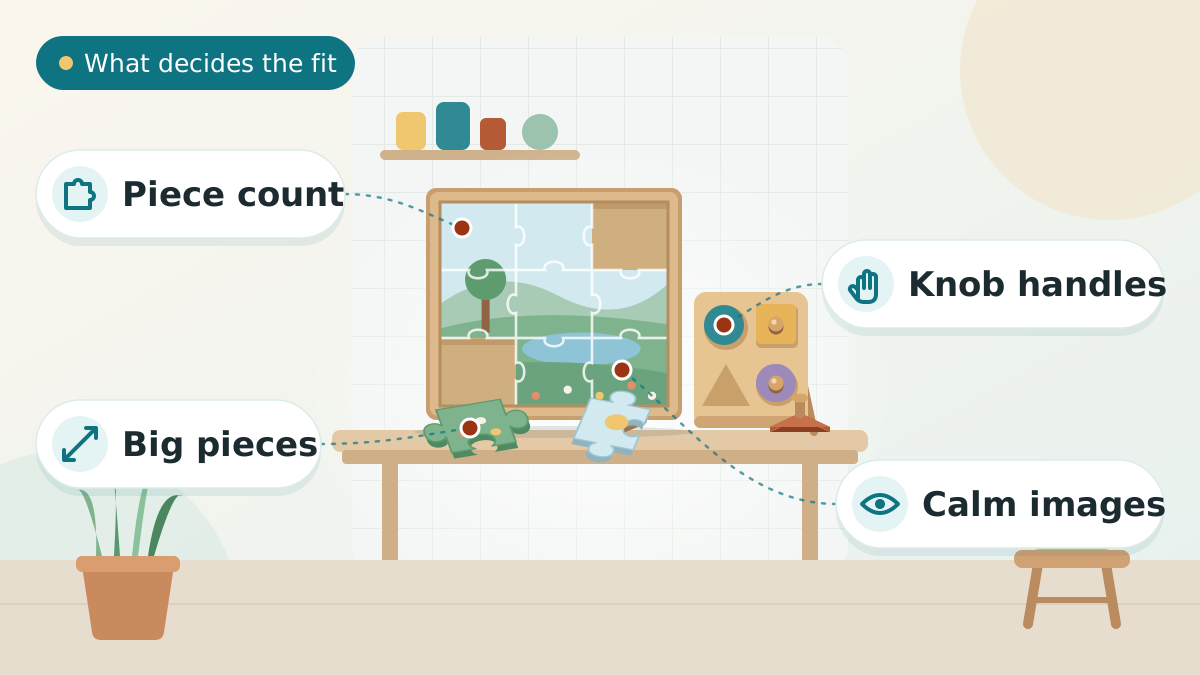
This is where most caregivers go wrong the first time — they buy a puzzle matched to where the person was, not where they are now. A general staging guide:
- Mild impairment or early-stage dementia: 100–300 pieces, large format, adult imagery. The Cobble Hill Easy Handling 275-piece is the pick here.
- Mid-stage dementia: 35–63 pieces with large pieces and a guided-completion box. The Relish range is designed exactly for this; Springbok’s 36-piece Puzzles to Remember and the Bits and Pieces 50-piece set add more pictures at this level.
- Later-stage dementia: 13–35 pieces, thick pieces, high contrast. The Relish 13-piece.
- Advanced dementia: single-digit piece count with wooden knobs or chunky tactile pieces. Engagement and handling, not completion.
If in doubt, start simpler than you think you need to. A puzzle the person finishes with a sense of pride does far more good than one that frustrates them.
Adult imagery matters
A person with dementia has a lifetime of adult experience and self-image. A puzzle with children’s cartoon characters feels demeaning, even if the person cannot articulate why. Choose puzzles with imagery the person would have enjoyed as an adult — gardens, animals, nostalgic scenes, landscapes, familiar objects. The Relish and Springbok ranges are built around this principle. Choosing imagery that connects to the person’s history (a farm if they grew up rural, a city scene if they spent their life in a city) adds an additional layer of engagement.
Guided-completion boxes and packaging dignity
Two practical details that matter more than they sound. A guided-completion box shows the finished image as a frame the puzzle sits inside, which provides a constant visual reference and reduces the frustration of "what am I trying to build?" Specialist dementia brands like Relish also keep words like "dementia" off the outer packaging, so the puzzle can be given as a gift and used in shared spaces without the person feeling labelled.
Session length and putting the puzzle away
Dementia affects attention and stamina as well as memory. Plan for shorter sessions of 15–30 minutes and stop before the person tires or gets frustrated — ending on a positive note is what makes the next session easier to start. A puzzle storage bag or tray keeps the progress intact between sessions so it does not have to restart from scratch. Some puzzles come with storage bags; if not, a puzzle mat that rolls up is a useful addition.
Read more:Activities for Seniors With Dementia at HomeDementia Care at Home
Tips to Choose Puzzles
Short on time? Here are the key points to weigh before choosing, each covered in detail above:
- Match the puzzle to the current stage
- Adult imagery matters
- Guided-completion boxes and packaging dignity
- Session length and putting the puzzle away
Comparing options? See our guides to Best Elderly Monitoring Systems, Best Medical Alert Devices for Seniors, and Best Ai Ambient Fall Detection Sensors.
What the evidence says — and what it does not
Puzzles are sold with a lot of implied promise, so it is worth being precise about what is actually established.
The relevant research is on cognitive stimulation: a structured programme of activities and discussion — word games, puzzles, music, reminiscence, creative tasks — usually run in a group. The Cochrane review of randomised trials found it produces a small benefit to cognition compared with usual care, which the reviewers describe as roughly equivalent to a six-month delay in the decline normally expected in mild-to-moderate dementia. Participants also improved on communication and social interaction, with slighter gains in daily activities and in their own ratings of their mood. In the UK, NICE recommends group cognitive stimulation therapy for mild-to-moderate dementia.
- Benefit was greater when sessions ran twice a week or more, rather than weekly. A puzzle brought out once a fortnight is not the thing that was tested.
- Benefit was greater in milder dementia. That does not mean later-stage activity is pointless — it means the goal shifts from cognition to comfort, occupation and connection, which are worth having on their own terms.
- The evidence is for engagement, not for products. Studies looking specifically at jigsaws and games have generally been of poor methodological quality. What was tested is a facilitated activity with another person present.
- Nothing here prevents or halts dementia. The disease progresses regardless. What can change is how the person spends their day and how much of their remaining ability stays in use.
The practical conclusion is the one families usually arrive at anyway: doing the puzzle with them is most of the intervention. Sitting down together twice a week, talking while you sort the pieces, is much closer to what the trials tested than handing someone a box and leaving the room. If a session ends with a conversation and a finished picture, the puzzle has done its job whether or not a single piece was placed unaided. See activities for seniors with dementia at home for the wider repertoire.
Beyond jigsaws: other puzzle-type activities for dementia
Jigsaw puzzles work well, but they are one tool in a broader activity toolkit. Depending on the person’s history and current ability, other puzzle-type activities may be more engaging:
- Sorting activities (by color, shape, or theme) can be calming and accessible at later stages.
- Word searches with very large print and familiar topic categories work well in early-to-mid stage.
- Matching card games using photos of familiar people, places, or objects are deeply personalised.
- Reminiscence activities using photo albums or memory boxes can be engaging and often work at later stages when puzzles no longer fit.
For dementia clock and reminder tools that support daily orientation, see our best dementia clocks guide.
When a puzzle stops working — signs to move on
The goal is engagement without frustration. Watch for signs that the current puzzle is no longer right: the person pushes the pieces away, becomes agitated, repeatedly picks up the same piece without placing it, or loses interest very quickly. These are signals to step down to a simpler format, not to push through. A puzzle that causes distress is doing harm rather than good. Occupational therapists who specialise in dementia care can help match activities to current ability and suggest alternatives when puzzles no longer work.
Frequently asked questions
No. Puzzles support engagement, confidence, and quality of life, and can be a calming part of the day — but they are not a treatment or cure for dementia. For a diagnosis or a change in symptoms, consult your loved one’s doctor. Choose puzzles by piece count and the person’s current ability so the activity stays enjoyable rather than frustrating.
It depends on the stage. For mid-stage dementia, the Relish 35-piece is the specialist pick — 1.77-inch pieces, guided-completion box, adult imagery. For early-stage or mild impairment, a large-format puzzle of 100 pieces or more, such as the Cobble Hill Easy Handling 275-piece. For later stage, 13 pieces or fewer, or wooden knob puzzles. The most common mistake is choosing a puzzle that is too hard for where the person is today.
A rough guide: early-stage or mild impairment suits 100–300 large pieces; mid-stage suits 35–63 large pieces with a guided-completion box; later stage suits 13–35 pieces; advanced dementia suits single-digit pieces with large knobs or handles. Always start simpler than you think you need to, and step down as the condition progresses.
Larger pieces that are easy to handle with reduced dexterity, adult-appropriate imagery that matches the person’s life experience rather than children’s characters, a guided-completion box that shows the finished image for reference, and packaging that does not feel like a medical product. The piece count also needs to match the current cognitive stage, not the one the person was at months ago.
Puzzles provide meaningful cognitive stimulation, fine motor practice, and a sense of accomplishment when matched to the right level. They also give caregivers and family members a shared activity that does not depend on conversation. The key word is "matched" — a puzzle that is too hard causes frustration and distress; one that is too easy provides little benefit. Getting the level right is what makes puzzles a positive rather than a negative experience.
Keep sessions to 15 to 30 minutes and stop while engagement is still positive — before frustration or fatigue sets in. Ending on a positive moment makes the next session easier to start. Progress can be saved between sessions with a puzzle mat or tray so the work does not have to restart from scratch.
The piece format can be useful — wooden knob puzzles with very few pieces are practical for late-stage dementia. But the imagery matters: children’s cartoon characters can feel demeaning to an adult with a lifetime of experience. When possible, choose adult imagery even in simplified formats. Specialist dementia brands like Relish offer simple piece counts with adult imagery specifically for this reason.
No — and the best ones do not. Specialist brands like Relish deliberately exclude the word from their packaging so the puzzle can be given as a gift and used in any setting without labelling the person. This matters because many people with dementia are not fully aware of their diagnosis, and a "dementia puzzle" label can be distressing.
Watch for signs: the person pushes pieces away, becomes agitated, repeatedly picks up the same piece without placing it, or loses interest quickly. These signal it is time to step down to a simpler format — fewer pieces, larger pieces, or a wooden knob style. An occupational therapist specialising in dementia care can help match activities to current ability when puzzles stop working.
Yes. Puzzles work well alongside sorting activities (by colour or shape), large-print word searches, matching card games with familiar photos, and reminiscence activities using photo albums. The goal is to have a range of options since interest and ability vary from day to day. Dementia orientation tools like large-display clocks can also help frame the daily routine around activities like puzzle sessions.
Active Minds rebranded as Relish. The two names refer to the same company. Earlier Active Minds products (especially older plastic puzzle formats) are no longer in production; the current Relish cardboard puzzle range is the continuation of that brand under the new name.
The final verdict
Start with the Relish 35-piece if the person is in mid-stage dementia — it is the only pick here built from the ground up for this population, with the right piece size, guided-completion box, and adult imagery. For a second puzzle at the same level, Springbok’s 36-piece Puzzles to Remember adds nostalgic, made-in-USA scenes. For early-stage or mild impairment, step up to the Cobble Hill 275-piece. Step down to the Relish 13-piece or a wooden knob puzzle as the condition progresses. For more variety near the top of the mid-stage range, the Bits and Pieces set adds three 50-piece puzzles with extra-large pieces. And always stop before frustration sets in — a finished puzzle is a moment of genuine pride; an overwhelming one is a reason not to try again. One last thing worth more than the choice of puzzle: sit down and do it with them. The research behind all of this is on structured activity done in company, twice a week or more, and that part costs nothing.
Our overall winner is the Relish 35-Piece Dementia Puzzle. You can check the current price on Amazon.
Our Top 5 Picks at a Glance
Ready to choose? Here are the top 5 again.
Best overall specialist
Relish 35-Piece Dementia Puzzle
Best nostalgic scenes
Springbok Puzzles to Remember
Best for late-stage / tactile
Melissa & Doug Wooden Knob Puzzle
Best three-puzzle set
Bits and Pieces 50-Piece Puzzle Set (3 puzzles)
Best interlocking design
Cobble Hill Easy Handling Puzzle
Affiliate links — we may earn a commission.
More reviews
