
A Daily Routine for Seniors: Structuring the Whole Day

Practical guidance for seniors and caregivers; not medical advice. Adapt any routine to the individual’s health, energy, and preferences.
A gentle, predictable rhythm to the day is one of the quiet foundations of healthy aging. A good daily routine steadies mood, supports sleep, and keeps the body moving — without feeling rigid.
Key takeaways
- A predictable daily routine supports sleep, mood, appetite, and a sense of purpose — one of the simplest foundations of healthy aging.
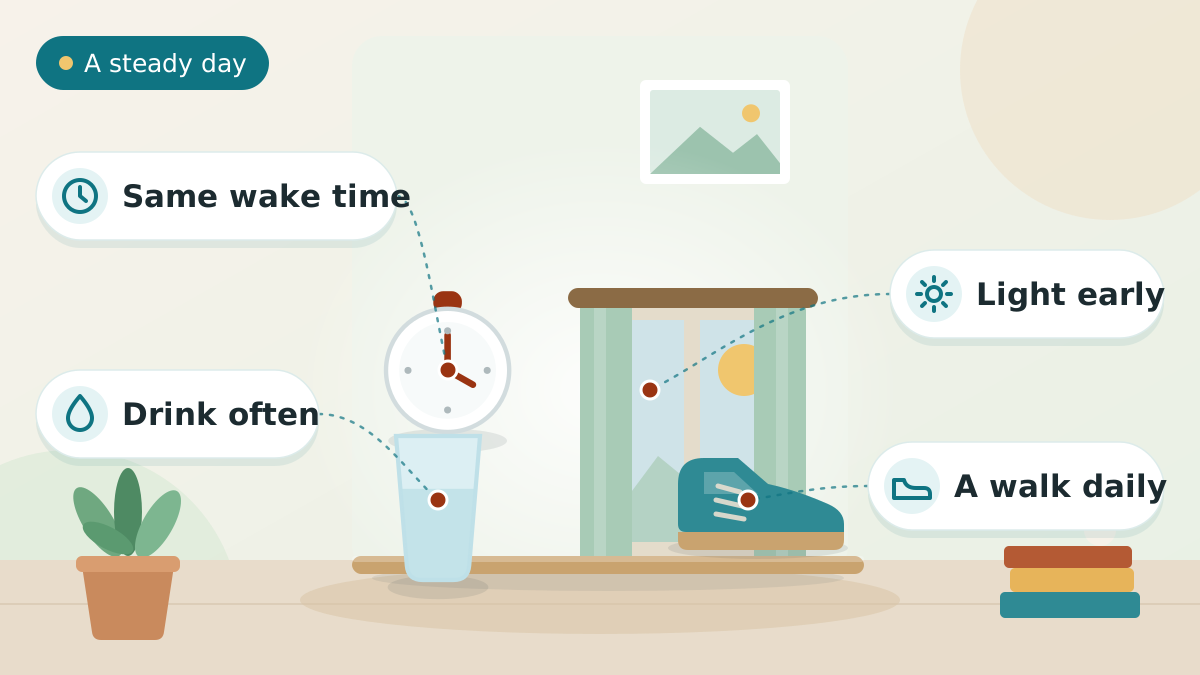
- Build the day around a few anchors: a consistent wake and sleep time, regular meals, daily movement, and moments of connection.
- Balance activity and rest — an active morning, a lighter afternoon, and a calming evening wind-down.
- Flexibility matters — a routine is a helpful rhythm, not a rigid schedule; adapt it to energy and how the day feels.
- Tailor the routine to ability level, and lean on caregivers and simple aids to keep it safe and achievable.
Quick answer
What does a good daily routine for seniors look like?
A healthy senior routine is built around a few steady anchors: a consistent wake and sleep time, regular meals, daily gentle movement, and moments of social connection and purpose. It balances an active morning, a lighter afternoon with rest, and a calming evening wind-down that supports good sleep. Keep it flexible, adapt it to the person’s energy and ability, and use simple aids and caregiver support to keep it safe.
What a daily routine really is
A daily routine is simply a gentle, repeating rhythm to the day — a familiar sequence of waking, moving, eating, resting, and connecting. It is not a rigid, minute-by-minute schedule, and it should never feel like a set of rules. Think of it as a helpful shape for the day that the person can lean on, especially on days when energy or motivation is low.
For older adults, that predictability does real good: it steadies the body clock (supporting sleep and appetite), reduces decision fatigue, and provides a reassuring sense of structure and purpose. This guide walks through how to build one across the whole day, linking to our detailed morning, afternoon, and evening routine guides.

Bonus: Follow-Along Player
An ElderlyDaily original
Ready for a plan you can follow every day?
Chair Yoga for Seniors — The Complete 4-Week System
- 40 illustrated poses, each with an easier and a stronger option
- A day-by-day 4-week plan that starts at about 10 minutes a day
- 7 mini-routines for stiff knees, balance, mornings and more
One-off purchase. Instant download.
Fillable PDF · 48 pages · US Letter + A4
Why routines matter for seniors
A consistent daily rhythm supports health and wellbeing in several concrete ways:
- Better sleep — consistent wake and sleep times keep the body clock aligned, improving sleep quality.
- Steadier mood — predictability reduces anxiety and can ease the low mood that unstructured, empty days can bring.
- Regular nutrition and hydration — routine meals and drinks make skipped meals and dehydration less likely.
- Maintained mobility — regular gentle movement built into the routine can help maintain strength and balance.
- Sense of purpose — activities and connection give the day meaning, which can support emotional wellbeing.
- Easier caregiving — a shared routine makes care more predictable and less stressful for everyone.
The key anchors of a healthy day
Rather than filling every hour, build the day around a handful of reliable anchors and let the rest flow:
- Consistent sleep and wake times — one of the most important anchors for the body clock.
- Regular meals — three balanced meals at roughly consistent times, with good nutrition and hydration.
- Daily movement — some gentle activity each day, ideally in the morning when energy is higher.
- Rest — a calm afternoon rest to recharge without disrupting night sleep.
- Connection and purpose — social contact and engaging activities, even small ones, most days.
- A wind-down — a calming evening routine that prepares the body for sleep.
Good to know
You do not need to schedule the whole day. Fix just a few anchors — wake time, meal times, a daily walk, and a bedtime — and let everything else flow naturally around them. Anchors give structure without rigidity.
A sample daily structure
A flexible example of how the anchors fit across a day (adjust freely to the person’s rhythm) — or start from our printable daily schedule template:
| Part of day | Focus |
|---|---|
| Morning | Wake at a consistent time, wash and dress, breakfast, medications, gentle movement, a purposeful activity |
| Midday | Lunch, a short walk or errand, some social contact |
| Afternoon | A rest or quiet activity, hydration, a light hobby or task |
| Evening | Dinner, calming activities, wind-down routine, consistent bedtime |
Adapting the routine by ability level
A good routine fits the person as they are today, and flexes as needs change:
- More active seniors — the routine can include longer walks, outings, hobbies, and social activities; the structure simply keeps healthy habits consistent.
- Those with limited mobility — build in seated movement, more rest, and accessible activities, with a clear safe path around the home.
- Those with cognitive decline — a simple, highly consistent routine is especially valuable, reducing confusion and anxiety; keep steps predictable and familiar (see dementia daily routine).
- On low-energy days — keep the anchors (meals, meds, a little movement, sleep) and let go of the rest without guilt.
How caregivers support the routine
Caregivers play a big role in making a routine work while preserving the person’s independence and dignity:
- Co-create it — build the routine *with* the person around their preferences, not imposed on them.
- Prompt gently — reminders for meals, medications, movement, and hydration, using aids like a pill organizer where helpful.
- Support independence — let the person do what they safely can; the routine should enable, not take over.
- Keep it safe — a safe home, suitable footwear, grab bars, and a medical alert device or monitoring for peace of mind.
- Look after yourself too — a shared routine also helps caregivers; see caregiver daily routine support.
Starting or changing a routine
Introduce a routine gently, so it feels supportive rather than imposed:
- Start small — begin with one or two anchors (a consistent wake time and a daily walk), and build from there.
- Follow the person’s natural rhythm — work with when they naturally have energy, rather than against it.
- Give it time — a new routine takes a few weeks to feel natural; be patient and consistent.
- Review and adjust — revisit the routine as health, seasons, and preferences change; it should always serve the person.
For the full day broken down, explore the morning, afternoon rest, and evening guides, plus daily movement and nutrition.
Frequently asked questions
What does a good daily routine for seniors look like?
It is built around a few steady anchors: consistent wake and sleep times, regular meals, daily gentle movement, and moments of social connection and purpose. It balances an active morning, a lighter afternoon with rest, and a calming evening wind-down for good sleep. Keep it flexible, adapt it to the person’s energy and ability, and use simple aids and caregiver support to keep it safe.
Why are routines important for elderly people?
A consistent daily rhythm supports better sleep (by steadying the body clock), a steadier mood, regular nutrition and hydration, maintained mobility through daily movement, and a sense of purpose that protects mental health. Predictability also reduces anxiety and decision fatigue, and it makes caregiving more manageable. This is especially valuable for people with cognitive decline.
How structured should a senior’s routine be?
A routine should be a helpful rhythm, not a rigid minute-by-minute schedule. Fix just a few anchors — wake time, meal times, a daily walk, and bedtime — and let the rest of the day flow naturally around them. This gives structure and predictability without pressure, and it leaves room to adapt to how the person feels each day.
How do I create a daily routine for an elderly parent?
Build it with them around their preferences and natural energy rhythm, not imposed on them. Start small with one or two anchors (a consistent wake time and a daily walk) and add gradually, prompt gently for meals, medications, movement, and hydration, keep the home and activities safe, and give the new routine a few weeks to feel natural. Review and adjust it as needs change.
How do I adapt a routine for someone with dementia?
For someone with cognitive decline, a simple, highly consistent routine is especially valuable — it reduces confusion and anxiety by keeping steps predictable and familiar. Keep the sequence of the day stable, use clear prompts and cues, and simplify tasks. Our dementia daily routine guide covers this in more depth, including calm structure and meaningful, achievable activities.
What if a senior has low energy some days?
On low-energy days, keep the essential anchors — meals, medications, a little movement, hydration, and consistent sleep — and let go of the rest without guilt. A routine is meant to support the person, not burden them, so flexing it around fluctuating energy is exactly how it should work. Persistent fatigue or a sudden drop in energy, though, is worth discussing with a doctor.
Sources
- National Institute on Aging (NIH). Sleep and Older Adults
- National Institute on Aging (NIH). Four Types of Exercise Can Improve Your Health and Physical Ability
- National Institute on Aging (NIH). Healthy Eating As You Age: Know Your Food Groups
