
4 Best Bed Alarms for Seniors
 By Kutubuddin, Founder & Senior Care Researcher Updated October 2026
In this guide


For most caregivers, the Smart Caregiver Cordless Bed Sensor Pad is the best bed alarm: a weight-sensing pad under the fitted sheet alerts a pager you carry, so there is no cord to trip on and nothing sounding in the bedroom.
We may earn a commission when you buy through links on this page. Read our affiliate disclosure.
Top 4 Picks — Find Your Situation
#1 · Best Overall
Smart Caregiver Cordless Bed Sensor Pad with Wireless PagerBest for: Most caregivers who want a reliable, quiet, expandable bed-exit alert
#2 · Best for Dementia
Lunderg Early Alert Bed Alarm SystemBest for: Caregivers of dementia or high fall-risk seniors who want the earliest, quietest warning
#3 · Best Under-Mattress
Lunderg Under-Mattress Bed AlarmBest for: Seniors who dislike or remove an on-top pad, or anyone prioritizing comfort
#4 · Best Floor Mat
Smart Caregiver Floor Mat Alarm & PagerBest for: Caregivers who prefer floor-based detection or want to cover an exit or doorway
Start with what the evidence actually shows, because most listings for these devices overstate it. No randomised trial of bed or chair alarms alone has found a significant reduction in falls or fall injuries. The largest test, published in Annals of Internal Medicine in 2012, pushed alarm use on hospital units up thirty-six-fold and measured no significant change in falls, injuries, or restraint use. A 2018 Cochrane review called the evidence uncertain. So what is a bed alarm actually for? It tells you someone has got out of bed — a real and useful thing for a caregiver down the hall, but not the same as preventing a fall. Buy one to know sooner, not to make a fall less likely. The design choice that matters most is how you are alerted. A loud in-room alarm can startle and agitate someone with dementia, and CMS guidance warns that an audible alarm can itself act as a restraint if the person becomes afraid to move. A wireless pager that alerts the caregiver remotely while keeping the room quiet is the better design.

Smart Caregiver Cordless Bed Sensor Pad with Wireless Pager
Most caregivers who want a reliable, quiet, expandable bed-exit alert
The Smart Caregiver cordless bed sensor pad and wireless pager wins as the dependable default. It gets the most important thing right — the alert goes to a pager the caregiver carries, not a speaker in the bedroom, so a senior isn't startled awake by an alarm. The cordless pad slips under the fitted sheet with nothing to trip over, and the pager lets you choose sound or silent vibration.
It's also flexible and easy to live with. The wireless range covers most homes, setup needs no Wi-Fi or tools, and the system expands — you can add a chair pad or doorway sensor to the same pager as needs grow. It isn't the earliest-warning option here (a pre-alert pad detects rising sooner), but as a quiet, proven, expandable bed-exit alert it fits the widest range of households.
What we love
- Quiet, remote alerting
- Established, expandable system
- Expandable coverage
- Easy to set up and use
Things to consider
- Pad has a limited lifespan (replace periodically)
- Placement matters for false alarms
- Range varies with walls and floors
Right for you if
- ✓You want a quiet, reliable bed-exit alert with a pager
- ✓You'd like to add chair or doorway sensors later
- ✓You want simple setup with no Wi-Fi or app
- ✓A caregiver will carry the pager around the home
Maybe skip it if
- !You need the earliest possible warning — the Lunderg pre-alert detects rising sooner
- !The senior removes or refuses a pad — choose the under-mattress sensor
- !You'd rather catch them at the floor — the floor mat fits
What owners consistently report
Common praise
- +Owners value the quiet pager and reliable alerts
- +Setup is described as quick and simple
- +The expandability is a frequently mentioned plus
Common gripes
- –The pad needs replacing after its lifespan
- –Placement affects false alarms
- –Range can drop through thick walls or floors
Getting started
- →Place the pad under the fitted sheet and secure it so it can't shift
- →Carry the pager and set it to vibrate or low volume at night
- →Test the range from where you'll actually be, then adjust
How it compares
The Lunderg Early Alert system is the better choice when the earliest warning matters most — its pre-alert detects the senior beginning to rise, buying extra seconds a standard pad can't. The Smart Caregiver is an established, easily expandable option for general use. Choose the Lunderg for dementia and high fall risk, the Smart Caregiver for a reliable, flexible everyday alert.
How we picked
We compared 4 options. We reviewed the randomised evidence on bed and chair alarms before comparing any product, because it determines what these devices can honestly be sold as. We then compared the most widely recommended systems on the things that actually differ: alert method (wireless pager versus in-room alarm), early or pre-alert detection, pad type and placement, false-alarm resistance, wireless range, durability and incontinence resistance, and ease of setup. Products are also checked against the CPSC recall database before listing. Our picks draw on manufacturer specs, CMS surveyor guidance, published trial evidence, and owner feedback — not our own hands-on testing. We favour wireless-pager systems, because a quiet room is both safer and kinder.
Reviewed by Kutubuddin — who researches senior-care products and the real-world needs of caregivers and older adults.
Other picks, reviewed
Lunderg Early Alert Bed Alarm System
Built specifically for dementia care. Its patented pre-alert detects the person beginning to rise — not just when weight leaves the pad — giving you extra seconds to respond. Crucially, there's no in-room alarm to frighten or agitate your loved one; every alert goes to the wireless pager you carry. The hip-level pad resists false alarms and wipes clean.
What we like
- Pre-alert warns before the person is up
- No in-room alarm — gentler for dementia
- Incontinence-resistant, easy-clean pad
- Long range for multi-floor homes
Keep in mind
- Pad lifespan around 15 months
- Must be placed at hip level to work best
- Costs more than a basic alarm
- Detection
- Patented pre-alert (before rising)
- Alert
- Wireless pager only (quiet room)
- Pad
- 10x33 in, hip-level, wipeable
- Range
- Up to ~400 ft
- Eligibility
- FSA/HSA
Lunderg Under-Mattress Bed Alarm
The pick for comfort and for seniors who pull off or refuse an on-top pad. The sensor sits invisibly under the mattress — no crinkle, no texture, nothing to notice or remove — while still sending early alerts to the wireless pager. A longer-lasting pad (about two years) and the same quiet, remote alerting make it a discreet, dignity-preserving choice.
What we like
- Completely hidden and comfortable
- Nothing for the senior to remove or resist
- Quiet wireless alerts
- Longer pad lifespan
Keep in mind
- Mattress thickness limit (and not for Sleep Number beds)
- Slightly less precise than a hip-level pad
- Premium price
- Placement
- Invisible, under the mattress
- Alert
- Wireless pager (sound/vibrate)
- Comfort
- No crinkle or texture
- Pad life
- ~24 months
- Limit
- Mattress up to ~13 in
Smart Caregiver Floor Mat Alarm & Pager
The choice when you'd rather catch the senior as they step down than place a pad in the bed. A large pressure-sensitive mat sits beside the bed (or at a doorway) and alerts the wireless pager when stepped on — with nothing under the body and the freedom to roll it up and tuck it away during the day. Cordless and easy to reposition.
What we like
- No pad under the body
- Doubles as a doorway/exit sensor
- Quiet wireless alerting
- Cordless and easy to move or hide
Keep in mind
- Alerts once feet are already down (no pre-alert)
- A mat underfoot is a consideration for steadiness
- Larger footprint to position
- Type
- Floor pressure mat (24x48 in)
- Alert
- Wireless pager (sound/vibrate)
- Range
- Up to ~300 ft
- Placement
- Bedside or doorway
- Portable
- Cordless; rolls up
What to look for
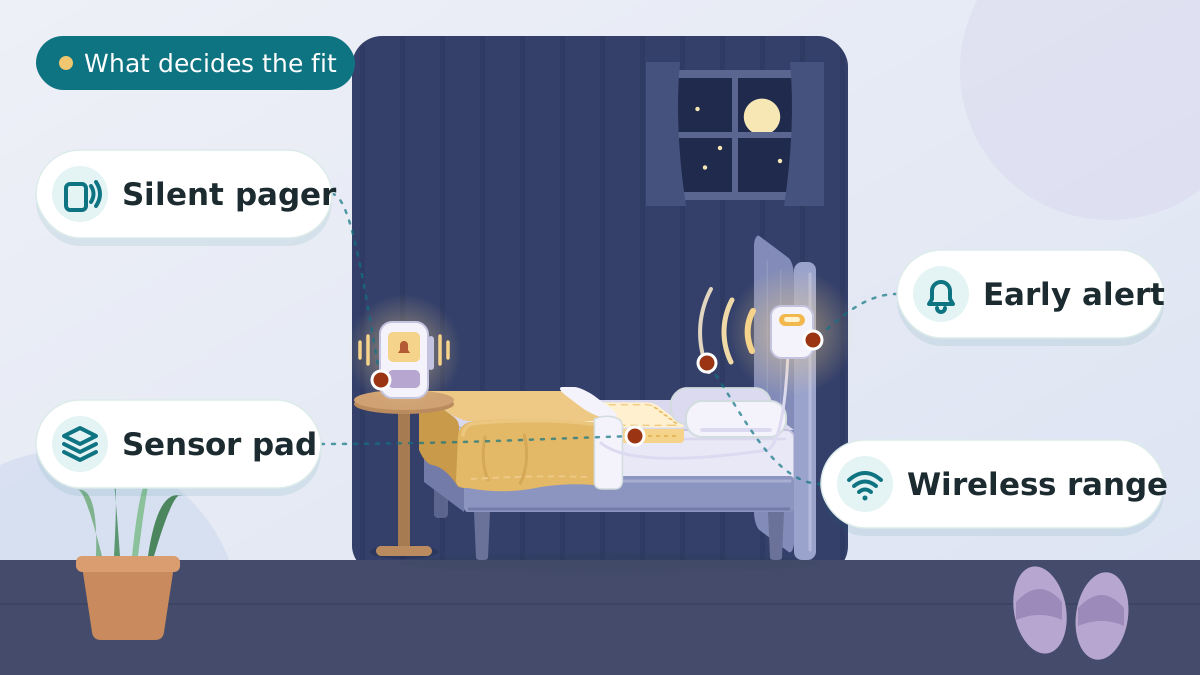
Wireless pager, not a loud bedside alarm
This is the most important decision, and it's about more than convenience. A loud alarm going off in the bedroom can startle a senior — especially someone with dementia — and CMS guidance warns it can make a person afraid to move.
For that reason, CMS guidance warns that in-room alarms can act as a restraint, and many care settings have moved away from them. Choose a system where the alert goes to a pager the caregiver carries, so the bedroom stays quiet and the person keeps their dignity while you still get the warning.
Pre-alert vs standard detection
Timing is everything when the goal is to reach the person before a fall.
A standard pad alarms when weight leaves it — by which point the senior is already up. A pre-alert or early-alert pad detects them beginning to rise (it's placed at hip level), giving you precious extra seconds to get there first. For high fall risk or fast movers, that head start gives you more time to respond.
Pad type and placement
Match the sensor to the person.
- On-top bed pad: goes under the fitted sheet; place at hip level for pre-alert models.
- Under-mattress: invisible and comfortable, ideal for someone who removes or refuses a pad.
- Chair pad: alerts when they stand from a chair or recliner.
- Floor mat: triggers when they step down, with nothing under the body.
Range, false alarms, and durability
A few practical factors decide how well it works day to day.
Match the wireless range to your home — a multi-floor house needs more reach. Correct placement plus adjustable sensitivity cuts false alarms (a constant source of lost sleep and lost trust). Choose an incontinence-resistant, wipeable pad, and note that sensor pads have a lifespan (often 15 to 24 months) and should be replaced on schedule to stay reliable.
Power, expandability, and setup
Think about how it fits your routine.
Decide between battery and AC power, and consider an expandable system that pairs several sensors — bed, chair, and doorway — to a single pager if you're covering more than one risk. The best systems are plug-and-play and need no Wi-Fi, app, or tools.
Read more:Dementia Home Safety Guide 2025Sleep Problems in DementiaDementia Wandering Behavior
What the trials actually found
This is the part of the story the product listings leave out, and it should shape what you expect from whatever you buy.
- Shorr et al., Annals of Internal Medicine, 2012. A cluster randomised trial that set out to increase bed alarm use on hospital nursing units, and succeeded — usage rose from 1.79 to 64.41 days per 1,000 patient-days. There was no statistically significant difference in the rate of falls, the number of patients who fell, fall-related injuries, or the number of patients restrained.
- Alarms used on their own. Across the randomised literature, no trial of bed or chair alarms as a sole intervention has shown a significant effect on falls or on injuries from falls. Nor did alarms change residents’ fear of falling, length of stay, functional status, discharge destination, or quality of life.
- Cochrane, 2018. The review concluded the evidence for alarm effectiveness in preventing falls was uncertain, based on the three trials that tested alarms in isolation.
- The disinvestment trial. An Australian study tested cutting alarm use rather than adding it. Reducing use to below 3 percent of beds was non-inferior to the existing high-use practice; eliminating alarms altogether was not. Fewer alarms did no harm. None at all may.
None of this means a bed alarm is useless. It means the thing it reliably does is tell you someone has moved, and the thing it does not reliably do is stop them falling. Those trials were run on staffed wards with a nurse a few metres away; a family caregiver asleep in another room is in a genuinely different position, and no trial has tested that setting. Knowing sooner has value. Just do not buy one expecting the fall risk itself to drop.
What does have evidence behind it: a systematic review and meta-analysis of 283 randomised trials of fall-prevention interventions in older people, published in JAMA in 2017, found that exercise, alone or combined with other measures, was associated with a lower risk of injurious falls compared with usual care. If the goal is fewer falls rather than faster notification, strength and balance work is the intervention with the numbers behind it — see our chair yoga and pedal exerciser guides, and ask about a referral to a physiotherapist or falls clinic.
Use it without turning it into a restraint
CMS surveyor guidance from 2017 treats position change alarms as something that can become a restraint rather than as a straightforward safety device. Two situations trigger that reading: the resident becomes reluctant to move because they do not want to set the alarm off, or they cannot turn it off themselves. Best practice in that guidance is narrow — use alarms, if at all, to gather movement information that informs a proper, person-centred plan, not as a permanent fixture.
Those requirements apply to facilities, not to a private home. But the harm they are guarding against does not care where the bed is. A person who lies still because they are frightened of the noise is worse off, not safer, and immobility carries its own costs.
- Choose a pager over an in-room siren, so the noise is where the caregiver is.
- Tell the person the alarm is there and what it does. Do not install one covertly.
- Treat repeated false alarms as a fault to fix, not background noise to tolerate — alarm fatigue is how real alerts get missed.
- Review whether it is still needed. An alarm that made sense after a hospital discharge may not three months later.
Tips to Choose Bed Alarms
Short on time? Here are the key points to weigh before choosing, each covered in detail above:
- Wireless pager, not a loud bedside alarm
- Pre-alert vs standard detection
- Pad type and placement
- Range, false alarms, and durability
- Power, expandability, and setup
Comparing options? See our guides to Best Elderly Monitoring Systems, Best Medical Alert Devices for Seniors, and Best Ai Ambient Fall Detection Sensors.
An alarm prompts a response — pair it with the rest
A bed alarm gives you the chance to help before a fall, but the person still tries to get up, so it works best as part of a plan rather than on its own.
Combine it with a bedside fall mat to cushion a fall if one happens, lower the bed height, and add motion night lights to light the path. For a confused or frail senior, an alarm is a kinder alternative to a bed rail, which carries an entrapment risk — but it can still act as a restraint if it is used to keep someone in bed, and it is not a substitute for supervision or a plan from the person's care team. Our nighttime falls guide covers the full approach.
Reducing false alarms and alarm fatigue
False alarms cost sleep and erode the trust that makes the system work, so a few habits matter:
- Place the pad correctly — flat, secured with the clips, and at hip level for pre-alert models.
- Set the sensitivity appropriately for the person.
- Keep the pad in good condition and replace it at the end of its lifespan.
- Use vibrate or low volume on the pager at night to alert you without waking the household.
- For a restless mover, a larger pad reduces missed alerts.
See our safe bedroom setup guide for the wider picture.
Frequently asked questions
They alert a caregiver that the person is getting up so someone can assist; they do not physically stop a fall. The earlier the alert, the better — pre-alert systems that detect a senior beginning to rise give the most time to respond. A bed alarm works best alongside a fall mat, a lower bed, and good lighting, since it prompts help but the person still attempts to get up.
Place the pad flat and secured under the fitted sheet, at hip level for pre-alert models, and set the sensitivity to suit the person. Keep the pad in good condition and replace it at the end of its lifespan, since a worn pad misreads. For a restless sleeper, a larger pad reduces both false alarms and missed alerts. Correct placement is the single biggest factor.
For dementia, choose a wireless-pager system with pre-alert, like the Lunderg Early Alert. The pre-alert warns you as the person begins to rise, and — just as importantly — the alert sounds only on the pager you carry, not in the bedroom. A loud in-room alarm can frighten and agitate someone with dementia and even cause a fall, which is why quiet, remote alerting matters most here.
Most home systems advertise ranges from about 300 to 400 feet in open space, but walls, floors, and appliances reduce that indoors. For a single-story home a shorter range is fine; for a multi-floor house, choose a longer-range model and test it from where you'll actually be. If you might be out of range, a system that vibrates and sounds gives you the best chance of noticing.
The pager's replaceable AA batteries typically last months, depending on use. Separately, many sensor pads have a built-in, non-replaceable battery with a lifespan of around 15 to 24 months from first activation — after that, the pad should be replaced to stay reliable. Check whether your model uses a replaceable battery or a lifespan-limited pad.
A traditional bed alarm needs someone to receive the alert, so for a senior living entirely alone it's less useful on its own. In that case, pair it with a medical alert system or a remote-monitoring setup so help can be summoned. Bed alarms shine when a caregiver — at home or nearby — can respond to the pager and assist before a fall.
A pressure (weight) pad sits on or under the mattress, or on a chair or floor, and alerts based on weight being applied or removed — reliable for detecting a specific action like getting up. A motion sensor watches an area and alerts on movement, useful for doorways or wandering but more prone to false triggers. Many caregivers use a pressure pad for the bed and a motion sensor for an exit.
Most don't. The common pad-and-pager systems connect the sensor directly to the handheld pager over their own wireless signal, with no Wi-Fi, app, or internet needed — which makes them simple and reliable. Only smart, app-connected monitors require Wi-Fi. If you want plug-and-play simplicity, choose a standalone pad-and-pager system.
Wireless-pager systems are widely used in care settings, but loud in-room alarms have largely been phased out because they were considered a potential restraint that compromised dignity and could increase agitation. If you're choosing for a facility or a loved one in care, favor a quiet, pager-based system, and check the facility's specific policies on alarms.
Choose a discreet option and frame it gently. An under-mattress sensor is invisible and comfortable, with nothing for the person to notice or remove, which can reduce resistance. Explaining it in terms of their own safety and independence — and keeping the alert on your pager rather than in their room — helps too. If they still resist, an occupational therapist can suggest tailored approaches.
The final verdict
For most caregivers, the Smart Caregiver cordless system is the best bed alarm — quiet, well supported, and expandable. Choose the Lunderg Early Alert for dementia and high fall risk (pre-alert plus no in-room noise), the Lunderg under-mattress sensor for comfort or a senior who refuses a pad, or the Smart Caregiver floor mat for floor-based detection. The guiding principle: pick a wireless pager over a loud bedside alarm — it's safer and kinder — and pair the alarm with a fall mat and good lighting, since it prompts help but doesn't stop the fall by itself.
Our overall winner is the Smart Caregiver Cordless Bed Sensor Pad with Wireless Pager. You can check the current price on Amazon.
Our Top 4 Picks at a Glance
Ready to choose? Here are the top 4 again.
Best Overall
Smart Caregiver Cordless Bed Sensor Pad with Wireless Pager
Best for Dementia
Lunderg Early Alert Bed Alarm System
Best Under-Mattress
Lunderg Under-Mattress Bed Alarm
Best Floor Mat
Smart Caregiver Floor Mat Alarm & Pager
Affiliate links — we may earn a commission.
