

Walker vs Cane: Which Mobility Aid Is Right?

Based on physical-therapy and mobility-safety guidance; a physical therapist can confirm the right choice in a single visit.

A cane and a walker solve different problems. Choosing the wrong one — or holding on to a cane after a walker is needed — is a common cause of falls. Here is how to match the aid to the person.
Key takeaways
- Choose a cane for mild balance help or one weaker leg; choose a walker when balance is poor, both legs are weak, or weight needs real support.
- A cane leaves one hand free and keeps a natural gait; a walker gives far more stability but needs two hands and more space.
- If a person leans hard on their cane, grabs furniture while using it, or has fallen recently, they have likely outgrown the cane.
- A rollator (wheeled walker with a seat) is the middle-to-high-support option for someone who can control wheels and wants a place to rest.
- Whatever the aid, fit and technique matter more than the device — see how to walk with a cane and pair it with balance exercises.
Quick answer
Should a senior use a walker or a cane?
Use a cane if the person needs only light balance support or has one weaker side, still walks fairly steadily, and can manage stairs. Use a walker if balance is unreliable, both legs are weak, weight must be supported, or there have been recent falls. When in doubt, the safer choice is more support — and a physical therapist can decide in one assessment. Explore models in our best canes and best walkers reviews.
The short answer, at a glance
If you only read one thing: a cane assists balance, a walker provides it. A cane is for someone who is mostly steady and needs a little help; a walker is for someone whose balance can no longer be trusted on its own.
| Cane | Walker | |
|---|---|---|
| Support level | Light — assists balance | High — bears weight and steadies |
| Hands needed | One (a hand stays free) | Two |
| Best for | One weak leg, mild balance help | Poor balance, both legs weak, fall history |
| Stairs | Manageable with technique | Difficult; usually avoided |
| Space needed | Minimal | More — doorways and turns matter |
| Gait | Natural and quick | Slower and more deliberate |

What a cane does best
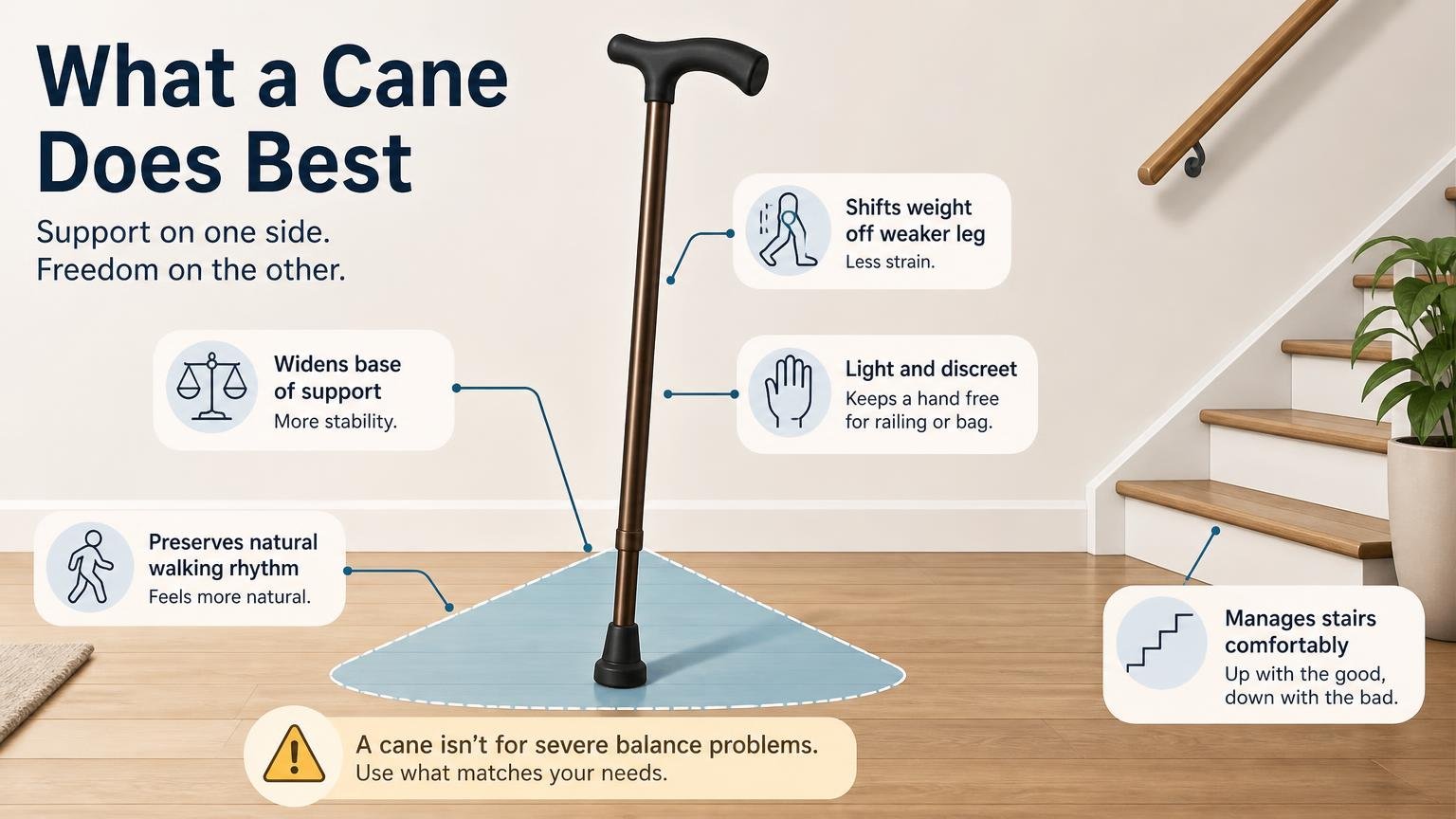
A cane widens the base of support and shifts a share of body weight off a weaker leg. It suits someone who is fundamentally steady but needs help on one side — after a hip or knee issue, mild arthritis, or general age-related unsteadiness.
Its advantages are real: it is light, discreet, keeps a hand free for a railing or a bag, and preserves a natural walking rhythm. It is also the only common aid that manages stairs comfortably, using the up-with-the-good, down-with-the-bad stair rule.
But a cane has a ceiling. It cannot catch a genuine loss of balance, and it does not truly bear weight. Ask it to do a walker’s job and it becomes unsafe.
Good to know
A quad cane (four small feet) offers more stability than a single-point cane and stands on its own — a useful half-step for someone between a cane and a walker. We cover types in the best canes for seniors review.
What a walker does best
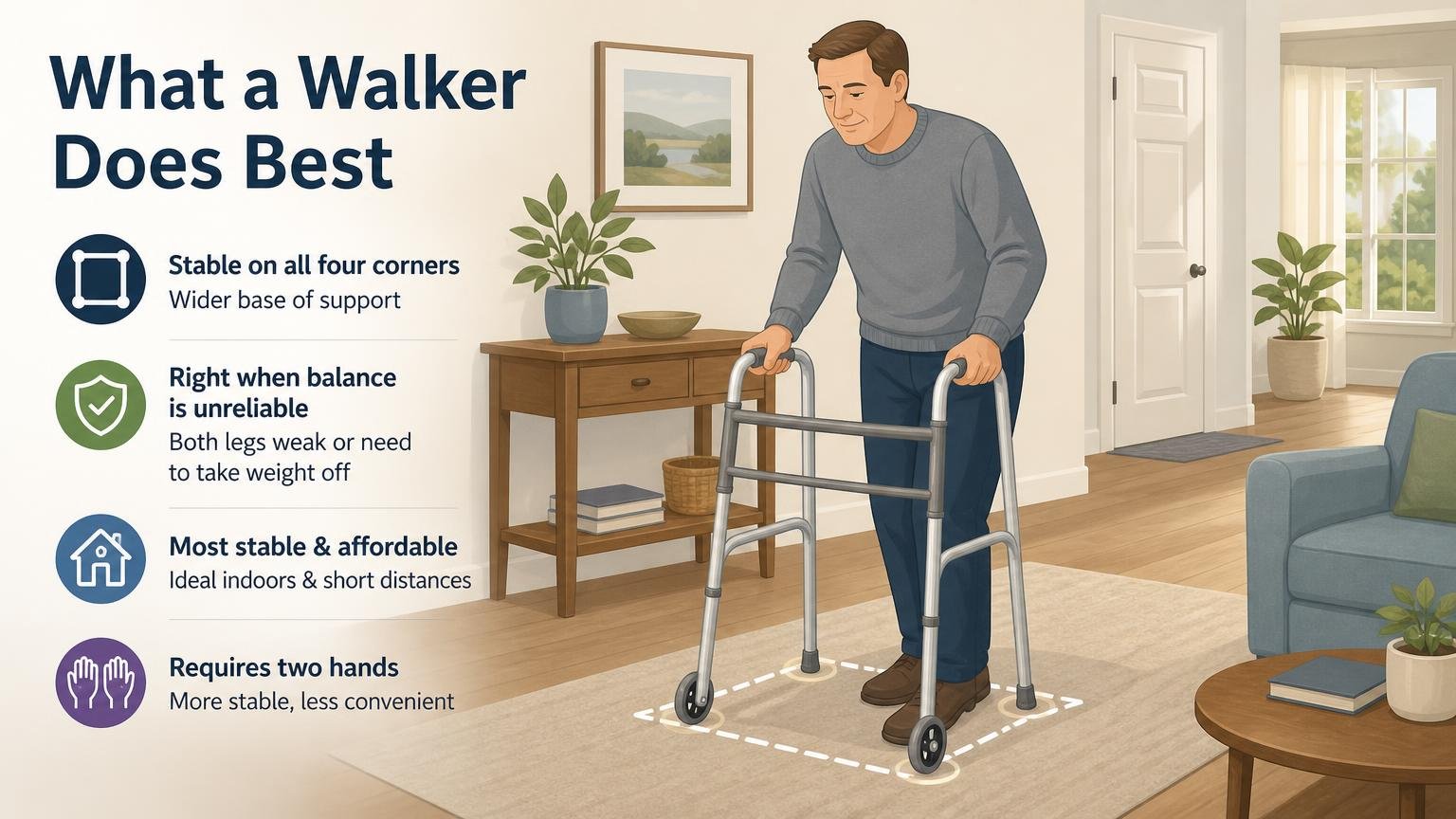
A walker surrounds the person with a stable frame on all four corners, dramatically widening the base of support and giving something solid to push down on. It is the right tool when balance is unreliable, when both legs are weak, or when a person needs to take real weight off their legs to move at all.
Standard walkers (no wheels, or two front wheels) are the most stable and the most affordable, and they are ideal indoors and for short distances. The trade-off is that they require two hands, move more slowly, need to be lifted or pushed with each step, and are awkward on stairs and in tight spaces.
For someone who finds a standard walker too slow or tiring, the next step is usually a rollator — covered below.
How to decide: a simple checklist
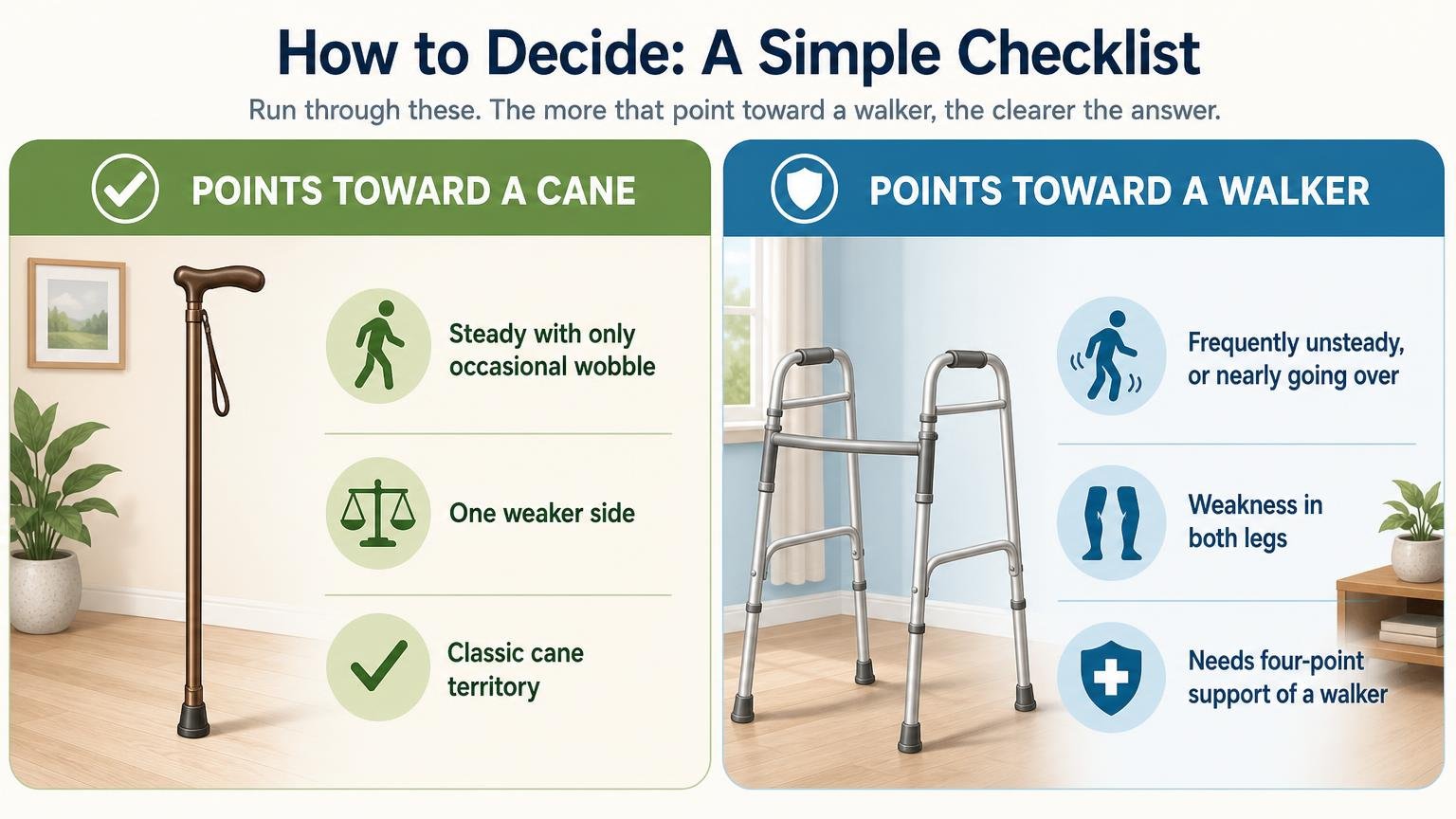
Run through these. The more that point toward a walker, the clearer the answer:
- 1
How is their balance, unaided?
Steady with only occasional wobble points to a cane. Frequently unsteady, or a feeling of "nearly going over," points to a walker.
- 2
One weak leg, or two?
One weaker side is classic cane territory. Weakness in both legs needs the four-point support of a walker.
- 3
Do they need to take weight off their legs?
If pain or weakness means they must lean real weight on the aid to move, that is a walker (or rollator) — a cane is not built to carry it.
- 4
Any recent falls or near-falls?
A fall in the last few months is a strong signal to step up support. See what to do when a parent keeps falling.
- 5
What is the terrain and distance?
Short indoor trips suit either; long or outdoor distances with rest stops favour a rollator with a seat.
Safety first
If you are genuinely unsure, choose the option with more support. The cost of a walker that is slightly more than needed is small; the cost of a cane that is not enough is a fall.
Where a rollator fits in
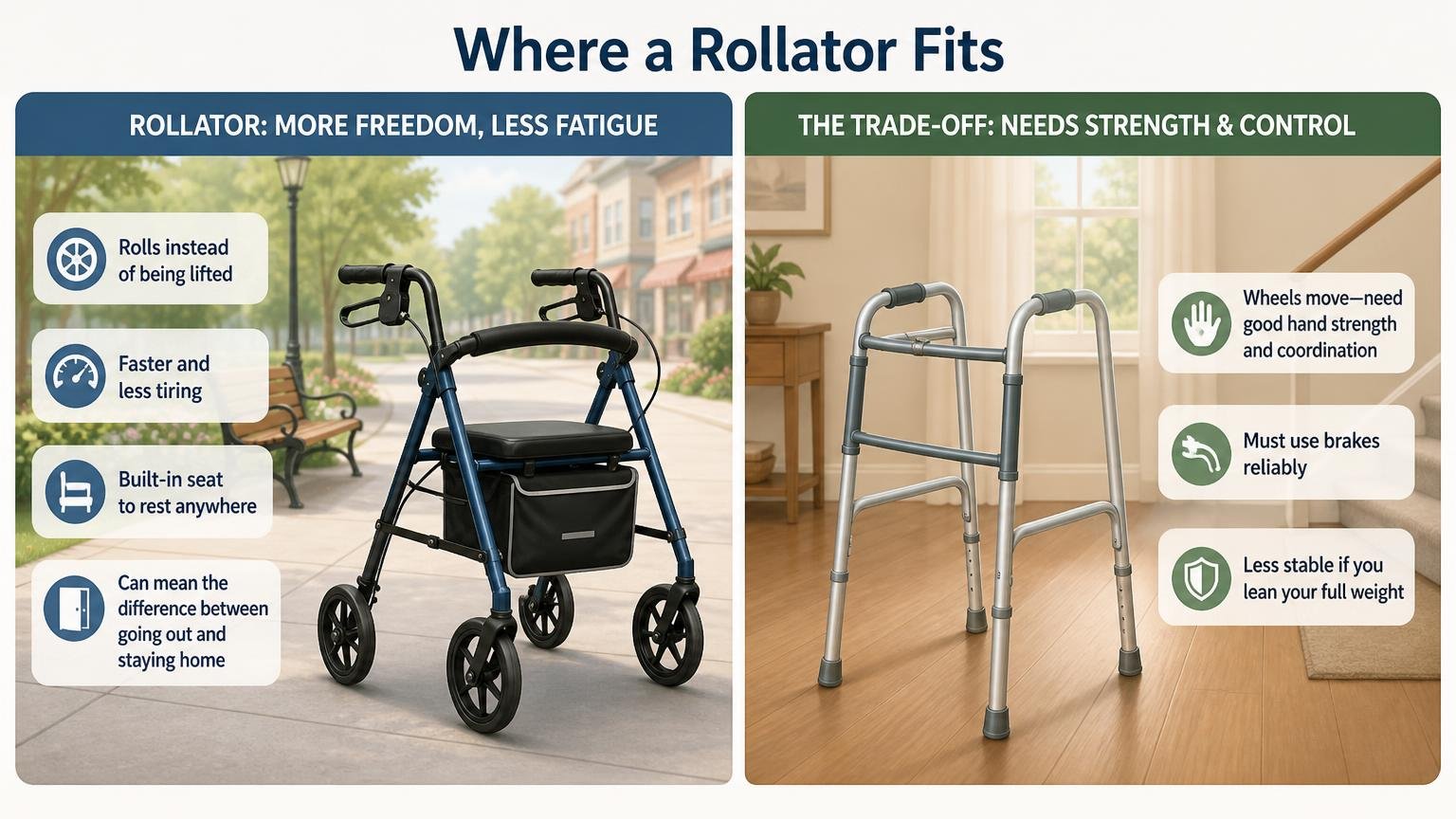
A rollator is a walker on four wheels, with hand brakes and a built-in seat. It rolls instead of being lifted, so it is faster and less tiring than a standard walker — and the seat lets a person rest anywhere, which can be the difference between going out and staying home.
The trade-off is that wheels move, so a rollator suits someone with enough hand strength and coordination to work the brakes reliably; it is less stable than a standard walker for someone who tends to lean their full weight forward. If a rollator is on your shortlist, our how to choose a rollator guide and rollator vs walker comparison go deeper, and the best rollators for seniors review compares models.
Knowing when to make the switch
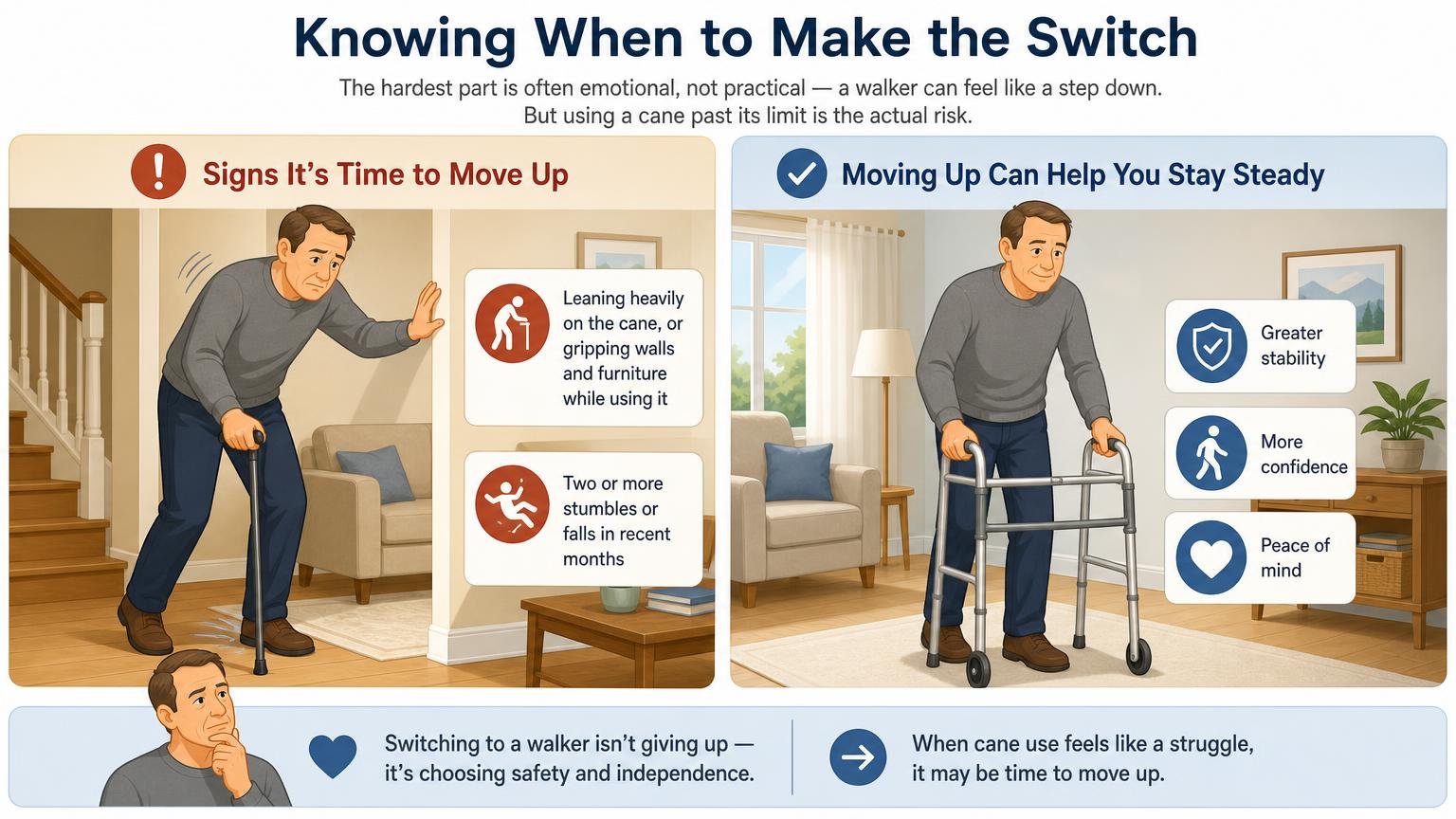
The hardest part is often emotional, not practical — a walker can feel like a step down. But using a cane past its limit is the actual risk. Watch for these signs that it is time to move up:
- Leaning heavily on the cane, or gripping walls and furniture while using it
- Two or more stumbles or falls in recent months
- New or worsening dizziness on standing, or fatigue over short distances
- Both legs now feel weak, rather than one
- Growing fear of falling that keeps them from moving around the home
If several of these ring true, arrange a physical-therapy assessment — it is one of the most worthwhile appointments a family can make, and the therapist will fit whichever aid is right. For the emotional side, our guide on an elderly parent who refuses help has approaches that work.
Getting the most from either aid
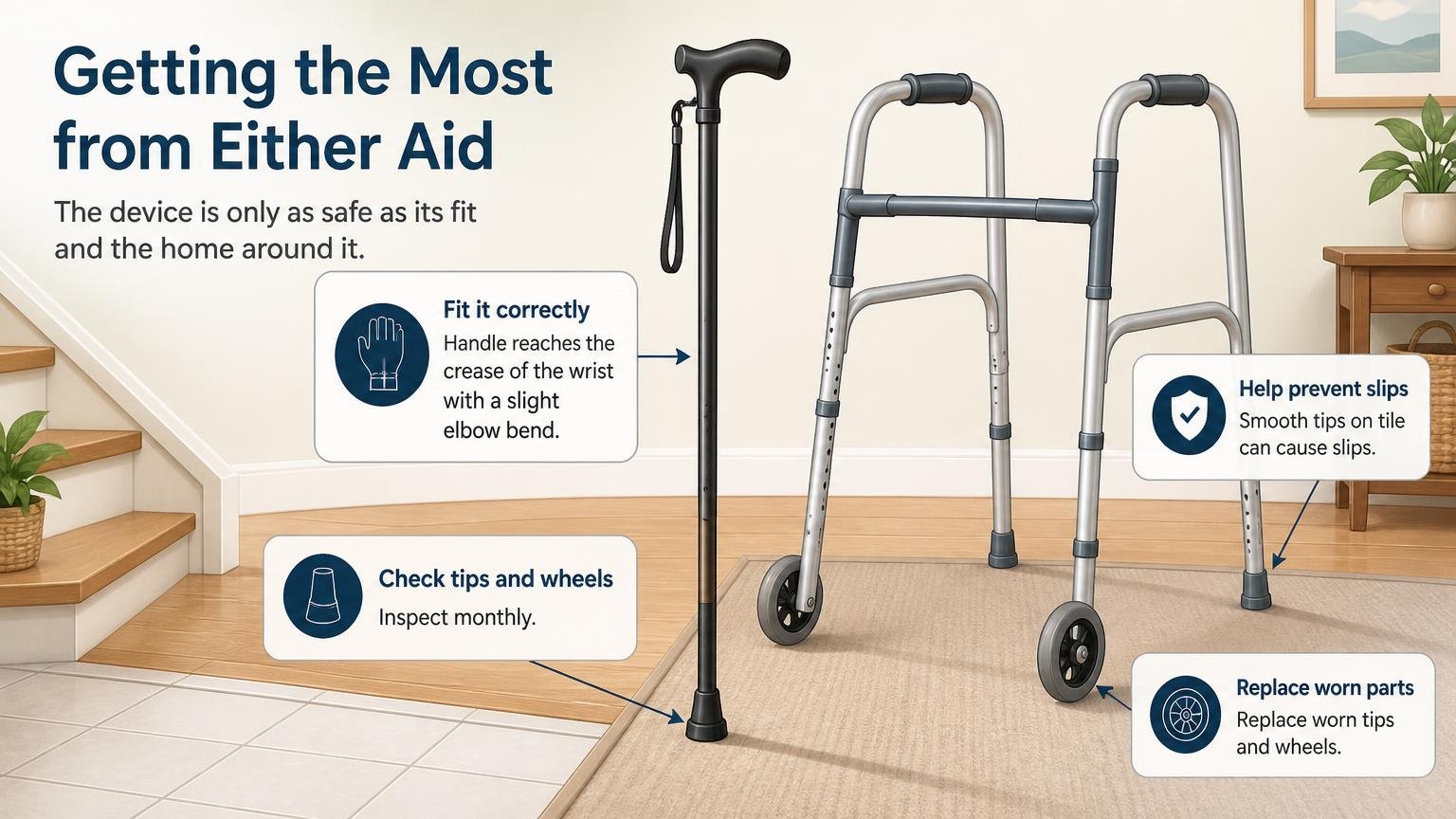
The device is only as safe as its fit and the home around it:
- Fit it correctly: with a cane or walker, the handle should reach the crease of the wrist when standing tall, with a slight elbow bend.
- Check the rubber tips and wheels monthly and replace worn ones — a smooth tip on tile is a leading, preventable cause of slips.
- Clear the paths at home of rugs and cords, and light the bedroom-to-bathroom route for night trips.
- Pair the aid with strength and steadiness work — balance exercises for seniors measurably reduce fall risk at any age.
- Wear firm, non-slip shoes; even the best aid cannot rescue slippery soles. See shoes that help prevent falls.
Frequently asked questions
Is a walker safer than a cane?
For someone with poor balance or weakness in both legs, yes — a walker’s four-point frame is far more stable and can bear real weight, while a cane only assists balance. But for a steady person with one weaker side, a cane is perfectly safe and less restrictive. The safest aid is the one matched to the person’s actual need.
Can you use a cane and a walker at different times?
Yes, and many people do — a cane around a familiar, uncluttered home and a walker for longer or less predictable outings. If someone is regularly reaching for the walker, though, it usually signals the walker should become the everyday aid.
When should a senior switch from a cane to a walker?
When light, one-sided support is no longer enough: heavy leaning on the cane, recent stumbles or falls, weakness in both legs, new dizziness, or exhaustion over short distances. A physical-therapy assessment is the reliable way to time it.
What is the difference between a walker and a rollator?
A standard walker has no wheels (or two front wheels) and must be lifted or pushed slightly with each step — it is the most stable option. A rollator has four wheels, hand brakes, and a seat; it rolls smoothly and lets you rest, but is less stable for someone who leans their full weight forward. See our rollator vs walker guide.
Does a cane go in the strong or weak hand?
The strong hand — opposite the weaker leg. This widens the base of support when the weak leg bears weight and matches the body’s natural arm swing. Full technique is in how to walk with a cane.
Will using a walker make someone weaker?
Not if it is the right aid — it prevents the falls and fear that actually shrink a person’s activity. To stay as strong as possible, pair any aid with regular, safe movement; our guide on helping seniors exercise safely shows how.
