


Rollator vs Walker: Which Is Right for Your Senior?

Educational guidance, not medical advice. A physical therapist can assess which aid suits the person’s specific balance and strength — worth doing.

They look similar, but a standard walker and a rollator suit very different needs — and choosing wrong can mean less safety or less independence. Here is how to tell which fits.
Key takeaways
- A standard walker offers maximum stability (four legs to brace on) but a slower, lift-or-push gait — for those needing significant support.
- A rollator (wheeled walker with brakes and a seat) allows a smoother, faster, more natural walk and a place to rest — for those who can walk but tire.
- The core question: does the person need to lean and brace for stability (walker), or keep moving and rest (rollator)?
- A rollator is not automatically the "upgrade" — its wheels mean less bracing support, which is unsafe for someone who needs to lean heavily.
- When unsure, a physical-therapist assessment matches the aid to the person’s actual balance and strength.
Quick answer
Should my senior use a rollator or a standard walker?
Choose a standard walker if they need maximum stability and tend to lean or brace their weight on the frame for support — it is more stable but slower, used with a lift-or-push, step-in gait. Choose a rollator if they can walk reasonably but tire, need to rest, or want to move more naturally — its wheels, brakes, and seat allow a smoother, faster walk. The key: a walker braces, a rollator rolls. A rollator is *not* simply an upgrade — its wheels give less bracing support. When unsure, get a physical-therapy assessment.
The core difference
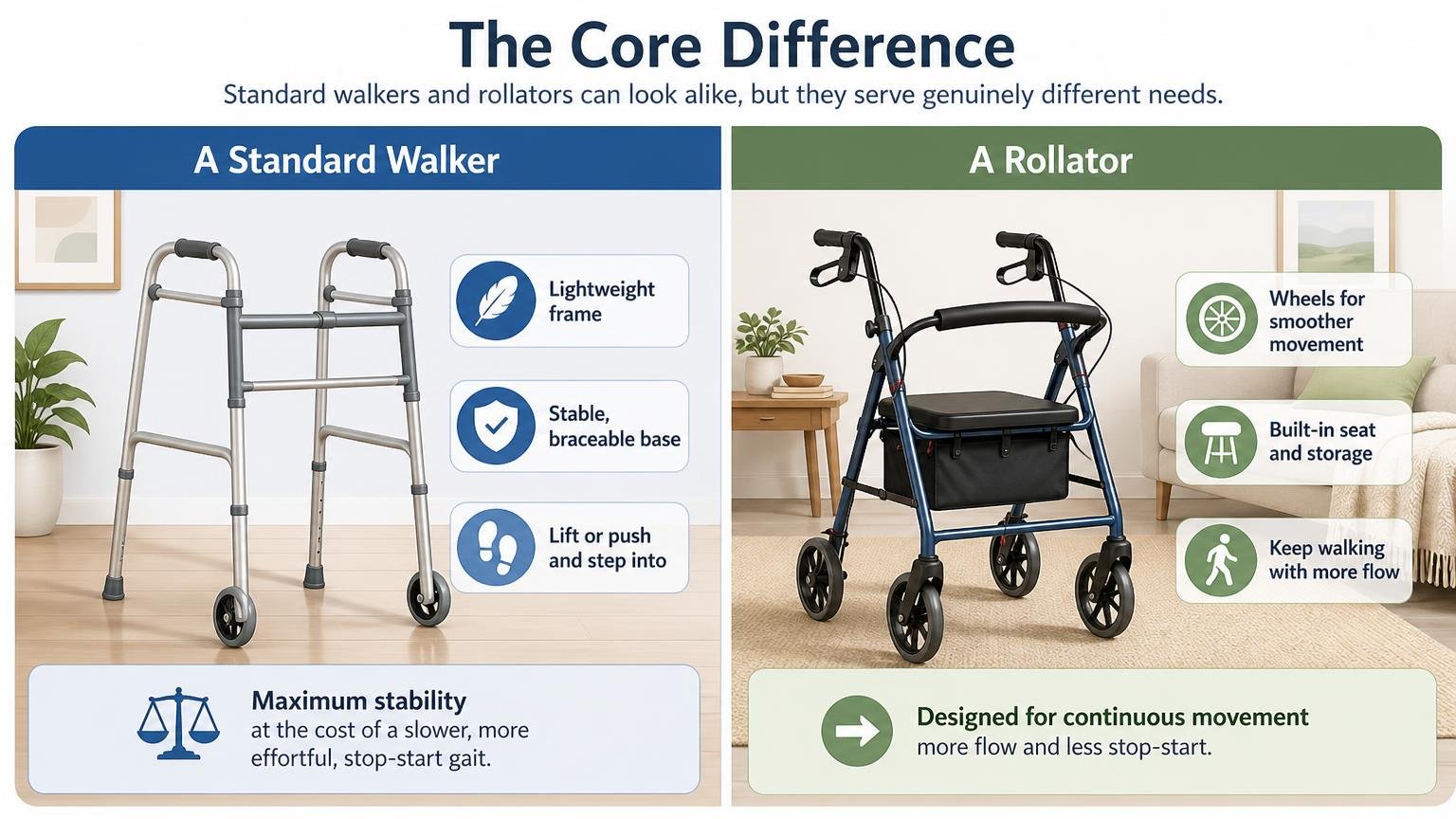
Standard walkers and rollators can look alike, but they serve genuinely different needs, and understanding the core difference makes the choice clear.
- A standard walker is a lightweight frame, typically with four legs (sometimes with two front wheels). The person lifts it or pushes it forward and steps into it. Its stillness on the ground is the point: it provides a stable, braceable base to lean weight on — maximum stability, at the cost of a slower, more effortful, stop-start gait.
- A rollator is a wheeled walker — usually four wheels — with hand brakes and, very often, a built-in seat. The person walks behind and pushes it, moving continuously and more naturally without lifting. It offers ease, speed, and a place to rest, at the cost of less bracing stability (because it rolls).
So the question is not "which is better?" but "which matches how this person needs to move?" This guide sits alongside our broader mobility aids guide and the walker vs cane comparison.

Sponsored Pick
REHAND Ergonomic All-Terrain Folding Cane
Seniors with arthritis or joint pain who want a cushioned, ergonomic grip with all-terrain stability
Check PriceWhen a standard walker is the better choice
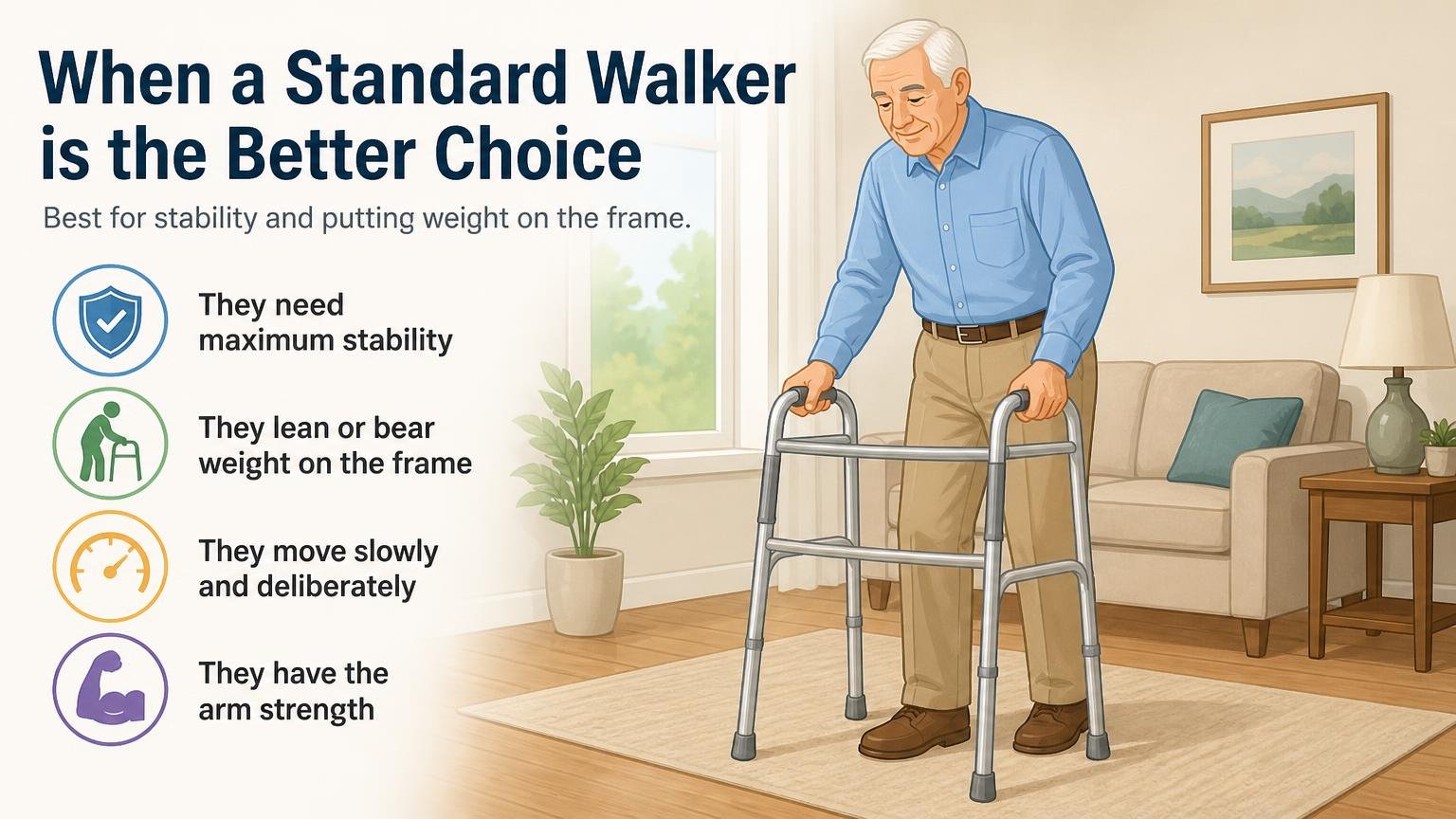
A standard walker suits someone who needs real stability and tends to put weight on the frame:
- They need maximum stability — significant balance problems or unsteadiness where a solid, braceable base matters most.
- They lean or bear weight on the frame — a standard walker’s legs stay put to support that weight; a rollator would roll away.
- They move slowly and deliberately — the lift-or-step gait suits shorter distances and indoor use.
- They have the arm strength to lift or push the frame with each step.
See walkers for seniors. A walker with front wheels — a "rolling walker" — is the middle rung between this and a rollator, and the difference matters more than the names suggest: see rolling walker vs rollator below.
Watch out
If a person leans heavily on their walking aid for support, a rollator can be dangerous — its wheels can roll out from under their weight. Someone who braces their weight generally needs a standard walker, not a rollator.
When a rollator is the better choice
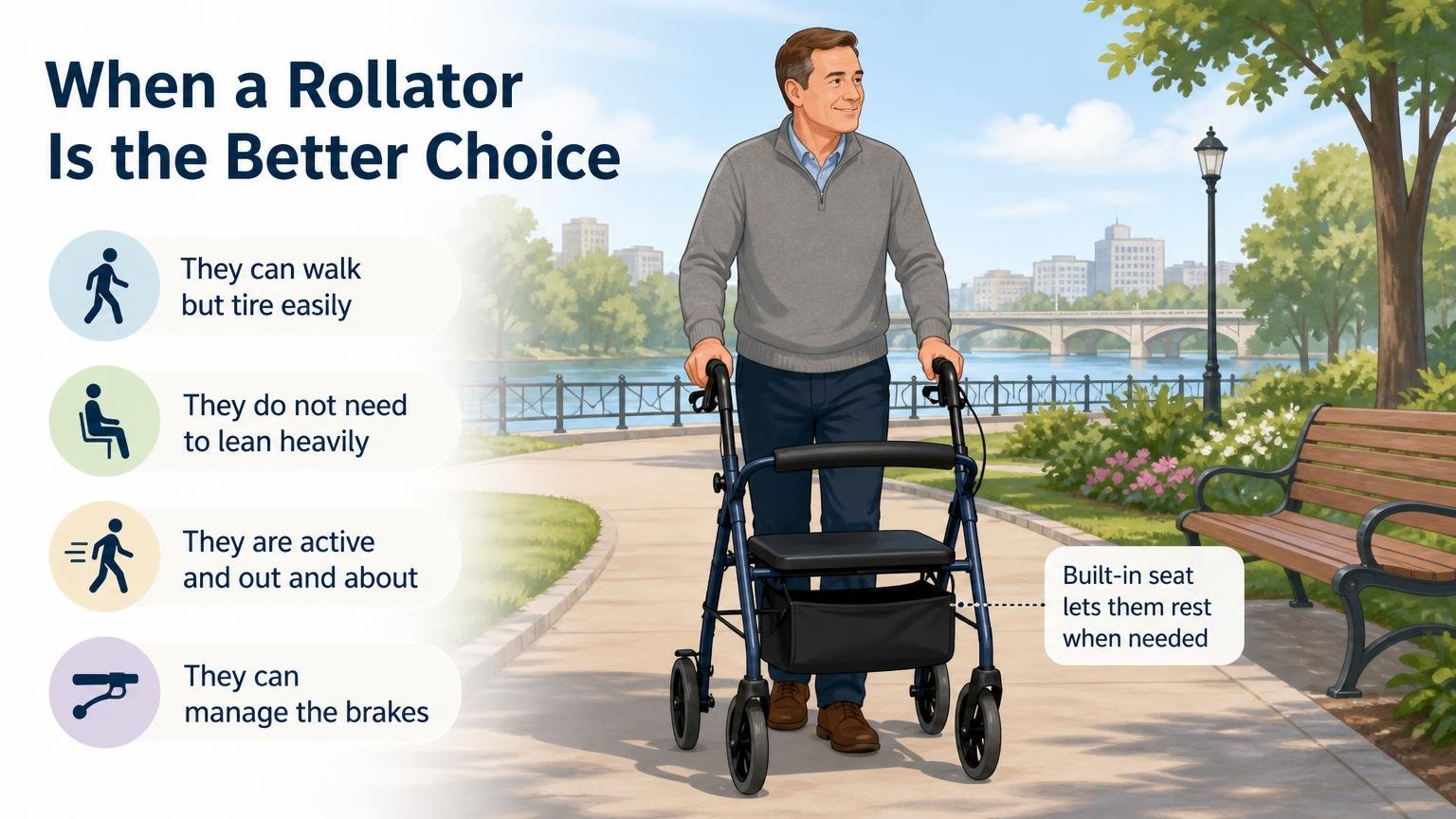
A rollator suits someone who can walk reasonably well but needs support, endurance help, or a rest:
- They can walk but tire easily — the built-in seat lets them rest whenever needed, extending how far they can go.
- They want a smoother, faster, more natural walk — no lifting; the wheels keep them moving continuously.
- They do not need to lean heavily on the aid — they use it for light-to-moderate support and steadiness, not to brace full weight.
- They are active and out and about — rollators handle distances, outdoors, and carrying items (via a basket or bag) well.
- They can manage the brakes — using the hand brakes correctly is essential for safety.
See rollators for seniors and useful accessories.
Rolling walker vs rollator: are they the same thing?
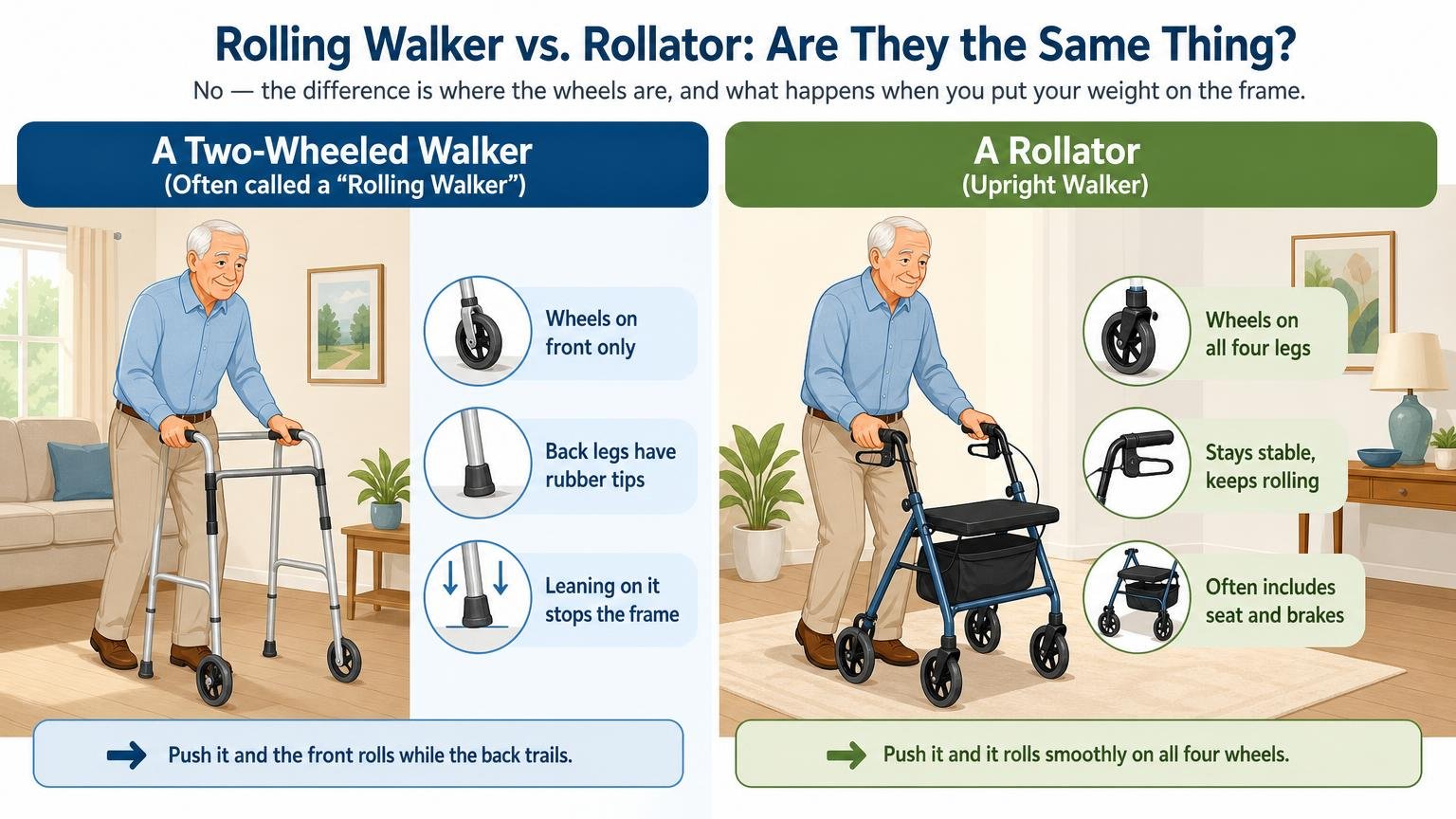
No — and this is the distinction that catches most families out, because shops use both names loosely. The difference is where the wheels are, and what happens when someone puts their weight on the frame.
- A two-wheeled walker, often sold as a \"rolling walker\", has wheels on the front legs only. The back legs end in rubber tips or glides that rest on the floor. Push it and the front rolls while the back trails — and the moment someone leans on it, those rear tips grip and the frame stops. It brakes against the floor by itself.
- A rollator has four wheels and no floor braking at all. It stops only when the person squeezes the hand brakes. Lean on a rollator that is not braked and it keeps rolling.
That is the whole safety argument in one line: a two-wheeled walker stops itself; a rollator stops only if the person stops it. It is why a physical therapist will often move someone from a standard frame to a two-wheeled walker rather than straight to a rollator — it takes away the lift-and-place effort without demanding grip strength, quick reactions and the judgement to brake before sitting down.
So the honest ladder has four rungs, not two: standard walker — two-wheeled walker — rollator — wheelchair. Most families skip the second rung without realising it exists, and that is the jump where falls happen.
A fifth option sits slightly outside the line. An upright walker puts the handles at forearm height so the person stands tall rather than stooping over the frame — easier on the back, and better for looking ahead instead of down. It is taller, heavier and dearer, and it still rolls on four wheels, so the same braking caution applies. See the UpWalker pick in our walkers for seniors review.
Good to know
If someone needs less effort than a standard frame but you are not confident they will brake reliably — arthritis in the hands, slow reactions, any cognitive change — a two-wheeled walker is usually the right middle step, not a rollator.
Side-by-side comparison
At a glance:
| Feature | Standard walker | Rollator |
|---|---|---|
| Stability | Highest (braceable base) | Good, but less bracing (rolls) |
| Gait | Slower, lift-or-step | Smooth, continuous |
| Effort | More (lifting/pushing) | Less (rolls easily) |
| Resting | No seat | Built-in seat to rest |
| Best for | Needs to lean/brace, max stability | Can walk but tires, wants to keep moving |
| Best use | Indoors, short distances | Outdoors, longer distances |
Good to know
One-line rule: if they lean their weight on it, choose a walker; if they walk with it and need to rest, choose a rollator. Match the aid to how the person actually moves, not to which looks more capable.
Making the choice
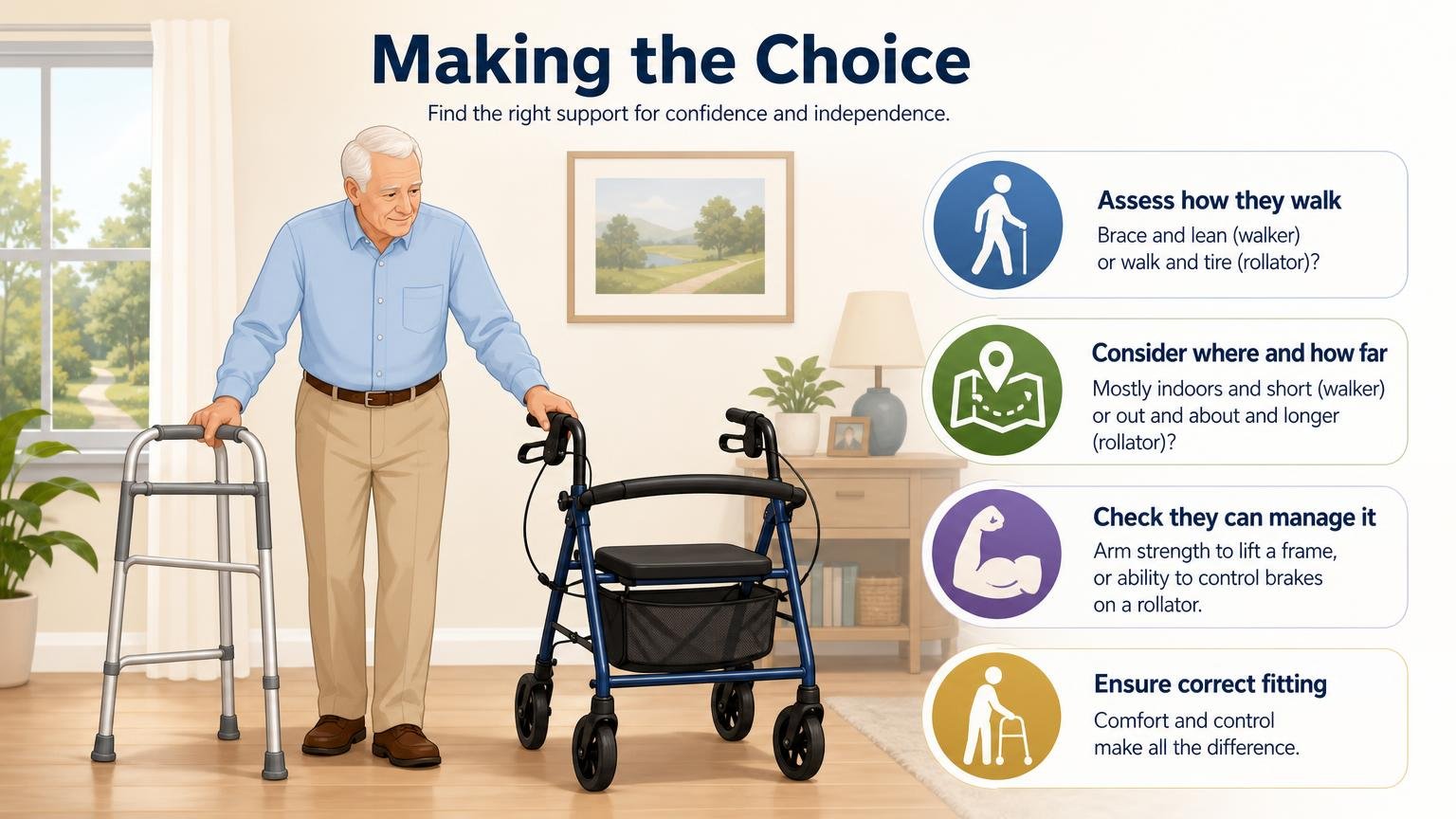
To decide well:
- Assess how they walk — do they brace and lean (walker) or walk and tire (rollator)? This is the deciding factor.
- Consider where and how far they will use it — mostly indoors and short (walker) or out and about and longer (rollator).
- Check they can manage it — arm strength to lift a frame, or the ability to control brakes on a rollator.
- Ensure correct fitting — either aid must be set to the right height; a wrongly fitted aid is unsafe, as covered in the mobility aids guide.
- Get a professional assessment when unsure — a physical therapist can match the aid to the person’s balance and strength and teach safe use, which is the surest way to choose right.
And remember the aim of both: keeping the person safely mobile, which protects strength, independence, and confidence.
Frequently asked questions
Is a rolling walker the same as a rollator?
No. A rolling walker has wheels on the front legs only, with rubber tips or glides at the back that grip the floor when weight goes on the frame — so it brakes itself. A rollator has four wheels and no floor braking, and stops only when the hand brakes are squeezed. A two-wheeled rolling walker is the middle step between a standard frame and a rollator, and it is often the safer choice for someone who cannot be relied on to brake.
What is an upright walker and who is it for?
An upright walker sets the handles at forearm height so the person stands upright instead of stooping over the frame, which eases back and shoulder strain and lets them look ahead rather than down. It suits someone with reasonable balance who finds a conventional rollator uncomfortable. It is taller, heavier and more expensive, and because it still rolls on four wheels the same braking caution applies as with any rollator.
What is the difference between a rollator and a walker?
A standard walker is a frame (usually four legs) offering maximum stability, used with a lift-or-step gait, best for those needing to brace their weight. A rollator is a wheeled walker with hand brakes and usually a seat, allowing a smoother, continuous walk without lifting and a place to rest, best for those who can walk but tire. A walker braces; a rollator rolls.
Is a rollator better than a walker?
Not necessarily — it depends on the person’s needs, and a rollator is not simply an upgrade. A rollator offers ease, speed, and resting but less bracing stability because it rolls, which can be dangerous for someone who leans heavily on their aid. A standard walker is more stable for those who need to brace their weight. Match the aid to how the person walks.
Who should use a rollator?
A rollator suits someone who can walk reasonably well but tires easily (the seat lets them rest), wants a smoother and faster walk without lifting, does not need to lean heavily on the aid for support, is active and goes out and about, and can manage the hand brakes safely. It is ideal for extending range and endurance rather than for bracing significant weight.
Who should use a standard walker?
A standard walker suits someone who needs maximum stability, tends to lean or bear weight on the frame (which stays put to support them), moves slowly and deliberately mostly indoors and over short distances, and has the arm strength to lift or push the frame with each step. It is the safer choice for significant balance problems.
Is a rollator safe for someone who leans heavily on it?
Generally no — because a rollator rolls, it can move out from under someone who puts heavy bracing weight on it, risking a fall. A person who leans heavily on their walking aid usually needs a standard walker, whose legs stay planted to support that weight. When in doubt, a physical therapist can assess which is safe.
How do I choose between a rollator and a walker?
Assess how the person walks — whether they brace and lean (walker) or walk and tire (rollator) — which is the deciding factor. Also consider where and how far they will use it, whether they can manage a frame or brakes, and ensure correct fitting. When unsure, a physical-therapy assessment matches the aid to their balance and strength and teaches safe use.
