
5 Best Exercise Bikes for Seniors
 By Kutubuddin, Founder & Senior Care Researcher Updated October 2026
In this guide
 Best overallMarcy Recumbent Exercise Bike
 Best for gradual progressionYOSUDA Recumbent Exercise Bike (350 lb)
 Best for small spacesExerpeutic Foldable Exercise Bike
 Best full-body workoutSunny Health & Fitness Smart Recumbent Bike
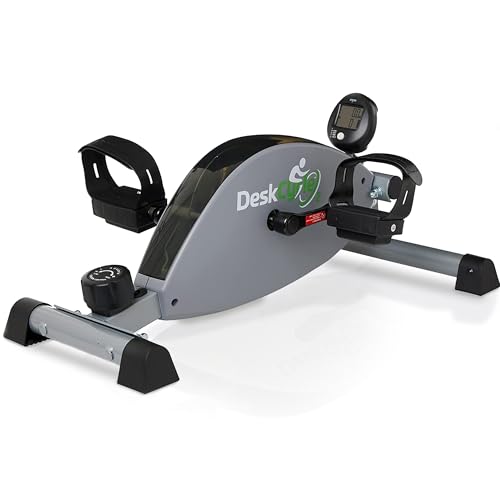 Best under-deskDeskCycle 2 Under-Desk Pedal Exerciser
- What to look for
- Frequently asked questions
For most seniors, the best exercise bike is a recumbent — the reclined position, padded back support and step-through frame make it the easiest, safest cardio at home. A pedal exerciser earns a bonus: set it on a table and it works the upper body too.
We may earn a commission when you buy through links on this page. Read our affiliate disclosure.
Top 5 Picks — Find Your Situation
#1 · Best overall
Marcy Recumbent Exercise BikeBest for: Most seniors — an affordable, senior-designed recumbent that does the job without fuss
#2 · Best for gradual progression
YOSUDA Recumbent Exercise Bike (350 lb)Best for: Seniors rebuilding fitness gradually, and larger riders — at 350 lb it has the most headroom here
#3 · Best for small spaces
Exerpeutic Foldable Exercise BikeBest for: Apartments and small rooms where a full-size recumbent will not fit
#4 · Best full-body workout
Sunny Health & Fitness Smart Recumbent BikeBest for: Seniors who want arms and legs working in the same session
#5 · Best under-desk
DeskCycle 2 Under-Desk Pedal ExerciserBest for: The least mobile, and anyone who will only exercise while doing something else
The Marcy recumbent is our top pick: step-through, extra-large display numbers and nothing to set up. The YOSUDA recumbent is the step up for gradual progression, with 16 resistance levels and a 350 lb rating. For small spaces, the Exerpeutic folding upright disappears into a closet; the Sunny Health recumbent elliptical works the arms and legs together; and an under-desk pedal exerciser like the DeskCycle makes daily movement effortless.
A closer look at our top pick: the Marcy recumbent
Marcy Recumbent Exercise Bike
Best for: Most seniors — an affordable, senior-designed recumbent that does the job without fuss
- Type
- Recumbent
- Resistance
- 8 magnetic levels
- Frame
- Step-through steel
Independently researched · Updated October 2026
The Marcy earns the top spot because it was plainly designed around the problems older riders actually have. The step-through frame removes the bar a stiff hip or knee would have to clear. The high-density foam seat and contoured, foam-covered handles support the back and arms. Counterbalanced pedals with adjustable straps keep feet in place, and the LCD shows time, speed, distance and calories in extra-large numbers.
Its eight magnetic resistance levels are coarser steps than the YOSUDA’s sixteen, and the display has no workout programs or heart-rate tracking. For most seniors that is the right trade: there is no app, no subscription and nothing that needs explaining twice.
What we love
- Step-through frame — easy on the knees and back getting on and off
- Extra-large display numbers that are easier to read
- High-density foam seat with contoured handles supporting back and arms
- Counterbalanced pedals with adjustable foot straps
- No app, no subscription, nothing to set up
Things to consider
- Only 8 resistance levels — bigger jumps between settings than a 16-level bike
- Basic display: no workout programs, no heart-rate tracking
- Requires assembly
Right for you if
- ✓You want a simple recumbent with nothing to set up
- ✓Getting on and off safely is the main concern
- ✓Readable display numbers matter more than workout programs
Maybe skip it if
- !Space is tight (get the Exerpeutic folding upright)
- !You want finer resistance steps or a higher weight rating (get the YOSUDA)
- !You want the arms working too (get the Sunny Health recumbent elliptical)
Getting started
- →Set the seat so there is a slight bend in the knee at full pedal extension
- →Start at resistance level 1 and ride for 10 minutes before assessing
- →Tighten the pedal straps before each ride
How it compares
The YOSUDA recumbent is the step up when gradual progression matters — 16 resistance levels give smaller jumps than the Marcy’s 8, and its 350 lb rating suits larger riders. Choose the Marcy for the simplest senior-designed setup; choose the YOSUDA when the rider will build fitness over months or needs the higher capacity.
How we picked
We compared 5 options. Our picks are based on manufacturer specifications, physiotherapy and exercise science guidance, and verified owner and caregiver reviews — not independent lab testing. We focused on what matters for older adults: ease of getting on and off (step-through design, seat height), back support (recumbent backrest and lumbar support), resistance range starting from the gentlest levels, display readability for older eyes, and footprint in a typical home. Always get medical clearance before starting a new exercise routine, particularly for heart conditions, joint replacements, or balance issues. Start at the gentlest resistance, keep sessions short, and stop immediately if you feel pain, chest discomfort, or dizziness.
Reviewed by Kutubuddin — who researches senior-care products and the real-world needs of caregivers and older adults.
Other picks, reviewed
YOSUDA Recumbent Exercise Bike (350 lb)
The reason to step up to this one is the resistance range. Sixteen magnetic levels mean someone who has not exercised in years can start very light and move up in smaller steps than an 8-level bike allows — and smaller jumps are often the difference between a routine you keep and one you quietly abandon. It is rated for riders up to 350 lb, the most headroom on this page, with an adjustable padded seat and backrest, an LCD monitor and pulse sensors on the handles.
It is a lesser-known brand than Marcy or Sunny Health, so check the seat-adjustment range against the rider’s leg length before buying.
What we like
- 350-lb capacity — the highest on this page
- 16 resistance levels — finer steps than an 8-level bike
- Pulse sensors on the handles and an LCD monitor
- Adjustable padded seat with a backrest
Keep in mind
- Lesser-known brand with a shorter track record
- Fewer programs and features than premium recumbents
- Check the seat range suits the rider’s height before ordering
- Type
- Recumbent
- Resistance
- 16 magnetic levels
- Capacity
- 350 lb
Exerpeutic Foldable Exercise Bike
If there is no room for a recumbent, this is the answer. It folds to roughly half its size, weighs 39 pounds, and rolls away on transport wheels — so it can live in a cupboard between sessions rather than dominating a room. It takes a 300-pound capacity, fits riders from 5 feet 3 to 6 feet 1, and has 8 magnetic levels, a hand pulse monitor, and larger pedals with safety straps.
The important caveat: this is an upright bike, not a recumbent. You sit upright rather than reclining, so there is no backrest and no lumbar support. For a senior with back pain, that is a real difference — the recumbents above are the better choice if you have the floor space.
What we like
- Folds to half its size and rolls away — easy to store
- Light at 39 lb, with transport wheels
- 300-lb capacity; fits riders 5’3” to 6’1”
- 8 magnetic levels, 3-piece high-torque crank, hand pulse monitor
- Larger pedals with safety straps to stop feet slipping
Keep in mind
- Upright, not recumbent — no backrest, no lumbar support
- Small 3.5-inch display compared with the consoles above
- The MyCloud Fitness cadence sensor is sold separately
- Type
- Upright (folding)
- Capacity
- 300 lb
- Weight
- 39 lb, folds to half size
Sunny Health & Fitness Smart Recumbent Bike
This one is doing something genuinely different. It is a recumbent elliptical: the handles move, so your arms work while your legs pedal on elliptical-sized foot pedals. For a senior who is losing upper-body strength as well as leg strength — which is most of us, past a certain point — that turns one session into two. You can also hold the handles still and work the legs alone.
It runs 8 magnetic levels on a quiet belt drive, has built-in pulse sensors, and the SunnyFit app is genuinely free — no membership fee. That is a real advantage worth weighing.
What we like
- Moveable handles work the arms while the legs pedal — a true full-body session
- Free SunnyFit app with no membership fee
- Quiet belt drive; low-impact on knees and hips
- Built-in pulse sensors and an adjustable seat
Keep in mind
- The moving handles take a little coordination — not for everyone
- 8 resistance levels, so coarser steps than a 16-level bike
- Listing does not state weight capacity — check before buying
- Type
- Recumbent elliptical
- Resistance
- 8 magnetic levels
- App
- SunnyFit — free, no fee
DeskCycle 2 Under-Desk Pedal Exerciser
Not really a bike — just the pedals. It sits under a desk or in front of an armchair, and you pedal while reading, watching television, or on the phone. For someone who will never get onto a full bike, or who is recovering and needs to start extremely small, this is the one that actually gets used.
It is better built than the cheap versions: 8 resistance settings up to 39 pounds, a high-inertia flywheel that spins 14 times per pedal stroke for a real-bike feel, sealed bearings, and silent magnetic resistance. It adjusts from 9 to 10 inches tall, so it fits under desks as low as 27 inches.
What we like
- Use it from any chair — no bike to get on or off
- 8 resistance levels up to 39 lb; high-inertia flywheel for a real-bike feel
- Silent magnetic resistance and sealed bearings
- Detachable LCD tracks RPM, distance, calories and time
- Adjustable height, fits desks as low as 27 inches
Keep in mind
- Pedals only — no seat, no back support, no upper body
- Needs a stable chair; it does not hold you in place
- Not a substitute for a real bike if you can manage one
- Type
- Under-desk pedals
- Resistance
- 8 levels, up to 39 lb
- Height
- 9–10 in; fits 27-in desks
What to look for
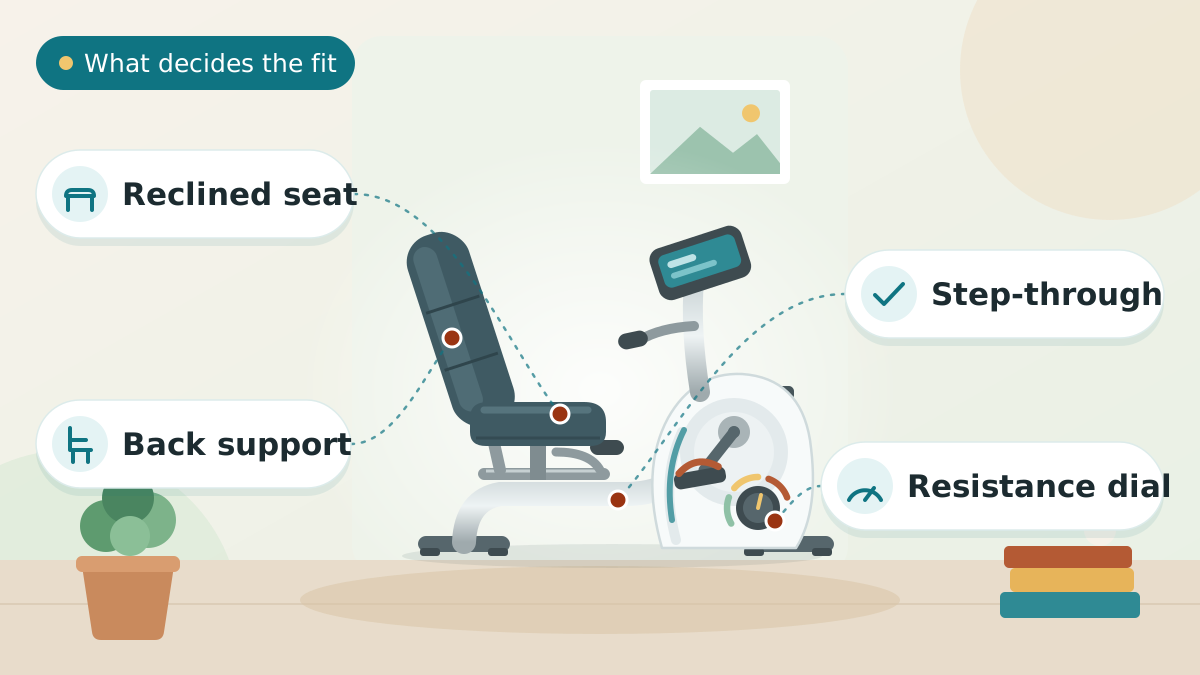
Recumbent, upright, or pedal exerciser?
Three styles cover most senior needs:
- Recumbent bike: reclined position with a seat back, step-through frame, no balance required. The safest and most comfortable option for seniors with back pain, balance issues, or limited mobility. The default recommendation.
- Upright bike: more like a traditional bicycle, takes up less floor space, and offers a slightly more active workout. Requires more balance and core engagement than a recumbent.
- Under-desk pedal exerciser: just the pedals, used from any chair. The gentlest option by far, and the most likely to get used daily because it fits into time already spent sitting.
If the primary concern is safety and comfort, start with a recumbent. If space is the main issue, the folding upright or the pedal exerciser are the practical alternatives.
Getting on and off safely
For many seniors, mounting and dismounting is the highest-risk moment on an exercise bike. A recumbent’s step-through frame is the key feature: there is no top bar to swing a leg over. Look for how low the seat is from the ground and whether there are stable handlebars in reach while sitting down and standing up.
A recumbent with a step-through frame, like the Marcy, is the easiest to get on and off. Upright bikes, including folding ones, require more agility to mount.
Resistance range: starting gentle matters
A senior who is deconditioned or recovering from illness should start at the lowest available resistance and add gradually over weeks. A bike with only 3–4 resistance levels may jump too aggressively between settings; 8 or more levels give finer control for a gradual build.
The feel of resistance matters as much as the number of levels. Magnetic resistance is smooth and quiet; friction resistance tends to be jerkier and noisier. All the bikes in this guide use magnetic or eddy-current resistance.
Display readability and simplicity
A large, high-contrast display that shows time, distance, and heart rate clearly matters more for older eyes than a touchscreen full of apps. The Marcy is built around this, with extra-large numbers on its LCD; the YOSUDA adds pulse sensors for a heart-rate reading. If a senior will never use Bluetooth or app connectivity, paying for it adds cost without benefit.
Tips to Choose Exercise Bike
Short on time? Here are the key points to weigh before choosing, each covered in detail above:
- Recumbent, upright, or pedal exerciser?
- Getting on and off safely
- Resistance range: starting gentle matters
- Display readability and simplicity
Comparing options? See our guides to Best Portable Elliptical Machine for Seniors, Best Chair for Chair Yoga, and Best Shoes for Seniors to Prevent Falls.
Health benefits of cycling for seniors
Regular time on a stationary bike builds leg strength, supports heart and lung health, keeps knee and hip joints moving through their range, and improves circulation — all without the impact on joints that walking or jogging involves. For seniors with knee arthritis or osteoporosis, cycling is a low-impact form of aerobic exercise because the joints are supported and the movement is smooth rather than percussive; ask a doctor whether it suits your condition.
The low-impact nature of cycling is also what makes it sustainable over the long term. Regular sessions at a gentle pace, done consistently, are what make cycling worthwhile. Start with whatever is comfortable and build from there.
Is a stationary bike safe for seniors?
For most older adults, yes — the seated, supported position makes it one of the safest forms of cardio. The sensible precautions: get medical clearance first (especially for heart conditions, recent joint replacements, or any uncontrolled health condition), start with short sessions at the lowest resistance, and stop immediately if you feel chest discomfort, dizziness, shortness of breath, or sharp joint pain.
The step-through frame on a recumbent removes the top bar you would otherwise have to swing a leg over, which makes getting on easier than on a standard bike. Once seated, the movement is controlled and easy to stop at any time.
Frequently asked questions
For most seniors, a recumbent bike is the safest and most comfortable choice — the reclined position with back support and step-through frame makes getting on and off easy and reduces joint stress. The Marcy recumbent is our top pick for its simple, senior-designed setup; the YOSUDA recumbent adds finer resistance steps and a 350 lb rating. For small spaces, the Exerpeutic folding upright or the DeskCycle under-desk pedal exerciser fit where a recumbent does not.
A recumbent bike seats the rider reclined with a backrest, putting minimal stress on the lower back and requiring no balance. An upright bike is more like a standard bicycle, works the core more actively, and takes up less floor space. For most seniors, especially those with back pain, balance issues, or limited mobility, a recumbent is the safer and more comfortable choice.
Generally yes — stationary cycling is a low-impact exercise that moves the knee through its range without the pounding of walking or jogging. Gentle cycling is a low-impact way to keep an arthritic knee moving. Start at the lowest resistance with a smooth pedalling motion, avoid resistance that causes pain, and check with a doctor or physiotherapist before starting if the knee has recently been replaced or is acutely inflamed.
Start with 5–10 minutes per session at the lowest resistance, and build gradually over weeks to 20–30 minutes. Consistency matters more than duration — even 10 minutes daily is a good place to start. Stop immediately if you feel chest discomfort, dizziness, shortness of breath, or sharp joint pain, and seek medical advice before resuming.
The most important features are: a step-through frame (no bar to swing a leg over), a padded seat with back support, resistance that starts at a very gentle level, a large readable display, and a stable wide base. For seniors with limited hand strength, large easy-grip handlebars matter too. Advanced features like Bluetooth and built-in programs are useful for variety but not necessary for basic safe use.
Stationary cycling is often included in physiotherapy protocols after hip and knee replacement, but the timing and resistance level must be guided by the surgeon and physio team. Do not start cycling after joint replacement without explicit medical clearance and guidance on which movements to avoid. Once cleared, a recumbent bike is typically the preferred option because of the supported position and controlled range of motion.
An under-desk pedal exerciser is only the pedal mechanism — you slide it under a desk, table, or in front of a sofa and pedal while doing other activities. It provides very gentle leg movement rather than a full cardio workout. It is worth it for seniors who are too sedentary to commit to a dedicated workout but would naturally pedal if it required no extra effort — which describes many people. It does not replace a full exercise bike for fitness goals.
Yes, before starting any new exercise routine. This is especially important if you have a heart condition, uncontrolled blood pressure, a recent joint replacement, significant balance issues, or any condition that affects circulation or sensation in the legs. A doctor or physiotherapist can help set safe starting parameters and flag any contraindications specific to your health.
A budget recumbent provides the core comfort features without extras. A mid-range premium recumbent adds more resistance levels, programs, and warranty coverage for longer-term daily use, at a step up in price. Under-desk pedal exercisers are the cheapest option by a wide margin. The right amount to spend depends on whether the senior will use it daily for years or occasionally.
When the pedal is at its furthest point, the knee should have a slight bend — not fully locked out (too far) and not bent more than 15–20 degrees (too close). Adjust the seat sliding position until this angle feels natural. A seat that is too close forces the knee to bend sharply, which strains the joint; a seat too far means reaching for the pedal and losing stability.
The final verdict
For most seniors, the best exercise bike is the one that is easiest to get onto and most comfortable to stay on — which is nearly always a recumbent. The Marcy is the simple, senior-designed choice; the YOSUDA adds finer resistance steps and a 350 lb rating for gradual progression and larger riders; the Sunny Health recumbent elliptical works the arms as well as the legs. For small spaces, the Exerpeutic folding upright is the practical compromise. And for a senior who would benefit from gentle daily movement without a dedicated workout, the DeskCycle does the job quietly in any chair. Get medical clearance first, start slow, and a stationary bike becomes one of the safest and most sustainable ways to stay active at home.
Our overall winner is the Marcy Recumbent Exercise Bike. You can check the current price on Amazon.
Our Top 5 Picks at a Glance
Ready to choose? Here are the top 5 again.
Best overall
Marcy Recumbent Exercise Bike
Best for gradual progression
YOSUDA Recumbent Exercise Bike (350 lb)
Best for small spaces
Exerpeutic Foldable Exercise Bike
Best full-body workout
Sunny Health & Fitness Smart Recumbent Bike
Best under-desk
DeskCycle 2 Under-Desk Pedal Exerciser
Affiliate links — we may earn a commission.
More reviews
