
5 Best Orthopedic Pillows for Seniors
 By Kutubuddin, Founder & Senior Care Researcher Updated October 2026
In this guide

For most seniors with neck pain, the Tempur-Pedic TEMPUR-Neck is the most dependable starting point — a single piece of dense, contoured TEMPUR-Material sized to your shoulder-to-neck measurement, built for side and back sleepers, and backed by five years of warranty.
We may earn a commission when you buy through links on this page. Read our affiliate disclosure.
Top 5 Picks — Find Your Situation
#1 · Best overall
Tempur-Pedic TEMPUR-Neck PillowBest for: Side and back sleepers with chronic neck pain who want a zero-maintenance contoured pillow in the right size
#2 · Best adjustable
Mediflow Water PillowBest for: Anyone whose ideal firmness changes, or who moves positions frequently through the night
#3 · Best for neck pain
Coisum Cervical Memory Foam PillowBest for: Seniors with neck pain wanting a contoured cervical design at a mid-range price
#4 · Best wedge
Kolbs Bed Wedge PillowBest for: Night-time reflux or GERD, or anyone who needs to sleep propped up
#5 · Best for side sleepers
Elviros Cervical Memory Foam PillowBest for: A contoured pillow for side sleepers who want shoulder and neck support.
If you want to fine-tune your own firmness, the Mediflow Water Pillow lets you add or remove water until support feels exactly right — a real advantage when a loved one’s needs change. Contoured cervical options from Coisum and Elviros cover the majority of neck-pain sleepers at a gentler price. And if the problem is acid reflux, GERD, or breathing difficulties at night, no flat pillow solves that — a wedge pillow does.
A closer look at our top pick
Tempur-Pedic TEMPUR-Neck Pillow
Best for: Side and back sleepers with chronic neck pain who want a zero-maintenance contoured pillow in the right size
- Material
- TEMPUR-Material (dense memory foam)
- Sizes
- Small / Medium / Large
- Warranty
- 5 years
Independently researched · Updated October 2026
The TEMPUR-Neck earns the top spot because it removes the two guesses that make every other pillow a lottery: it tells you which size to buy (measure your neck-to-shoulder distance against the chart) and the TEMPUR-Material holds that shape every single night without any action on the user’s part. For a senior with arthritic hands, that zero-maintenance quality matters enormously.
The contoured shape works equally well for both sleeping positions — side and back — which covers most older adults. And it’s genuinely designed with neck support as the first priority rather than pillow softness, which is a meaningful design distinction from comfort-first pillows that happen to be labeled orthopedic.
What we love
- Three sizes matched to your shoulder-to-neck measurement
- Single-piece TEMPUR-Material never flattens or needs adjusting
- Contoured shape works for both back and side sleeping
- 5-year warranty; removable, machine-washable cover
Things to consider
- Extra-firm feel takes several nights to adjust to
- Expensive; no returns once opened
- Not ideal for stomach sleepers
Right for you if
- ✓You or your parent has consistent, ongoing neck pain that affects sleep
- ✓You want a pillow that lasts years without flattening or adjusting
- ✓You are a side or back sleeper with an average-to-larger shoulder build
Maybe skip it if
- !You need adjustable firmness (get the Mediflow)
- !Budget is the main constraint (get the Coisum)
- !The problem is reflux or GERD rather than neck pain (get the wedge)
What owners consistently report
Common praise
- +Users report real sleep improvement
- +The firmness that feels odd the first night usually feels right by the end of the first week
- +The size-chart approach is widely appreciated — it reduces trial and error
Common gripes
- –The initial firmness is jarring if you’re used to soft pillows — alternate with your old pillow the first few nights
- –TEMPUR-Material cannot be washed; only the cover is washable
- –Stomach sleepers should look elsewhere
Getting started
- →Measure neck-to-shoulder distance before ordering and use the Tempur-Pedic size chart
- →Give it at least five nights before judging — the material takes time to adapt to your body heat
- →Keep the cover in regular rotation through the washing machine
How it compares
The runner-up for many families is the Mediflow Water Pillow — fully adjustable firmness and lower cost, and the better choice when the ideal support level isn’t clear yet. Choose the TEMPUR-Neck when the sleep position and neck pain are consistent and you want a set-it-and-forget-it pillow that holds its shape for years; choose the Mediflow when you want to fine-tune.
How we picked
We compared 5 options. Our picks are based on manufacturer specifications, sleep-health and physical-therapy guidance, and verified owner reviews — not independent lab testing. We focused on what distinguishes a genuinely orthopedic pillow from a comfort pillow for a senior: the shape and density actually designed to support the cervical spine, the ability to match a sleep position, whether the pillow holds its shape over time, and ease of use for arthritic hands. A pillow is highly personal — the right one depends on your sleep position, shoulder width, and what’s actually causing the pain, so the picks below are a research-backed starting point, not a one-size answer.
Reviewed by Kutubuddin — who researches senior-care products and the real-world needs of caregivers and older adults.
Other picks, reviewed
Mediflow Water Pillow

The Mediflow’s water base is genuinely different from anything else here: you add or remove water through a valve to set soft, medium, or firm support, and the pillow then moves with you as you change positions through the night, keeping the neck height consistent. That’s the feature that matters for seniors — no fluffing, no repositioning at 3 a.m. The design has been studied at Johns Hopkins. If a parent’s comfort needs change season to season, or if the right firmness is genuinely hard to pin down, the Mediflow’s adjustability makes it the most useful trial pillow in this group.
What we like
- Firmness fully adjustable — soft, medium, or firm — by adding or removing water
- Water base auto-levels as you turn, maintaining support all night
- The only pillow here with a published trial behind it
- Hypoallergenic; available with fiber fill or memory foam top
Keep in mind
- Heavier than a standard pillow once filled
- Filling and adjusting takes a few tries to get right
- Slightly warm due to the water layer’s thermal mass
- Base
- Adjustable water layer
- Top layer
- Fiber fill or memory foam (by model)
- Adjustment
- Add/remove water via valve
Coisum Cervical Memory Foam Pillow

A dual-height contoured cervical pillow that costs a fraction of the TEMPUR-Neck and covers the same design logic: a higher lobe for side sleeping, a lower lobe for back sleeping, a central depression for the head. The memory foam is CertiPUR-US certified and the cover is cooling and washable. It appears in physical-therapy round-ups. The main caveat is that there’s no sizing system the way Tempur-Pedic’s three-size chart allows — if shoulder width is significantly above or below average, the TEMPUR-Neck is a safer fit. For most seniors, though, this is an excellent place to start.
What we like
- Dual-height contour works for both side and back sleeping
- CertiPUR-US certified memory foam; cooling washable cover
- Strong owner reviews and physical-therapy roundup presence
- Significantly less expensive than premium picks
Keep in mind
- No multi-size system — one height fits most but not all
- Foam can retain some heat overnight
- Material
- CertiPUR-US memory foam
- Design
- Dual-height contour
- Cover
- Cooling, washable
Kolbs Bed Wedge Pillow

A different category from the cervical pillows above, solving a different problem. If reflux wakes a senior at night, raising the whole torso is what keeps stomach acid down — and a flat pillow, however good, cannot do it. Stacked pillows can, briefly, but they slide apart by 2am.
The useful number is the height. Reflux guidance generally calls for six to eight inches of elevation at the head end, and this wedge is 7.5 inches (24 x 24 in) which sits inside that range; there is a 12-inch version (25 x 25 in) if more is wanted. The top 1.5 inches are memory foam over a firmer core, so it gives a little at the shoulders without collapsing, and the jacquard cover unzips and goes in the machine — which matters more than it sounds for anyone dealing with reflux or night sweats.
One thing to be clear about, because the listing is not. It is sold as a pillow for sleep apnea and described as supporting people managing COPD, asthma and heart failure. A wedge is a positioning aid. It is not a treatment for any of those, and nobody should be buying one instead of getting assessed. Bought for what it actually does — holding a comfortable incline all night — it is a good wedge.
What we like
- Holds a steady incline all night, which stacked pillows do not
- 7.5 in sits inside the elevation range usually advised for reflux
- Memory foam top softens the shoulder contact without losing the angle
- Cover unzips and washes — genuinely useful for this use case
- Turned around, it works for leg elevation too
Keep in mind
- The listing markets it for sleep apnea and for COPD, asthma and heart failure. It is a positioning aid, not a treatment for any of them — get assessed rather than self-treating
- Takes up real space on the bed, and a partner will notice
- Side sleepers often need a separate pillow on top for the neck
- Firmer than it looks in photos; it has to be, to hold the angle
- Height
- 7.5 in (12 in version available)
- Size
- 24 x 24 in
- Top layer
- 1.5 in memory foam over a firmer core
- Cover
- Removable, machine washable
Elviros Cervical Memory Foam Pillow

The Elviros is shaped specifically for side sleeping — with a deeper shoulder cutout and a taller neck support lobe than a generic cervical pillow, which is exactly what a side sleeper with neck pain needs to keep the spine level from ear to hip. The memory foam is CertiPUR-US certified and the cover is breathable and removable. If your parent sleeps almost exclusively on their side and the Coisum or TEMPUR-Neck hasn’t worked, the more targeted side-sleeper geometry here is worth trying.
What we like
- Deeper shoulder cutout and taller lobe tailored for side sleeping
- Keeps the ear-to-hip spinal line level on the side
- CertiPUR-US certified memory foam; breathable removable cover
- Good value for a purpose-shaped cervical pillow
Keep in mind
- Less useful for back sleepers — shape is optimized for one position
- Foam can feel firm initially
- Material
- CertiPUR-US memory foam
- Geometry
- Side-sleeper shoulder cutout
- Cover
- Breathable, removable
What to look for
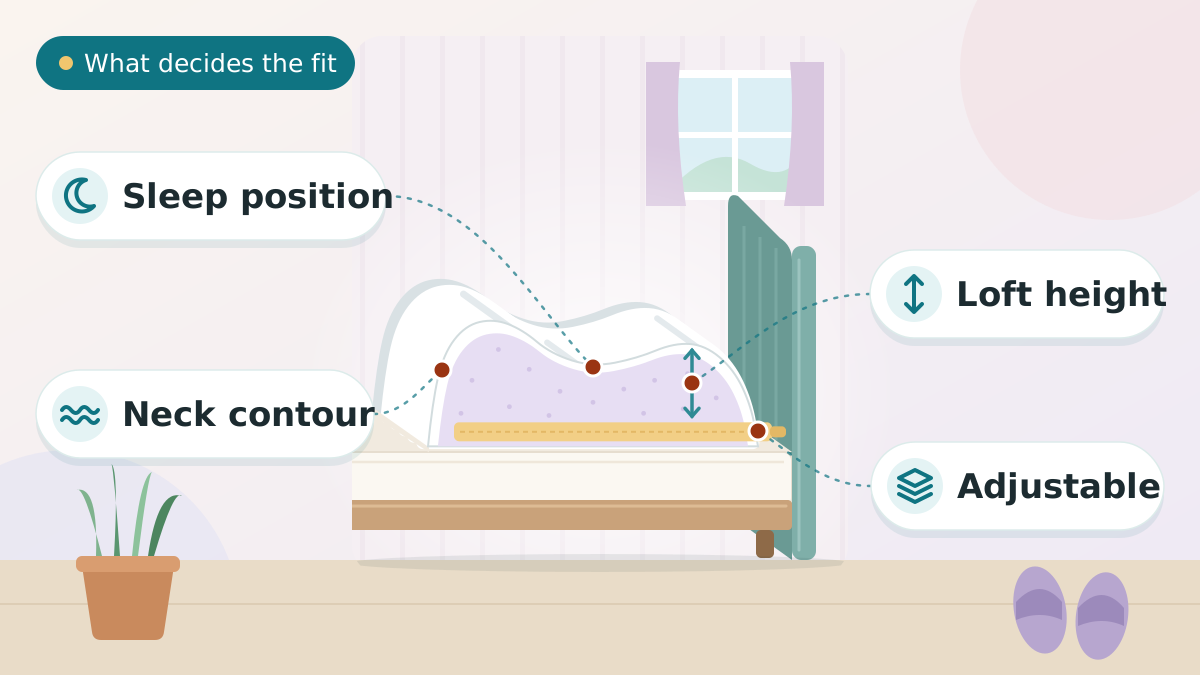
Match the pillow to the problem first
An “orthopedic” pillow is a broad term. The type that helps depends on what the problem actually is:
- Neck pain from misalignment: a contoured cervical pillow — the Tempur-Pedic, Coisum, or Elviros.
- Acid reflux or GERD at night: a wedge pillow — a flat pillow cannot hold the torso at an angle. It works alongside the other measures a doctor will suggest, not instead of them.
- Pressure in the hips or shoulders from side sleeping: the Elviros shoulder-cutout design or a body pillow.
- Unsure of the right firmness: the Mediflow water pillow, which is adjustable after purchase.
Buying the wrong type means the pain or disruption continues regardless of quality.
Sleep position determines pillow shape
Side sleepers need a taller, firmer pillow that fills the gap between the shoulder and the ear — too flat and the neck bends down; too high and it bends up. Back sleepers need a lower, contoured pillow that supports the curve of the neck without propping the head forward. Stomach sleeping is hard on the neck at any age; if that’s unavoidable, a very flat or soft option reduces the strain.
Most cervical pillows have a dual-height design: a taller lobe for side sleeping and a shorter one for back sleeping. Rotating the pillow changes the profile.
Density and firmness: what holds up over time
A pillow that compresses flat in the first month does nothing. Higher-density memory foam (or TEMPUR-Material, which is denser still) maintains its height and shape year after year. Shredded foam and fiber-fill pillows feel plush initially but tend to go flat faster and often aren’t the right fit for seniors with actual cervical pain.
Arthritis in the hands is worth factoring in. Pillows that need regular fluffing or adjusting are harder to use; the Tempur-Pedic requires none, and the Mediflow needs only occasional water adjustments.
Getting the size right (especially for cervical pillows)
The Tempur-Pedic’s three-size system is unusually helpful here: measure from the tip of the neck to the outer edge of the shoulder — small is under 4.5 inches, medium is 4.5 to 5.5 inches, large is above 5.5 inches. Most other cervical pillows come in a single size, which works for average builds but can miss at the extremes.
If you’re unsure, err toward the medium profile and adjust from there.
Read more:Safe Bedroom Setup for Seniors 2025
Tips to Choose Orthopedic Pillows
Short on time? Here are the key points to weigh before choosing, each covered in detail above:
- Match the pillow to the problem first
- Sleep position determines pillow shape
- Density and firmness: what holds up over time
- Getting the size right (especially for cervical pillows)
Comparing options? See our guides to Best Adjustable Bed Wedge Pillows and Best Mattress for Seniors.
When a pillow isn’t enough: back pain and positioning at night
A good pillow helps neck pain; it doesn’t fix back pain on its own. For seniors who wake with lower-back pain, the mattress and sleep position usually matter more than the pillow. A small pillow under the knees when back-sleeping, or between the knees when side-sleeping, can take pressure off the lumbar spine. For prolonged sitting rather than sleep, our best pressure-relief seat cushions guide covers daytime support.
Acid reflux and nighttime positioning: what actually helps
Elevating the head of the bed or using a wedge pillow is one of the most commonly recommended non-drug interventions for GERD and nighttime reflux in older adults. The elevation keeps stomach acid below the esophagus during sleep. Stacking regular pillows doesn’t achieve the same gradual incline and tends to shift position during the night. If a senior is waking with heartburn or a cough at night, this is worth raising with their doctor as part of a full management plan.
Frequently asked questions
For most seniors, a contoured cervical pillow matched to sleep position is the best starting point. The Tempur-Pedic TEMPUR-Neck is sized by shoulder-to-neck measurement and holds its shape without flattening — a major advantage for nightly use. If budget is the issue, the Coisum provides the same dual-height contour at a lower price. The right answer also depends on whether you’re a side or back sleeper, since the pillow shape and height differ between positions.
They can be, when matched to the right problem. A contoured cervical pillow supports spinal alignment and can reduce neck stiffness for side and back sleepers. A wedge pillow can help some people with nighttime reflux by keeping the torso raised; breathing problems at night need a medical assessment. A generic comfort pillow labeled “orthopedic” usually isn’t. The key is picking a type that addresses the actual complaint, not just a pillow with a medical-sounding name. If neck pain is severe or accompanied by arm symptoms, a clinician should be involved.
A wedge pillow is the only flat-surface option that keeps the torso elevated consistently through the night, which can help reduce nighttime reflux. Stacking regular pillows doesn’t achieve a gradual, stable incline and tends to shift during sleep. If nighttime reflux or coughing is a regular problem, this is worth discussing with a doctor as part of a full management plan.
A taller, firmer pillow that fills the distance from the shoulder to the ear, keeping the spine level. The Elviros is shaped specifically for side sleeping, with a deeper shoulder cutout and taller lobe. The Tempur-Pedic TEMPUR-Neck and Coisum dual-height models also work well for side sleeping — use the taller lobe. Avoid flat or very soft pillows, which let the neck tilt down and strain the muscles.
Firm enough to maintain height through the night, but not so rigid it causes discomfort at pressure points. Dense memory foam and TEMPUR-Material hold their shape better than shredded foam or fiber fill, which go flat faster. If the right firmness is genuinely unclear, the Mediflow Water Pillow lets you adjust softness to medium to firm by adding or removing water after purchase.
Sometimes. Keeping the neck in better alignment can reduce airway restriction for positional snoring. A wedge pillow, by elevating the whole torso, can further help by reducing postnasal drip and congestion that contributes to snoring. Severe or chronic snoring, especially with pauses in breathing, may indicate sleep apnea, which needs medical assessment.
Yes, with the right choice. Arthritis in the neck (cervical spondylosis) benefits from a pillow that supports the natural curve of the spine and doesn’t require fluffing or repositioning during the night. Shaped or water-based pillows like the TEMPUR-Neck or Mediflow work better than shredded foam options that need ongoing adjusting — a real practical difference for arthritic hands.
A high-quality memory foam or TEMPUR-Material pillow should hold its shape for several years with proper care. Shredded foam and fiber-fill pillows typically flatten within a year or two. The Tempur-Pedic TEMPUR-Neck comes with a 5-year warranty. Replace any pillow when it no longer provides the same height and support it did new — or when morning neck stiffness returns.
Measure the distance from the tip of the neck to the outer edge of the shoulder. For the TEMPUR-Neck, under 4.5 inches is small, 4.5–5.5 inches is medium, and above 5.5 inches is large. Most other cervical pillows come in one size that works for average builds. If your loved one’s shoulder width is significantly above or below average, the Tempur-Pedic’s sizing system is worth the extra cost to get the fit right.
Both can work well; the difference is adjustability. A memory foam or TEMPUR-Material pillow provides a fixed, consistent level of support that is reliable night after night once you know it’s right. A water pillow like the Mediflow lets you dial in firmness after purchase, which is useful if the right support level is uncertain or changes over time. If neck pain is consistent and the sleep position is settled, dense memory foam is usually the simpler, lower-maintenance choice.
The final verdict
For neck pain and an established sleep position, start with the Tempur-Pedic TEMPUR-Neck — sized correctly, it’s the most dependable long-term cervical pillow. For adjustable firmness, the Mediflow. For value-priced cervical support, the Coisum (general) or Elviros (side sleepers). For nighttime reflux or GERD, only the wedge raises the torso; breathing problems at night need a medical assessment. And regardless of the pillow: if neck pain is severe, persistent, or accompanied by arm numbness or tingling, a clinician should assess the cervical spine — a pillow is a comfort measure, not a diagnosis.
Our overall winner is the Tempur-Pedic TEMPUR-Neck Pillow. You can check the current price on Amazon.
Our Top 5 Picks at a Glance
Ready to choose? Here are the top 5 again.
Best overall
Tempur-Pedic TEMPUR-Neck Pillow
Best adjustable
Mediflow Water Pillow
Best for neck pain
Coisum Cervical Memory Foam Pillow
Best wedge
Kolbs Bed Wedge Pillow
Best for side sleepers
Elviros Cervical Memory Foam Pillow
Affiliate links — we may earn a commission.
More reviews
