
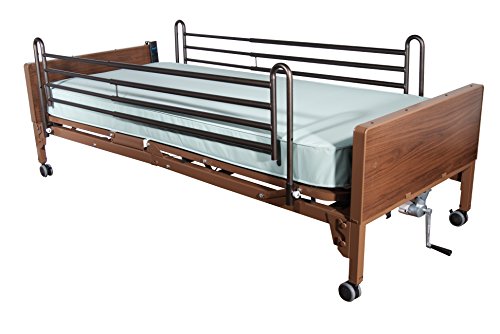

Hospital Bed vs. Adjustable Bed: Which One Actually Solves the Problem

Medicare coverage details based on CMS durable medical equipment guidance; confirm specifics with your doctor and DME supplier before ordering.

They get confused constantly, and the confusion is expensive: one of these Medicare may help pay for, the other Medicare will never cover a cent of — and it depends entirely on which problem is actually being solved.
Key takeaways
- A hospital bed raises and lowers the whole bed, takes side rails, and is built for transfers and caregiving — Medicare Part B may cover one as durable medical equipment when a doctor documents medical necessity
- An adjustable bed base changes the angle of the mattress (head up, feet up) but not the height, doesn’t take side rails, and Medicare classifies it as furniture — it pays nothing toward it, ever
- The deciding question is simple: is the problem getting in and out of bed, or is it comfort while lying in bed? The first needs a hospital bed, the second an adjustable base
- Coverage turns on what the doctor documents about function, not on a diagnosis — ask about a hospital bed before assuming it’s unaffordable
- A basic hospital bed is usually a 13-month Medicare rental, after which you own it, with the standard deductible and 20% coinsurance — features beyond basic (rotation, sit-to-stand) fall outside every coverage code and become a private purchase
Quick answer
Do I need a hospital bed or an adjustable bed base?
If the real difficulty is getting in and out of bed — the bed is too high, too low, or a caregiver needs to raise it to help — that is a hospital bed, and Medicare may help pay for it as durable medical equipment. If the person can get in and out fine but needs to sleep with their head or feet raised for reflux, breathing, or circulation, that is an adjustable bed base, which Medicare classifies as furniture and never covers.
The short answer, at a glance
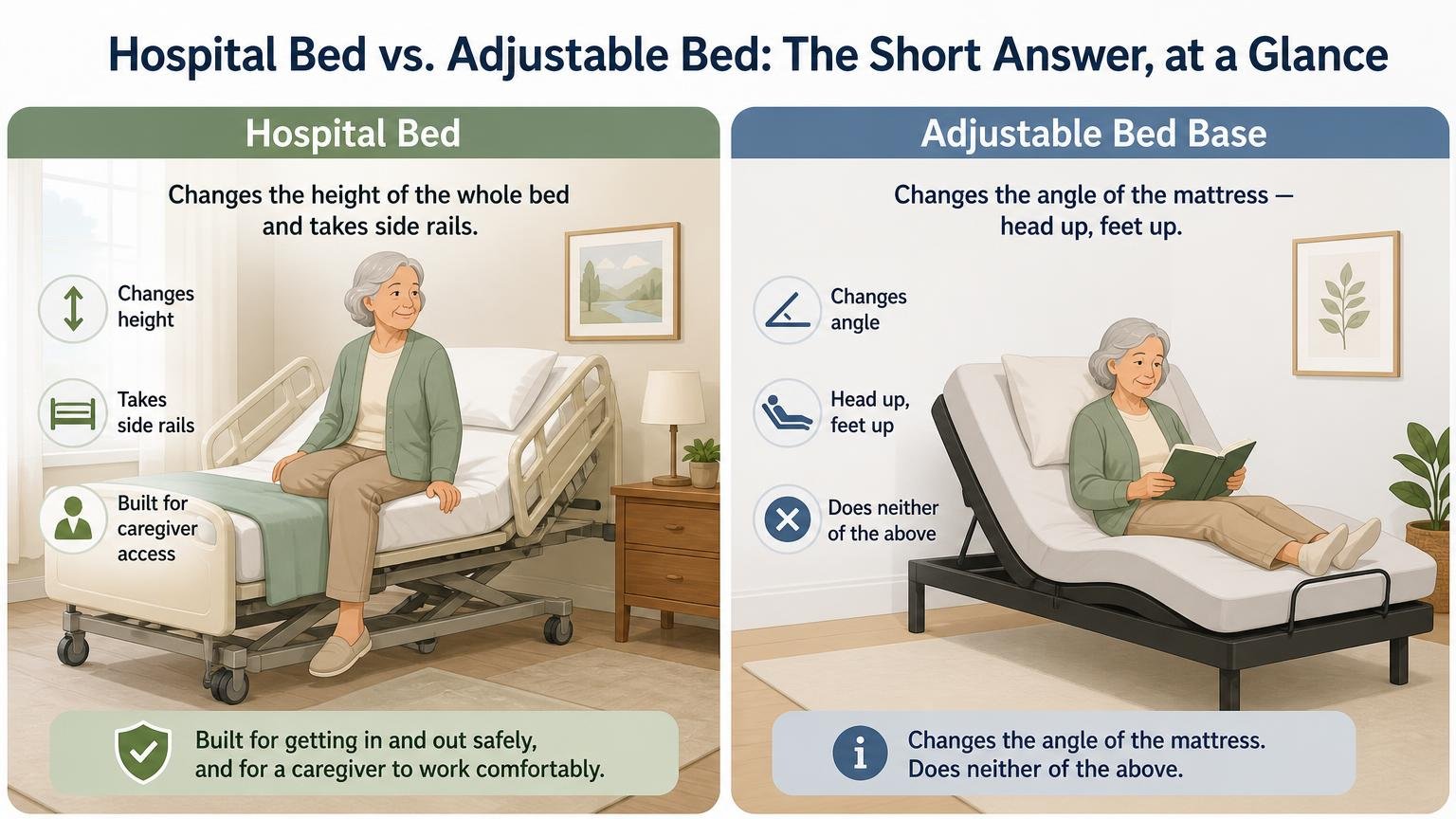
A hospital bed changes the height of the whole bed and takes side rails — built for getting in and out safely, and for a caregiver to work at a comfortable height. An adjustable bed base changes the angle of the mattress — head up, feet up — and does neither of those things.
They look similar in photos and get recommended interchangeably online, but they solve genuinely different problems, and only one of them has a path to Medicare coverage.
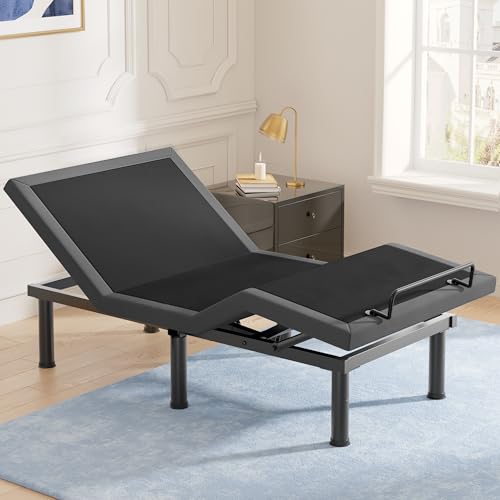
Sponsored Pick
Tami T450 Adjustable Bed Frame
A tight budget where one-touch presets still matter
Check PriceWhat a hospital bed does that an adjustable base can’t
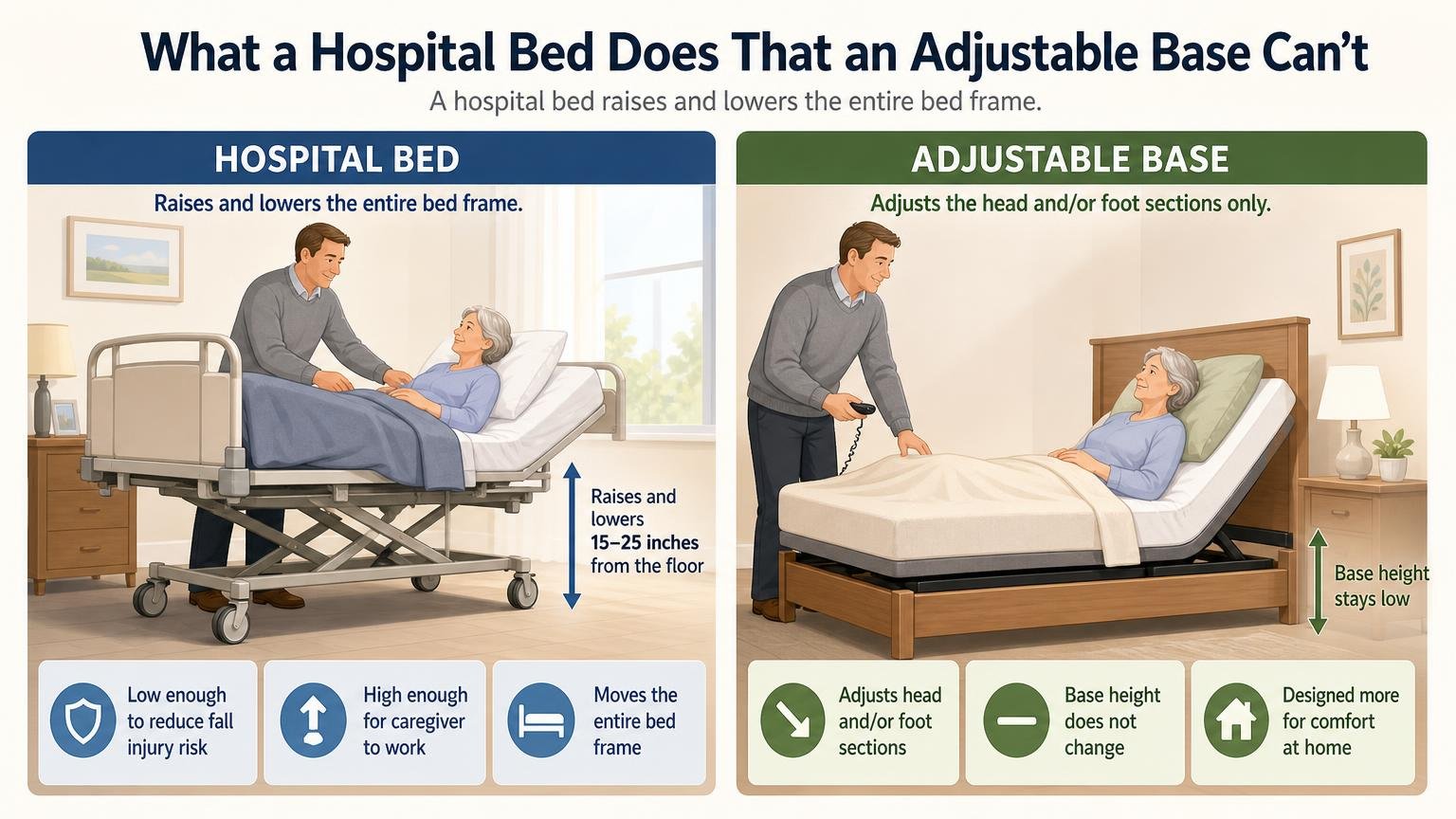
A hospital bed raises and lowers the entire bed frame, typically somewhere in the range of 15 to 25 inches from the floor, low enough to reduce fall injury risk and high enough for a caregiver to work without bending. It takes side rails — full or half length — for safety and as a hand-hold for repositioning. Many models add independent head and foot articulation on top of the height adjustment, so it does what an adjustable base does as a bonus feature, not its main job.
This is the product for: getting in and out of bed safely, a caregiver who needs to raise the bed to provide care without back strain, or a genuine medical need for side rails or specific positioning like Trendelenburg. It is generally obtained either through a Medicare-enrolled DME supplier (if pursuing coverage) or purchased directly for private use.
What an adjustable base does well
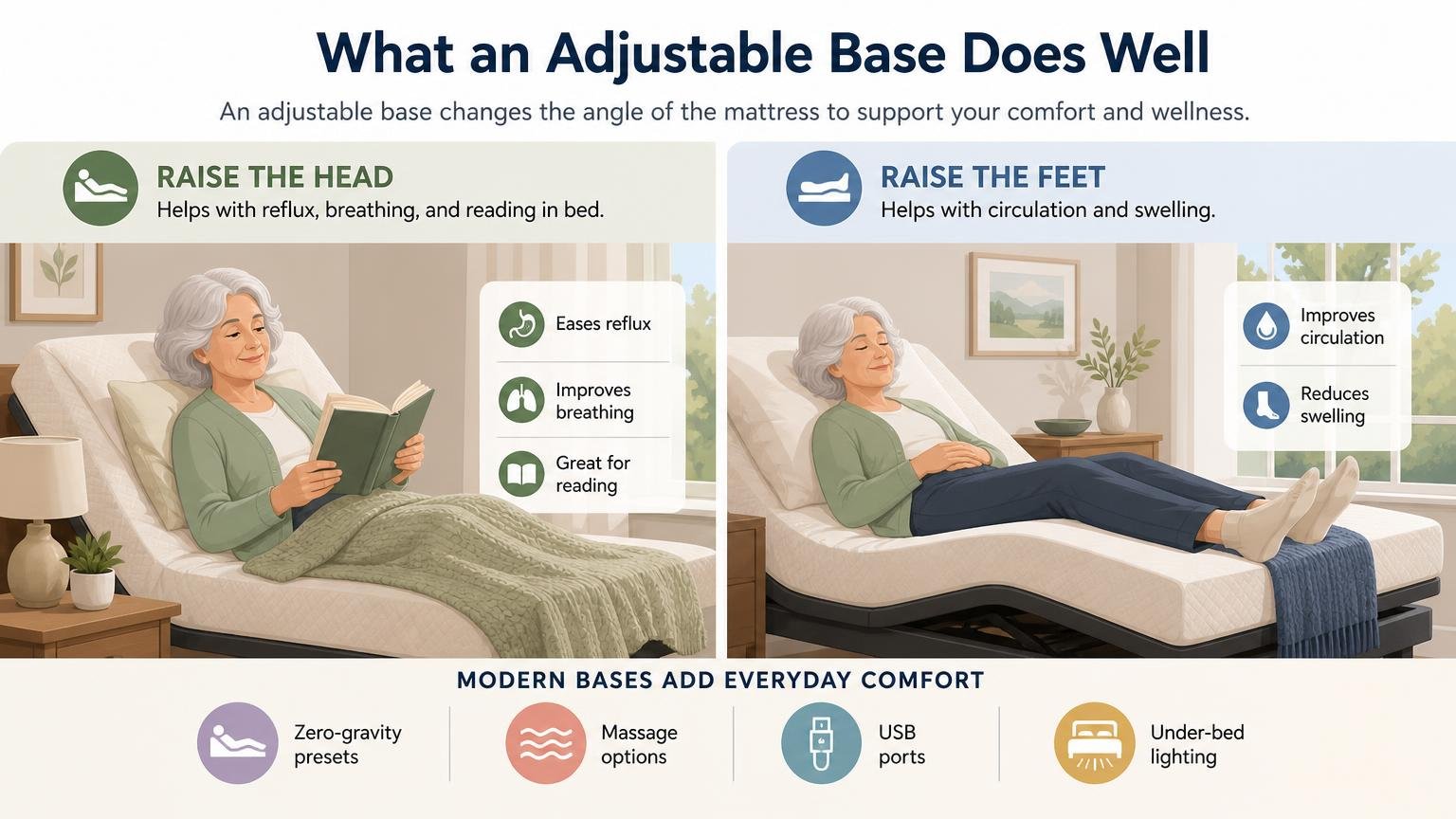
An adjustable base changes the angle of the mattress — raising the head helps with reflux, breathing, and reading in bed; raising the feet helps with circulation and swelling. Modern bases add zero-gravity presets, massage, USB ports, and under-bed lighting. They look like ordinary furniture, need no prescription, and ship the same way any other furniture does.
What they do not do: change the height of the bed, take side rails, or help with getting in and out. If the actual problem is a bed that’s too high or too low to exit safely, an adjustable base will not fix it — it will just tilt the same problem to a different angle. Our best adjustable beds for seniors review covers the full field if this is the right fit.
The Medicare question, answered directly
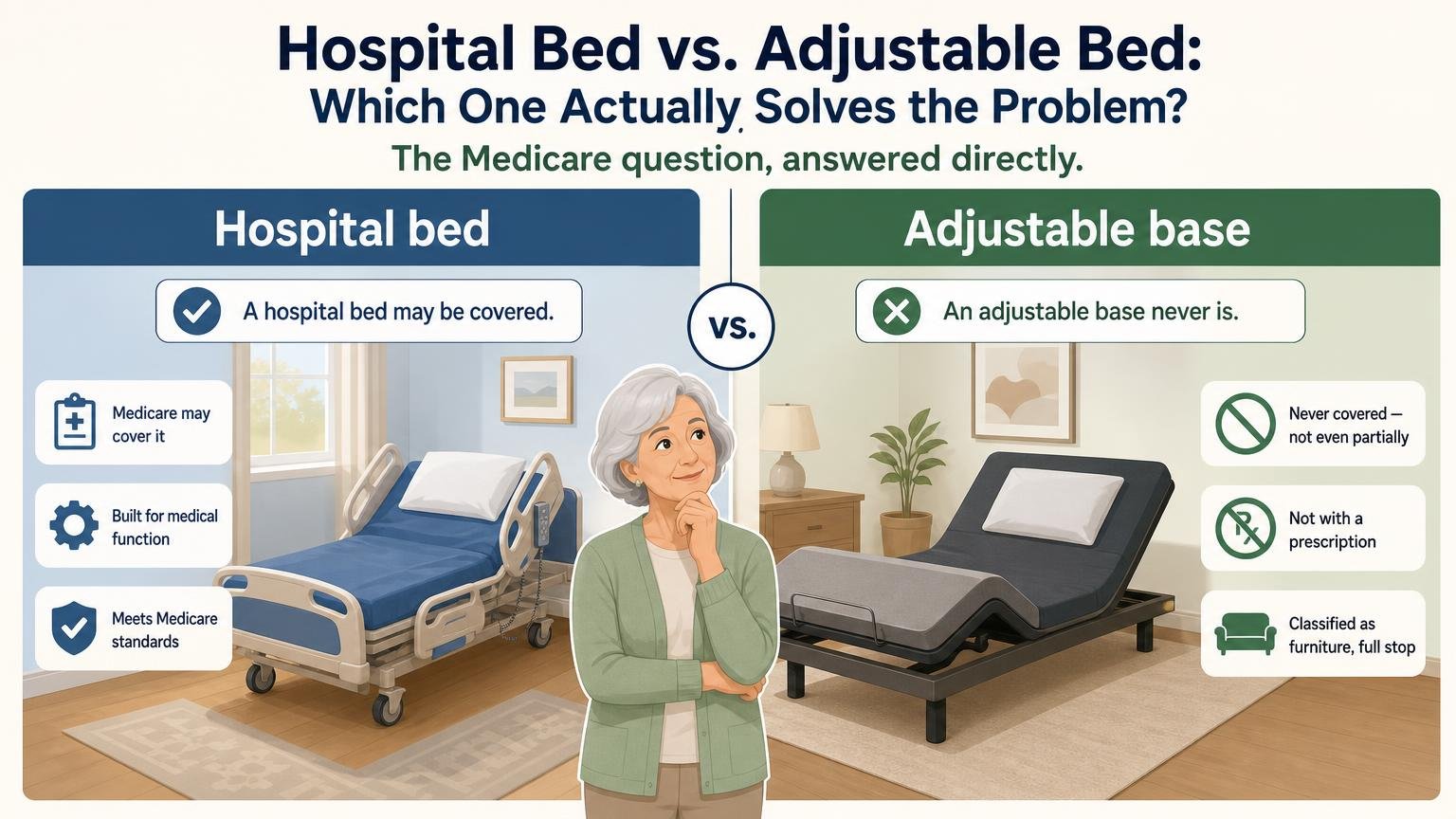
A hospital bed may be covered. An adjustable base never is — not partially, not with a prescription, not under any circumstance. Medicare classifies an adjustable base as furniture, full stop.
- Hospital bed: Medicare Part B covers a basic hospital bed as durable medical equipment when a doctor documents medical necessity — typically as a 13-month rental, after which ownership transfers to you, subject to the standard Part B deductible and 20% coinsurance. Coverage turns on what the doctor documents about function (why the bed is medically necessary), not on a diagnosis label. Features beyond a basic hospital bed — rotation, sit-to-stand assistance, hi-low positioning purely for caregiver convenience — fall outside every hospital-bed coverage code and become a private purchase, even though the base bed itself may be covered.
- Adjustable base: none of it is covered. Medicare treats the entire category as furniture, regardless of the medical reason behind wanting one.
If there’s any chance a hospital bed could be medically justified, that conversation with the doctor is worth having before assuming the cost is out of reach — it may not be the exact bed originally wanted, but it may be the one that’s actually paid for. If a basic hospital bed doesn’t cover the full need (for example, genuine rotation or sit-to-stand assistance for transfers), our rotating beds for seniors guide covers that next tier, including what it costs privately once Medicare’s basic coverage is factored in.
How to decide: a simple checklist
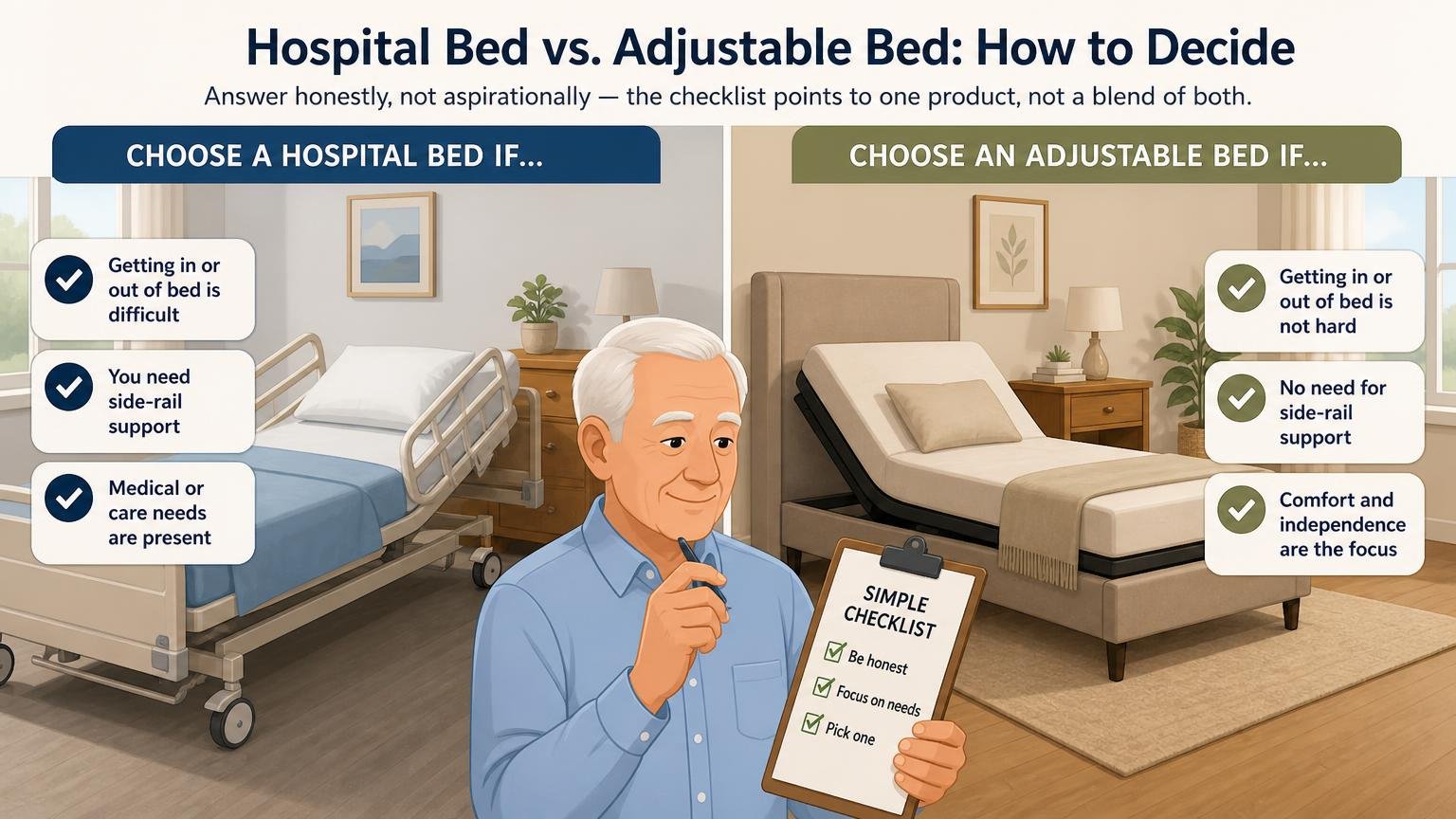
Answer honestly, not aspirationally — the checklist points to one product, not a blend of both:
- Is the real difficulty getting in or out of bed, not lying in it comfortably? → Hospital bed.
- Does a caregiver need the bed raised to provide care without bending or straining their back? → Hospital bed.
- Is side-rail support medically needed, for safety or repositioning? → Hospital bed.
- Is the issue reflux, breathing, or swelling that’s helped by raising the head or feet while otherwise sleeping normally? → Adjustable base.
- Is the priority comfort, presets, and a bed that looks like furniture, with no interest in pursuing insurance coverage? → Adjustable base.
- Genuinely both — needs the height and rails of a hospital bed AND wants head/foot articulation? Many hospital beds already include head and foot articulation as a built-in feature — check that first before assuming two separate products are needed.
Frequently asked questions
Is an adjustable bed the same as a hospital bed?
No. An adjustable base changes the angle of the mattress — head up, feet up. A hospital bed also raises and lowers the height of the entire bed, takes side rails, and is built for transfers and caregiving. If the problem is getting in and out of bed or a caregiver needing to work at a comfortable height, that’s a hospital bed. If it’s reflux, breathing, or swelling while otherwise sleeping normally, that’s an adjustable base.
Does Medicare cover a hospital bed?
It may. Medicare Part B covers a basic hospital bed as durable medical equipment when a doctor documents medical necessity, typically as a 13-month rental after which you own it, subject to the standard deductible and 20% coinsurance. Coverage depends on what the doctor documents about function, not the diagnosis. Features beyond basic — rotation, sit-to-stand assistance — fall outside every coverage code and become a private purchase.
Does Medicare cover an adjustable bed base?
No, never. Medicare classifies an adjustable bed base as furniture regardless of the medical reason for wanting one, so it is always a private, out-of-pocket purchase.
How do I get a Medicare-covered hospital bed?
Start with a conversation with the doctor about the specific functional need — why the bed is medically necessary, not just that one would help. If they agree, they document it and you obtain the bed through a Medicare-enrolled DME supplier, typically as a rental. Buying one directly, outside that process, means paying the full cost yourself even if it would otherwise have qualified.
Can a hospital bed do everything an adjustable base does?
Many hospital beds include independent head and foot articulation as a built-in feature, in addition to height adjustment and rails — so if genuine height/rail need exists alongside a wish for head/foot positioning, one hospital bed may cover both needs rather than buying two separate products. Check the specific model’s features before assuming otherwise.
