Bathroom Fall Prevention for Seniors: Complete Caregiver Guide

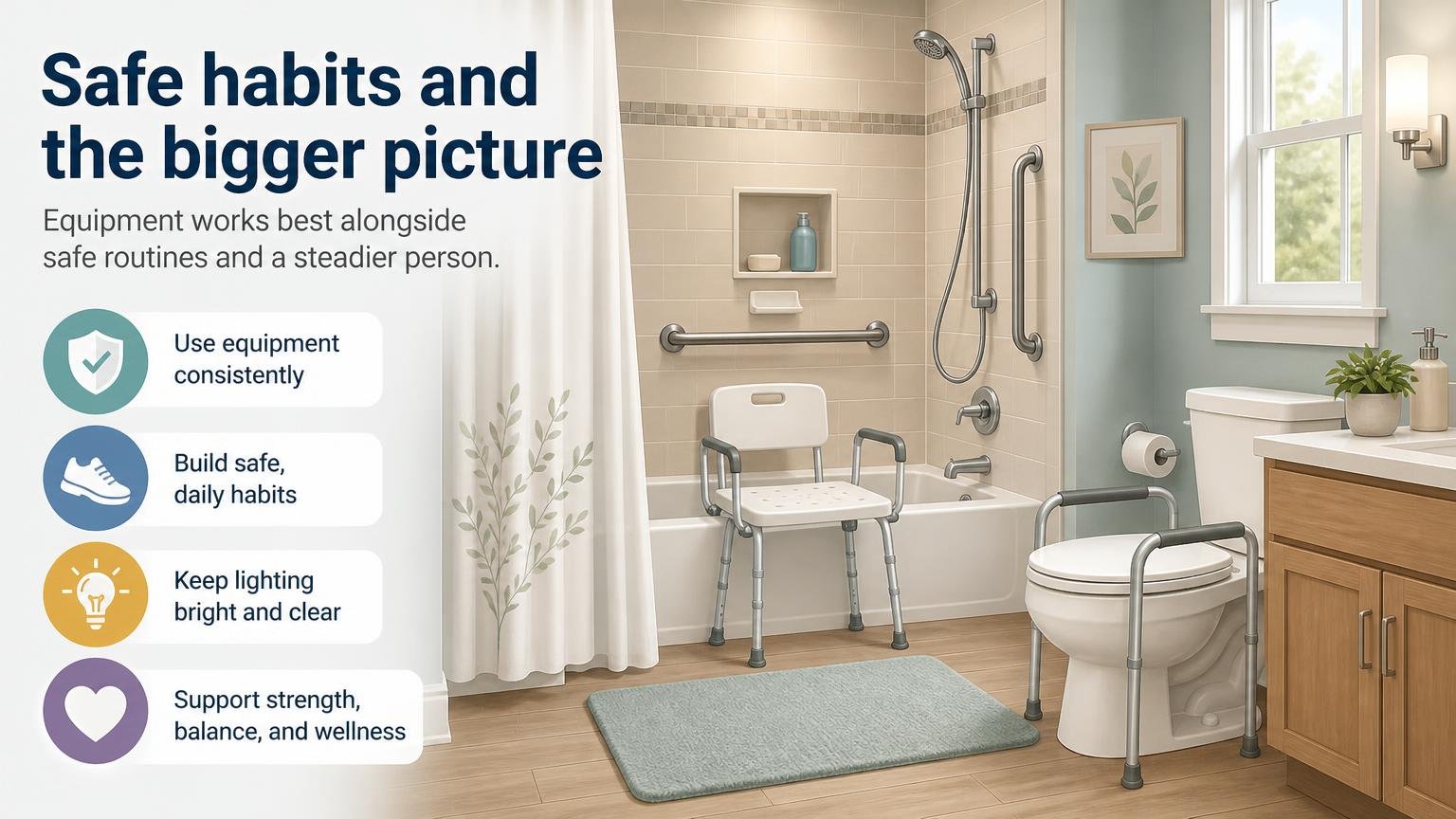
Senior-friendly bathroom with grab bars, shower chair, non-slip mats, and proper lighting for fall prevention

Critical Safety Alert

According to the CDC, over 230,000 seniors are hospitalized each year due to bathroom falls. Research shows that 80% of these injuries occur during transfers in and out of the shower or bathtub. The good news? Most bathroom falls are preventable with the right safety modifications.

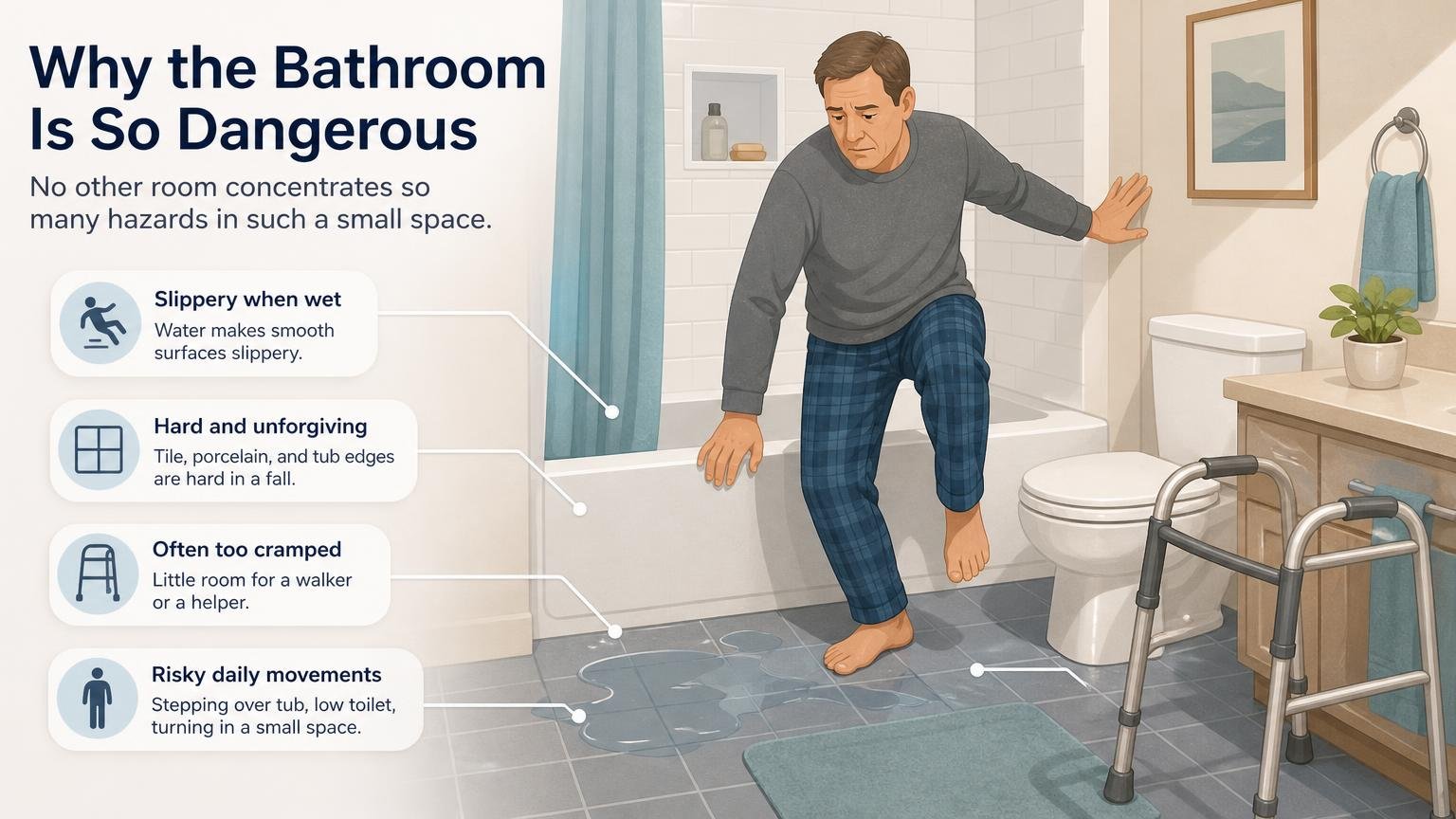
Bathrooms are the most dangerous room in the home for seniors. The combination of wet surfaces, hard fixtures, and frequent transfers creates a perfect storm for falls. But as a caregiver, you have the power to dramatically reduce this risk.

We've organized this guide from quick 30‑minute safety improvements to long‑term modifications, so you can start protecting your loved one immediately while planning for comprehensive safety upgrades. Every recommendation is backed by research from the CDC Falls Prevention and reviewed by occupational therapists who specialize in senior home safety. For broader guidance on mobility aids, transfer safety, and home modifications, see our fall prevention resource.

Quick Safety Checklist for Caregivers

Essential modifications that prevent most bathroom falls

Install grab bars near toilet and in shower
Use non-slip mats inside tub/shower
Improve lighting with bright LED bulbs
Add raised toilet support or safety rails
Keep essentials within easy reach

Assess Your Fall Risk

Take our free Fall Risk Assessment to get personalized recommendations for your situation. This 5-minute questionnaire helps identify specific risk factors and provides tailored safety strategies.

Risk levels: Low • Moderate • High
Take the Free Fall Risk Assessment

Why Bathroom Falls Happen: Understanding the Risk Factors

Senior using grab bar support while entering bathtub, demonstrating high-risk bathroom transfer moment

Understanding why falls occur is the first step in prevention. Bathroom falls rarely have a single cause—they typically result from a combination of environmental hazards and age‑related changes. Here's what puts seniors at highest risk:

Slippery Surfaces

Water, soap, shampoo, and conditioner create extremely slick conditions on tile and porcelain surfaces. Even small amounts of moisture can reduce traction by 70%, making it nearly impossible to recover from a loss of balance.

Balance Challenges

Stepping over tub edges, turning in tight spaces, and weight transfers require good balance that naturally declines with age. Seniors with arthritis, neuropathy, or inner ear issues face even greater challenges maintaining stability.

Poor Lighting

Dim lighting makes it hard to see obstacles, water puddles, and edges clearly. Many bathrooms have inadequate lighting, especially at night when seniors are most vulnerable to falls during urgent bathroom trips.

Rushing & Urgency

Urgent bathroom needs, especially at night, lead to hurried movements and reduced caution. Seniors may skip using mobility aids or forget to turn on lights when rushing, significantly increasing fall risk.

Medication Effects

Many medications cause dizziness, drowsiness, or blood pressure changes that increase fall risk. Diuretics increase bathroom frequency, while sedatives and blood pressure medications can cause sudden lightheadedness during transfers.

Hard Surfaces

Tile, porcelain, and fixtures create high‑impact surfaces that turn minor slips into serious injuries. Hip fractures, head trauma, and broken wrists are common outcomes when seniors fall on hard bathroom surfaces.

Critical Insight for Caregivers

Falls rarely have a single cause. Most bathroom falls result from a combination of 2‑3 risk factors occurring simultaneously—such as wet floors + poor lighting + rushing. This is why a comprehensive safety approach that addresses multiple hazards is far more effective than single interventions.

Shower & Tub Safety: The Highest‑Risk Transfer Area

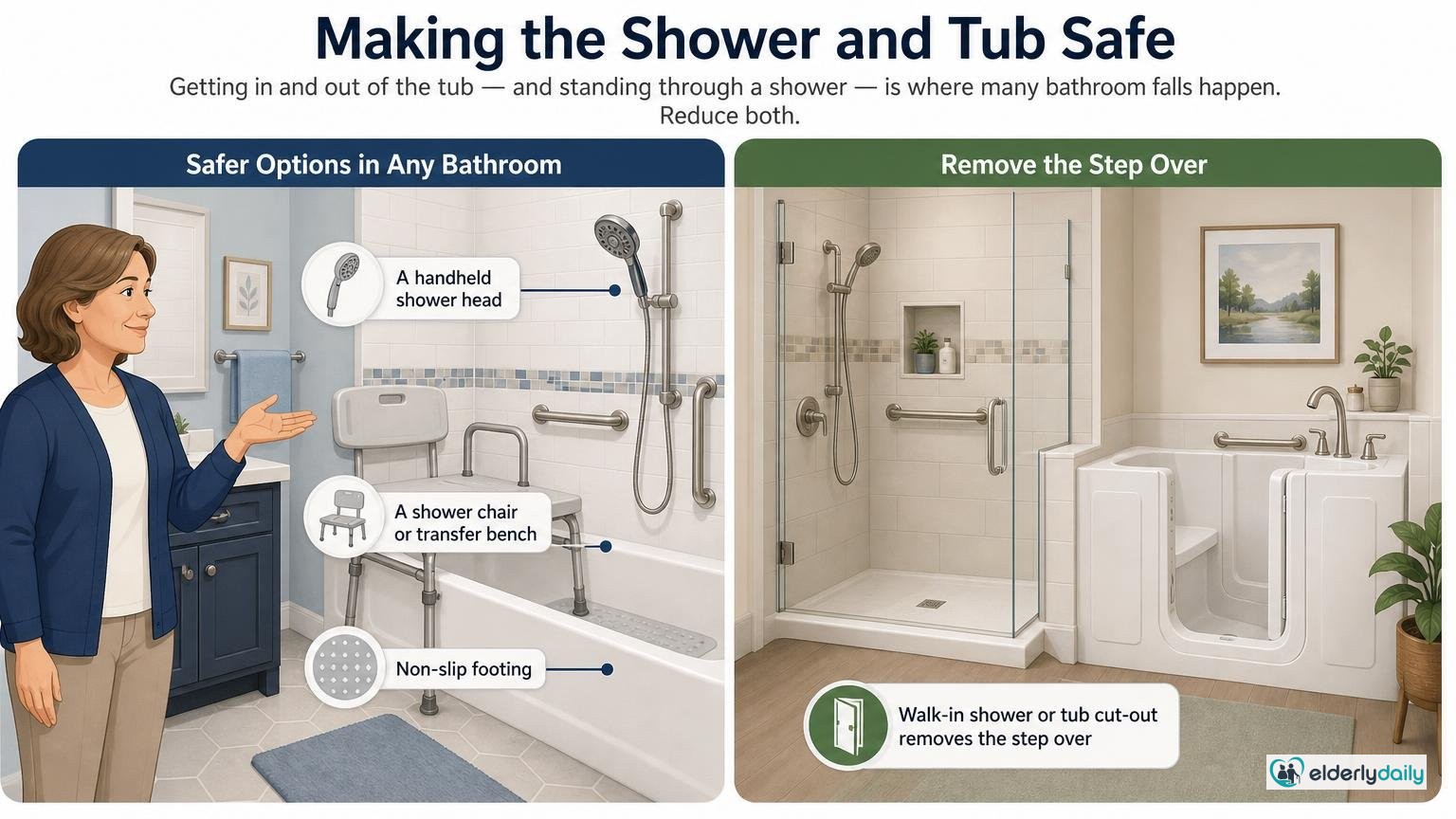
Transfer bench and grab bars installed in senior bathroom shower for safe bathing

The shower and bathtub area accounts for 27% of all bathroom falls. The combination of wet surfaces, high thresholds, and the need to balance on one foot while stepping over the tub edge creates extreme fall risk. Here's how to make this area dramatically safer:

Essential Shower Safety Aids

  • Grab Bars Inside Shower

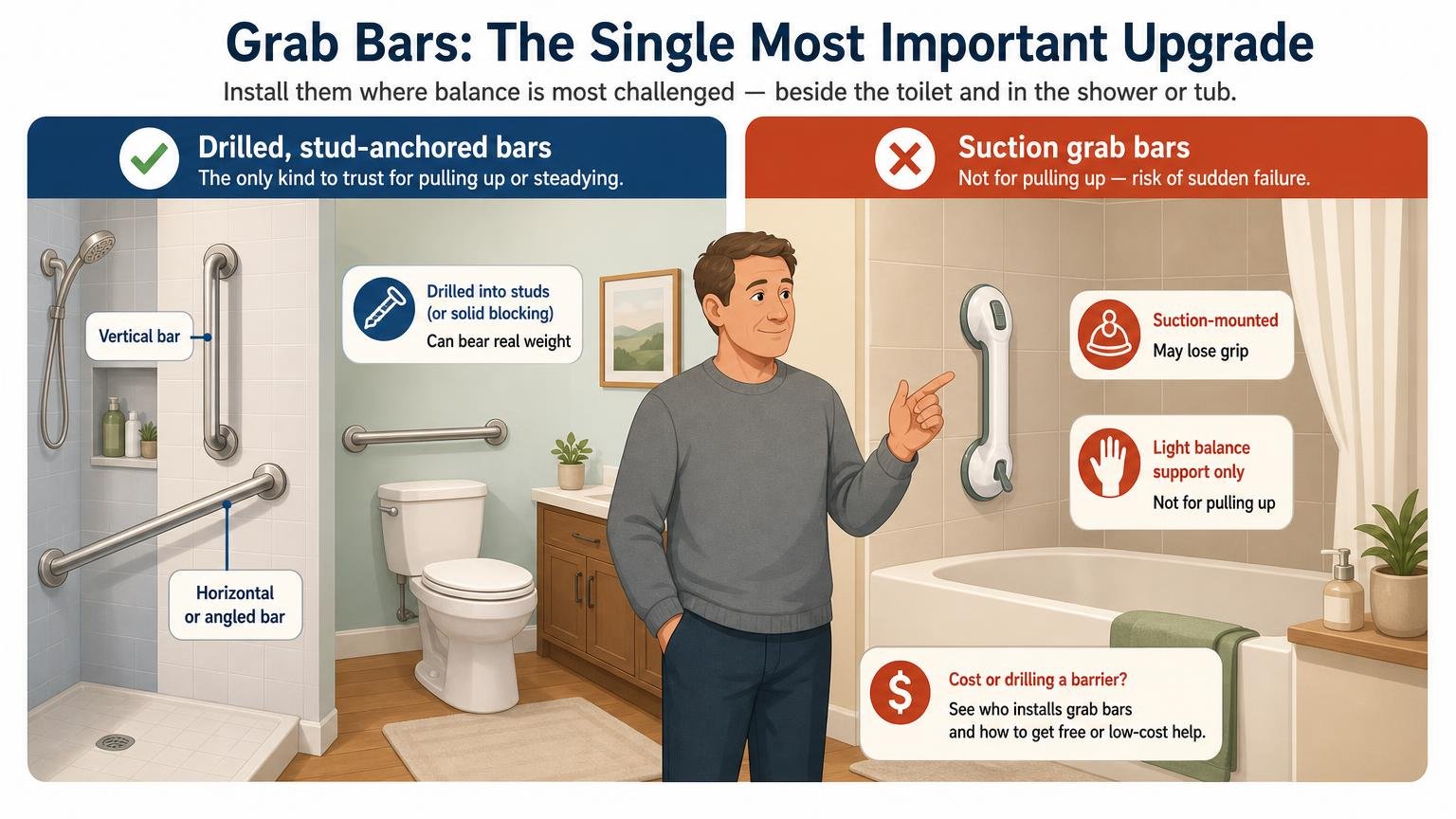
    Install at least one vertical grab bar for entry/exit and one horizontal bar for stability while showering

  • Non‑Slip Shower Mat

    Use textured mats with strong suction cups that cover the entire standing area

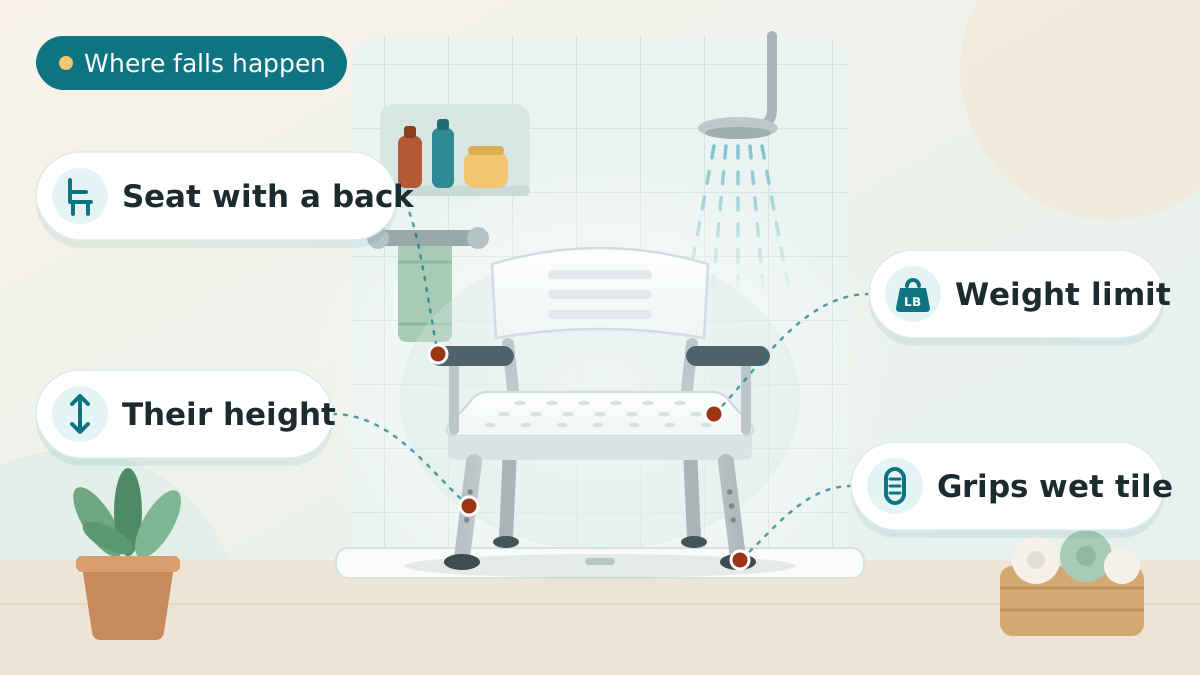
  • Shower Chair or Bench

    Allows safe seated bathing for seniors with balance issues or fatigue

  • Handheld Shower Head

    Enables bathing while seated and eliminates reaching overhead

Tub Transfer Solutions

  • Transfer Bench

    Spans the tub edge so seniors can sit and slide across rather than stepping over

  • Tub Grab Bars

    Mount on the wall beside the tub for support during entry and exit

  • Tub Step Stool

    Reduces the height of the tub threshold for easier stepping (use with grab bars)

  • Walk‑In Tub Conversion

    For severe mobility limitations, consider a walk‑in tub or curbless shower renovation

Caregiver Tip: The "Sit‑Down Shower" Approach

For seniors with significant balance issues, transition to seated bathing completely. Install a shower chair, handheld shower head, and grab bars. This eliminates standing fatigue and dramatically reduces fall risk. Many caregivers report this single change provides the most peace of mind.

Toilet Transfer Safety: Preventing 19% of Bathroom Falls

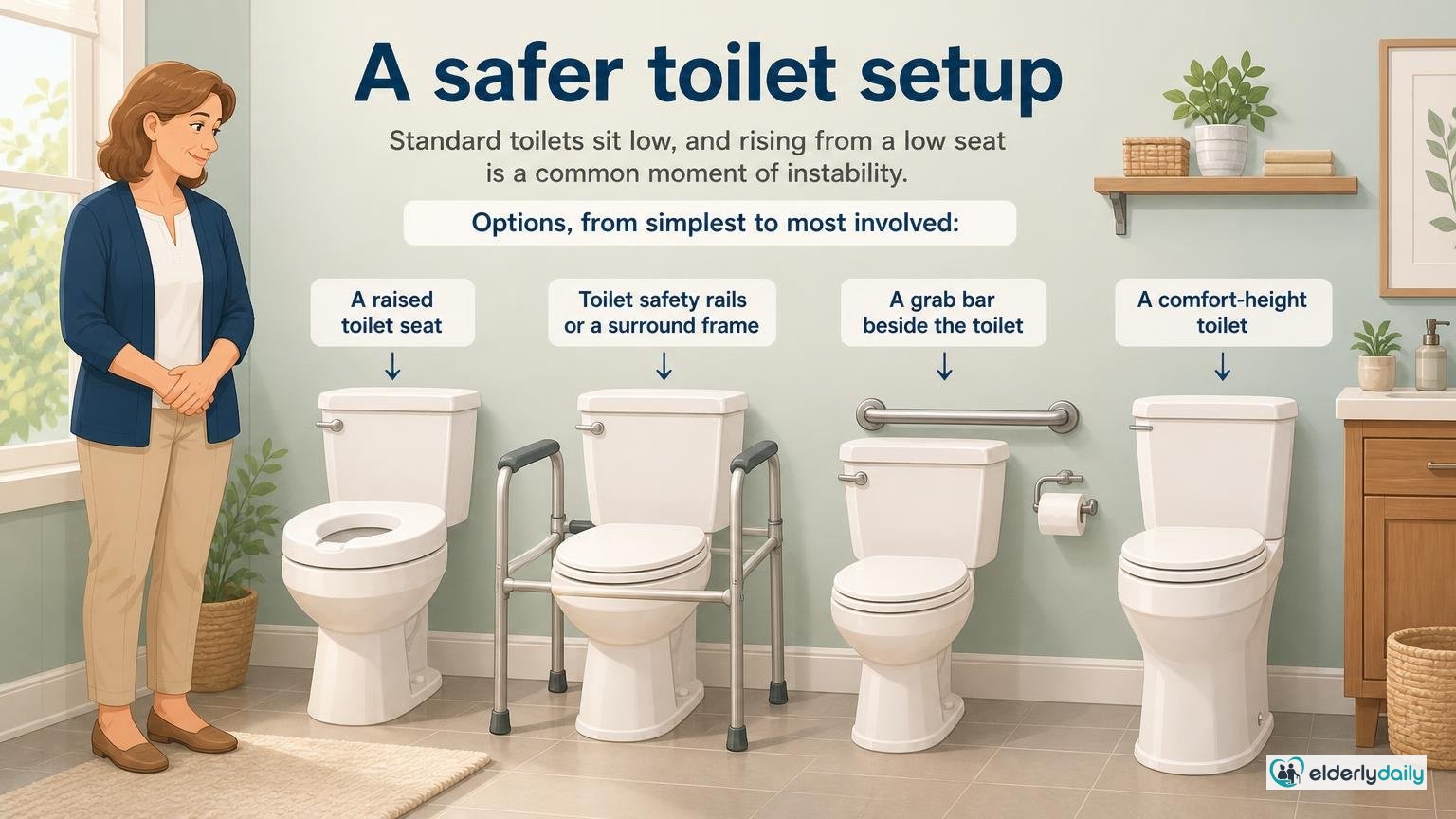
Toilet safety rails with armrests and raised seat for senior bathroom safety

Sitting down and standing up from the toilet requires significant leg strength and balance. As we age, these movements become increasingly difficult and dangerous. Research shows that 19% of bathroom falls occur during toilet transfers. Installing a comfort-height toilet reduces strain by raising the seat 2-4 inches, making transfers significantly safer. Here are the three most effective solutions:

Toilet Safety Rails

Freestanding frames that provide armrests on both sides of the toilet. They're adjustable, easy to install, and support 300+ pounds.

Best for: Seniors who need arm support but have adequate leg strength

Cost: $35‑90

Raised Toilet Seats

Add 3‑5 inches of height to the toilet, reducing the distance seniors need to lower and raise their body during transfers.

Best for: Seniors with hip/knee issues or post‑surgery recovery

Cost: $25‑70

Wall‑Mounted Grab Bars

Permanently installed bars beside the toilet provide the strongest, most reliable support for transfers.

Best for: Long‑term safety and maximum weight support

Cost: $20‑80 + installation

Optimal Toilet Safety Setup (Recommended Combination)

For maximum safety, combine multiple aids:

  • Wall‑mounted grab bar on the dominant hand side

  • Raised toilet seat (if needed for mobility)

  • Toilet safety rails for bilateral arm support

  • Non‑slip mat on the floor in front of the toilet

Installation Tip:

Position grab bars 33‑36 inches from the floor (measured from the center of the bar). This height works for most seniors and allows proper leverage during transfers. Always mount into wall studs or use heavy‑duty anchors rated for 250+ pounds.

Nighttime Bathroom Safety: Preventing Falls in the Dark

Complete Nighttime Safety Strategy

Lighting Solutions

  • Motion‑sensor night lights along the path from bedroom to bathroom

  • Soft nightlight inside the bathroom (leave on 24/7)

  • Dimmer switch on main bathroom light to avoid harsh brightness

  • Glow‑in‑the‑dark tape on light switches and grab bars

Additional Precautions

  • Keep a bedside commode for urgent nighttime needs

  • Remove all rugs and obstacles from the walking path

  • Ensure grab bars are within easy reach from the toilet

  • Consider a medical alert device for fall detection

Bedside Commode Consideration

For seniors with frequent nighttime bathroom needs or significant mobility limitations, a bedside commode can be a game‑changer. While it may seem like a loss of independence, it actually provides greater safety and dignity by eliminating the most dangerous nighttime journey. Many families report this single change dramatically reduces caregiver anxiety and improves everyone's sleep quality.

Floor Safety Improvements: Foundation of Bathroom Safety

While grab bars and safety aids are critical, the foundation of bathroom safety lies in proper flooring and lighting. These environmental modifications create a safer baseline that supports all other safety measures.

Flooring Safety Upgrades

Non‑Slip Bath Mats

Use textured rubber mats with strong suction cups inside the tub/shower and on the bathroom floor. Replace every 6‑12 months as suction weakens.

Cost: $15‑35 per mat

Remove Loose Rugs

Eliminate all loose bath mats and rugs that can slide or bunch up. If rugs are necessary, use only those with non‑slip backing and secure edges.

Cost: Free (removal)

Anti‑Slip Floor Treatment

Apply anti‑slip coating to tile floors to increase traction when wet. Professional application lasts 2‑3 years.

Cost: $200‑500 (professional)

Textured Flooring Replacement

For major renovations, consider slip‑resistant vinyl or textured tile flooring designed for wet areas.

Cost: $1,000‑3,000+ (renovation)

Lighting Enhancements

Bright LED Bulbs

Replace all bathroom bulbs with bright LED bulbs (100‑watt equivalent minimum). Ensure even lighting throughout the space.

Cost: $10‑25 for bulbs

Motion‑Sensor Night Lights

Install motion‑activated night lights that automatically illuminate when seniors enter the bathroom at night.

Cost: $12‑30 per light

Dimmer Switches

Add dimmer switches to avoid harsh brightness during nighttime bathroom trips while maintaining adequate visibility.

Cost: $15‑40 + installation

Task Lighting Near Mirror

Install bright task lighting near the mirror and vanity area to improve visibility for grooming tasks.

Cost: $30‑100 per fixture

Post‑Surgery & High‑Risk Senior Considerations

Seniors recovering from hip replacement, knee surgery, or other procedures have temporary but significantly elevated fall risk. Post‑surgery bathroom safety requires additional equipment and caregiver vigilance during the recovery period.

Post‑Surgery Bathroom Safety Checklist

Essential Equipment

  • Raised Toilet Seat (3‑5 inches)

    Reduces hip flexion and strain during transfers

  • Toilet Safety Rails

    Provides bilateral arm support for safe transfers

  • Shower Transfer Bench

    Eliminates need to step over tub edge

  • Handheld Shower Head

    Allows bathing while seated safely

  • Long‑Handled Sponge

    Reduces bending and reaching during bathing

Caregiver Support Strategies

  • Supervise all bathroom transfers during first 2‑4 weeks post‑surgery

  • Keep bathroom door unlocked and slightly ajar for quick access

  • Set up a bedside commode for nighttime use to avoid long walks

  • Follow physical therapist's transfer technique instructions exactly

  • Schedule bathroom breaks to avoid rushing and urgency

  • Keep medical alert device within reach at all times

High‑Risk Senior Indicators

Some seniors require maximum bathroom safety precautions even without recent surgery. Consider comprehensive safety upgrades if your loved one has:

  • History of falls (1+ in past year)

  • Parkinson's disease or stroke history

  • Severe arthritis or joint pain

  • Vision impairment or cataracts

  • Takes 4+ medications daily

  • Uses walker or cane for mobility

How to Make a Bathroom Safer in 30 Minutes

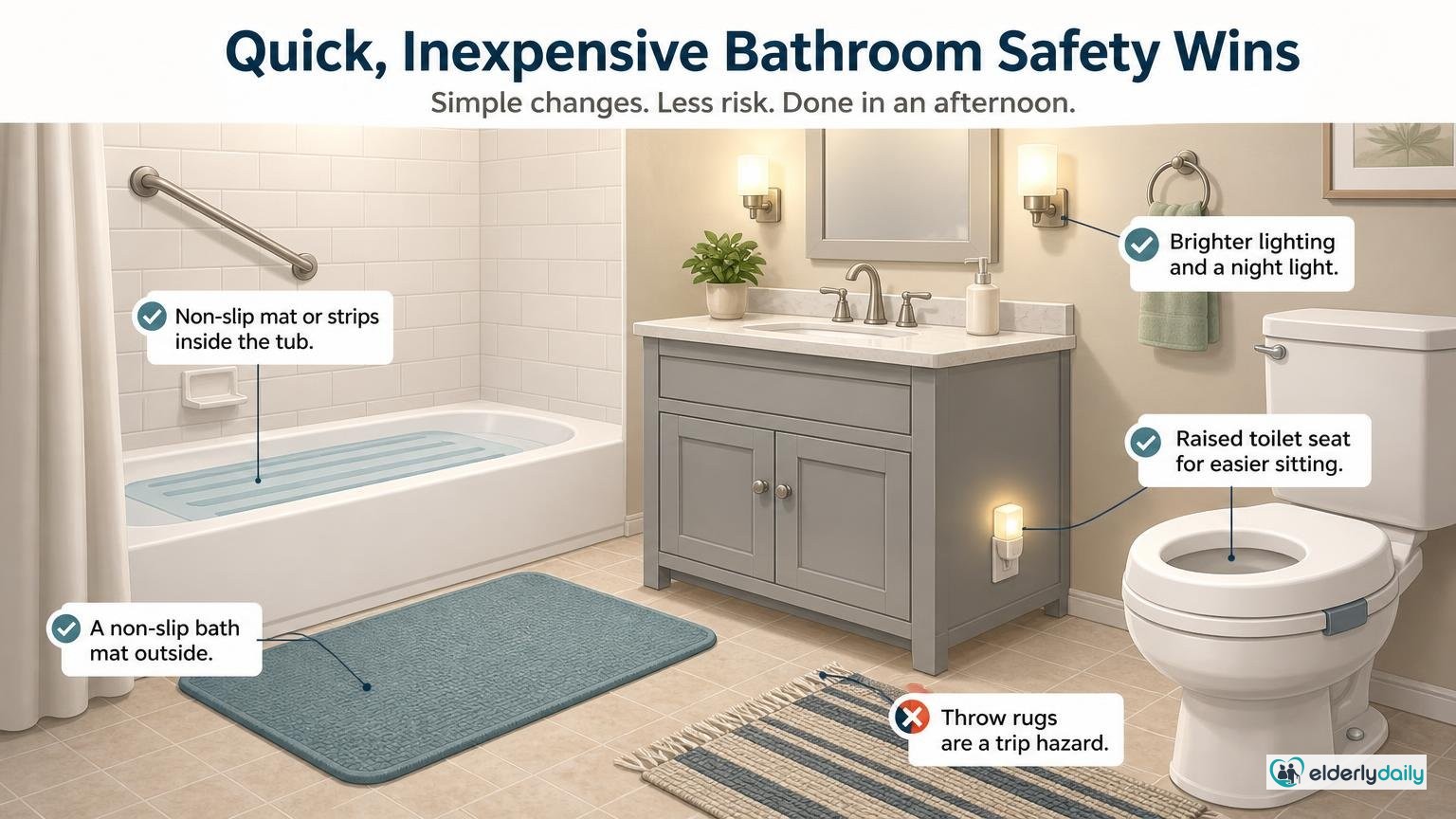
You don't need to complete a full bathroom renovation to make a significant safety impact. These quick modifications can be implemented in just 30 minutes and will immediately reduce fall risk.

1

Install Non‑Slip Mats (5 minutes)

Place non‑slip bath mats inside the tub/shower and on the bathroom floor. Ensure they have strong suction cups and lay flat without wrinkles. This single step prevents 38% of bathroom falls.

What you need: Non‑slip bath mats with suction cups ($15‑35)

2

Improve Lighting (10 minutes)

Replace dim bulbs with bright LED bulbs (at least 100‑watt equivalent). Add a motion‑sensor night light for nighttime bathroom trips. Poor lighting contributes to 11% of bathroom falls.

What you need: LED bulbs ($10‑25), motion‑sensor night light ($12‑30)

3

Clear Walking Paths (5 minutes)

Remove all loose rugs, bath mats outside the tub, and any clutter from the floor. Ensure there's a clear, obstacle‑free path from the door to the toilet and shower.

What you need: Nothing—just remove hazards

4

Organize Essentials Within Reach (5 minutes)

Move frequently used items (soap, shampoo, towels, toilet paper) to waist‑height shelves. Eliminate the need for bending, reaching, or stretching that can cause loss of balance.

What you need: Shower caddy or shelf organizer ($10‑25)

5

Mark Grab Bar Locations (3 minutes)

Identify where grab bars are needed most (beside toilet, inside shower, near tub entry). Mark these spots with painter's tape for professional installation or DIY mounting this weekend.

What you need: Painter's tape ($5), grab bars for later installation ($20‑80 each)

6

Test Water Temperature (2 minutes)

Set the water heater to 120°F maximum to prevent scalding. Test shower temperature before your loved one enters to avoid sudden temperature changes that cause instability.

What you need: Nothing—just adjust water heater thermostat

Total Time: 30 Minutes

Total Cost: $50‑150 (excluding grab bars)

These six quick modifications address the most common fall hazards and can be completed in a single afternoon. For maximum safety, follow up with professional grab bar installation within the next week.

When to Seek Professional Help

While many bathroom safety modifications can be DIY projects, certain situations require professional assessment and installation. Knowing when to call in experts ensures maximum safety and proper equipment use.

Call a Professional Immediately If:

  • Your loved one has fallen 2+ times

    Frequent falls indicate serious balance or mobility issues requiring PT/OT evaluation

  • Balance has noticeably declined

    Sudden changes in stability may indicate medical issues or medication side effects

  • Fear of falling limits bathroom use

    Anxiety about falls can lead to dehydration and hygiene issues—get help now

  • Post‑surgery recovery period

    Physical therapist can assess home safety and recommend specific equipment

Professional Installation Needed For:

  • Wall‑mounted grab bars

    Must be mounted into wall studs to support 250+ pounds safely

  • Walk‑in tub or curbless shower conversion

    Major renovation requiring plumbing and construction expertise

  • Electrical work for lighting upgrades

    New fixtures, switches, or outlets require licensed electrician

  • Anti‑slip floor treatment application

    Professional application ensures even coverage and long‑lasting results

Occupational Therapy Home Safety Assessment

An occupational therapist (OT) can conduct a comprehensive home safety assessment and provide personalized recommendations based on your loved one's specific mobility limitations, medical conditions, and daily routines. Many insurance plans, including Medicare, cover OT assessments when prescribed by a physician.

To request an assessment: Ask your loved one's primary care physician for a referral to occupational therapy for a home safety evaluation. The OT will visit your home, assess fall risks, and provide a detailed report with specific equipment recommendations and installation guidance.

Most Common Bathroom Danger Zones

Understanding where falls happen helps you prioritize safety upgrades. These five areas account for the majority of bathroom injuries.

High Risk

Wet Floors

Water splashes from showers and sinks create invisible slip hazards. Even small puddles can cause serious falls on tile surfaces.

High Risk

Shower Entry

Stepping over tub edges or shower thresholds requires balance and leg strength that many seniors struggle with.

Medium Risk

Toilet Transfers

Sitting down and standing up from low toilets puts stress on knees and requires core strength and balance.

Medium Risk

Poor Lighting

Dim bathrooms make it hard to see water, obstacles, and edges clearly, especially for seniors with vision changes.

High Risk

Nighttime Urgency

Rushing to the bathroom at night while drowsy and in dim lighting creates a dangerous combination of risk factors.

Best Safety Products Caregivers Use

These six safety aids are the most effective tools for preventing bathroom falls. Each one addresses a specific danger zone and provides measurable protection.

Grab Bars

Grab Bars

Provides sturdy support for all bathroom transfers

Check on Amazon
Non-Slip Bath Mat

Non-Slip Bath Mat

Prevents slipping on wet shower and tub surfaces

Check on Amazon
Shower Chair

Shower Chair

Allows safe seated bathing without exhaustion

Check on Amazon
Toilet Safety Rails

Toilet Safety Rails

Sturdy armrests for sitting and standing support

Check on Amazon
Handheld Shower Head

Handheld Shower Head

Reduces reaching and allows seated showering

Check on Amazon
Motion Sensor Night Light

Motion Sensor Night Light

Automatic lighting for safe nighttime bathroom trips

Check on Amazon

Caregiver Decision Helper

Use this comparison table to prioritize which safety aids to install first based on your loved one's specific needs and your budget.

Safety AidBest ForCost LevelPriority
Grab BarsAll transfers & support$20-80Critical
Non-Slip MatsWet surface traction$15-35Critical
Shower ChairBalance issues & fatigue$40-120High
Toilet Safety RailsSitting/standing support$35-90High
Raised Toilet SeatMobility limitations$25-70Medium
Motion Night LightsNighttime visibility$12-30High
Handheld Shower HeadSeated bathing$25-60Medium

Step-by-Step Bathroom Fall Prevention Plan

Follow this four-week plan to systematically improve bathroom safety. You don't need to do everything at once—steady progress is what matters.

Week 1

Remove Hazards

  • Remove all bath mats without rubber backing
  • Clear clutter and unnecessary items from bathroom
  • Check for loose tiles or damaged flooring
  • Remove any furniture or obstacles blocking pathways
  • Ensure all electrical cords are secured and out of the way
Week 2

Add Support Rails

  • Install grab bars near toilet (both sides if possible)
  • Add grab bars inside shower or tub
  • Install grab bar near shower entry point
  • Consider adding a grab bar near bathroom sink
  • Test all installations to ensure they support full body weight
Week 3

Upgrade Shower Safety

  • Place non-slip mat inside tub or shower
  • Install shower chair if balance is a concern
  • Add handheld shower head for seated bathing
  • Apply non-slip strips to tub floor if needed
  • Organize shower products within easy reach
Week 4

Nighttime Fall Prevention

  • Install motion-sensor night lights along bathroom path
  • Add night light inside bathroom
  • Ensure light switches are easily accessible
  • Consider bedside commode for urgent nighttime needs
  • Review medications with doctor if dizziness occurs at night

Visual Safety Reference

Bathroom Safety Checklist

Essential modifications every caregiver should implement

Bathroom Safety Checklist Infographic

Top Causes of Senior Bathroom Falls

Data‑backed insights for prevention priorities

Wet/Slippery Floors38%
Shower/Tub Entry27%
Toilet Transfers19%
Poor Lighting11%
Nighttime Falls5%

Source: CDC National Center for Injury Prevention and Control

Caregiver Tips for Daily Support

Beyond physical modifications, these daily habits and practices help caregivers provide ongoing fall prevention support.

Encourage Slow Standing

Remind your loved one to sit for a moment after using the toilet before standing. This prevents dizziness from blood pressure changes that can cause falls.

Keep Towels Reachable

Place towels, soap, and shampoo within easy reach so seniors don't need to stretch, bend, or reach while standing on wet surfaces.

Review Medications with Doctor

Many medications cause dizziness, drowsiness, or blood pressure changes. If falls increase, ask the doctor to review all prescriptions and supplements.

Practice Using New Equipment

When you install new grab bars or a shower chair, practice using them together during the day when everyone is alert and the bathroom is dry.

Keep Phone Accessible

Ensure your loved one can reach a phone from the bathroom in case they need help. Consider a waterproof phone holder or medical alert device.

Schedule Vision Checkups

Poor vision contributes to falls. Regular eye exams and updated prescriptions help seniors see obstacles, water, and edges more clearly.

Support Safe Daily Routines for Seniors

Bathroom safety is just one part of comprehensive daily care. Explore our Senior Daily Routines Hub for complete guidance on morning routines, evening routines, nutrition, exercise, and caregiver support strategies.

Explore Daily Routine Guides

Frequently Asked Questions

Related Caregiver Resources

Caregiver Takeaway

You don't need to transform the entire bathroom overnight. Start with the highest‑priority changes: grab bars near the toilet and shower, non‑slip mats, and better lighting. These three modifications alone prevent the majority of bathroom falls.

Remember, your loved one's safety and independence go hand in hand. The right safety aids don't take away dignity—they provide the support that allows seniors to maintain their daily routines with confidence.

Take it one step at a time, involve your loved one in the decisions, and celebrate each safety upgrade as a win for everyone's peace of mind.

Affiliate Disclosure: ElderlyDaily.com participates in the Amazon Services LLC Associates Program. When you purchase products through our links, we may earn a small commission at no additional cost to you. This helps us continue providing free, research‑backed caregiver guides and product recommendations.