Some days the care goes smoothly. Others, the phone rings, a delivery comes, lunch runs late — and suddenly you cannot remember whether the morning pills were given, or whether Mom has had anything to drink since breakfast.
A daily checklist takes that weight off your memory. It turns a hundred small worries into a page you can glance at and trust — one that any family member can pick up and follow. This free printable is organized by time of day, plus the handful of checks worth protecting even on the busiest days, and the warning signs that mean it is time to call for help.
This checklist is a tool for organizing daily care, not medical advice. Always follow the care plan set by your loved one’s doctor, and call a healthcare professional with any medical concern.
What This Checklist Helps With
Nothing Slips on Busy Days
A clear routine for every part of the day means no dose, meal, or safety check gets forgotten.
Everyone Stays in Sync
One shared page keeps siblings, aides, and respite caregivers all working from the same plan.
Catch Problems Early
Built-in red-flag reminders help you notice the changes that need same-day attention.
Download Your Free Caregiver Daily Checklist
A printable daily care checklist for elderly parents and seniors — organized by time of day, with handoff notes and red-flag reminders. No signup required.
What’s Included:
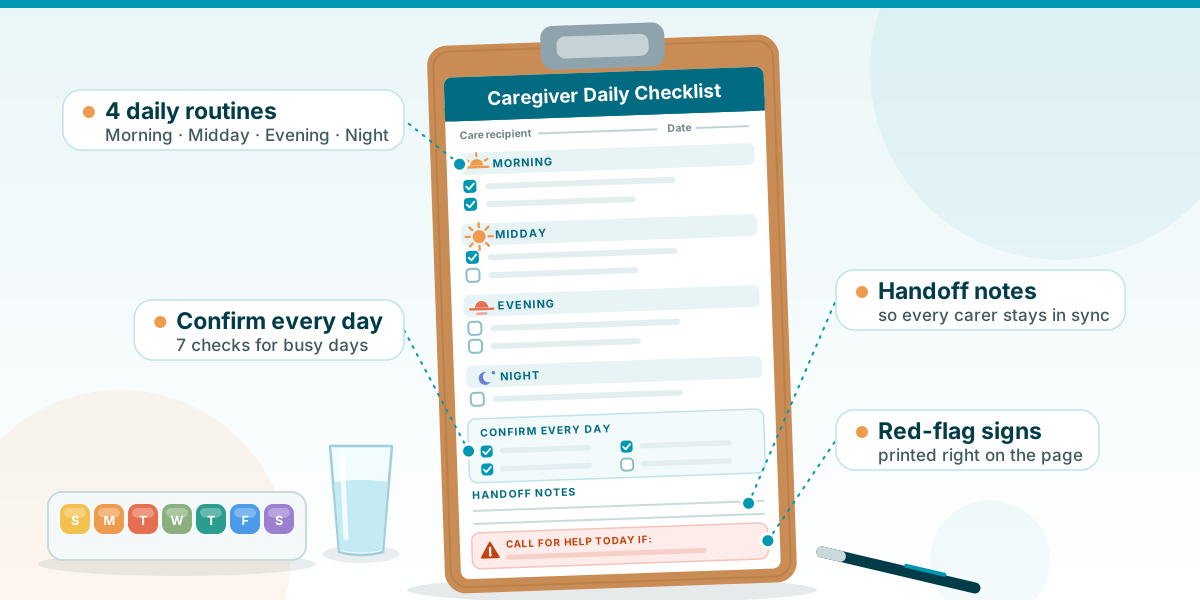
- Morning, midday, evening, and night care routines with checkboxes
- A “confirm every day” safety row for busy days
- Handoff notes so multiple caregivers stay in sync
- Red-flag warning signs printed on the page
- Space for care-recipient, caregiver, and contact details
- Clean, printer-friendly layout (no color ink required)
Want more caregiver resources? Subscribe for updates:
No signup required to download. We respect your privacy.
Optional upgrade
Want the whole system, not just a checklist?
The checklist above is free, forever. When you want everything in one organized, fillable place — daily care, medications, appointments, behavior notes, and a caregiver handoff — the Dementia Caregiver Command Center is a 52-page fillable toolkit.
The Daily Caregiver Checklist, Hour by Hour
A calm, predictable rhythm is easier on everyone. Work through each block, check things off as you go, and let the page — not your memory — carry the load.
Morning
- Greet and gently orient — day, date, and the plan for today
- Toileting; check skin and continence
- Wash or bathe, plus oral and denture care
- Dress in clean, weather-appropriate clothes and safe, non-slip footwear
- Give morning medications with water — check each against the medication list
- Breakfast with some protein; offer a full glass of fluid
- Quick steadiness check before the first walk of the day
Midday
- Offer fluids — steady sips matter more than one big glass
- Lunch; note appetite and anything left uneaten
- Midday medications if scheduled; watch for side effects
- Toileting and hand hygiene
- One enjoyable, engaging activity — a walk, a visitor, music, a hobby
- A short rest if needed (earlier is better than late afternoon)
Evening
- Dinner — a lighter portion, with adequate fluids
- Evening medications; confirm the day’s earlier doses were all given
- Wind-down: dim the lights, lower the noise, calm activity
- Toileting and a skin check; moisturize dry or reddened areas
- Lay out clothes and anything needed for the morning
Night
- Bedtime medications if scheduled
- Safety sweep — night lights on, path to the bathroom clear
- Phone and the medical alert button within easy reach
- Note anything unusual from the day in the log
Seven Things to Confirm Every Day
If a busy day gets away from you, these are the checks worth protecting.
Red Flags — When to Get Help Today
Most days the checklist is routine. But some changes need same-day medical attention. Contact the doctor — or call emergency services for the items that say so — if you notice:
- Sudden weakness, facial droop, or slurred speech — call emergency services (stroke signs)
- Chest pain, trouble breathing, or bluish lips — call emergency services
- A fall with injury, a blow to the head, or an inability to bear weight
- New or worsening confusion, drowsiness, or being hard to wake
- Signs of dehydration — little or very dark urine, dry mouth, dizziness
- Fever with shaking chills, or a new productive cough
- Repeated vomiting, or not eating or drinking for a day
- Skin that is broken, or red and not fading — a possible pressure sore
This list helps you recognize warning signs — it is not exhaustive and is not medical advice. When in doubt, call a healthcare professional.
ADLs vs. IADLs: A Quick Reference
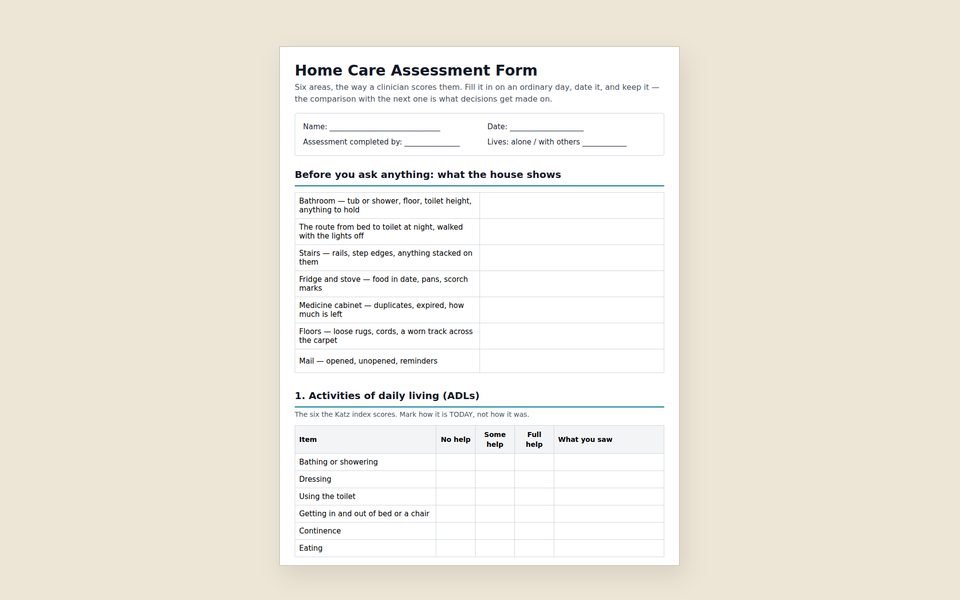
Knowing which everyday tasks a person can still do — and which need help — is the clearest way to size up how much care is needed and to shape a care plan.
ADLs — Basic Self-Care
The fundamentals of caring for one’s own body.
- Bathing and grooming
- Dressing
- Toileting
- Transferring (bed to chair)
- Continence
- Eating
IADLs — Independent Living
The tasks needed to run a household and stay independent.
- Managing medications
- Preparing meals
- Managing money and bills
- Shopping and errands
- Housekeeping and laundry
- Using the phone or technology
- Transportation
Using One Checklist Across a Whole Family
The checklist earns its keep when more than one person shares the care. Keep a single copy at the care station — the kitchen counter, the medication drawer, wherever the day happens — so no one is guessing what has already been done.
One rule prevents almost every mistake: whoever does a task checks it off right then, not later from memory. Use the handoff notes line to pass along the small things — “ate little at lunch,” “seemed unsteady this morning” — and take a few minutes each week to look back together. Patterns show up on paper long before anyone would notice them in the moment.
Tools That Make Daily Care Easier
Affiliate disclosure: some of the guides below contain Amazon links. ElderlyDaily may earn a small commission at no extra cost to you, which helps keep these resources free.
Best Pill Organizers for Seniors
Keep each day’s doses sorted and visible
Best Automatic Pill Dispensers
Locked, alarmed dispensing for memory loss
Best Medical Alert Devices
One-button help if a fall happens
Best Night Lights for Seniors
Safer paths for night-time bathroom trips
Best Grab Bars for Seniors
Support at the highest-risk transfer points
Best Shoes to Prevent Falls
Non-slip footwear for steadier walking
Frequently Asked Questions
A good daily checklist covers medications, meals and fluids, hygiene, toileting and skin, mobility and fall safety, mood and engagement, and a home-safety sweep. Organizing it by time of day — morning, midday, evening, and night — makes it easy to follow and hard to skip a step during a busy day.
Related Caregiver Resources & Guides
Caregiver Emergency Binder Template
Everything a stand-in caregiver needs, in one place
Daily Medication Chart & Tracker
A printable companion for meds specifically
Daily Living Aids: Caregiver Guide
Tools that make everyday tasks easier
Medication Management at Home
Prevent missed and double doses safely
Keeping a Senior Safe Living Alone
When the checklist runs across a distance
Preventing Caregiver Burnout
The checklist should protect you too
Senior Care Plan Generator
Turn daily tasks into a written plan
Care Needs Assessment
Gauge how much support is really needed
Last Updated: September 2026
This resource supports families managing daily elder care at home. For medical advice, always consult your loved one’s healthcare provider.