With dementia, the day itself is a form of care. A predictable routine, a way to see the pattern behind hard moments, and a page that tells a new caregiver who your person really is — these do more, most days, than anything you can buy.
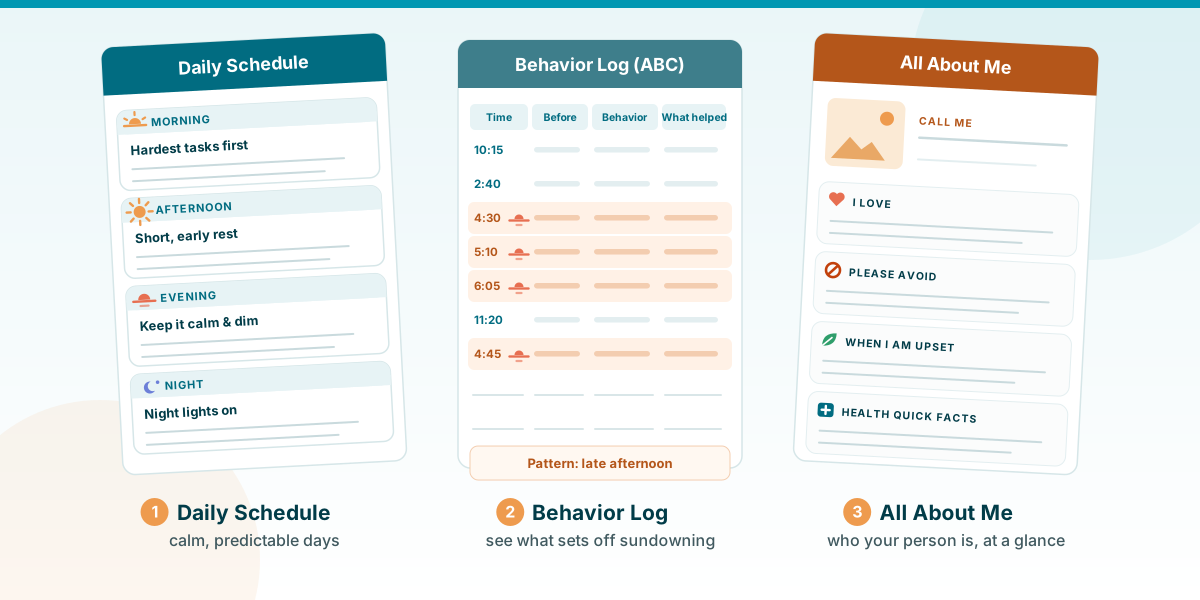
This free toolkit gives you three printables built around how dementia actually affects a day: a daily schedule that front-loads the mornings and keeps evenings calm, a sundowning & behavior log that reveals triggers, and an “All About Me” profile that keeps care personal across every shift and setting.
These are practical organizing tools, not medical advice. Every person’s dementia is different — follow the plan set by your loved one’s healthcare team, and raise any change or concern with them.
Bring calm through a predictable day
Dementia Daily Schedule & Routine Template
A fill-in daily schedule built around dementia: hardest tasks in the morning, calm evenings to ease sundowning, and space to write the activities that suit your person.
See the pattern behind hard moments
Sundowning & Behavior Log (ABC Tracker)
A simple before / behavior / what-helped log. A few days of entries reveal the triggers behind agitation and sundowning so you can adjust the routine to prevent them.
The person behind the diagnosis
“All About Me” Profile
A one-page personal profile for aides, hospitals, and respite carers — who your person is, what they love, and how to help them at difficult moments. The single most useful sheet for person-centered care.
Free, print-friendly PDFs. No signup required.
Ready for the full system?
The Dementia Caregiver Command Center
The printables above are free. When you want everything in one organized, shareable place — daily care, behavior patterns, medications, appointments, safety, and caregiver handoff — the Command Center is a 52-page fillable toolkit.
How to Build a Dementia Daily Schedule
A good dementia routine is not a rigid timetable — it is a familiar shape to the day that the person can lean on. A few principles do most of the work:
- Keep the same order every day — predictability lowers anxiety far more than variety helps.
- Put the hardest tasks (bathing, appointments) in the morning, when the person is usually freshest.
- Keep late afternoon and evening calm and low-stimulation to ease sundowning.
- Build in rest, but keep naps short and early so night sleep is protected.
- Follow lifelong habits where you can — an early riser stays an early riser.
Morning
Wake – late morning
- Wake gently; greet by name and say the day, date, and weather
- Hygiene and dressing while alertness is highest
- Unhurried breakfast with fluids
- One purposeful activity — a walk, folding laundry, a familiar hobby
Afternoon
Midday – late afternoon
- Lunch, then a short early rest (not a long or late nap)
- Gentle activity or a change of scene while it is still light
- Offer fluids regularly
- Begin winding activity down as the afternoon ends
Evening
Dinner – bedtime
- Early, calm dinner; avoid caffeine
- Lower the lights and noise; close curtains before dusk
- A familiar, soothing activity — music, photos, a quiet show
- Keep the same simple bedtime routine every night
Night
Bedtime – morning
- Night lights along the path to the bathroom
- Reassure calmly if they wake; keep it dim and quiet
- Note disturbed nights on the behavior log
Tracking Sundowning With the ABC Method
Difficult moments usually have a pattern once you can see several of them side by side.
For a few days, jot down what was happening just before, what the person did, and what settled it.
Look for triggers — hunger, tiredness, noise, pain, a certain time of day — and adjust the routine to head them off.
Once you can see what tends to come before a difficult moment, small routine changes often prevent it — an earlier dinner, a quieter evening, a snack before the usual dip. Bring the log to appointments too; it is far more useful to a doctor than trying to describe it from memory. For the why behind late-day agitation, see our guide to dementia and sundowning.
Why an “All About Me” Profile Matters
As dementia progresses, the person can no longer tell a new aide or a busy nurse who they are. This one page does it for them — turning task-focused care into person-focused care, and heading off distress before it starts. It covers:
Frequently Asked Questions
Keep the same order every day, since predictability lowers anxiety. Schedule demanding tasks like bathing in the morning when the person is freshest, and keep late afternoons and evenings calm and low-stimulation to ease sundowning. Build in short, early rest rather than long late naps, and follow the person’s lifelong habits wherever you can. Fill in the printable template together and adjust it as needs change.
More Dementia Care Support
Dementia Daily Routine for Caregivers
The full guide behind the schedule template
Dementia & Sundowning
Why late-day agitation happens, and what helps
How to Calm a Dementia Patient
In-the-moment techniques for hard moments
Dementia Wandering Behavior
Reduce and respond to wandering safely
Dementia Home Safety
Room-by-room changes that prevent harm
Activities for Seniors With Dementia
Ideas to fill the schedule with
Best Dementia Clocks
Day/date clocks that support orientation
Caregiver Emergency Binder
Pair the profile with a full care binder
Caregiver Daily Checklist
A general daily checklist to sit alongside these
Care Needs Assessment
Gauge how much support is needed
Last Updated: September 2026
This toolkit supports families caring for someone with dementia at home. For medical advice, always consult your loved one’s healthcare provider.