
Fall Prevention Tips for Seniors: The Complete Home Checklist

In this guide
- The real numbers, and the myth worth correcting
- What actually works, before you buy anything
- The 10-minute walkthrough
- The free fix most lists skip: what’s on their feet
- Products that address a specific hazard
- If a fall has already happened, or the pattern is changing
- The rest of this site’s fall-prevention guides, one line each
- FAQs
A room-by-room checklist plus what the evidence actually shows works — and where the "bathroom is the most dangerous room" advice you’ve heard is only part of the picture.
Key takeaways
- Falls are common, not rare: over 14 million older adults — 1 in 4 — fall every year, and falling once roughly doubles the chance of falling again
- The bedroom and stairs cause about as many ER-treated falls as the bathroom — fall-proofing only the bathroom leaves real risk unaddressed
- The single best-evidenced intervention is exercise that targets balance and strength, not any product purchase
- A 10-minute walkthrough of four rooms catches most of the fixable hazards
- This site has seven deeper guides on specific causes and rooms — this page is the map to all of them, not a replacement for any one
Quick answer
What actually prevents falls in seniors?
Three things matter most, in order of evidence strength: balance and strength exercise (the best-proven intervention), removing specific hazards room by room (loose rugs, poor lighting, clutter on walking paths, no grab bars where transfers happen), and a medication review, since several common drug classes raise fall risk. Products like grab bars and non-slip mats help with specific hazards but work best alongside those first two, not instead of them.
The real numbers, and the myth worth correcting
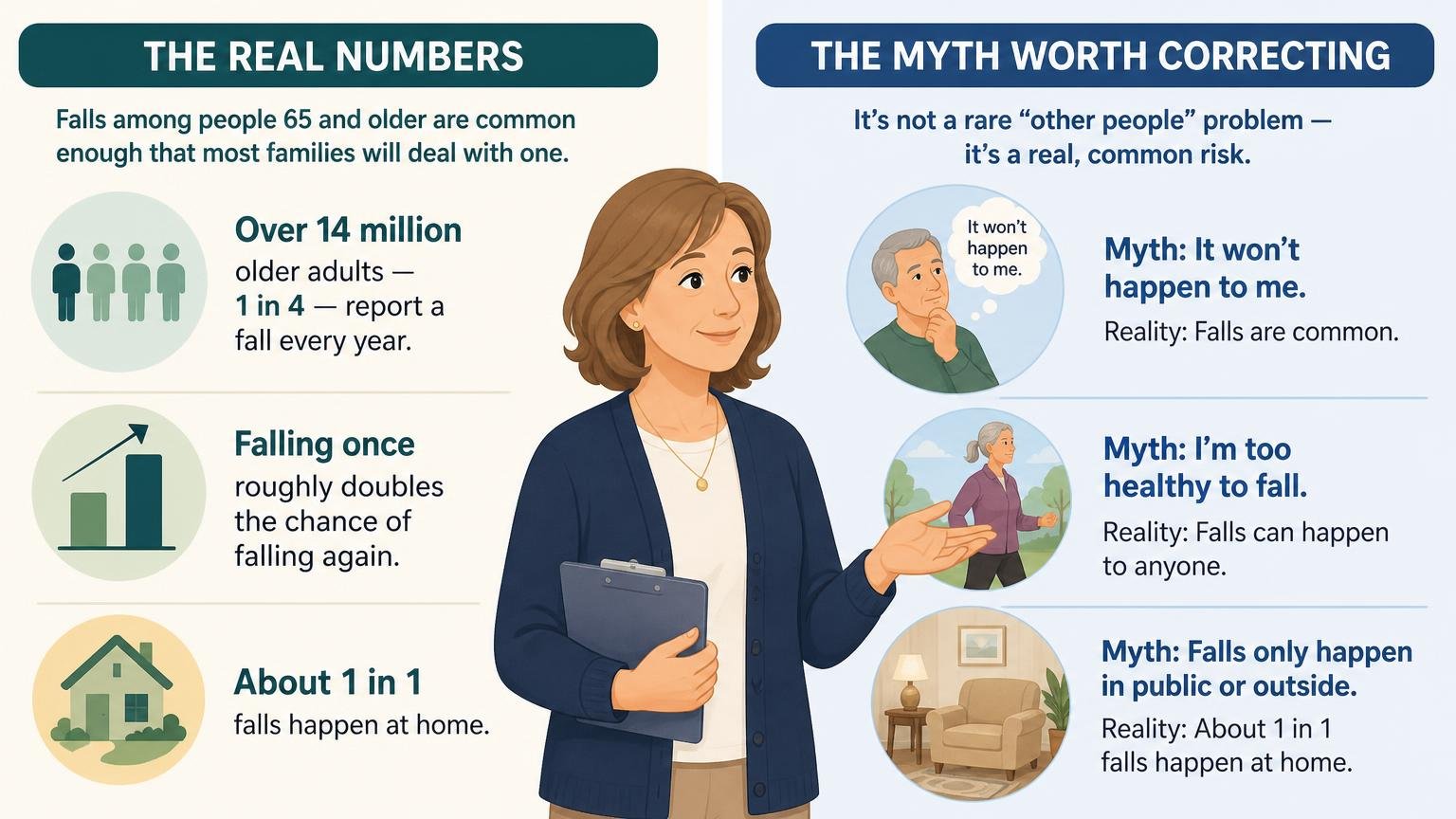
Falls among people 65 and older are common enough that most families will deal with one eventually: over 14 million older adults — 1 in 4 — report a fall every year, and falling once roughly doubles the chance of falling again. About 1 in 10 falls causes an injury serious enough to restrict activity or need medical care.
The advice you’ve probably heard is to fall-proof the bathroom first. That instinct is reasonable — wet, hard surfaces are genuinely dangerous — but it undersells the rest of the house. The best available data on where falls that send someone to the ER actually happen puts the bedroom (25%) and stairs (23%) narrowly ahead of the bathroom (23%) — a far more even split than "the bathroom is the most dangerous room" suggests. A prevention plan that stops at the bathroom door is missing two-fifths of the real risk.
That is the actual case for a whole-home safety checklist rather than a single-room fix, and it is what the rest of this page is built around.

What actually works, before you buy anything
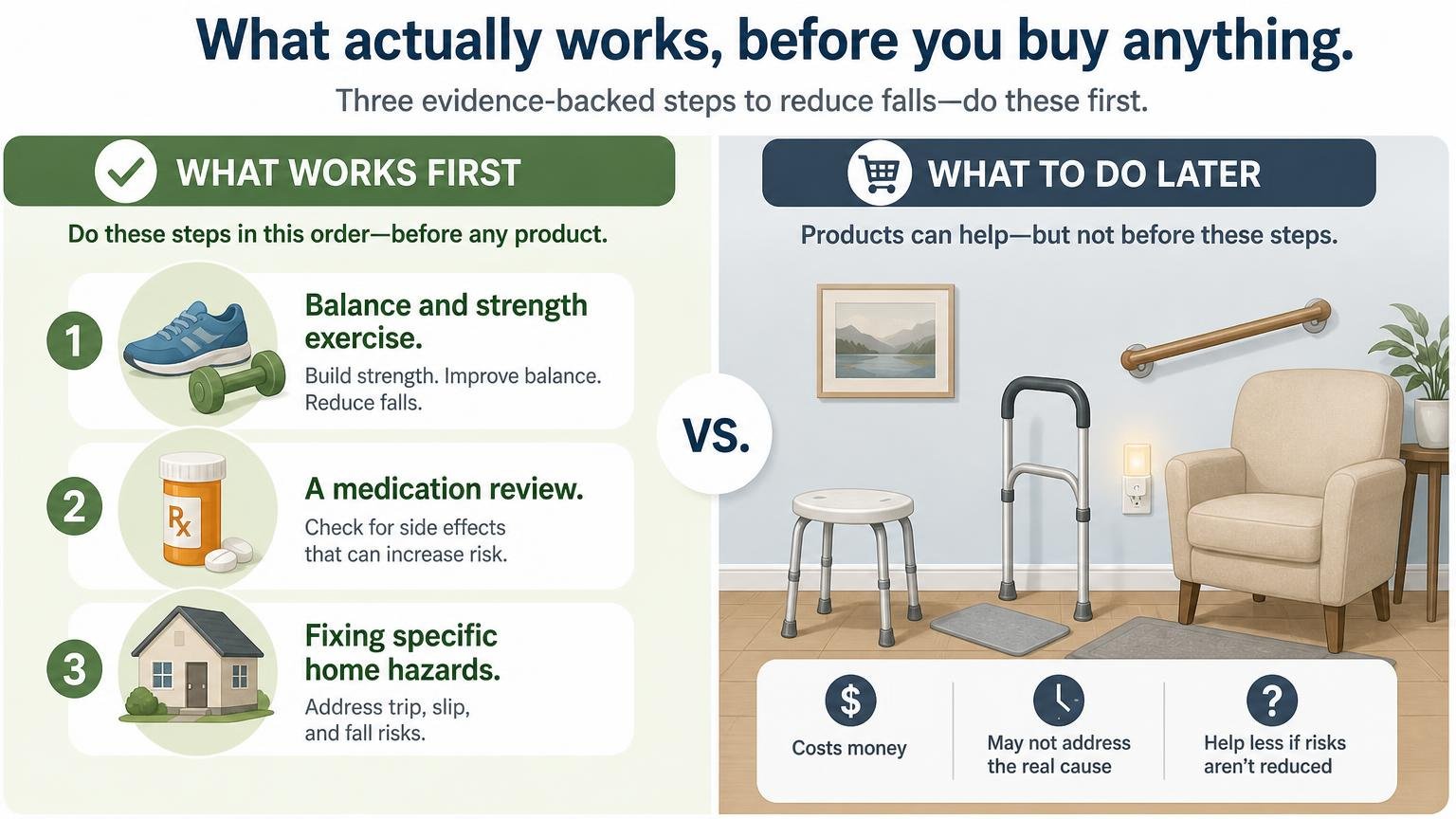
Three interventions have real evidence behind them, and they are worth doing in this order — before, not instead of, any product purchase:
- Balance and strength exercise. A major Cochrane review of exercise programs for community-dwelling older adults found they reduce the rate of falls by roughly a quarter. This is the single best-evidenced fall-prevention intervention that exists, ahead of any device or home modification. Our balance exercises for seniors guide has a safe starting routine.
- A medication review. Sedatives, some blood-pressure medications, and several other common drug classes are established fall-risk factors, and a doctor or pharmacist can often adjust a regimen without losing its benefit. This is free, and it is worth doing before spending on anything else.
- Fixing specific home hazards. Loose rugs, poor lighting, clutter on walking paths, and missing grab bars where someone actually transfers their weight — the checklist below.
Products help most with the third item. A grab bar does not substitute for the first two, and none of the three substitutes for a doctor’s evaluation if falls are new, frequent, or getting worse — see why is my dad falling more often for when a change in pattern needs medical attention rather than a home fix.
The 10-minute walkthrough
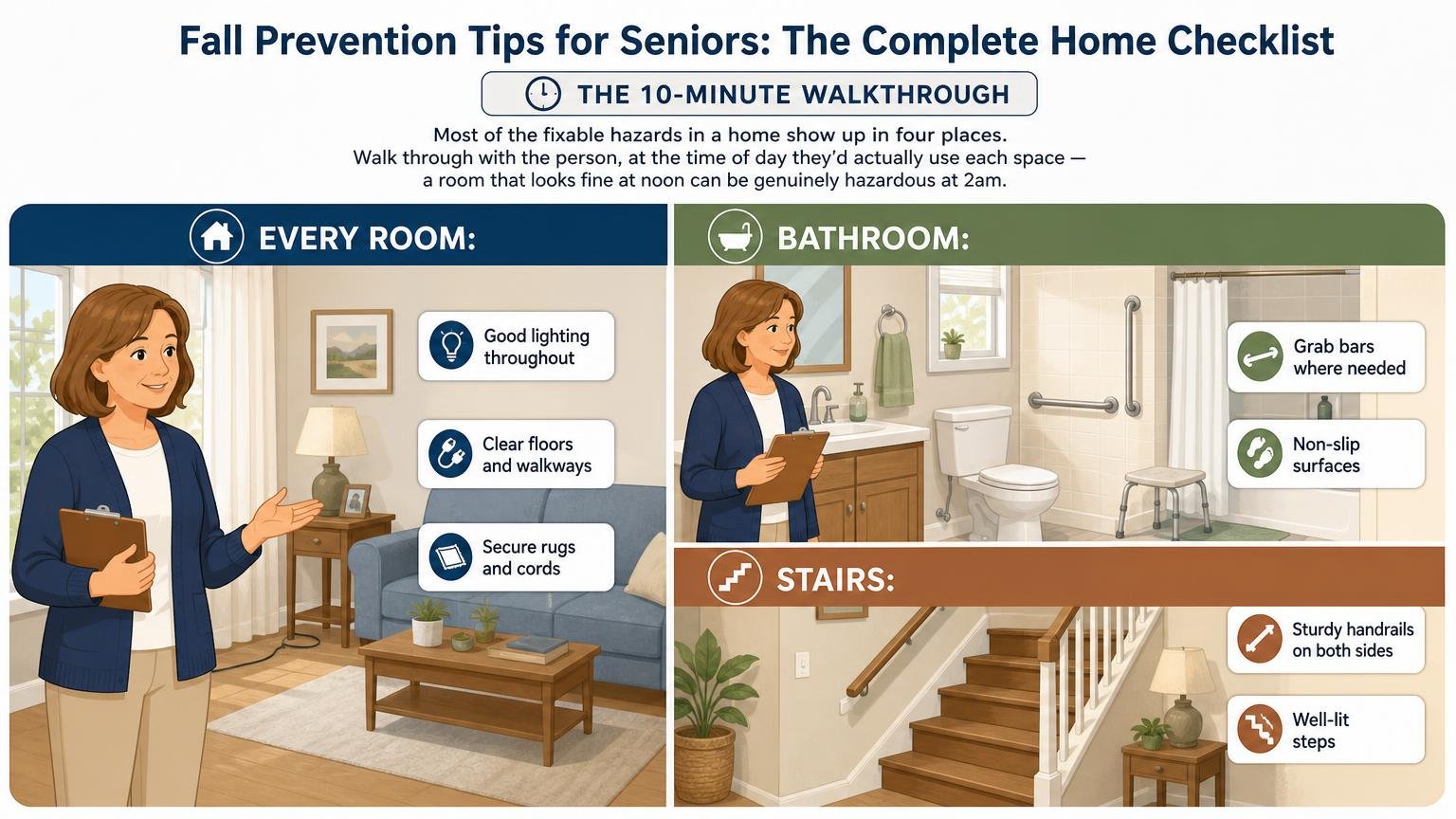
Most of the fixable hazards in a home show up in four places. Walk through with the person, at the time of day they’d actually use each space — a room that looks fine at noon can be genuinely hazardous at 2am.
- Every room: loose rugs removed or taped flat at every edge; walking paths clear of cords, boxes, and low furniture; light switches reachable from the doorway, not just across the room.
- Bathroom: a grab bar within reach of the toilet and inside the tub or shower, mounted into a stud, not just suction; a non-slip mat or textured surface in the tub; a night light so a 2am trip doesn’t mean fumbling for a switch in the dark.
- Stairs: secure handrails on both sides, not just one; good lighting at the top and bottom with a switch at each end; the top and bottom steps marked or edged if they’re hard to see.
- Bedroom: a clear, obstacle-free path to the bathroom; a lamp or light switch reachable from the bed without getting up in the dark; the bed at a height where feet reach the floor while seated.
That covers the bulk of what a professional home fall-risk assessment would flag. Our full bathroom fall prevention guide goes deeper on that one room specifically, including when a bigger remodel is worth it.
The free fix most lists skip: what’s on their feet
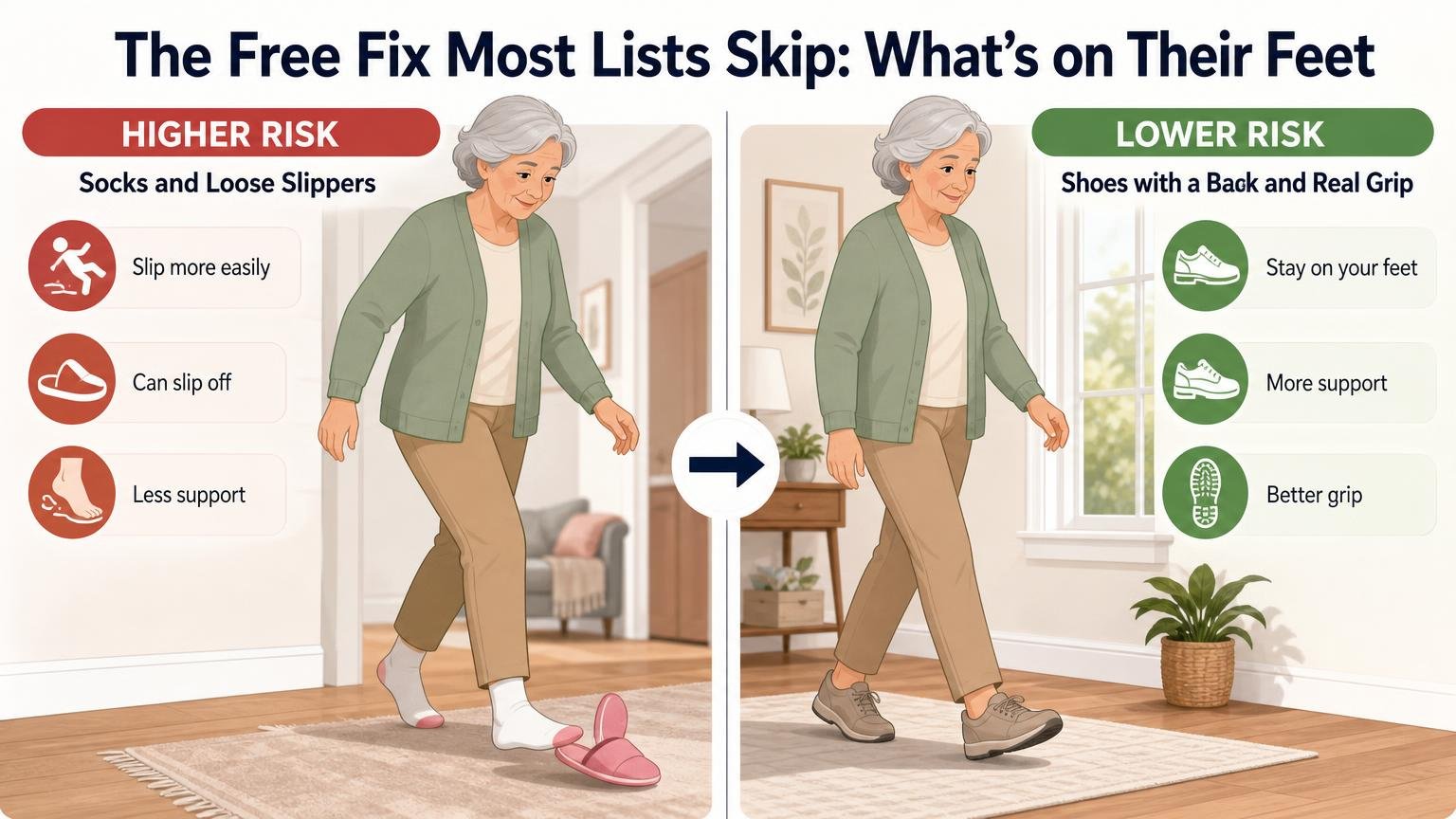
No single change matters more and costs less than this one: get the person out of socks and loose slippers and into shoes with a back and real grip, at least for time spent walking around the house. In the best available study of real falls in long-term care — direct video review, not a survey — slippers or sandals accounted for 43% of footwear-related falls and socks another 35%; ordinary shoes were involved in only 18%.
Buying dedicated indoor shoes is the second-best move, and worth doing — our best shoes for seniors to prevent falls review covers what to look for. But the free version of this fix (anything with a back and a sole, instead of socks or backless slippers) is the one to do today.
Products that address a specific hazard
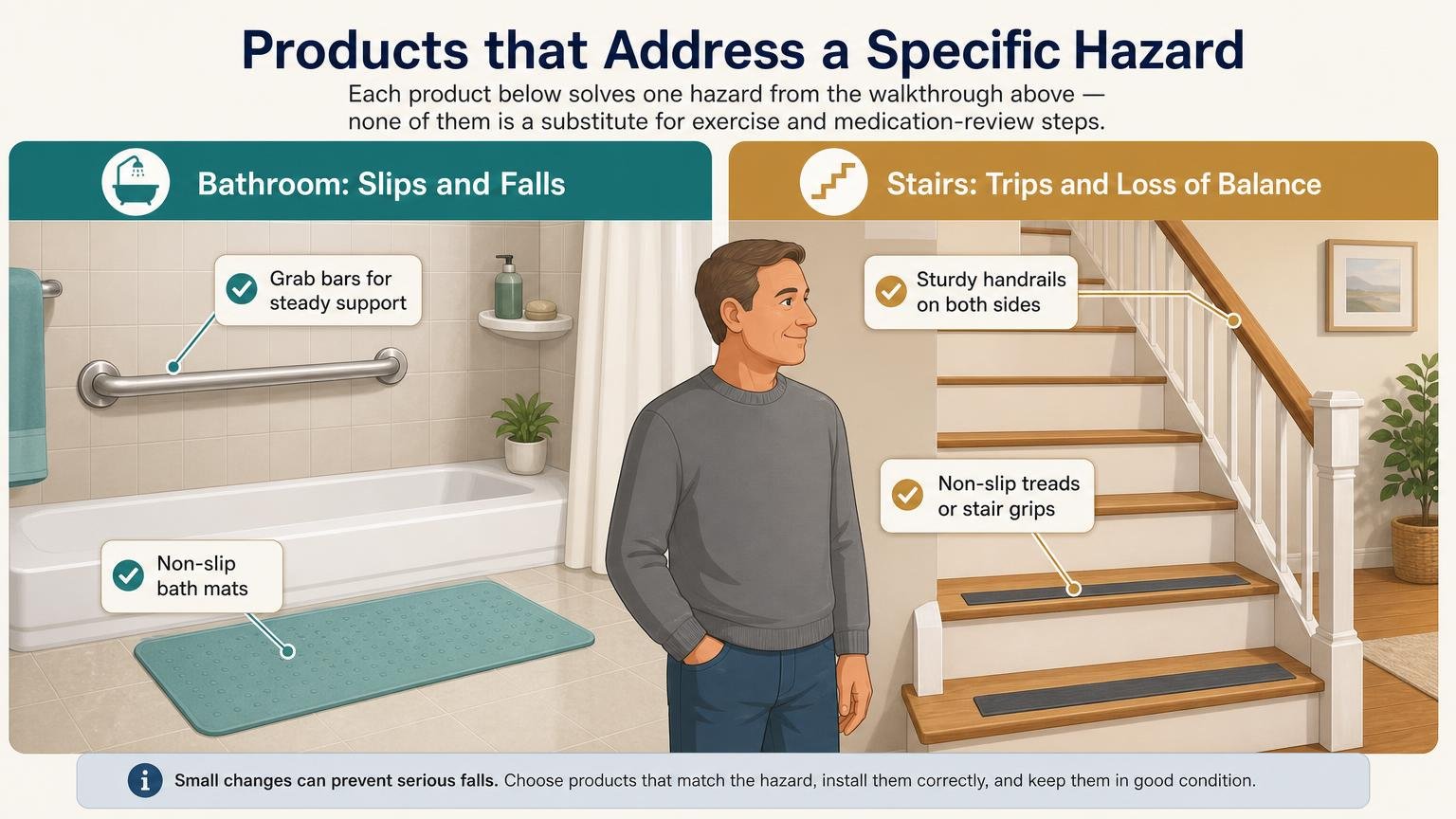
Every product below solves one hazard from the walkthrough above — none of them is a substitute for the exercise and medication-review steps.
- Grab bars wherever someone actually transfers weight — by the toilet, in the tub or shower. Our grab bar placement guide covers exactly where and how high; our best grab bars for seniors review compares permanent, weight-bearing options.
- Non-slip bath mats for the tub or shower floor — see best non-slip bath mats for seniors.
- Night lights or motion-activated lighting for the path between bed and bathroom — see best night lights for seniors.
- A cane, walker, or rollator, if balance or endurance has genuinely declined — the wrong aid, or resisting one for too long, is itself a fall risk. See best canes, best walkers, and best rollators for seniors.
- Bed rails, with real caution — they help some people get in and out of bed safely, but the wrong kind creates a genuine entrapment risk for someone confused at night. Read bed rail safety before buying, not after.
If a fall has already happened, or the pattern is changing
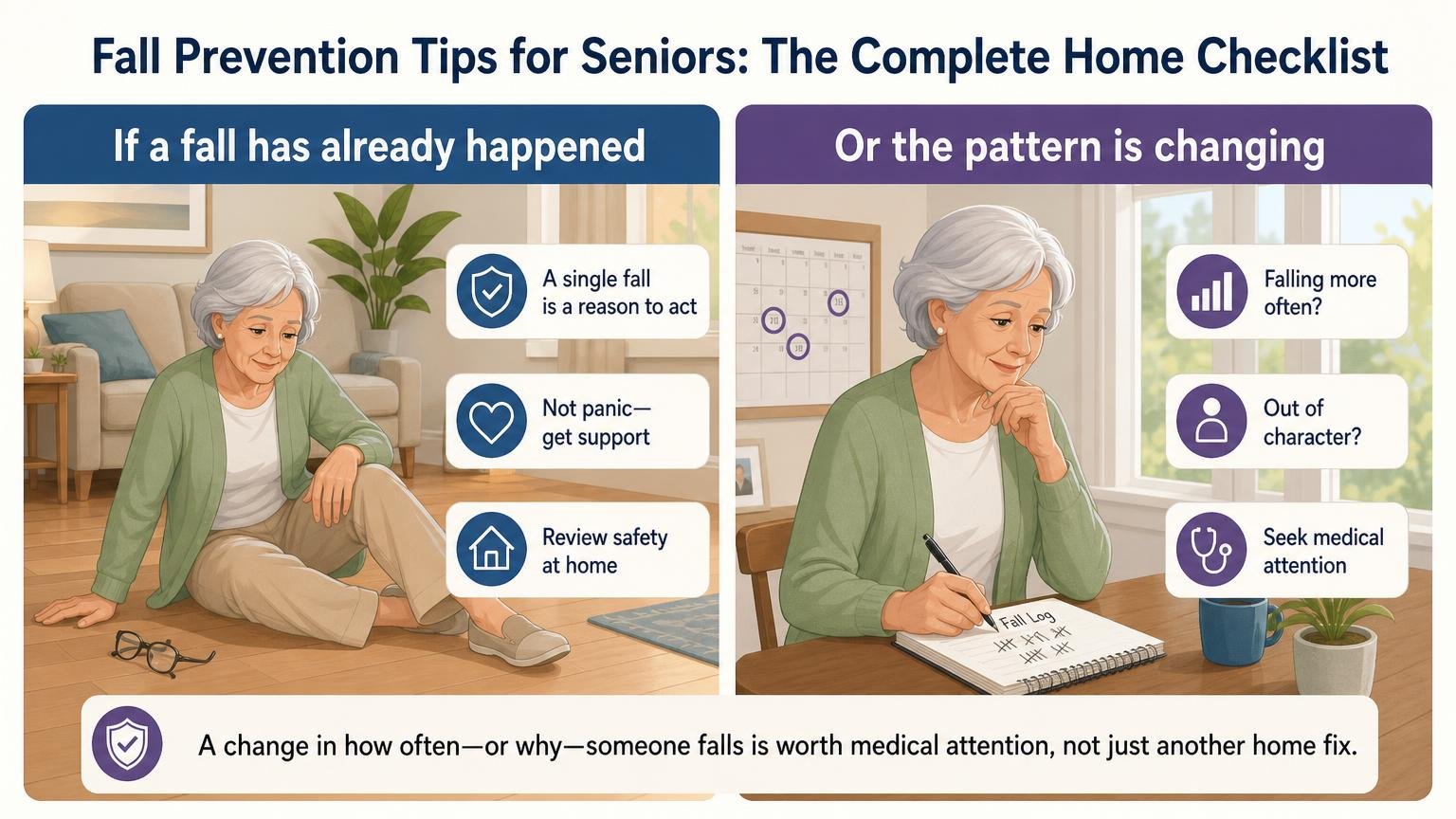
A single fall is a reason to act, not panic — but a change in how often someone is falling, or a fall that’s out of character, is worth medical attention rather than another home fix. Why is my dad falling more often walks through when a new medical issue, a medication change, or a UTI can be the real cause. If falls are becoming a repeated pattern, elderly parent keeps falling covers building an actual prevention plan, not just reacting to the last one.
And if the person has become afraid to move around after a fall, that fear is its own real problem — it leads people to restrict activity, which weakens the exact strength and balance that prevents the next fall. Fear of falling in the elderly covers breaking that cycle.
The rest of this site’s fall-prevention guides, one line each
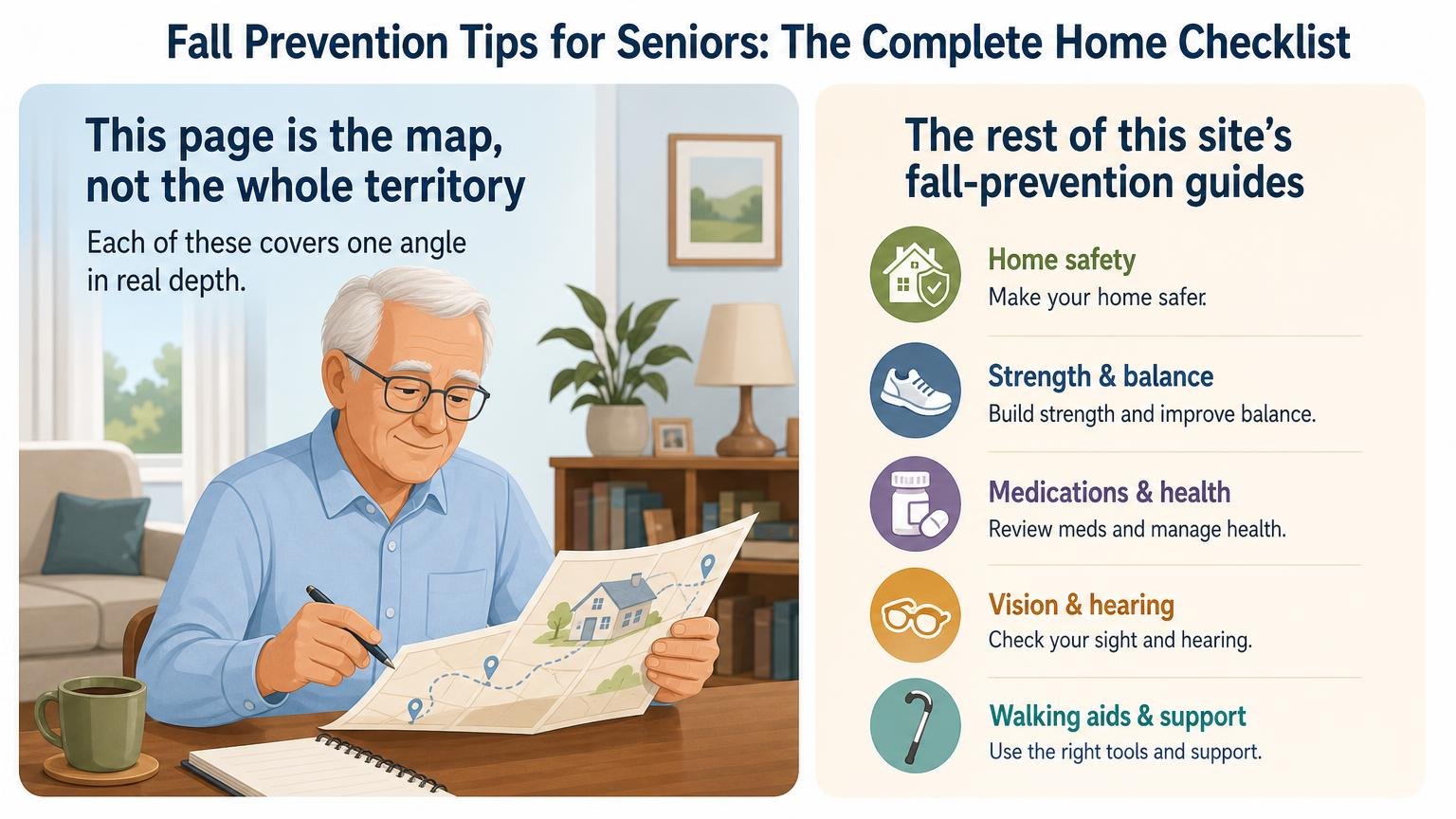
This page is the map, not the whole territory — each of these covers one angle in real depth:
- Bathroom fall prevention — a full room-by-room safety pass on the single highest-risk room.
- Nighttime falls in seniors — why 2am is uniquely dangerous, and the lighting fix that matters most.
- Mobility and fall prevention — how resisting a mobility aid for too long raises fall risk more than using one.
- Hearing loss and fall risk — the overlooked connection between hearing and balance.
- Why is my dad falling more often — when a change in pattern signals a medical cause.
- Elderly parent keeps falling — building a real prevention plan after repeated falls.
- Fear of falling in the elderly — breaking the fear-inactivity-weakness cycle.
Frequently asked questions
What are the most important fall prevention tips for seniors?
In order of evidence: balance and strength exercise (the single best-proven intervention), a medication review with a doctor or pharmacist since several common drugs raise fall risk, and fixing specific home hazards — loose rugs, poor lighting, clutter on walking paths, and grab bars where someone actually transfers their weight. Getting out of socks and loose slippers and into shoes with a back and grip is the single free fix that matters most day to day.
Is the bathroom really the most dangerous room for falls?
It’s one of the most dangerous, but not uniquely so. The best available data on ER-treated falls puts the bedroom (25%) and stairs (23%) narrowly ahead of the bathroom (23%) — a far more even split than the common "bathroom is the most dangerous room" advice suggests. A prevention plan that only addresses the bathroom is missing real risk elsewhere in the house.
What is the single most effective way to prevent falls?
Exercise that specifically targets balance and strength. A major Cochrane review of exercise programs found they reduce the rate of falls by roughly a quarter in community-dwelling older adults — a bigger effect than any single home modification or product. It works best combined with a medication review and fixing specific hazards, not as a replacement for them.
How often do falls happen in older adults?
Over 14 million older adults — about 1 in 4 — report falling every year in the US, and falling once roughly doubles the chance of falling again. About 1 in 10 falls causes an injury serious enough to restrict activity or need medical care, which is why prevention matters even after a single fall that seemed minor.
When should a fall be treated as a medical issue rather than a home safety issue?
When the pattern changes — a sudden increase in frequency, a fall that’s out of character, or one accompanied by dizziness, confusion, or an inability to get up afterward. These can signal a new medical issue, a medication side effect, or an infection rather than a hazard you can fix with a grab bar. See why is my dad falling more often for what a change in pattern can mean.
