
Balance Exercises for Seniors: A Safe Step-by-Step Routine

General exercise guidance, not medical advice. Anyone with recent falls, dizziness, or heart or joint conditions should check with their doctor or a physical therapist first.
Balance is trainable at any age — and better balance can help lower the risk of falls. This is a safe, progressive routine you or the person you care for can start today, no equipment required. ⬇ Download the free printable quick-reference card to keep by the chair.
Key takeaways
- A free printable quick-reference card covers every exercise and the weekly plan — download it here.
- Balance improves with practice at any age — and regular practice can help lower fall risk.
- Always exercise within reach of a sturdy support (a heavy chair or counter) and, ideally, with someone nearby at first.
- Progress in stages: start seated or holding on with two hands, then one hand, then a fingertip, then hands-free — only when each stage feels solid.
- A good routine mixes standing balance, strength (sit-to-stands), and walking drills — strength and balance work together.
- Pair the routine with the right footwear and, if used, correct aid technique — see walking with a cane and shoes that prevent falls.
Quick answer
What are the best balance exercises for seniors?
The most effective and safest starting set is: sit-to-stands (strength), standing marching and heel-to-toe standing (balance), and weight shifts side to side. Do them holding a sturdy support, a few minutes most days, and progress from two-hand support toward hands-free only as each move becomes steady. Always keep a chair or counter within reach, and stop if you feel dizzy or unsteady.
Get the free printable quick-reference card
Every exercise below, plus the weekly plan, is also available as a free printable PDF — a two-page card to keep by the chair or counter you exercise near.
Print it and follow along without needing a screen nearby. Download the printable PDF here.

Large-print edition included
An ElderlyDaily original
Want every movement drawn out, a full page each?
Chair Tai Chi — Illustrated Edition
- All eight movements, a full page each, drawn frame by frame
- A three-minute warm-up, plus five common mistakes and how to fix them
- A four-week plan with a practice tracker
One-off purchase. Instant download.
PDF · 24 pages · US Letter + A4

Sponsored Pick
REHAND Ergonomic All-Terrain Folding Cane
Seniors with arthritis or joint pain who want a cushioned, ergonomic grip with all-terrain stability
Check PriceWhy balance training works
Balance is not a fixed trait — it is a skill the brain and body maintain through use, and it fades when unused. The good news, shown repeatedly in research, is that it responds to training at any age: practising challenges the systems that keep us upright and they get better, reducing both the risk of falling and the fear of falling that shrinks a person’s world.
Balance also depends on strength, especially in the legs and core. That is why this routine pairs balance drills with simple strength moves — the two reinforce each other. If falls are already a concern, read alongside our guide on what to do when an elderly parent keeps falling.
Set up safely before you start
A balance routine should never itself cause a fall. Set the stage first:
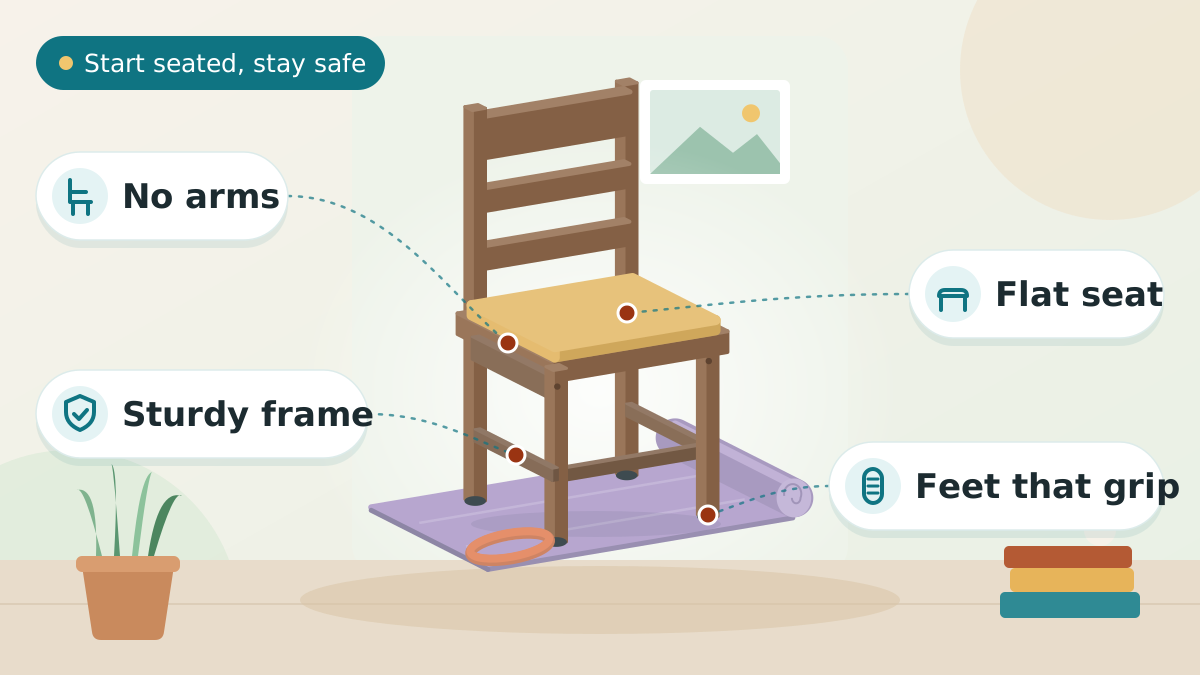
- Always have a sturdy support within arm’s reach — a heavy, stable chair (not one on wheels) or a kitchen counter.
- Have someone nearby for the first sessions, especially for standing exercises.
- Wear firm, flat, non-slip shoes or go barefoot on a non-slip floor — never socks on smooth flooring.
- Clear the area of rugs, cords, and clutter, and make sure the space is well lit.
- Stop immediately if you feel dizzy, lightheaded, short of breath, or any chest or joint pain — and check with a doctor before continuing.
Safety first
If the person has had a recent fall, new dizziness, or a heart or inner-ear condition, get clearance from their doctor or a physical therapist before starting. This routine is general guidance, not a personalized prescription.
Warm up: seated exercises
Begin seated to warm the muscles and joints and to build confidence. Sit tall in a sturdy chair, feet flat.
- 1
Seated marching
Lift one knee, lower it, then the other — like marching in place while seated. Keep it smooth and controlled. Aim for 10–20 lifts per leg.
- 2
Ankle circles and pumps
Lift one foot slightly and circle the ankle each way, then point and flex. Loosens the ankles, which do much of the fine work of balance. 10 each way, each foot.
- 3
Seated leg extensions
Straighten one knee to lift the foot in front of you, hold a moment, lower slowly. Builds the thigh strength that standing balance relies on. 10 per leg.
The most valuable move: sit-to-stands
If you do only one exercise, make it this one. Standing up from a chair is the single most functional strength-and-balance movement there is — it is exactly the motion that fails people and causes falls, and practising it directly builds the capacity to do it safely. It is also the foundation for helping an elderly person stand up.
- 1
Set up
Sit toward the front of a sturdy chair, feet flat and slightly back under the knees. Arms crossed over the chest if able, or using the armrests for help at first.
- 2
Stand with control
Lean the chest slightly forward ("nose over toes"), push up through the heels to standing. Do not pull up on anything or fling yourself up.
- 3
Sit with control
Reach the hips back and lower slowly and quietly to the seat — no dropping the last few inches. The slow lowering builds as much strength as the rising.
- 4
Build up gradually
Start with 5 and rest; work toward 2–3 sets of 10 over the weeks. Use the armrests less as strength grows.
Good to know
Counting how many sit-to-stands someone can do in 30 seconds is a simple way to track progress over time.
Standing balance exercises
Now the core balance work. For every move below, stand behind or beside your sturdy support and hold on to begin. Progress from two hands, to one hand, to a fingertip, to hands-free — and only advance a stage when the current one feels genuinely steady.
- 1
Standing weight shifts
Feet hip-width apart, slowly shift your weight onto one foot, hold a few seconds, return to center, then the other side. Teaches controlled weight transfer — the basis of every step.
- 2
Standing marching
Lift one knee to a comfortable height, lower it, then the other. Slow and controlled. This adds a moving balance challenge on one leg at a time.
- 3
Heel-to-toe stand (tandem stance)
Place one foot directly in front of the other, heel touching toe, and hold. This narrows your base and sharply challenges balance. Build up to 10–30 seconds, then switch which foot leads.
- 4
Single-leg stand
The advanced move: lift one foot slightly off the floor and balance on the other, holding your support as needed. Start with a few seconds and build up. Always keep the support within reach.
- 5
Heel raises and toe raises
Rise onto the balls of the feet, lower; then rock back onto the heels lifting the toes. Strengthens the ankles and calves that stabilize every stride.
Walking balance drills
Because falls happen while moving, practising dynamic balance matters. Do these along a clear wall or counter you can touch:
- Heel-to-toe walking: walk in a straight line placing the heel of one foot directly in front of the toes of the other, like walking a tightrope. Go slowly; touch the wall as needed.
- Walking with head turns: walk slowly and turn your head left and right on cue — this trains the balance system to cope with the head movements of real life.
- Side-stepping: step sideways along the counter, leading with one foot then bringing the other to meet it. Strengthens the hip muscles that catch a sideways loss of balance.
If a mobility aid is used, these drills complement good aid technique rather than replace it — see walking with a cane or, for choosing an aid, walker vs cane.
A simple weekly plan
Consistency beats intensity. A realistic target is a short session most days rather than a long one occasionally.
| Day | Focus | Roughly |
|---|---|---|
| Mon / Wed / Fri | Seated warm-up + sit-to-stands + standing balance | 10–15 min |
| Tue / Thu | Seated warm-up + walking drills | 10 min |
| Sat | Gentle full routine at an easy pace | 10–15 min |
| Sun | Rest, or a short easy walk | — |
Good to know
Tie the routine to an existing habit — right after breakfast, or during a favourite TV programme — to make it stick. For more on building safe activity into a caregiver’s day, see helping seniors exercise safely.
Progressing safely and knowing when to get help
Advance by making a move slightly harder only once the current version feels steady — hold a little longer, reduce hand support, or narrow the stance. Never rush to hands-free; the support is what keeps training safe.
Some signs mean it is time to involve a professional rather than push on alone:
- Recent falls, or a growing fear that limits moving around the home
- Dizziness, lightheadedness, or a sense of the room spinning
- Balance that is clearly worsening despite regular practice
- Any new weakness on one side, or after a hospital stay (see weakness after hospitalization)
A physical therapist can assess balance precisely and build a tailored program — one of the highest-value appointments for anyone at risk of falling.
Frequently asked questions
Is the balance exercises printable free?
Yes — the printable quick-reference card is completely free, no sign-up required. It covers the seated warm-up, sit-to-stands, standing balance moves, walking drills, and the weekly plan from this guide, laid out as a two-page card to print and keep handy.
Can balance really improve in older age?
Yes. Balance is a trainable skill at any age, and research shows that regular practice can improve steadiness and reduce falls in older adults. The key is consistency — a few minutes most days — done safely within reach of support.
How often should seniors do balance exercises?
Aim for short sessions most days of the week rather than one long session occasionally. Even 10–15 minutes several times a week can help improve balance. The weekly plan above is a realistic starting structure.
What is the single best balance exercise for seniors?
The sit-to-stand. It builds the exact leg strength and control that standing up safely requires — the motion that most often fails and causes falls — while also training balance. Heel-to-toe standing is the best pure-balance move to pair with it.
Are balance exercises safe to do alone?
Seated exercises generally are. For standing exercises, especially early on, have someone nearby and always keep a sturdy support within arm’s reach. Anyone with recent falls, dizziness, or heart or inner-ear issues should get medical clearance first.
How long until balance improves?
Many people notice steadier movement and more confidence within a few weeks of regular practice, with continued gains over months. Tracking something simple — like 30-second sit-to-stand counts or heel-to-toe hold time — shows the progress.
Should someone who uses a cane or walker still do balance exercises?
Absolutely — the exercises complement the aid and help the person stay as strong and steady as possible. Do standing drills holding your aid or a support, and pair them with correct aid technique from walking with a cane.
