
Why Is My Dad Falling More Often?

Educational guidance, not medical advice. A sudden increase in falls warrants prompt medical review; a fall with injury or new symptoms may be urgent.
A sudden increase in falls is not just "getting older" — it means something has changed. Finding that change can help reduce the risk of the next fall.
Key takeaways
- A sudden increase in falls means something has changed — it is a signal to investigate, not to accept.
- Common triggers: a new illness or infection, medication changes, worsening strength, balance, vision, or hearing, and blood-pressure drops on standing.
- A UTI or other acute illness can cause a sudden burst of falls, often with confusion — check for it.
- Some situations are urgent — a fall with a head injury (especially on blood thinners), a suspected fracture, or falls with new weakness or confusion.
- The response is a medical review to find the change, plus layered fall prevention.
Quick answer
Why is my elderly dad falling more often all of a sudden?
A sudden increase in falls signals a change worth finding. Common causes include a new illness or infection (a UTI can cause a burst of falls, often with confusion), new or changed medications (dizziness, drowsiness, blood-pressure drops), worsening strength, balance, vision, or hearing, and blood pressure that falls on standing. Arrange a prompt medical review to identify the change, and layer on fall prevention. A fall with a head injury or new weakness is urgent.
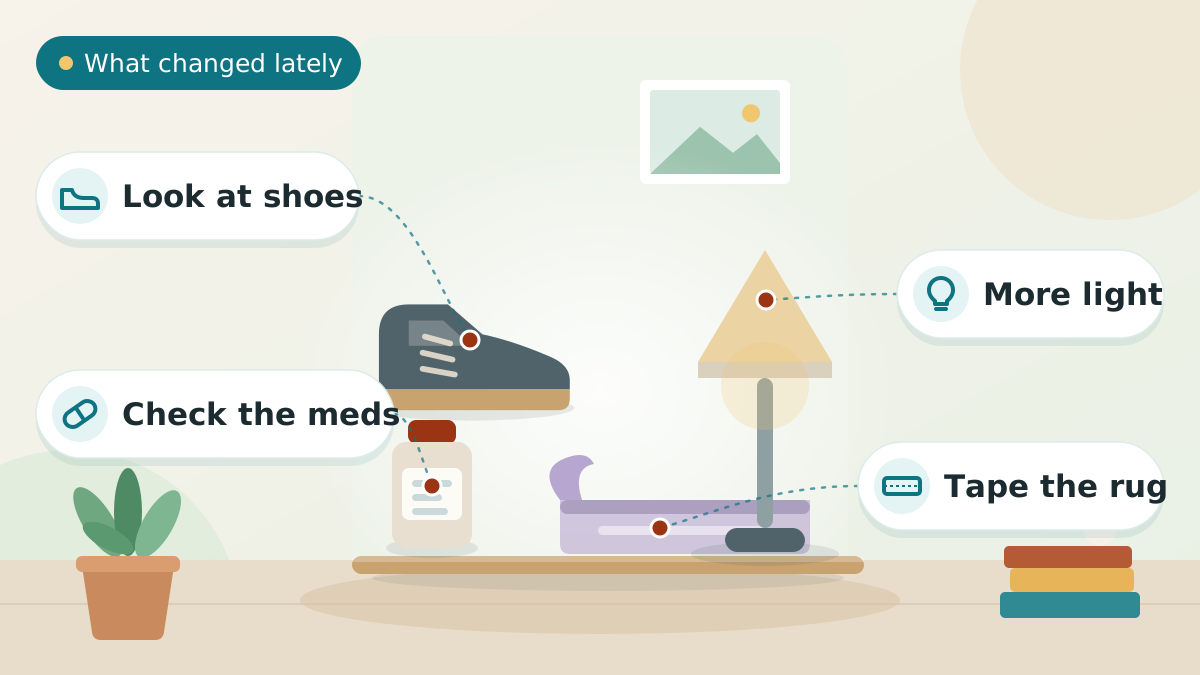
An increase in falls means something changed
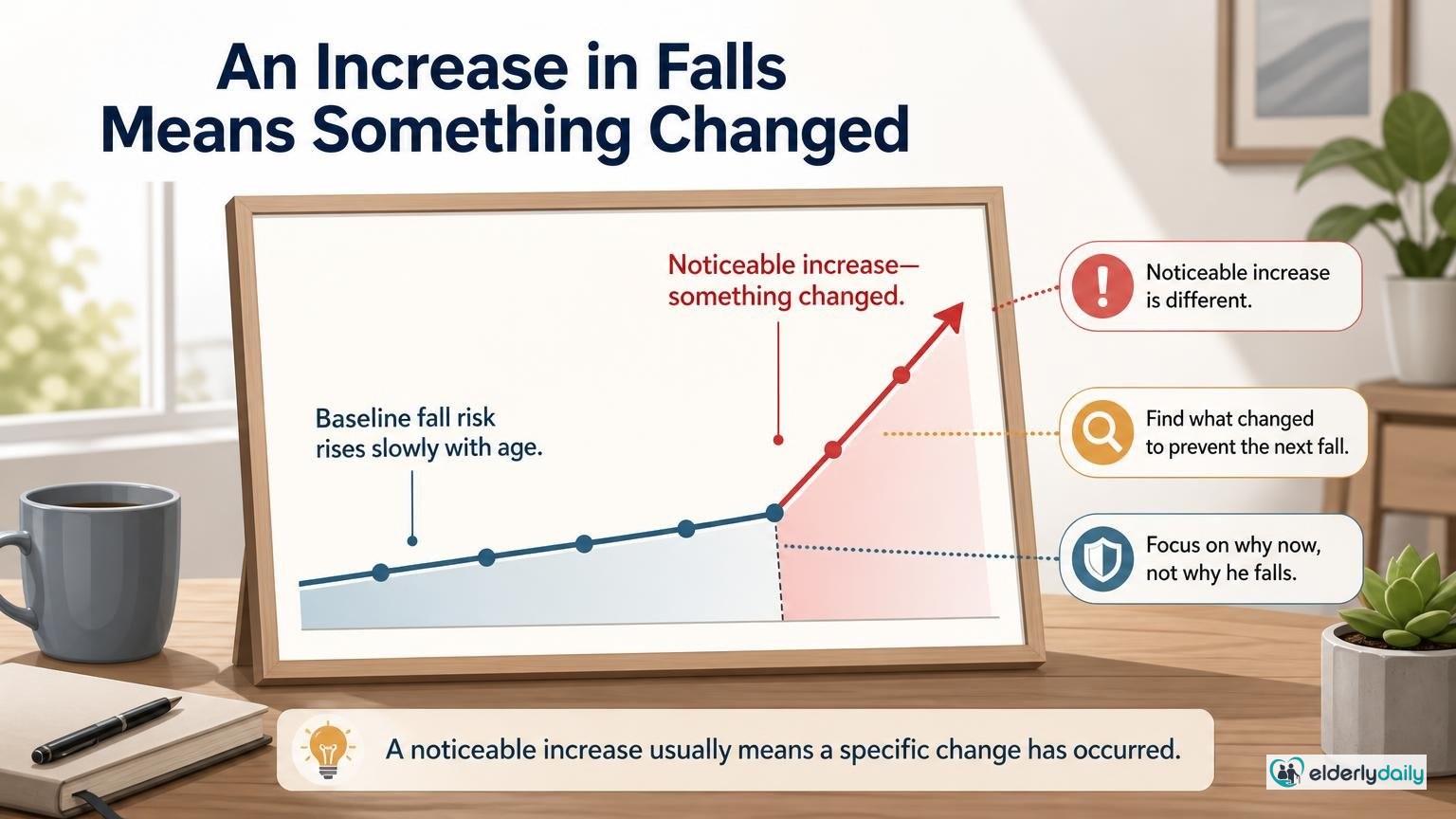
A person’s baseline fall risk rises gradually with age, but a noticeable increase — several falls where there were few, or a new pattern of stumbling — is different. It usually means a specific change has occurred, and identifying that change is the most powerful way to prevent the next fall.
This guide focuses on that "why now?" question — what tends to cause a sudden rise in falls. For the complete, layered approach to preventing falls and responding after one, pair it with our fuller guide, why an elderly parent keeps falling.
Sponsored Pick
LifeFone Medical Alert Service
One of the longer-established US monitored providers. Plans from $24.95/mo on annual billing.
See LifeFone’s PlansA new illness or acute problem
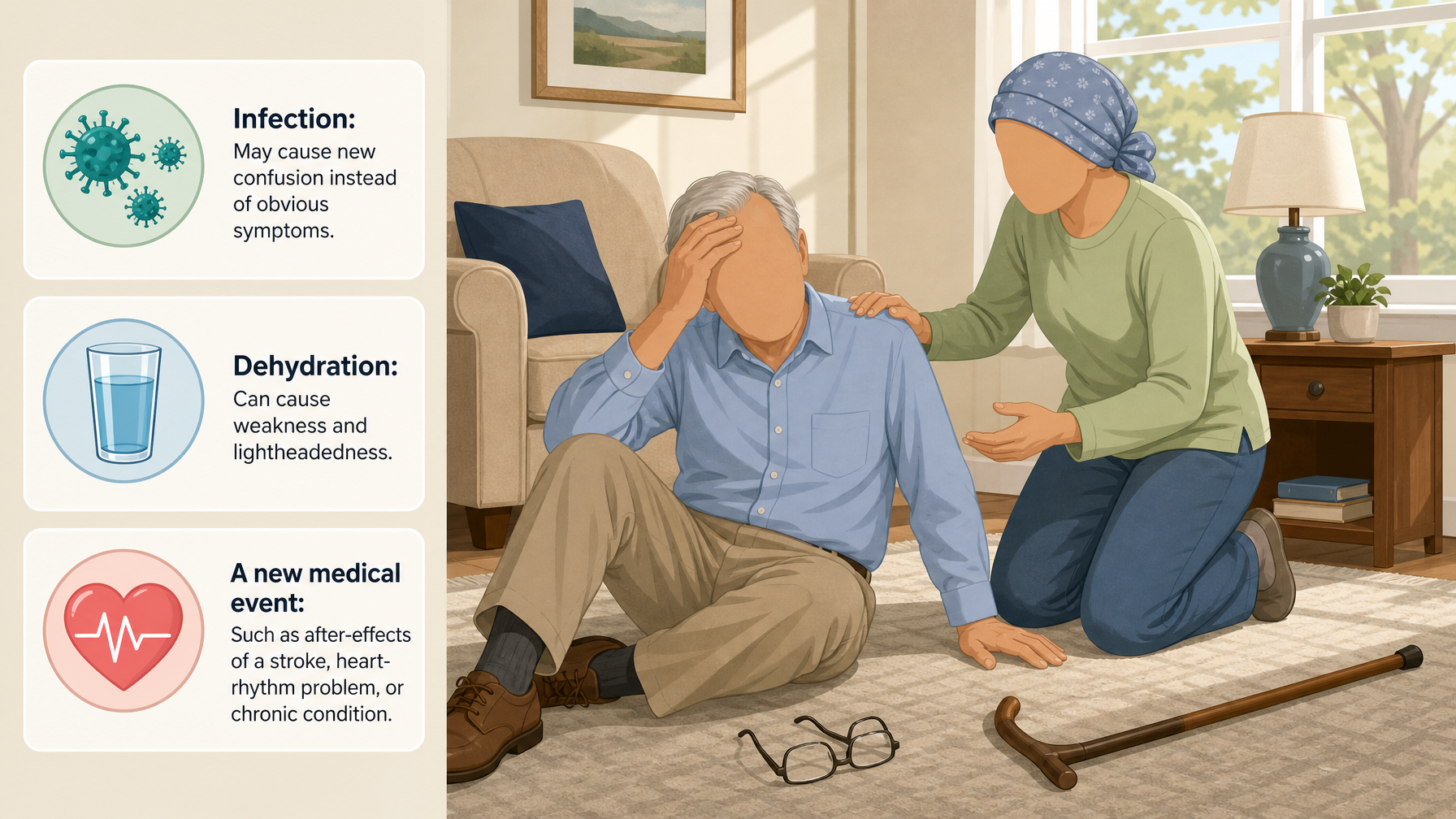
One of the most common reasons for a sudden burst of falls is a new, often hidden, acute illness that makes the person weaker or less steady:
- Infection — a UTI, chest infection, or other infection can suddenly reduce strength, alertness, and balance, frequently with new confusion rather than obvious symptoms.
- Dehydration, causing weakness and lightheadedness.
- A new medical event — the after-effects of a minor stroke, a heart-rhythm problem causing brief dizziness, or worsening of a chronic condition.
- Sudden weakness — if the increase in falls comes with new weakness, see why an elderly parent is suddenly so weak.
Because these are often treatable, a medical check that specifically looks for an acute cause is the priority when falls suddenly increase.
Watch out
A sudden cluster of falls, especially with new confusion, drowsiness, or feeling unwell, often signals an infection or another acute illness. Have it checked promptly — treating the cause frequently stops the falls.
Medications and blood pressure
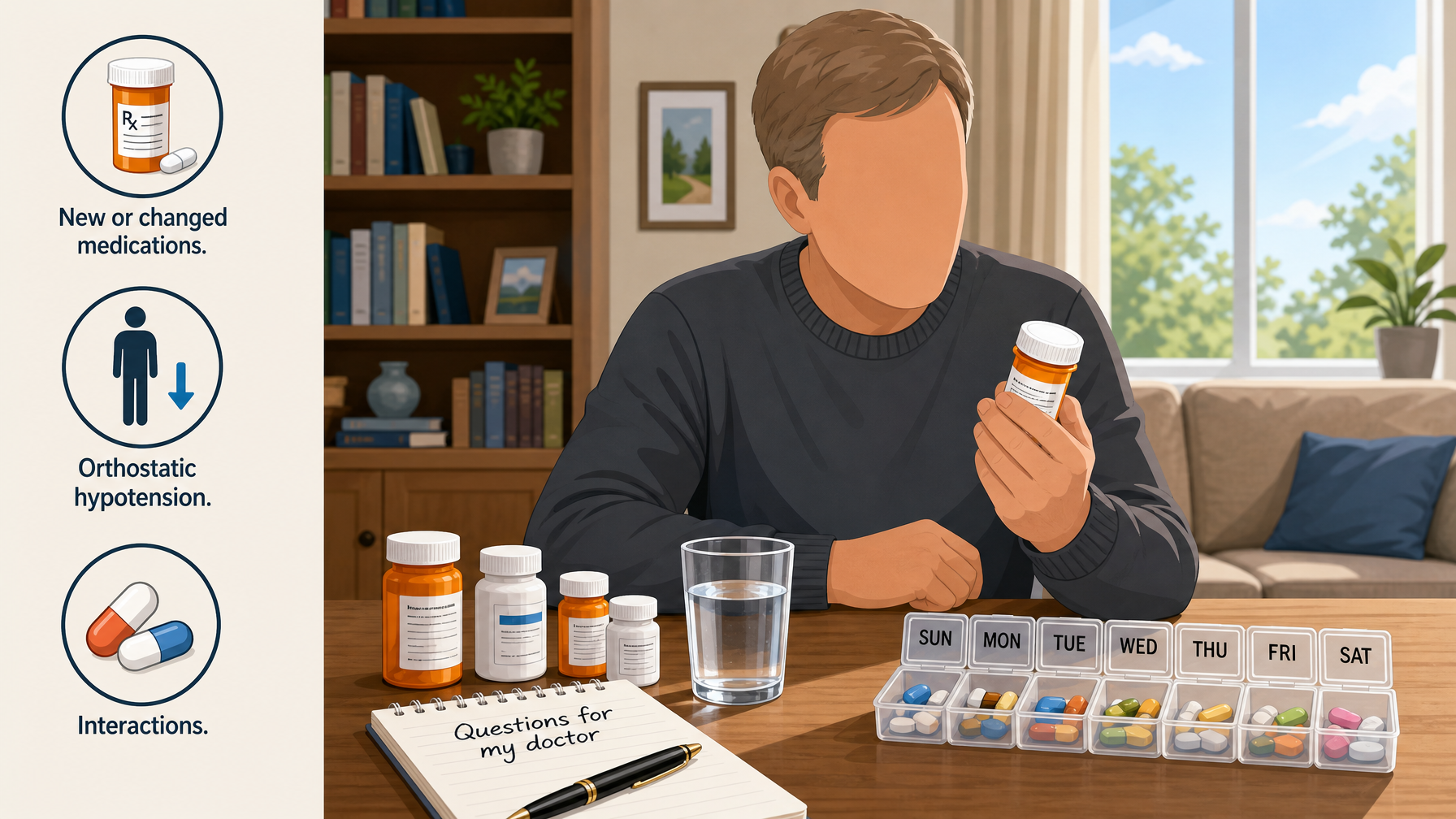
Medication changes are a frequent, very fixable cause of increased falls:
- New or changed medications — sedatives, some blood-pressure and heart drugs, certain antidepressants, and anything causing drowsiness or dizziness can tip someone into falling. Ask for a medication review focused on fall risk.
- Orthostatic hypotension — a drop in blood pressure on standing, causing the "stood up and went dizzy" fall. It is common, often medication-related, and can be tested and managed.
- Interactions — a new drug added to existing ones, or an over-the-counter product, can combine to cause dizziness.
Never stop or change a prescription yourself, but do raise the increase in falls as a specific reason to review.
Strength, balance, vision, and hearing
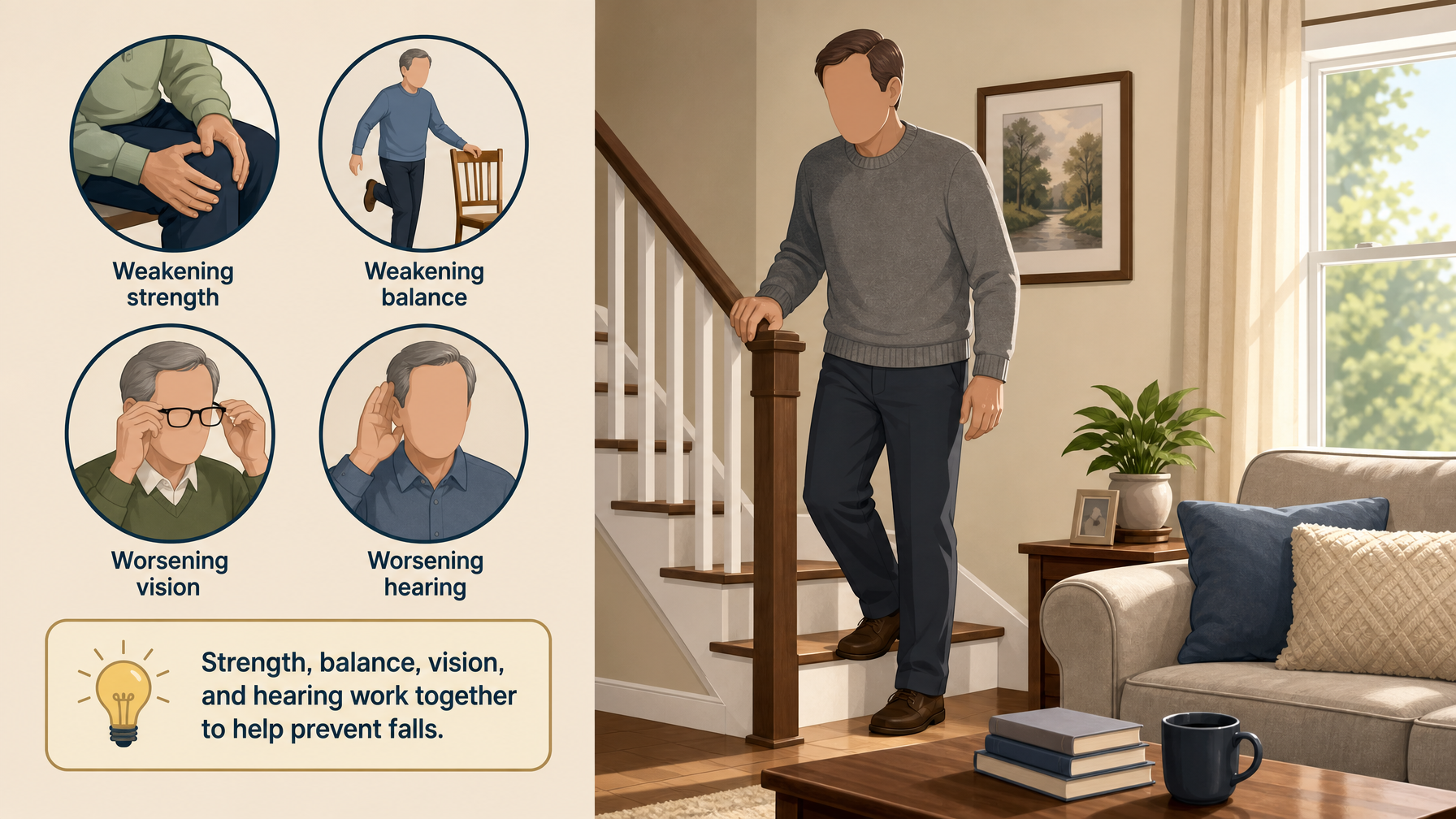
A decline in any of the systems that keep us upright can drive more falls:
- Weakening strength and balance — from illness, inactivity, or deconditioning; rebuild safely with balance exercises.
- Worsening vision — new or changed eyesight makes hazards and steps harder to see; see low vision aids.
- Worsening hearing — independently linked to falls; see hearing loss and fall risk.
- Foot problems or footwear — pain, numbness, or worn, unsupportive shoes; see shoes that prevent falls.
- Fear of falling, which changes gait and can paradoxically increase falls — see fear of falling.
When a fall is urgent
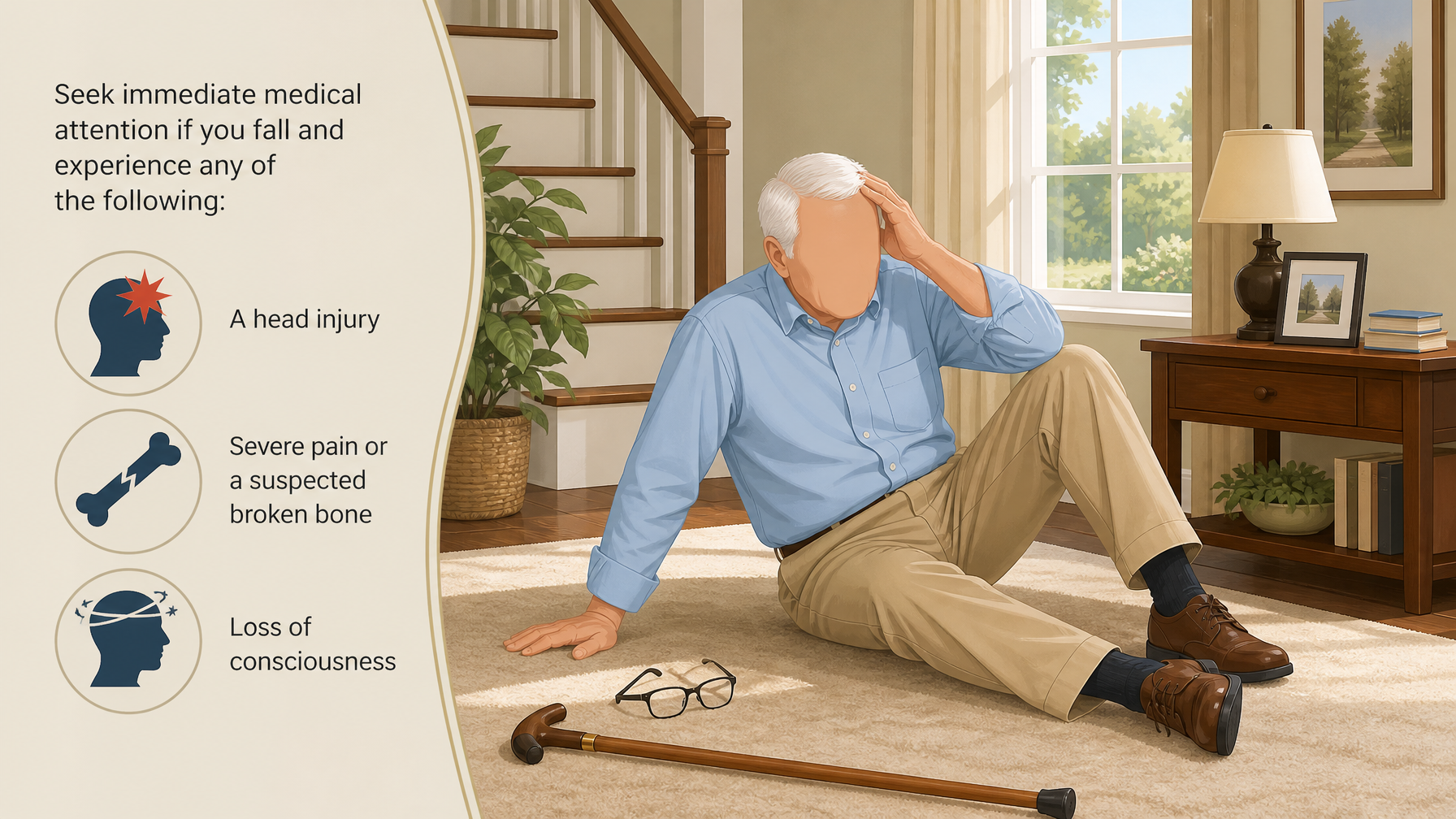
While finding the cause of increased falls is important, an individual fall can itself be an emergency. Seek urgent or emergency care if a fall involves:
- A head injury — especially important for anyone on blood thinners, where a head strike needs prompt review even if they seem fine.
- Severe pain or a suspected broken bone (a hip, wrist, or otherwise) — do not move them if a serious injury is suspected; call for help.
- Loss of consciousness, or a fall with new weakness, numbness, slurred speech, or severe confusion — possible stroke or serious cause; call emergency services.
- An inability to get up, or being found after a long time on the floor.
Our guide on what to do after a fall and how to help an elderly person stand up covers the safe response.
Safety first
A head strike on blood thinners, a suspected fracture, loss of consciousness, or a fall with stroke signs are emergencies. Do not move someone with a suspected serious injury — call for help.
What to do about increasing falls
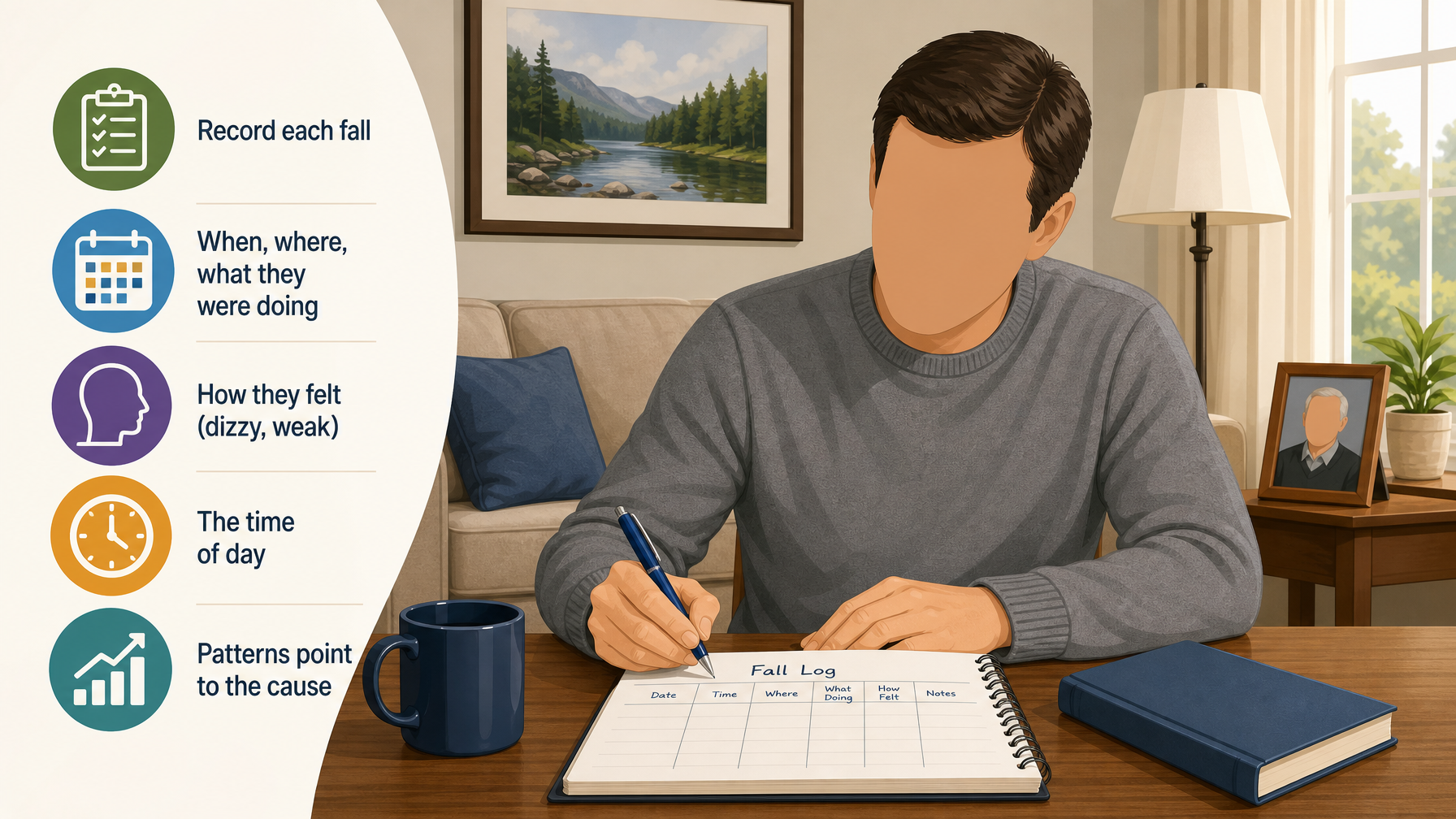
Turn the "why" into prevention:
- 1
Keep a fall diary
Record each fall — when, where, what they were doing, how they felt (dizzy, weak), and the time of day. Patterns (on standing, after medication, at night) point straight to the cause.
- 2
Get a prompt medical review
Ask the doctor to look for an acute cause (infection, dehydration), review medications and standing blood pressure, and assess strength, balance, vision, and hearing.
- 3
Layer on fall prevention
Combine the medical fixes with home safety, the right mobility aid, balance work, and a medical alert device — the full approach is in why an elderly parent keeps falling.
- 4
Act urgently on red flags
For a fall with head injury, suspected fracture, or new neurological symptoms, seek emergency care.
Frequently asked questions
Why is my elderly parent suddenly falling more often?
A sudden increase in falls signals a change worth finding. Common causes include a new illness or infection (a UTI can cause a burst of falls, often with confusion), new or changed medications causing dizziness or blood-pressure drops, worsening strength, balance, vision, or hearing, and orthostatic hypotension (blood pressure falling on standing). A prompt medical review to identify the change is the priority.
Can an infection cause an elderly person to fall more?
Yes. A urinary tract infection or other acute illness can suddenly reduce strength, alertness, and balance, causing a cluster of falls — often with new confusion rather than obvious symptoms. Because infection is common and treatable, checking for it is a priority when falls suddenly increase; treating it frequently stops the falls.
Can medications make my parent fall more often?
Yes — this is one of the most common and fixable causes. Sedatives, some blood-pressure and heart medications, certain antidepressants, and anything causing drowsiness or dizziness can increase falls, and risk rises with the number taken. A new drop in blood pressure on standing is often medication-related. Ask for a medication review focused on fall risk; never stop a prescription yourself.
When is a fall a medical emergency?
Seek emergency care for a fall involving a head injury (especially on blood thinners), severe pain or a suspected broken bone, loss of consciousness, or new weakness, numbness, slurred speech, or severe confusion. Also urgent if the person cannot get up or was found after a long time on the floor. Do not move someone with a suspected serious injury.
What should I do if my dad is falling more often?
Keep a fall diary (when, where, what he was doing, how he felt, time of day) to reveal patterns, get a prompt medical review to look for infection, medication effects, blood-pressure drops, and sensory or strength decline, and layer on fall prevention — home safety, the right mobility aid, balance work, and a medical alert device. Act urgently on any red-flag fall.
Is falling more just a normal part of aging?
Fall risk rises gradually with age, but a noticeable increase in falls is not something to accept as normal — it usually means a specific, often treatable change has occurred. Identifying that change (through a fall diary and medical review) is the most effective way to prevent the next fall.
Sources
- CDC. Facts About Falls — Older Adult Fall Prevention
- National Institute on Aging (NIH). The Dangers of Polypharmacy and the Case for Deprescribing in Older Adults
- Clinical Infectious Diseases (Norman, 2000). Fever in the Elderly
- CDC. Signs and Symptoms of Stroke
