
Why Does My Elderly Parent Keep Falling? Causes and What to Do

Educational guidance, not medical advice. Repeated falls warrant a prompt medical review — this guide helps you prepare for and act on it.
Repeated falls are never "just aging" — they have causes, and most are treatable or preventable. This guide helps you find the why, respond safely after a fall, and put the right prevention in place.
Key takeaways
- Repeated falls are a medical warning sign, not an inevitable part of aging — most causes can be treated or reduced.
- The usual culprits cluster into four groups: medical/health, medications, strength and balance, and home hazards — often several at once.
- A sudden change in falling (new confusion, weakness, or dizziness) can signal an acute problem like a UTI or medication effect — treat it as urgent.
- After a fall, check for injury before moving them, and never lift by pulling on arms — use the safe method below.
- Prevention works best in layers: medical review + strength/balance work + home safety + the right mobility aid.
Quick answer
Why does my elderly parent keep falling?
Repeated falls usually have more than one cause working together: an underlying health issue (blood pressure drops, vision or inner-ear problems, an infection), medication side effects (dizziness, drowsiness), declining leg strength and balance, and home hazards (rugs, poor lighting, no grab bars). Because a pattern of falls signals a real problem, the first step is a medical review — then layer on balance exercises, home safety, and the right mobility aid.
Falling is a signal, not a given
It is tempting to file repeated falls under "getting older," but that framing is both wrong and dangerous — it delays finding causes that are often fixable. A pattern of falls is one of the clearest signals in senior health that something has changed and needs attention.
The stakes are high: falls are the leading cause of injury in older adults, and a serious fall can start a downward spiral of fear, reduced activity, and further weakness. The encouraging flip side is that most fall risk is modifiable. This guide works through the causes so you can bring specifics — not just "she keeps falling" — to the doctor.
Watch out
A sudden increase in falls, especially with new confusion, weakness on one side, slurred speech, or a severe headache, can be a medical emergency (including stroke). Seek urgent care rather than waiting for a routine appointment.
Sponsored Pick
LifeFone Medical Alert Service
One of the longer-established US monitored providers. Plans from $24.95/mo on annual billing.
See LifeFone’s PlansCause 1: Medical and health issues
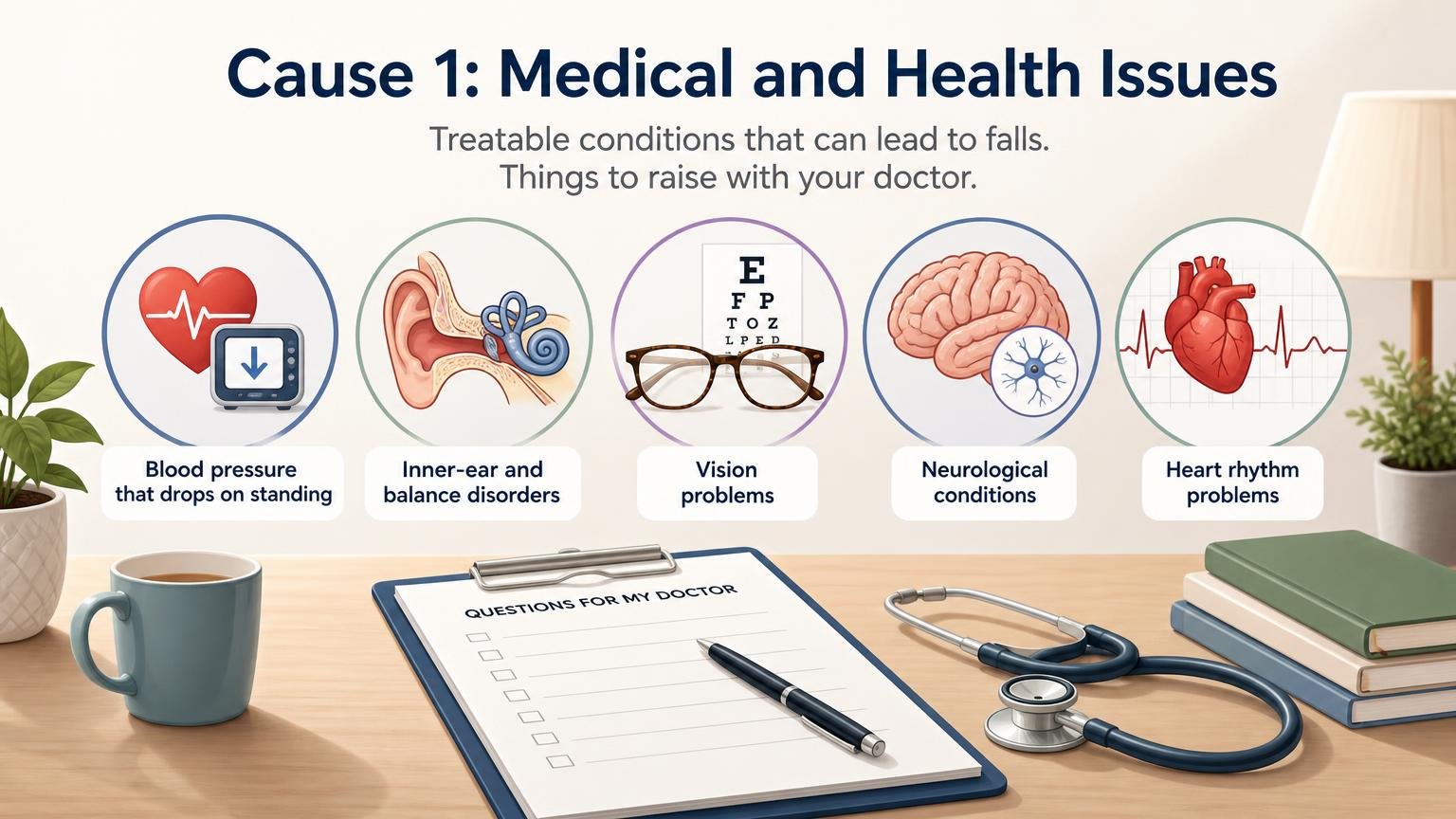
A wide range of treatable conditions makes people fall. Common ones to raise with the doctor:
- Blood pressure that drops on standing (orthostatic hypotension) — a very common cause of the "stood up and went dizzy" fall.
- Inner-ear and balance disorders (like BPPV vertigo), which are often highly treatable once identified.
- Vision problems — outdated glasses, cataracts, or poor contrast perception. Our low-vision aids guide covers support.
- Infections, especially urinary tract infections, which in seniors often show up as new confusion or unsteadiness rather than obvious symptoms — see UTI signs in seniors.
- Neurological conditions (Parkinson’s, neuropathy, the after-effects of a stroke) and heart rhythm problems that cause brief dizziness.
- Dehydration and low blood sugar, which cause weakness and lightheadedness and are easily overlooked.
Cause 2: Medications
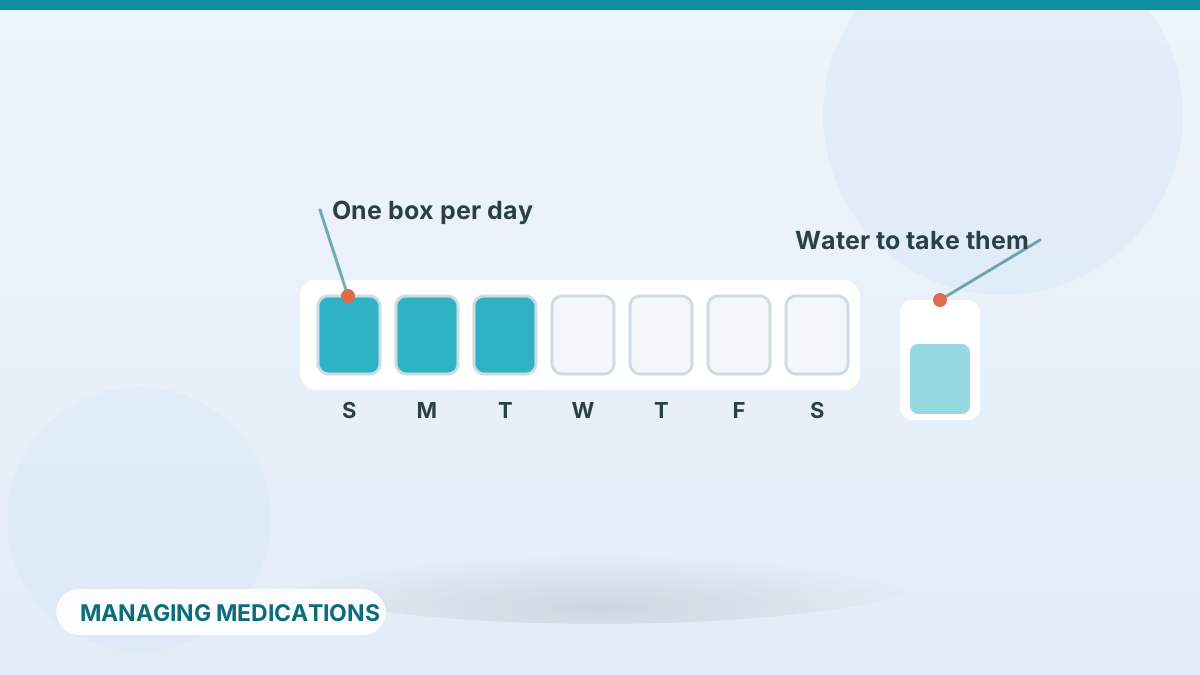
Medications are one of the most common and most overlooked causes of falls — and one of the most fixable. Many drugs cause dizziness, drowsiness, slowed reactions, or blood-pressure drops, and the risk climbs with the number of medications taken.
Ask the doctor or pharmacist for a medication review specifically focused on fall risk. Categories that commonly contribute include sedatives and sleep aids, some blood-pressure and heart medications, certain antidepressants, and anything that causes drowsiness. Never stop or change a prescription on your own — but do raise falls as a reason to review. Keeping medications organized also prevents doubling or missed doses; see medication management.
Good to know
Bring a complete list of everything they take — prescriptions, over-the-counter drugs, and supplements — to the review. Interactions between "harmless" OTC products and prescriptions are a frequent hidden cause of dizziness.
Cause 3: Weakness and balance decline
Leg strength and balance fade with inactivity, and each fall can make things worse by feeding a fear that leads to moving less — which weakens the body further. Breaking that cycle is central to prevention.
The remedy is targeted, safe exercise. Our balance exercises for seniors routine builds the strength and steadiness that can help prevent falls, and helping seniors exercise safely shows how to support it. A sudden, marked weakness — particularly after a hospital stay — deserves its own look; see weakness after hospitalization and why an elderly parent is suddenly so weak.
Cause 4: Home hazards
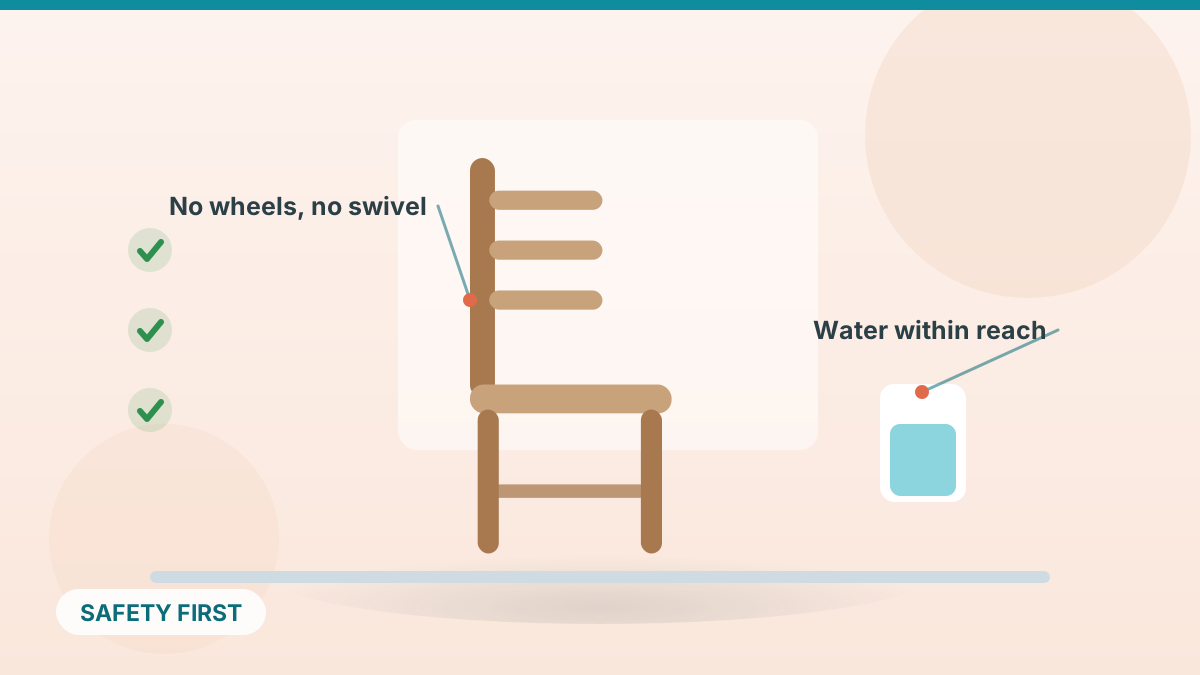
Most falls happen at home, among hazards that are cheap and quick to fix. Walk through the home looking for these:
- Loose rugs and clutter on walking paths — the classic trip hazards. Remove or secure them.
- Poor lighting, especially on stairs and the night-time route to the bathroom. Add bright bulbs and night lights.
- No grab bars in the bathroom, where many falls occur — see bathroom fall prevention and grab bar placement.
- Unsafe stairs — no handrail, or worn treads. A secure rail is one of the highest-value fixes.
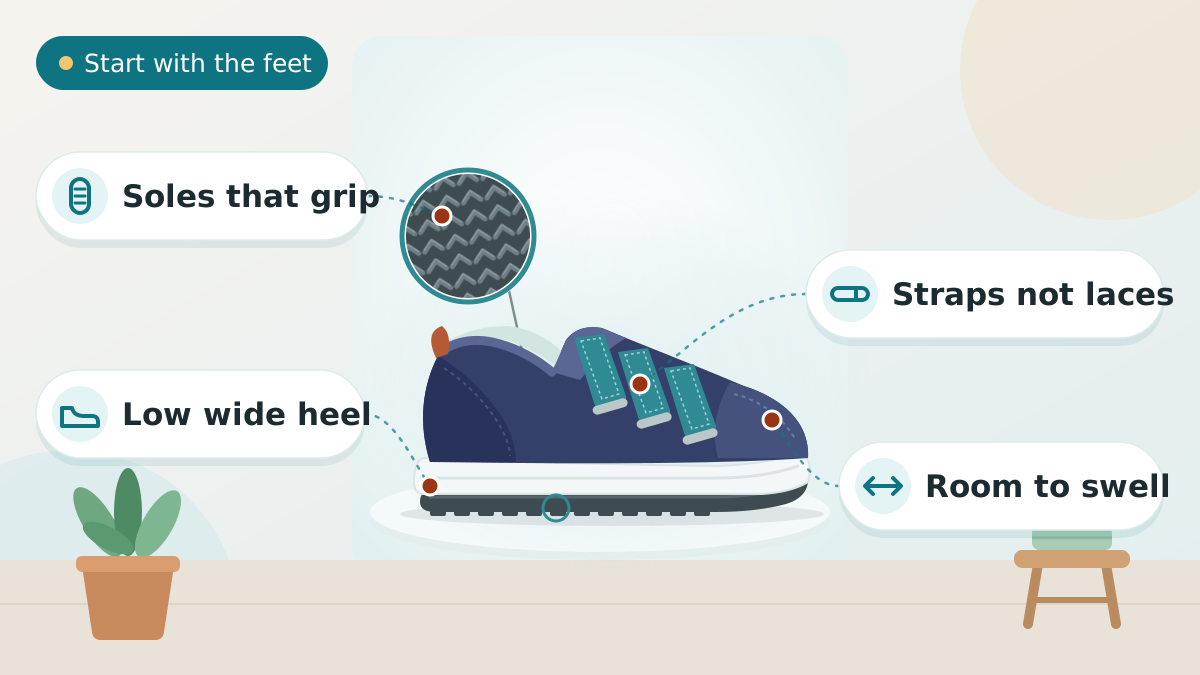
- Slippery floors and the wrong footwear — socks on smooth floors, or worn slippers. See shoes that prevent falls.
Our senior home safety guide and safe bedroom setup walk through the whole home room by room.
What to do right after a fall
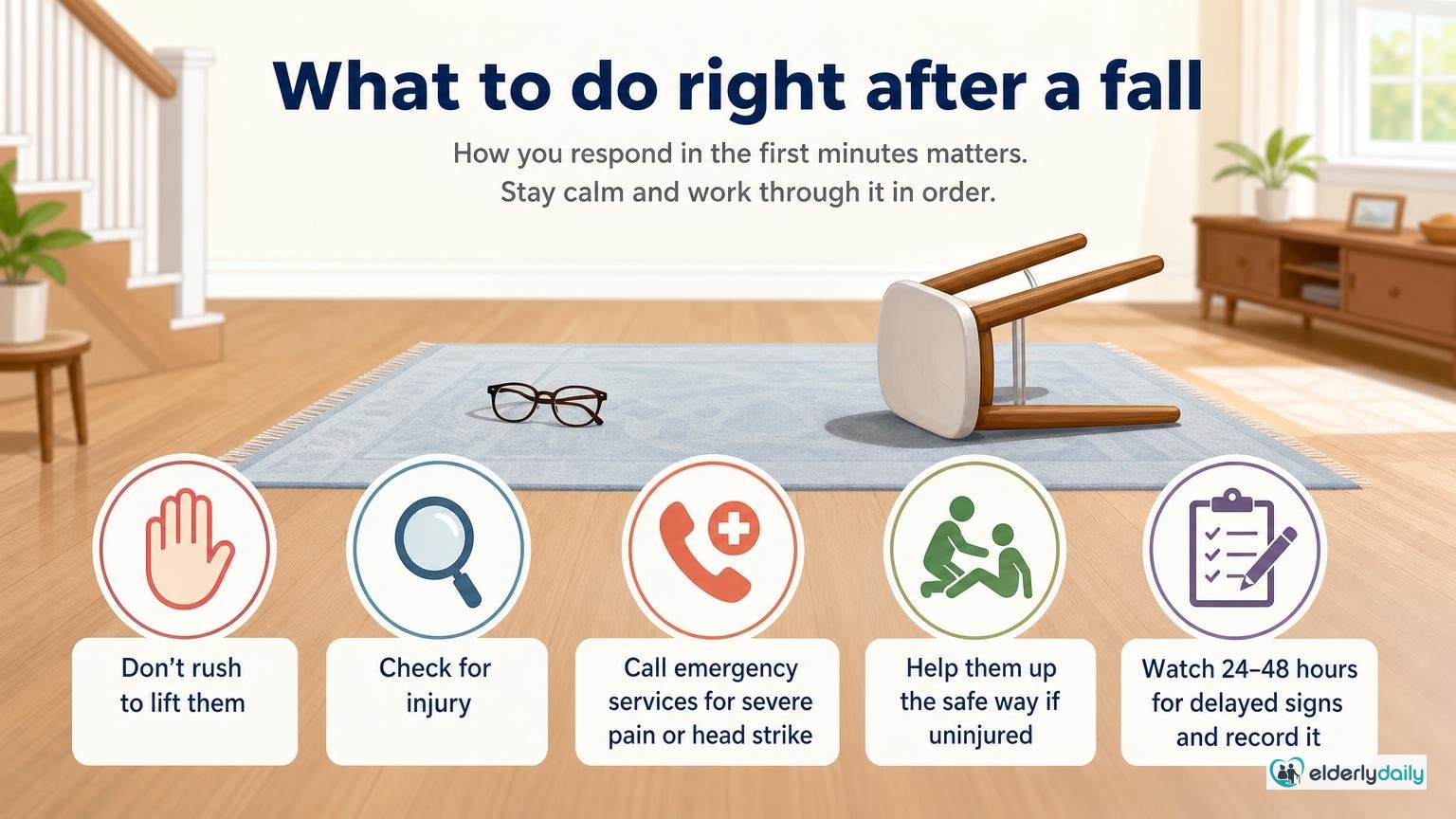
How you respond in the first minutes matters. Stay calm and work through it in order:
- 1
Do not rush to lift them
Kneel down, keep them still, and reassure them. Moving too fast can worsen an injury.
- 2
Check for injury
Ask about pain; look for obvious injury, especially to the head, hip, or wrist. If there is severe pain, a possible broken bone, a head strike, bleeding, or they cannot get up — call emergency services and do not move them.
- 3
If uninjured, help them up the safe way
Have them roll to their side, push up to hands and knees, crawl to a sturdy chair, place both hands on the seat, bring one foot forward, and rise to sit on the chair — with you steadying, never pulling on their arms. Our how to help an elderly person stand up guide details this.
- 4
Watch for delayed signs
For 24–48 hours after a fall, watch for new confusion, worsening pain, or a headache — especially important for anyone on blood thinners, where a head strike needs prompt medical review even if they seem fine.
- 5
Record it
Note the date, time, what they were doing, and how they felt. A fall diary reveals patterns (time of day, after medication, on standing) that help the doctor find the cause.
Safety first
A medical alert device or an ambient fall-detection sensor means a fall — especially when alone — brings help quickly. For someone who has fallen repeatedly, it is one of the most valuable safeguards. Some devices only send an alert to family; if nobody is guaranteed to be reachable when it matters, a monitored medical alert service closes that gap for a monthly fee.
Building a prevention plan that works
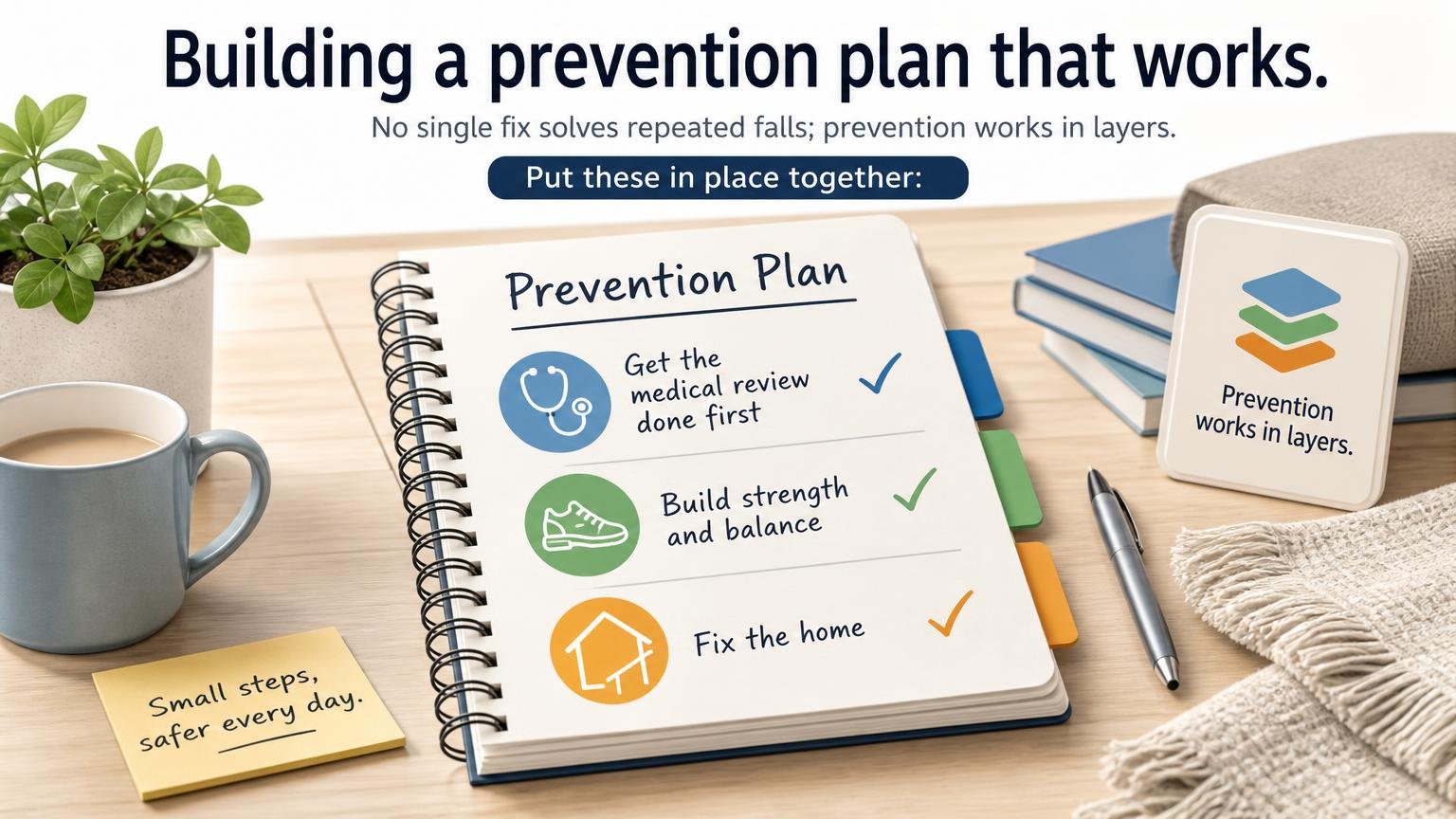
No single fix solves repeated falls; prevention works in layers. Put these in place together:
- Get the medical review done first — treat blood pressure, vision, infections, and review medications. This often removes the biggest, most invisible causes.
- Build strength and balance with a regular, safe routine — the balance exercises here are a starting point.
- Fix the home: lighting, rugs, bathroom grab bars, stair rails, and footwear.
- Get the right mobility aid, correctly fitted — see walker vs cane and how to walk with a cane.
- Address the fear of falling, which itself raises risk — our fear of falling guide helps.
If falls continue despite these steps, or if living alone is becoming unsafe, it may be time to weigh more support — see signs an elderly parent should not live alone.
Frequently asked questions
Is it normal for elderly people to fall a lot?
No. While fall risk rises with age, repeated falls are a warning sign of a specific, usually treatable cause — not something to accept as normal. A pattern of falls should prompt a medical review to find and address the reason.
What is the most common cause of falls in the elderly?
There is rarely a single cause; falls usually result from several factors together — a health issue (like blood-pressure drops or vision problems), medication side effects, declining strength and balance, and home hazards. Medications and orthostatic (standing) blood-pressure drops are especially common and often overlooked.
When should I worry about my parent falling?
Treat a sudden increase in falls — or a fall with new confusion, one-sided weakness, slurred speech, severe headache, or loss of consciousness — as a possible emergency. Any fall with significant pain, a suspected fracture, or a head strike (especially on blood thinners) needs prompt medical care.
How do I help my parent up after a fall without hurting them?
Do not lift by pulling their arms. Check for injury first; if serious, call for help and keep them still. If uninjured, guide them to roll onto their side, get to hands and knees, crawl to a sturdy chair, and rise onto it while you steady them. Full steps are in how to help an elderly person stand up.
Can medications cause an elderly person to fall?
Yes — this is one of the most common and fixable causes. Many drugs cause dizziness, drowsiness, or blood-pressure drops, and risk rises with the number taken. Ask for a medication review focused on fall risk, and never stop or change a prescription without medical advice.
What should I do to prevent my parent from falling again?
Layer the fixes: a medical and medication review, a regular balance-and-strength routine, home safety changes (lighting, rugs, grab bars, stair rails, footwear), and the right, correctly fitted mobility aid. A medical alert device adds a safety net if they are ever alone.
Sources
- CDC. Facts About Falls — Older Adult Fall Prevention
- Cochrane. Exercise for preventing falls in older people living in the community (2019)
- National Institute on Aging (NIH). The Dangers of Polypharmacy and the Case for Deprescribing in Older Adults
- CDC / NCIPC. Location of Older Adult Falls That Resulted in Emergency Department Visits
- CDC. Signs and Symptoms of Stroke
