
Nighttime Falls in Seniors: Why They Happen and How to Prevent Them

Educational guidance, not medical advice. Recurrent night falls or blood-pressure drops on standing should be reviewed with a doctor.
Night-time is prime time for falls: dark rooms, urgent bathroom trips, and a groggy, unsteady body. The causes are specific — and so are the fixes.
Key takeaways
- Night falls cluster around a few causes: darkness, urgent bathroom trips, blood-pressure drops on standing, grogginess, and medications.
- Lighting is the top fix — motion-activated night lights on the route to the bathroom.
- The night bathroom trip is the classic scenario — a clear lit path, or a bedside commode, can help prevent falls.
- Standing up slowly can help counter the blood-pressure drop (orthostatic hypotension) that causes dizziness on rising.
- Address medications, evening fluids, and getting-up support — and have a way to call for help if a fall happens.
Quick answer
How do I prevent an elderly person falling at night?
Target the specific night-time causes: light the route with motion-activated night lights and a reachable bedside lamp; make the bathroom trip safe with a clear path or a bedside commode; teach standing up slowly to counter blood-pressure drops; review medications and evening fluids with the doctor; provide support for getting up (a bed assist handle); and ensure a way to call for help (medical alert) in case a fall happens.
Why night-time is prime time for falls
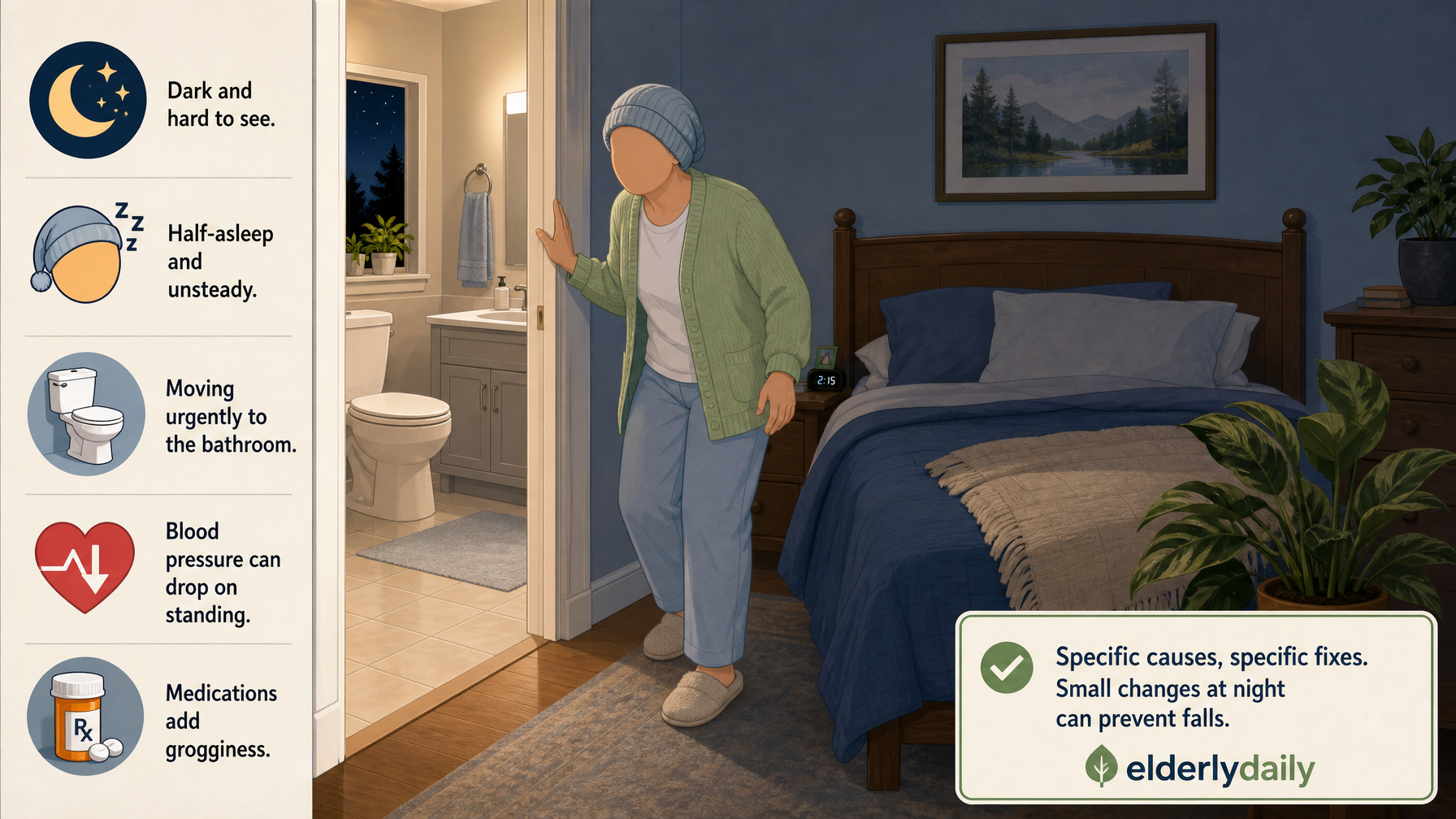
Falls at night are especially common, and it is no mystery why: several risk factors converge in the small hours. It is dark and hard to see; the person is often half-asleep and unsteady; they may be moving urgently to reach the bathroom; and standing up quickly from bed can cause a drop in blood pressure and a moment of dizziness. Add any medication effects and the picture is complete.
The encouraging flip side is that because the causes are so specific, the fixes are too. This guide works through each cause and its remedy. It pairs closely with safe bedroom setup and the broader fall prevention approach.

Sponsored Pick
Stander Wonder Pole Plus with Rotating Double Grab Bar
Renters, anyone who cannot drill, or spots with no convenient wall
Check PriceLighting: the single biggest fix
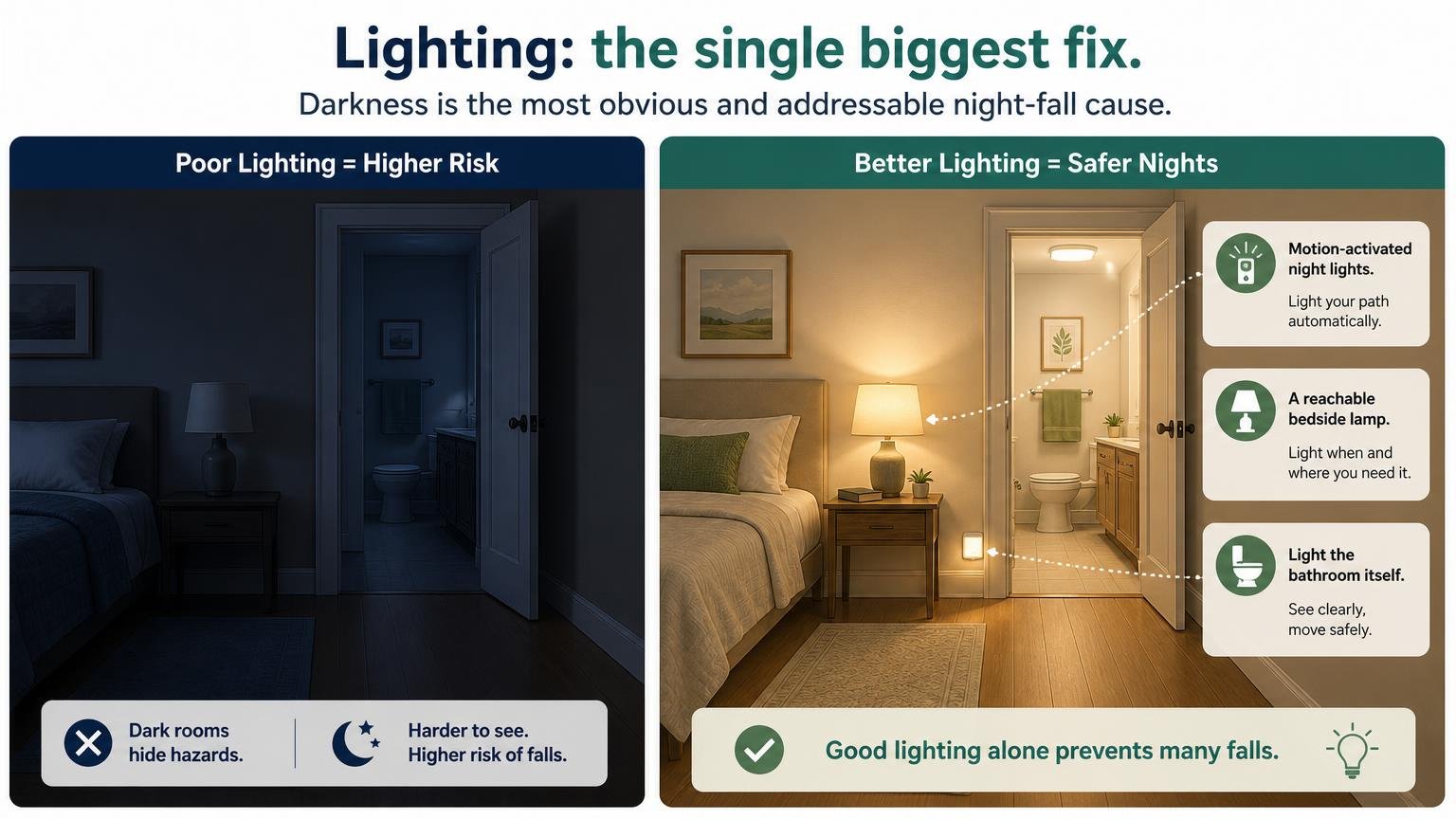
Darkness is the most obvious and addressable night-fall cause. Good lighting can help lower the risk of falls:
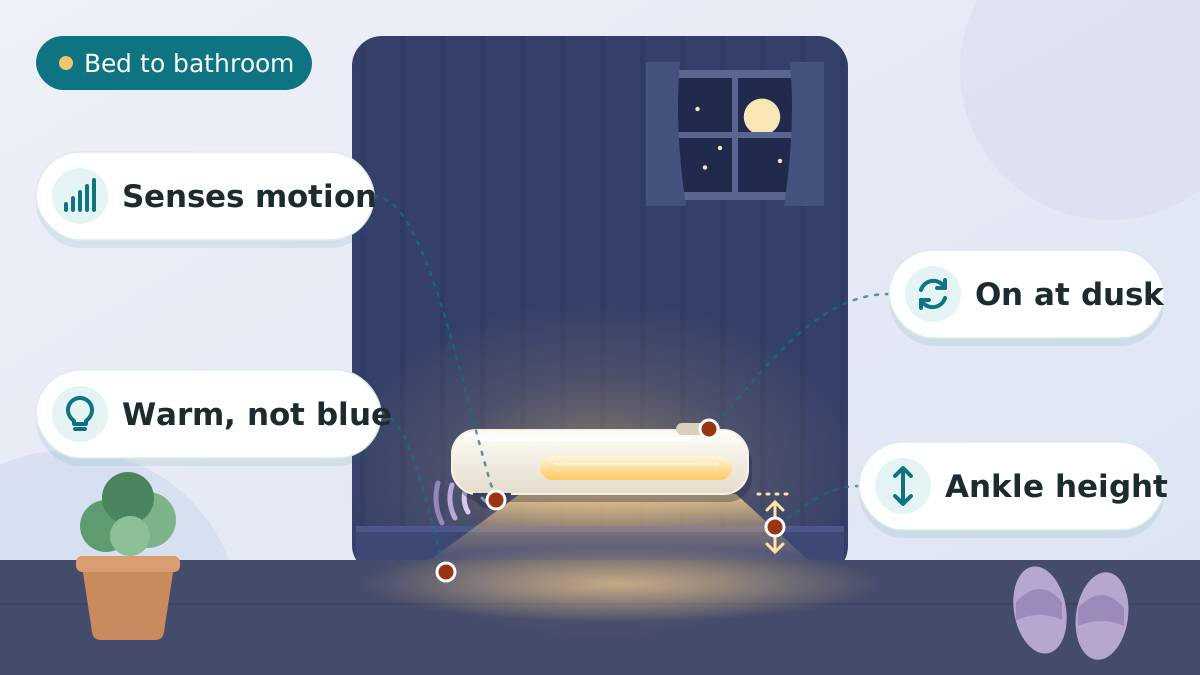
- Motion-activated night lights along the whole route from bed to bathroom, so the way is always lit without fumbling for a switch.
- A reachable bedside lamp to turn on before getting up — never cross a dark room to reach light.
- Light the bathroom itself with a soft night light, so the destination is visible.
- Avoid harsh, blinding light — soft, warm night lighting lets the person see without fully waking or being dazzled.
Good to know
Motion-activated night lights along the bed-to-bathroom route are a simple, low-effort way to make night-time walking safer. The path lights itself, exactly when needed, with nothing to switch on.
The night bathroom trip
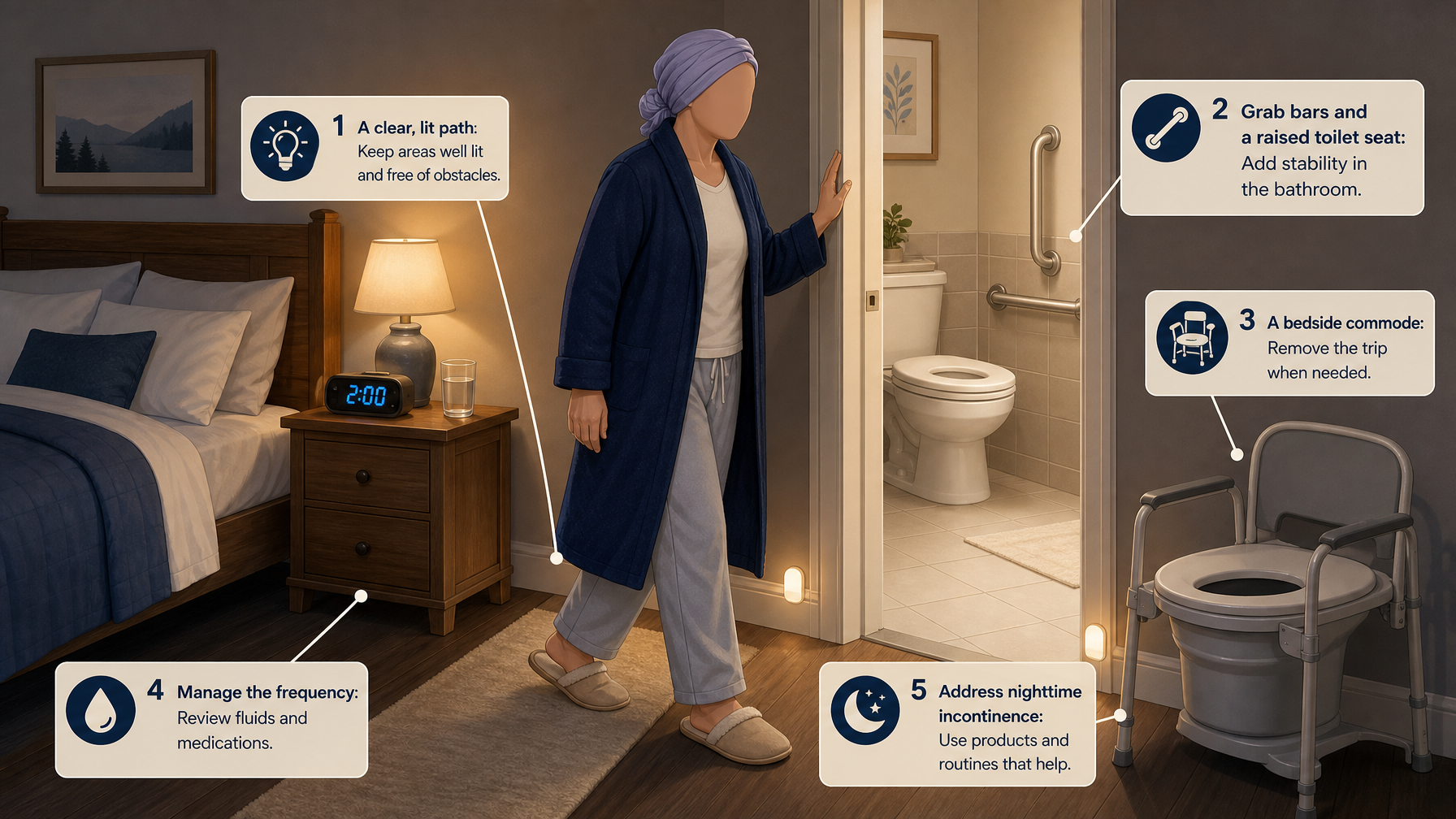
Needing the toilet at night (nocturia) is the trigger for a large share of night falls, so making that journey safe — or removing it — is central:
- A clear, lit path from bed to bathroom, free of any obstacles (covered in safe bedroom setup).
- A bedside commode if the bathroom is far, down stairs, or the person is very unsteady — this removes the risky trip entirely, which can make night-time toileting safer.
- Grab bars and a raised toilet seat in the bathroom for safe transfers on and off the toilet.
- Manage the frequency — discuss with the doctor if night urination is excessive (it can have treatable causes), and see below on evening fluids.
- Address nighttime incontinence if that is contributing to urgent trips.
Standing up slowly (blood-pressure drops)
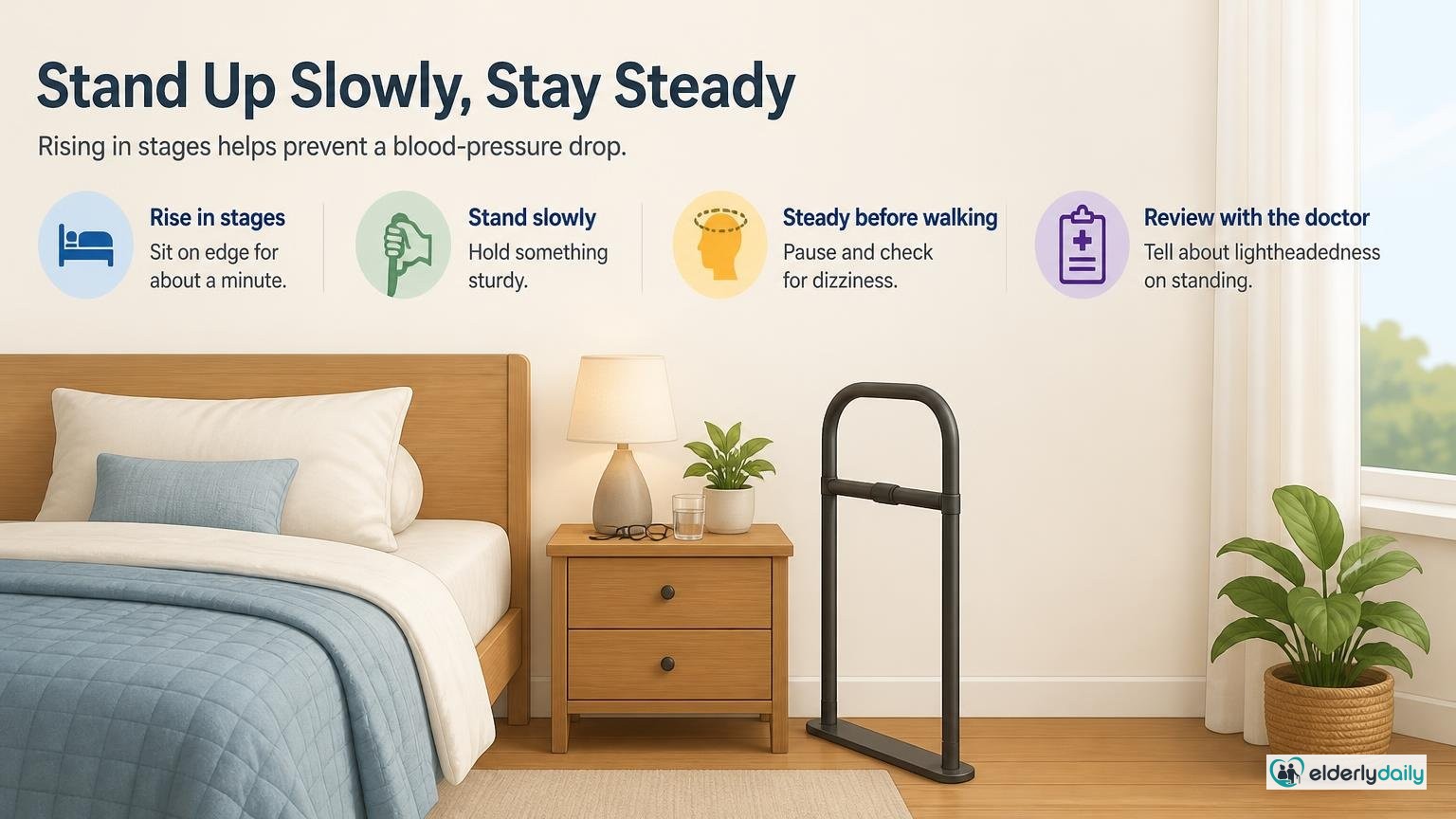
A common and under-recognized cause of night falls is orthostatic hypotension — a drop in blood pressure when moving from lying or sitting to standing, causing lightheadedness or dizziness just as the person rises. At night, half-asleep and rising quickly, this is especially dangerous.
- Rise in stages — sit up on the edge of the bed for a minute before standing, letting the blood pressure adjust, then stand slowly holding something sturdy.
- Steady before walking — pause once standing to make sure there is no dizziness before setting off.
- Review with the doctor — orthostatic hypotension can be caused or worsened by medications (especially blood-pressure and heart drugs) and dehydration, and is often treatable; mention it, particularly if the person feels dizzy on standing. See why dad is falling more often.
Watch out
If the person regularly feels dizzy or lightheaded on standing, tell the doctor. Orthostatic hypotension is a common, often treatable cause of falls, and it may point to a medication that needs adjusting.
Medications, fluids, and support
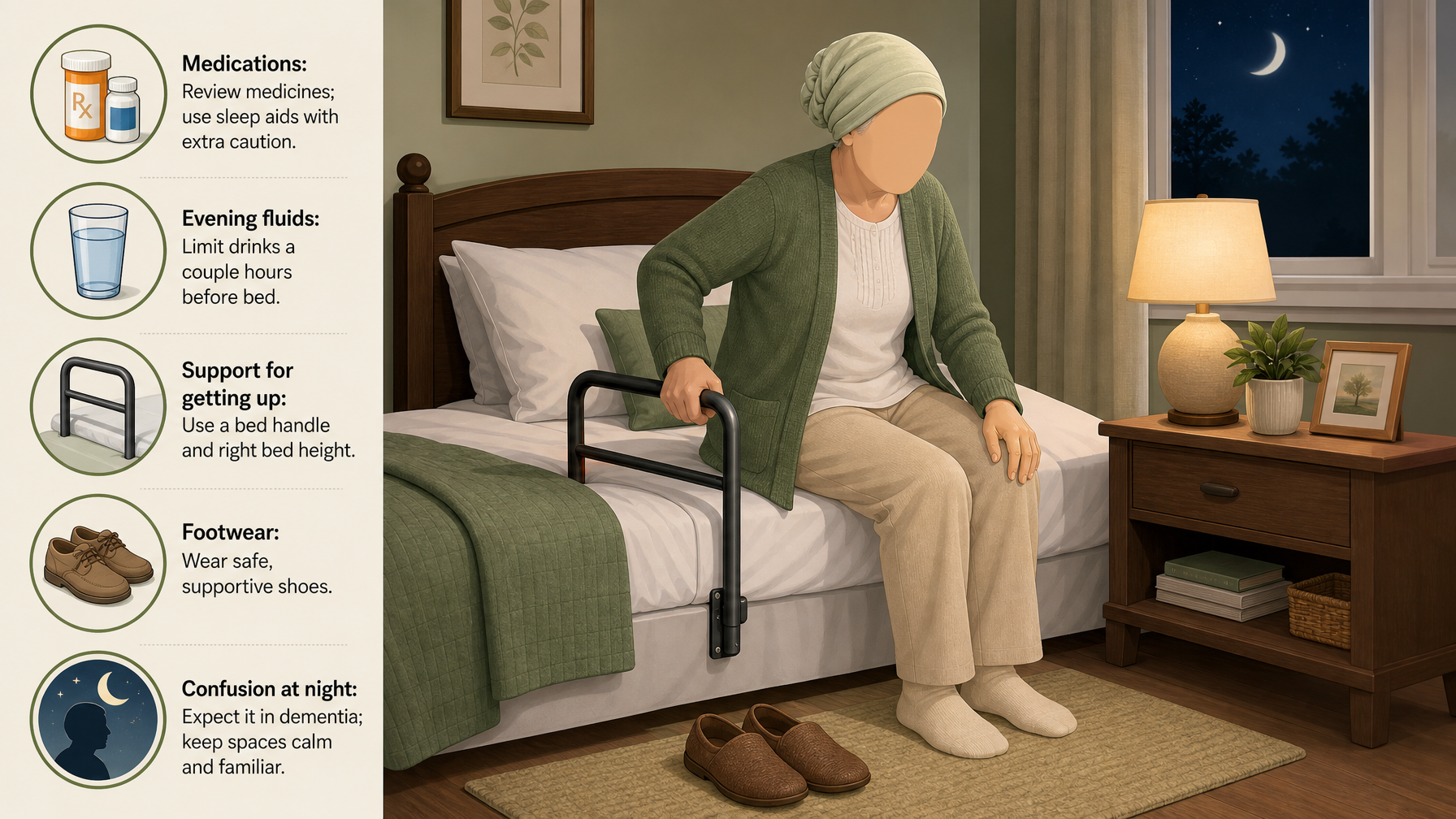
A few more contributors and their fixes:
- Medications — sedatives, sleep aids, and some other drugs cause grogginess or dizziness that raises night-fall risk; ask for a medication review, and be especially cautious with sleep aids in dementia.
- Evening fluids — moderating drinks in the couple of hours before bed (while staying well hydrated across the day) can reduce night bathroom trips; balance against any medical advice.
- Support for getting up — a bed assist handle gives something sturdy to rise with, and the right bed height makes it easier.
- Footwear — non-slip slippers by the bed rather than walking in socks.
- Confusion at night — if the person is confused at night or has dementia, extra supervision and safety measures matter.
If a night fall happens
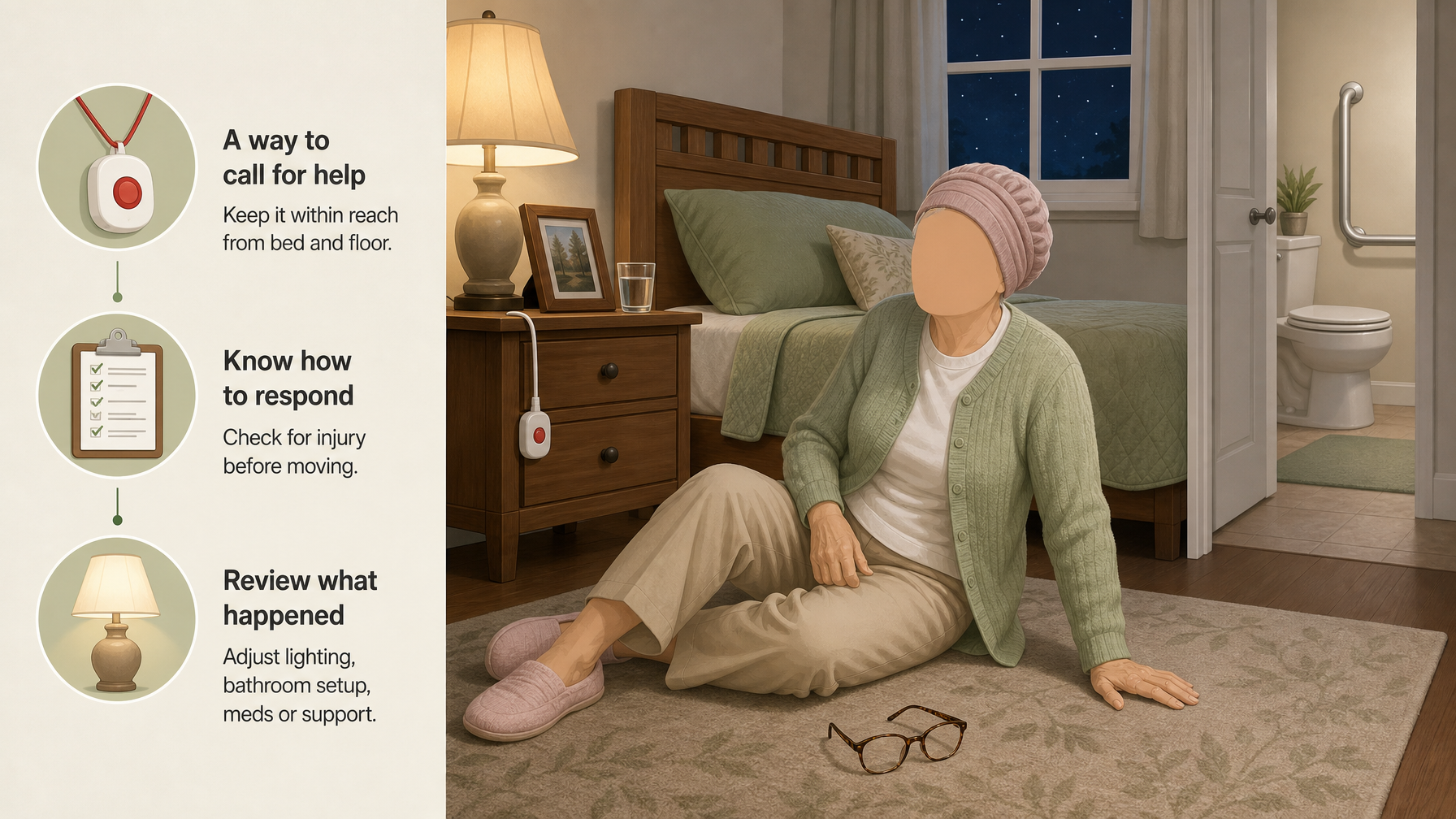
Despite prevention, plan for a fall so help comes fast:
- A way to call for help within reach of the bed and floor — a medical alert device, ideally with fall detection, so a fall at night does not mean hours on a cold floor, especially for someone living alone.
- Know how to respond — after a fall, assess for injury before moving; see how to help an elderly person stand up.
- Review what happened — each night fall is a clue; adjust lighting, the bathroom setup, medication timing, or getting-up support to prevent the next one.
Frequently asked questions
Why do elderly people fall at night?
Several risk factors converge at night: darkness makes it hard to see, the person is often groggy and unsteady, they may move urgently to reach the bathroom, and standing up quickly can cause a blood-pressure drop and dizziness. Medications and night-time confusion add to it. Because these causes are specific, the fixes — better lighting, a safe bathroom trip, rising slowly — are specific too.
How do I prevent falls at night for seniors?
Light the route with motion-activated night lights and a reachable bedside lamp, make the bathroom trip safe with a clear path or a bedside commode, teach standing up slowly to counter blood-pressure drops, review medications and evening fluids with the doctor, provide support for getting up such as a bed assist handle, and ensure a way to call for help in case a fall happens.
What is the best way to light a path for night-time?
Motion-activated night lights along the whole route from bed to bathroom are a practical option — the path lights itself when needed, with nothing to switch on. Add a reachable bedside lamp to turn on before getting up, and a soft light in the bathroom. Use warm, soft lighting that lets the person see without being dazzled or fully woken.
Why does my parent get dizzy when standing up at night?
This is often orthostatic hypotension — a drop in blood pressure when moving from lying or sitting to standing, causing lightheadedness just as they rise. It is common, can be worsened by medications and dehydration, and is often treatable. Have them rise in stages (sit on the bed edge for a minute, then stand slowly), and mention the dizziness to the doctor.
Should I get a bedside commode to prevent night falls?
If the bathroom is far from the bedroom, down stairs, or the person is very unsteady, a bedside commode removes the risky night-time journey entirely — one way to help reduce night falls triggered by bathroom trips. Combine it with good lighting, safe bed height, and support for getting up.
Can medications cause night-time falls?
Yes — sedatives, sleep aids, and some other medications cause grogginess or dizziness that raises night-fall risk, and blood-pressure and heart drugs can cause the dizziness-on-standing that leads to falls. Ask for a medication review focused on fall risk, be especially cautious with sleep aids (particularly in dementia), and never stop a prescription without medical advice.
Sources
- CDC. Facts About Falls — Older Adult Fall Prevention
- National Institute on Aging (NIH). The Dangers of Polypharmacy and the Case for Deprescribing in Older Adults
- CDC (MMWR). Nonfatal Bathroom Injuries Among Persons Aged ≥15 Years — United States, 2008
