
Memory Care for Seniors: What It Is, What It Costs, When It’s Time

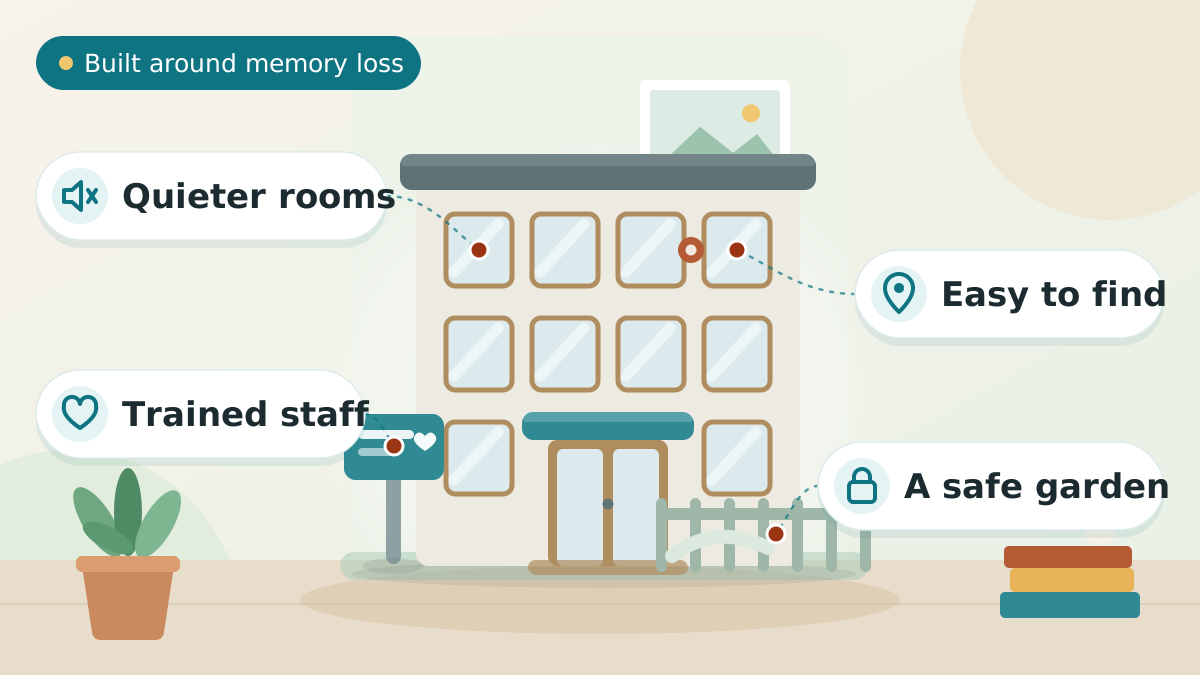
A secure, dementia-trained setting is a different thing from standard assisted living — here’s what that difference actually buys, what it costs, and Medicare’s answer.
Key takeaways
- Memory care is a secure, dementia-specialized setting — usually inside or attached to an assisted living community, not a separate type of facility entirely
- The security (preventing wandering) and staff training are the real difference from standard assisted living, not just the marketing label
- Memory care typically costs more than standard assisted living, for genuine reasons — higher staffing ratios and secured facilities
- Original Medicare does not cover memory care, for the same custodial-care reason it doesn’t cover assisted living
- Wandering risk specifically is the clearest single trigger for considering memory care over staying in standard assisted living or at home
Quick answer
Does Medicare pay for memory care?
No. Medicare treats memory care the same way it treats assisted living — as custodial care, not medical care — so it doesn’t cover the residence itself, regardless of the dementia diagnosis driving the need for it. Medicare does keep covering medically necessary services delivered to a memory care resident, like doctor visits, medications, and therapy — just not the room, board, or specialized supervision.
What memory care actually adds over assisted living
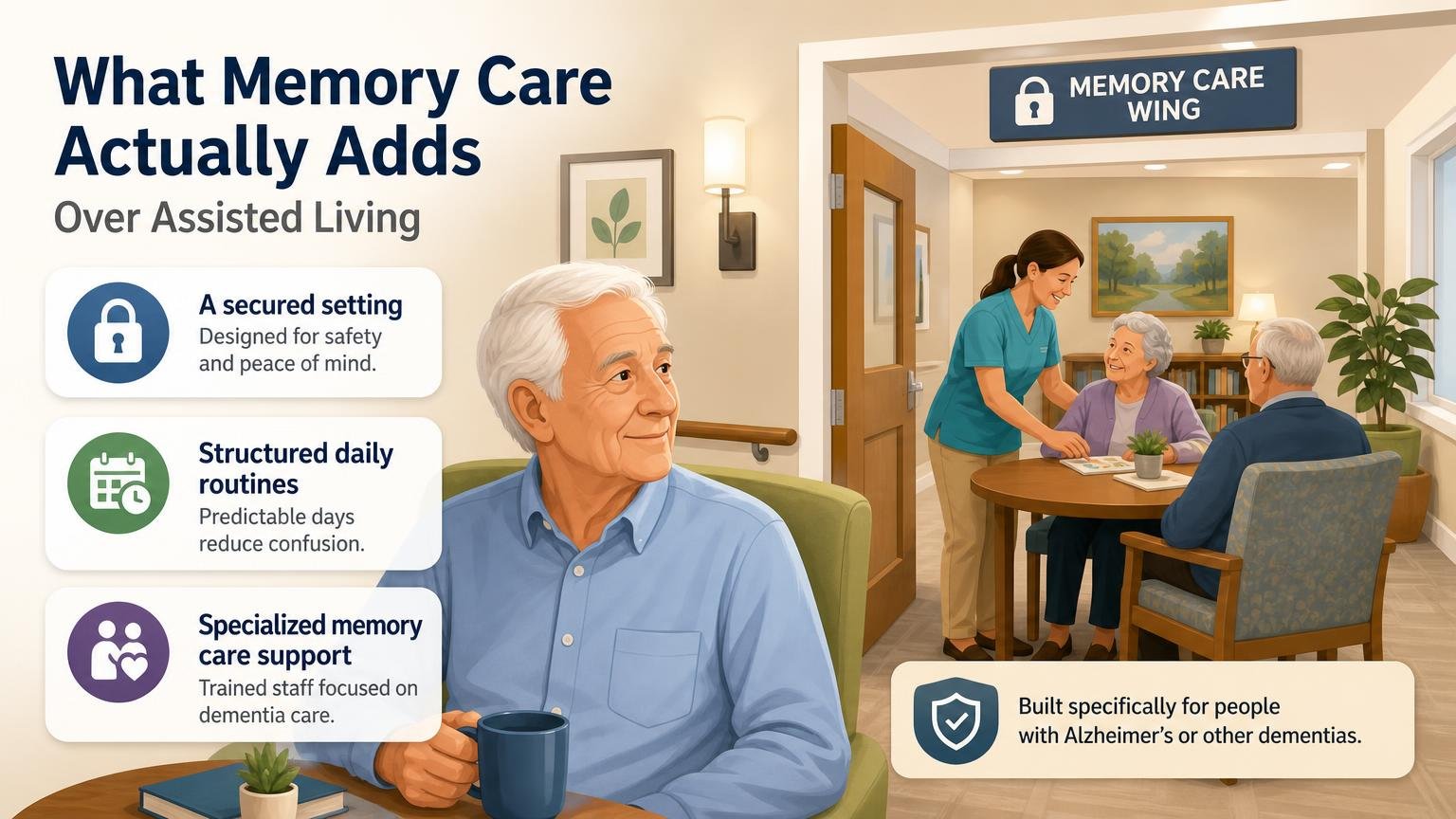
Memory care is usually a secured wing or floor within an assisted living community, sometimes a standalone community, built specifically for people with Alzheimer’s or other dementias. The added elements, beyond what standard assisted living already provides:
- A secured setting designed specifically to prevent wandering and getting lost — controlled exits, enclosed outdoor areas.
- Staff trained specifically in dementia care — de-escalation, communication techniques, recognizing distress that isn’t verbally expressed.
- Structured daily routines, since predictability itself reduces agitation and confusion for many people with dementia.
- Higher staff-to-resident ratios, because personal care and supervision needs are typically greater.
If someone’s main need is help with daily tasks and they aren’t a wandering or elopement risk, standard assisted living may be the better and less expensive fit even with a dementia diagnosis. The security and staffing model is what memory care is really selling — not just a different name on the same service.

Sponsored Pick
ComfiLife Gel Enhanced Memory Foam Seat Cushion
A senior who sits for long stretches in a recliner, office chair, or wheelchair
Check PriceDoes Medicare or Medicaid cover it?
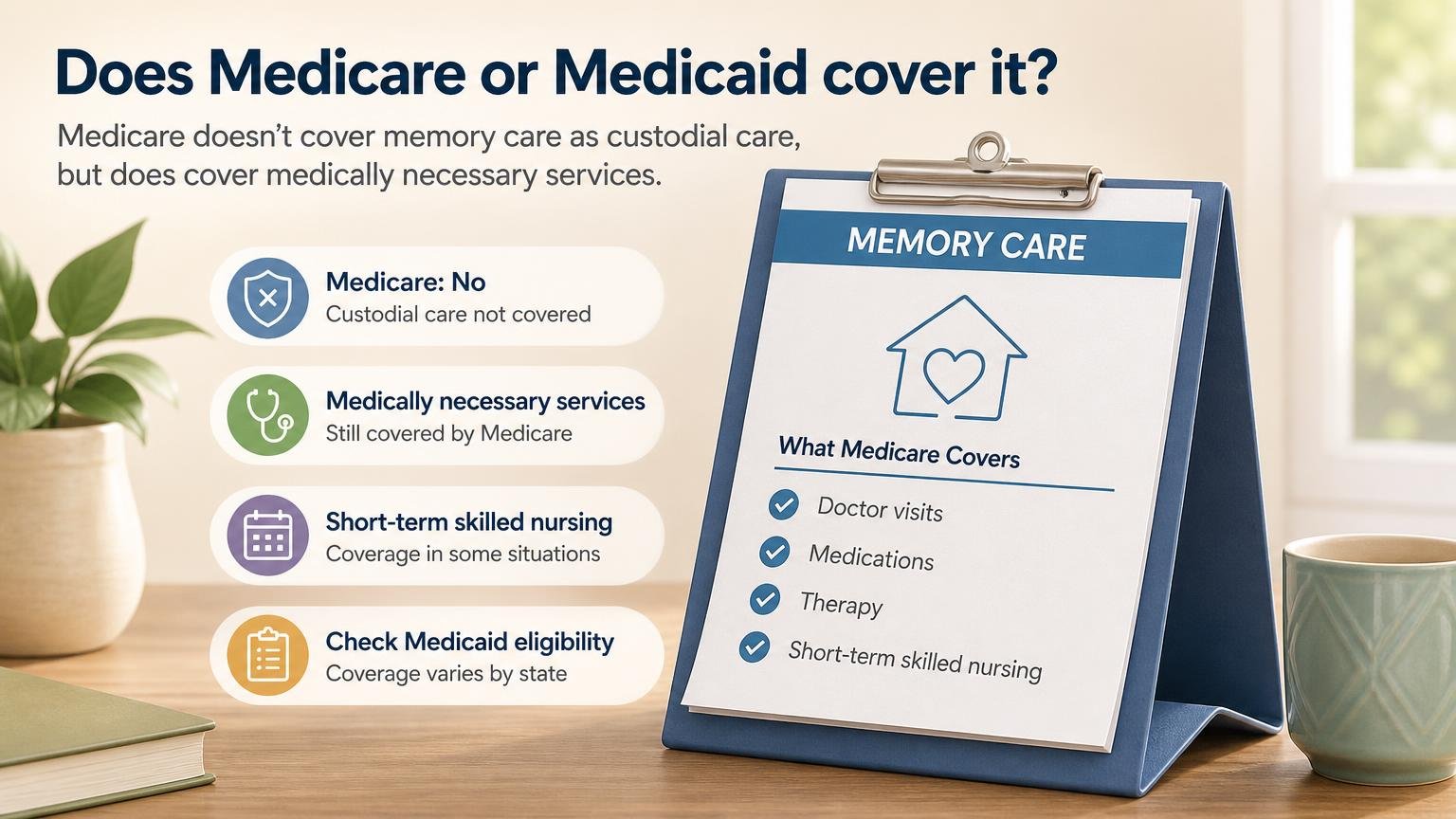
Medicare: no, for the same reason as assisted living — this is custodial care in Medicare’s classification, regardless of the underlying diagnosis. Medicare continues to cover medically necessary services a memory care resident receives — doctor visits, medications, therapy, a short-term skilled nursing stay if qualifying conditions are met — just not the residence, supervision, or staffing itself.
Medicaid: memory care generally falls under the same state HCBS waiver programs that may help with assisted living, where they exist, though how memory care specifically is covered varies by state — some states cover it as an enhanced assisted-living service, others have separate rules. This needs a call to your state Medicaid office rather than a general assumption.
What it costs
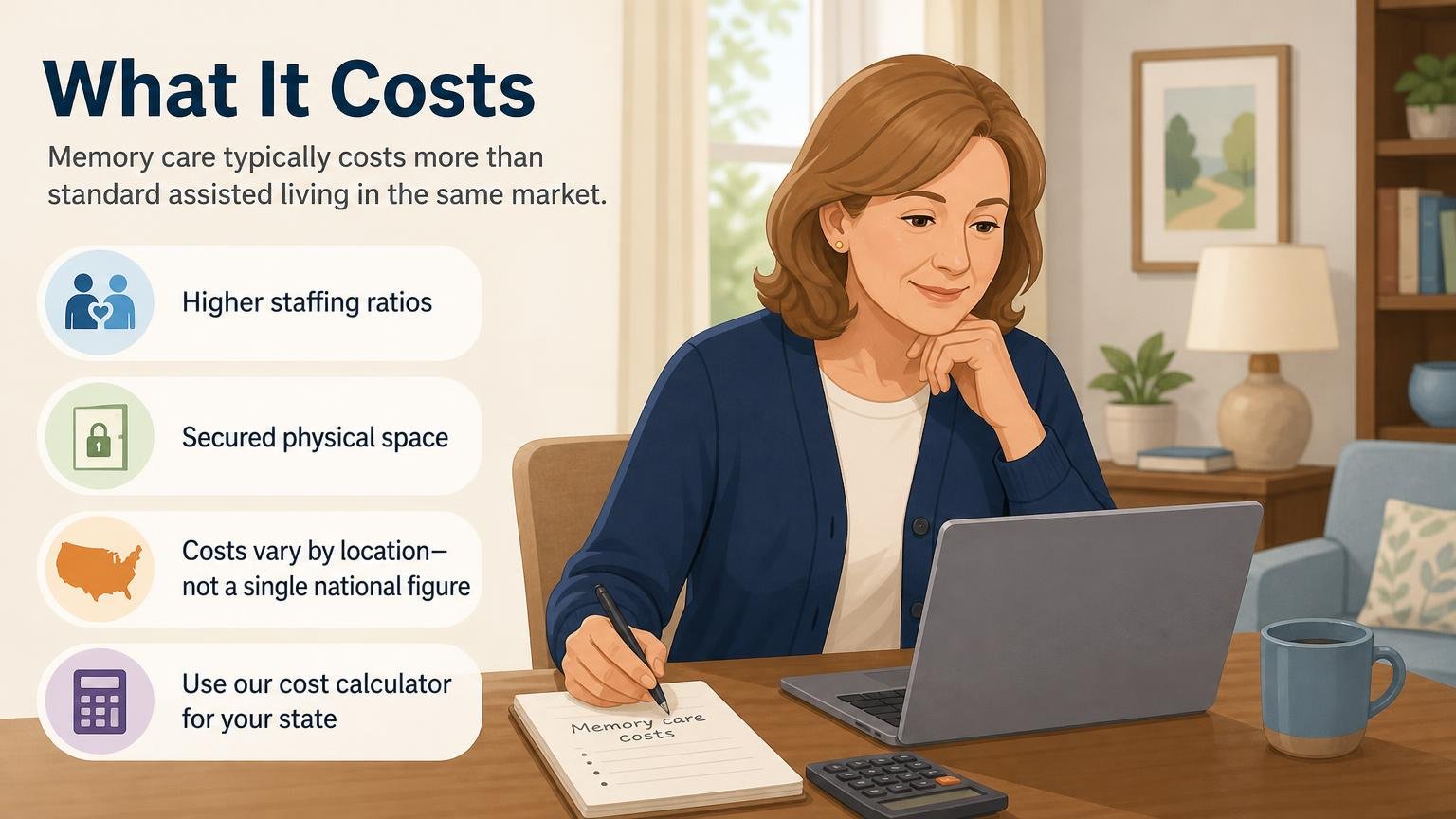
Memory care typically costs meaningfully more than standard assisted living in the same market, reflecting the higher staffing ratios and the secured physical space. Rather than quote a single national figure that goes stale and is wrong for most regions, our senior care cost calculator estimates memory care against your specific state.
One planning note worth knowing early: if someone may eventually need memory care but doesn’t yet, ask any assisted living community you’re considering now whether they have a memory care wing and what the transition process looks like — moving within a familiar community is usually easier than a second cross-town move later.
When memory care becomes the right call
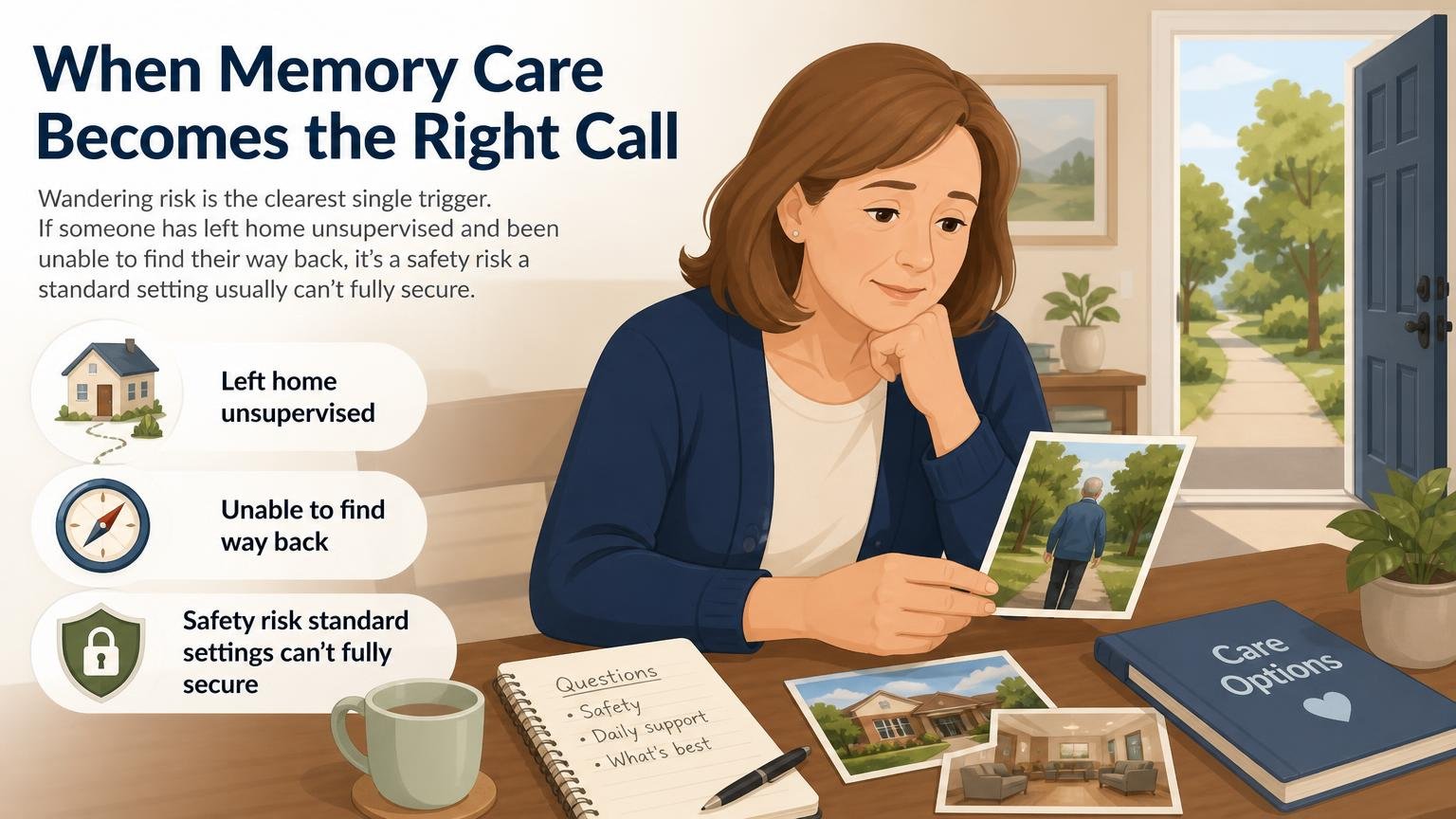
Wandering risk is the clearest single trigger — if someone has left home unsupervised and been unable to find their way back, or attempted to, that is a safety risk a standard home or assisted-living setting usually cannot fully secure against. Our dementia wandering behavior guide covers why it happens and the safety measures that can be tried before a facility move.
More generally, if dementia symptoms are progressing to the point where signs dementia is getting worse describes, that’s the right guide for assessing where things actually stand. And if the family is still managing well at home, our dementia care at home guide and activities for seniors with dementia cover that path fully — memory care is a next step for when home care stops being safe, not a default.
Frequently asked questions
Does Medicare cover memory care?
No. Medicare classifies memory care as custodial care, the same as assisted living, regardless of the dementia diagnosis behind the need for it. Medicare does keep covering medically necessary services — doctor visits, medications, therapy — delivered to a memory care resident, just not the residence, supervision, or staffing.
What is the difference between assisted living and memory care?
Memory care is typically a secured setting within or attached to an assisted living community, built specifically for dementia: controlled exits to prevent wandering, staff trained in dementia-specific care techniques, and structured routines. Standard assisted living provides personal-care help without that security layer or specialized training. Someone with dementia who isn’t a wandering risk may do fine in standard assisted living; someone who is a wandering risk generally needs the secured setting.
How much more does memory care cost than assisted living?
Memory care typically costs meaningfully more, reflecting higher staffing ratios and a secured physical space, but the exact gap varies a lot by region. Our senior care cost calculator estimates both against your specific state rather than relying on a single national figure.
When should someone move from assisted living or home to memory care?
Wandering or elopement risk — leaving unsupervised and being unable to find the way back — is the clearest single trigger, since that’s a safety risk most homes and standard assisted living settings can’t fully secure against. More broadly, it’s worth considering when dementia symptoms are progressing to the point that daily supervision needs exceed what the current setting can safely provide.
Sources
- Medicare.gov. Durable Medical Equipment (DME) Coverage
- Medicaid.gov. Home & Community-Based Services Authorities
