
5 Best GPS Trackers for Dementia Patients
 By Kutubuddin, Founder & Senior Care Researcher Updated October 2026
In this guide
According to the Alzheimer's Association, about six in ten people with dementia will wander, and finding them quickly matters — so a GPS tracker is the recovery layer that lets you find them fast, pairing with a door alarm that warns you before they leave.
We may earn a commission when you buy through links on this page. Read our affiliate disclosure.
Top 5 Picks — Find Your Situation
#1 · Best Overall
AngelSense GPS TrackerBest for: Moderate-to-advanced dementia, or anyone who removes other trackers
#2 · Best Compact & Discreet
Tracki Mini GPS TrackerBest for: Early-to-mid dementia, where the person will carry something but refuses to wear a device
#3 · Best Hidden (Won't-Remove)
GPS SmartSoleBest for: Late-stage dementia or anyone who refuses and removes visible devices
#4 · Best with an SOS Help Button
Medical Guardian Mini GuardianBest for: Early-stage seniors who want emergency help plus location, not advanced wandering control
#5 · Best Smartwatch
Apple Watch SEBest for: Early-stage dementia in someone comfortable wearing and charging a smartwatch
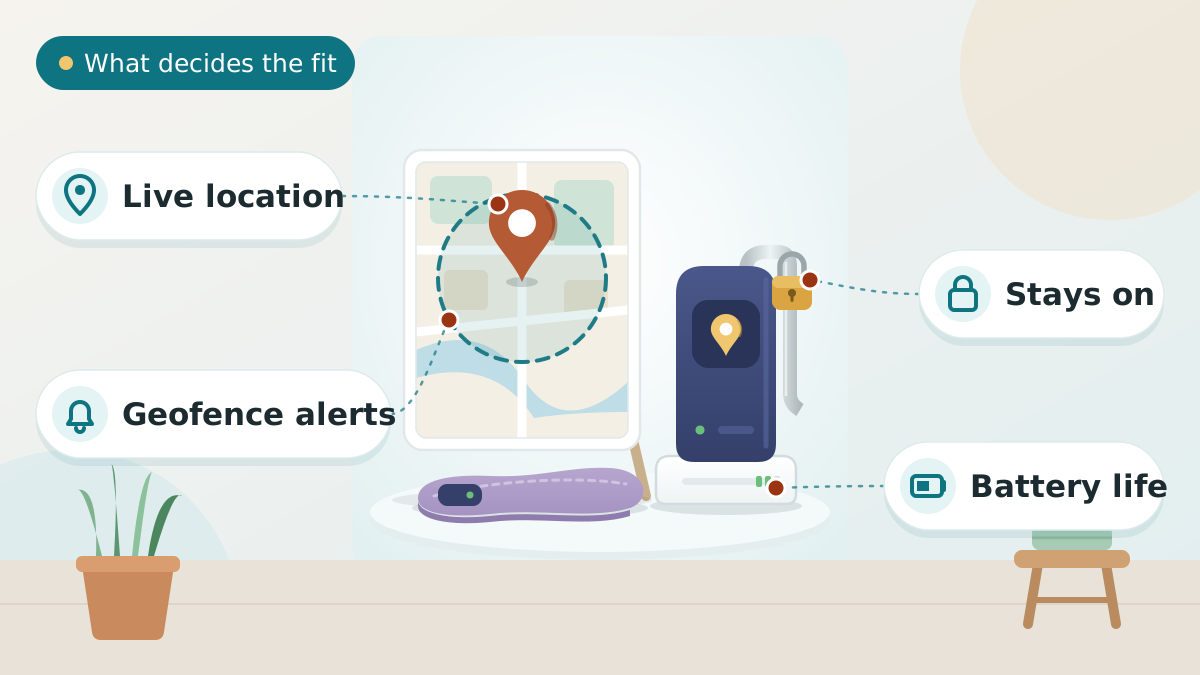
What matters most: real-time location, geofence alerts the moment they cross a safe-zone boundary, and — the make-or-break for dementia — whether the person will actually keep the device on. Tamper-resistant wearables and hidden shoe trackers win for that reason. Our overall pick is AngelSense.
For broader safety beyond wandering — falls, inactivity, night-time emergencies at home — pair a tracker with one of the best elderly monitoring devices.
A closer look at our top pick: AngelSense
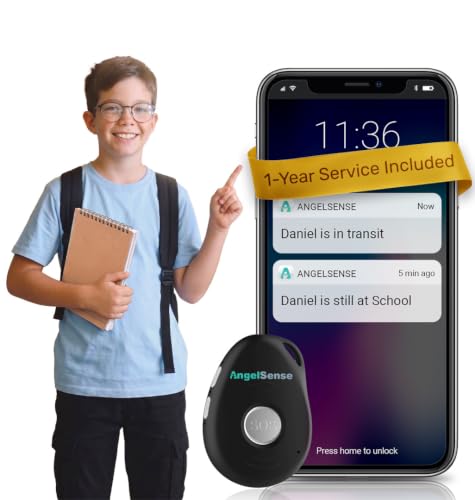
AngelSense GPS Tracker
Best for: Moderate-to-advanced dementia, or anyone who removes other trackers
- Wear
- Tamper-resistant clip (key to remove)
- Tracking
- Real-time (~10-sec updates)
- Voice
- 2-way speakerphone, auto-answer
- Alerts
- Geofence + routine + SOS + fall
Independently researched · Updated October 2026
AngelSense wins because it solves the two hardest problems in dementia tracking at once: keeping the device on, and finding the person fast. Its attachment locks to clothing and needs a key tool to remove, so it stays put on someone who pulls off a watch — and it tracks in near real time, updating frequently enough to follow an active wandering episode rather than showing a stale dot.
It's also the richest system for caregivers. Two-way speakerphone with auto-answer lets you speak to a disoriented loved one or listen to what's around them; geofence and routine-deviation alerts flag when they leave a safe zone or break their usual pattern; and an SOS button and fall detection add further layers. The costs are real — a higher monthly subscription and daily charging from its roughly 36-hour battery — but for moderate-to-advanced dementia, no other consumer tracker matches its combination of staying on and staying informative.
What we love
- Stays on a person who removes devices
- Rich alerts, voice, and history
- Built specifically for dementia and special needs
- Responsive, accurate tracking
Things to consider
- Premium price; service renews after the first year
- About 36-hour battery means daily charging
- Larger and more visible than a clip tag
Right for you if
- ✓Your loved one wanders and removes other devices
- ✓You want two-way voice to reach and calm them
- ✓You value geofence and routine-deviation alerts
- ✓You're managing moderate-to-advanced dementia
Maybe skip it if
- !You want the smallest, most discreet tag — choose Tracki
- !They refuse any visible device — the SmartSole hides in a shoe
- !It's early stage and a familiar watch fits — the Apple Watch works
What owners consistently report
Common praise
- +Owners report it stays on a person who removes other trackers
- +The two-way voice and detailed history are valued
- +Alerts arrive promptly during real wandering events
Common gripes
- –The subscription is among the priciest
- –The roughly 36-hour battery means daily charging
- –Safe zones can't be drawn as tightly as a single home
Getting started
- →Attach it to clothing with the provided locking fastener
- →Set safe zones for home and regular destinations
- →Charge it nightly and test alerts after setup
How it compares
The Tracki is the better pick when discretion and running cost lead — it's small, light and much cheaper to buy and run, but it has no SOS button or two-way voice, and at real-time update rates it needs charging around every five days. AngelSense is larger and pricier but far harder to remove and far richer in alerts and communication. Choose the Tracki for a discreet early-stage tracker, AngelSense for a wanderer who needs a device that stays on.
How we picked
We compared five dementia GPS trackers on real-time accuracy, geofence and wandering alerts, wearability and tamper-resistance (the decisive factor in dementia), battery life, extra safety features (SOS button, two-way voice, fall detection), and total cost including the required subscription. Our picks draw on manufacturer specs, dementia-care guidance, and owner feedback — not hands-on lab testing. Note: every dedicated tracker needs a cellular plan, and several are sold directly by the maker rather than as a one-time purchase.
Reviewed by Kutubuddin — who researches senior-care products and the real-world needs of caregivers and older adults.
Other picks, reviewed
Tracki Mini GPS Tracker

Small and light enough to sit in a coat pocket or clip to a belt without drawing attention — useful when an obvious device provokes resistance. It combines 4G LTE, GPS, Wi-Fi and Bluetooth, so it keeps a fix indoors and in weak-signal areas, and geofence alerts arrive quickly. Read the battery claim carefully: the headline figure of a month or more is battery-save mode, which reports only a few times a day. Set to update every one to five minutes — which is what you need when someone has actually walked out — expect around five days between charges.
What we like
- Small and light enough to carry unnoticed
- Wi-Fi positioning helps hold a fix indoors
- Fast geofence alerts
- Low device cost; subscription cancellable at any time
Keep in mind
- A locator, not an alert device — no two-way voice, and the maker states it is not an emergency beacon
- Nothing stops it being taken out of a pocket or unclipped
- The month-long battery figure is battery-save mode, not real-time tracking
- Size
- Compact puck, under 2 oz
- Wear
- Pocket, belt clip or magnetic mount
- Signal
- 4G LTE + GPS/Wi-Fi/Bluetooth
- Battery
- ~5 days at real-time updates
- Cost
- Device + subscription, cancel anytime
GPS SmartSole
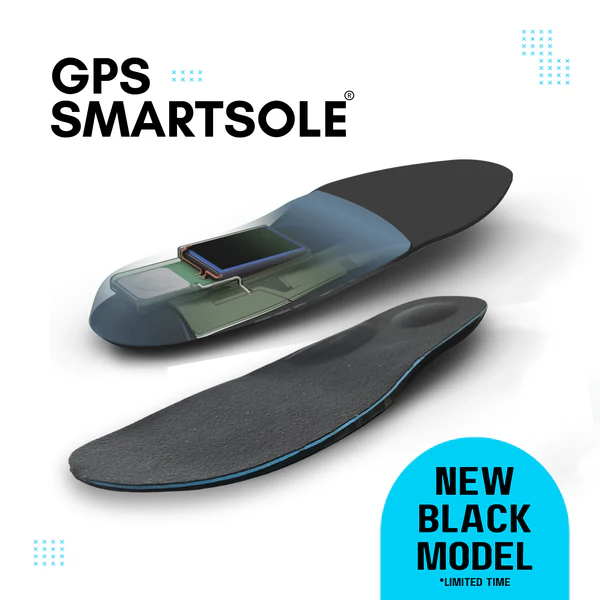
The answer when your loved one removes every wearable. A GPS tracker is built into a shoe insole — completely invisible to the wearer and impossible to remove without taking the shoe apart, which sidesteps the whole resistance problem. It provides real-time location and geofence alerts; the trade-offs are that it only works when they're wearing those shoes and the battery is shorter.
What we like
- Completely hidden — no resistance
- Hard to notice or remove while the shoes are worn
- Real-time location and safe-zone alerts
- No conversation about wearing it
Keep in mind
- Only tracks while the shoes are worn
- Shorter battery than wrist or clip trackers
- Must be trimmed/fitted to the shoe
- Form
- Hidden in a shoe insole
- Removal
- Invisible; can't be taken off
- Tracking
- Real-time + geofence
- Limit
- Only works with shoes on
- Cost
- Device + monthly subscription
Medical Guardian Mini Guardian

A mobile medical alert pendant that doubles as a locator — best for an early-stage senior who lives fairly independently and would benefit from a help button. It offers GPS location, fall detection, and a button that connects to a 24/7 monitoring center for two-way help. Note it's a medical alert device first: it can be removed, and it doesn't send geofence alerts to caregivers the way dedicated dementia trackers do.
What we like
- SOS button to professional monitors
- Fall detection included
- GPS location via caregiver app
- Good for independent early-stage seniors
Keep in mind
- Not designed for advanced dementia
- Easily removed
- Lacks caregiver geofence/wandering alerts
- Type
- Mobile medical alert + GPS
- Help
- Button to 24/7 monitoring center
- Safety
- Fall detection, 2-way to center
- Limit
- Removable; no caregiver geofence alerts
- Cost
- Device + monthly monitoring
Apple Watch SE

A familiar, mainstream option for early-stage dementia, when the person can still manage a watch. It offers location sharing, fall detection, Emergency SOS, and two-way calling, and it's water-resistant for all-day wear, including swimming. The catches: it needs a cellular line to track away from a paired phone, and it relies on the wearer to keep it charged and on — so it suits early stages, not advanced wandering.
What we like
- Familiar and well-supported
- SOS, fall detection, and calling
- Location sharing with family
- Durable and waterproof
Keep in mind
- Relies on the person to manage and charge it
- Needs a cellular plan for standalone tracking
- Not suited to moderate or advanced dementia
- Type
- Mainstream smartwatch
- Safety
- SOS, fall detection, location share
- Calls
- Two-way calling
- Requires
- Cellular line; daily charging
- Water
- Swim-proof
What to look for
Will they keep it on? The decisive question
A tracker only helps if it's actually being worn, and people with dementia frequently remove devices they don't understand. Form factor often matters more than features.
- Removes a watch: try a tamper-resistant wearable with a locking attachment (AngelSense) or a watch that needs a tool to unfasten.
- Rejects visible devices: a compact clip-on (Tracki) in a coat pocket goes unnoticed.
- Refuses everything: a hidden GPS shoe insole (SmartSole) can't be seen or removed.
- Tip: starting tracker use early, before decline progresses, builds familiarity so there's less resistance later.
Real-time location and geofencing
These two features are the heart of a dementia tracker.
Choose true real-time GPS that updates live on your phone — premium dementia trackers refresh roughly every 10 seconds, while budget devices may only update every few minutes. Geofence (safe-zone) alerts that notify you the instant the person crosses a set boundary are the bridge between a door alarm warning you they left and you actually finding them.
The subscription reality and total cost
There's no truly free dedicated GPS tracker — they use cellular networks and need a monthly plan, on top of the device.
Plan costs vary by tracker, and a smartwatch needs its own cellular line too. Budget for the ongoing cost over years, not just the upfront price, and confirm the plan covers your loved one's location before buying. The cheapest device with the features you need is usually the right call.
Battery, water resistance, and indoor use
Practical reliability matters more in dementia care, because the person can't tell you the device died.
Most trackers last one to several days and need charging on a routine — build it into the daily schedule, and favor longer battery life where you can. Look for water resistance for all-day wear. Indoors, GPS is weak, so trackers lean on Wi-Fi and cellular to approximate location — fine for confirming 'still at home,' less precise room to room.
Extra features — and why AirTags fall short
An SOS button, two-way voice, and fall detection all add real value; two-way voice with auto-answer is especially helpful, since hearing your voice can calm and orient a disoriented person who can't answer a call.
One important caution: Bluetooth tags like AirTag and Tile are not GPS trackers. They only reveal a location when near someone else's device on a crowd-finding network, offer no real-time tracking, no geofence alerts, and no SOS, and an AirTag can even trigger an unknown-tracker alert to the wearer. They were designed for objects, not people — useful at most as a cheap backup tucked in a pocket, never as the primary tool for dementia wandering.
Read more:Dementia AggressionDementia and SundowningDementia Care at Home
Tips to Choose Gps Trackers
Short on time? Here are the key points to weigh before choosing, each covered in detail above:
- Will they keep it on? The decisive question
- Real-time location and geofencing
- The subscription reality and total cost
- Battery, water resistance, and indoor use
- Extra features — and why AirTags fall short
Comparing options? See our guides to Best Medical Alert Devices for Seniors, Best Ai Ambient Fall Detection Sensors, and Best Bedside Fall Mats.
Prevention plus recovery — pair it with door alarms
A GPS tracker finds someone after they've left; it doesn't stop them leaving. The strongest setup combines both ends of the problem.
Pair the tracker with a door alarm that warns you before an exit, add secure locks and a wandering-response program, and build out a dementia home-safety setup. A bed alarm extends the same early-warning approach overnight. A tracker is a safety net — not a substitute for supervision.
Choosing as dementia progresses
Match the device to the stage, and revisit the choice as needs change:
- Early stage: a familiar smartwatch or a discreet clip the person can manage, with location sharing and an SOS button.
- Moderate to late stage: a tamper-resistant wearable or a hidden shoe tracker they can't remove — reliability and won't-remove design matter more than extra features.
- Always: keep an updated photo and a MedicAlert-style ID as backup, consider a free local Project Lifesaver or similar first-responder program, and get consent from the person or their legal guardian where required.
If wandering is driven by agitation, our guide to calming a person with dementia and dementia clocks for orientation can help reduce the urge to leave.
Frequently asked questions
Almost always, yes. Dedicated GPS trackers use cellular networks to report location, so they need a monthly data plan, with costs that vary by device, in addition to the upfront cost. A smartwatch needs its own cellular line too. A few no-subscription generic trackers exist but offer fewer features. Budget for the ongoing cost, and confirm the plan covers your loved one's area before buying.
Outdoors, modern trackers are typically accurate to within a few yards, and premium dementia devices update roughly every 10 seconds for near real-time tracking. Accuracy drops indoors and among tall buildings, where devices fall back on Wi-Fi and cellular positioning to estimate location. For finding a wanderer outside, that outdoor accuracy is what matters most, and geofence alerts add an immediate heads-up when they leave a safe zone.
Many are water-resistant enough for everyday wear and rain, and some, like the Apple Watch, are fully swim-proof. Water resistance matters because the device should stay on through handwashing, weather, and daily life. Check the specific rating before buying, especially for a shoe-based or clip tracker that may face more incidental moisture than a sealed wearable.
This is the most common problem, so choose a form factor designed around it. A tamper-resistant wearable like AngelSense locks to clothing and needs a tool to remove; a compact Tracki can be tucked into a coat pocket or an inside lining; and a GPS shoe insole like SmartSole is completely hidden and can't be taken off. Introducing a device early, before cognition declines further, also reduces resistance later.
Generally yes when you're caring for the person, but consent and privacy still matter. Where possible, get agreement from your loved one while they can give it, or from their legal guardian or power of attorney, and follow local privacy laws. Using a tracker for someone's safety is widely accepted in dementia care; the key is acting in their best interest and respecting their dignity.
It varies widely. Real-time wearables like AngelSense may need daily charging (around 36 hours), while compact tags like the Tracki run about five days at real-time update rates, and some pocket trackers last far longer. Battery life is especially important in dementia care because the person can't tell you the device died — so favor longer life where you can, and build charging into a daily routine you control.
Partially. GPS signals are weak indoors, so trackers use Wi-Fi and cellular positioning to estimate location inside — accurate enough to confirm someone is still home, but not reliable room to room. Trackers with strong Wi-Fi positioning, like the Tracki, do better indoors. For indoor wandering between rooms, motion sensors or a door alarm are a better fit than GPS alone.
Geofencing lets you draw a virtual boundary on a map — around the home, yard, or care facility — and get an instant alert the moment your loved one crosses it. For wandering, this is the single most useful feature: it gives you advance warning before they're lost, rather than after. You can usually set several geofences for home and regular destinations and be notified whenever one is breached.
In late stages, reliability and a won't-remove design matter far more than extra features. A hidden GPS shoe insole like SmartSole works well because the person never sees it and can't take it off, and a tamper-resistant wearable like AngelSense, with two-way voice, is also strong. Avoid devices that rely on the person to operate, charge, or keep them on, since that cooperation usually isn't possible.
In most cases, no. Medicare covers short-term medical care, not ongoing supervision or safety devices, so GPS trackers are typically not covered. Some Medicaid programs, long-term care insurance policies, Medicare Advantage plans, or local charities and first-responder programs may help with the cost. Check your specific coverage, and look into free local options like Project Lifesaver as a backup.
The final verdict
For most dementia caregivers, AngelSense is the best GPS tracker — tamper-resistant, real-time, with two-way voice and geofence alerts. Choose the Tracki for a discreet, low-cost clip-on in early-to-mid stages, the GPS SmartSole for someone who refuses to wear any device, the Medical Guardian Mini Guardian when an early-stage senior also wants an SOS help button, or the Apple Watch for early stages when they can manage a smartwatch. Two principles decide it: pick something the person will actually keep on, and budget for the monthly subscription. Pair the tracker with a door alarm so you can both prevent and recover, keep a current photo and ID as backup, and skip AirTags — they aren't real GPS.
Our overall winner is the AngelSense GPS Tracker. You can check the current price on Amazon.
Our Top 5 Picks at a Glance
Ready to choose? Here are the top 5 again.
Best Overall
AngelSense GPS Tracker
Best Compact & Discreet
Tracki Mini GPS Tracker
Best Hidden (Won't-Remove)
GPS SmartSole
Best with an SOS Help Button
Medical Guardian Mini Guardian
Best Smartwatch
Apple Watch SE
Affiliate links — we may earn a commission.
More reviews
