
Dementia and Sundowning: Why It Happens and How to Manage It

Educational guidance based on dementia-care principles; not a substitute for medical advice. A sudden or severe change in behavior should be evaluated by a doctor.
As afternoon fades to evening, many people with dementia become more confused, anxious, or agitated. It is called sundowning — and while it is exhausting, understanding its triggers gives you real tools to ease it.
Key takeaways
- Sundowning is a pattern of increased confusion, anxiety, or agitation in the late afternoon and evening, common in dementia.
- Likely drivers include fatigue, disrupted body-clock rhythms, fading light and shadows, hunger, and end-of-day overstimulation.
- Prevention beats reaction: light exposure by day, a calm predictable evening, and limiting late-day fatigue and stimulants can help reduce it for many people.
- When an episode hits, stay calm, reassure, reduce stimulation, and redirect rather than reason or argue.
- A sudden onset or severe worsening can signal a medical problem (like infection or pain) — get it checked.
Quick answer
How do I manage sundowning in dementia?
Focus on prevention: maximize daylight and activity earlier in the day, keep a calm, predictable evening routine, ensure the person is not overtired or hungry, brighten the home before dusk to cut shadows, and limit caffeine, sugar, and overstimulation late in the day. During an episode, stay calm, reassure, reduce noise and activity, and gently redirect. Have sudden or severe changes evaluated medically, as they can signal a treatable cause.
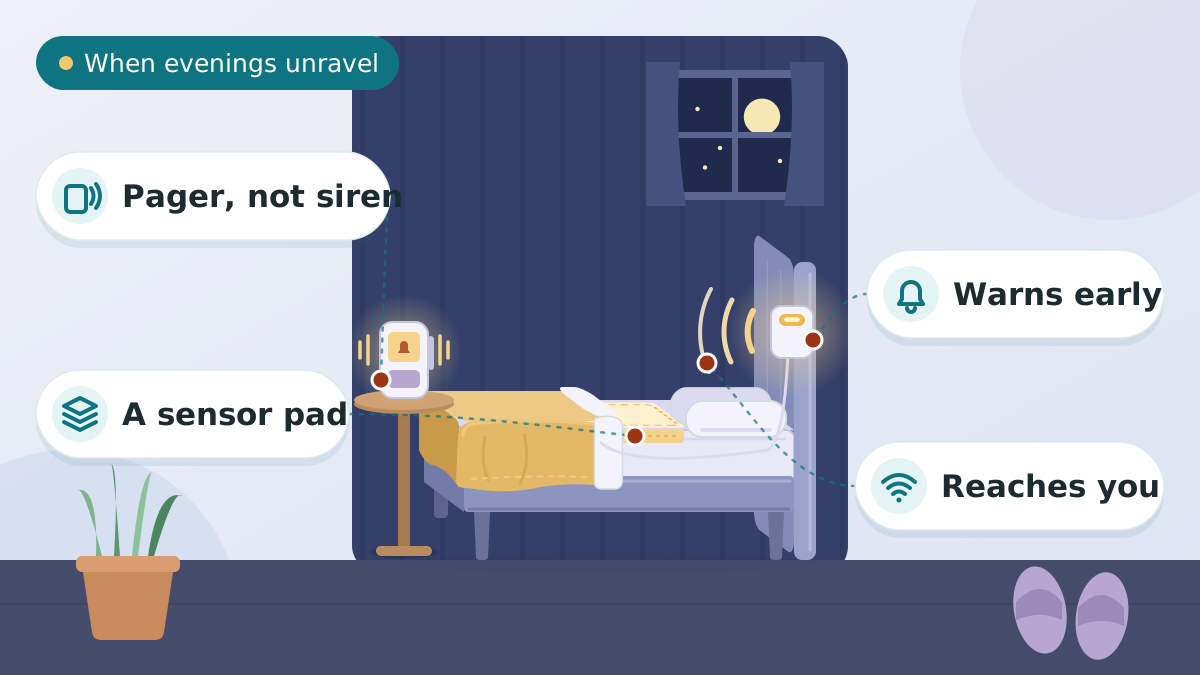
What sundowning is
Sundowning (or "sundown syndrome") describes a pattern many families notice: a person with dementia who has been relatively settled during the day becomes more confused, restless, anxious, irritable, or agitated as the afternoon wears into evening. The name comes from the timing — symptoms rise as the sun goes down and can continue into the night.
It is common, it is not a separate disease but a pattern seen with dementia, and — importantly — it is manageable. It is also one of the more draining challenges for caregivers, arriving exactly when their own energy is lowest. Understanding why it happens is the first step to easing it.

An ElderlyDaily original
Want the whole thing in one place?
Dementia Caregiver Command Center
- Daily care and medication logs in one place
- Behaviour-pattern tracking, to spot what makes a day harder
- Safety pages and caregiver handoff sheets for family and respite helpers
One-off purchase. Instant download.
Fillable PDF · US Letter + A4

Sponsored Pick
American Lifetime Day Clock
Seniors who need a clear, large-print day-and-date clock they can read across a room
Check PriceWhy it happens
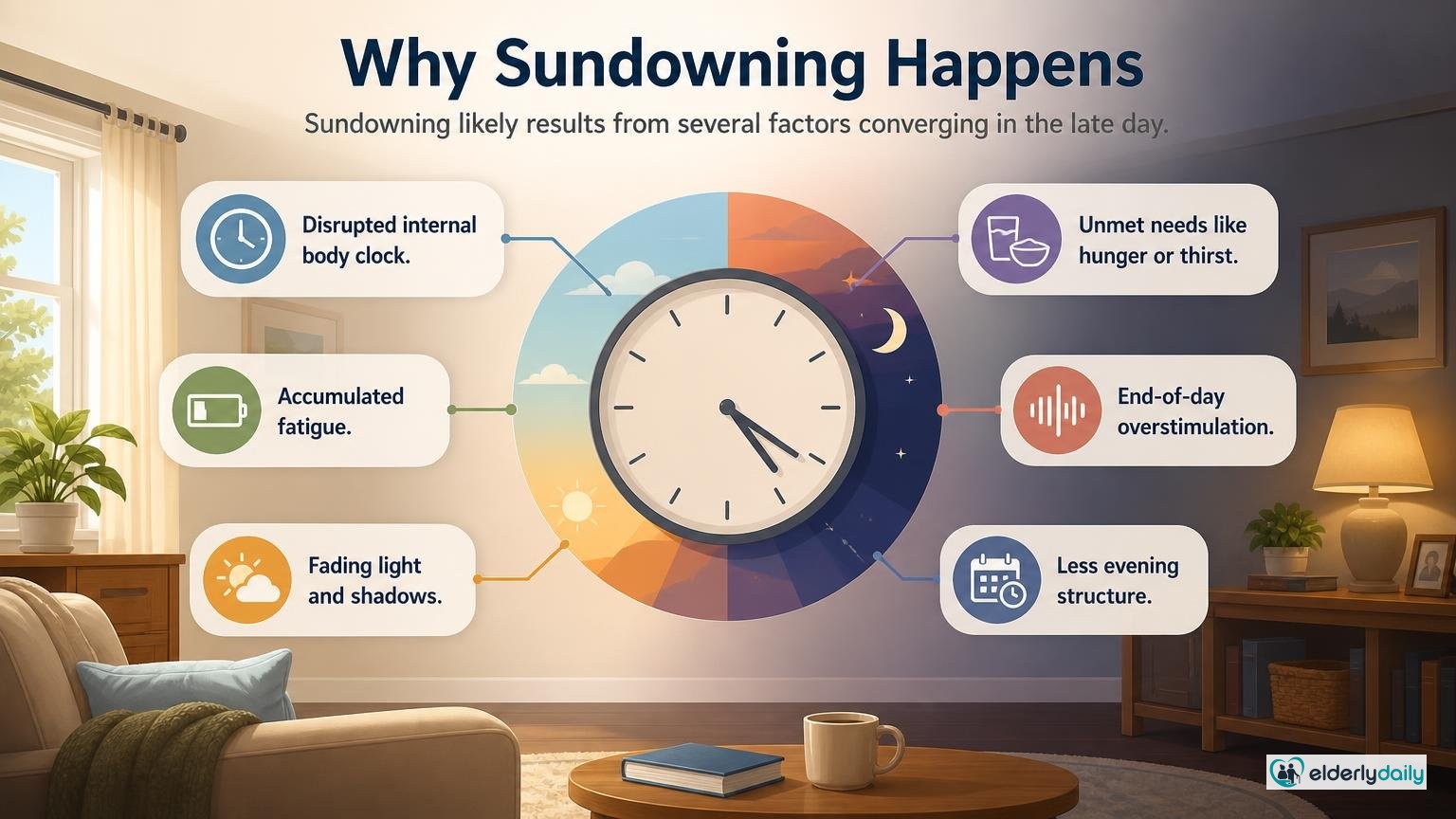
There is no single cause; sundowning likely results from several factors converging in the late day:
- Disrupted internal body clock. Dementia damages the brain’s regulation of the sleep-wake cycle, so the natural cues that tell us it is evening get scrambled.
- Accumulated fatigue. By late afternoon the mental effort of a whole day of coping is exhausting, and a tired brain copes less well — much like an overtired child.
- Fading light and shadows. As daylight dims, shadows and reduced contrast can cause misperceptions and fear.
- Hunger, thirst, or a full bladder building up by end of day.
- End-of-day overstimulation — a noisy household, a busy dinner-time, or too much activity as everyone gets home.
- Less structure in the evening, when the day’s activities wind down and there is less to anchor the person.
Preventing sundowning: set the day up right
The most effective approach is preventive — shaping the whole day so the late-day dip is smaller. These strategies genuinely reduce sundowning for many people:
- 1
Maximize daylight and morning activity
Get plenty of natural light and gentle activity earlier in the day. Bright light exposure helps reset the body clock, and morning is often the person’s best time. Time outdoors or by a window helps.
- 2
Keep a steady daily routine
Consistent wake, meal, and bedtime hours reduce confusion and support the body clock. See dementia daily routine.
- 3
Prevent late-day fatigue
Balance activity with rest so the person is not exhausted by evening; a short early-afternoon rest can help, but avoid long or late naps that disturb night sleep.
- 4
Brighten the home before dusk
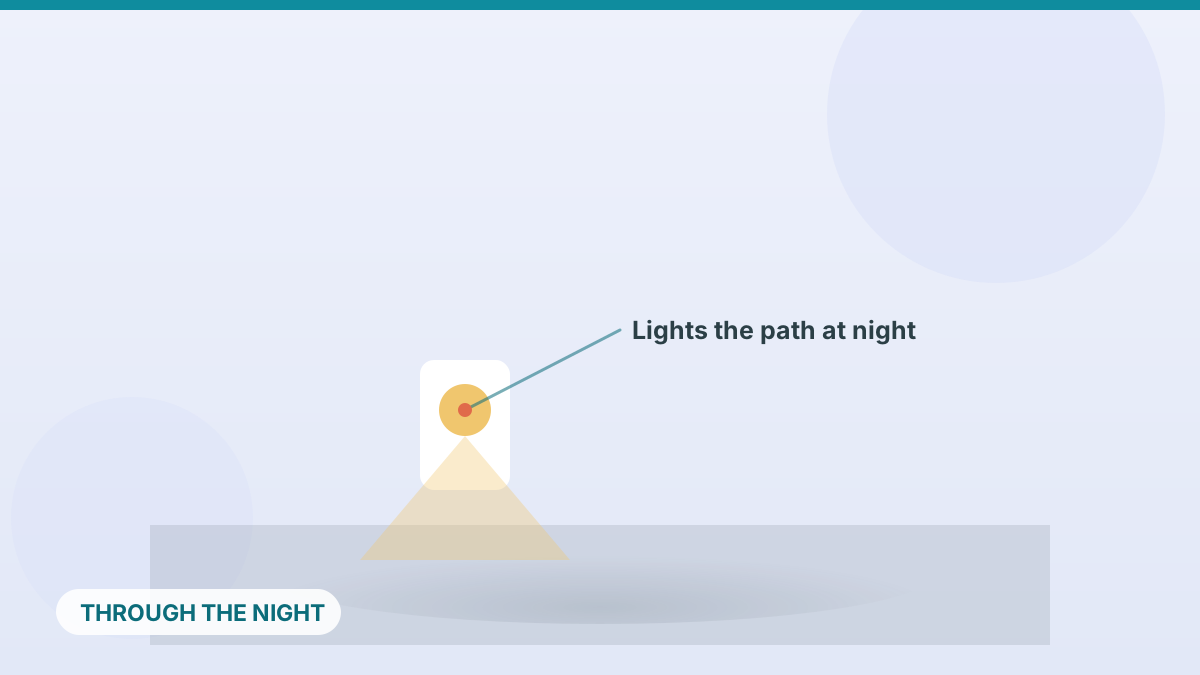
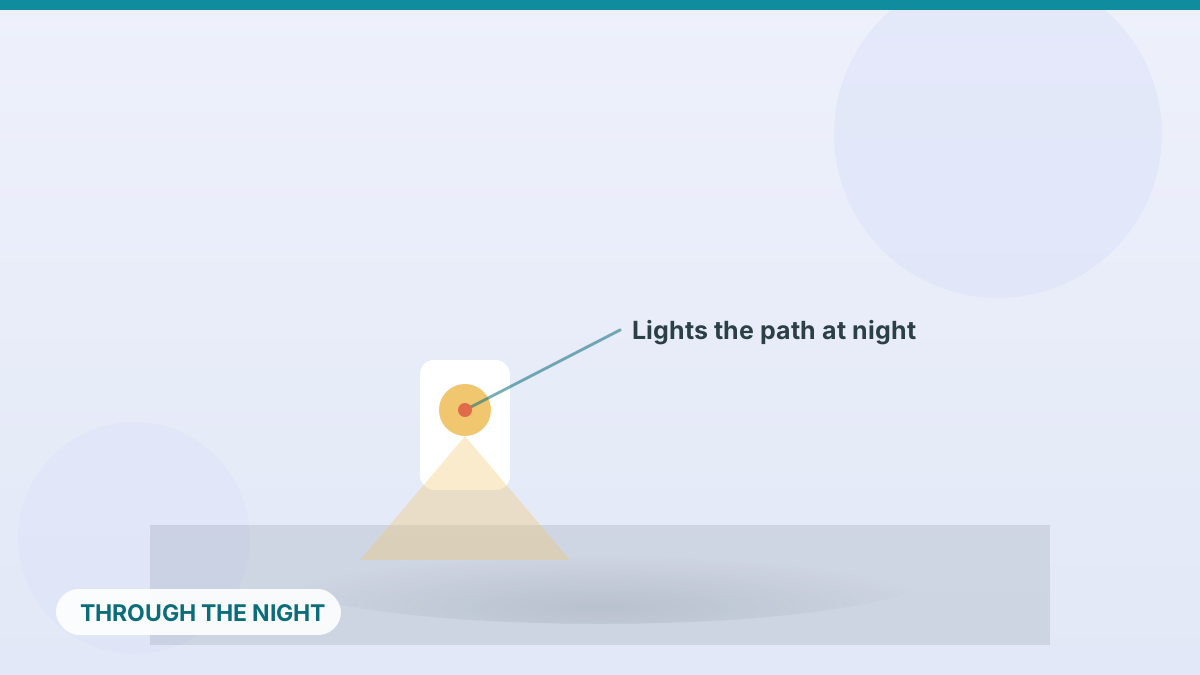
Turn lights on and close curtains before it gets dim to reduce shadows and confusing low-contrast scenes. Good night lights help through the evening.
- 5
Limit stimulants and heavy stimulation late
Reduce caffeine and sugar in the afternoon, and keep the evening calm and quiet — lower noise, fewer visitors, and a gentle wind-down.
Good to know
Keep a simple log of when episodes start and what preceded them for a week or two. Patterns — a skipped rest, a busy evening, hunger — often reveal the person’s specific triggers, which you can then head off.
Calming an episode as it happens
When sundowning strikes despite prevention, your calm is the most powerful tool. Reasoning or arguing makes it worse; reassurance and redirection help.
- Stay calm and reassuring. Your steady, gentle presence and tone matter more than words — the person mirrors your emotional state.
- Reduce stimulation. Lower noise, dim busy activity, turn off a loud TV, and create a quieter, calmer space.
- Acknowledge the feeling and redirect. Validate the emotion ("You seem worried — I’m here") and gently guide toward a soothing activity, a snack, or a comforting object. See how to calm a dementia patient.
- Meet basic needs — offer the toilet, a drink, or a small snack, in case hunger or discomfort is driving it.
- Try gentle comfort — soft music the person likes, a favourite blanket, a calm walk, or simply sitting together.
- Do not argue or quiz — avoid correcting or demanding explanations, which add stress.
Sundowning, sleep, and safety
Sundowning often bleeds into the night, disturbing sleep for everyone and sometimes leading to night-time wandering. The two challenges are linked:
- Support good sleep habits and a calming bedtime routine — our dementia sleep problems guide covers this in depth.
- Ensure night safety if the person gets up confused — night lights, a clear path, and consideration of door alarms or an elderly monitoring system given the wandering risk.
- A dementia clock that clearly shows day/night and time can reduce the disorientation that feeds evening and night confusion.
When to involve the doctor
While sundowning itself is a behavioral pattern, some situations need medical input:
- A sudden onset or a marked, rapid worsening of evening agitation — this can signal a treatable problem such as infection (a UTI is a classic trigger), pain, dehydration, or a medication effect, rather than the usual pattern.
- Episodes that risk the person’s or others’ safety, or that you cannot manage with the strategies above.
- Severe distress, or if you are wondering whether treatment could help — the doctor can review contributing factors, medications, and options.
Non-drug strategies are the first-line approach and are often very effective; any medication is a decision for the doctor, weighing benefits and risks carefully in dementia.
Watch out
A sudden change in behavior in a person with dementia — including new or much worse evening agitation — should be checked for infection, pain, or other treatable causes. Do not assume it is "just sundowning" if it appears abruptly.
Frequently asked questions
What is sundowning in dementia?
Sundowning is a pattern of increased confusion, anxiety, restlessness, or agitation that appears in the late afternoon and evening in people with dementia. It is not a separate disease but a common behavioral pattern, likely driven by a disrupted body clock, accumulated fatigue, fading light, hunger, and end-of-day overstimulation. It is manageable with the right strategies.
What triggers sundowning?
Common triggers include tiredness by late day, a disrupted sleep-wake body clock, fading light and confusing shadows, hunger, thirst or a full bladder, caffeine or sugar late in the day, and an overstimulating, noisy evening with less structure. Identifying the person’s specific triggers through a short log helps you prevent episodes.
How do you stop sundowning?
You reduce it mainly through prevention: maximize daylight and activity earlier in the day, keep a consistent routine, prevent late-day exhaustion, brighten the home before dusk to cut shadows, and limit caffeine, sugar, and overstimulation in the evening. During an episode, stay calm, reduce stimulation, reassure, and redirect rather than argue.
What time does sundowning usually start?
It typically begins in the late afternoon as daylight starts to fade and can continue into the evening and night. The exact timing varies by person, which is why brightening the home before dusk and keeping the late day calm and structured are helpful.
How do I calm someone during a sundowning episode?
Stay calm and reassuring, reduce noise and activity, acknowledge their feelings and gently redirect to a soothing activity, and meet basic needs like the toilet, a drink, or a snack. Soft familiar music, a comforting object, or simply sitting together can help. Avoid arguing, correcting, or quizzing, which increase distress.
When should I see a doctor about sundowning?
See a doctor if evening agitation starts suddenly or worsens rapidly, since that can signal a treatable problem like infection, pain, or dehydration rather than typical sundowning. Also seek help if episodes risk safety, cause severe distress, or cannot be managed with behavioral strategies. Non-drug approaches are first-line; any medication is a careful medical decision.
Sources
- National Institute on Aging (NIH). Coping With Agitation, Aggression, and Sundowning in Alzheimer's Disease
- National Institute on Aging (NIH). Managing Sleep Problems in Alzheimer's Disease
- Clinical Infectious Diseases (Norman, 2000). Fever in the Elderly
- MedlinePlus (U.S. National Library of Medicine). Delirium
