
Dementia Aggression: How to Handle It Safely

Educational guidance based on person-centered dementia care; not medical advice. Sudden or severe aggression can signal a treatable medical problem — see below — and safety comes first.
Aggression is one of the most distressing parts of dementia — and one of the most misunderstood. It is not the person turning on you; it is unmet need or fear finding the only outlet left. That shift in understanding is the key to handling it safely.
Key takeaways
- Aggression in dementia is communication of an unmet need or fear — not deliberate or personal.
- Safety first: in the moment, give space, avoid cornering or restraining, and remove hazards before anything else.
- Find and address the trigger — pain, fear, overstimulation, or a distressing interaction usually lies behind it.
- A sudden onset of aggression is a medical red flag — often pain or infection like a UTI — and needs a prompt check.
- Non-drug approaches come first; persistent or dangerous aggression warrants medical review and support for you.
Quick answer
How do I handle aggression in a person with dementia?
In the moment, prioritize safety — give space, stay calm, do not corner or restrain, and remove hazards. Then look for the trigger (pain, fear, overstimulation, discomfort, a distressing task) and address the underlying need; validate feelings and gently redirect rather than arguing. Prevent future episodes by identifying patterns and reducing triggers. A sudden onset of aggression is a medical red flag (often pain or infection) needing a check, and persistent or dangerous aggression warrants medical review.
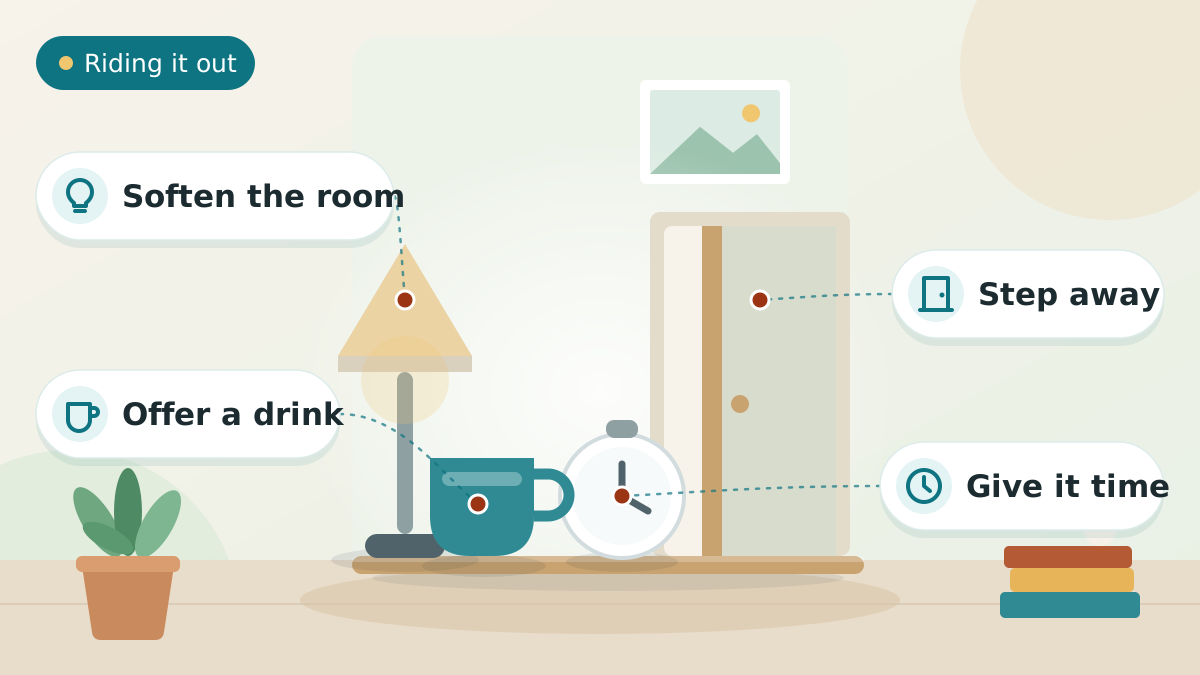
Understanding aggression differently
The most important shift a caregiver can make is to stop seeing aggression as the person "being difficult" or "turning on" them, and to start seeing it as communication. As dementia strips away the ability to express needs and process the world, fear, pain, and frustration can come out as shouting, resistance, or lashing out — because that is the only outlet left.
This reframe is not just kinder; it is practical. When you understand that aggression signals an unmet need or a frightening experience, you can look for and address the cause — which works far better than confrontation. It also helps you not take it personally: the disease is driving the behavior, not the person’s feelings about you. This builds on the calming approach in how to calm a dementia patient.
An ElderlyDaily original
Want the whole thing in one place?
Dementia Caregiver Command Center
- Daily care and medication logs in one place
- Behaviour-pattern tracking, to spot what makes a day harder
- Safety pages and caregiver handoff sheets for family and respite helpers
One-off purchase. Instant download.
Fillable PDF · US Letter + A4

Sponsored Pick
Tracki Mini GPS Tracker
Early-to-mid dementia, where the person will carry something but refuses to wear a device
Check PriceIn the moment: safety first
When aggression flares, your first priority is everyone’s safety — de-escalation comes right after:
- Stay calm and give space. Do not crowd or corner the person; step back to a safe distance. Your calm lowers the temperature.
- Do not restrain or force unless someone is in immediate danger — restraint usually escalates fear and aggression.
- Remove hazards — anything that could be thrown or cause injury.
- Protect yourself and others — keep out of striking range, and remove other people (including agitated bystanders) from the situation.
- Don’t argue or retaliate. Avoid raising your voice, arguing, or correcting, which pour fuel on the fire.
- Wait it out safely — often the surge passes if you stay calm and do not escalate it; then gently re-approach.
Safety first
If aggression ever puts you or others in real danger and you cannot keep everyone safe, prioritize safety and seek urgent help. Your safety matters too — stepping away from a dangerous situation is the right thing to do.
Finding the trigger
Once things are safe, become a detective for what set it off — because addressing the cause is what resolves and prevents aggression. Common triggers:
- Pain or physical discomfort — a person who cannot express pain may lash out; this is a leading and overlooked trigger.
- Fear or feeling threatened — being approached suddenly, not understanding what is happening, or a care task (like bathing) that feels frightening or undignified.
- Overstimulation — too much noise, activity, or too many people.
- Unmet needs — hunger, thirst, needing the toilet, tiredness, or being too hot or cold.
- Frustration — at not being understood, or at being unable to do something.
- A specific interaction — being rushed, corrected, argued with, or having care forced on them.
Keeping a simple log of episodes — what happened just before, the time, the setting — often reveals clear patterns you can then head off.
When it is sudden: check for a medical cause
A crucial point: a sudden onset of aggression, or a sharp increase in someone previously calmer, is a medical red flag. It frequently signals a treatable physical problem rather than the dementia itself:
- Infection — a UTI is a classic cause of sudden agitation and aggression in seniors, often without obvious urinary symptoms.
- Pain — undiagnosed pain (a fracture, dental problem, constipation, or other) commonly drives new aggression.
- Medication effects or a new medical problem.
- Delirium — sudden confusion with agitation; see why mom is confused at night.
So when aggression appears suddenly, have the person checked promptly for these causes — treating them often resolves the aggression.
Watch out
New or suddenly worsening aggression is often pain or infection, not "the dementia getting worse." A prompt medical check for a UTI, pain, or other treatable cause is one of the most valuable responses.
Preventing future episodes
Prevention beats management. Using what you learn about triggers, reduce the conditions that spark aggression:
- Address pain and physical needs proactively — regular comfort, toileting, food, and drink, and medical attention to any pain.
- Approach care gently — from the front, calmly, explaining each step, at the person’s best time of day, never rushing or forcing; a steady daily routine reduces anxiety.
- Manage the environment — reduce noise and overstimulation, and keep surroundings calm and familiar.
- Use validation and redirection — meet the emotion, avoid arguing, and redirect to something soothing; see how to calm a dementia patient.
- Provide meaningful activity to reduce the frustration and boredom that feed agitation.
When to seek help — and support for you
Some situations call for outside help, and you should never feel you must face this alone:
- Persistent or escalating aggression — ask the doctor to review for medical causes and discuss options; non-drug approaches are first-line, and any medication is a careful decision weighing benefits and risks in dementia.
- Dangerous aggression — if there is a real risk of harm to the person or others that you cannot safely manage, seek urgent professional help.
- Guidance and training — dementia organizations and specialists offer valuable, practical support for managing behaviors.
- Your own wellbeing — coping with aggression is exhausting and can be frightening; lean on support and guard against caregiver burnout. It is not a personal failing to need help with this.
Frequently asked questions
Why does my parent with dementia become aggressive?
Aggression in dementia is communication of an unmet need or a frightening experience — not deliberate or personal. Common triggers include pain or discomfort, fear or feeling threatened (such as during bathing), overstimulation, unmet needs like hunger or needing the toilet, frustration at not being understood, and distressing interactions like being rushed or corrected. Finding and addressing the trigger is key.
How do I handle a dementia patient who is being aggressive?
Prioritize safety first — stay calm, give space, do not corner or restrain, and remove hazards. Avoid arguing or raising your voice, wait for the surge to pass, then look for the trigger and address the underlying need, validating feelings and gently redirecting. Prevent future episodes by identifying patterns, and have sudden aggression checked medically.
Is sudden aggression in dementia a medical emergency?
A sudden onset of aggression, or a sharp increase, is a medical red flag that often signals a treatable problem — commonly pain (from a fracture, dental issue, or constipation) or infection such as a UTI, which frequently causes sudden agitation in seniors. It warrants a prompt medical check, since treating the cause often resolves the aggression.
How can I prevent aggression in someone with dementia?
Address pain and physical needs proactively, approach care gently and unhurried at the person’s best time of day, keep a calm and familiar environment with reduced noise and overstimulation, maintain a predictable routine, use validation and redirection instead of arguing, and provide meaningful activity to reduce frustration and boredom. A trigger log helps you spot and head off patterns.
Should I use medication for dementia aggression?
Non-drug approaches — addressing triggers, gentle care, environment, and de-escalation — are the first-line treatment, and checking for pain or infection is essential. Any medication is a careful medical decision that weighs benefits against real risks in dementia, so it should be discussed with the doctor for persistent or dangerous aggression rather than used as a first resort. In particular, antipsychotics — sometimes used for severe agitation — carry an FDA warning of an increased risk of death in older adults with dementia, so they are reserved for serious or dangerous symptoms, at the lowest effective dose and for the shortest time, under medical supervision.
What do I do if my parent’s aggression is dangerous?
If there is a real risk of harm to the person or others that you cannot safely manage, prioritize everyone’s safety — give space, avoid restraint, and seek urgent professional help. Afterward, involve the doctor to review medical causes and options, use dementia specialist support, and get help for yourself; facing dangerous aggression is frightening and you should not do it alone.
Sources
- Alzheimer's Association. Anxiety & Agitation (behavioral symptoms and treatment)
- MedlinePlus (U.S. National Library of Medicine). Delirium
- Clinical Infectious Diseases (Norman, 2000). Fever in the Elderly
