
Signs Dementia Is Getting Worse

Educational guidance, not medical advice. A sudden decline is often a treatable problem, not progression — see below and seek prompt medical care.
Dementia progresses, but rarely on a schedule. Knowing the signs of decline helps you plan care, adjust support, and — crucially — tell slow progression from a sudden, treatable problem that only looks like "getting worse."
Key takeaways
- Dementia usually progresses gradually, with worsening memory, daily function, communication, behavior, and eventually physical ability.
- The most useful distinction: gradual decline over months (progression) versus a sudden change over hours to days (often a treatable problem, not the dementia).
- Watch for more help needed with daily tasks, greater confusion and disorientation, communication decline, new or worse behaviors, and later physical changes.
- A sudden worsening is a medical red flag — check for infection, pain, medication effects, or delirium before assuming progression.
- Recognizing progression lets you adjust support, plan ahead, and reassess whether current care is still enough.
Quick answer
How do I know if dementia is getting worse?
Progression shows as gradual worsening over months: needing more help with daily tasks, greater confusion and disorientation, declining communication, new or worse behaviors, and eventually physical changes (mobility, swallowing, continence). The crucial distinction is speed — a sudden change over hours to days is usually not progression but a treatable problem like infection, pain, or delirium, and needs a prompt medical check. Recognizing genuine progression helps you adjust care and plan ahead.
The most important distinction: gradual vs. sudden
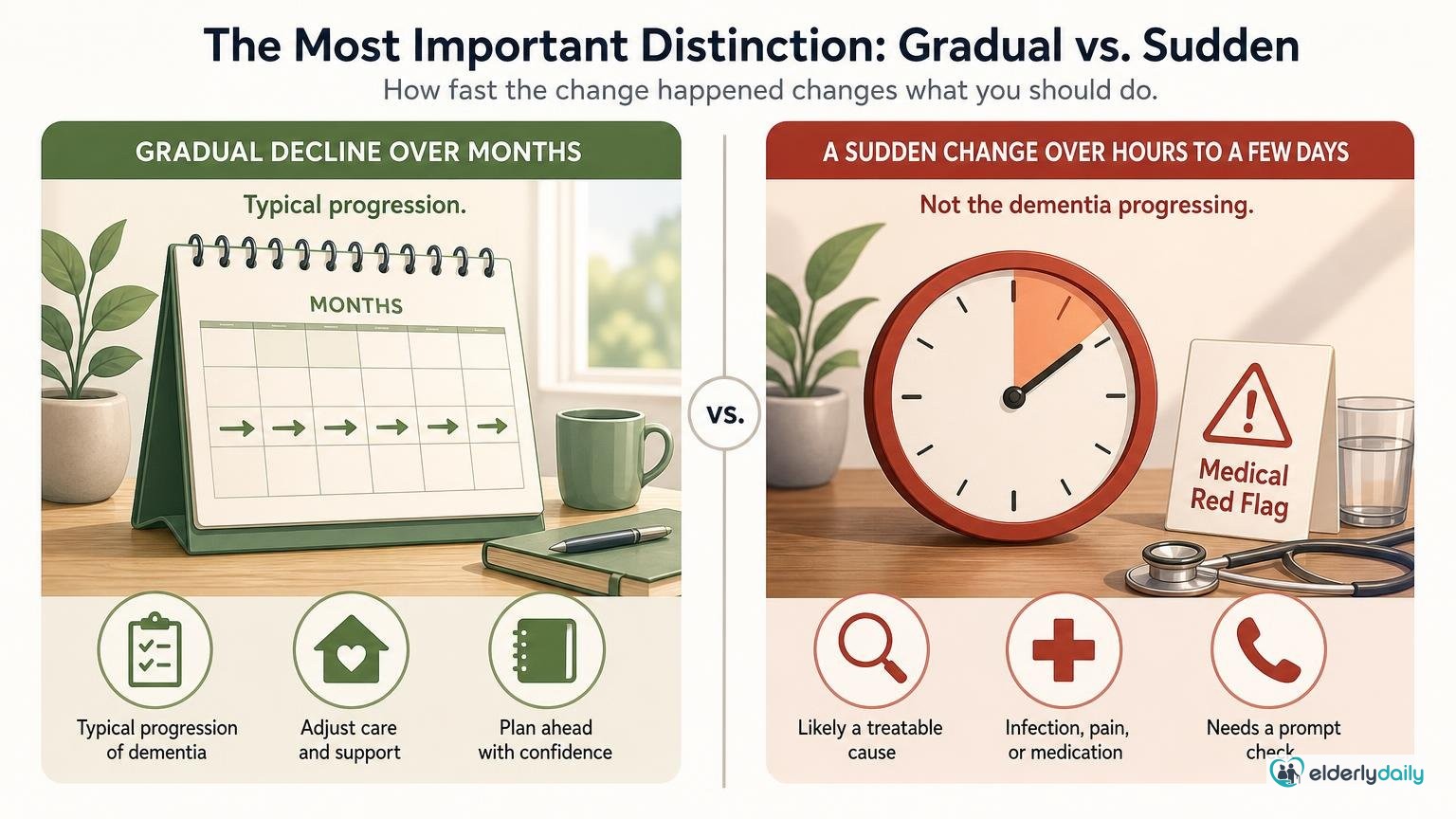
Before listing the signs of progression, one distinction matters above all, because it changes what you should do: how fast the change happened.
- Gradual decline over months is how dementia typically progresses. This calls for adjusting care, adding support, and planning ahead — but not usually urgent medical action.
- A sudden change over hours to a few days — a sharp drop in a person who was stable — is usually not the dementia progressing. It is far more likely a treatable medical problem (infection, pain, dehydration, medication) causing delirium on top of the dementia, and it needs a prompt medical check.
Families often assume any decline is "the dementia getting worse" and wait — missing a treatable cause. So as you read the signs below, always ask first: *did this come on gradually, or suddenly?*
Watch out
A sudden decline in someone with dementia is a medical red flag, not simple progression. Check for a UTI or other infection, pain, constipation, dehydration, or a medication effect first — these are common, treatable, and often cause a dramatic-looking but reversible worsening.
An ElderlyDaily original
Want the whole thing in one place?
Dementia Caregiver Command Center
- Daily care and medication logs in one place
- Behaviour-pattern tracking, to spot what makes a day harder
- Safety pages and caregiver handoff sheets for family and respite helpers
One-off purchase. Instant download.
Fillable PDF · US Letter + A4

Sponsored Pick
10.1-Inch Extra Large Digital Clock
Seniors who need the biggest, highest-contrast display in the room
Check PriceMemory, thinking, and orientation
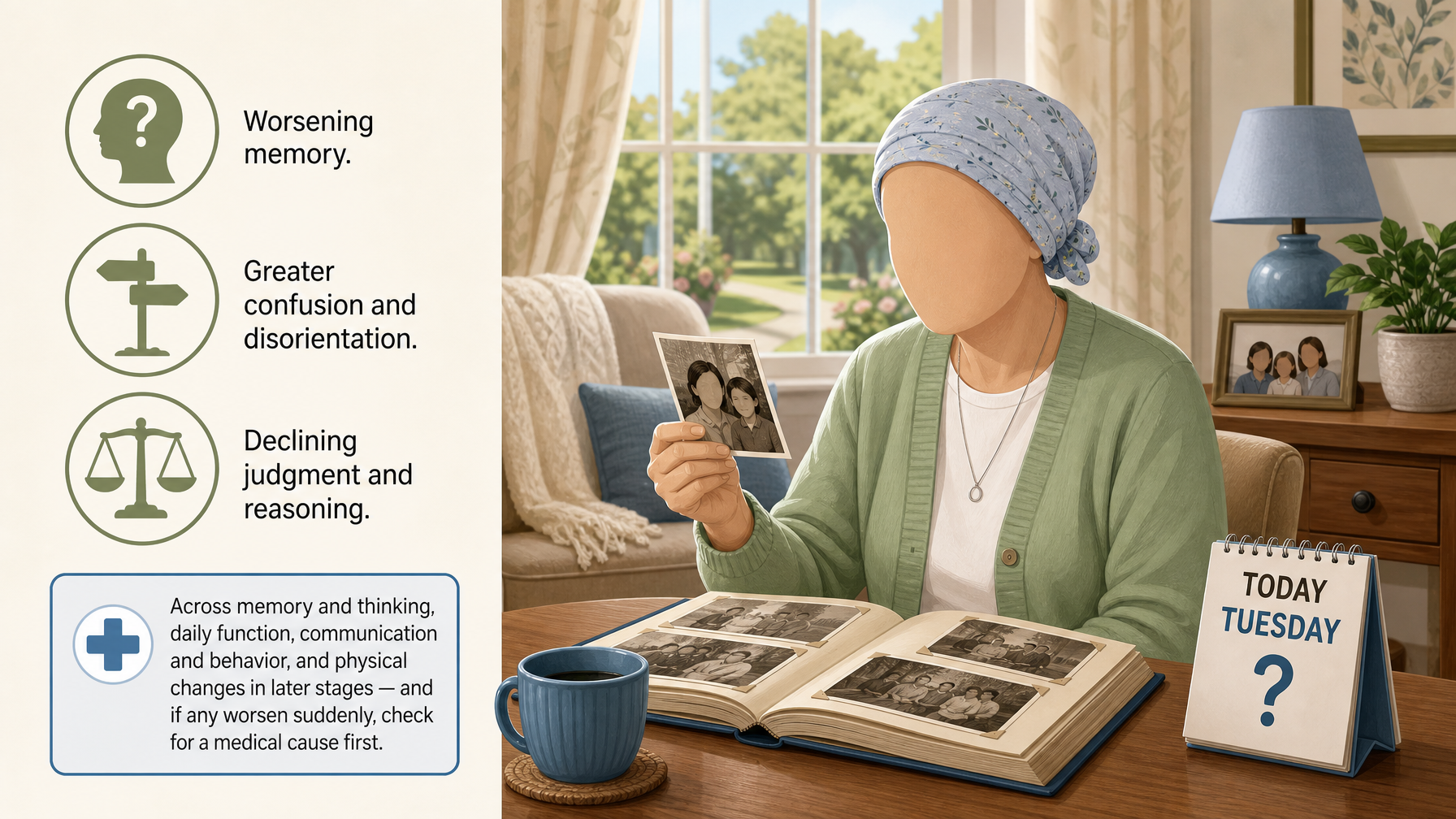
As dementia progresses, cognitive changes deepen:
- Worsening memory — forgetting more recent events and, over time, more distant memories, familiar names, and faces.
- Greater confusion and disorientation — increasing trouble with time, place, and eventually recognizing people, and getting lost even in familiar settings.
- Declining judgment and reasoning, and difficulty with tasks that were previously manageable.
- Increased confusion in the late day (sundowning) and at night.
A quick way clinicians screen these thinking changes is the clock drawing test — a brief in-office check that flags possible impairment, though it is a screen, not a diagnosis.
Daily function and independence
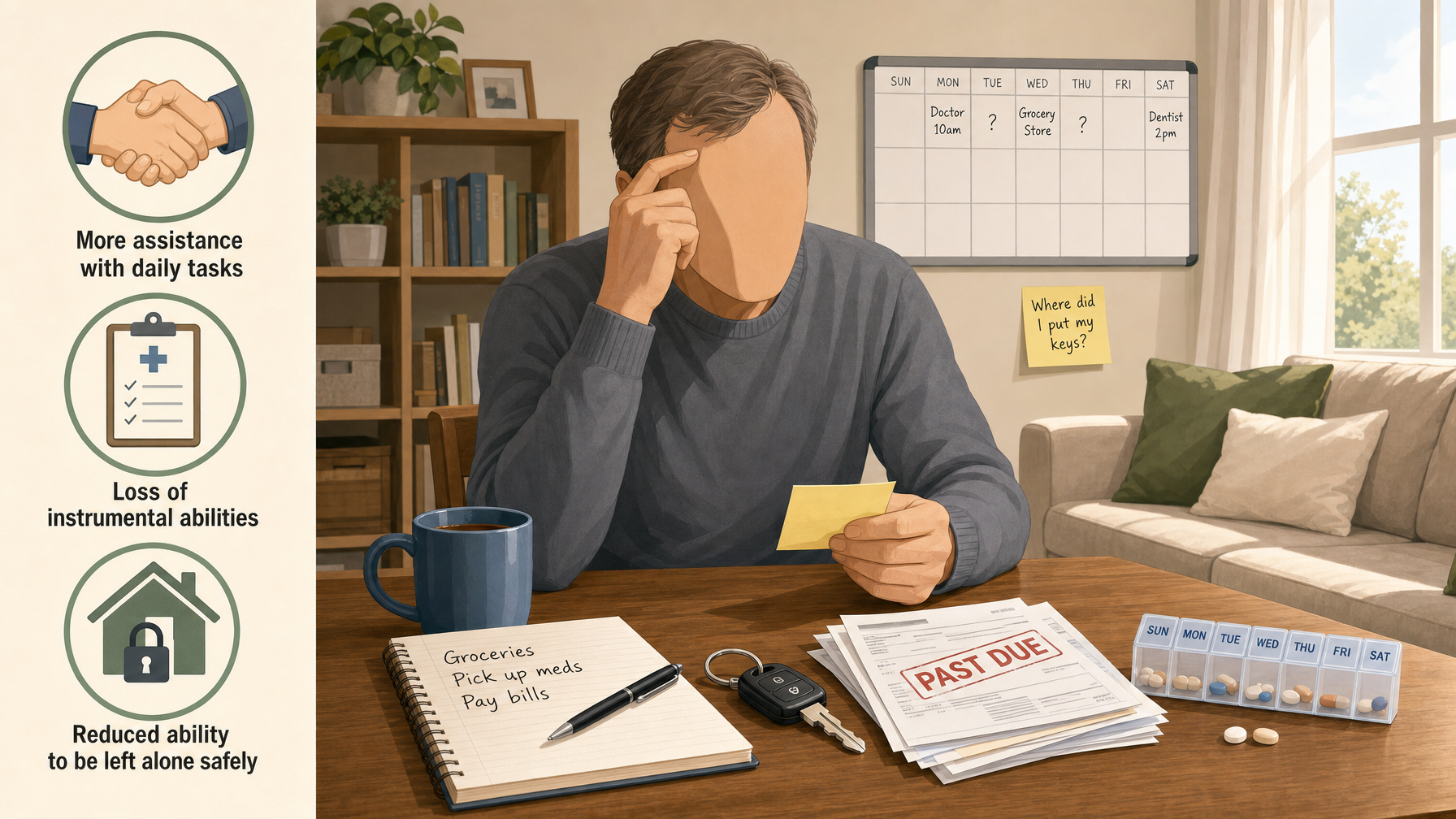
A key marker of progression is needing more help with everyday life:
- More assistance with daily tasks — dressing, bathing, eating, and toileting increasingly need help.
- Loss of instrumental abilities — managing money, medications, cooking, and appointments become unsafe or impossible.
- Reduced ability to be left alone safely — see signs a parent should not live alone.
- New safety risks — needing more supervision around the home, and increased wandering risk.
Communication and behavior
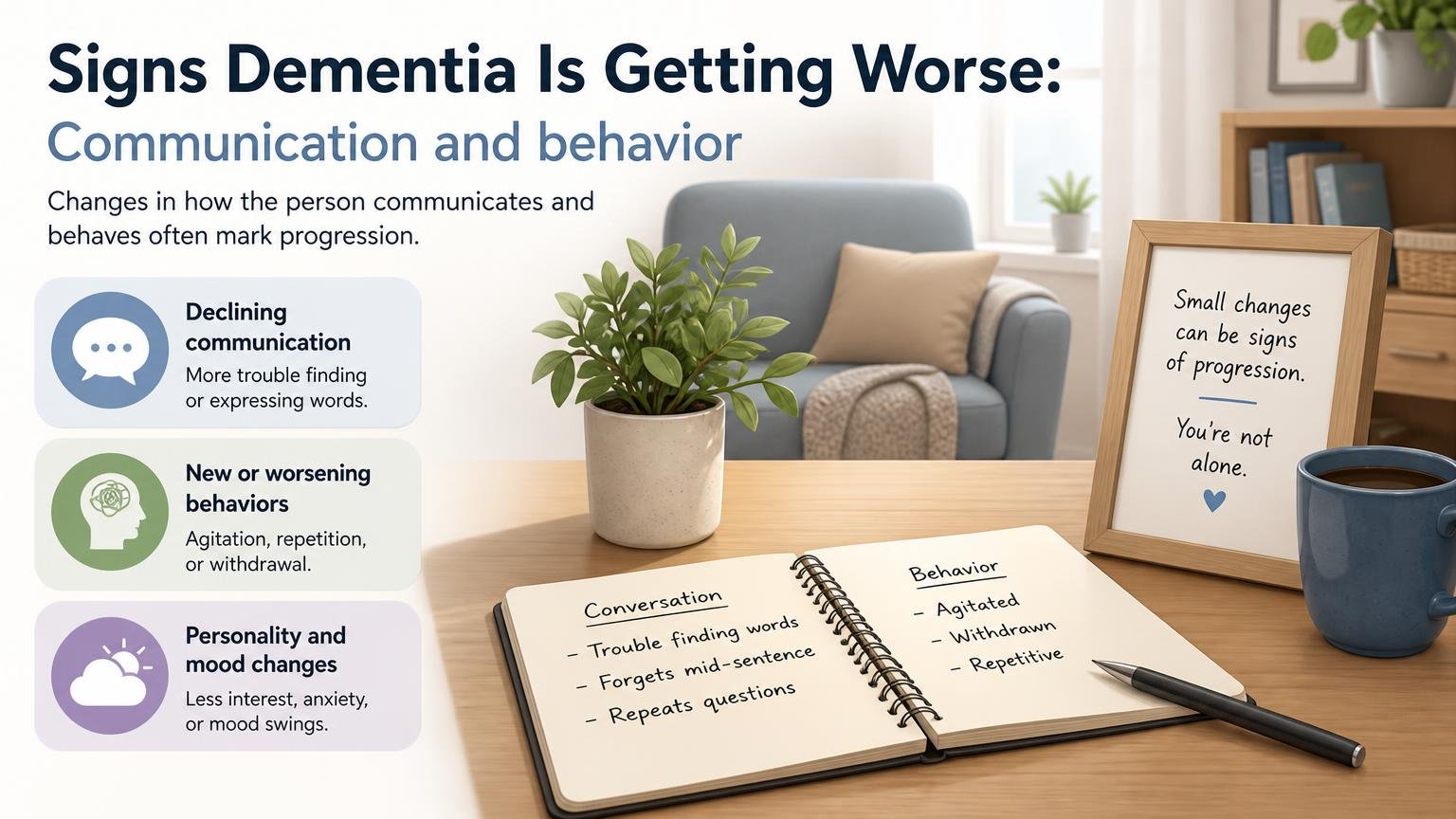
Changes in how the person communicates and behaves often mark progression:
- Declining communication — difficulty finding words, following or holding a conversation, and eventually reduced speech.
- New or worsening behaviors — increased agitation, aggression, restlessness, or apathy and withdrawal.
- Personality and mood changes, and increased anxiety or suspicion.
- Sleep changes — more disturbance, day-night reversal, or sleeping much more; see dementia sleep problems.
Remember the golden rule: if any of these appear or worsen *suddenly*, check for a medical cause first.
Physical changes in later stages
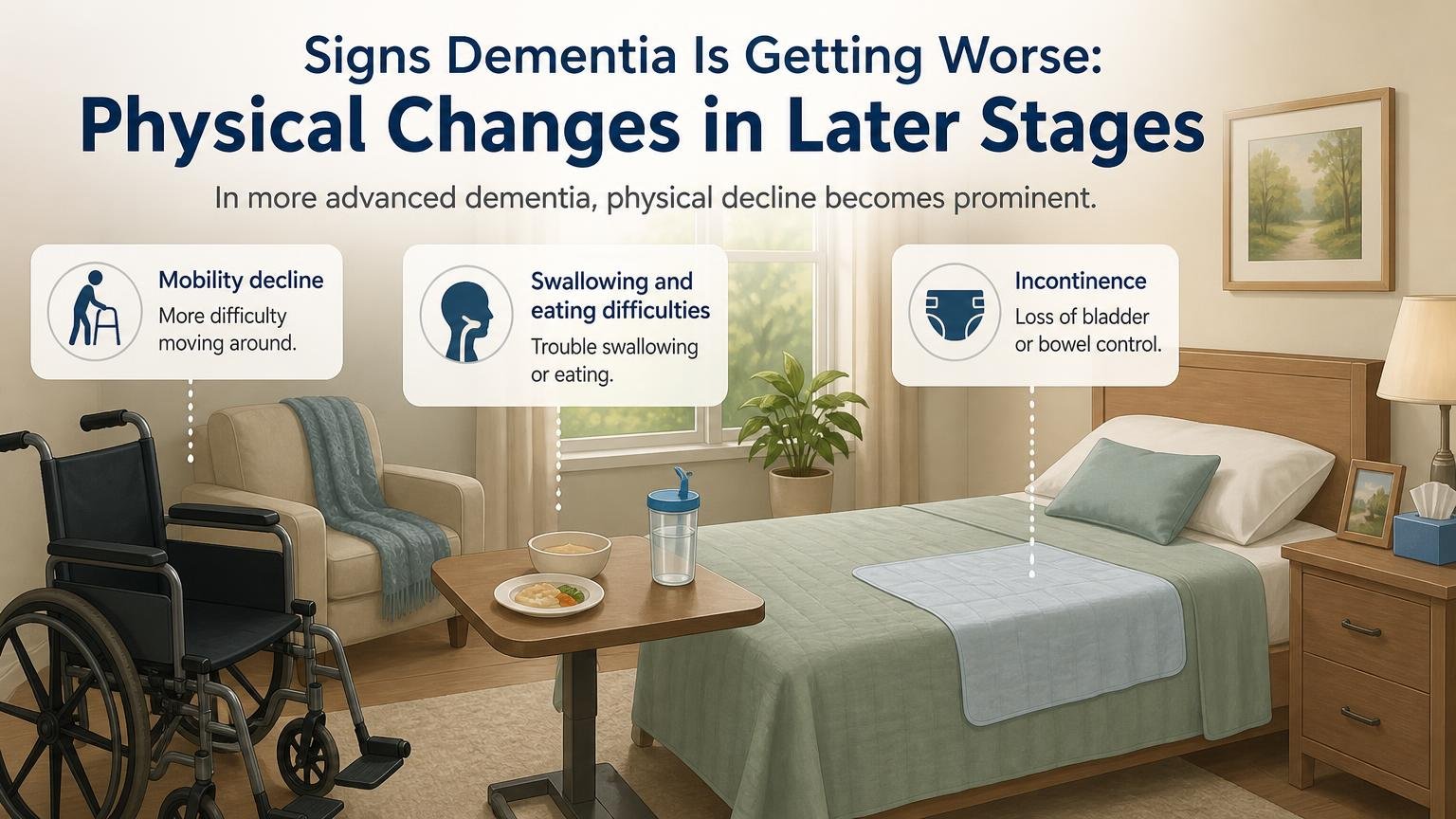
In more advanced dementia, physical decline becomes prominent:
- Mobility decline — increased unsteadiness, falls, and eventually difficulty walking or becoming chair- or bed-bound.
- Swallowing and eating difficulties, with weight loss and risks around food and drink.
- Incontinence — see managing incontinence at home.
- Greater vulnerability to infections and other health problems, and increased sleeping.
What to do as dementia progresses
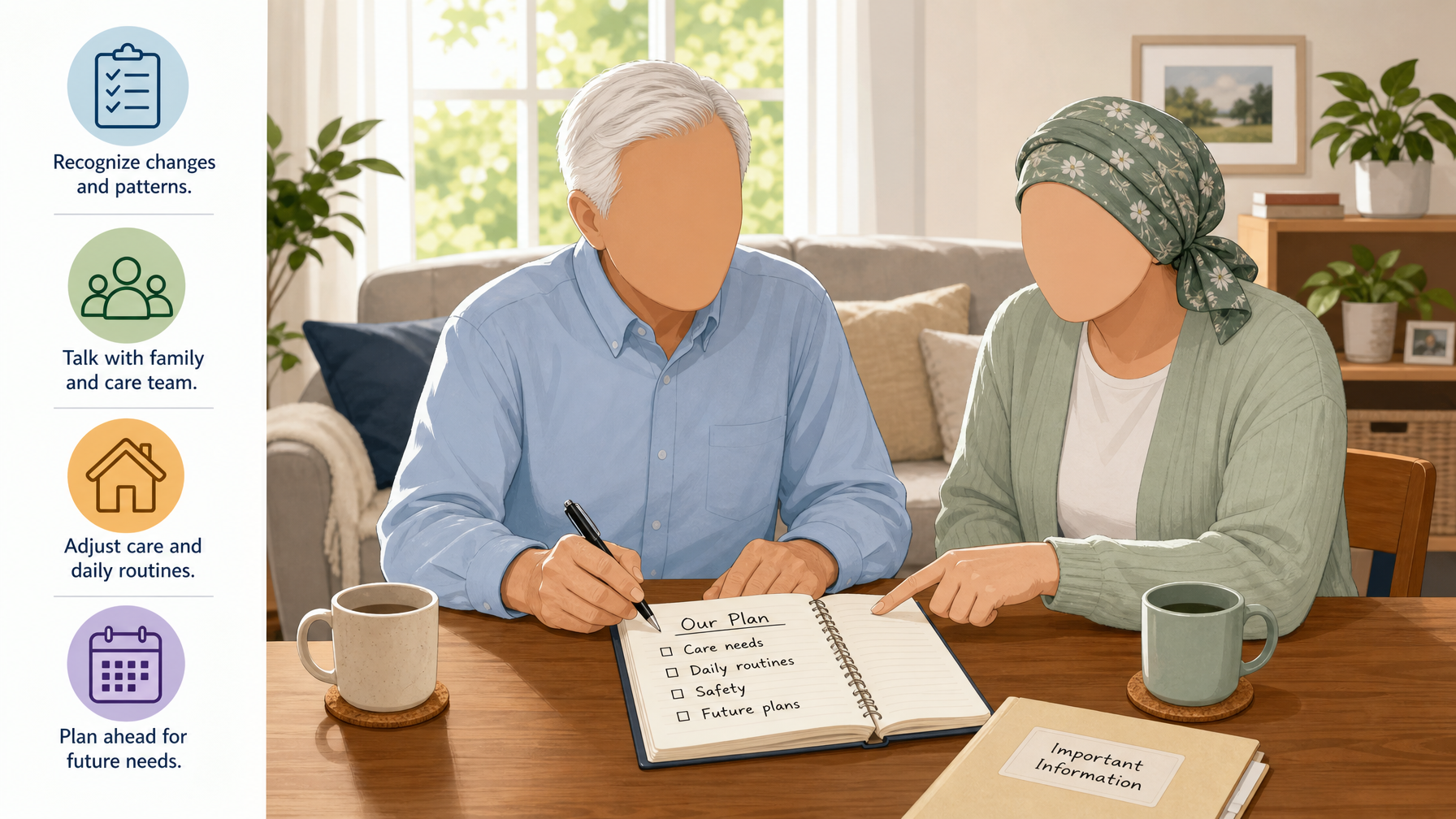
Recognizing progression is the trigger to adapt and plan:
- 1
Rule out a treatable cause for any sudden change
Always check first whether a decline is sudden — if so, seek prompt medical care for infection, pain, dehydration, or medication effects before assuming progression.
- 2
Adjust the support and environment
Increase help with daily tasks, simplify activities and the routine, and update home safety as needs change.
- 3
Review care needs and options
Reassess whether current care is still enough and sustainable — consider more home support or, when appropriate, a move; see how to tell if a parent needs assisted living.
- 4
Plan ahead while you can
Handle legal, financial, and care-wish planning early, and build a care team including the doctor and dementia specialists.
- 5
Support yourself
Progression increases demands and grief; lean on support and guard against caregiver burnout.
Frequently asked questions
What are the signs that dementia is getting worse?
Progression shows as gradual worsening over months: needing more help with daily tasks, greater confusion and disorientation, declining communication and judgment, new or worse behaviors like agitation or withdrawal, sleep changes, and eventually physical decline (mobility, swallowing, continence). The key is that genuine progression is gradual — a sudden change is usually something else.
How do I know if it is dementia progressing or something else?
The distinction is speed. Gradual decline over months is typical progression. A sudden change over hours to a few days — a sharp drop in a stable person — is usually not the dementia but a treatable problem such as infection (a UTI is common), pain, dehydration, or a medication effect causing delirium. Always check a sudden change medically before assuming progression.
Is a sudden decline in dementia normal?
No — a sudden decline is a medical red flag, not normal progression, which is gradual. Sudden worsening of confusion, function, or behavior over hours to days is often caused by a treatable problem like a UTI or other infection, pain, constipation, dehydration, or medication, and needs a prompt medical check. Treating the cause often reverses the decline.
What are the stages of dementia decline?
Broadly, dementia moves from earlier stages (noticeable memory and thinking changes, but considerable independence) through middle stages (more help needed with daily tasks, greater confusion, communication and behavior changes) to advanced stages (extensive care needs, significant communication loss, and physical decline including mobility, swallowing, and continence). Progression rates vary widely between individuals.
What should I do when my parent’s dementia gets worse?
First rule out a treatable cause for any sudden change. For genuine gradual progression, adjust support and simplify activities and routine, update home safety, reassess whether current care is still enough (considering more home support or assisted living), plan legal and financial matters early while possible, build a care team, and get support for yourself to guard against burnout.
How fast does dementia progress?
It varies greatly between individuals and by the type of dementia — some decline slowly over many years, others more quickly. Because the pace is unpredictable, the practical focus is on watching for changes, distinguishing gradual progression (which calls for adjusting care and planning) from sudden changes (which call for a medical check), and planning ahead while the person can take part.
Sources
- National Institute on Aging (NIH). Managing Personality and Behavior Changes in Alzheimer's
- National Institute on Aging (NIH). The Dilemma of Delirium in Older Patients
- MedlinePlus (U.S. National Library of Medicine). Delirium
- Clinical Infectious Diseases (Norman, 2000). Fever in the Elderly
