
Dementia Care at Home: A Complete Caregiver Guide

Educational guidance based on person-centered dementia-care principles; not a substitute for advice from the person’s doctor or a dementia specialist.
Caring for someone with dementia at home is one of the hardest and most loving things a family can do. This guide covers the foundations — communication, routine, safety, behavior, and looking after yourself — so you can do it with more confidence and less strain.
Key takeaways
- Meet the person where they are — enter their reality rather than correcting it. Validation calms; arguing escalates.
- A predictable daily routine reduces confusion and anxiety more than almost anything else — see dementia daily routine.
- Behaviors are communication — agitation, wandering, or resistance usually signal an unmet need (pain, boredom, fear, hunger), not "bad behavior."
- Safety-proof the home early — falls, wandering, and hazards are real risks; see dementia home safety.
- Care for yourself. Dementia caregiving is a marathon; protecting your own health is not optional — see preventing caregiver burnout.
Quick answer
How do I care for someone with dementia at home?
Build care on five foundations: communicate gently (enter their reality, validate feelings, keep it simple); keep a consistent daily routine to reduce confusion; understand behaviors as unmet needs rather than misbehavior; make the home safe against falls and wandering; and support your own wellbeing so you can sustain it. Bring in the doctor for any sudden change (which can signal a treatable problem), and use community and respite support early.
Communicating with someone who has dementia
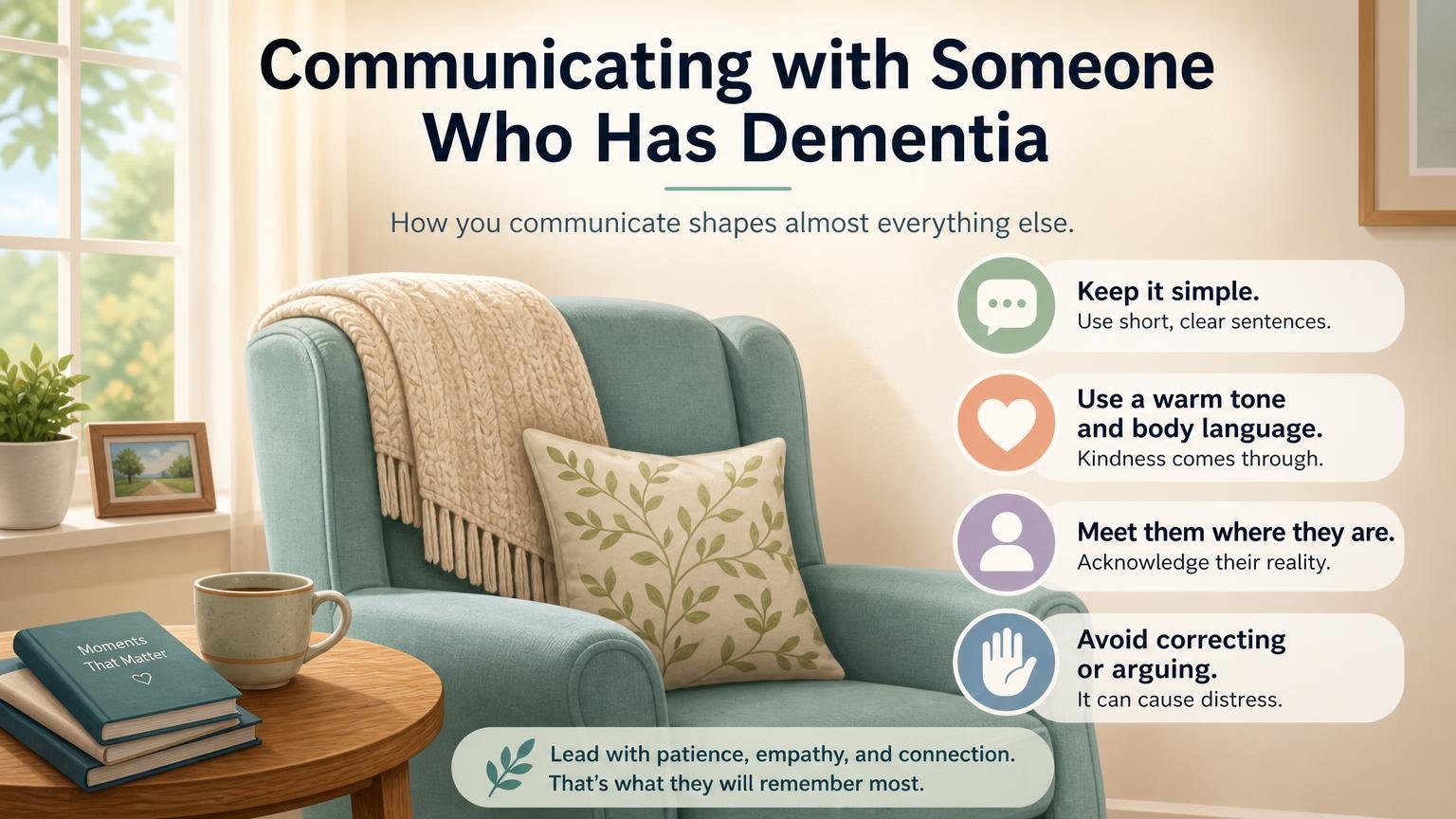
How you communicate shapes almost everything else. As dementia progresses, the person increasingly lives in their own reality, and the caregiver’s job is to meet them there — gently, without correcting or arguing. Trying to force facts ("Mom, Dad died years ago") only causes fresh grief and agitation each time.
- Enter their reality and validate feelings. If she is anxious about "getting to work," respond to the feeling ("It sounds like you have a lot to do") rather than the facts. This is the heart of a calmer relationship — more in how to calm a dementia patient.
- Keep it simple. Short sentences, one idea at a time, one question at a time. Give plenty of time to respond.
- Use a warm tone and body language. Approach from the front, at eye level, calm and unhurried — the person reads your emotional tone even when words are lost.
- Do not argue or quiz. Avoid "Don’t you remember?" Offer information gently instead of testing recall.
- Redirect rather than confront. If a topic causes distress, gently shift to another activity or subject.
Good to know
A simple rule of thumb: connect with the emotion, not the fact. Meeting the feeling behind the words defuses far more distress than getting the details "right" ever will.
An ElderlyDaily original
Want the whole thing in one place?
Dementia Caregiver Command Center
- Daily care and medication logs in one place
- Behaviour-pattern tracking, to spot what makes a day harder
- Safety pages and caregiver handoff sheets for family and respite helpers
One-off purchase. Instant download.
Fillable PDF · US Letter + A4

Sponsored Pick
10.1-Inch Extra Large Digital Clock
Seniors who need the biggest, highest-contrast display in the room
Check PriceThe power of routine
For a person losing their grip on time and memory, a predictable routine is deeply reassuring — it removes the constant, exhausting question of "what happens next?" A steady rhythm to the day reduces confusion, anxiety, and many difficult behaviors.
- Keep wake, meals, activities, and bedtime at consistent times.
- Schedule demanding tasks (like bathing) for the person’s best time of day, often the morning.
- Build in regular, gentle activity and time outdoors or in daylight, which also helps sleep and sundowning.
- Allow flexibility — follow the person’s cues on a hard day rather than forcing the schedule.
Our dementia daily routine for caregivers offers a practical sample structure to adapt.
Understanding difficult behaviors
Agitation, aggression, repetitive questions, resistance to care, wandering — these are among the hardest parts of dementia, and the key insight transforms how you respond: behavior is communication. The person is expressing an unmet need they can no longer put into words.
- Look for the trigger. Common causes are pain or illness, hunger or thirst, needing the toilet, tiredness, boredom, overstimulation, fear, or discomfort (too hot, too cold, uncomfortable clothing).
- Rule out medical causes, especially for a sudden change — pain, infection (a UTI often causes sudden agitation or confusion), or medication effects. A sudden behavioral change warrants a medical check.
- Respond to the need, not the behavior. Meeting the underlying need usually resolves the behavior far better than confrontation.
- Stay calm and do not take it personally — the disease is speaking, not the person. For aggression specifically, see handling dementia aggression.
Two behaviors deserve their own guides: wandering and the late-day agitation of sundowning.
Watch out
A sudden change in behavior, confusion, or alertness is a medical red flag in dementia — it often signals a treatable problem like infection, pain, or dehydration, not just disease progression. Have it checked promptly.
Making the home safe
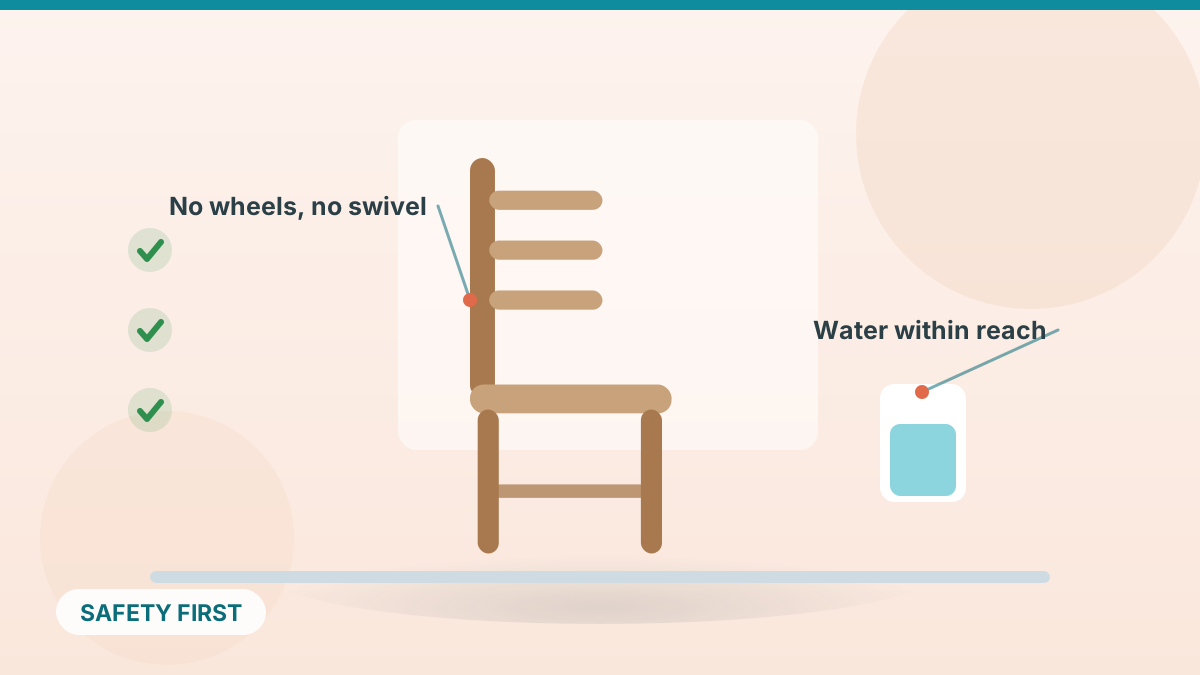
Dementia affects judgment, perception, and memory, creating safety risks that need proactive management. Address these early rather than after an incident:
- Falls — dementia raises fall risk through impaired judgment and, later, changes in walking; set up the home and bathroom for safety and see why elderly parents keep falling.
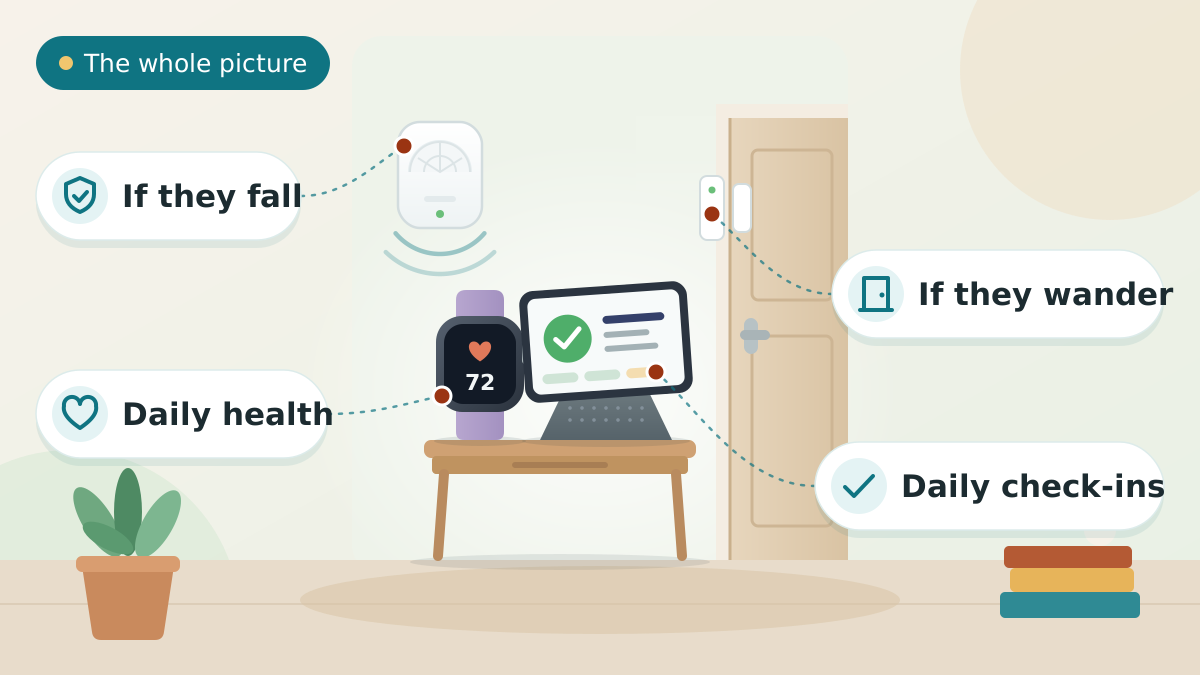
- Wandering and getting lost — secure exits and consider door alarms and GPS trackers; see dementia wandering behavior.
- Kitchen and household hazards — stoves, sharp objects, cleaning products, and medications may need securing as the disease advances.
- Medication safety — the person can no longer manage their own medications reliably; use a system and supervise. See medication management.
- Night safety — night lights and, where helpful, bed or monitoring alarms.
Our dementia home safety guide is a room-by-room walkthrough.
Daily care: bathing, dressing, eating
Everyday personal care can become a flashpoint, often because it feels frightening or undignified to the person. Approach it with patience and preparation:
- Bathing — a common source of resistance; keep the room warm, explain each step calmly, preserve dignity, and pick the person’s best time of day. A shower chair and handheld shower head make it safer and less stressful.
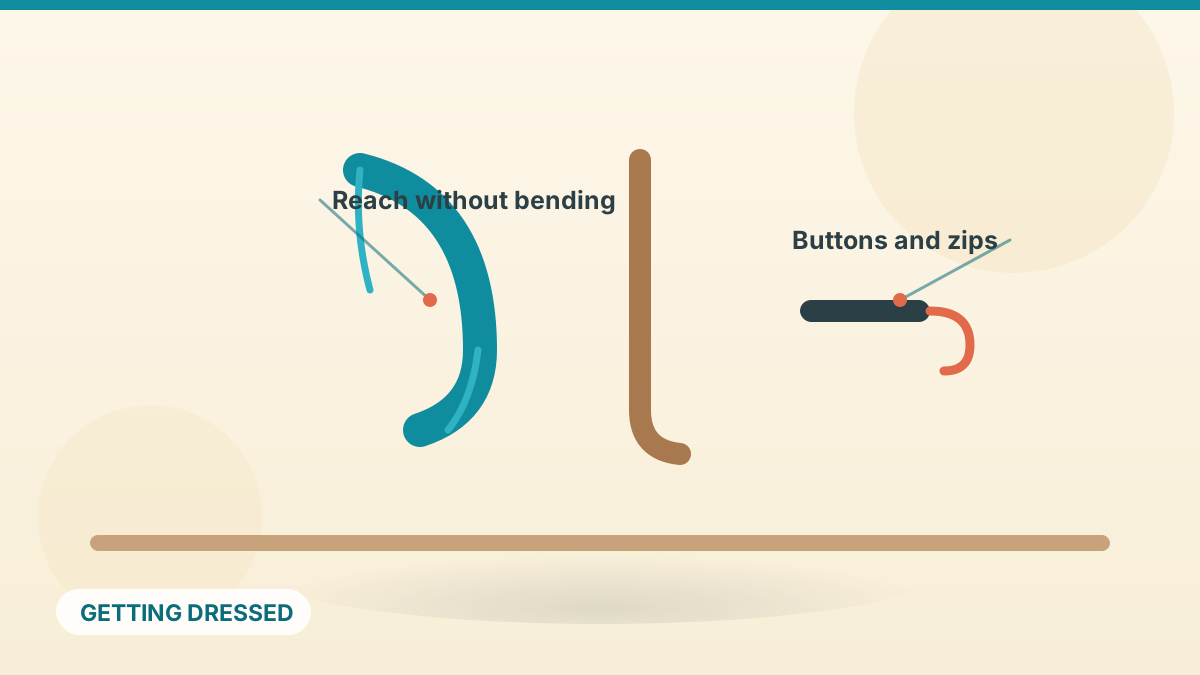
- Dressing — lay out clothes in order, offer simple choices, and use easy-on clothing and dressing aids to preserve independence.
- Eating — offer simple, familiar foods; reduce distractions at mealtimes; watch for swallowing changes as dementia advances. If incontinence develops, see managing incontinence at home.
- Meaningful activities — engagement reduces agitation and adds purpose; see activities for seniors with dementia, puzzles, and conversation starters.
Planning for progression
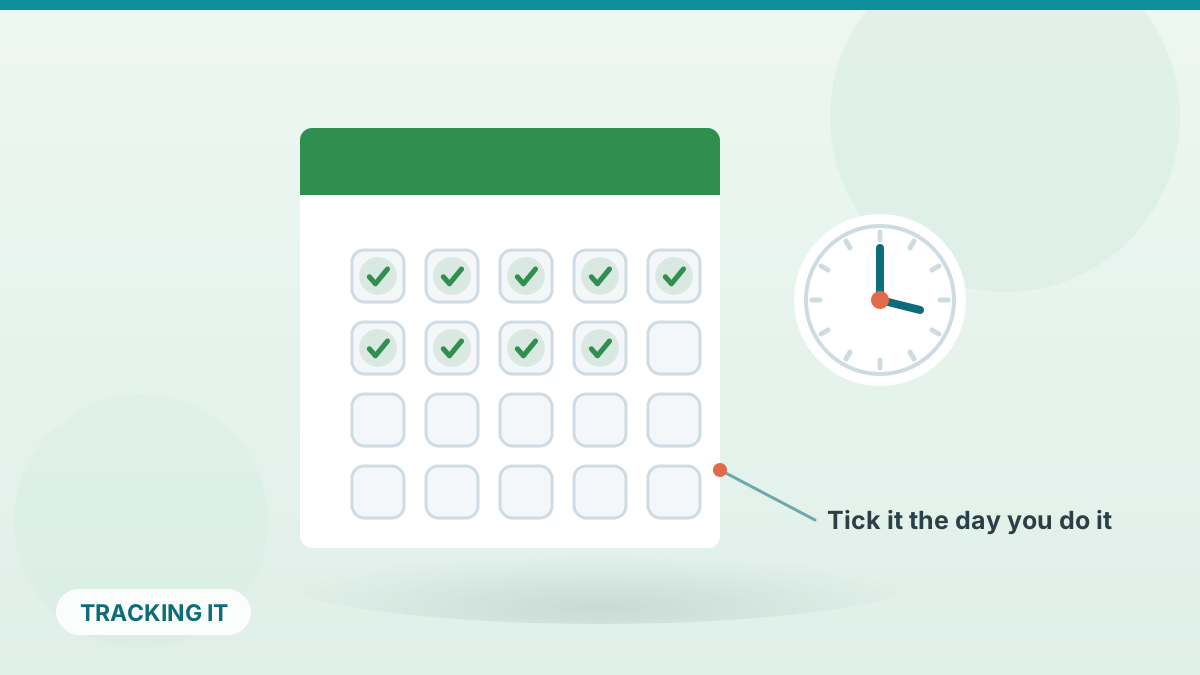
Dementia is progressive, and needs will change. Planning ahead — while the person can still take part — spares crises later:
- Learn the likely stages and watch for change; see signs dementia is getting worse.
- See how clinicians check thinking with a quick screen like the clock drawing test — handy for spotting change, though it is a screen, not a diagnosis.
- Handle legal and financial planning early (power of attorney, wishes for care) while the person can participate.
- Build a care team — the doctor, a dementia specialist, and local dementia/Alzheimer’s organizations, which offer invaluable support and advice.
- Consider when home care may no longer be safe or sustainable, and what options exist — see how to tell if a parent needs assisted living.
Caring for yourself

This may be the most important section, because dementia caregiving is a long, demanding road, and a depleted caregiver cannot sustain good care. Protecting your own wellbeing is part of caring for them.
- Accept help and use respite — family, friends, adult day programs, and respite services. You do not have to do it all alone.
- Join a support group (in person or online) — connecting with others who understand is genuinely sustaining.
- Watch your own health, sleep, and stress, and take real breaks. See preventing caregiver burnout.
- Grieve as you go — dementia brings ongoing losses, and it is normal to feel grief, guilt, frustration, and love all at once. Be as compassionate with yourself as you are with them.
Safety first
If you feel overwhelmed, hopeless, or at the end of your ability to cope, reach out — to your doctor, a support line, or dementia organizations. Asking for help is strength, and support exists.
Frequently asked questions
How do you care for a dementia patient at home?
Focus on five foundations: gentle communication that enters their reality and validates feelings, a consistent daily routine that reduces confusion, understanding difficult behaviors as unmet needs, making the home safe against falls and wandering, and supporting your own wellbeing. Involve the doctor for any sudden change and use community and respite support early.
Should you correct someone with dementia?
Generally no. Correcting or arguing about facts the person can no longer hold onto causes distress and often fresh grief, without changing anything. Instead, meet the emotion behind their words and gently redirect. Connecting with how they feel calms far more effectively than getting the facts "right."
Why does my parent with dementia get agitated or aggressive?
Behavior in dementia is communication of an unmet need the person can no longer express — commonly pain, hunger, thirst, needing the toilet, tiredness, boredom, fear, or overstimulation. A sudden change can also signal a treatable medical problem like infection or pain. Look for the trigger and meet the need, and have sudden changes checked medically.
How do I keep a dementia patient safe at home?
Proactively address falls (home and bathroom safety), wandering (secure exits, door alarms, GPS trackers), kitchen and household hazards, and medication safety, plus night-time safety with lighting and, where helpful, alarms. Our dementia home safety guide gives a room-by-room walkthrough.
When is it no longer safe to care for someone with dementia at home?
When safety cannot be maintained despite adjustments, when care needs exceed what you can provide, or when the caregiver’s own health is failing. Warning signs include frequent falls, serious wandering, aggression that cannot be managed, unsafe situations, and caregiver burnout. Our guide on whether a parent needs assisted living can help you weigh it.
How do I cope with the stress of dementia caregiving?
Accept help and use respite (family, day programs, respite services), join a support group, protect your own health and sleep, take real breaks, and allow yourself to grieve the ongoing losses. Dementia care is a marathon — sustaining yourself is essential to sustaining their care, and support is available if you feel overwhelmed.
Sources
- National Institute on Aging (NIH). Managing Personality and Behavior Changes in Alzheimer's
- Alzheimer's Association. Anxiety & Agitation (behavioral symptoms and treatment)
- Alzheimer's Association. Wandering (prevention and safety)
- Clinical Infectious Diseases (Norman, 2000). Fever in the Elderly
