
In-Home Care for Seniors: What It Covers, Costs, and Medicare Pays For

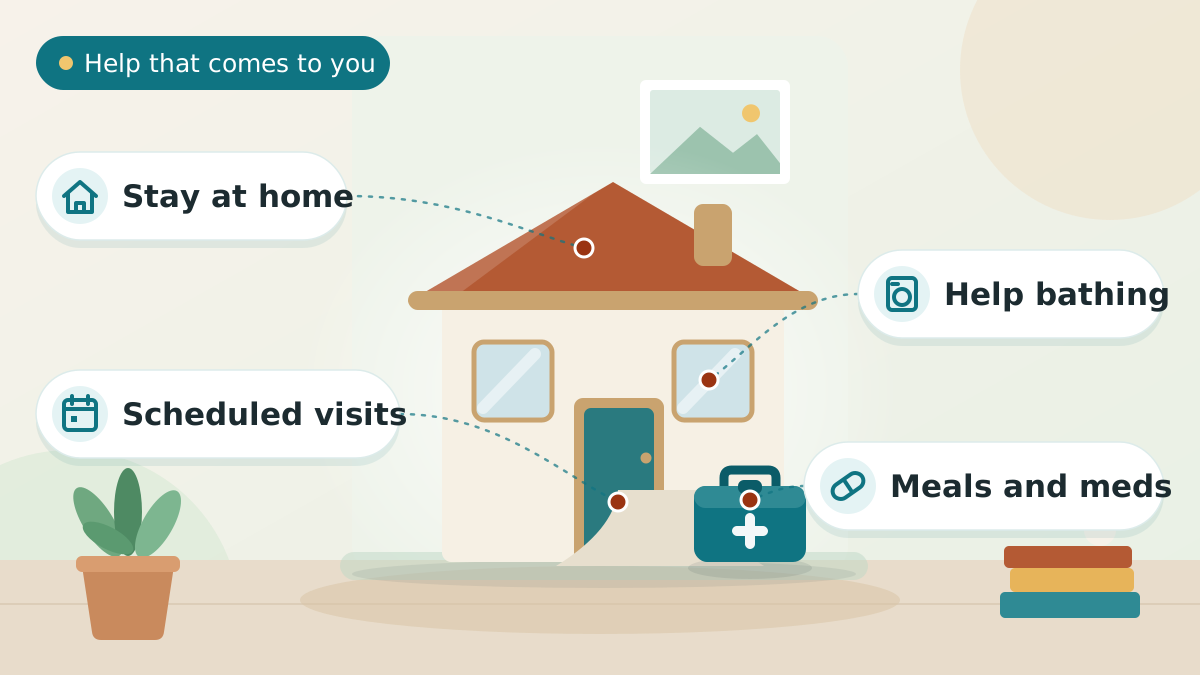
Two genuinely different things share the name "in-home care" — one Medicare sometimes pays for, one it almost never does. Knowing which one you need decides the whole plan.
Key takeaways
- "In-home care" means two different things: non-medical help with daily tasks, and skilled home health ordered by a doctor
- Medicare pays for home health under specific conditions — it almost never pays for non-medical help, even though that’s what most families searching this term actually need
- Non-medical in-home care is usually the most affordable way to stay at home, but it is an ongoing cost with no insurance behind it for most families
- A mix of paid help and the right home safety equipment often costs less than either extreme — all-paid-care or no support at all
- This is the one care level where a lot of what actually helps is equipment, not staffing — see the products section below
Quick answer
Does Medicare pay for in-home care?
It depends which kind. Medicare covers skilled home health — nursing or therapy ordered by a doctor for someone who is homebound — but not the non-medical help (bathing, meals, housekeeping, companionship) that most families mean when they say "in-home care." That non-medical kind is what most people are actually looking for, and it’s paid out of pocket unless a state Medicaid waiver or VA benefit applies.
Two different things share this name
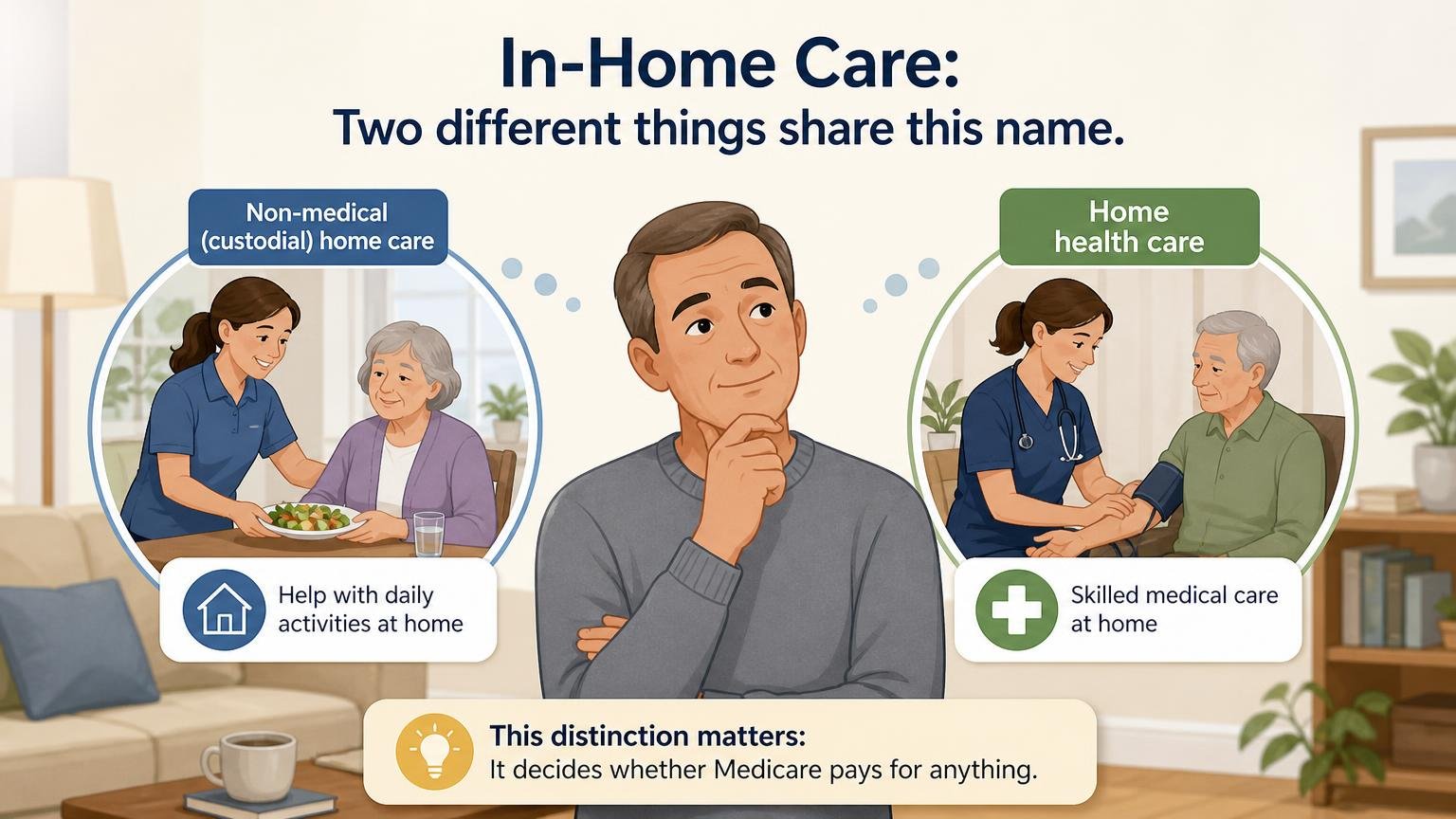
This is the single most common confusion in this category, and it decides whether Medicare pays for anything:
- Non-medical (custodial) home care — help with bathing, dressing, meals, housekeeping, errands, transportation, medication reminders, and companionship. Provided by a home care aide or agency. This is what most families mean by "in-home care," and it is what Medicare does not cover.
- Home health care — skilled nursing, physical or occupational therapy, or a home health aide, ordered by a doctor as part of a treatment plan, for someone who is homebound. This is medical care delivered at home, and Medicare covers it when specific conditions are met.
A family that needs help with bathing and meals but has no active medical treatment plan will not get Medicare coverage for that help, no matter how necessary it genuinely is — because Medicare classifies it as custodial, not medical. That single distinction is worth understanding before budgeting for anything.
What Medicare actually covers here
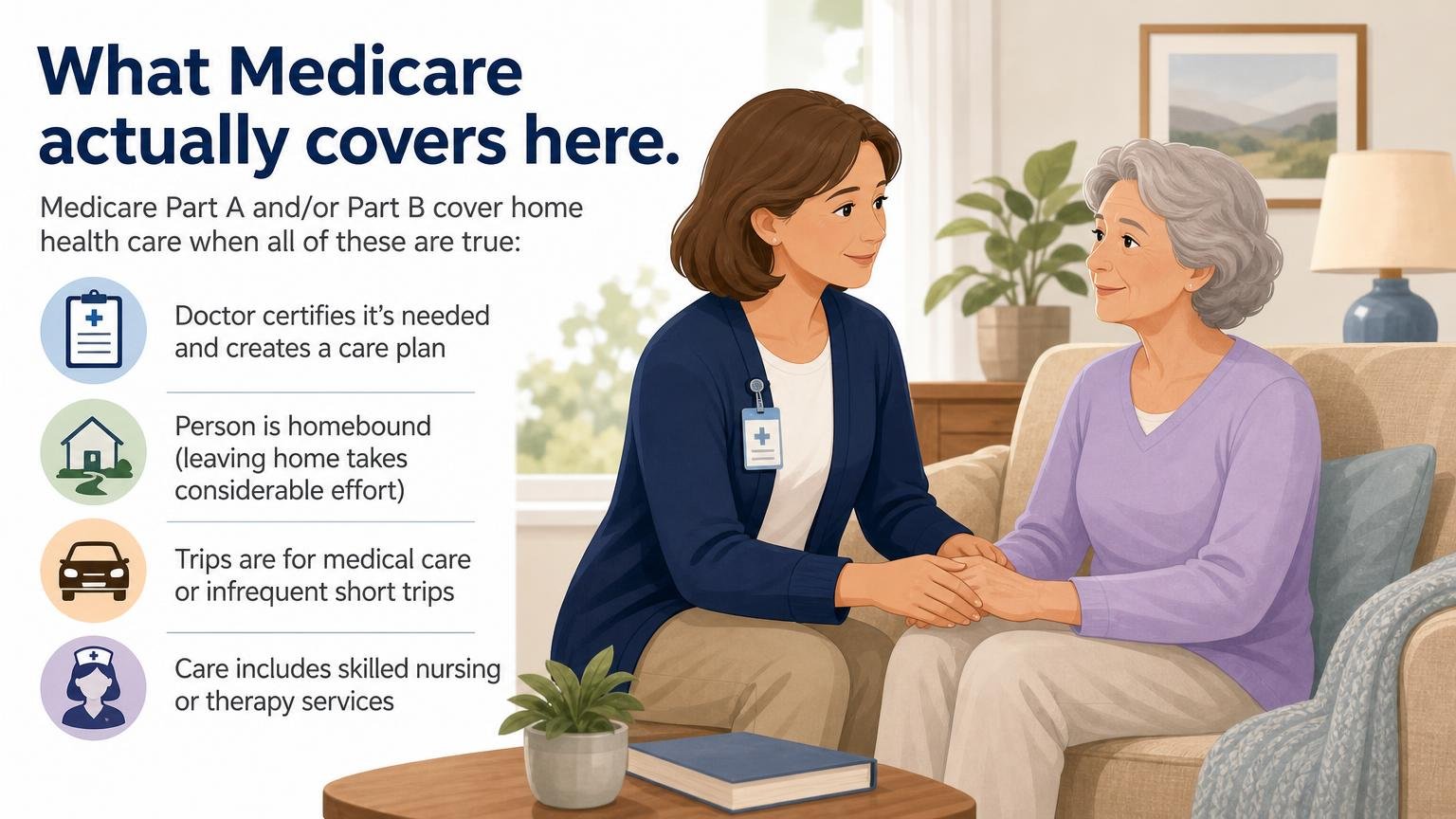
Medicare Part A and/or Part B cover home health care when all of these are true: a doctor certifies it’s needed and creates a care plan, the person is homebound (leaving home takes considerable effort, and is for medical care or infrequent short trips), and the care includes skilled nursing or therapy on a part-time or intermittent basis — not full-time.
When those conditions are met, Medicare covers the skilled nursing, therapy, and a limited amount of home health aide time tied directly to that treatment. It does not cover round-the-clock care, meal delivery, or homemaker services provided alone — those have to come bundled with a genuine skilled-care need, not requested on their own.
For the far more common situation — a family that needs regular non-medical help but has no doctor-ordered treatment plan — Medicare pays nothing. That gap is what the rest of this guide is about.
Paying for non-medical care
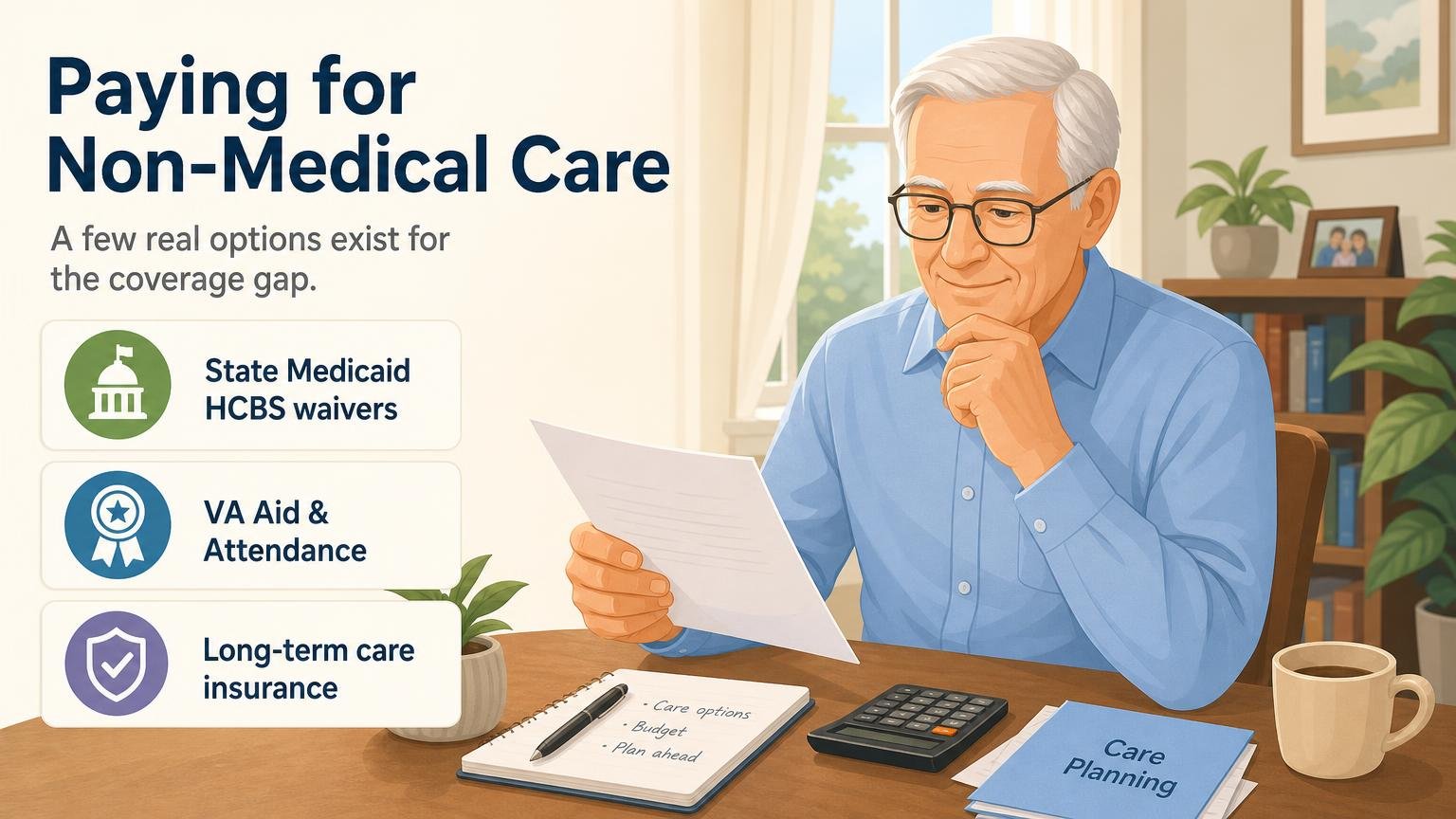
A few real options exist for the coverage gap, though none is universal:
- State Medicaid HCBS waivers — Home and Community-Based Services waivers let some states cover non-medical home care for people who’d otherwise qualify for nursing-home-level Medicaid, specifically to help them stay home instead. Eligibility, services covered, and waiting lists vary enormously by state.
- VA Aid & Attendance — an additional pension benefit for eligible wartime veterans and surviving spouses who need help with daily activities, on top of a standard VA pension.
- Long-term care insurance — covers non-medical home care if the policy includes it, but only if it was purchased before a health decline; it cannot be bought after care is already needed.
- Private pay — the most common answer in practice. Costs vary widely by region and by hourly vs. live-in arrangements; our senior care cost calculator gives a state-level estimate rather than a single national number that’s wrong for most places.
What actually helps, beyond paid hours
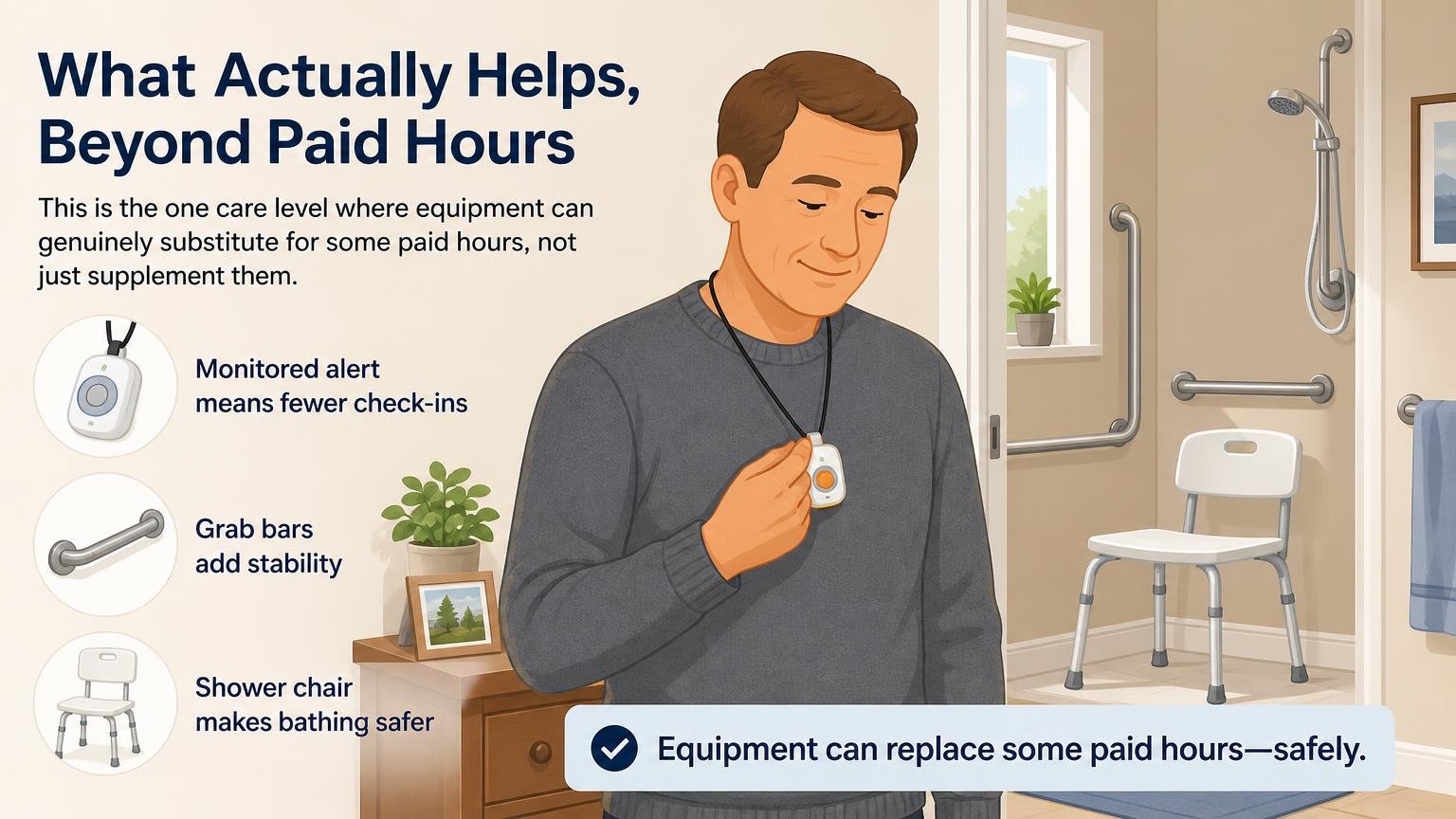
This is the one care level where equipment can genuinely substitute for some paid hours, not just supplement them. A few examples worth naming directly: a monitored medical alert device means fewer check-in visits are needed purely for safety reassurance; grab bars and a shower chair mean a bathing routine that once needed two hands can sometimes be managed with one, or none; a pill organizer or automatic dispenser reduces the medication-reminder visits that otherwise eat into a caregiver’s paid hours.
None of that replaces real help when real help is needed — but it changes how many paid hours are needed, which is the actual budget lever for most families. Our choosing a medical alert system guide is the natural next read if safety, not task help, is the main worry.
When in-home care stops being enough
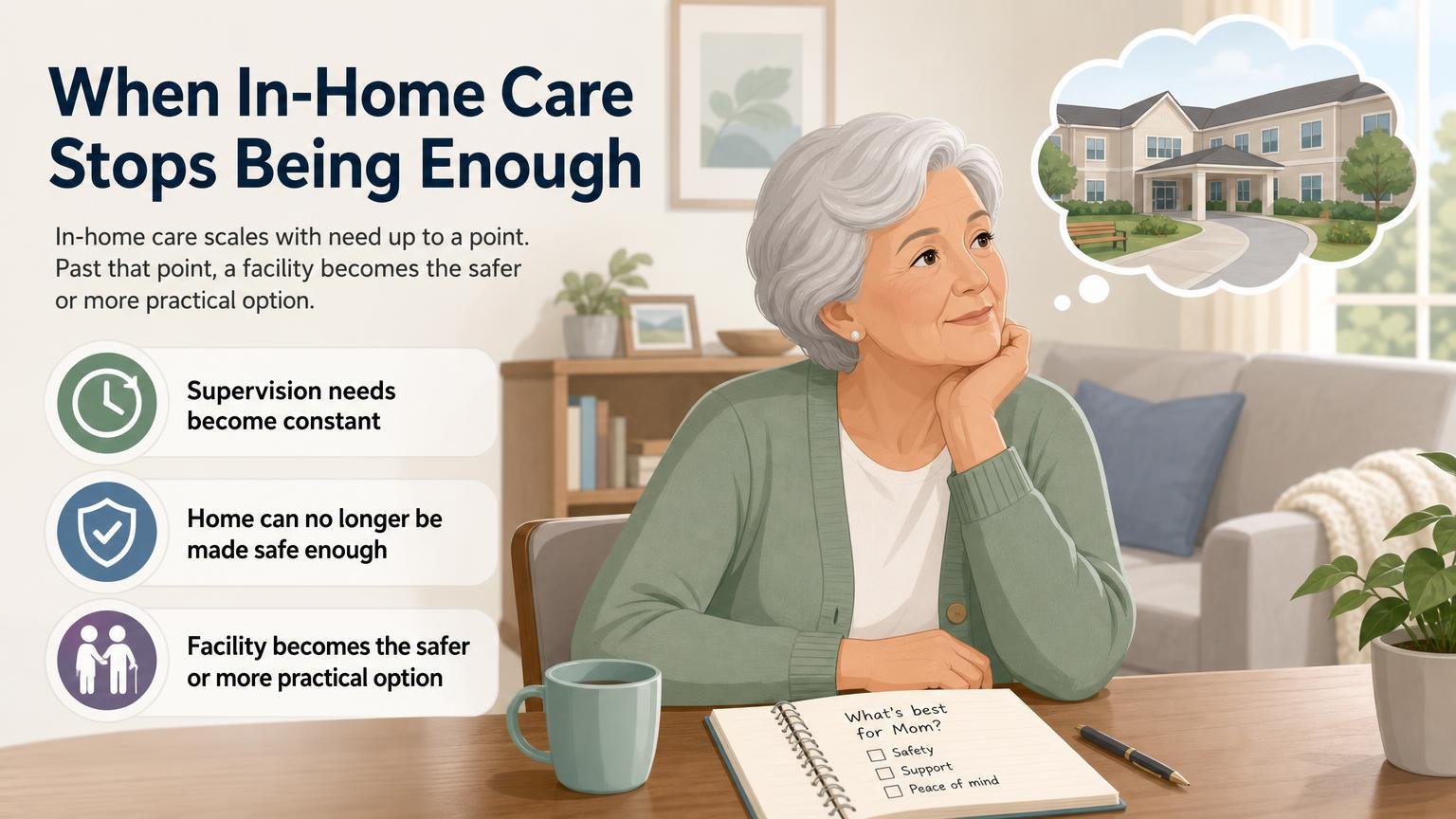
In-home care scales with need up to a point — more hours, more visits, a live-in aide. Past that point, a facility becomes the safer or more practical option, usually when supervision needs to be constant rather than scheduled, or when the home itself can no longer be made safe enough. How to tell if a parent needs assisted living covers that specific decision, including a comparison table across every level of care.
If the concern is specifically a family caregiver reaching their own limit rather than the senior’s needs outgrowing home care, that is a real and separate problem worth naming — see preventing caregiver burnout.
Frequently asked questions
Does Medicare pay for in-home caregivers?
Not for the non-medical help (bathing, meals, housekeeping, companionship) most families mean by that phrase — Medicare classifies that as custodial care. Medicare does cover skilled home health (nursing or therapy ordered by a doctor for a homebound patient), but that is a narrower, medically-driven service, not general caregiving help.
What is the difference between home care and home health care?
Home care is non-medical help with daily tasks — bathing, meals, housekeeping, companionship — provided by an aide or agency, paid out of pocket in most cases. Home health care is skilled nursing or therapy ordered by a doctor as part of a treatment plan for a homebound patient, and Medicare covers it when those specific conditions are met.
How much does in-home care cost?
It varies enormously by region and by whether care is hourly or live-in. Rather than quote a single national figure that’s likely wrong for your area, our senior care cost calculator gives a state-level estimate across every care type, including in-home care.
Is there financial help available for in-home care?
A state Medicaid HCBS waiver may cover it for those who’d otherwise qualify for nursing-home-level Medicaid — availability and waiting lists vary by state. VA Aid & Attendance helps eligible wartime veterans and surviving spouses. Long-term care insurance helps only if purchased before a health decline. For most families, private pay remains the primary source, which is why equipment that reduces the paid-hours need is worth considering alongside staffing.
Sources
- Medicare.gov. Durable Medical Equipment (DME) Coverage
- Medicaid.gov. Home & Community-Based Services Authorities
