
Questions to Ask When Touring Assisted Living: A Family Checklist

Planning information for families, not legal, financial or medical advice. Assisted living is licensed by each state, so rules and contracts vary.
In this guide
- Before you visit: a ten-minute phone call
- First impressions: what to notice when you walk in
- Questions to ask about care and staff
- Health, medicines and safety
- Daily life, food and visiting
- Costs: the questions that prevent surprises
- Ask residents and their families
- Extra questions for memory care
- Extra questions for a nursing home
- Go back a second time, at a mealtime
- Compare places side by side
- Before you sign the contract
- FAQs
Every place looks lovely on the tour. These are the questions that show what daily life and the real monthly bill will be like, in the order you will need them, from the first phone call to the contract.
Key takeaways
- Make a ten-minute phone call first: openings, the full monthly price, how care is charged, and Medicaid.
- On the tour, ask about staffing on every shift, nurse hours, training, and how care needs are decided.
- Get the money answers in writing: rent, care levels, extras, yearly increases and refunds.
- Ask exactly when your parent would have to move out if their needs grow.
- Visit twice, the second time at a mealtime, and read the contract at home before signing.
Quick answer
What should I ask when touring assisted living?
Ask how many staff work each shift and when a nurse is on site, how care needs are assessed and how the price changes as they grow, who manages medicines, what happens after a fall, what the monthly cost includes, how much prices have gone up, and when a resident would have to move out. Then watch how staff treat residents, and visit again at a mealtime.
Before you visit: a ten-minute phone call
A short call before you book a tour saves wasted trips. Ask every place the same questions, and cross off any that clearly do not fit:
- Do you have an opening now, or a waiting list?
- What is the monthly price, and exactly what does it include?
- How do you charge for care: care levels, a points system, or each service separately?
- Is there a one-time community or entrance fee?
- Can you meet my parent's care needs today? Do you have memory care if it is needed later?
- Do you accept Medicaid now, or if my parent's savings run out?
- Is a nurse on site, and during which hours?
Before the tour, look up each place's license and recent inspection reports with your state's assisted living licensing agency. Assisted living is licensed by each state, so the rules and the reports differ from state to state.
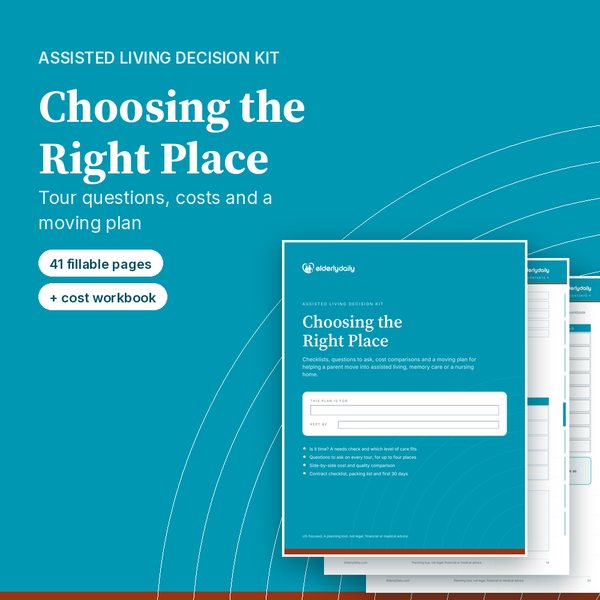
Includes cost spreadsheet
An ElderlyDaily original
Touring places for a parent?
Assisted Living Decision Kit
- Every question in this guide, as Tour Worksheets for up to four places
- Side-by-side comparison of quality and the real monthly cost
- Cost spreadsheet: monthly totals, a 3-year projection and your budget gap
One-off purchase. Instant download.
Fillable PDF · 41 pages · US Letter + A4
First impressions: what to notice when you walk in
Use your eyes and your nose before you ask anything. A tour is a sales visit; these are the signs of everyday care:
- Clean, with a fresh smell in hallways and rooms
- Residents look cared for: dressed, groomed and comfortable
- Staff greet residents by name and speak to them kindly and patiently
- Residents are busy and chatting, not just sitting
- Handrails, good lighting, call buttons in rooms and bathrooms, and a secure outdoor space
- A room where your parent's own furniture and photos would fit
Questions to ask about care and staff
Staffing is what your parent will feel every day. Ask:
- How many staff are on duty during the day, in the evening and overnight?
- Is a nurse on site, and during which hours? Who covers nights and weekends?
- What training do caregivers have, including dementia training?
- How do you decide what care my parent needs, and how often is it reviewed?
- How long have most of your caregivers worked here?
- Who do we call with a concern, and how quickly do you respond?
Good to know
Ask for staffing numbers for each shift, including nights and weekends, not one figure for the whole day.
Health, medicines and safety
- Who manages medicines, and is there an extra charge for it?
- What happens in a medical emergency, or after a fall? How quickly is the family told?
- Which hospital do you use, and can my parent keep their own doctor?
- Can you handle needs like diabetes, oxygen, a wheelchair or a two-person transfer?
- When would my parent have to move out because their needs have grown?
The question families forget
Ask, in writing, what would make your parent have to leave, and how much notice the community must give. Move-out rules come from each community's contract and your state's rules, so the answer differs from place to place.
Daily life, food and visiting
- Can we see this week's activity calendar and menu?
- Are special diets and cultural food needs met?
- Is transport provided to appointments and shops, and does it cost extra?
- What are the visiting hours? Can family join meals?
- How do you help new residents settle in and make friends?
Costs: the questions that prevent surprises
Assisted living is usually priced as a base monthly rent plus charges for care, and the care part can rise as needs grow. Get every answer in writing:
- What is the base monthly rent for this room?
- What do the care levels cost, and what moves someone to a higher level?
- Which extras cost more: laundry, transport, help with medicines, outings?
- How much have prices gone up each year recently, and how much notice do you give?
- Is any part of the community or entrance fee refundable?
- How much notice is needed to move out, and what is refunded?
Original Medicare does not pay for assisted living. For how Medicaid waivers and VA benefits can help, see our guide to assisted living costs and coverage, and use our senior care cost calculator for a state-level estimate.
An ElderlyDaily original
Assisted Living Decision Kit
Includes cost spreadsheet
- Instant download
- Fillable PDF · 41 pages · US Letter + A4
Ask residents and their families
If staff will introduce you, talk to a resident or a visiting family member. Their answers often tell you more than the tour:
- Do you like living here? What would you change?
- Do staff come quickly when you call?
- How is the food?
- How does the community handle a problem when you raise it?
Extra questions for memory care
If your parent is living with dementia, add these:
- What dementia training do staff have, and how often is it refreshed?
- How are doors and exits secured?
- What is the staffing on the memory care unit, day and night?
- How do you handle agitation, anxiety or sundowning?
- How do you avoid medicines that sedate residents?
- Is there a safe outdoor area to walk?
Our memory care guide explains what memory care adds and how it is paid for.
Extra questions for a nursing home
Nursing homes that take Medicare or Medicaid must meet federal rules, so start with the facts. Look up the home on Medicare Care Compare, which shows star ratings, staffing, health inspections and quality measures, then ask the home what it has done about any problems found.
- How many residents does each nurse and aide care for on each shift?
- Will my parent have the same caregivers most days?
- Which therapies are offered on site?
- How are care plan meetings scheduled with family?
For what nursing home care covers and when Medicare pays, see our skilled nursing guide.
Two rights worth knowing
A nursing home that takes Medicare or Medicaid may not ask anyone else to guarantee payment for your parent to get in or to stay (42 CFR 483.15). It also cannot require you to sign an arbitration agreement, and if you sign one you can cancel it within 30 days (42 CFR 483.70). If you manage your parent's money, sign as their representative, not as a guarantor.
Go back a second time, at a mealtime
Once you have a favorite, visit again, ideally at lunch or in the evening and without much notice. It shows everyday life rather than the tour:
- Does the food look and smell good?
- Do residents who need help eating get it?
- Do staff sit and talk with residents?
- Are call lights answered quickly?
- Would your parent feel at home here?
Compare places side by side
After your tours, score each place from 1 to 5 on what matters most to your family: feeling like home, kind staff, care for today and for the future, safety, food, activities, and distance for family visits.
Then compare the total monthly cost, not the starting price: rent, care fees, medicine help and extras, plus any one-time fee and the yearly increase. A place with lower rent can end up costing more.
If you are still unsure whether assisted living is the right level of care, start with how to tell if a parent needs assisted living.
Before you sign the contract
Ask for the contract (often called the residency or admission agreement) before move-in day, and read it at home. Check:
- Every fee is in writing, including the price list for extras
- How care levels are set, who decides when they change, and how much notice you get
- The move-out and discharge rules, and how you can appeal
- What is refunded if your parent moves out or passes away
- Whether there is an arbitration clause, and whether signing it is optional
- Who signs, and in what role
If anything is unclear, an elder law attorney can review the contract with you. If problems come up later, your state's Long-Term Care Ombudsman is a free advocate for residents.
Once you have chosen a place, our moving checklist covers the paperwork, what to bring, moving day and the first 30 days.
Frequently asked questions
What questions should I ask when touring assisted living?
Ask about staffing on each shift and nurse hours, caregiver training, how care needs are assessed and reviewed, who manages medicines, what happens after a fall or emergency, the full monthly cost including care levels and extras, how much prices have risen, and when a resident would have to move out. Then watch how staff and residents interact.
What should I look for on an assisted living tour?
Cleanliness and a fresh smell, residents who look cared for, staff who greet residents by name and speak kindly, residents who are busy rather than just sitting, safety features like handrails and call buttons, and a room that would fit your parent's own furniture.
Should I visit assisted living more than once?
Yes, if you can. A second visit at a mealtime, with little notice, shows everyday life: the food, whether residents get help eating, and how quickly call lights are answered.
How do I compare assisted living costs?
Ask each place for its written price list and add up the same items for all of them: base rent, care level fees, medicine management and extras, plus any one-time fee and the yearly increase. Original Medicare does not pay for assisted living, so most residents pay privately, sometimes with help from a state Medicaid waiver or VA benefits.
What questions should I ask about memory care?
Ask about dementia training for staff, how doors and exits are secured, staffing day and night, how agitation and sundowning are handled, how the community avoids sedating medicines, and whether there is a safe outdoor area to walk.
Can a nursing home make me guarantee payment for my parent?
Not if the home takes Medicare or Medicaid. Federal rules bar these homes from asking for a third-party guarantee of payment as a condition of admission or of staying. If you manage your parent's money, you may be asked to sign as their representative so you can pay from their funds, without personal liability.
