
How to Tell If a Parent Needs Assisted Living

Guidance for families weighing care options, not a formal assessment or financial/legal advice. A geriatric care professional can assess needs objectively.
Wondering whether it is time for assisted living is a sign you are paying attention. This guide helps you assess care needs honestly, understand the options, and approach the decision with clarity and compassion.
Key takeaways
- The real question is whether care needs are being safely met where the person is — not their age.
- Assess honestly across daily living, safety, health management, cognition, and social wellbeing — and how much the current setup (including a caregiver) is straining.
- Understand the levels of care — from help at home, to assisted living, to memory care and nursing care — so you match needs to the right option.
- A professional assessment (doctor or geriatric care manager) brings objectivity to an emotional, high-stakes decision.
- Approach it with your parent, not at them — autonomy and dignity matter; see when an elderly parent refuses help.
Quick answer
How do I know if my parent needs assisted living?
Assess whether their care needs are being safely met at home. Consider how they manage daily living (bathing, dressing, meals, medications), their safety (falls, wandering, leaving the stove on), their health and cognition, their social wellbeing (isolation), and how much the current arrangement — including any family caregiver — is straining. When needs consistently exceed what home support can safely provide, assisted living may fit. A professional assessment helps you decide objectively.
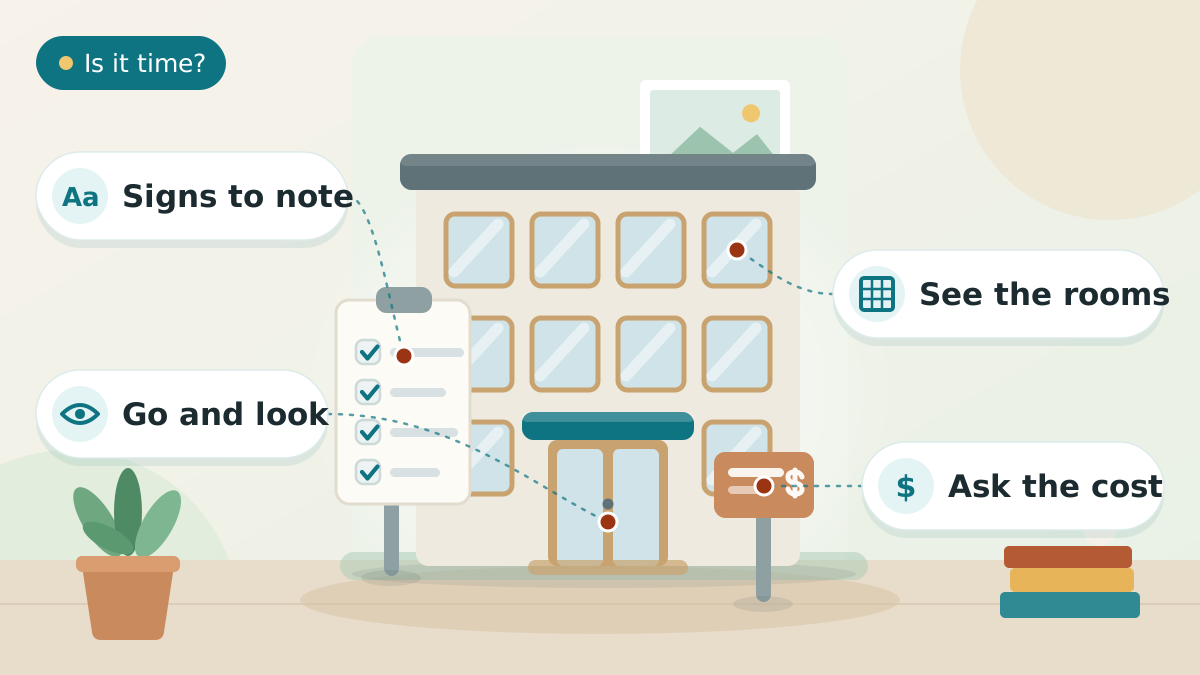
The right question to ask
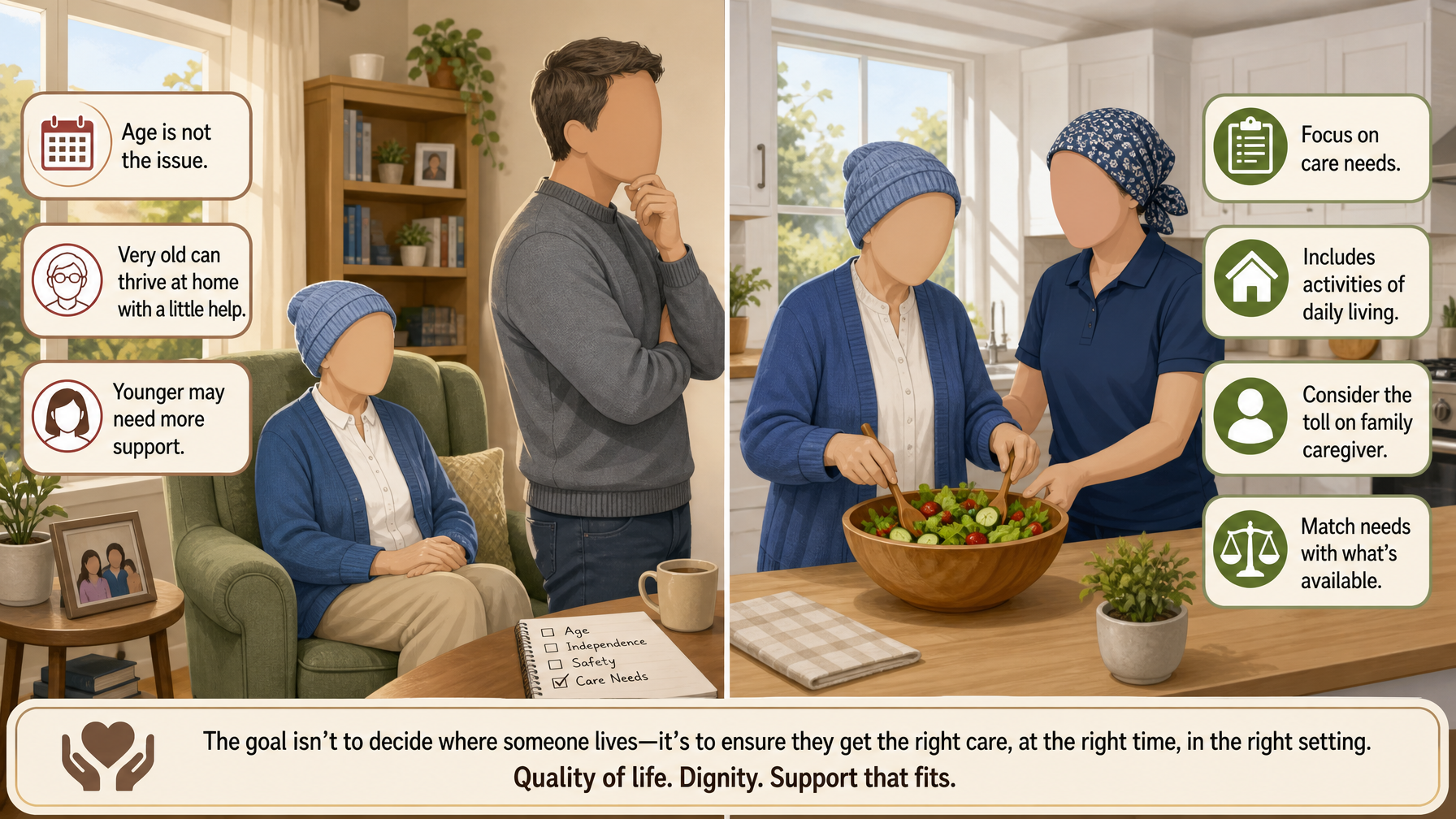
Families often frame this as "is my parent too old to live at home?" — but age is not the issue. The real question is whether their care needs are being safely and adequately met in their current situation. Someone can be very old and thrive at home with a little help; someone younger may need more support than home can safely provide.
Framed that way, the decision becomes an honest assessment of needs versus what the current setup provides — including the toll on any family caregiver. This guide walks through that assessment, the range of care options, and how to approach the decision and the conversation. It builds on the signs a parent should not live alone.
An ElderlyDaily original
Want all of it in one organized binder?
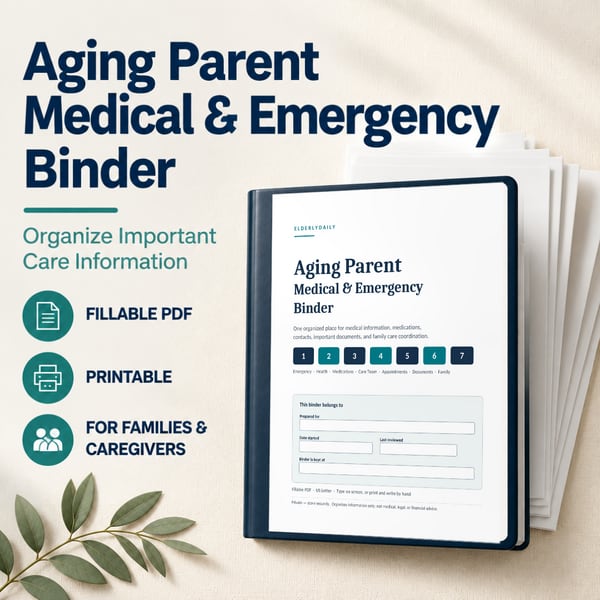
Aging Parent Medical & Emergency Binder
- Medical history, medications and emergency contacts in one place
- Seven sections: emergency, health, medications, care team, appointments, documents and family
- Type into it on screen, or print it and fill it in by hand
One-off purchase. Instant download.
Fillable PDF · US Letter
Assessing care needs honestly
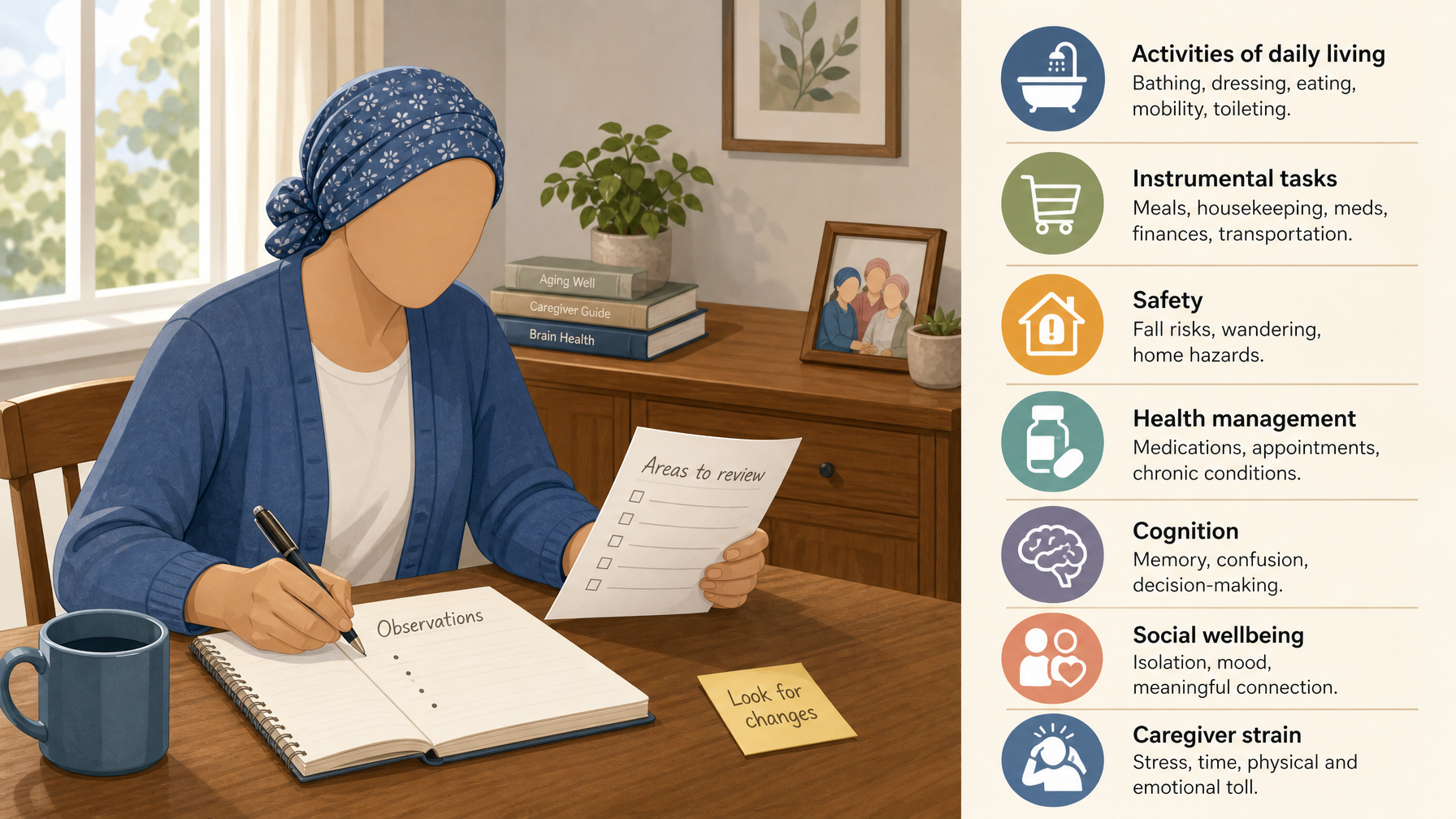
Work through these areas as objectively as you can — ideally writing down specific observations rather than relying on impressions:
- Activities of daily living — can they manage bathing, dressing, toileting, eating, and moving around safely and independently? Growing difficulty or needing hands-on help points toward more care.
- Instrumental tasks — managing medications, meals, finances, shopping, housework, and transport. Struggles here are common early indicators.
- Safety — falls, wandering, unsafe lapses (stove, doors), or an inability to respond in an emergency — see signs a parent should not live alone.
- Health management — whether medical conditions and medications are being managed well, and how often problems arise.
- Cognition — memory, judgment, and orientation, and whether decline is affecting safety — see signs dementia is getting worse.
- Social and emotional wellbeing — isolation, loneliness, and mood, which strongly affect health.
Good to know
Assess the caregiver too. If a family member is providing so much support that their own health, work, or wellbeing is suffering, the current arrangement may be unsustainable even if the parent seems "okay" — that strain is a legitimate part of the decision.
Understanding the levels of care
Matching needs to the right option requires knowing what each provides. The main levels, from least to most support:
| Option | Best for | What it provides |
|---|---|---|
| Support at home | Needs help but is largely safe and independent | Family, home-care aides, meals, safety tech, day services |
| Independent living community | Independent but wants community and less upkeep | Housing, social life, some services; little personal care |
| Assisted living | Needs help with daily tasks but not full nursing care | Help with bathing, dressing, meds, meals; social activities; 24-hr staff |
| Memory care | Dementia needing a secure, specialized setting | Assisted living plus secure environment and dementia-trained staff |
| Nursing (skilled) care | Significant medical or physical care needs | Around-the-clock skilled nursing and medical care |
Good to know
Assisted living sits between living at home with help and full nursing care: it suits someone who needs daily support and supervision but not constant medical care. If dementia is the main issue, memory care is the specialized version.
Signs assisted living may be the right fit
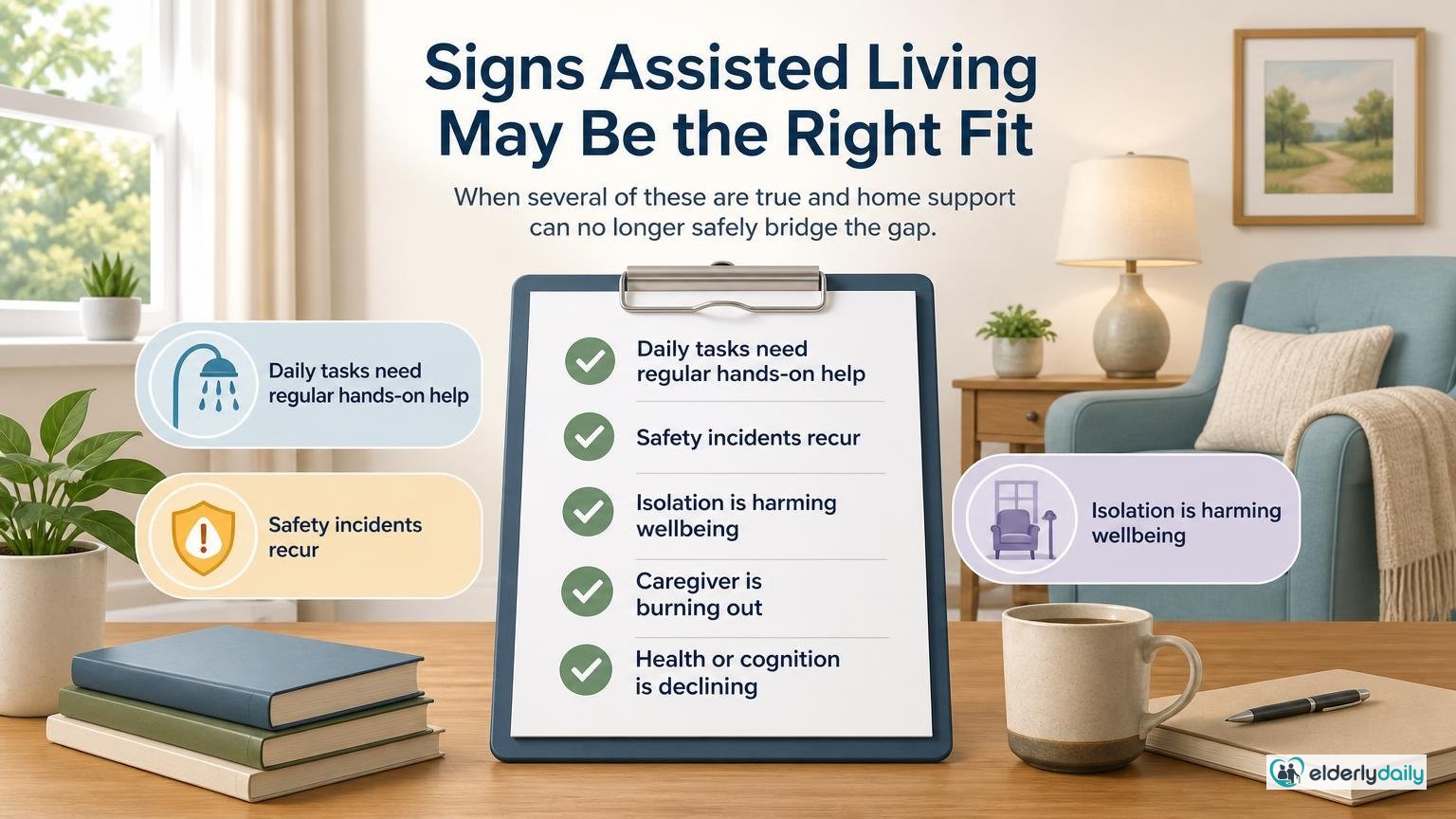
Assisted living tends to fit when several of these are true and home support can no longer safely bridge the gap:
- Daily tasks need regular hands-on help that family or home care cannot reliably provide.
- Safety incidents recur despite home modifications and support — falls, medication errors, unsafe lapses.
- Isolation is harming wellbeing, and the social life of a community would genuinely help.
- Home care has become impractical or insufficient for the level or hours of support needed.
- The family caregiver is burning out, and the current arrangement is unsustainable — see preventing caregiver burnout.
- Health or cognition is declining to a point where supervision is needed.
If dementia and safety (like wandering) are central, a secure memory-care setting may be the better match than standard assisted living.
Get a professional assessment
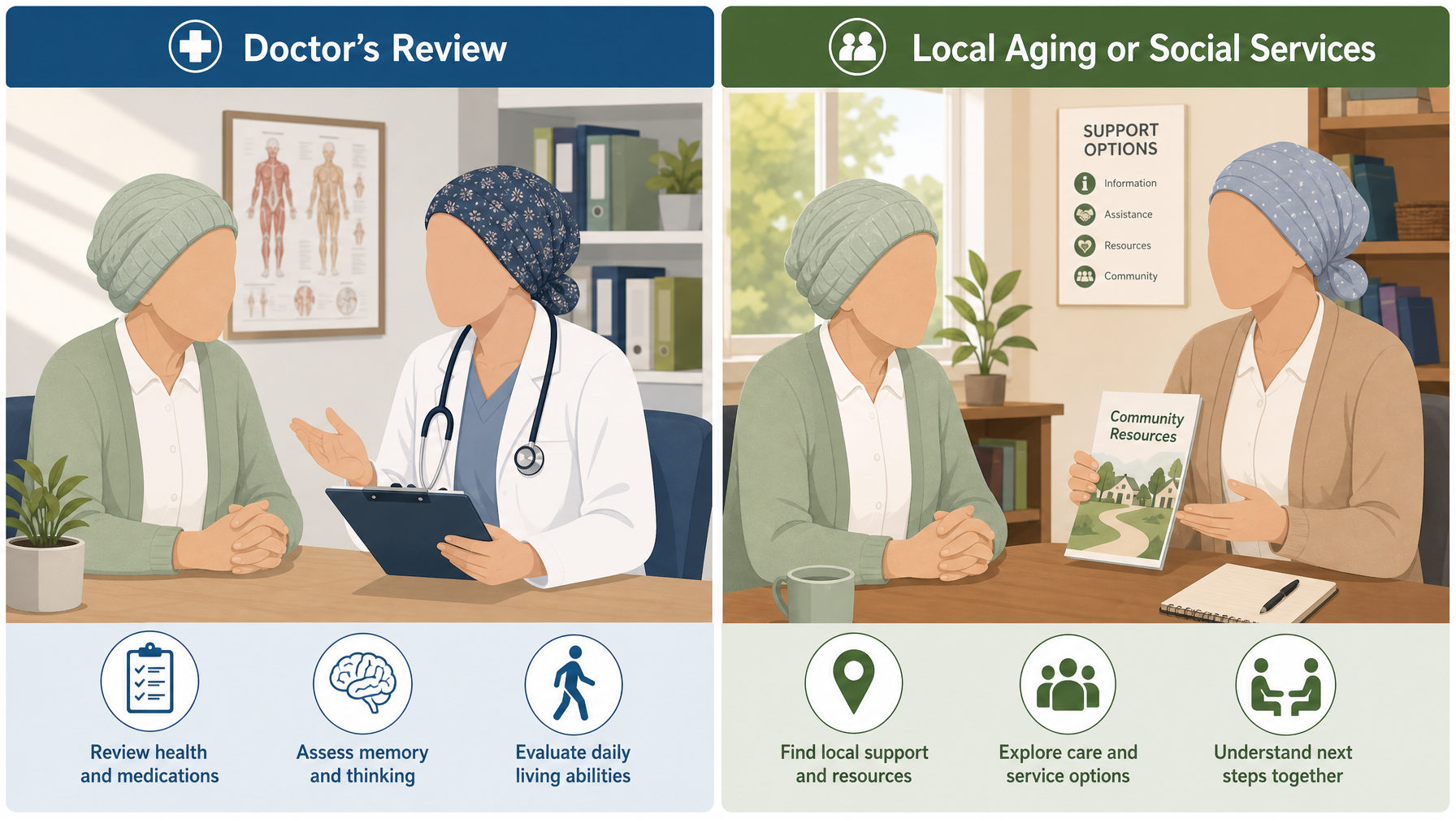
This is a high-stakes, emotional decision, and outside objectivity helps enormously. Consider:
- A doctor’s review — first to rule out treatable causes of decline (infection, medication, depression, sensory loss), and to advise on care needs.
- A geriatric care manager or needs assessment — professionals who assess the situation comprehensively and recommend appropriate options, which is especially useful when family members disagree.
- Local aging or social services, which can advise on assessments, home-care options, and financial support.
- Financial and legal advice on the cost of care and how to fund it, and ensuring documents like power of attorney are in place.
Approaching the decision and the conversation
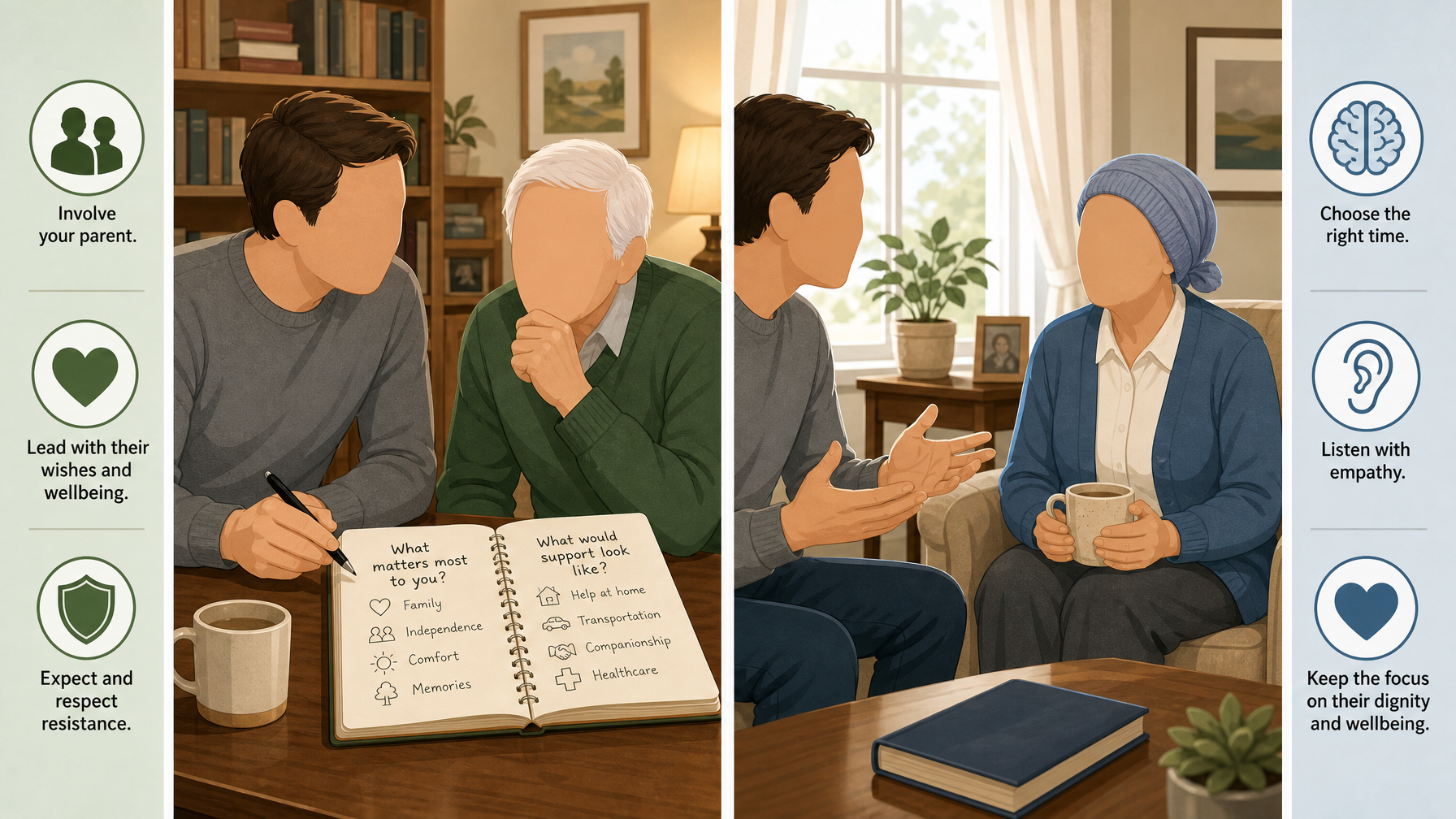
How you handle the decision matters as much as the decision itself — for your parent’s dignity and for family relationships:
- Involve your parent as much as possible; this is their life and their choice. Approach it as a shared problem, not a verdict delivered to them.
- Lead with their wishes and wellbeing — their safety, comfort, and quality of life — rather than framing it as a loss of independence.
- Expect and respect resistance, which is normal and understandable; our elderly parent refuses help guide offers approaches that work.
- Visit options together where possible, and involve the wider family to share the decision and reduce conflict.
- Allow time and revisit — except in urgent safety situations, these decisions often unfold over several conversations.
Safety first
If there is an immediate safety crisis — a parent who cannot be left alone safely right now — you may need to act faster and arrange urgent support or a temporary solution while you plan. Their immediate safety comes first.
Frequently asked questions
How do I know if my parent needs assisted living?
Assess whether their care needs are being safely met at home: how they manage daily tasks (bathing, dressing, meals, medications), their safety (falls, wandering, unsafe lapses), their health and cognition, their social wellbeing, and how much the current setup — including any family caregiver — is straining. When needs consistently exceed what home support can safely provide, assisted living may be the right fit.
What is the difference between assisted living and a nursing home?
Assisted living provides help with daily tasks (bathing, dressing, medications, meals) and supervision with 24-hour staff, but not constant medical care — it suits someone who needs support but not skilled nursing. Nursing (skilled) care provides around-the-clock medical and nursing care for significant health or physical needs. Memory care is assisted living in a secure, dementia-specialized setting.
When is it time for assisted living?
It tends to fit when daily tasks need regular hands-on help that family or home care cannot reliably provide, safety incidents recur despite home support, isolation is harming wellbeing, home care has become insufficient, or the family caregiver is burning out. If dementia and safety are central, memory care may be the better match.
Should I get a professional assessment before deciding?
Yes — it brings valuable objectivity to an emotional decision. Start with a doctor to rule out treatable causes of decline and advise on needs, and consider a geriatric care manager or needs assessment for a comprehensive evaluation and recommendations, especially if family members disagree. Local aging services and financial/legal advice help too.
How do I talk to my parent about assisted living?
Involve them as much as possible and treat it as a shared problem, not a verdict. Lead with their wishes, safety, and quality of life rather than framing it as losing independence, expect and respect resistance, visit options together, involve the wider family, and allow time across several conversations — unless there is an immediate safety crisis.
What if my parent refuses to consider assisted living?
Resistance is very common and understandable. Keep the relationship intact by listening to their fears, focusing on their goals (safety, staying as independent as possible), trying increased home support first where feasible, and involving trusted people or professionals. Our guide on when an elderly parent refuses help covers specific approaches, and immediate safety concerns may require faster action.
Sources
- MedlinePlus (U.S. National Library of Medicine). Delirium
- CDC. Facts About Falls — Older Adult Fall Prevention
- National Institute on Aging (NIH). Taking Medicines Safely as You Age
