
Moving a Parent to Assisted Living: A Checklist for Families

Planning information for families, not legal, financial or medical advice. Requirements differ by state and by community, so always ask for the community's own list.
You have chosen a place. This checklist takes you from the paperwork to the first care plan meeting, so the move is calmer for your parent and for you.
Key takeaways
- Ask the community for its own move-in list and paperwork first; requirements differ by state.
- Measure the new room before deciding what to bring, and let your parent choose the things that matter most.
- Pack familiar comforts like a favorite chair, photos and a clock, and label everything with your parent's name.
- Carry medicines and paperwork separately on moving day and hand them to the nurse or manager.
- Expect several weeks of settling in, and attend the first care plan meeting.
Quick answer
What should I bring when moving a parent into assisted living?
Bring about a week to ten days of easy-on clothes and comfortable shoes with grip, toiletries, glasses, hearing aids and mobility aids, and familiar comforts such as a favorite chair or bedspread, family photos, a clock and a lamp. Add copies of ID, insurance cards and legal papers, and label everything. Check the community's own list first, because many provide furniture and linens and some items are not allowed.
A simple timeline, from choosing a place to moving in
Every move is different, but this order keeps the biggest jobs from piling up in the last few days:
| When | What to do |
|---|---|
| As soon as you choose a place | Get the contract and the community's move-in list. Book the health assessment the community asks for. |
| 3 to 4 weeks before | Measure the room. Decide with your parent what to bring, and start downsizing room by room. |
| 2 weeks before | Book movers or family helpers. Arrange mail forwarding. Label clothes and belongings. |
| 1 week before | Confirm the date and time, who will be there, and how medicines will be handed over. |
| Moving day | Set up the room first if allowed, arrive calmly, and stay for a meal. |
| First 30 days | Visit often, check medicines started correctly, and attend the first care plan meeting. |
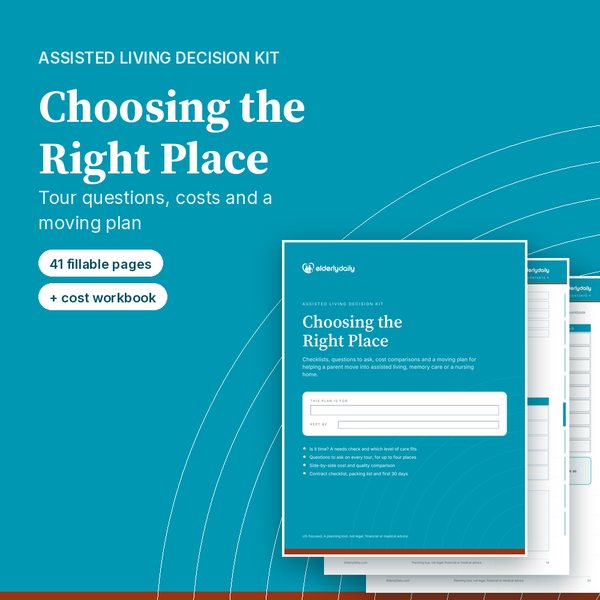
Includes cost spreadsheet
An ElderlyDaily original
Touring places for a parent?
Assisted Living Decision Kit
- Every question in this guide, as Tour Worksheets for up to four places
- Side-by-side comparison of quality and the real monthly cost
- Cost spreadsheet: monthly totals, a 3-year projection and your budget gap
One-off purchase. Instant download.
Fillable PDF · 41 pages · US Letter + A4
Admission paperwork to gather
Most communities ask for these before move-in. Ask for their own list too, because requirements differ by state:
- Photo ID and Social Security card
- Medicare and other insurance cards
- A health assessment or physician's report, on the community's own form
- A medicine list, signed by the doctor if required
- A TB test or other health screening, if the community or state requires it
- Financial power of attorney, plus health care power of attorney or proxy
- Advance directive or living will and any do-not-resuscitate order, if your parent has them
- Emergency contacts and pharmacy details
- The signed contract and first payment
Before you sign the contract, read it at home; our questions to ask when touring assisted living include a contract checklist.
Downsizing: decide room by room
Moving from a family home into one room or a small apartment is often the hardest part. A few things make it easier:
- Measure the new room and closet first, so decisions are about what fits, not what to give up
- Let your parent choose the furniture, photos and keepsakes that matter most to them
- Sort each room into keep, give to family, sell and donate, and start early rather than the week before
- Bring familiar furniture where possible; a favorite chair and bedspread help a new place feel like home
- Scan or photograph keepsakes that will not fit, so nothing feels lost
What to bring: a packing checklist
Check the community's list first: many provide the bed, linens or furniture, and some items are not allowed. Label everything with your parent's name.
Clothing
- 7 to 10 days of easy-on clothes
- Comfortable shoes with grip
- Sweaters and a warm jacket
- Sleepwear and a robe
- Underwear and socks
- An outfit for special days
Personal care
- Toothbrush, toothpaste and denture care
- Hairbrush and toiletries
- Glasses, hearing aids and spare batteries
- Shaver or grooming kit
- Walker, cane or other mobility aids
- Medicines, as the community directs
Comfort and home
- A favorite chair or bedspread
- Family photos and pictures
- A clock and a calendar
- A lamp and a night light
- A small TV or radio
- Phone and charger, labeled
- Favorite books and hobbies
- A large-print address book
Paperwork and money
- Copies of ID and insurance cards
- Copies of power of attorney and advance directive
- A little cash (keep valuables at home)
- Stamps and cards
- A list of important phone numbers
An ElderlyDaily original
Assisted Living Decision Kit
Includes cost spreadsheet
- Instant download
- Fillable PDF · 41 pages · US Letter + A4
What to leave at home
- Valuables, expensive jewelry and large amounts of cash
- Original documents; bring copies and keep the originals safe
- More furniture than the room comfortably holds; clear paths matter for walkers and wheelchairs
- Anything on the community's list of items that are not allowed
Ask the community whether it recommends renter's insurance for your parent's belongings, and who is responsible for lost or damaged items.
Moving-day plan
- One week before: confirm the date and time, the movers, and who will be there
- Set up the room first if the community allows, so your parent arrives to a room with their own things
- Carry medicines and paperwork separately, and hand them to the nurse or manager on arrival
- Plan a calm arrival, ideally in the morning, with one or two familiar people
- Stay for a meal, and introduce your parent to staff and a neighbor or two
- Agree when you will visit or call next, and tell your parent before you leave
Tell people about the new address
- Post office (mail forwarding)
- Social Security
- Medicare and insurers
- Pension and VA
- Banks and cards
- Doctors and pharmacy
- Family and friends
- Utilities to stop at the old home
The first 30 days
Most people need several weeks to settle in. Some sadness and unsettled days early on are normal.
- Week 1: visit or call often, check the room has everything, and learn the names of the main caregivers
- Week 1: check that medicines started correctly and match the doctor's list
- Week 2: join an activity or a meal together, and help your parent meet one or two neighbors
- Weeks 2 to 4: attend the first care plan meeting
- Week 3: ask what your parent likes and what they miss, and fix the small things
- Week 4: check the first bill against the contract and the price list
Sudden confusion is not just settling in
Tell staff about anything that worries you, and tell the doctor promptly about any sudden new confusion, which can be a sign of illness such as an infection. See our guide to UTI signs in seniors.
The first care plan meeting
Ask for a care plan meeting in the first few weeks, then at least every few months or whenever needs change. Bring these questions:
- What care is my parent getting each day?
- Are they eating, sleeping and joining in?
- Any falls, health changes or new medicines?
- Has their care level or price changed?
- What can family do to help?
If a problem is not resolved, your state's Long-Term Care Ombudsman is a free advocate for residents.
If your parent does not want to move
Resistance is common and understandable. Involve your parent in every choice you can, from the room to what to bring, and give them time. Our guides on when an elderly parent refuses help and how to tell if a parent needs assisted living cover the conversation in more depth.
Frequently asked questions
What should I bring when moving a parent into assisted living?
About a week to ten days of easy-on clothes, comfortable shoes with grip, toiletries, glasses, hearing aids and mobility aids, plus familiar comforts such as a favorite chair or bedspread, family photos, a clock and a lamp. Add copies of ID, insurance cards and legal papers, and label everything. Check the community's own list first.
What should not be brought to assisted living?
Leave valuables, expensive jewelry, large amounts of cash and original documents at home, along with more furniture than the room comfortably holds. Also check the community's list of items that are not allowed.
What paperwork is needed to move into assisted living?
Usually photo ID, insurance cards, a health assessment on the community's form, a medicine list, any required health screening such as a TB test, power of attorney documents, an advance directive if your parent has one, emergency contacts and the signed contract. Requirements differ by state, so ask for the community's own list.
How can I make moving day easier for my parent?
Set up the room first if the community allows, so your parent arrives to their own things. Arrive calmly with one or two familiar people, carry medicines and paperwork separately, stay for a meal, and tell your parent when you will visit or call next.
How long does it take to adjust to assisted living?
Most people need several weeks to settle in, and some sadness or unsettled days early on are normal. Visit often, keep a regular rhythm, and tell staff about anything that worries you. Tell the doctor promptly about any sudden new confusion, which can be a sign of illness.
