
Preventing Caregiver Burnout: Protecting Yourself While You Care

Supportive guidance, not medical or mental-health treatment. If you feel depressed, hopeless, or unable to cope, please reach out to your doctor or a mental-health professional.
You cannot pour from an empty cup. Caregiver burnout is common, serious, and preventable — and looking after yourself is not selfish, it is essential to sustaining the care you give. ⬇ Download the free printable weekly self-care planner to actually put a break on the calendar.
Key takeaways
- A free printable weekly planner turns respite and self-care ideas into an actual plan — download it here.
- Caregiver burnout is common and serious — physical, emotional, and mental exhaustion from prolonged caregiving stress.
- Catch it early by watching for the warning signs — exhaustion, withdrawal, irritability, resentment, neglecting your own health, and hopelessness.
- Respite is essential, not optional — regular breaks are what make long-term caregiving sustainable.
- Set boundaries, accept and ask for help, and share the load — you were never meant to do this alone.
- Caring for yourself sustains the care you give; it is the opposite of selfish.
Quick answer
How do I prevent caregiver burnout?
Treat your own wellbeing as essential, not optional. Recognize the warning signs early (exhaustion, irritability, withdrawal, resentment, neglecting your health). Build in regular respite — real breaks using family, friends, or respite services. Accept and ask for help, sharing tasks rather than doing everything alone. Set boundaries, protect your sleep, health, and social connections, and seek support from other caregivers or a counselor. If you feel hopeless or unable to cope, reach out to a professional.
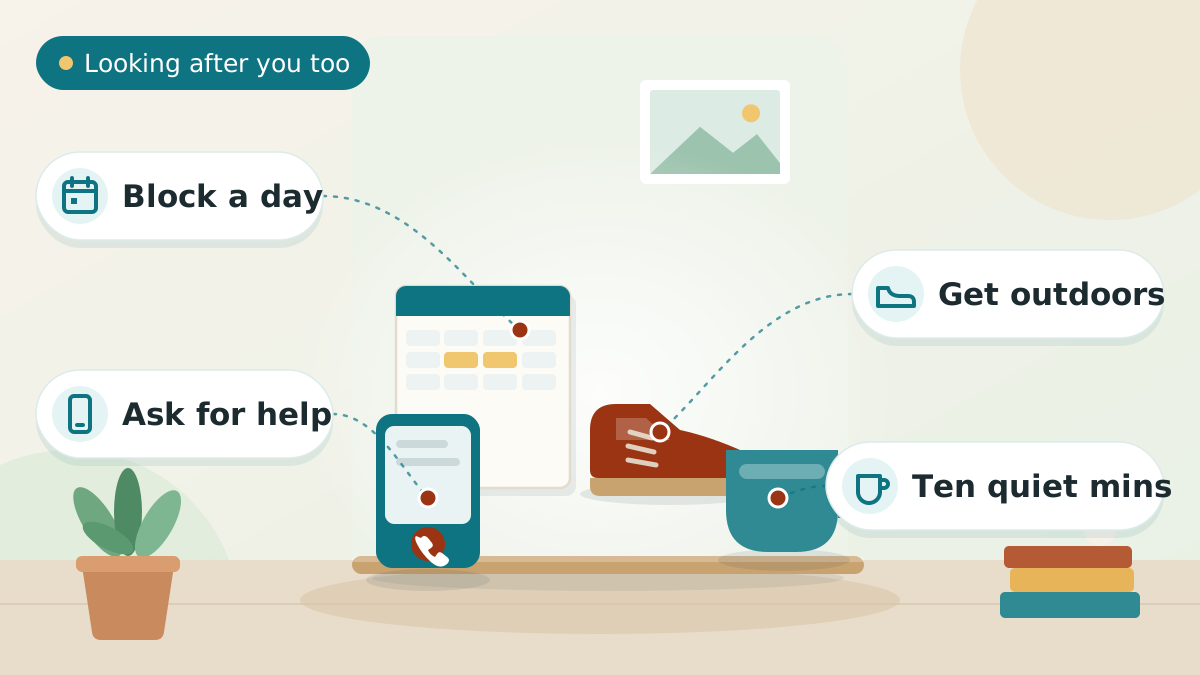
Get the free printable weekly self-care planner
Reading about respite and self-care is one thing; actually scheduling it is another. Our free printable weekly planner has a warning-signs reference and a fill-in space for one real self-care action each day.
Print it, put it somewhere you’ll see it, and write in one small thing for each day. Download the printable planner here.

An ElderlyDaily original
Want all of it in one organized binder?
Aging Parent Medical & Emergency Binder
- Medical history, medications and emergency contacts in one place
- Seven sections: emergency, health, medications, care team, appointments, documents and family
- Type into it on screen, or print it and fill it in by hand
One-off purchase. Instant download.
Fillable PDF · US Letter

Sponsored Pick
CallToU Wireless Caregiver Pager (2 Buttons, 2 Receivers, 500+ ft)
Households where the caregiver moves between rooms or floors and wants call buttons in more than one spot
Check PriceWhat caregiver burnout is — and why it matters
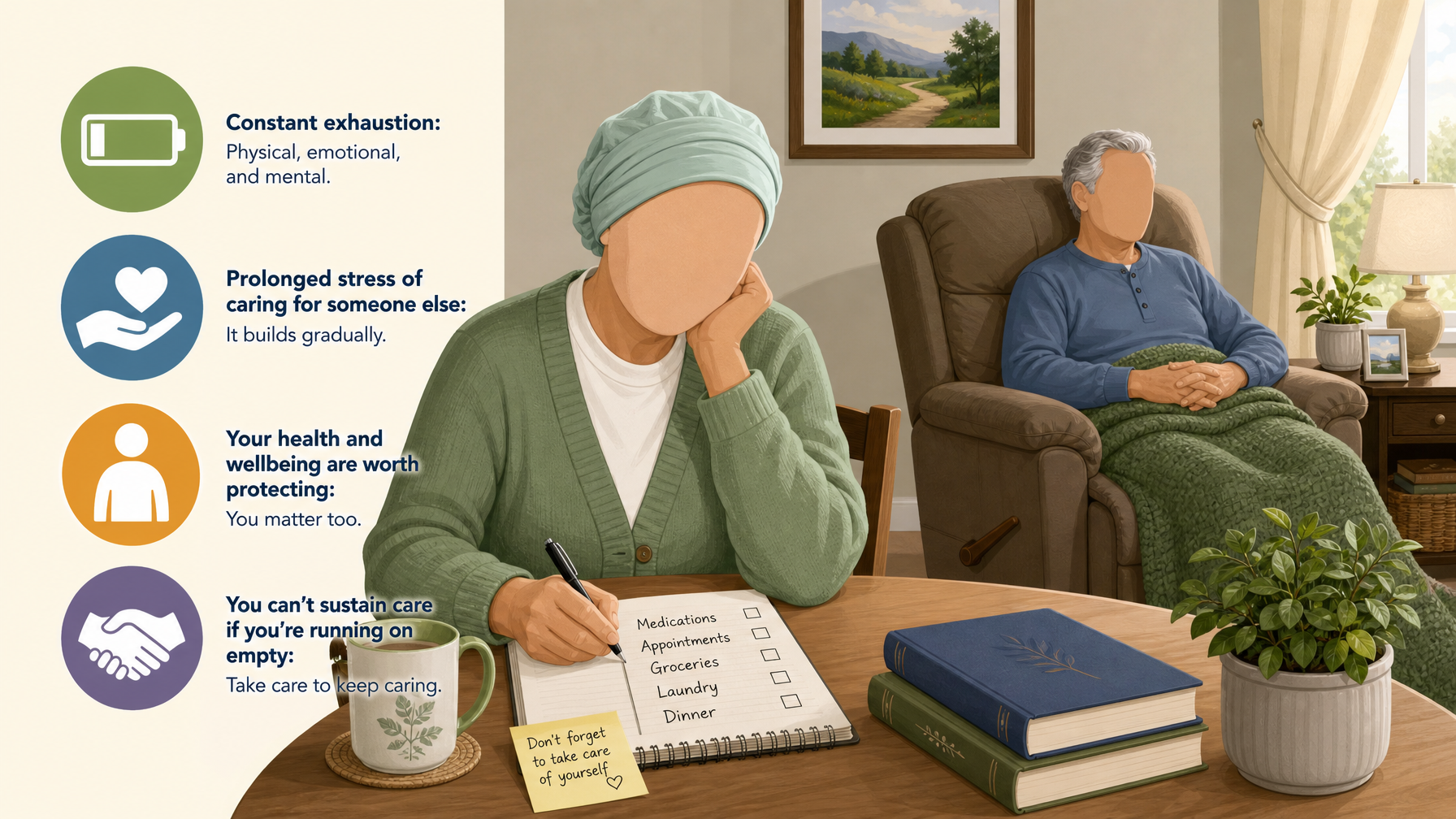
Caregiver burnout is a state of physical, emotional, and mental exhaustion caused by the prolonged stress of caring for someone else. It builds gradually, often in devoted caregivers who put everyone’s needs above their own for so long that they run themselves into the ground without noticing.
It matters for two reasons. First, your own health and wellbeing are worth protecting in their own right. Second — and this is the point that gives many caregivers permission to act — you cannot sustain good care if you are depleted. A burned-out caregiver makes more mistakes, has less patience, and may reach a point where they can no longer continue at all. Looking after yourself is therefore part of looking after them, not a competing priority.
Recognize the warning signs early
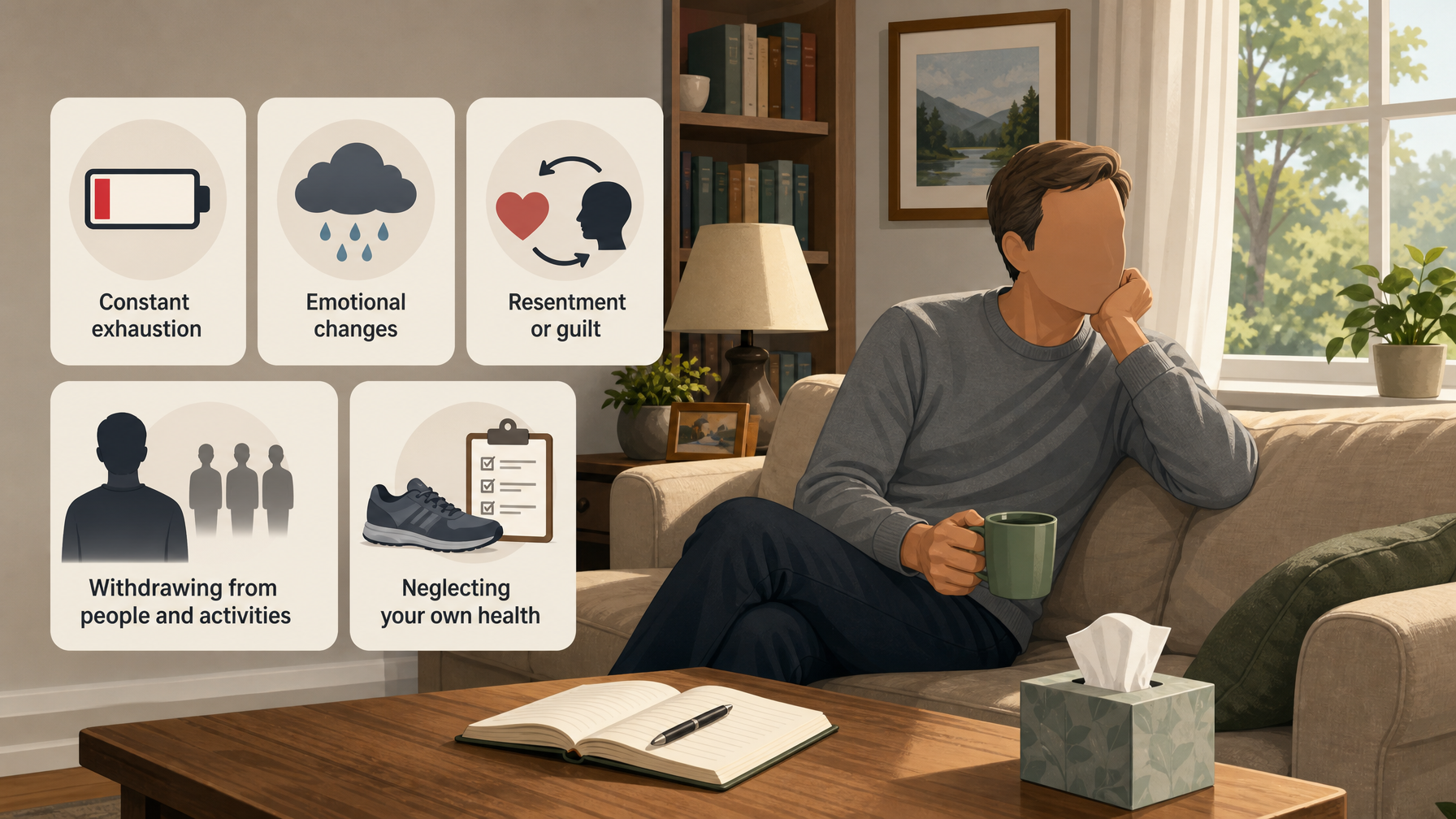
Burnout is far easier to address before it becomes severe, so learn to spot it in yourself. Warning signs include:
- Constant exhaustion — tiredness that sleep does not fix, and low energy.
- Emotional changes — irritability, mood swings, anxiety, sadness, or feeling overwhelmed and hopeless.
- Resentment or guilt — resenting the person or the situation, then feeling guilty for it (a very common, very human cycle).
- Withdrawing from friends, activities, and things you used to enjoy.
- Neglecting your own health — skipping your own appointments, poor eating, no exercise, using alcohol to cope.
- Frequent illness, headaches, or physical symptoms from chronic stress.
- Trouble concentrating, or feeling you have nothing left to give.
If several of these ring true, treat it as a signal to act now — not once things "calm down," which they often do not on their own.
Watch out
Resenting the person you care for, then feeling guilty about it, does not make you a bad caregiver — it is a normal sign of being stretched too thin. It is a cue to get more support, not to try harder alone.
Respite: the non-negotiable
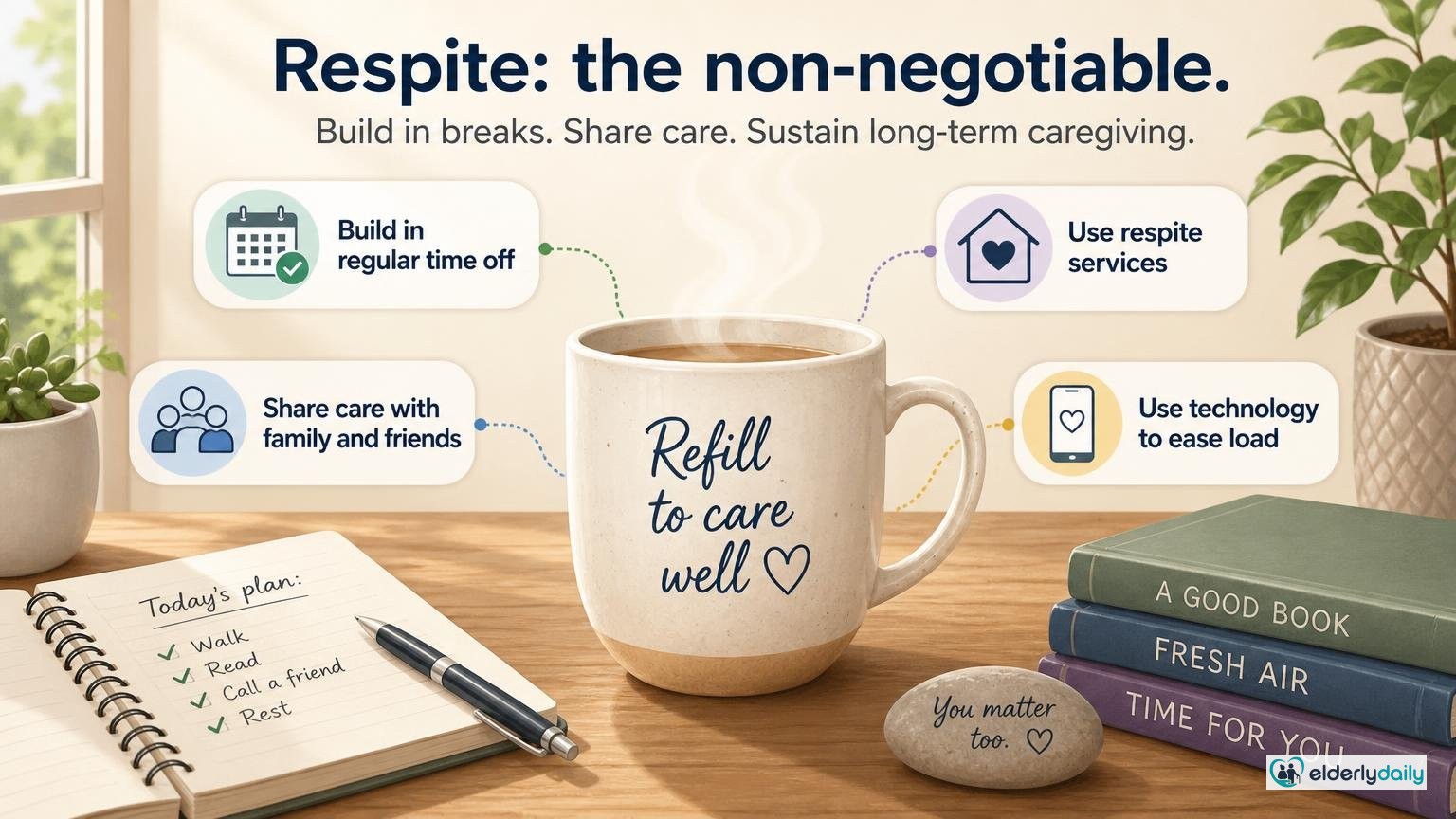
If there is one essential in preventing burnout, it is regular respite — genuine breaks from caregiving. It is not a luxury or a reward for coping; it is what makes long-term caregiving physically and emotionally possible.
- Build in regular time off, however small to start — a few hours a week is a foundation to grow from.
- Use respite services — in-home respite care, adult day programs, or short-stay residential respite give you longer breaks and the person social engagement.
- Share care with family and friends — a rota, even an imperfect one, spreads the load. People often want to help but do not know how; give them specific tasks.
- Use technology to reduce constant vigilance — a medical alert device, monitoring system, or automatic pill dispenser can let you step back a little.
Protecting real breaks is the single highest-value thing most caregivers can do for their own sustainability.
Accept help and set boundaries
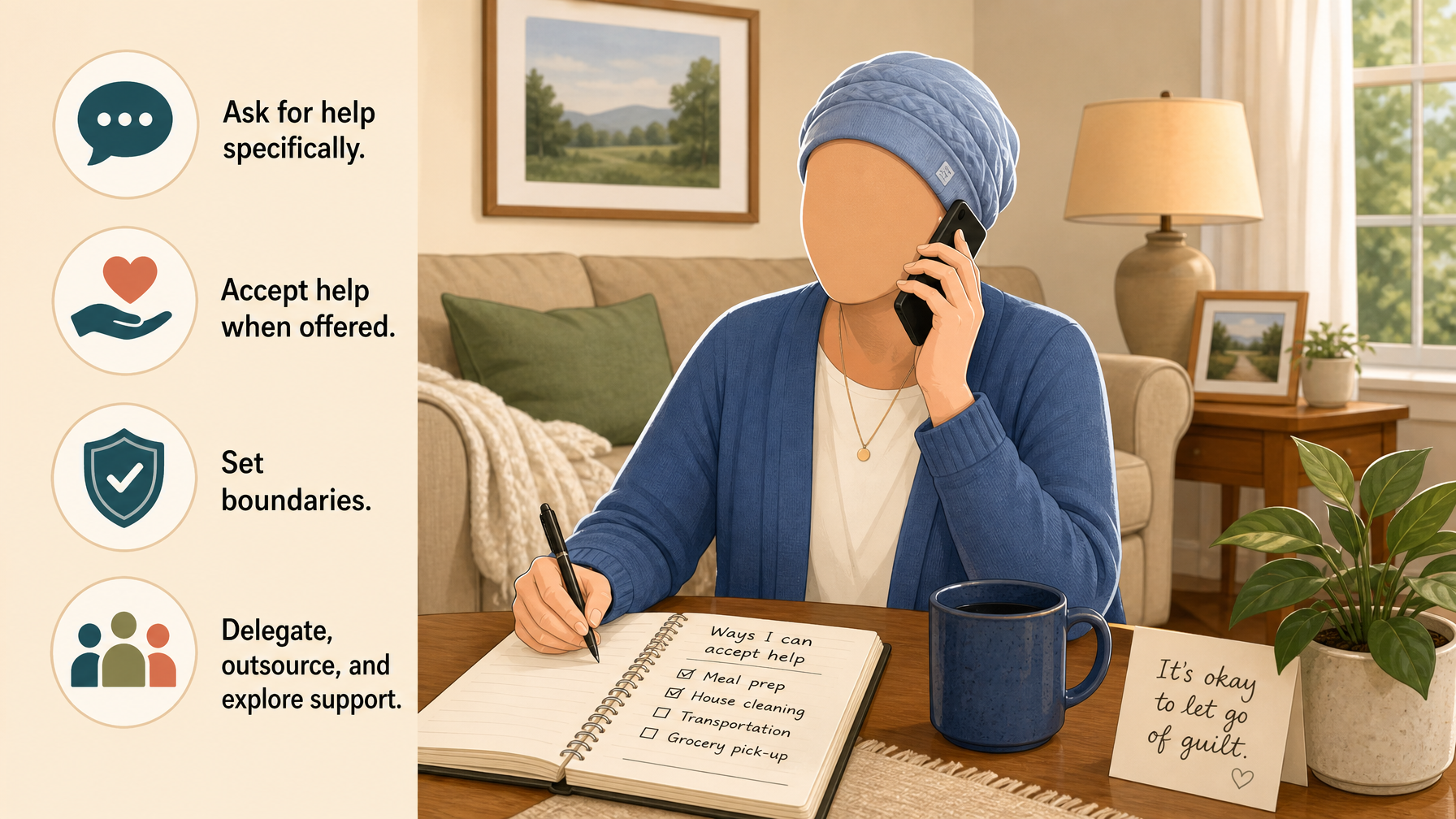
Many caregivers carry far too much because they will not ask for help or cannot say no. Both are learnable:
- Ask for help specifically. "Can you sit with Dad Saturday afternoon?" works far better than "let me know if you can help." Keep a list of concrete tasks others can take.
- Accept help when offered, even if imperfectly done — perfectionism fuels burnout.
- Set boundaries on what you can realistically provide, and let go of guilt about limits. You cannot do everything, and pretending you can helps no one.
- Delegate and outsource where possible — meals, cleaning, transport, and paid care all lighten the load.
- Explore support services — local aging agencies, caregiver organizations, and disease-specific groups (like dementia associations) offer practical and financial help you may not know exists.
Protect your own health and mind
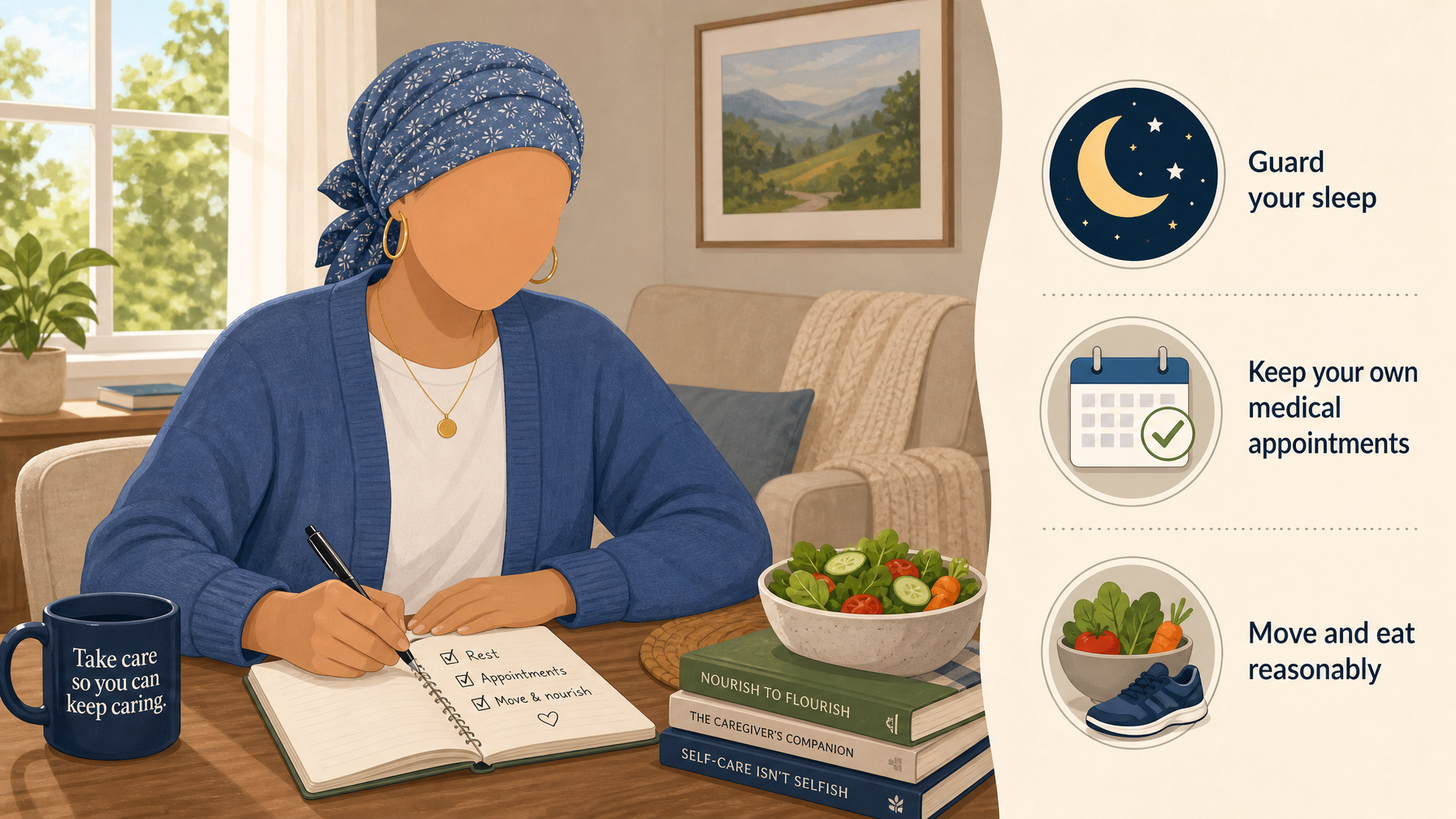
Sustaining care means keeping your own foundations intact:
- Guard your sleep — exhaustion accelerates burnout faster than almost anything.
- Keep your own medical appointments and do not ignore your own health.
- Move and eat reasonably — basic self-care that stress makes easy to drop.
- Stay connected — protect at least some friendships and activities outside caregiving; isolation deepens burnout.
- Make space for even small things you enjoy — a walk, a book, a coffee with a friend — which refill the cup.
Tend to the emotional load
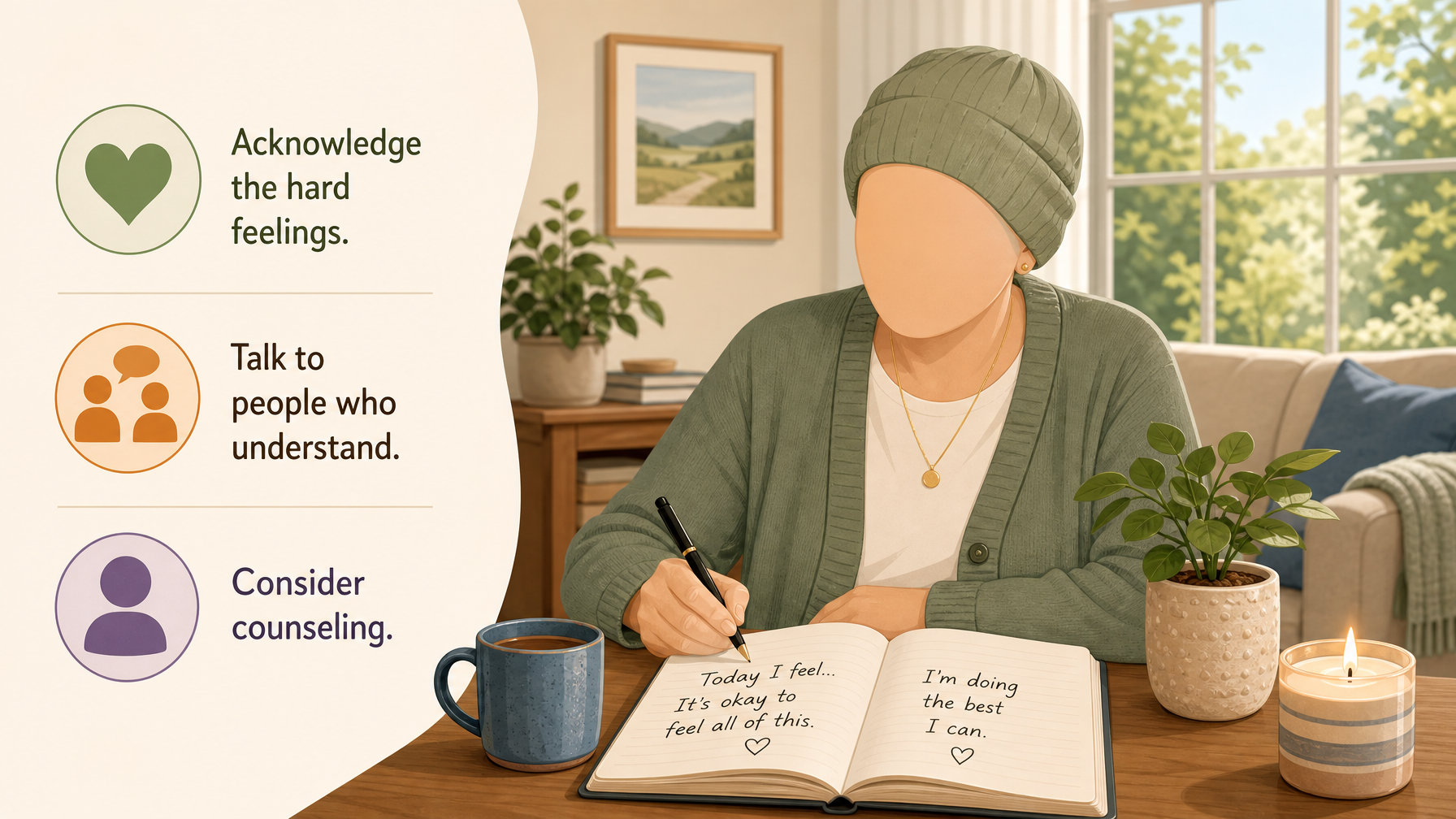
Caregiving carries a heavy emotional weight — grief, guilt, frustration, and love, often all at once — and processing it protects you:
- Acknowledge the hard feelings rather than suppressing them; they are normal and do not make you a bad caregiver.
- Talk to people who understand — caregiver support groups (in person or online) reduce isolation and share practical wisdom.
- Consider counseling if you are struggling — a professional can help you cope and process.
- Grieve the ongoing losses, especially with a progressive illness like dementia, where you may grieve the person while still caring for them.
Safety first
If you feel persistently hopeless, depressed, unable to cope, or that you cannot go on, please reach out for help — to your doctor, a mental-health professional, or a support line. You matter, support exists, and asking for help is a sign of strength.
Frequently asked questions
Is the caregiver self-care planner printable free?
Yes — the printable weekly planner is completely free, no sign-up required. It includes a quick warning-signs reference, respite and self-care ideas from this guide, and a fill-in weekly grid to actually schedule one small thing for each day.
What is caregiver burnout?
Caregiver burnout is a state of physical, emotional, and mental exhaustion caused by the prolonged stress of caring for someone. It builds gradually, often in devoted caregivers who neglect their own needs. It matters both for your own health and because a depleted caregiver cannot sustain good care — so preventing it is part of caring well for your loved one.
What are the signs of caregiver burnout?
Warning signs include constant exhaustion that sleep does not fix, irritability and mood changes, anxiety or hopelessness, resentment followed by guilt, withdrawing from friends and activities, neglecting your own health, frequent illness or headaches, and trouble concentrating or feeling you have nothing left to give. Several of these together are a signal to act now.
How do I prevent caregiver burnout?
Recognize the warning signs early, build in regular respite (breaks are essential, not optional), accept and specifically ask for help, set boundaries on what you can provide, protect your sleep, health, and social connections, and seek support from other caregivers or a counselor. If you feel hopeless or unable to cope, reach out to a professional.
Is it normal to resent the person I care for?
Yes — resenting the person or situation, then feeling guilty about it, is a very common and human response to being stretched too thin. It does not make you a bad caregiver; it is a sign you need more support. Treat it as a cue to build in respite and help rather than to push harder on your own.
What is respite care and why does it matter?
Respite care is temporary care that gives the primary caregiver a break — through in-home help, adult day programs, or short residential stays. It matters because regular breaks are what make long-term caregiving sustainable; without them, exhaustion and burnout build. Respite is a necessity, not a luxury, and also gives the person social engagement.
When should I seek professional help for caregiver stress?
Reach out if you feel persistently hopeless, depressed, anxious, unable to cope, or that you cannot go on, or if stress is harming your health or relationships. Your doctor, a mental-health professional, caregiver support groups, and support lines can all help. Seeking help is a sign of strength, and support is available.
