
Printable Heart Failure Weight Log: Free Daily Weight & Symptom Chart (PDF)

Educational only, not medical advice. Weighing steps and warning signs follow MedlinePlus, the American Heart Association, Cleveland Clinic and Mayo Clinic. Follow your own care team’s action plan and numbers.
With heart failure, a few pounds gained in a day or two can be a sign that fluid is building up. This free log gives you a month of mornings to write down your weight, blood pressure, pulse and six common symptoms, with a zones page that shows when to call your care team and when to call 911.
Key takeaways
- Free printable heart failure weight log: one month, 7 pages, with no sign-up.
- Weigh every morning on the same scale, after the bathroom and before you eat, in similar clothes (MedlinePlus).
- Call your provider if your weight goes up by more than 2 to 3 pounds in a day or 5 pounds in a week, unless your care team gave you other numbers (MedlinePlus).
- A green, yellow and red zones page: when it is a good day, when to call your care team, and when to call 911.
- Fill it in on screen or print it. US Letter and A4.
Quick answer
Where can I get a free printable heart failure weight log?
Download it free here: the heart failure weight log (PDF) has a month of daily rows for weight, the change from yesterday, blood pressure, pulse and six symptoms, plus a green, yellow and red zones page and a page for your care team’s numbers. There is an A4 edition too. You can type into it on screen or print it. No email or sign-up is needed.
Download the free heart failure weight log
Both files have the same 7 pages. Pick the paper size you use: US Letter in the US and Canada, A4 almost everywhere else. The A4 edition says “your local emergency number” instead of 911.
Filling it in on screen
Open the PDF in Chrome, Edge or Adobe Acrobat Reader, click any box and type or tick. When you are done, download or save the file so your entries are kept, or print it. On a phone, Adobe Acrobat Reader works best.
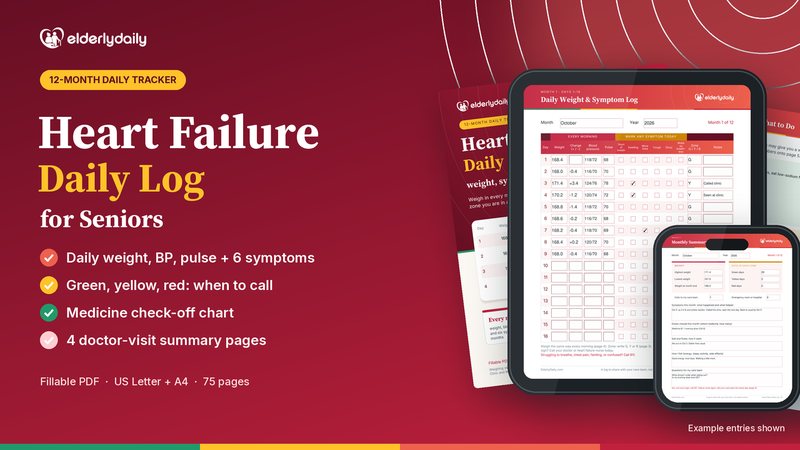
An ElderlyDaily original
Weighing in every morning?
Heart Failure Daily Log for Seniors
- Every morning: weight, change from yesterday, blood pressure, pulse and six symptoms
- Green, yellow and red zones: when to call your care team, and when to call 911
- A page for your care team’s numbers: weight limits, salt and fluids
One-time purchase · Instant download · Fillable PDF · 75 pages · US Letter + A4

Sponsored Pick
RunStar 550 lb High-Capacity Scale
Heavier users who need a higher-capacity scale with a clear display
Check PriceWhat is inside
- Page 2, How to use it: set up once, then a few minutes every morning.
- Page 3, Green, yellow, red: the signs of a good day, when to call your doctor or heart failure nurse, and when to call 911.
- Page 4, How to weigh and check: the same routine every morning, how to count your pulse, home blood pressure, and checking for swelling.
- Page 5, My care team’s numbers: your dry or target weight, your weight-gain limits, salt and fluid limits, normal pulse and blood pressure, and who to call.
- Pages 6 and 7, Daily log: one row a day for a month: weight, change, blood pressure, pulse, six symptoms to mark, your zone and notes.
How to weigh yourself with heart failure
These steps follow MedlinePlus from the National Library of Medicine.
- 1
Every morning, on the same scale
Weigh when you get up, after you use the bathroom and before you eat.
- 2
Wear similar clothing each time
and write the weight down right away.
- 3
Work out the change
from yesterday, and check the total change over the last 7 days.
- 4
Know your numbers
Contact your provider if your weight goes up by more than 2 to 3 pounds (1 to 1.5 kg) in a day, or 5 pounds (2 kg) in a week, or if you lose a lot of weight. Your care team may give you different numbers: write them on page 5.
Green, yellow, red: when to call
The log has a full page on the zones. Your care team may give you a written action plan with different numbers; if they do, follow theirs.
- Green, a good day (American Heart Association Self-Check Plan): your weight is steady, no new or worse shortness of breath, no new swelling, your usual activity level, no chest pain.
- Yellow, call your doctor or heart failure nurse (MedlinePlus, AHA, Cleveland Clinic): weight up more than 2 to 3 pounds in a day or 5 pounds in a week; shortness of breath with activity, when lying down, or an hour or two after falling asleep; swelling in the feet, ankles or legs; more tired or weak than usual; a cough that won’t go away; a pulse that is very slow, very fast or irregular; dizziness that lasts more than a minute.
Red: call 911 or go to the emergency room
If you struggle to breathe or are short of breath while sitting still, have new or worsening chest pain, or are confused or cannot think clearly (Cleveland Clinic); or if you faint or feel severely weak, have sudden, severe shortness of breath and cough up white or pink foamy mucus, have a fast or irregular heartbeat with shortness of breath, chest pain or fainting, or get repeated shocks from a defibrillator (Mayo Clinic).
Salt, fluids and medicines
Your provider may ask you to limit salt (sodium) and the amount you drink, to reduce fluid buildup (NHLBI). Limits differ from person to person, so write yours from your care team on page 5.
Take your medicines as prescribed. Tell your provider before you take any new medicine, herb or supplement, including pain relievers such as ibuprofen or naproxen (MedlinePlus). Never change or stop a medicine, including a water pill, because of your readings without talking to your doctor first, unless your care team has given you a written plan.
Want the whole year?
The free log covers one month. Our Heart Failure Daily Log has 12 months of the same daily rows, monthly medicine check-off charts for up to 10 medicines, a page for medicine changes, tests and hospital stays, a summary page for every month and four doctor-visit pages.
An ElderlyDaily original
Heart Failure Daily Log for Seniors
$12One-time purchase · Instant download · Fillable PDF · 75 pages · US Letter + A4
More free printables
See all 34 free printables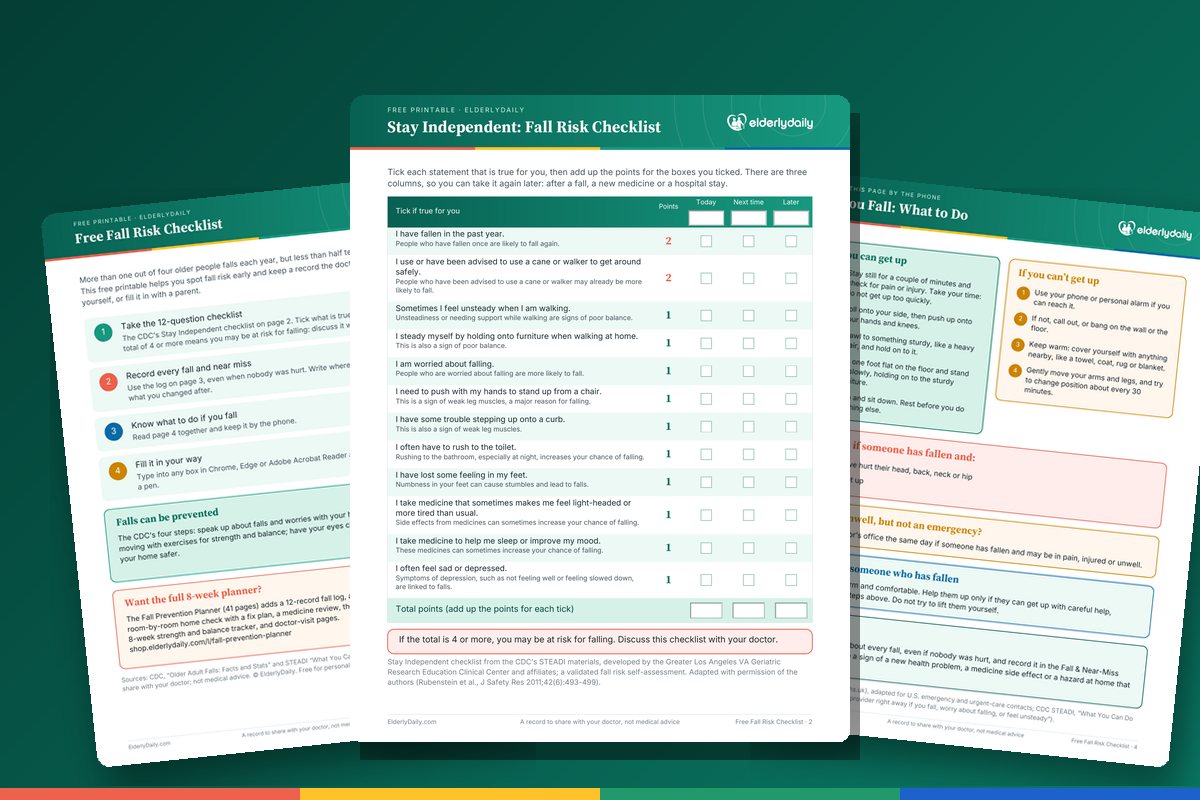 Fall Risk ChecklistThe CDC's 12-question Stay Independent checklist with scoring, a fall and near-miss log, and what to do if you fall.Free PDF, no sign-up
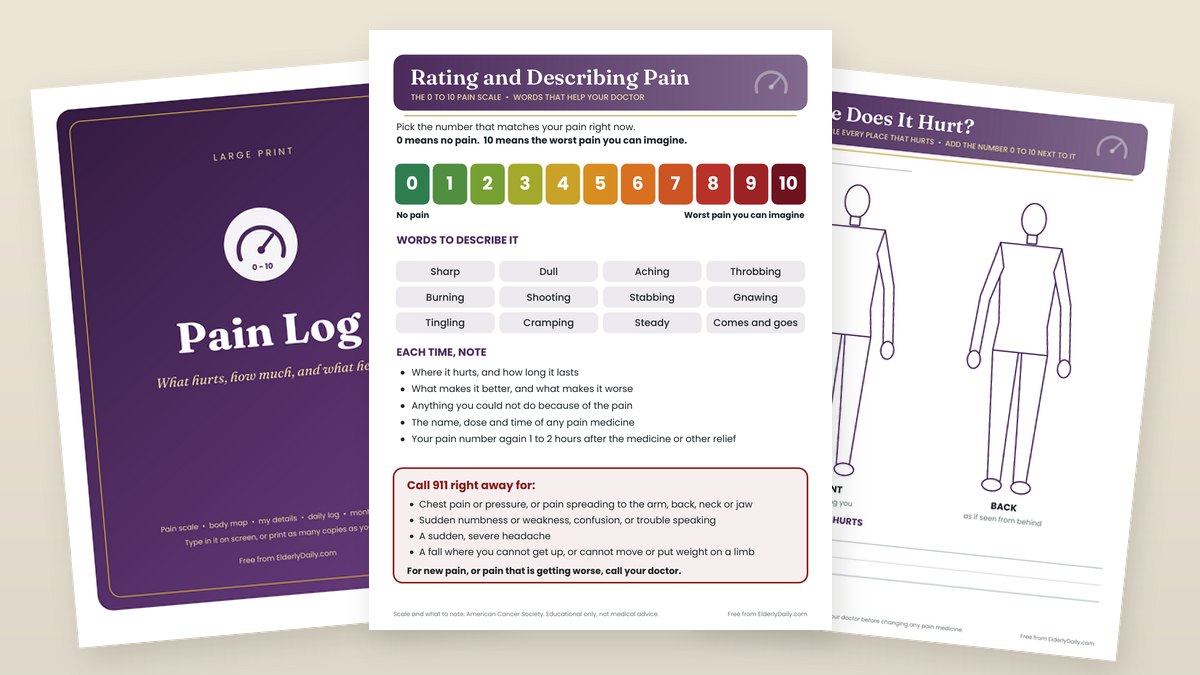 Pain LogA 0 to 10 pain scale, a body map, a daily pain diary and a monthly tracker to show your doctor.Free PDF, no sign-up
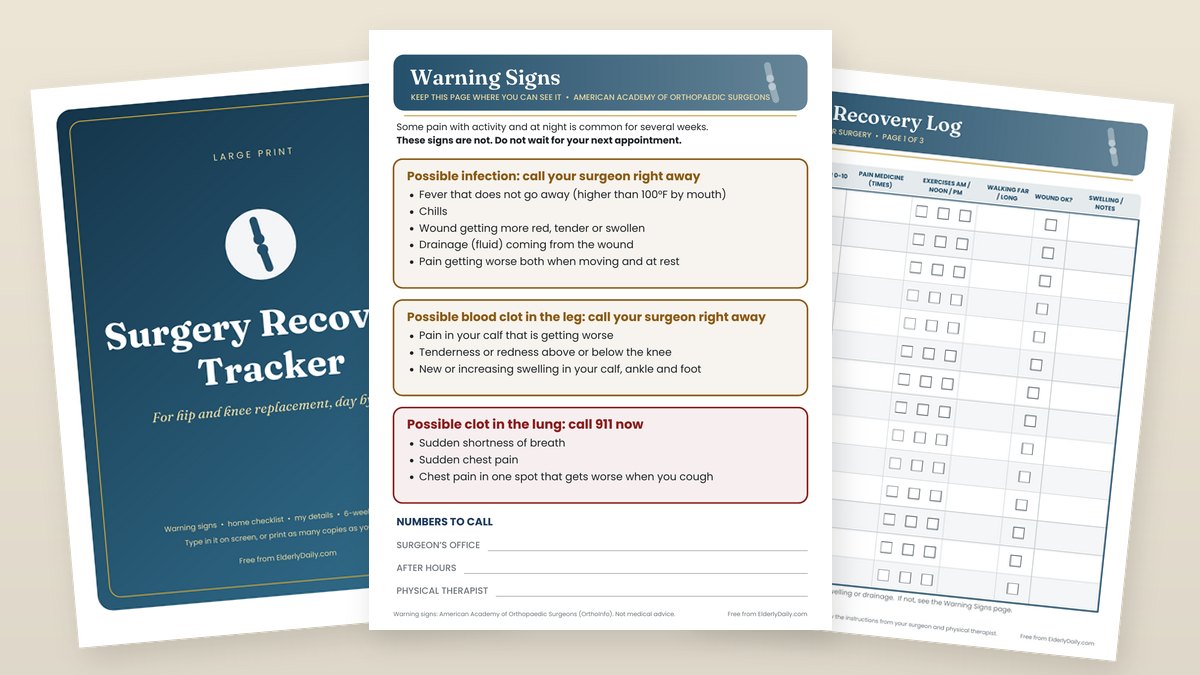 Surgery Recovery TrackerFor knee and hip replacement: warning signs, a home checklist and a 6-week daily log for pain, exercises and walking.Free PDF, no sign-up
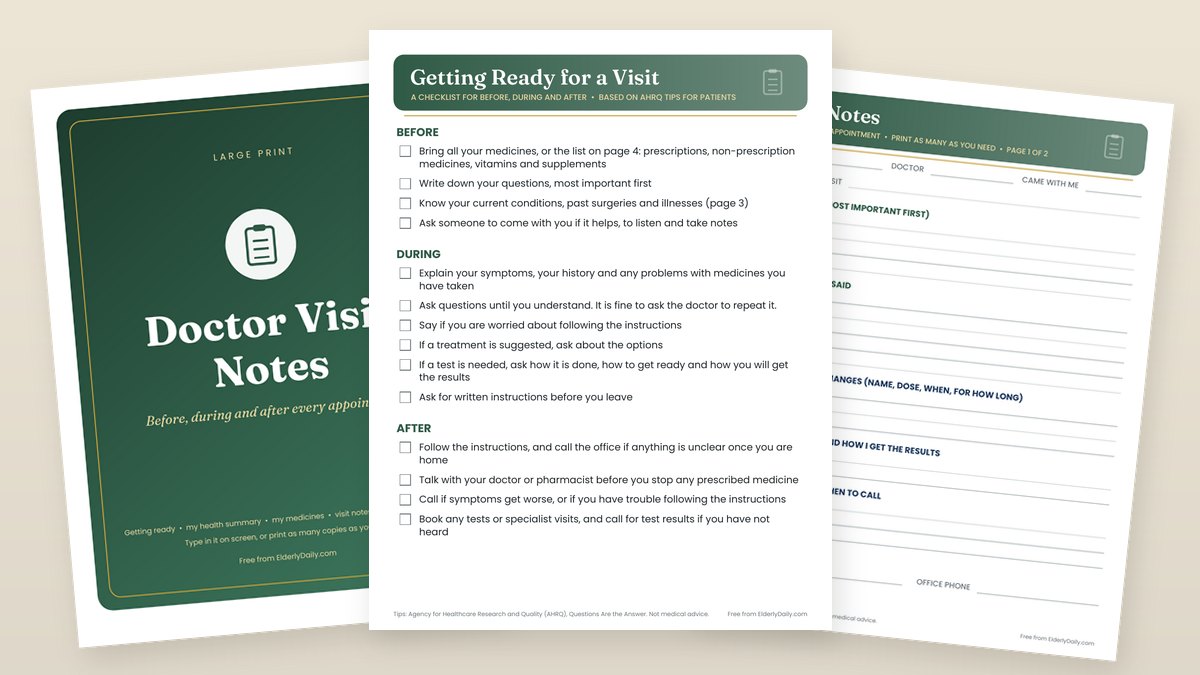 Doctor Visit NotesA before-and-after checklist, health summary, medicine list, visit notes pages and an appointment log.Free PDF, no sign-up
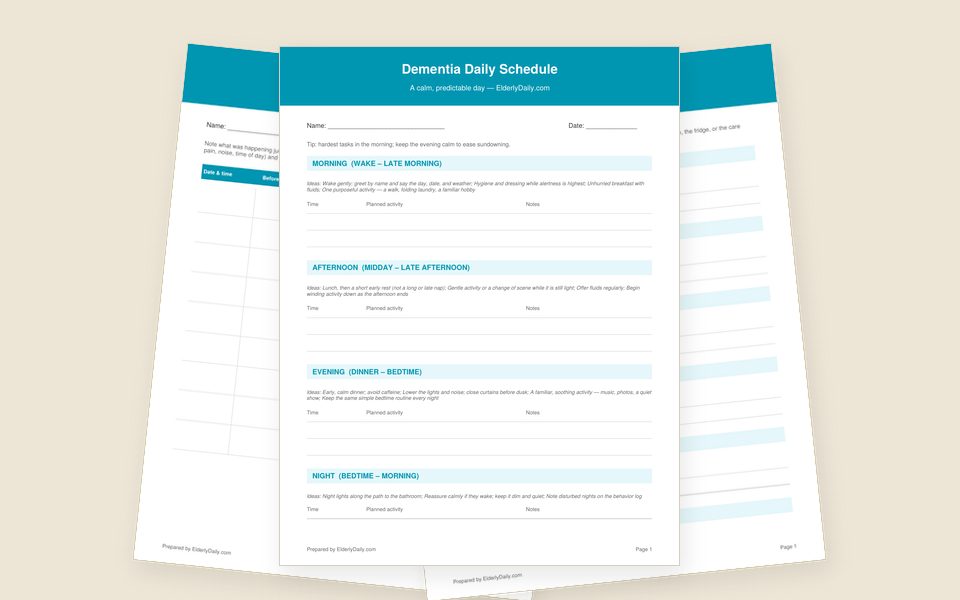 Dementia Care ToolkitA daily schedule, a sundowning and behavior log, and an All About Me profile.Free PDF, no sign-up
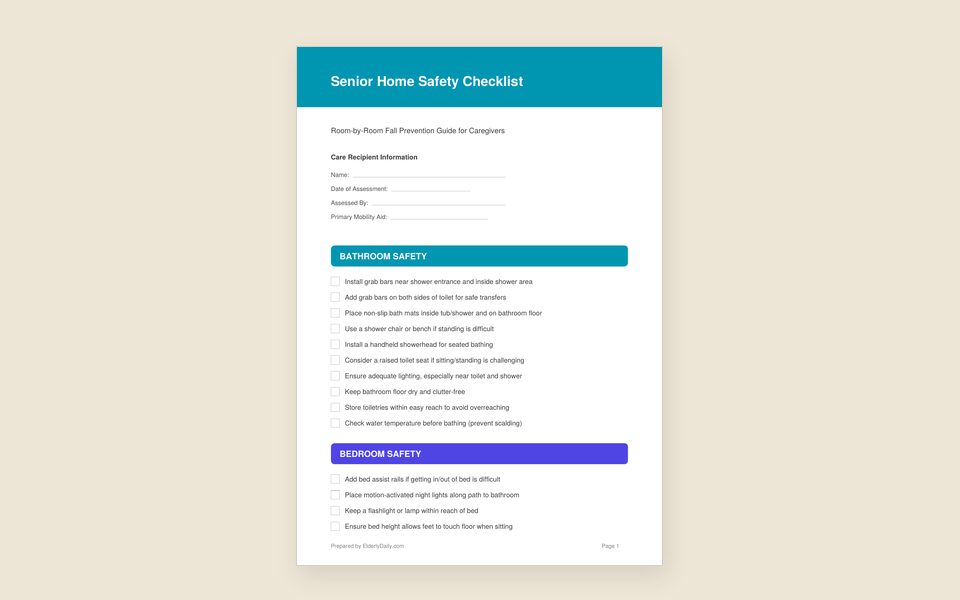 Home Safety ChecklistA room-by-room walk-through for fall hazards, the bathroom, the bedroom and emergencies.Free PDF, no sign-up
Frequently asked questions
Is this heart failure weight log really free?
Yes. Both PDFs download directly, with no email address, sign-up or payment. Print or fill in as many copies as you like for personal use.
How much weight gain is too much with heart failure?
MedlinePlus advises contacting your provider if your weight goes up by more than 2 to 3 pounds (1 to 1.5 kg) in a day or 5 pounds (2 kg) in a week. Your care team may give you different numbers; follow theirs.
What time of day should I weigh myself?
Every morning, on the same scale, after you use the bathroom and before you eat, wearing similar clothing each time (MedlinePlus).
Do I need to write down my blood pressure and pulse?
Only if your care team asks you to. The columns are there if you need them; your weight and symptoms are the daily core.
Can I keep the log for my mother or father?
Yes. Weigh at the same time each morning, mark any symptoms together, and bring the log to their appointments.
When is it an emergency?
Call 911 if someone struggles to breathe or is short of breath while sitting still, has new or worsening chest pain, is confused or cannot think clearly, faints, or coughs up white or pink foamy mucus with sudden, severe shortness of breath (Cleveland Clinic, Mayo Clinic).
