
6 Best Blood Pressure Monitors for Seniors
 By Kutubuddin, Founder & Senior Care Researcher Updated October 2026
In this guide
 Best OverallOmron Complete (BP7900)
 Best Large DisplayBeurer BM67 Upper Arm Monitor
 Best for Doctor SharingWithings BPM Connect
 Best Simple / One-PieceOmron Evolv (BP7000)
 Best BudgetGreater Goods Bluetooth Blood Pressure Monitor
 Best Wrist MonitorOmron Gold Wireless Wrist (BP4350)
- What to look for
- Frequently asked questions
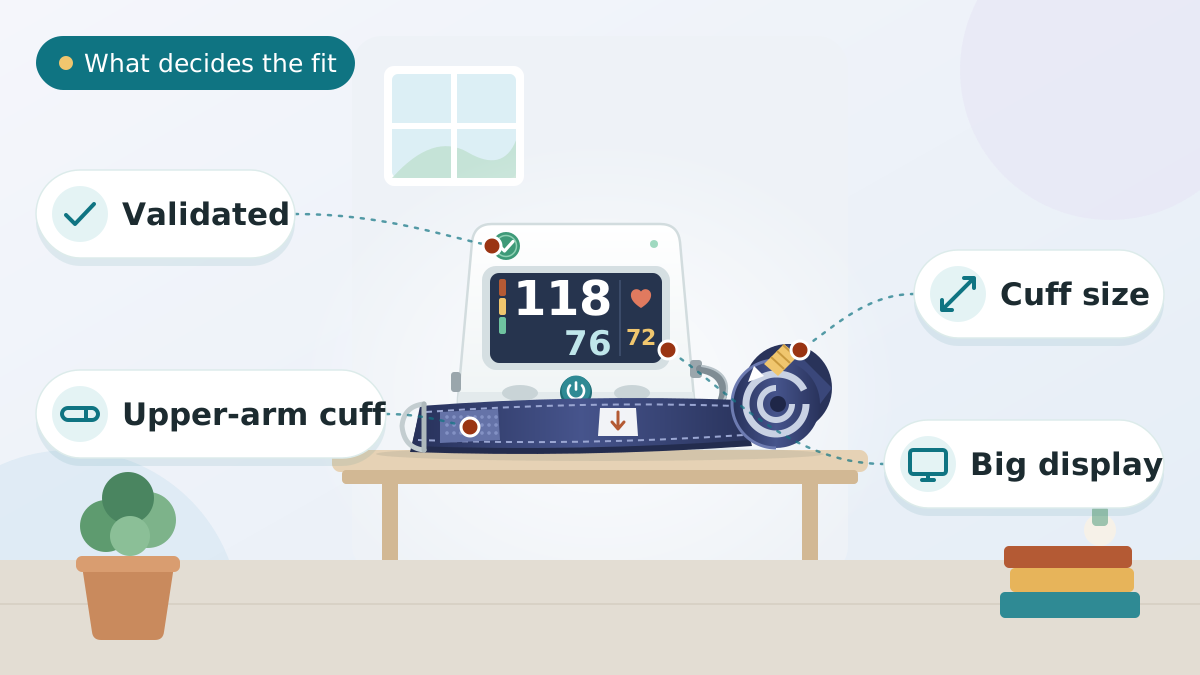
With nearly half of older adults living with high blood pressure, a home monitor is one of the most useful health tools a senior can own — but only if it is accurate. The single most important check is clinical validation: an unvalidated cuff can be off by 10-15 mmHg, making the numbers meaningless.
Choose a validated upper-arm monitor — the American Heart Association does not recommend wrist cuffs for routine use — with a large, easy-to-read display. Our overall pick is the Omron Complete, a clinically validated cuff that also captures a single-lead EKG in the same session — a genuinely useful safeguard as heart-rhythm problems become more common with age. Below, more validated upper-arm monitors matched to different needs, plus a validated wrist option for anyone who cannot use an arm cuff.
We may earn a commission when you buy through links on this page. Read our affiliate disclosure.
Our Top Pick
Omron Complete (BP7900)
The most capable everyday monitor for an older adult, and the only home cuff here that captures a single-lead EKG and a blood pressure reading in the same session.
- Blood pressure plus single-lead EKG in one reading
- Flags possible atrial fibrillation
- Clinically validated accuracy
- Irregular-heartbeat detection
- Bluetooth sync to the Omron Connect app
Type
Upper arm + EKG
EKG
Single-lead, same session
Detects
AFib indicators
Validation
Clinically validated
Sync
Bluetooth (Omron Connect)
Top 6 Picks — Find Your Situation
- Omron Complete (BP7900)Best Overall
Best forMost seniors who want clinically validated accuracy plus an EKG safeguard for heart-rhythm concerns
- BP plus single-lead EKG in one session — unique here
- Flags possible atrial fibrillation, more common with age
- Clinically validated accuracy
Watch out: Most expensive option here
- Beurer BM67 Upper Arm MonitorBest Large Display
Best forSeniors with low vision who want the largest, easiest-to-read numbers
- Extra-large, high-contrast display
- Color-coded risk indicator is easy to interpret
- Irregular-heartbeat alert
Watch out: Fewer smart/app features than connected rivals
- Withings BPM ConnectBest for Doctor Sharing
Best forSeniors (or their caregivers) who want readings to sync and share with a doctor automatically
- Automatic Wi-Fi sync — no app tapping needed
- Easy doctor and caregiver sharing
- Rechargeable (no disposable batteries)
Watch out: Relies on the app for full history and trends
- Omron Evolv (BP7000)Best Simple / One-Piece
Best forSeniors who want an accurate, no-fuss one-piece monitor that's easy to set up alone
- Simple one-piece unit, easy to set up alone
- Accurate readings from the most doctor-recommended home brand
- Wide ComFit cuff fits most arms without an upgrade
Watch out: Single-user memory (100 readings), not multi-user
Best forBudget-focused buyers who still want a clinically validated, easy-to-read monitor
- Validated accuracy at a low price
- Clear backlit display
- Bluetooth tracking included
Watch out: Fewer advanced features
- Omron Gold Wireless Wrist (BP4350)Best Wrist Monitor
Best forSeniors who cannot comfortably use an upper-arm cuff and want a clinically validated wrist monitor.
- Validated accuracy in a wrist form
- Position guidance addresses the usual wrist-monitor problem
- Easy to put on for those who struggle with arm cuffs
Watch out: Wrist readings are still more position-sensitive than upper-arm — technique matters
Omron Complete (BP7900)
Most seniors who want clinically validated accuracy plus an EKG safeguard for heart-rhythm concerns
The Omron Complete wins on the two things that matter most together: trustworthy accuracy and a real safeguard. It is clinically validated — the baseline every home monitor should meet — and it is the only cuff here that also records a single-lead EKG in the same sitting, so a possible atrial fibrillation shows up right beside the blood pressure number instead of needing a separate device.
It's also built for real seniors. The wide-range cuff fits most arms without buying an upgrade, irregular-heartbeat detection adds a safety flag on every reading, and results store and sync to the Omron Connect app so a caregiver or doctor can follow the trend — or you can simply read them on the device. For an older adult, where rhythm problems grow more likely with age, that BP-plus-EKG combination is genuinely useful rather than a gimmick.
What we love
- BP plus single-lead EKG in one session — unique here
- Flags possible atrial fibrillation, more common with age
- Clinically validated accuracy
- Stores and syncs results for easy doctor sharing
Things to consider
- Most expensive option here
- EKG not for use with implanted cardiac devices
- More features than some users need
Right for you if
- ✓You want the most capable validated monitor, not just the basics
- ✓Heart rhythm is a concern — a history of AFib, palpitations, or a doctor's watch-and-wait
- ✓You'd value BP and an EKG check in one device instead of two
- ✓You want readings that store and sync for easy doctor sharing
Maybe skip it if
- !You want the largest possible numbers — the Beurer BM67's XL display is easier still
- !You want the simplest setup — the one-piece Omron Evolv is the most fuss-free
- !You're on a tight budget — the validated Greater Goods costs much less
What owners consistently report
Common praise
- +Owners highlight consistent, doctor's-office-matching readings
- +The in-session EKG is praised as reassuring for those tracking a rhythm concern
- +The wide cuff and app sync get repeated mentions for ease of use
Common gripes
- –It's the most expensive monitor here
- –The EKG isn't for use with an implanted cardiac device
- –First-time setup of the app takes a little patience
Getting started
- →Measure the arm and confirm the cuff range before the first reading
- →Rest the arm at heart level and stay quiet during the measurement
- →For an EKG, follow the on-screen finger-placement prompt and hold still
How it compares to our runner-up
The Beurer BM67 is the closest alternative and the better pick if reading the screen is the priority — its XL high-contrast display is the easiest here to see at a glance. The Omron Complete edges it overall by adding a single-lead EKG and AFib flag alongside validated BP accuracy, which matters more as heart-rhythm problems become common with age. Choose the Complete for the accuracy-plus-EKG safeguard, the Beurer when the biggest, clearest numbers matter most.
How we picked
We compared 6 options. We compared today's most recommended home blood pressure monitors on what matters most for seniors: clinical validation (listed on the AHA/AMA Validated Device List or AAMI/ESH/BHS protocols), display readability, cuff fit range, irregular-heartbeat detection, and how easily readings can be tracked and shared with a doctor. Our picks draw on manufacturer specs and expert testing from Consumer Reports, AARP, and NCOA, plus the public Validated Device List — not hands-on lab testing. We prioritized upper-arm cuffs over wrist monitors, which the AHA considers less reliable for routine home use.
Reviewed by Kutubuddin — who researches senior-care products and the real-world needs of caregivers and older adults.
Our picks, reviewed
Omron Complete (BP7900)
The most capable everyday monitor for an older adult, and the only home cuff here that captures a single-lead EKG and a blood pressure reading in the same session. That matters with age: rhythm problems like atrial fibrillation grow more common, and the Complete flags possible AFib right alongside the BP number instead of needing a separate device. It is clinically validated for accuracy — the baseline every home monitor should meet — the wide cuff fits most arms, and readings sync to the free Omron Connect app so a caregiver or doctor can follow the trend. For most seniors it is the strongest blend of trustworthy accuracy and a genuinely useful extra.
What we like
- BP plus single-lead EKG in one session — unique here
- Flags possible atrial fibrillation, more common with age
- Clinically validated accuracy
- Stores and syncs results for easy doctor sharing
Keep in mind
- Most expensive option here
- EKG not for use with implanted cardiac devices
- More features than some users need
Key features
- Blood pressure plus single-lead EKG in one reading
- Flags possible atrial fibrillation
- Clinically validated accuracy
- Irregular-heartbeat detection
- Bluetooth sync to the Omron Connect app
- Type
- Upper arm + EKG
- EKG
- Single-lead, same session
- Detects
- AFib indicators
- Validation
- Clinically validated
- Sync
- Bluetooth (Omron Connect)
Beurer BM67 Upper Arm Monitor
The pick when reading the screen is the priority. The BM67 has an XL backlit display that shows the numbers in large, high-contrast digits — a meaningful quality-of-life detail for anyone with vision concerns — plus a color risk indicator and irregular-heartbeat detection.
What we like
- Extra-large, high-contrast display
- Color-coded risk indicator is easy to interpret
- Irregular-heartbeat alert
- Straightforward, low-fuss operation
Keep in mind
- Fewer smart/app features than connected rivals
- Check the cuff range against the user's arm size
- Type
- Upper arm
- Display
- XL backlit, high-contrast
- Indicator
- Color risk scale
- Rhythm
- Irregular-heartbeat detection
- Users
- Multi-user memory
Withings BPM Connect
The easiest way to keep a doctor in the loop. It's FDA cleared and the only home cuff with built-in Wi-Fi, so a reading uploads automatically to the Health Mate app — and on to Apple Health or Google Fit — without opening anything, even if the phone is in another room. The rechargeable battery means no AA hunting.
What we like
- Automatic Wi-Fi sync — no app tapping needed
- Easy doctor and caregiver sharing
- Rechargeable (no disposable batteries)
- Slim, travel-friendly design
Keep in mind
- Relies on the app for full history and trends
- Pricier than a basic validated cuff
- Narrower appeal if you don't use a smartphone
- Type
- Upper arm
- Validation
- FDA cleared
- Sync
- Built-in Wi-Fi (auto-upload)
- Apps
- Health Mate, Apple Health, Google Fit
- Power
- Rechargeable
Omron Evolv (BP7000)
The easiest to set up and live with. The cuff and display are a single tubeless unit — nothing to connect, no tube to kink or knock over — which genuinely helps a senior taking readings alone. The wide ComFit cuff fits most arms (9-17 in), it flags an irregular heartbeat during a normal reading, and it syncs over Bluetooth to the free Omron Connect app (also Apple Health and Google Fit). Fewer bells and whistles than the Complete, but it covers the essentials accurately with the least fuss.
What we like
- Simple one-piece unit, easy to set up alone
- Accurate readings from the most doctor-recommended home brand
- Wide ComFit cuff fits most arms without an upgrade
- Syncs to the app so family or a doctor can track trends
Keep in mind
- Single-user memory (100 readings), not multi-user
- Compact display is smaller than a tube-and-base monitor's
- No EKG or color risk indicator like pricier picks
Key features
- One-piece tubeless design — nothing to connect or knock over
- Wide-range ComFit cuff fits most arms (9-17 in)
- Irregular-heartbeat detection during a normal reading
- Bluetooth sync to Omron Connect (Apple Health / Google Fit)
- Stores up to 100 readings
- Type
- Upper arm (one-piece, tubeless)
- Accuracy
- OMRON Advanced Accuracy
- Cuff range
- 9-17 in (ComFit, wide)
- Memory
- 100 readings
- Sync
- Bluetooth (Omron Connect)
Greater Goods Bluetooth Blood Pressure Monitor
Proof that accuracy doesn't have to be expensive. It appears on the Validated Device List, has a clear backlit display and Bluetooth, and typically costs a fraction of premium monitors — making it an easy, trustworthy first monitor.
What we like
- Validated accuracy at a low price
- Clear backlit display
- Bluetooth tracking included
- Simple to set up and use
Keep in mind
- Fewer advanced features
- Confirm the cuff size fits the user's arm
- Single-user focus on the basic model
- Type
- Upper arm
- Validation
- On the Validated Device List
- Display
- Backlit, easy to read
- Sync
- Bluetooth app
- Value
- Low cost
Omron Gold Wireless Wrist (BP4350)
The pick for seniors who genuinely cannot manage an upper-arm cuff — because of arthritis, a larger arm, or discomfort. It is a clinically validated wrist monitor, so the readings are trustworthy when taken correctly. Its Heart Zone guidance tells you when your wrist is level with your heart — the step that makes a wrist reading accurate — and a cuff wrap guide flags a cuff that is too loose. It stores 100 readings for each of two users and syncs to the free Omron Connect app. Upper-arm is still the more reliable choice for most people, but this is the best wrist option when a cuff simply will not work.
What we like
- Validated accuracy in a wrist form
- Position guidance addresses the usual wrist-monitor problem
- Easy to put on for those who struggle with arm cuffs
- App tracking and two-user memory
Keep in mind
- Wrist readings are still more position-sensitive than upper-arm — technique matters
- The American Heart Association prefers upper-arm for routine monitoring
- You must hold the wrist at heart level for each reading
Key features
- Clinically validated wrist monitor
- Heart Zone guidance solves the main wrist-accuracy pitfall
- Cuff wrap guide warns when the cuff is too loose
- Syncs to the free Omron Connect app; stores two users' readings
- Irregular-heartbeat symbol
- Type
- Wrist cuff (fits 5.3–8.5 in)
- Accuracy
- Clinically validated
- Users
- 2 users, 100 readings each; app sync
- Guidance
- Heart Zone guidance + cuff wrap guide
- Extras
- Bluetooth; irregular-heartbeat symbol
What to look for
Accuracy first: choose a validated monitor
Accuracy is the one feature that actually matters, and most cheap monitors skip the testing that proves it. An unvalidated cuff can read 10-15 mmHg off — enough to hide real hypertension or trigger needless worry.
Before buying, check that the model is on the AHA/AMA Validated Device List (you can look it up at validatebp.org) or has passed AAMI, ESH, or BHS validation. Out of hundreds of monitors on the market, only a few dozen are listed.
Upper-arm, not wrist
For routine home use, upper-arm cuffs are more accurate than wrist or finger monitors, which are far more sensitive to position. The American Heart Association doesn't recommend wrist monitors for everyday tracking.
If a wrist monitor is the only option a person can manage physically, that's a conversation to have with their doctor — but for most seniors, a validated upper-arm cuff is the right call.
Get the cuff size right
Using the wrong cuff size is the single most common mistake, and it throws off every reading. Measure the arm's circumference at the midpoint and match it to the cuff's stated range.
Wide-range cuffs (around 9-17 in) fit most people. For larger arms, look specifically for a large or extra-large cuff rather than forcing a standard one.
A display a senior can actually read
The numbers do no good if they can't be read clearly. Look for a large, backlit display with high-contrast digits.
Color-coded indicators (green for normal, yellow for elevated, red for high) give instant context, and irregular-heartbeat detection adds a useful safety flag — arrhythmias become more common with age.
Memory, multiple users, and sharing
Tracking trends over time is the whole point of home monitoring, so consider how readings are stored and shared.
- On-device memory stores recent readings without a phone.
- Multi-user memory keeps two people's readings separate.
- Bluetooth or Wi-Fi syncs to an app you can show or send to a doctor.
- A simple paper log works perfectly well if you'd rather skip the app.
Tips to Choose Blood Pressure Monitors
Short on time? Here are the key points to weigh before choosing, each covered in detail above:
- Accuracy first: choose a validated monitor
- Upper-arm, not wrist
- Get the cuff size right
- A display a senior can actually read
- Memory, multiple users, and sharing
Comparing options? See our guides to Best Pulse Oximeters for Seniors, Best Thermometers for Elderly Care, and Best Weight Scales with Large Display for Seniors.
How to get an accurate reading at home
Even the best monitor needs good technique. A few minutes of setup makes the numbers trustworthy:
- Avoid caffeine, smoking, and exercise for 30 minutes beforehand, and empty your bladder.
- Sit quietly for five minutes first, back supported, feet flat on the floor, legs uncrossed.
- Rest the bare arm on a table so the cuff sits at heart level.
- Don't talk during the measurement.
- Take two or three readings a minute apart and record the average, at the same time each day.
What your numbers mean — and when to get help
As a general guide, the American Heart Association considers under 120/80 mmHg normal, 120-129 systolic elevated, and 130/80 or higher stage 1 hypertension. These are general references, not a diagnosis — your doctor sets your personal targets.
A reading of 180/120 mmHg or higher is a hypertensive crisis: wait a few minutes and re-measure, and if it stays that high — especially with chest pain, shortness of breath, weakness, or trouble speaking — seek emergency care right away.
For an older adult living alone, a home blood pressure monitor is one part of staying safe — pairing it with a way to summon help fast matters just as much. Our guide to elderly monitoring systems covers fall detection, medical alerts, and emergency response for aging parents at home.
Frequently asked questions
Upper-arm monitors are more accurate and are what the American Heart Association recommends for routine home use — wrist monitors are more sensitive to arm position and placement. That said, a clinically validated wrist monitor like the Omron Gold wrist is a practical, reasonably accurate option for seniors who can't manage an arm cuff, as long as it's used with the wrist held at heart level. If you can use an upper-arm cuff, choose one.
The easiest monitors have one-button operation, a large backlit display, and a pre-formed cuff that is simple to wrap. Among our picks, the one-piece Omron Evolv is the most fuss-free to set up and the Beurer BM67 has an extra-large display. Look for automatic inflation, a big digital readout, and stored readings so there is nothing to write down.
Original Medicare generally doesn't cover a home monitor for routine use (it covers 24-hour ambulatory monitoring only in specific medical situations), but some Medicare Advantage plans include one — check your plan. Many pharmacies offer free blood-pressure checks at in-store kiosks, and community health centers, local health departments, and heart-health programs sometimes provide free or discounted monitors. FSA and HSA funds can also be used to buy one.
Most smartwatches, including the Apple Watch, don't measure blood pressure at all. A few devices claim to — the Samsung Galaxy Watch's feature needs regular calibration against a cuff, and the Omron HeartGuide is a validated blood-pressure smartwatch — but for numbers you can trust, rely on a clinically validated arm cuff rather than a wristwatch.
A clinically validated upper-arm monitor is the most accurate choice. Validated models — listed on the AHA/AMA Validated Device List or tested under AAMI/ESH/BHS protocols — read within about +/- 3 mmHg when used correctly. The Omron Complete is our top pick because it pairs that validated accuracy with a single-lead EKG, but any validated upper-arm cuff with the right size and good technique will serve a senior well.
Generally no, not for routine use. Wrist (and finger) monitors are far more sensitive to position than upper-arm cuffs, so small errors in how the wrist is held can change the reading significantly. The American Heart Association recommends upper-arm monitors for everyday home tracking. If a senior physically can't use an arm cuff, discuss a validated wrist option with their doctor.
Follow the doctor's guidance, but a common routine is twice a day — morning and evening — for a week or two when starting or adjusting treatment, then less often once readings are stable. Measure at the same times each day, take two or three readings a minute apart, and record the average. Bring your log (or app data) to appointments.
Home monitors don't self-calibrate, so it's worth checking accuracy periodically. The simplest way is to bring your monitor to a doctor's visit and compare its reading against the office device. Many manufacturers also suggest re-checking every couple of years, and you should replace a monitor if its readings drift noticeably from the office's.
A reading of 180/120 mmHg or higher is considered a hypertensive crisis. Rest a few minutes and re-measure; if it's still that high, contact a doctor. If high numbers come with chest pain, shortness of breath, weakness, numbness, vision changes, or difficulty speaking, treat it as an emergency and call for help immediately. This is general guidance — always follow your own doctor's instructions.
Many can. A growing number of home monitors flag an irregular heartbeat detected during a normal reading, and some — like the Omron Complete — also capture a single-lead EKG that can indicate atrial fibrillation. These features are a helpful early warning, especially since arrhythmias become more common with age, but they aren't a substitute for a clinical diagnosis.
Bluetooth or Wi-Fi is helpful if a senior or caregiver wants to track trends and share readings with a doctor automatically — the Withings BPM Connect even syncs over Wi-Fi without opening an app. But connectivity is optional: most monitors show and store readings on the device itself, so a senior who'd rather avoid apps can simply keep a paper log.
First, confirm it's on the Validated Device List at validatebp.org before buying. Then verify in practice by comparing its reading against the device at your doctor's office during a visit. Consistent results within a few mmHg of the office reading — using the correct cuff size and good technique — mean you can trust the numbers.
Systolic pressure (the top number) is the pressure in your arteries when the heart beats; diastolic pressure (the bottom number) is the pressure between beats, when the heart rests. A reading of 120/80 means 120 systolic over 80 diastolic. Both numbers matter, and either being high can signal hypertension.
Traditional Medicare covers home blood pressure monitors only in limited situations — most notably for people on dialysis. Otherwise, a standard home monitor usually isn't covered, though some Medicare Advantage plans, HSA/FSA funds, or a doctor's prescription for ambulatory monitoring may help. Check your specific plan.
The final verdict
For most seniors, the Omron Complete is the best blend of validated accuracy and a genuinely useful extra — a single-lead EKG and AFib flag in the same reading. Choose the Beurer BM67 if reading the numbers is the top priority, the Withings BPM Connect for hands-off doctor sharing, or the one-piece Omron Evolv for the simplest setup. On a budget, the Greater Goods monitor proves validated accuracy doesn't have to cost much, and if an arm cuff is a struggle, the validated Omron Gold wrist is the best wrist alternative. Whatever you choose, confirm it's on validatebp.org, use the correct cuff size, and measure with good technique — an inaccurate monitor is worse than none at all.
Our overall winner is the Omron Complete (BP7900) — our best overall for most seniors. You can check the current price on Amazon to see today’s deal.
