
5 Best Weight Scales with Large Display for Seniors
 By Kutubuddin, Founder & Senior Care Researcher Updated October 2026
In this guide
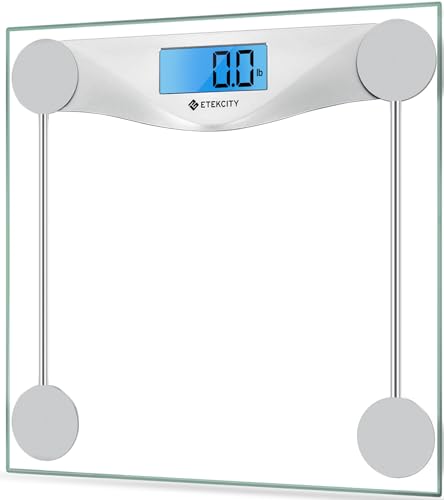

For most seniors, the Etekcity Digital Body Weight Scale is the best large-display scale: a big backlit LED readable from standing height, a sturdy tempered-glass platform, and step-on activation that wakes and calibrates it.
We may earn a commission when you buy through links on this page. Read our affiliate disclosure.
Top 5 Picks — Find Your Situation
#1 · Best Overall
Etekcity Digital Body Weight ScaleBest for: Most seniors who want a clear, reliable large-display scale at a low price
#2 · Best Large Display
EatSmart Precision Plus Digital ScaleBest for: Seniors with low vision or balance concerns who want the biggest, clearest numbers
#3 · Best for Low Vision
DMI Digital Talking Bathroom ScaleBest for: Seniors with significant vision loss who need their weight announced aloud
#4 · Best High-Capacity
RunStar 550 lb High-Capacity ScaleBest for: Heavier users who need a higher-capacity scale with a clear display
#5 · Best Smart
Withings Body Smart ScaleBest for: Caregivers and seniors who want to track weight trends and share them with a doctor
A bathroom scale earns its place in senior care when it makes a daily check effortless — because tracking weight is one of the simplest ways to catch fluid retention in heart failure or kidney disease, and to spot unintended weight loss. But a scale only helps if the person can read it and stand on it safely. That means a large, backlit display (or a talking scale for low vision), a wide, non-slip, low-profile platform for steady footing, and simple step-on operation. Our overall pick is the Etekcity, a clear large-display scale that nails the basics. Below are five options for different needs, plus how to weigh safely and what changes are worth a call.
A closer look at our top pick: the Etekcity
Etekcity Digital Body Weight Scale
Best for: Most seniors who want a clear, reliable large-display scale at a low price
- Display
- Large backlit LED
- Activation
- Step-on, auto-calibrate
- Platform
- 6mm tempered glass
- Accuracy
- ~0.2 lb
Independently researched · Updated October 2026
The Etekcity wins by doing the fundamentals well at a price almost anyone can justify. Its large, backlit LED display is easy to read from a standing height, and step-on activation means there's nothing to fumble with — you simply stand on it and it wakes, calibrates, and shows your weight to about 0.2 pounds. Owners commonly praise its accuracy and reliability.
It's also a sensible everyday choice for a senior household: a sturdy tempered-glass platform, simple operation, and no app or setup required. It isn't the biggest display or the most feature-rich scale here, but it's the one most people will read easily and keep using — which is what makes a weight-tracking habit stick.
What we love
- Clear, readable display
- Simple, reliable operation
- Accurate and consistent
- Inexpensive
Things to consider
- Glass can be slippery when wet — dry feet first
- No handrail for balance
- Basic features only
Right for you if
- ✓You want a clear, reliable scale without complexity
- ✓You'd rather avoid apps and setup
- ✓You want proven accuracy at a low price
- ✓Your vision is fine with a large backlit display
Maybe skip it if
- !You need the absolute biggest numbers — the EatSmart's 4.3-inch display is larger
- !Reading any display is hard — the DMI talking scale announces it aloud
- !You want trend tracking and sharing — the Withings Body Smart syncs to an app
What owners consistently report
Common praise
- +Owners consistently praise the readable display and accuracy
- +The step-on simplicity is frequently mentioned
- +It's seen as excellent value
Common gripes
- –The glass can be slippery with wet feet
- –There's no handrail for support
- –Features are basic by design
Getting started
- →Place it on a hard, flat floor — not carpet — for accurate readings
- →Step on once to calibrate it to 0.0 before regular use
- →Weigh at the same time each day for comparable numbers
How it compares
The EatSmart Precision Plus is the step up when readability and stability are the priority — its 4.3-inch display has noticeably bigger numbers and its extra-wide platform gives steadier footing. The Etekcity matches it on accuracy and simplicity at a lower price with a smaller footprint. Choose the Etekcity for proven value, the EatSmart for the biggest, clearest numbers.
How we picked
We compared large-display scales on what matters for older adults: display readability (digit size, backlight, contrast) and talking options, platform stability (width, non-slip surface, low profile), ease of activation, weight capacity and accuracy, and tracking features. Our picks draw on manufacturer specs, occupational-therapist-informed guides, and owner feedback — not hands-on lab testing. For meaningful trends, weigh at the same time of day on the same scale.
Reviewed by Kutubuddin — who researches senior-care products and the real-world needs of caregivers and older adults.
Other picks, reviewed
EatSmart Precision Plus Digital Scale
The pick when the numbers can't be big enough. Its standout feature is a 4.3-inch backlit LCD with enormous digits that are legible from a standing height without bending — and the extra-wide platform gives a more stable footing for anyone with balance concerns. Big display and steady stance in one, at a fair price.
What we like
- Very large, bright, easy-to-read digits
- Extra-wide platform for steadier footing
- Higher 440 lb capacity
- Simple step-on use
Keep in mind
- Larger floor footprint
- May need an initial calibration
- Plain, utilitarian look
- Display
- 4.3 in backlit LCD
- Platform
- Extra-wide (~15 in)
- Capacity
- 440 lb
- Activation
- Step-on
- Best for
- Readability + stability
DMI Digital Talking Bathroom Scale

The right answer when even the largest display is hard to read. This scale announces the weight aloud, with a volume control so it can be turned down when someone else is in the house — a senior with significant vision loss can weigh independently without bending or hunting for glasses. A large 3-inch LCD acts as a visual backup, it switches between pounds and kilograms, and it wakes on step-on so there is no button to find with a foot. Batteries are included, which matters when the person buying it is not the person using it.
What we like
- Announces weight aloud — no reading needed
- Volume control, so it is not shouting across the house
- Large LCD as a visual backup
- Batteries included
Keep in mind
- Voice quality is functional, not natural
- English only — no second language option
- May be too quiet in a hard-surfaced bathroom for hard-of-hearing users
- Output
- Spoken weight, English
- Volume
- Adjustable
- Display
- 3 in LCD visual backup
- Units
- Pounds and kilograms
- Activation
- Step-on, auto-on
RunStar 550 lb High-Capacity Scale

Built for anyone a standard scale will not read. Most bathroom scales stop at 400 lb; this one is rated to 550 lb (250 kg) and reads in 1 lb steps. The platform is wide as well as strong — 300 by 330 mm of 8 mm tempered glass on anti-slip feet — which matters as much for steadiness as for capacity, because a bigger surface gives an unsteady person more room to place their feet. The LCD is extra-wide, so the number is readable without bending down.
What we like
- Rated to 550 lb (250 kg) — well past where most scales stop
- Extra-wide 300 x 330 mm platform gives room to stand steadily
- Extra-wide LCD readable without bending over
- 8 mm tempered glass on anti-slip feet; step on and it reads
Keep in mind
- Large and heavy to move or store on end
- No app, no memory — it weighs and nothing else
- Reads in 1 lb steps, so it will not show the small daily shifts a heart-failure plan may ask for
- Glass platform is cold underfoot and needs a hard, level floor
- Capacity
- 550 lb (250 kg)
- Display
- Large, clear
- Platform
- Wide step-on
- Activation
- Step-on
- Units
- lb / kg / st
Withings Body Smart Scale

The successor to the Body+, which Withings has discontinued. It syncs each weigh-in to an app, charts the trend, supports multiple users, and shows the trend on a colour display on the scale itself, so it is useful even to someone who never opens the app. Weight is read to within 50 g. That precision is the point: in heart failure a gain of two or three pounds over a couple of days can mean fluid building up, and a steady unintended loss can be the first sign of something else — both are easier to catch in a chart than in a memory.
What we like
- Logs and graphs every weigh-in automatically — no writing it down
- Trend shown on the scale's own colour display, not just in the app
- Weight accurate to about 50 g, so small changes show up
- Tracks several people separately and shares easily with a doctor
Keep in mind
- Needs Wi-Fi and a smartphone app to set up and get full value
- Body-fat and composition figures can differ from a clinical DEXA scan — treat the weight as the reliable number and the rest as rough
- Some deeper insights sit behind an optional paid subscription
- Costs several times a simple large-display scale, and the display is smaller than the EatSmart
- Sync
- App trend tracking
- Users
- Multiple profiles
- Display
- Clear digital readout
- Sharing
- With caregiver/doctor
- Power
- Batteries
What to look for
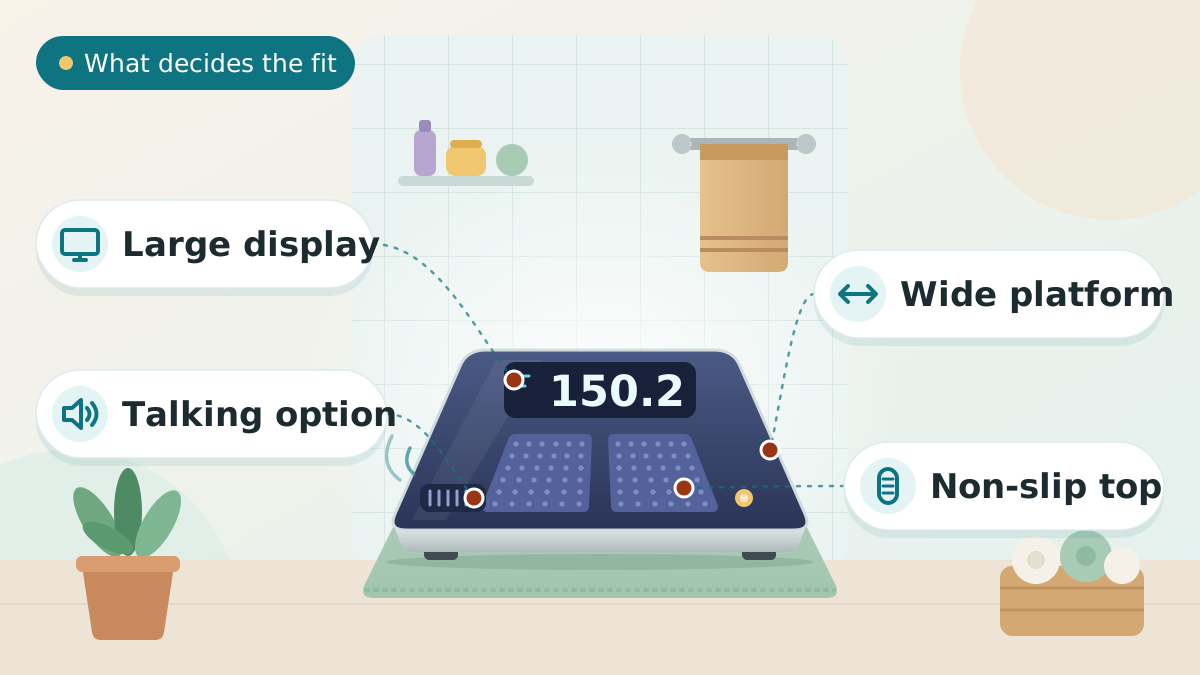
Display: big, backlit, high-contrast — or talking
The whole point of a senior scale is a number that's easy to read, so prioritize large digits with a backlight and strong contrast that cut through glare and dim bathrooms.
For significant vision loss, a talking scale that announces the weight aloud removes the problem entirely — look for one with adjustable volume so it's loud enough to hear but not jarring.
A stable, low-profile, non-slip platform
This is a safety feature, not a luxury. Standing still to be weighed can challenge an unsteady senior, so the platform matters.
- Choose a wide platform (about 12 inches or more) so there's room to stand without tipping.
- A textured or rubberized surface helps prevent slips, especially with damp feet.
- A low profile means a smaller step up and less of a lip to trip over.
Easy activation and simple operation
Fiddly scales get abandoned. Step-on activation — where the scale wakes the moment you stand on it — is far easier than tapping to turn it on first.
Fewer buttons, clearly marked units, and a simple readout suit anyone with dexterity or memory challenges. The best scale is the one that gets used without frustration.
Capacity and accuracy
Pick a capacity with headroom. A rating of at least 400 pounds comfortably covers clothing and any mobility gear, and bariatric users should look for 500 pounds or more.
For monitoring a condition like heart failure, favor a scale with 0.1-pound precision and consistent readings, since small day-to-day changes are exactly what you're watching for.
Tracking, memory, and smart sync
If you're following a trend rather than a single number, memory and syncing help.
Multi-user memory keeps separate histories, and a smart scale like the Withings logs each weigh-in and shares it with a caregiver or doctor. Whatever you use, weigh at the same time of day for comparable readings.
Read more:Preventing Hospital Readmission in Seniors8 Signs Your Elderly Parent Is Not Recovering ProperlyWhy Is My Elderly Parent Suddenly So Weak?
Tips to Choose Weight Scales
Short on time? Here are the key points to weigh before choosing, each covered in detail above:
- Display: big, backlit, high-contrast — or talking
- A stable, low-profile, non-slip platform
- Easy activation and simple operation
- Capacity and accuracy
- Tracking, memory, and smart sync
Comparing options? See our guides to Best Blood Pressure Monitors for Seniors, Best Pulse Oximeters for Seniors, and Best Thermometers for Elderly Care.
Weighing safely when balance is a concern
For an unsteady senior, stepping onto a scale and holding still is itself a fall risk, so set things up to reduce it.
Place the scale on a hard, flat floor rather than a plush rug, and position it beside a counter or grab bar so there's a steadying hand within reach. A talking scale avoids the need to bend down to read the number. If standing unaided isn't safe, a doctor-office visit or a handrail-style medical scale is the better option.
What weight changes should prompt a call
Weight is a useful early-warning sign, especially for heart and kidney conditions. For someone with heart failure, a sudden gain — the American Heart Association flags 2 to 3 pounds in a day or 5 pounds in a week — can signal fluid retention; follow the care team's specific threshold and report it promptly.
Unintentional weight loss in older adults is just as important, as it can point to illness, poor nutrition, or medication effects. Track the trend rather than reacting to a single reading, and share the pattern with the doctor. Our guide to managing chronic conditions at home covers the wider monitoring routine. This is general guidance, not a diagnosis.
Frequently asked questions
Look for the largest backlit, high-contrast digits you can find — a display around 3 to 4.3 inches, like the EatSmart Precision Plus, is legible from a standing height without bending. If even large numbers are hard to read, a talking scale that announces the weight aloud is the better solution, ideally one with adjustable volume so it's easy to hear.
Yes — for significant vision loss, a talking scale is often the best option because it removes the need to read anything. It announces the weight in a clear voice (many offer English and Spanish and a large display as backup), letting a senior weigh independently without glasses or bending. Check that the volume is adjustable, since some models can't be turned up for hard-of-hearing users.
It depends on the goal. A simple large-display scale is easier for daily use and needs no setup, which suits many seniors. A smart scale like the Withings Body Smart adds real value when you want to track trends over time and share them with a caregiver or doctor — useful for monitoring conditions like heart failure. If no one will use the app, a simple scale is the better choice.
Choose at least 400 pounds. That gives headroom for clothing and any mobility aids. Bariatric users should look for scales rated 500 pounds or more, several of which also have extra-wide, low-profile platforms that are more stable to stand on.
For general tracking, accuracy within about 0.2 to 0.5 pounds is fine. For monitoring a medical condition such as heart failure or kidney disease, where small daily changes matter, favor a scale with 0.1-pound precision and consistent readings. Consistency is key — weigh on the same scale, at the same time of day, in similar clothing.
For general wellness, once a week is plenty. But anyone managing heart failure, kidney disease, or another fluid-sensitive condition is often advised to weigh daily, at the same time, so a sudden gain can be caught early. Follow the doctor's specific guidance, and track the trend rather than worrying about a single reading.
With precautions, often yes. Place the scale on a hard, flat floor and position it next to a counter or grab bar so you have a steadying hand, and choose a wide, non-slip, low-profile platform. A talking scale avoids bending to read the number. If standing still unaided feels unsafe, ask about being weighed at the doctor's office or using a handrail-style medical scale.
For a senior with balance concerns, yes. A wider platform gives more room to plant both feet securely and reduces the risk of stepping partly off or tipping. Paired with a non-slip surface and a low profile, it makes getting on and off the scale safer and more confident — a worthwhile trade for a slightly larger footprint.
For heart failure, a rapid gain — commonly a few pounds in a day or about five pounds in a week — can indicate fluid retention and warrants a call; follow your care team's specific threshold. Steady, unintended weight loss in an older adult also deserves attention, as it can signal illness or poor nutrition. Report the trend, not just one reading, to the doctor.
Generally not. Standard bathroom scales are considered personal-care items and aren't covered by traditional Medicare. A medically necessary scale may qualify with a doctor's prescription and documentation in some cases, and HSA or FSA funds can often be used. Check your specific plan before buying.
The final verdict
For most seniors, the Etekcity is the best large-display scale — clear, accurate, and inexpensive. Choose the EatSmart Precision Plus for the biggest readable numbers and a wide, steady platform, the DMI Digital Talking Bathroom Scale when vision loss makes any display hard, the RunStar for a higher weight capacity, or the Withings Body Smart to track trends and share them with a doctor. Whichever you pick, set it on a hard floor with something to steady against, favor a wide non-slip platform, and watch the trend — a sudden gain or a steady unintended loss is worth a call to the doctor.
Our overall winner is the Etekcity Digital Body Weight Scale. You can check the current price on Amazon.
Our Top 5 Picks at a Glance
Ready to choose? Here are the top 5 again.
Best Overall
Etekcity Digital Body Weight Scale
Best Large Display
EatSmart Precision Plus Digital Scale
Best for Low Vision
DMI Digital Talking Bathroom Scale
Best High-Capacity
RunStar 550 lb High-Capacity Scale
Best Smart
Withings Body Smart Scale
Affiliate links — we may earn a commission.
More reviews
