
LifeFone Review (2026): Plans, Real Costs, and Who It Actually Suits
 By Kutubuddin, Founder & Senior Care Researcher Updated October 1, 2026
In this guide
- Pros and cons
- How we checked this, and what that is worth
- LifeFone Systems at a Glance
- LifeFone System and Product Details
- At-Home Landline — $24.95/month
- At-Home Cellular — $30.95/month
- VIP Active — $37.95/month
- VIPx2 — $39.95/month
- VIP flex — $39.95/month
- Safe Watch Active — $43.95/month
- What it actually costs — the headline price is not the price
- The battery figure that makes the at-home plans look worse than they are
- Where LifeFone sits against the alternatives
- The bottom line
- What LifeFone says
- If LifeFone is not the right shape
- Frequently asked questions

LifeFone is a credible, long-established monitored alert provider with unusually transparent pricing and the widest useful plan range in this category — six options spanning a $24.95 landline box to a $43.95 smartwatch, all cancellable at any time. If you have decided you want a monitored service, it belongs on your shortlist.
Two things stop this being a blanket recommendation. First, the headline price is not the price: fall detection is an extra on every single plan, and LifeFone does not publish what it costs, so the real monthly figure is one you can only discover at checkout. Second, and more important, plenty of people looking at LifeFone do not need a monitoring subscription at all — if someone reliable answers the phone, a one-off unmonitored device does the same job with no monthly fee.
We have not tested LifeFone’s service. Everything below is built from LifeFone’s own published data and from checking their claims against each other. That is a real limit, and where it matters we say so rather than implying otherwise.
We may earn a commission when you buy through links on this page, at no extra cost to you. Read our affiliate disclosure.

LifeFone Medical Alert Systems
Someone living alone who needs a stranger to answer at 4am, not a family member who might
- Published, comparable pricing for all six plans — rarer in this category than it should be
- Genuinely wide plan range: landline, cellular, pendant, wristband and smartwatch
- No long-term contract on any plan; cancel at any time
- US-based monitoring centres, staffed around the clock
- One mobile option (VIPx2) lasts 18 days per charge, which solves the biggest practical failure in this category
Type
Monitored medical alert service, 24/7 US-based response centres
Plans
Six — two at-home, four on-the-go
Price range
$24.95 to $43.95 per month on annual billing
At-home range
Up to 1,300 ft from the base station
On-the-go range
Unlimited, on cellular coverage
Fall detection
Optional on every plan, at extra cost
Contract
None — cancel at any time
Billing options
Annual, quarterly or monthly (annual is cheapest)
What we like
- Published, comparable pricing for all six plans — rarer in this category than it should be
- Genuinely wide plan range: landline, cellular, pendant, wristband and smartwatch
- No long-term contract on any plan; cancel at any time
- US-based monitoring centres, staffed around the clock
- One mobile option (VIPx2) lasts 18 days per charge, which solves the biggest practical failure in this category
Worth noting
- Fall detection costs extra on every plan and the price is not published anywhere on their site
- The published battery column compares two different things, which makes the at-home plans look far worse than they are
- Annual billing is the only way to reach the advertised rates — monthly costs meaningfully more
- Ordering by phone is pushed hard on every page, which suits some buyers but obscures the online price
- We have not tested the response time, call quality or cancellation process first-hand
Buy it if…
- The person lives alone, or is alone for long stretches of the day or night
- There is no family member certain to answer a phone at any hour
- You want the option of a smartwatch or wristband rather than a pendant round the neck
- Charging will be forgotten, and an 18-day battery genuinely changes whether the device gets worn
- You want to be able to stop paying without an exit penalty
Look elsewhere if…
- Someone is always in the house — a caregiver pager solves that far more cheaply
- A nearby family member reliably answers, in which case an unmonitored device has no monthly fee at all
- The person will not wear it — no amount of monitoring fixes a pendant left in a drawer
- The real worry is wandering rather than falls, where a device needing a deliberate button press is the wrong tool
- You want a single upfront purchase with no recurring cost of any kind
How we checked this, and what that is worth
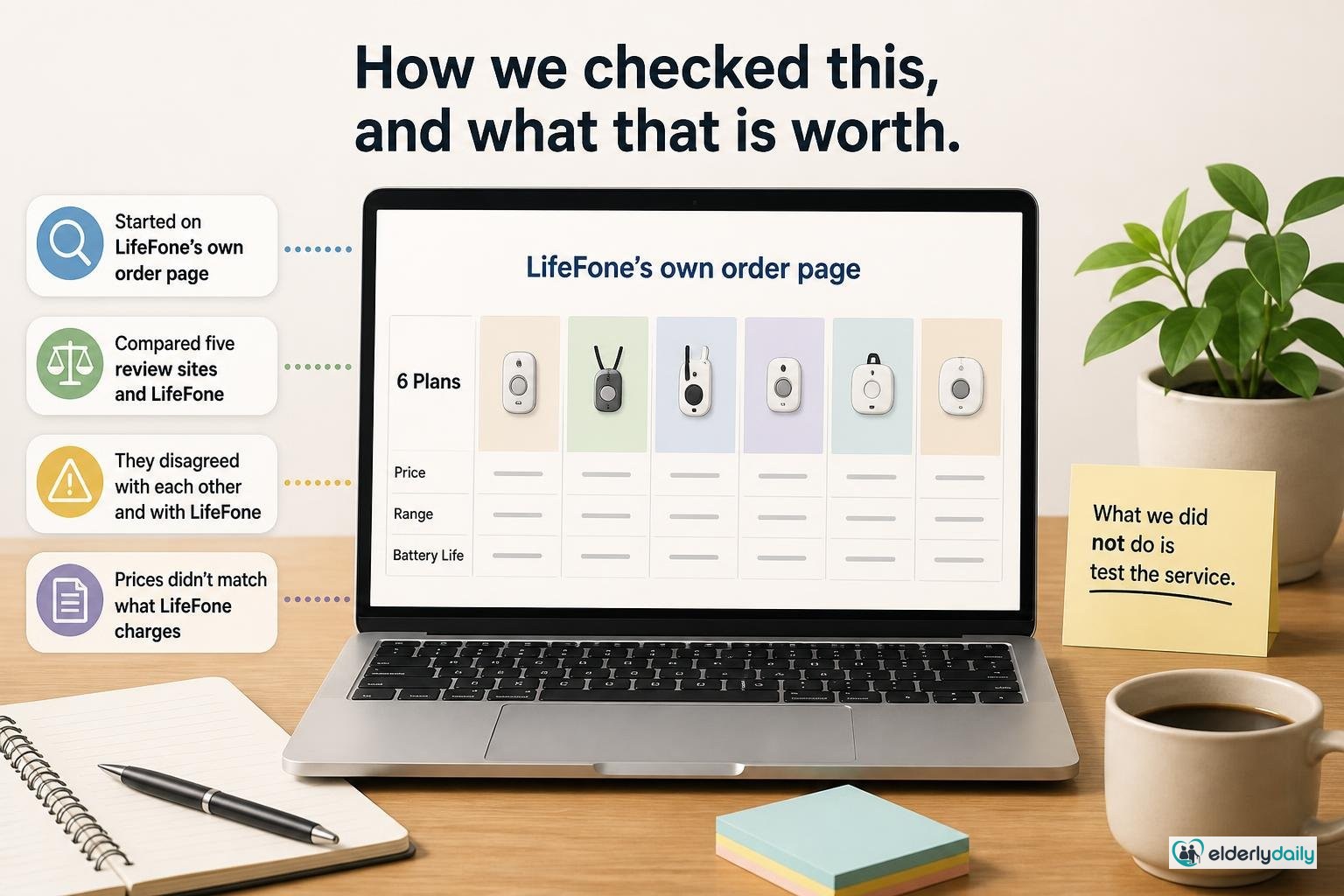
Almost every LifeFone review online repeats figures from other LifeFone reviews. We started somewhere else: LifeFone’s own order page, which publishes all six plans side by side with prices, ranges and battery life.
That turned out to matter. We compared five well-known review sites against LifeFone’s published data and against each other, and they disagreed — with each other and with LifeFone. Prices attributed to specific plans did not match what LifeFone charges for them. So every number on this page comes from LifeFone directly, and where a widely repeated figure could not be confirmed there, we have left it out and said so.
What we did not do is test the service. We have not pressed the button, timed a response, spoken to an operator or cancelled an account. Reviews that describe those experiences are telling you something we cannot. What we can tell you is exactly what the plans cost, what they include, where the published information is misleading, and whether the category is right for you in the first place — which, for most people reading this, is the decision that actually matters.
LifeFone Systems at a Glance
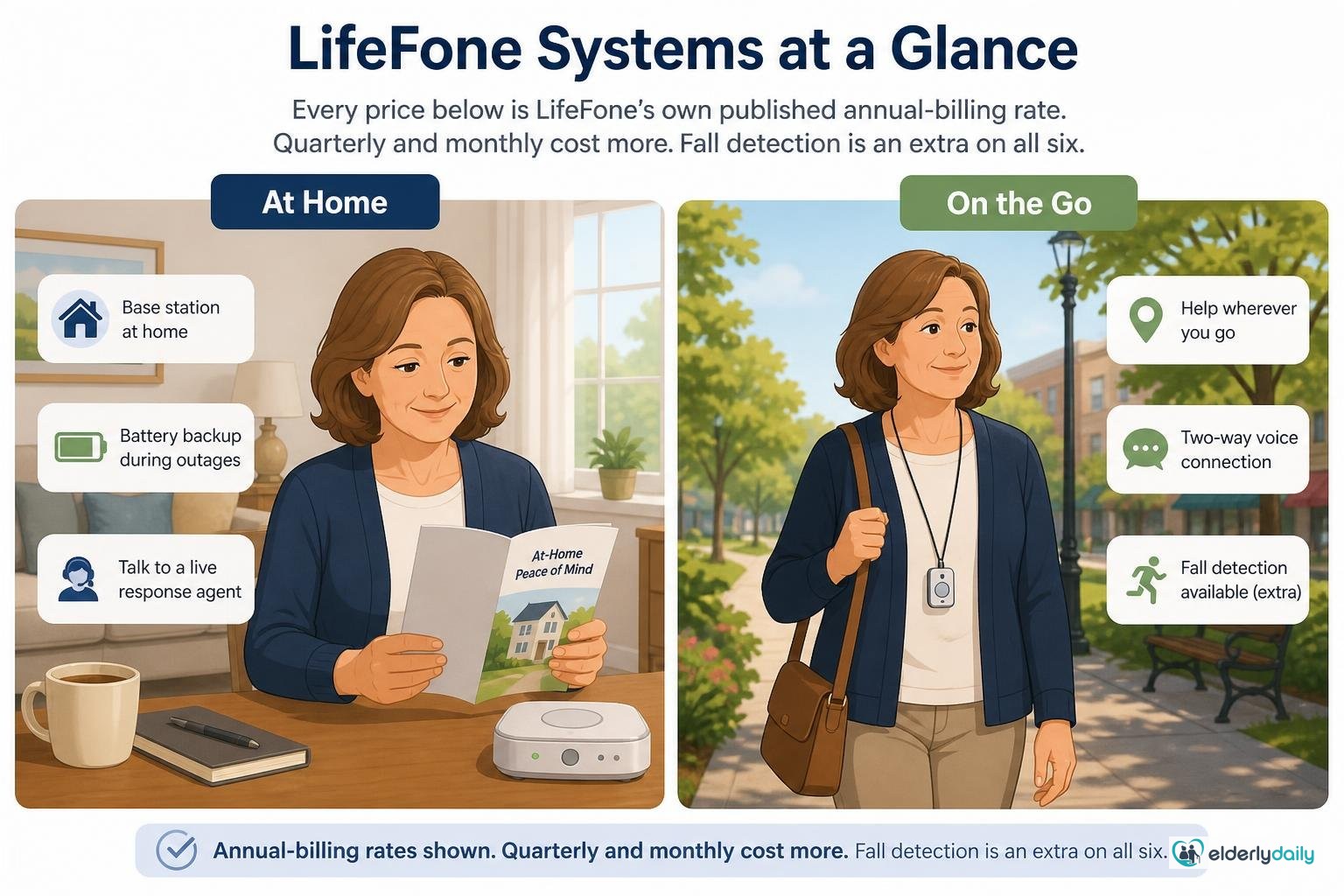
Every price below is LifeFone’s own published annual-billing rate. Quarterly and monthly cost more per month, and fall detection is an extra on all six.
| System | Where it works | Per month | Range | Battery | Best for |
|---|---|---|---|---|---|
| At-Home Landline | At home | $24.95 | Up to 1,300 ft | 32 hrs | A landline is already in the house and help is only needed at home |
| At-Home Cellular | At home | $30.95 | Up to 1,300 ft | 32 hrs | No landline in the house, and help is only needed at home |
| VIP Active | At home & on the go | $37.95 | Unlimited | 5 days | The cheapest way into on-the-go cover, if charging every few days is realistic |
| VIPx2 | At home & on the go | $39.95 | Unlimited | 18 days | Much the longest battery here, so charging is a fortnightly job rather than a routine |
| VIP flex | At home & on the go | $39.95 | Unlimited | 5 days | Worn on a wristband rather than round the neck |
| Safe Watch Active | At home & on the go | $43.95 | Unlimited | 24 hrs | Looks like a smartwatch, for someone who will not wear an obvious alert pendant |
LifeFone System and Product Details
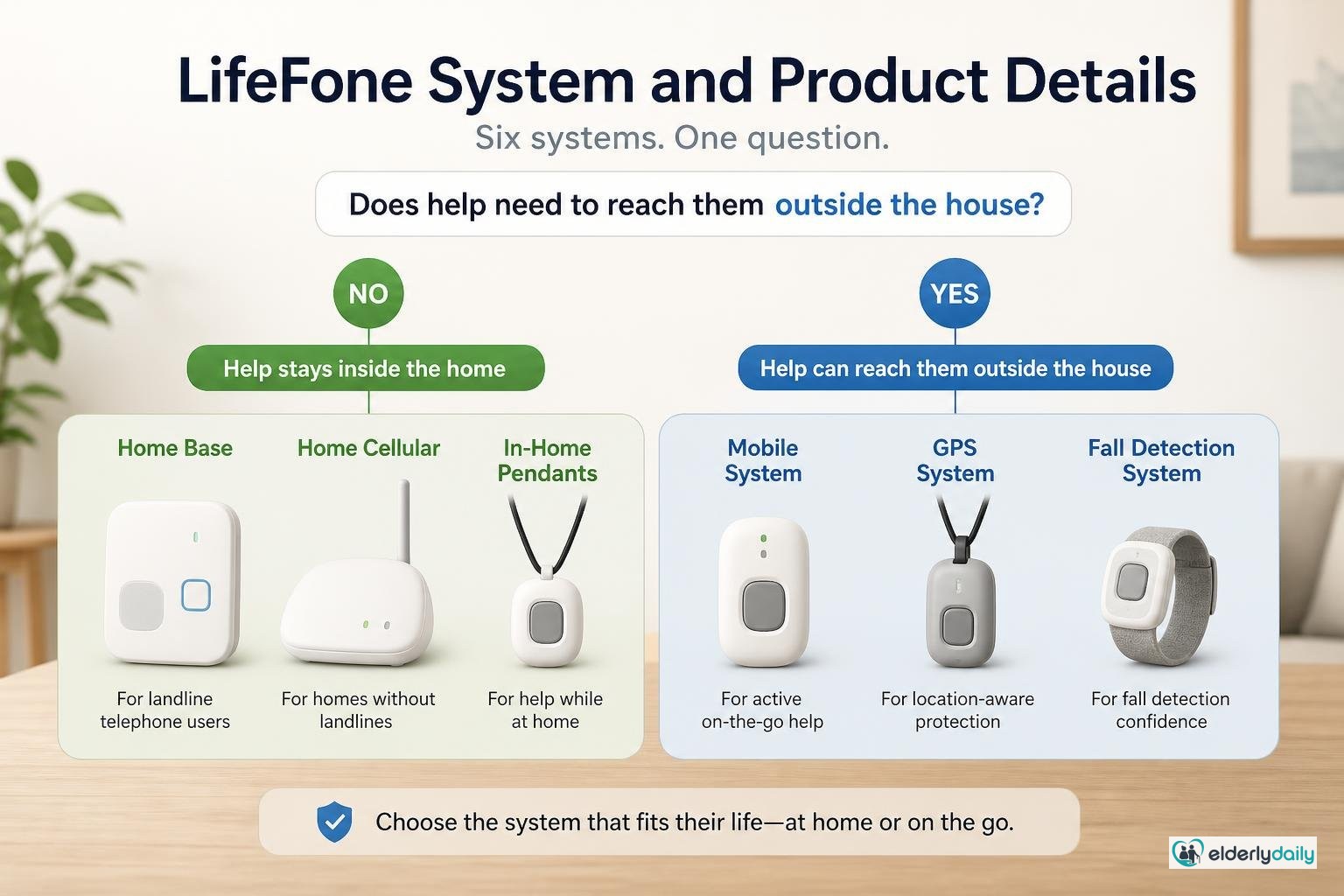
Six systems, split by one question: does help need to reach them outside the house? Below, what each one is and who it actually fits.
At-Home Landline — $24.95/month
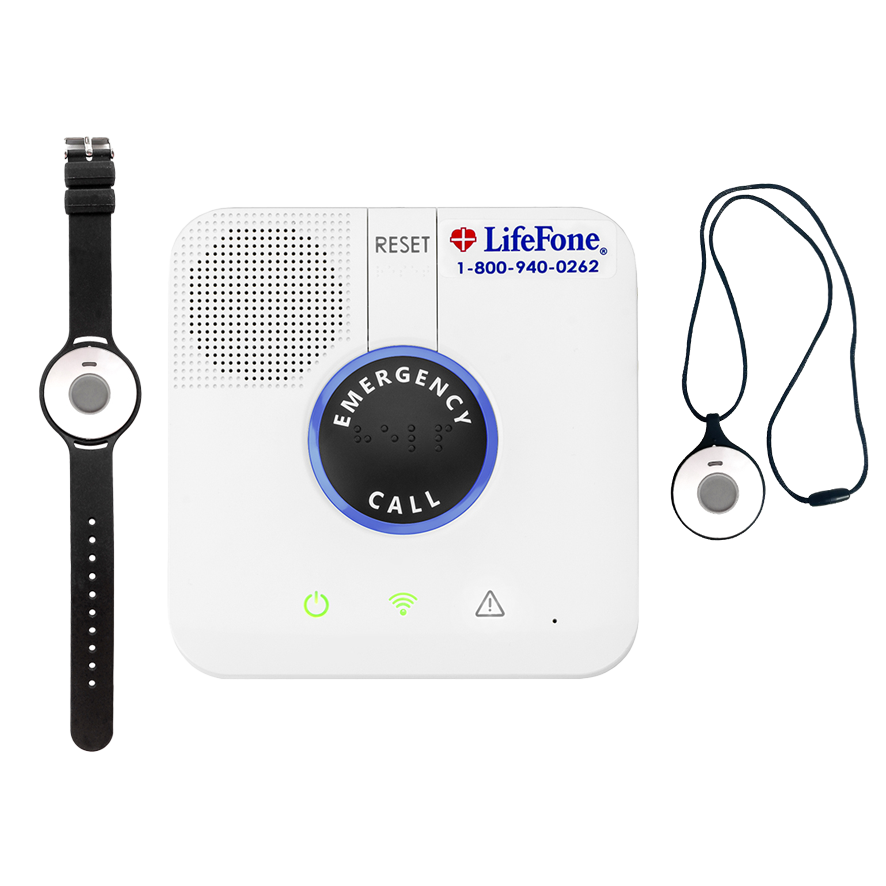
The cheapest thing LifeFone sells, and the simplest: a base station wired to an existing phone line, plus a waterproof pendant or wristband that works up to 1,300 ft from it — a house and a garden, not a walk to the shops.
The one thing to check before ordering: it needs a working landline. Plenty of households dropped theirs years ago without thinking about it, and this is the single most common ordering mistake in the category. If in doubt, the cellular version below does the same job with no phone line.
Right for: someone who is home nearly all the time, in a house that still has a landline. Worth knowing that the CDC reports most older-adult falls happen at home, which is exactly the case an at-home system covers.
At-Home Cellular — $30.95/month

Identical coverage to the landline plan — same 1,300 ft range, same wearable — but the base station connects over cellular instead of a phone line. Six dollars a month more, and it removes the only real prerequisite the cheaper plan has.
For most modern households this is the at-home plan to buy. It also sidesteps a quieter failure mode: a landline that gets cut off, goes down in a storm, or is disconnected when a package or provider changes.
Right for: the same person as above, in a house with no landline — or anyone who would rather not depend on one.
VIP Active — $37.95/month
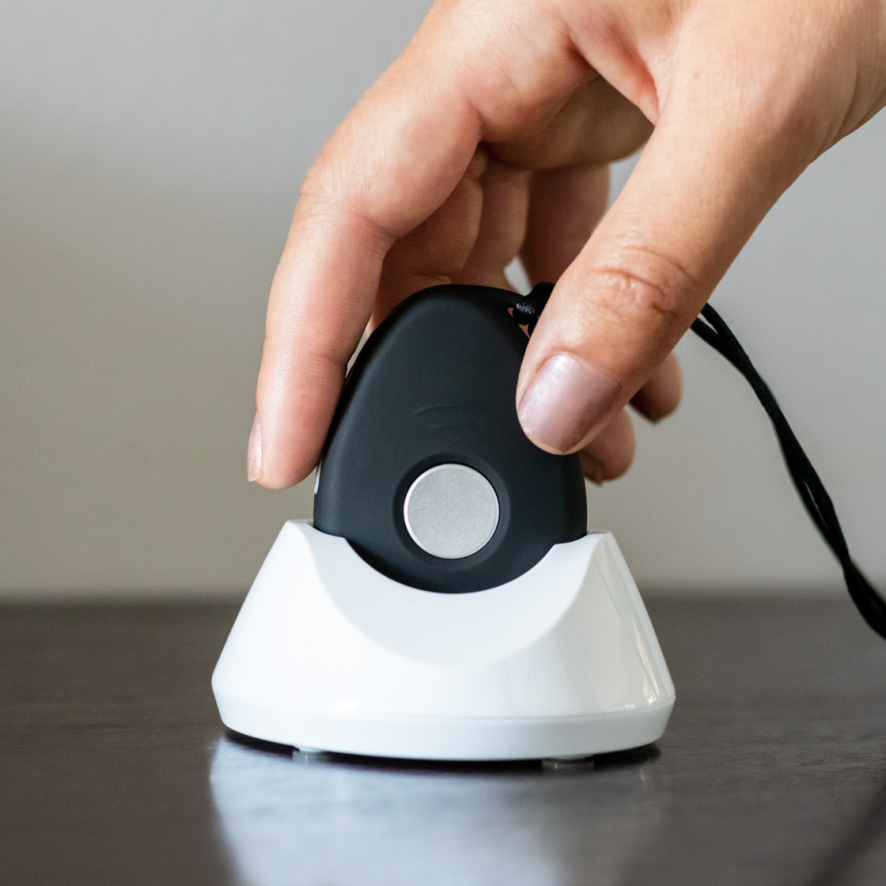
The cheapest way into on-the-go cover. Unlimited range wherever there is cellular signal, so it works in the garden, at the shops, in the car. Five days per charge.
Five days sounds generous next to a smartwatch, and it is — but it still means someone has to remember, roughly weekly, to put it on a charger. Whether that is realistic is the whole question, and it is worth answering honestly before saving four dollars a month against the VIPx2 below.
Right for: someone who goes out alone and has a carer or routine that reliably handles charging every few days.
VIPx2 — $39.95/month
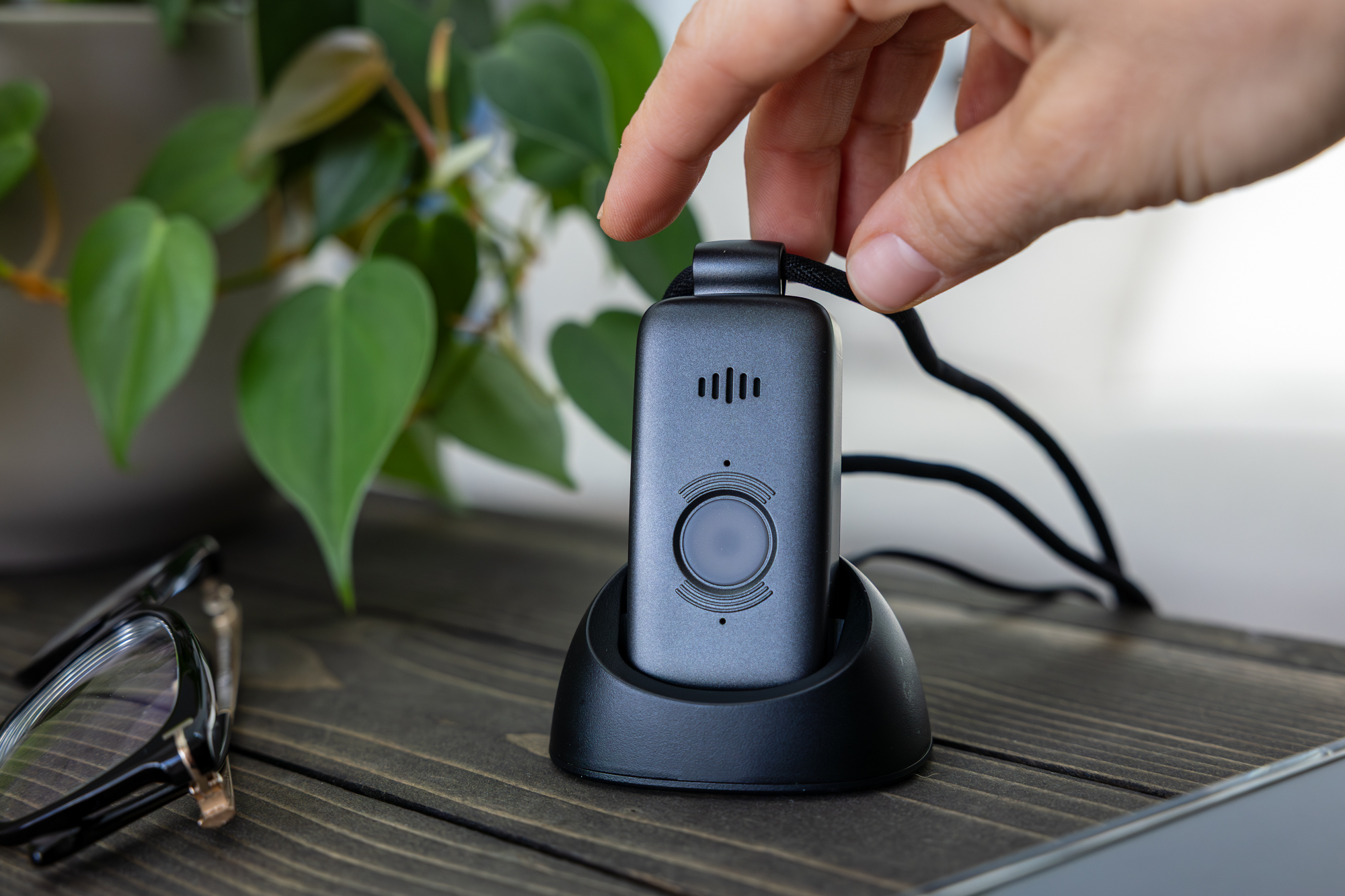
The most practically useful device LifeFone sells, and it is not close. Same unlimited range as VIP Active, four dollars a month more — and 18 days per charge instead of five.
That difference is not a spec-sheet nicety. An unworn pendant protects nobody, and the most common way these systems fail is not a technical fault but a device sitting on a charging cradle. Going from a weekly chore to a fortnightly one is the difference between a habit that holds and one that quietly lapses.
It also supports LifeFone’s optional caregiver app, which reports location, recent button presses and battery level — genuinely reassuring for family at a distance, and a separate monthly add-on rather than an included feature.
Right for: almost anyone choosing an on-the-go plan, and especially where charging will be forgotten or nobody is there daily to manage it.
VIP flex — $39.95/month
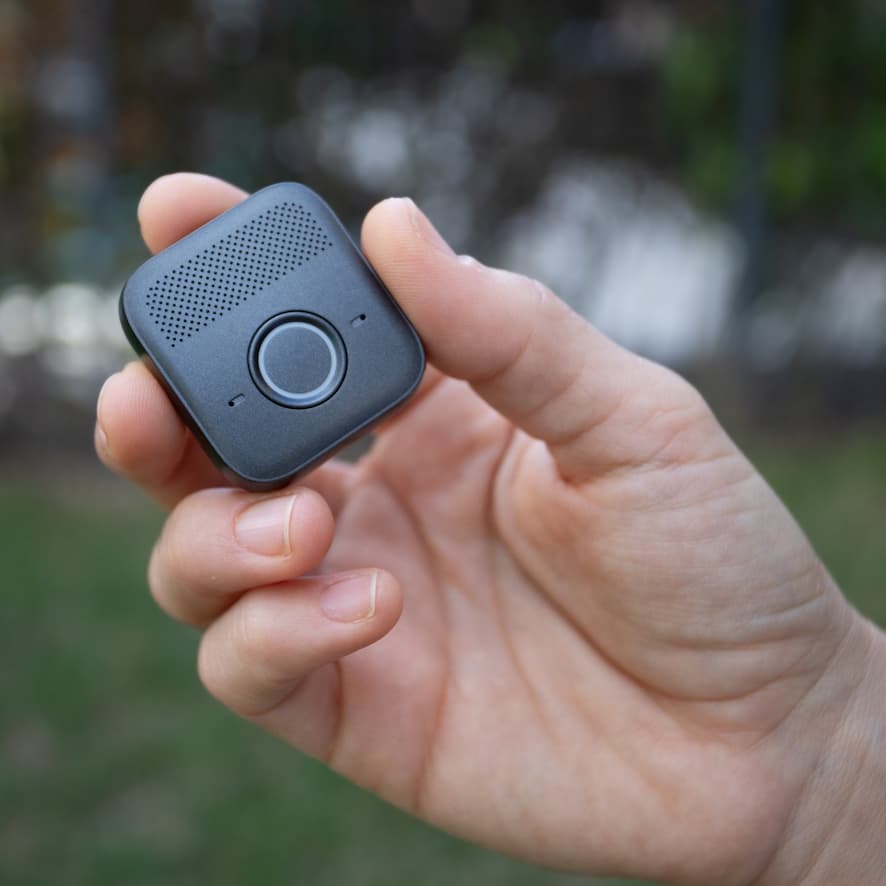
Same price as VIPx2 and the same unlimited range, but worn on a wristband rather than round the neck, at five days per charge.
The reason to choose it over VIPx2 is not technical — VIPx2 has far more battery for the same money. It is that some people will not wear a pendant. A wristband reads as a watch rather than a medical device, and a device that gets worn beats a better-specified one that does not.
Right for: someone who has refused a neck pendant, or finds one uncomfortable, and where the wrist format is what makes it acceptable.
Safe Watch Active — $43.95/month
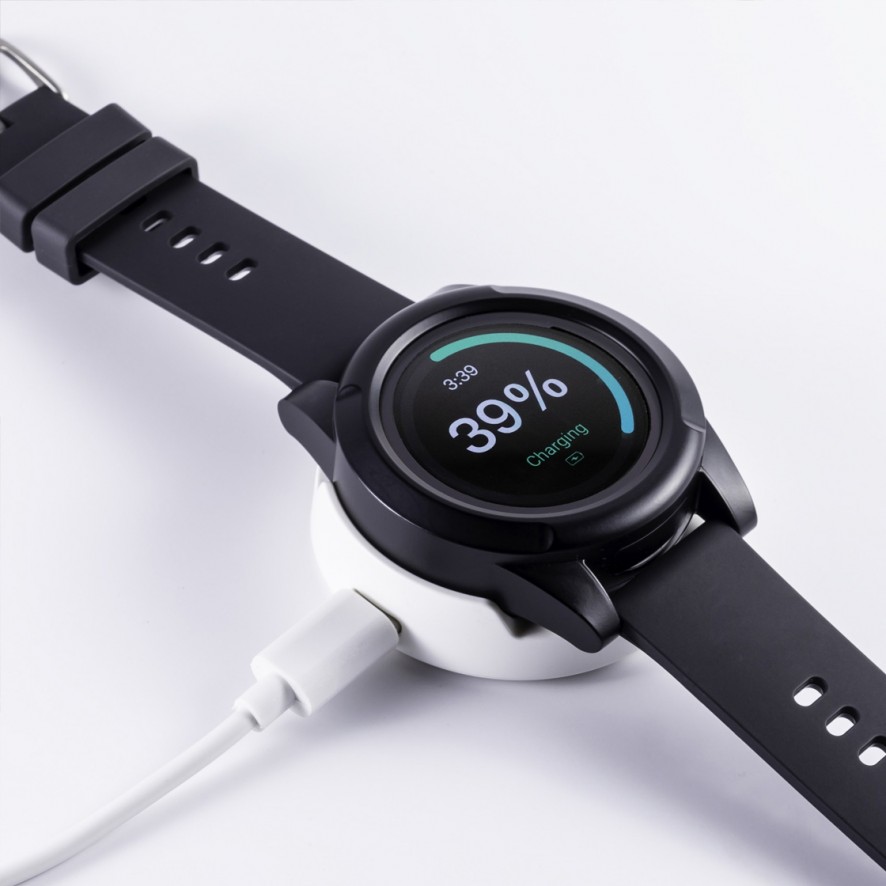
The most expensive plan, and the shortest battery here at 24 hours. It looks like a smartwatch rather than an alert device.
On paper that combination is hard to justify. In practice it answers a specific and very common problem: someone who flatly refuses to wear anything that marks them as frail. For that person the choice is not this watch versus a cheaper pendant — it is this watch versus nothing at all.
Be clear-eyed about the trade, though. Daily charging is a real commitment, and a watch on a bedside charger overnight is a watch that is not protecting anyone during the night-time bathroom trip — and NIA guidance identifies getting up at night as a common fall scenario. If nobody will reliably plug it in each day, VIPx2 is the safer buy even if it looks more like a medical device.
Right for: an image-conscious wearer with a daily charging routine that will actually hold.
What it actually costs — the headline price is not the price
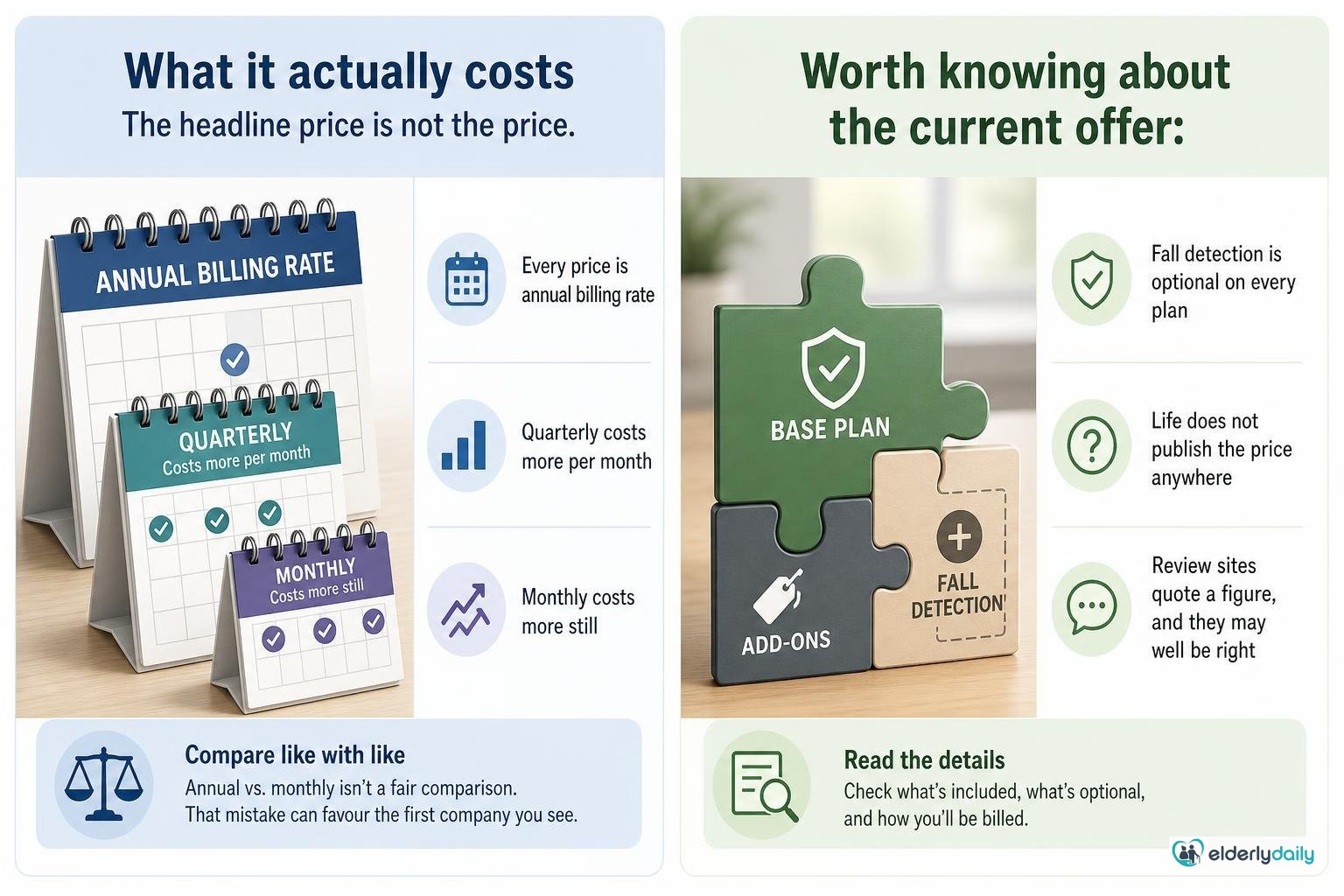
Every price LifeFone advertises is the annual billing rate. Quarterly costs more per month, monthly costs more still. If you compare LifeFone’s annual rate against a competitor’s monthly rate, you are not comparing like with like — and that mistake favours whichever company you happened to look at first.
Then there are the add-ons. Fall detection is optional on every single plan, and LifeFone does not publish its price anywhere on their site. Several review sites quote a figure, and they may well be right, but we could not confirm it first-hand and will not print a number we cannot stand behind. The practical consequence is the same either way: budget for more than the advertised rate, and confirm the total at checkout before committing.
Worth knowing about the current offer: LifeFone advertises a free month and free shipping, footnoted as applying to annual and quarterly plans only. So the billing period is not just about the monthly rate — it also decides whether the promotion applies at all.
One more thing that catches people out: LifeFone pushes phone ordering hard, on every page, alongside a promise of a special offer. Some buyers prefer that, and there is nothing wrong with it. But the published prices above are what you can see and compare in writing before anyone talks to you — which is a reasonable thing to want.
The battery figure that makes the at-home plans look worse than they are
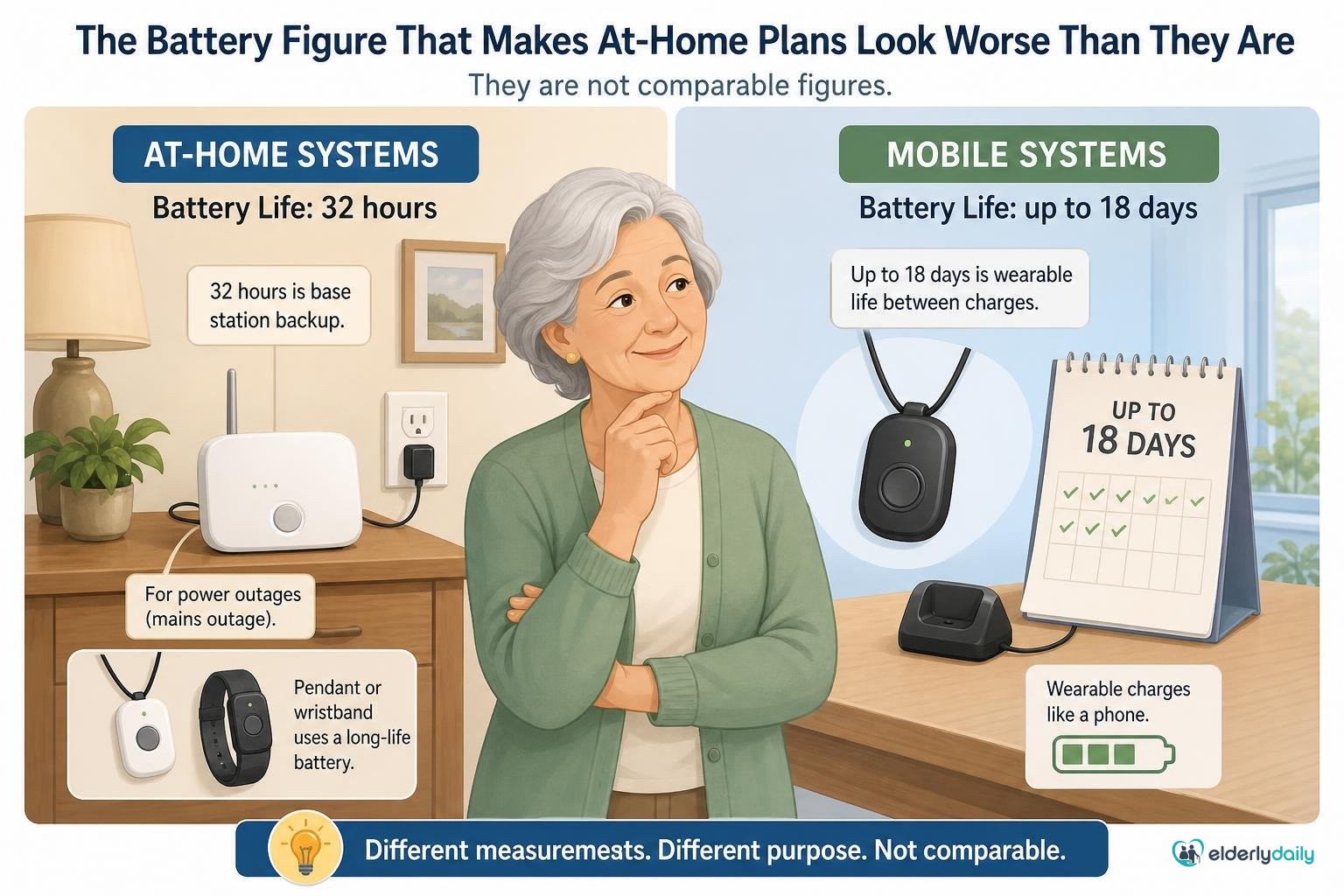
LifeFone’s comparison table lists a Battery Life column with "32 hours" against the at-home plans and up to "18 days" against the mobile ones. Read straight across, the at-home systems look dramatically worse.
They are not comparable figures. For the mobile devices, that number is how long the wearable lasts between charges. For the at-home systems, 32 hours is the base station’s backup power during a mains outage — the pendant or wristband you actually wear runs on a long-life battery measured in years, not hours.
This matters practically, not just pedantically. Someone comparing that column could reasonably conclude an at-home system needs charging every day and rule it out, when in fact the wearable needs no routine charging at all. If the at-home plan is otherwise right for you, do not let that column talk you out of it — but do confirm the specific figures with LifeFone for the plan you are considering, because they publish them in a way that invites exactly this misreading.
Where LifeFone sits against the alternatives
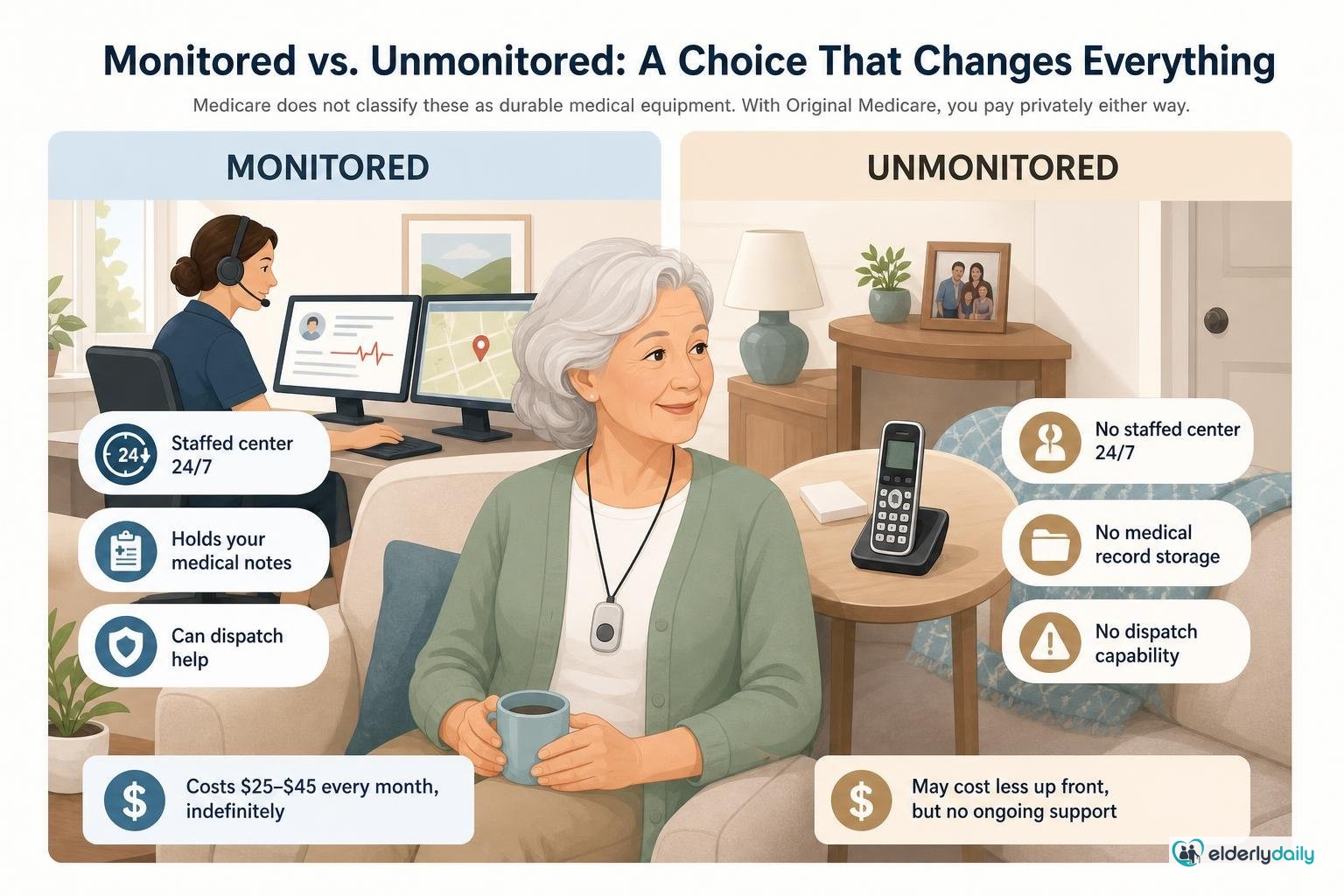
The honest comparison is not LifeFone against another monitored brand — it is monitored against unmonitored, because that choice changes the cost by an order of magnitude. Worth settling one thing first: Medicare does not classify these as durable medical equipment, so with Original Medicare you are paying for either option privately.
A monitored service like LifeFone costs $25–$45 every month, indefinitely, and buys you a staffed centre that answers at any hour, holds medical notes, and can dispatch an ambulance. An unmonitored device is a one-off purchase, often $50–$200, with no monthly fee — and it calls your family instead. Everything turns on whether someone reliably answers.
If nobody is guaranteed to pick up at 4am, the monitoring fee is buying the thing that unmonitored devices structurally cannot provide, and it is worth it. If a family member is nearby and always answers, you would be paying a few hundred pounds a year for something you already have. Our guide to choosing a medical alert system works through that decision properly, including the case for each.
The bottom line
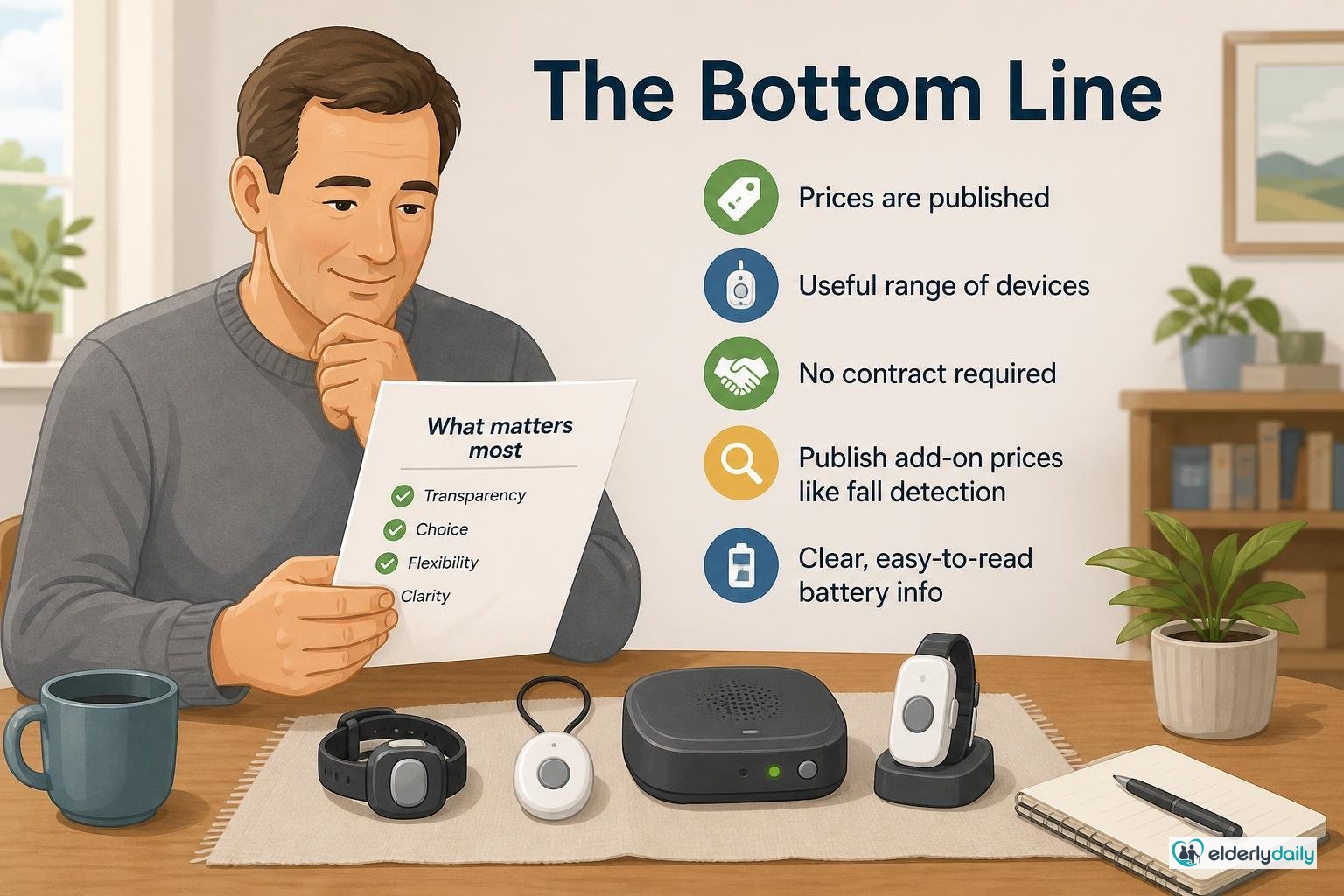
LifeFone does the things that are hard to fake: it publishes its prices, offers a genuinely useful spread of devices, and does not lock anyone into a contract. In a category where pricing is often hidden until you call, that transparency counts for something real.
What we would want fixed is the same transparency applied to the add-ons — publishing the fall-detection price would remove the one genuinely opaque part of the decision — and a battery column that does not invite a misreading against their own at-home plans.
Recommended, with the scope stated plainly: if you have established that a monitored service is what you need, LifeFone is a reasonable, well-priced choice worth comparing directly. If you have not established that yet, do that first — it is a bigger decision than which brand, and it is the one most likely to save you money.
What LifeFone says
The following are LifeFone’s own marketing claims from the product listing, not our independent findings. Figures such as ratings and review counts change over time — check the current LifeFone website for the latest.
- The Leader in Medical Alert Services since 1976
- 24/7 Safety, Security & Peace Of Mind
- Free month and free shipping on annual and quarterly plans
- US-based emergency response centres
If LifeFone is not the right shape
The alternatives here are not other subscriptions — they are the cheaper answers that suit a different household. Each of these does something a monitored service does not, and costs nothing per month.
- Unmonitored alert devices — Alerts go to family instead of a call centre. One-off cost, no monthly fee — right when someone reliably answers.
- Ambient fall detection — Radar and AI sensors that detect a fall with nothing worn at all — the answer when the pendant ends up in a drawer.
- Monitoring cameras — For checking in rather than responding. They show you a problem; they cannot answer one.
Frequently asked questions
LifeFone publishes six plans ranging from $24.95/month for At-Home Landline to $43.95/month for the Safe Watch Active, all on annual billing. Quarterly and monthly billing cost more per month. Optional extras — principally fall detection — are charged separately on every plan, so the realistic total is above the advertised rate.
Yes. Fall detection is an optional add-on on every LifeFone plan rather than an included feature. LifeFone does not publish the add-on price on its own comparison page, so confirm it at checkout. Whatever it costs, treat automatic fall detection as a backstop for when someone cannot press the button — no fall-detection system catches every fall, and providers say so in their own terms.
No. LifeFone states that its plans can be cancelled at any time, with no long-term contract on any of the six. Check the specific terms on refunds of prepaid annual plans and whether equipment must be returned, since those details differ from the cancellation policy itself.
Yes. The At-Home Cellular plan is the landline-free equivalent of the At-Home Landline plan and costs a few dollars more per month. All four on-the-go plans are cellular by design. Only the cheapest plan, At-Home Landline, requires a working phone line — which makes it the easiest ordering mistake to make in a house that dropped its landline years ago.
It depends entirely on the device. Among the mobile options LifeFone publishes 24 hours for the Safe Watch Active, five days for VIP Active and VIP flex, and 18 days for VIPx2. The "32 hours" shown against the at-home plans is a different measurement — the base station’s backup power during an outage, not the wearable’s charge interval. If someone is likely to forget charging, the 18-day option is the one that changes whether the device is actually worn.
Neither is better; they answer to different households. LifeFone connects to a staffed 24/7 centre for a monthly fee. An unmonitored device calls your family directly for a one-off price and no subscription. The deciding question is whether someone reliably answers at any hour — if yes, you may be paying monthly for something you already have; if no, that gap is exactly what the fee closes.
Original Medicare does not cover medical alert systems, as they are not classed as durable medical equipment. Some Medicare Advantage plans include them as a supplemental benefit and some state Medicaid programmes cover them in certain circumstances, so both are worth one phone call before assuming you will pay privately.
No, and we would rather say so than imply otherwise. We have not pressed the button, timed a response, spoken to an operator or been through cancellation. This review is built from LifeFone’s own published pricing and specifications, checked against each other and against what other sites report — which is how we found that widely repeated figures disagree with LifeFone’s own data. For lived experience of the monitoring service itself, reviews that describe hands-on testing are telling you something we cannot.
LifeFone Medical Alert Systems
Best for: Someone living alone who needs a stranger to answer at 4am, not a family member who might
Keep comparing
