
4 Best Ambient AI Fall Detection Systems
 By Kutubuddin, Founder & Senior Care Researcher Updated October 2026
In this guide

Ambient fall detection watches a room instead of relying on a button worn on the body — built for someone who will not wear a pendant, or could not press it.
We may earn a commission when you buy through links on this page. Read our affiliate disclosure.
Top 4 Picks — Find Your Situation
#1 · BEST OVERALL
AltumView Sentinare 3Best for: Families who want whole-room fall alerts on their own phones, with the option to check what happened without seeing video.
#2 · BEST RADAR, NO CAMERA
Aqara Presence Sensor FP2Best for: Families who want camera-free fall alerts over one high-risk spot, such as beside the bed, with no subscription.
#3 · BEST WITH 24/7 MONITORING
Aloe Care Health Fall SensorBest for: Someone living alone who needs a monitoring center to respond, not only family members.
#4 · BEST WHOLE-HOME RADAR
Cherish SerenityBest for: Families already using, or willing to use, an Alarm.com security provider who want radar coverage beyond one room.
This category is thinner than it looks. Several systems that topped lists like this one have stopped selling to families: Vayyar Care’s home version ended with Amazon’s Alexa Together service, Nobi now sells its lamp to care facilities, and others have gone quiet. The four below are ones a US family can still buy today.
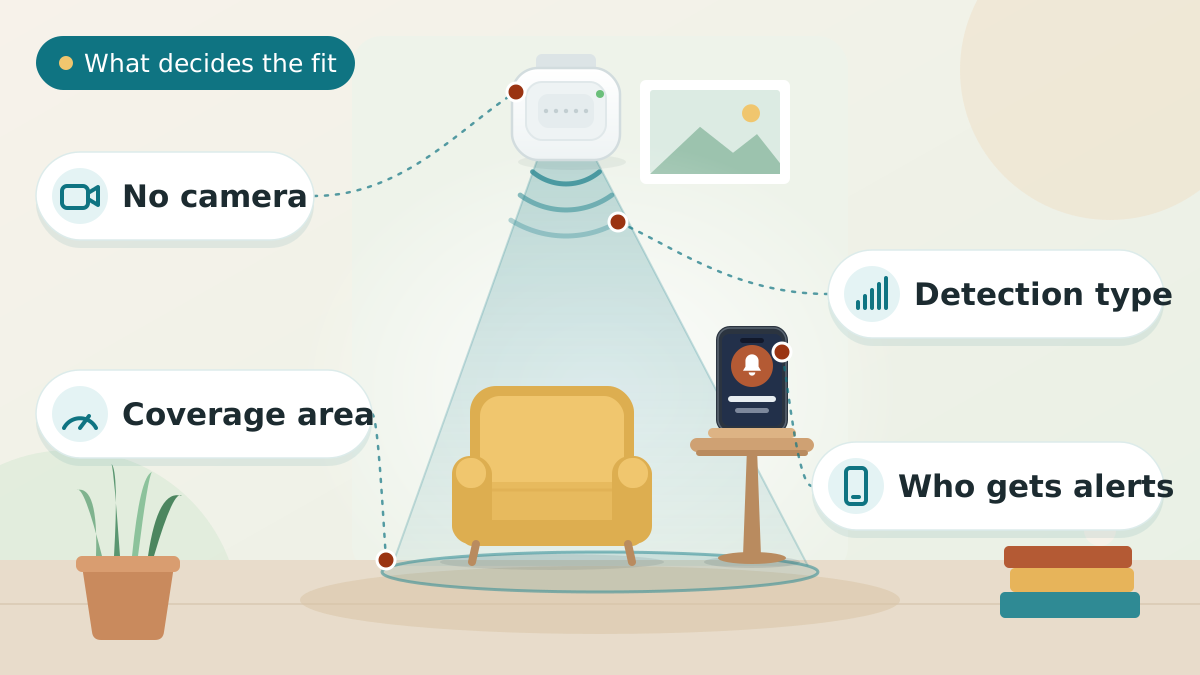
What decides the fit: how the sensor sees (radar, or an optical sensor that sends only stick figures), how much of the room one unit covers, and who receives the alert — your phone, or a 24/7 monitoring center.
A closer look at the AltumView Sentinare 3
AltumView Sentinare 3
Best for: Families who want whole-room fall alerts on their own phones, with the option to check what happened without seeing video.
- Detection: optical sensor with on-device AI — only stick figures are sent
- Falls up to about 20 ft (6 m) away, including slow falls (AltumView’s figure)
- Also flags bed exit, entering a set area, and a hand-wave call for help
- Alerts to the iOS, Android and web app; guest accounts can receive them
Independently researched · Updated October 2026
Two things decide whether fall detection actually gets used: whether the person has to wear something, and whether the sensor feels like being watched. A pendant protects someone only while it is on, and a camera in a bedroom or bathroom is the one thing most older adults refuse. The Sentinare answers both. Nothing is worn, and what leaves the device is a stick figure, not a picture of your parent.
It also covers a room rather than a spot. One wall-mounted unit watches falls up to about 20 feet (6 m) away, by AltumView’s figure, including slow falls — the kind where someone slides down beside the bed rather than dropping — which are exactly the falls a person cannot always report.
And it lets family check before they panic. Each alert can be opened as a short stick-figure clip, so you can tell a fall from someone lying down on purpose, and decide whether to call, drive over or ring for help.
What we love
- One unit covers a whole room
- You can check an alert as a stick-figure clip instead of video
- No wearable, nothing to charge or remember
- Works without a monthly plan
Things to consider
- **It is an optical sensor, not radar.** Only stick figures leave the device, but some people will still object to anything camera-like in a bathroom
- No 24/7 monitoring center — alerts go to family phones only
- Fewer false alarms needs the paid plan
- Needs power and Wi-Fi in each room you cover
Right for you if
- ✓The person refuses a pendant, or takes it off and forgets it.
- ✓You want one sensor to cover a bedroom or bathroom, not a single spot.
- ✓Family members are close enough, and reachable enough, to act on a phone alert.
- ✓You want to be able to check what happened without anyone seeing video.
Maybe skip it if
- !They will not accept anything camera-like in the room, even one that sends only stick figures. Choose the radar-based Aqara FP2 or Cherish instead.
- !Nobody can reliably respond to a phone alert day and night. A monitored service such as Aloe Care is the better route.
- !You need whole-home coverage from one device. Each unit covers one room.
- !There is no Wi-Fi in the home.
Getting started
- →Put it where falls are most likely, not where the person spends the most time — usually the bedroom and bathroom, and the route between them.
- →Add every family member who should get alerts as a guest, and agree who responds at night.
- →Run a test with a controlled, safe lie-down on the floor and check the alert reaches every phone before relying on it.
How it compares
The Aqara FP2 is the one to choose if anything camera-like is a dealbreaker: it uses radar, captures no image, and costs far less. What you give up is coverage — it watches a small circle under a ceiling mount rather than a whole room — and the alert goes to the Aqara app only. For one high-risk spot, such as beside the bed, the FP2 is enough; for a whole bedroom or bathroom, the Sentinare covers more.
How we picked
We compared 4 options. These ambient systems were assessed on detection accuracy without a wearable, how they handle false alarms, privacy (radar/sensor vs camera), alert speed to caregivers, and setup complexity in a typical home. We compared options using published specs, verified user reviews, and aging-in-place guidance, not our own trials. Coverage area and monitoring fees vary widely, so confirm both, and treat any system as a supplement to — not a replacement for — regular check-ins.
Reviewed by Kutubuddin — who researches senior-care products and the real-world needs of caregivers and older adults.
Other picks, reviewed
Aqara Presence Sensor FP2

The FP2 is the low-cost radar option, and the pick for anyone who will not accept anything camera-like at all. It uses mmWave radar, so it captures no image, and in its fall-detection mode it sends an alert to the Aqara Home app on a family member’s phone, with no monthly fee. The limits are real and worth knowing before you buy: fall detection works only with the sensor mounted on the ceiling, it covers a small area under it (Aqara’s manual gives about a 6.5-foot (2 m) radius from a 9-foot (2.8 m) ceiling), fall mode switches off the FP2’s other features, and the alert goes to the Aqara app only. Aqara says plainly it is not a medical device.
What we like
- No camera and nothing to wear
- No monthly fee for alerts
- Costs far less than monitored systems
- From an established smart-home brand
Keep in mind
- Covers a small circle under the sensor, not a whole room
- Fall mode turns off zones and presence detection
- Fall alerts reach the Aqara app only — not HomeKit, Alexa or Home Assistant
- Not a medical device, and no professional monitoring
Key features
- Detection: mmWave radar — no wearable, no camera
- Fall alerts to the Aqara Home app
- Ceiling mount required for fall detection
- Runs on 2.4 GHz Wi-Fi — no Aqara hub needed
- Needs constant USB-C power at the mounting spot
Aloe Care Health Fall Sensor
The route to use when you want a professional to answer the alert, not just a phone notification. Aloe Care Health, a medical alert company, offers a wall-mounted fall sensor as an add-on to its home system, and its alerts go to Aloe’s 24/7 emergency response center. Each sensor covers one room. It is not sold online as a separate product: you order it by phone with an Aloe plan, so ask what it costs and what the monitoring fee is before you commit.
What we like
- A trained responder handles the alert
- Part of a full medical alert service
- No wearable to refuse or forget
Keep in mind
- Ordered by phone only, with an Aloe plan and a monthly fee
- Aloe does not publish how the sensor detects a fall
- One room per sensor
- Confirm the current price before buying — published figures differ
Key features
- Wall-mounted room sensor — nothing to wear
- Alerts go to Aloe’s 24/7 response center
- Adds to Aloe Care’s home medical alert system
- One room per sensor; needs Wi-Fi
Cherish Serenity
Serenity is the most ambitious system here: one radar hub with AI that watches for falls across more of the home and also tracks breathing and heart rate, with no camera and nothing worn. It connects over cellular rather than your Wi-Fi. The catch is how you get it. Cherish does not sell to families directly; Serenity is offered through Alarm.com security dealers such as ADT, with a monthly service fee. Ask a local Alarm.com provider whether they can supply it before planning around it.
What we like
- Wider coverage than one-room sensors
- No camera, no wearable
- Health trends as well as fall alerts
Keep in mind
- Only through Alarm.com dealers — availability varies by area
- Monthly service fee
- Price is not published; get a quote
Key features
- Detection: radar with AI — no wearable, no camera
- Covers more than one room from a single hub
- Also tracks breathing and heart rate
- Cellular connection, not home Wi-Fi
What to look for
Detection method: radar or on-device optical
Ambient systems detect a fall without anything worn, using a sensor on a wall or ceiling. Radar captures no image at all. An optical sensor sees the room, but a good one processes the picture inside the device and sends only a stick figure. Compare how each system senses a fall, and how it tells a real fall from someone lying down on purpose.
Privacy: what actually leaves the device
The whole appeal of ambient detection is dignity. Ask exactly what the device records and transmits — nothing visual, a stick figure, or video — and where that data is kept. Radar is the strictest choice; an optical sensor that sends stick figures gives family more to check when an alert arrives.
Coverage, placement, and rooms
Each sensor covers a defined area, and the difference is large: some watch a whole room, others a small circle under a ceiling mount. Map the rooms where falls are most likely (bathroom, bedside) and count how many units you need. Check mounting height, power at the mounting point, and blind spots from walls or furniture.
Alerts, monitoring, and fees
Work out who gets the alert: a phone notification to family, a 24/7 monitoring center, or both. App-only alerts work only if someone will see and act on them at 3 a.m. Check for a monthly fee, whether it needs Wi-Fi, and what happens if the internet or power drops.
Read more:The 2026 Guide to AI Technology for SeniorsDementia Daily Routine for CaregiversPreventing Hospital Readmission in Seniors
Why this list is shorter than it used to be
Ambient fall detection has had a hard few years, and several products that topped lists like this one can no longer be bought by a family:
- Vayyar Care was sold to families only through Amazon’s Alexa Together service, which Amazon has ended. Vayyar now sells to care providers.
- Nobi’s smart lamp is now sold to nursing homes and care facilities, not to families.
- Kami Fall Detect could no longer be ordered when we checked: the store links lead nowhere.
- CarePredict now sells to families as SilverKin, and it is a wrist-worn device, so it does not belong on a no-wearable list.
Two newer products are worth watching: the eufy fall detection sensor, shown in 2026 with no price or ship date yet, and the Aqara FP400 Pro, which adds fall detection but is aimed at assisted living. We will add them if they reach US families.
Tips to choose an ambient fall detection sensor
Short on time? These are the points to weigh, each covered above:
- How it senses: radar or an on-device optical sensor
- What leaves the device
- How much of the room one unit covers
- Who gets the alert, and what it costs each month
An ambient sensor is one layer of safety, not a medical device. For anyone at real risk of serious falls, combine it with a medical alert and a doctor’s fall-risk review.
Comparing options? See our guides to Best Elderly Monitoring Systems, Best Medical Alert Devices for Seniors, and Best Bedside Fall Mats.
Frequently asked questions
Yes. Ambient sensors mounted on a wall or ceiling watch for a fall using radar or an optical sensor, so there is nothing to wear, charge or remember. The trade-off is coverage: each sensor watches one room or one area, so you need one wherever falls are likely, and none of them protect someone once they leave the house.
Some are designed for it. Radar captures no image, so it raises no privacy issue in a bathroom. AltumView says its Sentinare can go in bathrooms because only stick figures leave the device. Check the manufacturer’s guidance on humidity and mounting before installing any sensor there.
Most do not. The Aqara FP2 and AltumView Sentinare send an alert to family members’ phones, and someone has to act on it. If nobody can reliably respond, choose a system with a 24/7 monitoring center, such as Aloe Care Health’s fall sensor or a medical alert service.
The consumer sensors on this page are not sold as medical devices, and Aqara says so plainly for the FP2. Treat them as an extra layer of safety alongside a medical alert and a doctor’s fall-risk review, not as a replacement for either.
The final verdict
Our overall winner is the AltumView Sentinare 3. You can check the current price on Amazon.
Our Top 4 Picks at a Glance
Ready to choose? Here are the top 4 again.
BEST OVERALL
AltumView Sentinare 3
BEST RADAR, NO CAMERA
Aqara Presence Sensor FP2
BEST WITH 24/7 MONITORING
Aloe Care Health Fall Sensor
BEST WHOLE-HOME RADAR
Cherish Serenity
Affiliate links — we may earn a commission.
