
4 Best Upright Walkers for Seniors
 By Kutubuddin, Founder & Senior Care Researcher Updated October 2026
In this guide
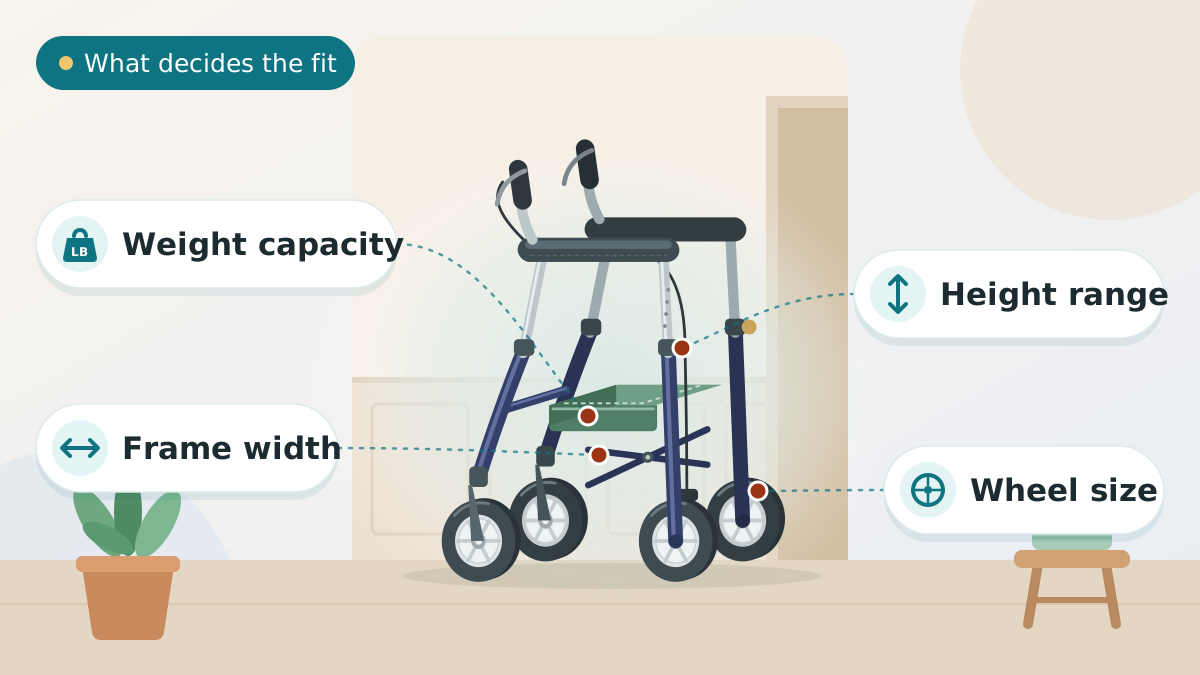
An upright walker puts your forearms on padded armrests so you stand tall instead of hunching over a frame. That is the whole point, and every model here does it. What separates them is fit: how wide the frame is, how much weight it holds, how big the wheels are, and which user heights it genuinely covers. Get those four numbers right and almost any of these works. Get them wrong and the walker ends up in a hallway.
We may earn a commission when you buy through links on this page. Read our affiliate disclosure.

Our Top Pick
Vive Mobility Upright Walker
The sensible default for most users.
- Lightest here at 20 lb
- Folds to 10.8 inches wide for car transport
- Flat-free wheels, so no punctures to deal with
Weight capacity
300 lb
Frame width
25 in
Wheels
8 in flat-free
Fits users
5'2" to 6'4"
Unit weight
20 lb
Top 4 Picks — Find Your Situation
- Vive Mobility Upright WalkerOur pick
Best forMost users between 5 foot 2 and 6 foot 4 and under 300 lb, especially if the walker travels by car
- Lightest here at 20 lb
- Folds to 10.8 inches wide for car transport
- Flat-free wheels, so no punctures to deal with
Watch out: Standard 300 lb capacity
 ELENKER Heavy-Duty Bariatric Upright WalkerBest heavy-duty
Best forUsers needing capacity well above 300 lb, in a home with doorways wide enough for a bariatric frame
- 500 lb capacity — the highest here by a wide margin
- Extra-wide padded seat and backrest, not a mesh sling
- Armrest and seat heights both adjust
Watch out: The widest frame on this page — measure the doorway before buying
- ELENKER HFK-9236T4 All-Terrain Upright WalkerWidest fit range
Best forShorter users, or homes where doorway width is the binding constraint
- Fits users from 4'8", lower than any other pick here
- Narrowest frame on this page at 24.5 inches
- 10-inch puncture-proof PU wheels front and rear
Watch out: At 30 lb, the heaviest of the 300 lb frames
 Helavo All-Terrain Upright WalkerBest outdoor walker you can still lift
Best forOutdoor walking where the walker still has to be lifted into a car
- Lightest of the outdoor-capable picks at 22.7 lb
- 10-inch puncture-proof rubber tires
- Height-adjustable handles and padded armrests
Watch out: Standard 300 lb capacity
How we picked
We compared 4 options. We do not test hands-on, and we say so. This comparison is built from manufacturer-published specifications — capacity, frame width, wheel diameter, folded size and stated user-height range — gathered from each maker’s own site rather than retailer listings, because listings in this category contradict each other. Awards go to whichever product leads on the specification that defines its category, and every award below names the number it won on. Where two products were genuinely level we say so rather than inventing a difference.
Our picks, reviewed
Vive Mobility Upright Walker
The sensible default for most users. At 20 lb it is the lightest walker on this page, and it folds to 10.8 inches wide — narrow enough for a car boot without wrestling. Everything else is standard for the category: 300 lb capacity, 8-inch flat-free wheels, a 17.5-inch padded seat, and a stated fit from 5 foot 2 to 6 foot 4. If the walker has to travel in a car most days, those two numbers matter more than any other spec here.
What we like
- Lightest here at 20 lb
- Folds to 10.8 inches wide for car transport
- Flat-free wheels, so no punctures to deal with
Keep in mind
- Standard 300 lb capacity
- Lower height limit of 5'2" rules out shorter users
- Fixed seat height, unlike some picks here
- Weight capacity
- 300 lb
- Frame width
- 25 in
- Wheels
- 8 in flat-free
- Fits users
- 5'2" to 6'4"
- Unit weight
- 20 lb
ELENKER Heavy-Duty Bariatric Upright Walker
A 500 lb capacity, which is where this pick separates from everything else on the page — every other walker here stops at 300 lb, and no amount of careful use gets a 300 lb frame past its rating. ELENKER reach that capacity with an extra-wide padded seat and backrest and a frame that adjusts at both the armrests and the seat, on 8-inch wheels rather than the 10-inch ones on the lighter picks. The trade is the one physics forces: a frame built to carry 500 lb is wider than a 300 lb frame, so this is the pick where the doorway measurement stops being good advice and becomes the number that decides it.
What we like
- 500 lb capacity — the highest here by a wide margin
- Extra-wide padded seat and backrest, not a mesh sling
- Armrest and seat heights both adjust
Keep in mind
- The widest frame on this page — measure the doorway before buying
- 8-inch wheels, so less capable outdoors than the 10-inch picks here
- Heavier to lift than the 300 lb frames, which is what the capacity costs
- Weight capacity
- 500 lb
- Frame width
- Bariatric — wider than every other pick here
- Wheels
- 8 in
- Fits users
- Armrest and seat heights both adjustable
ELENKER HFK-9236T4 All-Terrain Upright Walker
It covers 4 foot 8 to 6 foot 4 — a twenty-inch span, the widest here — and does it in the narrowest frame on the page at 24.5 inches. That combination is unusual and it matters in two specific situations: a shorter user whom most upright walkers simply do not adjust down far enough for, and a home with tight doorways. It runs 10-inch puncture-proof PU wheels front and rear, so the narrow frame costs nothing outdoors. At 30 lb it is the heaviest of the standard-capacity picks, which is the price of that adjustment range.
What we like
- Fits users from 4'8", lower than any other pick here
- Narrowest frame on this page at 24.5 inches
- 10-inch puncture-proof PU wheels front and rear
Keep in mind
- At 30 lb, the heaviest of the 300 lb frames
- Standard 300 lb capacity
- Shallower seat than the wider frames
- Weight capacity
- 300 lb
- Frame width
- 24.5 in
- Wheels
- 10 in front and rear, PU
- Fits users
- 4'8" to 6'4"
- Unit weight
- 30 lb
Helavo All-Terrain Upright Walker
Ten-inch flat-free rubber tires at 22.7 lb, which is the lightest anything on this page gets while still handling ground that is not a pavement. That is the trade most families are actually making, because the walker that copes with the park also has to go into the car to get there. Solid rubber means no punctures and no pump, and ten inches is enough to ride over the lips and cracks that stop an eight-inch wheel dead.
What we like
- Lightest of the outdoor-capable picks at 22.7 lb
- 10-inch puncture-proof rubber tires
- Height-adjustable handles and padded armrests
Keep in mind
- Standard 300 lb capacity
- Premium-priced against the 300 lb picks here
- Manufacturer publishes less dimensional detail than others here
- Weight capacity
- 300 lb
- Frame width
- Standard
- Wheels
- 10 in flat-free solid rubber
- Fits users
- Height-adjustable handles
- Unit weight
- 22.7 lb
What to look for
Measure the doorway before you look at anything else
Frame width is the specification that most often turns a good walker into a returned one. The standard-capacity walkers on this page start at 24.5 inches across and the bariatric frame is wider still, and a bathroom doorway in an older house can be narrower than you assume.
Measure the narrowest doorway the walker has to pass through daily, then subtract an inch for knuckles and steering. If that leaves you under 25 inches, the widest picks here are out regardless of how good they are otherwise. ELENKER say the same about their bariatric frames: measure the doorway before you commit to one.
Our Measure Before You Buy tool walks through this and the three other measurements worth taking first.
Weight capacity is a safety limit, not a suggestion
Most upright walkers stop at 300 lb. Two things follow from that.
- If the user is near or above 300 lb, the field narrows immediately — on this page, to one walker.
- Capacity has to cover the user leaning their weight onto the armrests during a sit-to-stand, not just standing still.
- Higher-capacity frames are wider. That is physics, not marketing, and it collides with the doorway measurement above.
Where capacity and doorway width pull against each other, capacity wins. A walker that does not fit through the bathroom door is an inconvenience; one that is over its limit is a fall.
Wheel size decides where it can go
Larger wheels roll over a lip that smaller wheels catch on. Eight-inch wheels are fine indoors and on smooth pavement. Ten inches handles most outdoor surfaces. Twelve-inch wheels do exist for rough ground, but on standard rollators rather than upright walkers — if the daily route is grass or gravel, compare rollators as well.
Flat-free solid rubber and pneumatic tires both absorb shock; solid rubber cannot puncture and needs no pump, which for most households is the more practical choice.
Every step up in wheel size costs weight and turning room. Pick for the ground that is walked on most days, not the roughest ground imaginable.
Check the stated height range, not just the maximum
Upright walkers put the forearms on armrests, so the armrest height has to match the user. Manufacturers publish a user-height range for exactly this reason, and the ranges differ more than you would expect — the picks here start anywhere from 4 foot 8 to 5 foot 2.
Shorter users are the ones most often let down. If the user is under about 5 foot 2, check the lower bound specifically before anything else, because several otherwise-excellent walkers simply do not adjust down that far.
Frequently asked questions
For someone who hunches over a standard rollator and gets back, neck or shoulder pain from it, usually yes — the armrests take the load through the forearms and let you stand tall and look ahead. It is not automatically better for everyone: upright walkers are heavier, wider and need more turning room, so for a small flat with tight doorways a standard rollator can still be the more practical choice.
Most upright walkers hold 300 lb. Choose a capacity comfortably above the user’s weight, because they will put real force through the armrests when standing up from the seat, not just resting on them. If the user is near or above 300 lb, look specifically for a heavy-duty frame rather than assuming a standard model will cope.
The standard-capacity walkers compared here start at 24.5 inches wide, so a 30-inch doorway is comfortable and a 28-inch doorway is workable. The bariatric frame is wider than all of them — if that is the pick you need, measure your narrowest daily doorway before anything else.
No, and that is normal rather than a warning sign. LifeWalker, who make the UPWalker, state it precisely: it is a Class I device registered with the FDA, and FDA approval is not required for this class of product. Treat any walker advertised as "FDA approved" with caution, because it is not a claim this category supports.
Medicare has its own durable medical equipment rules and an upright walker may or may not qualify — that is a separate question from whether an FSA or HSA will reimburse you, which turns on your plan administrator. Our guide to FSA and HSA eligible mobility equipment covers both gates and what your administrator will want to see.
Check the manufacturer’s stated lower height bound rather than the adjustment range in inches. Among the walkers here, the lower limits run from 4 foot 8 up to 5 foot 2, so a user around 4 foot 10 has far fewer genuine options than the category makes it look.
The final verdict
For most people the deciding number is not capacity or wheel size but frame width, because that is the one that either fits the home or does not. Measure the narrowest doorway first, then pick the walker that leads on whichever of the remaining three specs describes the actual daily problem — weight to lift, ground to cross, or height to fit. If none of this narrows it down, start with Walking Aid Finder, which asks whether an upright walker is the right category at all.
Our overall winner is the Vive Mobility Upright Walker — our our pick for most seniors. You can check the current price on Amazon to see today’s deal.
